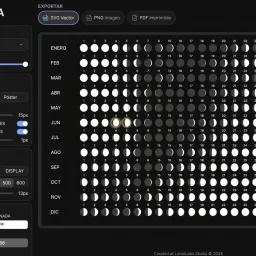
Lunar Phase Editor
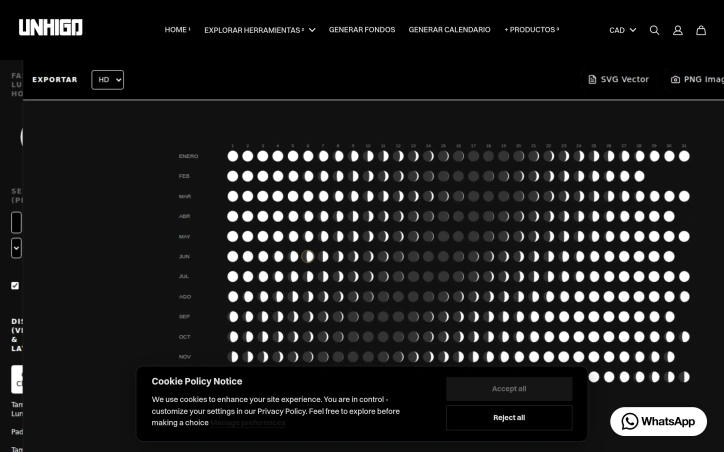
The Story
AI Overview
AI-generatedThe core audience comprises calendar designers, graphic artists working within astronomy-themed projects, and independent creators selling niche calendars. The tool's emphasis on export functionality suggests intentional positioning for both small-batch commercial production and digital distribution. Educators and planetariums interested in producing supplementary materials represent potential secondary users, though the available positioning doesn't explicitly confirm this market.
What distinguishes the product is its explicit commitment to minimalist aesthetic design. Rather than overwhelming users with astronomical complexity, the software prioritizes clean presentation and functional clarity. This philosophy reflects a thoughtful design decision: most calendar users want elegance and readability, not data density. The export-ready output integrates directly into downstream design and printing workflows, eliminating the typical handoff inefficiency between visualization and production.
The tool operates within UnhigoArt™ Studio, a broader multimedia design utility ecosystem. This positioning indicates the developer understands lunar calendar generation as one component of a larger design practice rather than a standalone novelty. Users already familiar with the studio's other tools likely find consistent workflows and design language throughout.
The product taps into a genuine market opportunity at the intersection of growing consumer interest in lunar cycles and the minimalist design trend. By automating data visualization for this niche, it removes a technical barrier that prevented many designers from exploring this aesthetic territory. Calendar producers previously needed either astronomical expertise to source and verify phase data or design expertise to translate raw numbers into layouts—rarely both.
The tool's success hinges on execution quality, ease of use, and pricing accessibility. The limited publicly available information prevents assessment of feature depth, UI intuitiveness, or the breadth of customization options available to designers. Similarly, the business model and pricing structure remain undisclosed, making it impossible to evaluate whether the product delivers sufficient value at its price point or whether target users might opt for manual design workflows instead.
Key Features
Minimalist Design
prioritizes clean presentation and functional clarity
Export Functionality
integrates directly into downstream design and printing workflows
Astronomical Data Handling
transforms lunar phase data into visually compelling calendar layouts
Integration with UnhigoArt Studio
operates within a broader multimedia design utility ecosystem
Use Cases
-
1
Calendar Designers
enables creation of publication-ready calendars without manual transcription
-
2
Graphic Artists
facilitates production of astronomy-themed projects
-
3
Independent Creators
supports small-batch commercial production and digital distribution of niche calendars
-
4
Educators and Planetariums
potential secondary users for producing supplementary materials
FAQ
What design aesthetic does Lunar Phase Editor follow? ▾
Is Lunar Phase Editor part of a larger design toolset? ▾
What kind of output does Lunar Phase Editor produce? ▾
Tech Stack & Tags
Discussion
No comments yet — be the first!
Join the conversation — sign up to comment.
Sign up freeCommunity Support
Boost this project on Sell With boost
