SaveClips
Productivity
Extracting video content from the internet without installing software or bouncing between platform-specific tools is the core promise of SaveClips, a web-based video downloader that consolidates what typically requires multiple services into a single interface.
The service addresses a real friction point for content creators, social media researchers, and users who need offline access to public video content. Rather than installing separate downloaders for YouTube, TikTok, Instagram, and other platforms, SaveClips handles 15 different sources from one browser-based tool, with the option to install it as a native app on iOS, Android, and desktop operating systems.
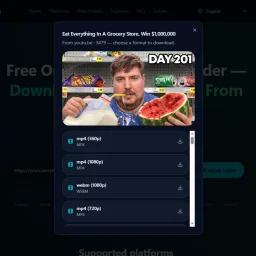
Several features justify the tool's position in a crowded market. It captures video at multiple resolutions—720p through 4K where the original source permits—and extracts audio directly to MP3 format, effectively doubling its utility for users building offline playlists or archiving podcast episodes. The downloaded files arrive without watermarks or third-party branding burned into the frame, addressing a common complaint about free downloaders. Processing is positioned as fast, and the user experience follows a straightforward four-step workflow: copy a video link, paste it into the search box, select a format, and save.
The privacy model sets it apart in a category often marred by data collection concerns. SaveClips stores neither the links users paste nor any record of what they download, retaining only anonymized usage counts. Combined with the complete absence of sign-up requirements, paywalls, or download limits, this creates a genuinely friction-free experience.
The platform's breadth is notable. Beyond obvious choices like YouTube and TikTok, it covers niche platforms including Bilibili, LinkedIn, Snapchat, and Tumblr. This comprehensive support across 15 platforms reduces the need for users to maintain multiple bookmarks or remember platform-specific syntax.
SaveClips positions itself as a free service with no recurring revenue model mentioned, suggesting either a breakeven operation or monetization through means not disclosed on the public-facing site. The lack of transparency here is the main gap in an otherwise straightforward product story.