
Chorebound

The Story
AI Overview
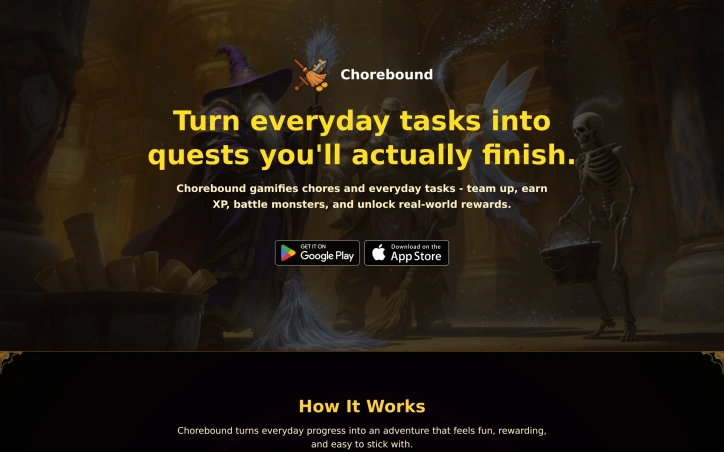
AI-generatedThe product targets a broad audience: families frustrated with nagging kids to clean, roommates tired of unclear responsibilities, couples juggling shared errands, and solo users building habits. The core insight is straightforward—that visualizing progress and creating social accountability makes follow-through more likely. What differentiates Chorebound is the depth of its game mechanics. Users create heroes and form parties with others, transforming mundane tasks into quests that award experience points and an in-game currency called gold. Leveling up happens through quest completion, and random monster encounters add surprise engagement during task execution. This isn't just a checklist with badges; it's a living progression system.
The rewards mechanism stands out as particularly pragmatic. Rather than offering only abstract achievement unlocks, Chorebound lets users spend accumulated gold on tangible real-world rewards managed by the group—whether that's screen time for children, date-night privileges for couples, or treats for roommates. This bridges the gap between virtual progress and actual motivation, making the gamification feel materially consequential rather than purely psychological theater.
The design philosophy reflects clear thinking about different use cases. A family chore app reduces nagging pressure while keeping kids engaged through agency. Roommate coordination becomes transparent through shared quests, replacing the passive-aggressive group chat. Solo users get a habit tracker with momentum mechanics. Each implementation shares the core system but emphasizes different pain points.
The comprehensive approach to gamified accountability positions Chorebound as a serious contender in the habit and household management space. However, the real test lies in execution complexity—managing real-world reward fulfillment across diverse groups, ensuring the RPG mechanics remain engaging long-term, and balancing progression pacing to prevent burnout or triumph fatigue. These operational challenges will ultimately determine whether Chorebound delivers on its ambitious premise of making chores feel like genuine adventure.
Key Features
RPG Progression System
Users create heroes, join parties, and level up by completing quests with experience points
Real-World Rewards
In-game gold earned through task completion can be spent on tangible group rewards like screen time or treats
Monster Encounters
Random challenges appear during task execution to add surprise and engagement to chores
Party and Social Accountability
Form parties with others to transform individual tasks into shared quests with group progress
Multi-Use Case Design
Adapts to families, roommates, couples, and solo users with customizable emphasis on different pain points
Use Cases
-
1
Families
Reduces nagging pressure on parents while keeping children engaged through agency and game mechanics
-
2
Roommates
Creates transparent household responsibility management through shared quests, replacing unclear communication and passive-aggressive chats
-
3
Couples
Helps coordinate shared errands and chores with built-in accountability and motivational rewards
-
4
Solo Users
Provides a habit tracker with momentum mechanics and progression-based motivation
FAQ
How do you get rewards in Chorebound? ▾
Can you use Chorebound with your family? ▾
What makes Chorebound different from other chore apps? ▾
What happens when you level up? ▾
Tech Stack & Tags
Discussion
No comments yet — be the first!
Join the conversation — sign up to comment.
Sign up freeCommunity Support
Boost this project on Sell With boost