
NZBX
- No match
Machine translation — the English original is authoritative.
The Story
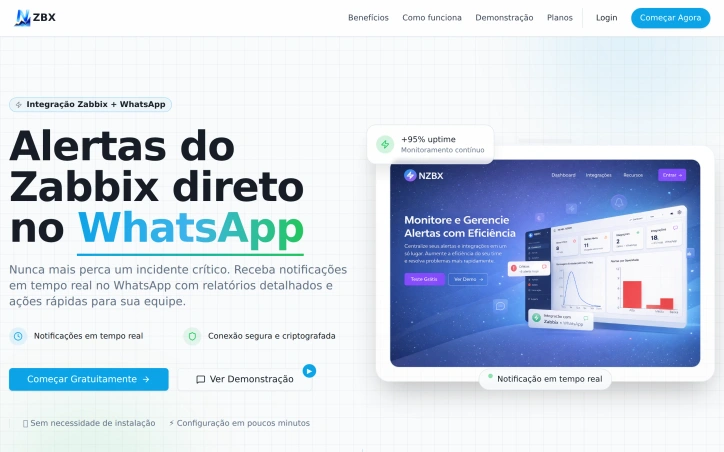
I built NZBX to solve a critical problem: infrastructure teams were missing or delaying responses to Zabbix alerts because notifications weren't reaching the right people fast enough. By integrating Zabbix monitoring directly into WhatsApp, teams receive instant, actionable notifications for every critical incident—turning their messaging app into a real-time command center for infrastructure management.
AI Overview
AI-generatedInfrastructure teams managing Zabbix monitoring systems face a persistent challenge: critical alerts get lost in noise or delayed in reaching the right people. NZBX addresses this by channeling Zabbix notifications through WhatsApp, transforming a ubiquitous messaging platform into a real-time incident command center.
The product targets DevOps and infrastructure teams already running Zabbix but wanting faster, more direct alert delivery. Instead of checking dashboards or waiting for email, incidents appear instantly in WhatsApp where team members already spend their working day.
What distinguishes NZBX is its simplicity and speed. The service requires no server installation—it connects to existing Zabbix instances through API authentication and delivers alerts in under three seconds. Setup takes five minutes, placing it at the low-friction end of the integration spectrum. End-to-end encryption and stated LGPD compliance address data security concerns when routing infrastructure alerts through third-party services.
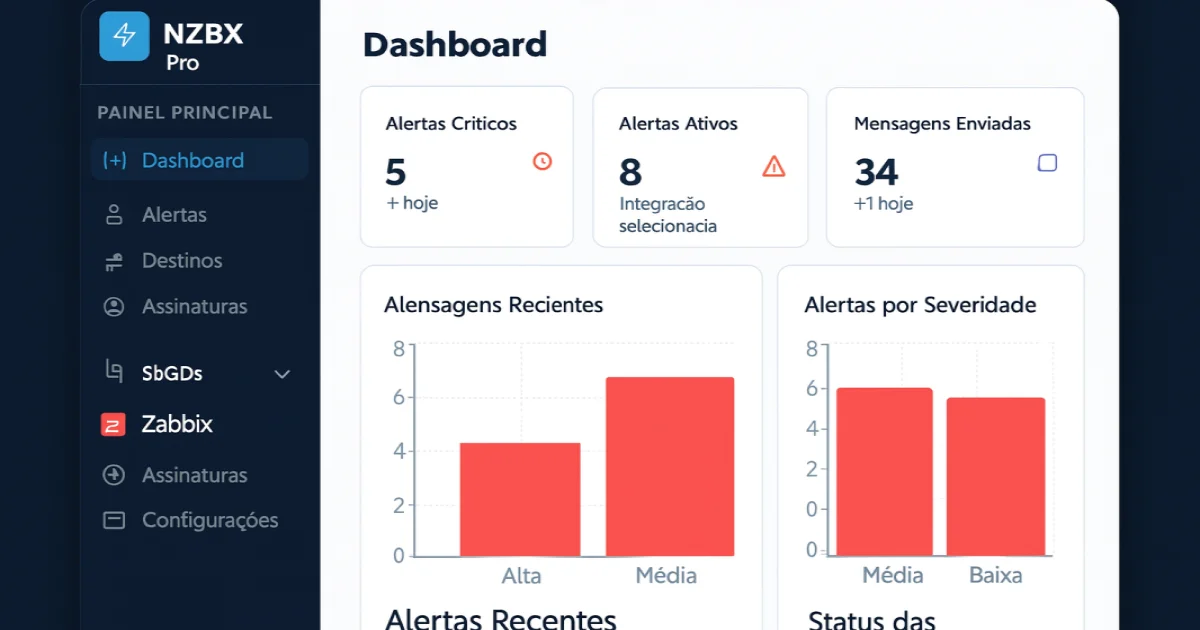
Beyond basic alerting, NZBX includes a dashboard for tracking metrics, interactive graphs, detailed reports, and data export. An AI-powered grouping system suppresses redundant alerts, with the platform claiming an 80 percent noise reduction. The service supports multiple Zabbix instances, granular user permissions, and access logging, indicating it's built for teams rather than solo operators. The stated 99.9 percent availability target and 24/7 support position it as infrastructure-grade tooling.
The integration strategy extends beyond Zabbix. The platform mentions compatibility with webhooks, GPT integration, and other monitoring tools, suggesting a broader alert aggregation roadmap. Up to 50 simultaneous users can access the system, and documentation appears comprehensive.
Pricing remains opaque. The site emphasizes free trials and no installation requirements but provides no transparent pricing details. For teams drowning in Zabbix alert fatigue, NZBX offers a pragmatic shortcut to faster incident response. The product's actual value depends on execution—whether the sub-three-second delivery consistently holds and whether AI-powered grouping reduces signal loss rather than suppressing critical alerts. These are testable claims worth validating before committing a team to the platform.
Founder Diary
DevlogThe maker hasn't posted a diary entry yet.
Key Features
WhatsApp Alerts
Delivers Zabbix notifications through WhatsApp in under three seconds
Dashboard & Analytics
Includes metrics tracking, interactive graphs, detailed reports, and data export capabilities
AI-Powered Grouping
Suppresses redundant alerts with claimed 80 percent noise reduction
Multi-Instance Support
Manages multiple Zabbix instances with granular user permissions and access logging
Quick Setup
No server installation required, connects via API authentication in five minutes
Use Cases
-
1
DevOps teams
Running Zabbix who need faster alert delivery than dashboards or email
-
2
Infrastructure on-call
Want incidents to appear instantly in WhatsApp where team members already communicate
-
3
Alert-fatigued teams
Seeking AI-powered grouping to reduce noise and catch critical alerts
-
4
Multi-team organizations
Managing multiple Zabbix instances with different access requirements
FAQ
How fast does NZBX deliver alerts? ▾
How does NZBX reduce alert noise? ▾
How much does NZBX cost? ▾
Will NZBX work with my infrastructure setup? ▾
Tech Stack & Tags
Discussion
No comments yet — be the first!
Join the conversation — sign up to comment.
Sign up freeCommunity Support
Boost this project on Sell With boost