
Best Event software Startups & Tools

Plan, promote, and track events with RSVPs and analytics.

Recently Listed

3 launches

Sort
EventMGT

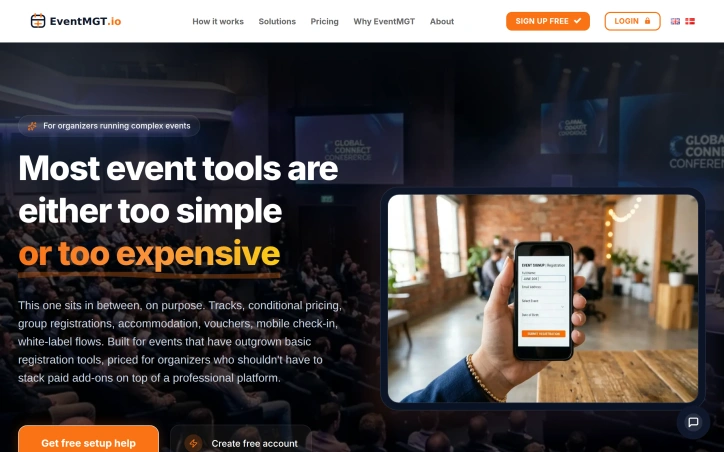
Event management is a complex task that requires a delicate balance between simplicity and functionality. Many existing tools fall short, either being too basic or too expensive, with the latter often relying on a stack of add-ons that can double the initial cost. EventMGT addresses this gap by providing a comprehensive platform designed for organizers running complex events. The company's mission is to empower event organizers to manage registrations, payments, and logistics with ease, without resorting to cumbersome spreadsheets or multiple add-ons. What stands out about EventMGT is its focus on providing a robust set of features that cater to the needs of events that have outgrown basic registration tools. The platform offers advanced registration logic, including multi-track sessions, conditional fields, and group registrations, all of which are typically found behind paid modules in other platforms. Additionally, EventMGT provides financial control features, such as tracking payments and changes to bookings, issuing proforma invoices, and running financial reports. The platform also extends its functionality beyond the registration process, enabling organizers to handle tasks such as QR check-in, on-site balance settlement, and badge printing on demand. The platform's capabilities are further enhanced by its commitment to providing free setup help, where the team will set up the first event for organizers, transferring existing data from spreadsheets or other tools, and reviewing the workflow before it goes live. This level of support is particularly noteworthy, as it demonstrates the company's confidence in its product and its willingness to support its customers. Notably, EventMGT operates without setup fees or obligatory quotes, and it doesn't require a credit card to create a free account.

Event-software
T
Thomas Lorenzen

Event management is a complex task that requires a delicate balance between simplicity and functionality. Many existing tools fall short, either being too basic or too expensive, with the latter often relying on a stack of add-ons that can double the initial cost. EventMGT addresses this gap by providing a comprehensive platform designed for organizers running complex events. The company's mission is to empower event organizers to manage registrations, payments, and logistics with ease, without resorting to cumbersome spreadsheets or multiple add-ons. What stands out about EventMGT is its focus on providing a robust set of features that cater to the needs of events that have outgrown basic registration tools. The platform offers advanced registration logic, including multi-track sessions, conditional fields, and group registrations, all of which are typically found behind paid modules in other platforms. Additionally, EventMGT provides financial control features, such as tracking payments and changes to bookings, issuing proforma invoices, and running financial reports. The platform also extends its functionality beyond the registration process, enabling organizers to handle tasks such as QR check-in, on-site balance settlement, and badge printing on demand. The platform's capabilities are further enhanced by its commitment to providing free setup help, where the team will set up the first event for organizers, transferring existing data from spreadsheets or other tools, and reviewing the workflow before it goes live. This level of support is particularly noteworthy, as it demonstrates the company's confidence in its product and its willingness to support its customers. Notably, EventMGT operates without setup fees or obligatory quotes, and it doesn't require a credit card to create a free account.

EventMGT preview

Key features

  • Advanced Registration Logic: Includes multi-track sessions, conditional fields, and group registrations
  • Financial Control: Tracks payments and changes to bookings, issues proforma invoices, and runs financial reports
See full listing
Planeja Noivos

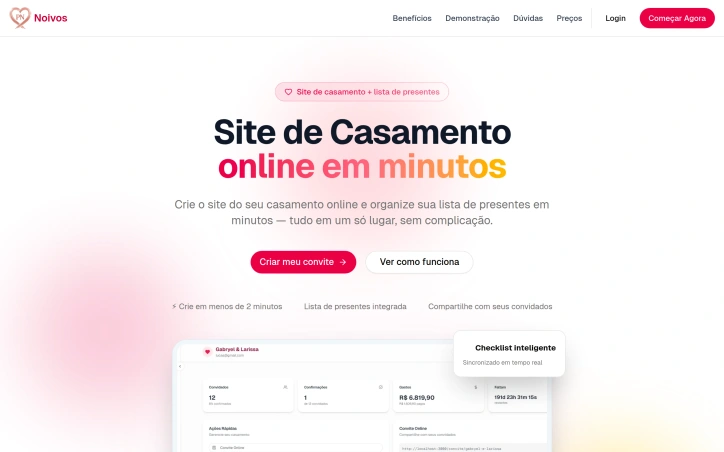
Wedding planning across Brazil frequently devolves into chaos—couples managing guest lists in spreadsheets, confirmation statuses via WhatsApp, budget tracking in multiple places, and gift registries scattered across different services. Planeja Noivos targets this fragmentation by consolidating the essential tools couples need into a single, streamlined application. The platform's core value proposition centers on simplification and speed. Users can create an online invitation and begin organizing their wedding within minutes, then layer in guest confirmations, task checklists, supplier coordination, and expense tracking from one dashboard. The interface appears designed for ease of use rather than feature density—a practical choice for a user base that likely approaches wedding planning with limited technical tolerance. Several features deserve emphasis. Guest management with real-time RSVP tracking addresses one of the most frustrating pain points mentioned in testimonials. The integrated gift registry eliminates the need for separate registration services, allowing guests to contribute money toward specific items directly within the platform. The automated checklist with reminders handles deadline management, reducing the cognitive load couples face during planning. Expense tracking prevents budget overruns, a concern explicitly highlighted in user feedback. The platform also facilitates vendor communication by centralizing contracts and timelines. Social proof is prominent. The site displays testimonials from four couples who married in late 2024 and early 2025, praising organization, time savings, and budget management. One couple reported a twenty percent cost reduction. The platform maintains a 4.9-star rating across more than 150 reviews, lending credibility to the claimed benefits. These metrics are recent and specific enough to carry weight. Planeja Noivos operates a freemium model—users can test the platform without providing payment information, removing friction from initial adoption. Tiered pricing plans exist, though the exact costs are partially obscured in the provided content. The free tier includes core features like checklists and guest lists, suggesting the company captures value at higher-tier offerings or through premium features. The product directly addresses a real problem faced by a large, recurring customer base in a growing economy. Its positioning emphasizes both emotional relief (stress reduction, celebration focus) and practical utility (cost savings, deadline management). For Brazilian couples seeking centralized wedding coordination, it offers a focused alternative to assembling multiple point solutions.

Event-software
L
Lucas Gabryel

Wedding planning across Brazil frequently devolves into chaos—couples managing guest lists in spreadsheets, confirmation statuses via WhatsApp, budget tracking in multiple places, and gift registries scattered across different services. Planeja Noivos targets this fragmentation by consolidating the essential tools couples need into a single, streamlined application. The platform's core value proposition centers on simplification and speed. Users can create an online invitation and begin organizing their wedding within minutes, then layer in guest confirmations, task checklists, supplier coordination, and expense tracking from one dashboard. The interface appears designed for ease of use rather than feature density—a practical choice for a user base that likely approaches wedding planning with limited technical tolerance. Several features deserve emphasis. Guest management with real-time RSVP tracking addresses one of the most frustrating pain points mentioned in testimonials. The integrated gift registry eliminates the need for separate registration services, allowing guests to contribute money toward specific items directly within the platform. The automated checklist with reminders handles deadline management, reducing the cognitive load couples face during planning. Expense tracking prevents budget overruns, a concern explicitly highlighted in user feedback. The platform also facilitates vendor communication by centralizing contracts and timelines. Social proof is prominent. The site displays testimonials from four couples who married in late 2024 and early 2025, praising organization, time savings, and budget management. One couple reported a twenty percent cost reduction. The platform maintains a 4.9-star rating across more than 150 reviews, lending credibility to the claimed benefits. These metrics are recent and specific enough to carry weight. Planeja Noivos operates a freemium model—users can test the platform without providing payment information, removing friction from initial adoption. Tiered pricing plans exist, though the exact costs are partially obscured in the provided content. The free tier includes core features like checklists and guest lists, suggesting the company captures value at higher-tier offerings or through premium features. The product directly addresses a real problem faced by a large, recurring customer base in a growing economy. Its positioning emphasizes both emotional relief (stress reduction, celebration focus) and practical utility (cost savings, deadline management). For Brazilian couples seeking centralized wedding coordination, it offers a focused alternative to assembling multiple point solutions.

Planeja Noivos preview

Key features

  • Guest Management: Real-time RSVP tracking and guest confirmation status management from one dashboard
  • Gift Registry: Integrated gift registry allowing guests to contribute money toward specific items directly within the platform
See full listing
GiftPlan

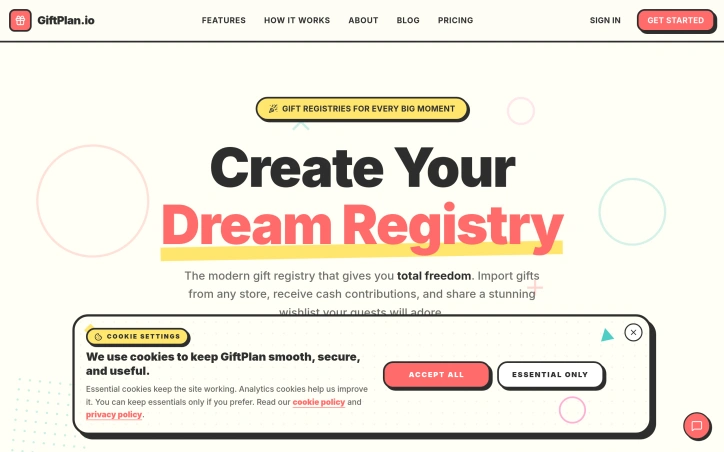
Modern gift registries have long operated under restrictive assumptions: registrants are limited to select retailers, guests must navigate clunky interfaces, and the entire experience feels trapped in early-2000s e-commerce. GiftPlan challenges this model by letting people curate gifts from virtually any online retailer while accepting flexible monetary contributions, addressing a real gap in how we approach gift-giving for major life events. The platform targets anyone planning a milestone celebration—weddings, baby showers, housewarmings, birthdays, graduations—essentially any occasion where guests need guidance on what to give. What distinguishes it from legacy registries is its straightforward flexibility. Rather than forcing users to shop from affiliated stores, the service lets them paste product links from Amazon, John Lewis, Selfridges, or elsewhere, with the system automatically pulling in product photos, prices, and descriptions. This removes friction for both the person building the registry and those browsing it. Beyond simple product import, GiftPlan includes meaningful features that acknowledge how people actually give gifts today. Group gifting allows multiple guests to contribute toward higher-ticket items, solving the tension between dreaming big and budget constraints. The thank-you manager automates gift tracking and personalizes acknowledgment notes, a practical feature that addresses the genuine headache of managing dozens of thank-you correspondences after an event. Guests contribute via Stripe without needing to create accounts, and they can include personal messages alongside their gifts—small touches that transform a transaction into something more human. The pricing structure reflects pragmatism over extraction. A one-time $9 publication fee and 1.5% per contribution (with guests able to voluntarily cover Stripe processing fees) represents a lean take compared to subscription-based competitors. The company explicitly promises no monthly costs and no hidden fees, which, while table stakes for a modern service, stands as a deliberate positioning choice. Where GiftPlan succeeds most is in removing friction without oversimplifying. The guest experience requires no app download, no account creation, and little decision-making beyond picking a gift and payment amount. For registrants, the universal import capability genuinely accelerates setup. The design philosophy appears oriented toward getting people registered quickly rather than maximizing time-on-site, which is the right instinct for an event-driven service. The main trade-off is that universality comes with less curation than specialized registries might offer, though that's arguably a feature for users who already know exactly what they want.
Event-software
P
Panos Zepos

Modern gift registries have long operated under restrictive assumptions: registrants are limited to select retailers, guests must navigate clunky interfaces, and the entire experience feels trapped in early-2000s e-commerce. GiftPlan challenges this model by letting people curate gifts from virtually any online retailer while accepting flexible monetary contributions, addressing a real gap in how we approach gift-giving for major life events. The platform targets anyone planning a milestone celebration—weddings, baby showers, housewarmings, birthdays, graduations—essentially any occasion where guests need guidance on what to give. What distinguishes it from legacy registries is its straightforward flexibility. Rather than forcing users to shop from affiliated stores, the service lets them paste product links from Amazon, John Lewis, Selfridges, or elsewhere, with the system automatically pulling in product photos, prices, and descriptions. This removes friction for both the person building the registry and those browsing it. Beyond simple product import, GiftPlan includes meaningful features that acknowledge how people actually give gifts today. Group gifting allows multiple guests to contribute toward higher-ticket items, solving the tension between dreaming big and budget constraints. The thank-you manager automates gift tracking and personalizes acknowledgment notes, a practical feature that addresses the genuine headache of managing dozens of thank-you correspondences after an event. Guests contribute via Stripe without needing to create accounts, and they can include personal messages alongside their gifts—small touches that transform a transaction into something more human. The pricing structure reflects pragmatism over extraction. A one-time $9 publication fee and 1.5% per contribution (with guests able to voluntarily cover Stripe processing fees) represents a lean take compared to subscription-based competitors. The company explicitly promises no monthly costs and no hidden fees, which, while table stakes for a modern service, stands as a deliberate positioning choice. Where GiftPlan succeeds most is in removing friction without oversimplifying. The guest experience requires no app download, no account creation, and little decision-making beyond picking a gift and payment amount. For registrants, the universal import capability genuinely accelerates setup. The design philosophy appears oriented toward getting people registered quickly rather than maximizing time-on-site, which is the right instinct for an event-driven service. The main trade-off is that universality comes with less curation than specialized registries might offer, though that's arguably a feature for users who already know exactly what they want.

GiftPlan preview

Key features

  • Universal Product Import: Paste links from any retailer—Amazon, John Lewis, Selfridges—and automatically pull in photos, prices, and descriptions.
  • Group Gifting: Multiple guests contribute toward higher-ticket items, removing budget constraints.
See full listing