Audilate
- No match
Machine translation — the English original is authoritative.
The Story
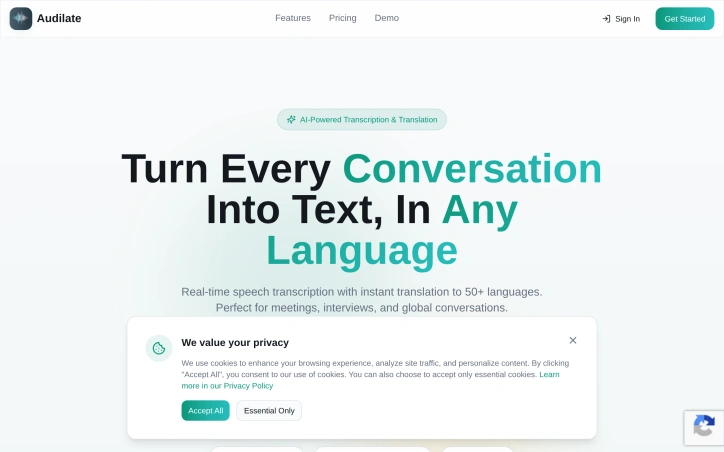
We built Audilate to break down language barriers in real-time conversations. Too many teams struggle with transcribing and translating meetings across 100+ languages. Our AI-powered solution instantly converts speech to text and translates it, making global collaboration seamless for meetings, interviews, and international conversations.
AI Overview
AI-generatedBreaking down language barriers during real-time conversations has long been a friction point for globally distributed teams, and Audilate directly addresses this challenge. The platform combines AI-powered speech transcription with simultaneous translation across over 100 languages, making it a practical solution for organizations where meetings, interviews, and collaborative discussions frequently span multiple geographies and language groups.
The core value proposition centers on eliminating the lag and complexity that typically come with asynchronous translation workflows. Rather than recording conversations and processing them after the fact, Audilate delivers live transcription and translation, allowing participants to collaborate without stopping to manage language gaps. This is particularly relevant for companies hiring internationally, conducting cross-border partnerships, or operating distributed teams where English is not universally spoken as a first language.
What distinguishes the product is its breadth of language support. With coverage across 100+ languages, the platform moves beyond serving just major language pairs and opens functionality to teams working in less commonly supported languages. This scope suggests the founders recognize that global collaboration extends well beyond English-to-Spanish or English-to-Mandarin scenarios. The integration of transcription and translation in a single workflow is also noteworthy—separate tools for these functions create unnecessary switching costs and synchronization challenges.
The positioning emphasizes real-time processing, which is critical for the use cases mentioned. Whether facilitating a live meeting between team members in different countries, conducting remote interviews with international candidates, or enabling seamless cross-border conversations, the speed at which transcription and translation occur directly impacts usability. Delays of even a few seconds can derail natural conversation flow.
The product targets organizations serious about global teamwork, particularly those for whom language support has become a competitive advantage or operational necessity. This includes multinational corporations, international service providers, distributed startups, and any team conducting work across language boundaries on a regular basis. The emphasis on meetings and interviews suggests the founders see their strongest initial adoption among HR, engineering, and business development functions that routinely conduct cross-language conversations.
One practical consideration for potential users is how the platform integrates with existing communication infrastructure—meetings apps, video conferencing tools, and collaboration platforms—though those implementation details fall outside the scope of what's presented here. The foundational premise, however, is sound: removing language as a barrier to real-time collaboration remains a genuine problem for many organizations.
Founder Diary
DevlogThe maker hasn't posted a diary entry yet.
Key Features
Speech Transcription
AI-powered real-time conversion of spoken words into text
Real-Time Translation
Simultaneous translation across over 100 languages during conversations
Broad Language Support
Covers over 100 languages including less commonly supported ones
Integrated Workflow
Combines transcription and translation in a single tool to eliminate switching costs
Low-Latency Processing
Delivers results with minimal delay to maintain natural conversation flow
Use Cases
-
1
International Hiring
HR teams conducting interviews with candidates who speak different languages
-
2
Distributed Teams
Globally dispersed organizations where English is not universally spoken as a first language
-
3
Cross-Border Partnerships
Companies facilitating business discussions and collaborations across language boundaries
-
4
Real-Time Meetings
Teams holding live meetings between members in different countries and language groups
FAQ
How many languages does Audilate support? ▾
Can I use Audilate for live meetings? ▾
Why does real-time translation matter? ▾
Tech Stack & Tags
Discussion
No comments yet — be the first!
Join the conversation — sign up to comment.
Sign up freeCommunity Support
Boost this project on Sell With boost
Meet the Founder

More in Transcription
VideoMP3Word
We built VideoMP3Word because transcription was...

LingoFrame
LingoFrame is a web based SaaS business offering...
Echosy
We built Echosy because transcription shouldn't...
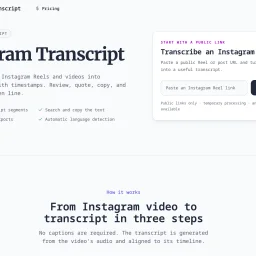
IGTranscript
I created IGTranscript because creators and rese...
Whisper Web
Whisper Web is a free browser tool for people wh...
Gyuret Notes
Gyuret Notes is an AI-powered transcription app...