
DestList DFY Travel Planning System

- No match
Machine translation — the English original is authoritative.
The Story
DestList was built to solve a problem I felt personally: loving travel, but hating how much work planning a trip had become. What should feel exciting often turns into hours of comparing flights, checking hotel reviews, mapping locations, building an itinerary, and second-guessing every decision. Even with all the information online and the rise of AI tools, travellers are still left doing the hardest part themselves: turning scattered options into one trip that actually makes sense.
That is the problem DestList solves.
What makes DestList different is our hybrid approach: AI plus human-in-the-loop travel curation. AI helps us move faster by organizing options, structuring itineraries, and handling research at scale, but we do not stop there. Human review is what makes the plan feel grounded, intentional, and trustworthy. That combination helps us deliver travel plans that are not just generated, but actually curated.
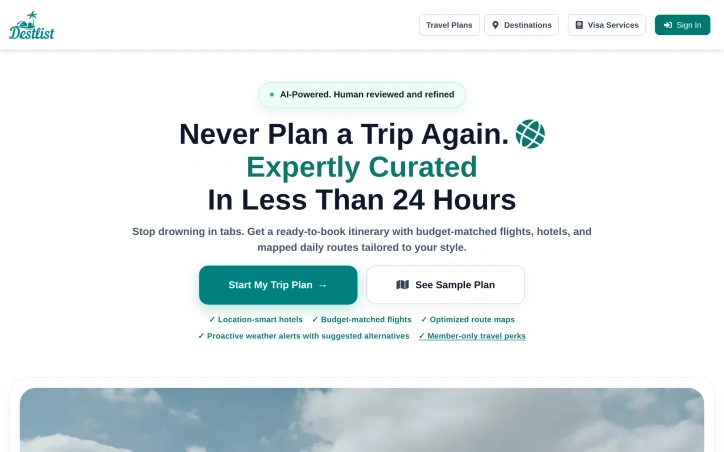
DestList turns a traveler’s preferences, budget, and style into a structured, ready-to-book trip. Instead of endless tabs and fragmented decisions, users get curated flights, hotels, day-by-day itineraries, mapped routes, and planning support in one place.
I built it because I believe travel planning should start with intention, not logistics. The goal is not just to give people more options, but to remove the mental load of planning and replace it with clarity, confidence, and a better travel experience.
AI Overview
AI-generatedTravel planning has become its own full-time job. Flight comparisons, hotel reviews, mapping, itinerary building—the mental fatigue alone stops many people from traveling as much as they'd like. Existing AI tools promise to help, but they often hand back a pile of options that still requires the traveler to synthesize and decide. That's where DestList enters: a done-for-you travel planning service that tackles the actual problem—the cognitive load of turning disparate choices into a coherent trip.
What distinguishes DestList is its deliberate hybrid model. Rather than relying entirely on AI-generated suggestions, the company layers human travel curation on top. An AI engine organizes research, structures itineraries, and handles the volume of options available; human travel experts then review and refine those recommendations to ensure they feel intentional, grounded, and trustworthy. This combination addresses a real gap: automation without human judgment often produces technically correct but uninspired results.
The service delivers end-to-end planning outputs. Users input their preferences, budget, and travel style, and receive structured recommendations including curated flights, vetted accommodations, day-by-day itineraries, mapped routes, and ongoing planning support. Everything arrives in one consolidated place, eliminating the scattered-tabs chaos that characterizes most trip planning today.
The founder's motivation grounds the product in genuine frustration rather than abstract tech enthusiasm. The recognition that the hardest part of planning isn't gathering information—it's synthesizing it into something coherent and confidence-inspiring—reveals thoughtful product thinking. DestList positions itself not as a research aggregator but as a planning solution that removes mental overhead.
For travelers who have the budget to outsource planning and want professional-grade itineraries without the DIY overhead, DestList fills a clear niche. The company's success ultimately depends on whether human curators can scale this model economically and whether the AI-human handoff genuinely improves on either approach alone. But the core insight—that planning is harder than information availability—is sound, and the execution model is more honest than pure AI generation.
Founder Diary
DevlogThe maker hasn't posted a diary entry yet.
Key Features
AI-Powered Research
An AI engine organizes research, structures itineraries, and handles the volume of available options.
Human Travel Curation
Travel experts review and refine AI recommendations to ensure they feel intentional, grounded, and trustworthy.
End-to-End Planning
Users receive curated flights, vetted accommodations, day-by-day itineraries, mapped routes, and ongoing support.
Consolidated Dashboard
All travel planning arrives in one place, eliminating the scattered-tabs chaos of traditional trip planning.
Preference-Based Customization
Users input preferences, budget, and travel style to receive personalized recommendations.
Use Cases
-
1
Busy Professionals
Travelers overwhelmed by the cognitive load of flight comparisons, hotel reviews, and itinerary synthesis.
-
2
Budget-Conscious Luxury Seekers
Travelers who want professional-grade itineraries without the time investment of DIY planning.
-
3
Decision-Fatigued Explorers
People whose mental fatigue from planning decisions prevents them from traveling as much as they'd like.
FAQ
How is DestList different from other AI travel planners? ▾
What does a DestList travel plan include? ▾
Who should use DestList? ▾
Founder's Resources
Discussion
No comments yet — be the first!
Join the conversation — sign up to comment.
Sign up freeCommunity Support
Boost this project on Sell With boost
Meet the Founder

More in Travel Planning

sharetrip rewards
New concept for travellers Lok at others recomen...

Time2Pack - Packing Lists & Travel Planner
Time2Pack was created from a simple but frustrat...

SearchSpot
We built SearchSpot because planning group trips...

Luggage Validator
Luggage Validator helps travelers find baggage r...

BookYolo
I built BookYolo to help travelers inspect hotel...

AI Travel Pro
Create Your AI Day-by-Day Travel Itinerary in Mi...