
Dropstone
- No match
Machine translation — the English original is authoritative.
The Story
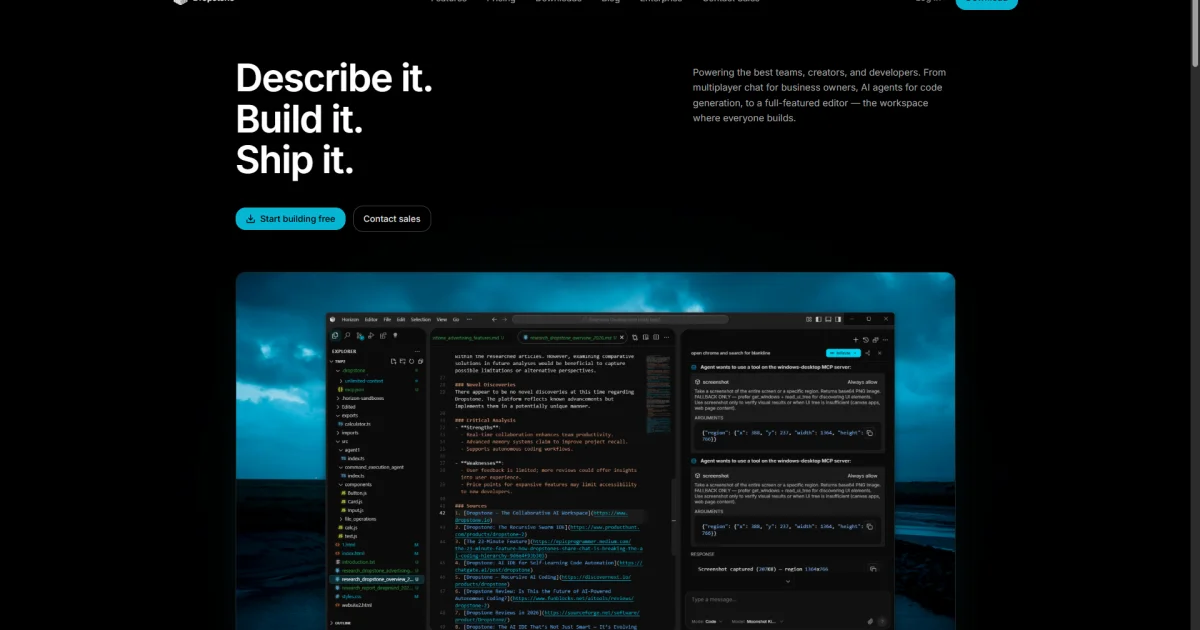
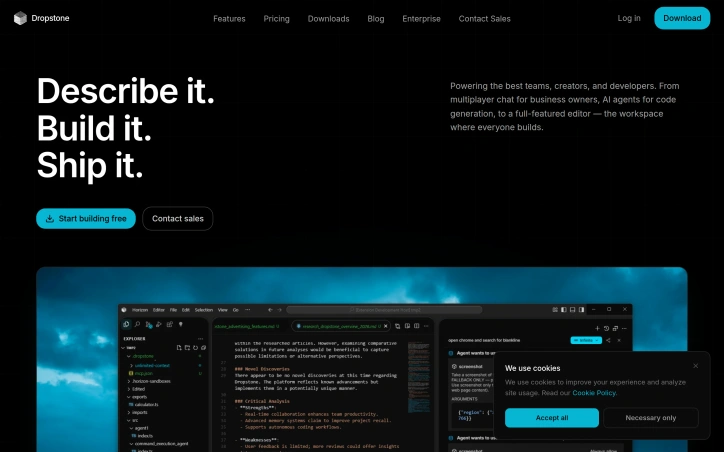
Dropstone: World's first generational recursive self-improvement AI for autonomous programming. Desktop application with MCP Server, Computer Use API, unlimited Ollama models, Claude Code integration, and Agent Mode.
AI Overview
AI-generatedCollaborative software development has long been fragmented across chat platforms, code editors, and AI assistants—each forcing teams to context-switch between tools. Dropstone consolidates this workflow into a unified workspace designed for teams, developers, and creators who want AI-powered development without sacrificing real-time human collaboration.
The product centers on two core experiences built from the same research foundation. The first is an AI-enhanced editor with intelligent autocomplete, code suggestions, and inline generation capabilities, paired with real-time multiplayer editing so teammates can work simultaneously on the same files. The second is a suite of autonomous agents that can be configured and deployed to handle end-to-end feature development with human oversight. Both tiers support direct integration with major platforms including GitHub, Vercel, Claude, and Figma, positioning Dropstone as infrastructure rather than a siloed tool.
What distinguishes Dropstone from other AI coding assistants is its Memory system, which captures and persists architectural decisions, codebase patterns, and team preferences across sessions. Rather than requiring engineers to re-explain context with each interaction, Dropstone automatically surfaces relevant knowledge during future work. The system learns from every interaction without manual configuration, storing patterns like deploy conventions, API error-handling approaches, and authentication strategies—information typically scattered across documentation, pull requests, and institutional knowledge.
The product is built on independent research into agentic systems and recursive swarms, published under the Blankline name. This foundation suggests depth beyond typical AI coding assistants, though the website offers limited technical detail on what this research enables in practice.
The example workflows shown—such as migrating payment services to Stripe v3 or running integration test suites—illustrate realistic development tasks where the combination of agent autonomy and real-time team visibility appears valuable. The integration with MCP servers and support for Computer Use API indicates technical depth for teams requiring more sophisticated automation.
Dropstone appears positioned for engineering teams already comfortable with AI-augmented development who want to graduate beyond chat-based assistants and move AI closer to their actual deployment workflows. The multiplayer-first design and persistent context system suggest the company is betting that the future of AI-assisted development is collaborative and stateful rather than conversational and ephemeral.
Founder Diary
DevlogThe maker hasn't posted a diary entry yet.
Key Features
AI-Enhanced Editor
Provides intelligent autocomplete, code suggestions, and inline generation with real-time multiplayer editing
Real-Time Collaboration
Multiple developers work simultaneously on the same files
Autonomous Agents
Configured to handle end-to-end feature development with human oversight
Memory System
Automatically captures and persists architectural decisions and codebase patterns across sessions
Integrated Platforms
Direct integration with GitHub, Vercel, Claude, and Figma
Use Cases
-
1
Engineering Teams
Want to graduate beyond chat-based assistants and integrate AI closer to deployment workflows
-
2
Development Teams
Need to consolidate fragmented workflows across chat, editors, and AI into one unified workspace
-
3
Teams with AI Comfort
Already comfortable with AI-augmented development and seeking advanced collaboration features
-
4
Organizations Needing Automation
Require sophisticated automation through MCP servers and Computer Use API integration
FAQ
How is Dropstone different from other AI coding assistants? ▾
Can multiple developers work on code simultaneously? ▾
What platforms does Dropstone integrate with? ▾
Does Dropstone include autonomous development agents? ▾
Tech Stack & Tags
Discussion
No comments yet — be the first!
Join the conversation — sign up to comment.
Sign up freeCommunity Support
Boost this project on Sell With boost
Meet the Founder
Anonymous Maker
More in Project management software

Snippetly
Snippetly helps developers and teams capture, or...

Chatquick AI
Create audiobooks, podcasts, and interactive aud...

Focus Session by SyncTasks
Select your tasks and enter a distraction-free m...

Krisp AI Note Taker Mobile
Meetings don’t wait. Neither should your notes....
Stash
Capture anything on your Mac with Stash. This sm...

US Global Mail
Managing paper mail costs time and resources. US...