Nano Banana
- No match
Machine translation — the English original is authoritative.
The Story
I built Nano Banana to make professional image creation accessible to everyone. Creating stunning visuals shouldn't require design skills or expensive software. With our AI-powered platform using Google's latest Gemini models, anyone can generate and edit high-quality images in seconds—whether you're a content creator, marketer, or exploring your creativity.
AI Overview
AI-generatedCreators and marketers looking to generate professional-quality visuals without design skills have a new option in Nano Banana, an AI-powered image generation and editing platform. The service tackles a real problem in the creator economy: the time and cost required to produce polished visual content at scale.
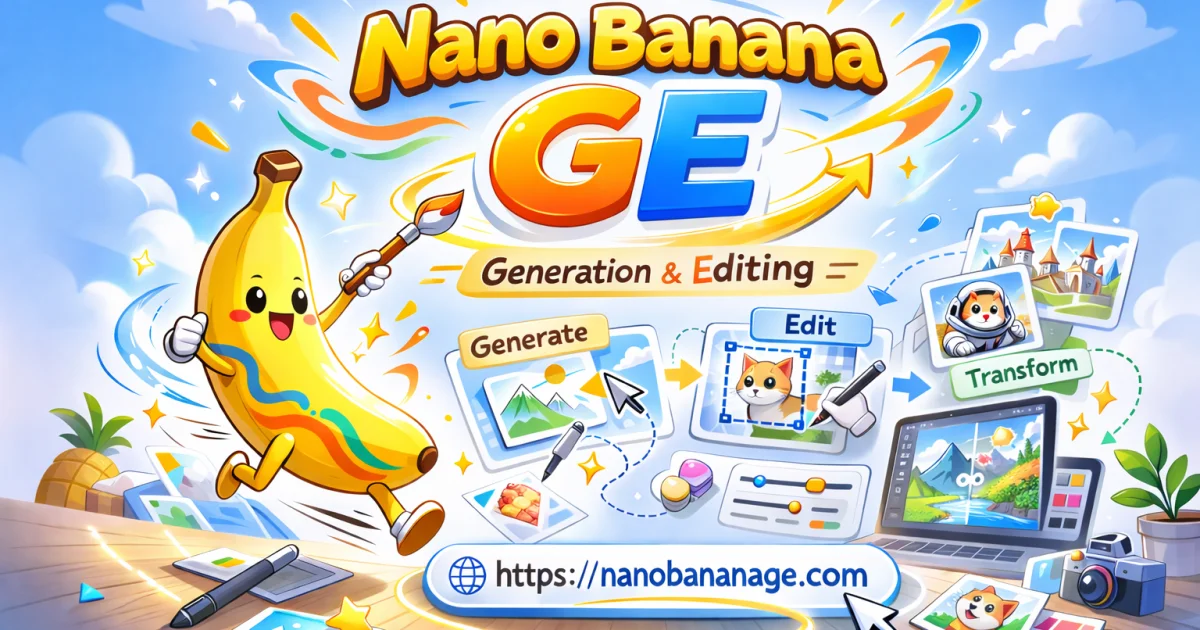
What distinguishes Nano Banana from competitors is its integrated approach. Rather than offering just a text-to-image generator, it combines three distinct workflows under one roof. The platform can generate images from written descriptions, transform existing photos into new artistic variations, and edit images with AI-assisted tools like background removal, object erasure, and face swapping. This breadth means users can handle most visual tasks without jumping between multiple tools.
The text-to-image engine supports 20 artistic styles and offers instant variations, allowing for rapid iteration. The image transformation feature preserves composition while changing artistic treatment or lighting, an important constraint for professional work. The photo editing suite includes batch processing, signaling that the platform is designed for workflows with volume demands, not just one-off creative experiments. All generations come with commercial licensing rights, a significant advantage for businesses and independent creators concerned with usage rights.
The platform runs on multiple AI models in the background, including Google's Gemini technology, alongside systems from ByteDance and Black Forest Labs. This model diversity delivers broader coverage across different image types and styles, though the company doesn't detail how users access or prioritize different models.
Pricing follows a familiar freemium model with a $12 monthly plan offering 1200 credits (equivalent to 600 images annually based on their claims) and a $29 professional tier described as the most popular option. The credits-based system creates flexibility for variable usage patterns, avoiding the fixed-generation limits of some competitors. No hidden fees are mentioned, and the free tier removes friction for initial trial.
The service positions itself as requiring no prompting expertise or design background, targeting the non-technical end of the AI-generation spectrum. For teams and individuals building content operations at scale, the batch processing and commercial licensing model appear deliberately designed to address production workflows rather than casual creation. Whether this simplicity extends to the actual interface would require hands-on evaluation, but the feature set is comprehensive enough to handle serious visual content demands.
Founder Diary
DevlogThe maker hasn't posted a diary entry yet.
Key Features
Text-to-Image Generation
Generates images from written descriptions with 20 artistic styles and instant variations.
Image Transformation
Transforms existing photos into new artistic variations while preserving composition.
AI Photo Editing
Includes background removal, object erasure, face swapping, and batch processing capabilities.
Commercial Licensing
All generated images come with commercial licensing rights included.
Multi-Model Backend
Operates on multiple AI models including Google Gemini, ByteDance, and Black Forest Labs.
Use Cases
-
1
Content Creators
Generate professional-quality visuals at scale without design skills or jumping between tools.
-
2
Marketers
Produce polished visual content without requiring design expertise or hiring design resources.
-
3
Business Teams
Build content operations at scale with batch processing and commercially-licensed assets.
-
4
Independent Creators
Create production-ready visuals with commercial licensing rights for monetization.
FAQ
How much does Nano Banana cost? ▾
Can I use generated images commercially? ▾
What AI models does Nano Banana use? ▾
Does Nano Banana support batch processing? ▾
Pricing
Credits-based system with free tier, $12 monthly plan (1200 credits), and $29 professional tier.
Tech Stack & Tags
Discussion
No comments yet — be the first!
Join the conversation — sign up to comment.
Sign up freeCommunity Support
Boost this project on Sell With boost
Meet the Founder

More by 0 Kong (Kong)


More in AI Generative Media

AI Mixer - AI Photo | AI Video | AI Voice. All AI tools in one app!
AI Mixer was built to solve a simple but frustra...
FacelessGenie
We built FacelessGenie to solve the biggest bott...

GeniusAI
We built GeniusAI to make professional AI image...

MyRaxAI
I built MyRaxAI to help creators generate stunni...

Berrioo
We built Berrioo to democratize professional vis...

Seedance
We built Seedance to make cinematic video creati...