#ai image generation Startups & Tools
Discover the best ai image generation startups, tools, and products on SellWithBoost.

For e-commerce sellers, marketers, and independent creators juggling product shots, ad creatives, and social content, visual creation has long meant choosing between stock photography, expensive editing tools, or rounds of revision. Duct Tape AI's GPT Image v2 generator addresses this friction by delivering photorealistic images directly from prompts, positioned as a commercial-grade alternative requiring no post-processing or Photoshop work. The product distinguishes itself through three core capabilities that separate it from competing image generation tools. First, it renders readable text natively across multiple languages—Korean, Japanese, Chinese, Arabic, and English—with pixel-perfect accuracy. This addresses a persistent weakness in AI image generation, where typography often appears garbled or visibly artificial. Second, the platform maintains character and brand consistency across sequential generations, allowing users to build multi-image campaigns and storytelling sequences without the identity drift that affects competitors. Third, it handles complex multi-subject compositions, a capability the company claims rivals or exceeds Midjourney and Flux in execution. The interface emphasizes simplicity. Users input prompts or reference images and adjust parameters like aspect ratio and resolution, with a preview system showing results before full generation. The company's gallery displays the breadth of output quality—from product photography with studio lighting to editorial portraiture to stylized illustration—all claimed to be generated without photographic source material or manual retouching. Pricing follows a tiered subscription model. The Basic plan costs $9.50 per month when billed annually at the current 50% discount and includes 7,200 monthly credits, watermark removal, and commercial use rights. The Advanced tier jumps to $24.50 monthly and provides 24,000 credits plus faster generation speeds. The Professional plan, at $49.50 monthly, adds 30,000 credits and priority customer support. The company promotes a limited-time 50% discount on annual subscriptions tied to a specific deadline. The product targets a clear niche: creators who need production-ready visuals quickly without specialized design skills or expensive tools. Success depends on whether the technical claims around text rendering, consistency, and composition hold under real-world production workflows. For businesses where visual output velocity and brand consistency across campaigns matter, the offering addresses a genuine operational bottleneck.
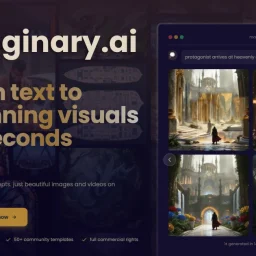
Creating stunning visuals from text prompts just got a lot easier, thanks to a innovative AI-powered solution designed specifically for creators. The problem it tackles is the tedious and time-consuming process of crafting complex prompts to achieve desired results, freeing up artists to focus on their craft. What stands out about this product is its ability to understand intent in any language, allowing users to simply write in plain language and receive high-quality images and videos on demand. The AI engine is capable of delivering diverse and unique outputs, making it an ideal tool for those who need rapid iterations and varied results. Notably, the product boasts a range of key features, including the ability to generate four variations in seconds, making it perfect for tight deadlines. It also offers style references, video generation, and more, built right in. Additionally, users can integrate the product into their workflow via a full REST API with comprehensive documentation and examples. The pricing model is straightforward, with a pay-as-you-go approach that eliminates forced subscriptions. Users can choose from a range of plans, including a novice pack with no commitment, or higher-tier plans with varying levels of support and credits. All plans include full commercial rights, with no hidden fees, and users can cancel anytime. With over 600 creators worldwide already trusting this product, it's clear that it's making a significant impact in the creative community. By simplifying the process of creating stunning visuals, this AI-powered solution is empowering artists to bring their ideas to life quickly and easily.

Creative professionals and businesses struggling to generate high-quality visual content at scale now have access to a streamlined AI image generation platform that prioritizes both speed and ease of use. GeniusAI targets content creators managing production timelines, marketing teams running campaigns, and developers building AI-powered applications, offering a tiered approach that accommodates different user needs and budgets. The platform distinguishes itself through deliberate simplicity. Rather than overwhelming users with endless customization options, GeniusAI presents a three-step workflow: select from preset AI models and styles, describe what you want in natural language, and generate the image. This straightforward approach appeals to users without technical AI expertise while providing enough control for professionals seeking consistency across projects. The product features image generation with multiple model variants, photo editing tools, and image upscaling capabilities. Prompt enhancement automatically improves user descriptions before generation, reducing the friction of crafting perfect prompts. Teams can collaborate within a shared workspace, and all tiers include commercial licensing, removing legal uncertainty around using AI-generated content for business purposes. For developers, an API enables integration with existing workflows and the ability to enforce brand guidelines programmatically. GeniusAI's pricing structure reflects its market positioning. The entry-level Genius Creator tier at ten dollars monthly offers 700 monthly credits sufficient for casual creators, with images up to 896 by 896 pixels and access to eight preset styles. The Genius Studio tier at thirty-five dollars monthly jumps to 3,000 credits and increases resolution to 1024 by 1024 pixels while unlocking all 21 available styles. The Genius Pro tier at forty-five dollars monthly adds 5,000 monthly credits, extends creation history to unlimited, and includes twenty-four hour priority support. Each tier supports instant regeneration and full-size downloads. The generation process emphasizes speed; the platform can produce images in seconds rather than minutes, a meaningful advantage for professionals with tight deadlines. The inclusion of multiple generation modes allows users to balance output speed against visual polish depending on project requirements. The platform's positioning emphasizes both accessibility and professional capability, suggesting it serves as a bridge between casual users discovering AI-generated imagery and teams deploying it as part of their production workflows. The combination of competitive pricing, commercial licensing, and team features positions GeniusAI as a practical choice for businesses integrating generative AI into existing creative operations.

Transforming casual photos and idle ideas into polished visual content typically demands design skills, software expertise, and hours of editing time. MakeImg streamlines this process for creators who want fast turnaround on shareable meme packs without the friction. The core offering is straightforward: upload a portrait or describe a scene, and the platform generates a cohesive nine-image reaction set ready to download within minutes. This addresses a real gap for content creators, social media enthusiasts, and anyone who wants to produce on-brand visual assets without learning specialized tools. The service works across two main input modes—text prompts for conceptual meme packs and photo uploads for personal reaction sets—making it accessible regardless of whether a user starts with an idea or existing imagery. Beyond the headline meme-pack feature, the platform extends into adjacent creative workflows: image composition layers multiple reference photos into a single output, image editing lets users refine shots with text instructions, and photo restoration repairs old or damaged images. This breadth gives creators flexibility to complete different project types within one interface rather than toggling between specialized apps. The product philosophy appears centered on quick iteration and exploration. The platform includes a gallery of real generated outputs, positioning users to preview results before committing time, and emphasizes minute-level generation speeds. This matters for creators managing content calendars or capitalizing on trending moments. Pricing follows a familiar creator-tool playbook: a free starter tier for exploring the full workflow, a $9.99 monthly subscription pitched to regular generators, and a one-time $5 single-pack purchase for occasional users. The credit-based model allows scaling without forced subscription commitment, though the pricing page references credits without detailing exact generation costs per feature. What remains underexplored in the marketing materials is the consistency quality of output, particularly whether multi-image sets maintain visual cohesion across poses and expressions. Given the technical challenge of generating nine related images that function as true reaction options, this is worth validating before deciding if the tool fits professional creator workflows versus casual meme sharing. The positioning is solid for the target user: someone who values speed and ease over granular creative control. MakeImg occupies sensible territory between demand and execution, offering enough workflow options to feel like a complete toolkit while keeping the interface simple enough for non-technical users to generate results immediately.

Creators without design expertise now have a viable alternative to expensive software subscriptions and steep learning curves. Berrioo packages a suite of AI-powered visual tools—from text-to-image generation to professional photo editing—into a browser-based platform designed for immediate usability. The platform addresses a clear market gap: the distance between creative intent and polished output. Most visual creation demands either specialist skills or expensive freelancers. Berrioo collapses that friction by automating execution. A food brand can generate lifestyle photography by typing a description. A social media manager can transform product photos into multiple artistic variations without adjusting presets. A marketer can remove backgrounds and upscale images to gallery-ready resolution in seconds. What distinguishes the offering is breadth wrapped in simplicity. Berrioo delivers text-to-image generation with 20 artistic styles, image-to-image transformation, batch processing, face swapping, object removal, and 4K upscaling. The interface prioritizes simplicity—each tool uses one-click or form-based workflows. The company positions these capabilities as professional-grade rather than consumer novelties, competing against commercial design software. The platform draws on established AI labs including ByteDance's Qwen and Black Forest Labs, indicating serious technical infrastructure beneath the accessible interface. Speed is emphasized throughout: "stunning visuals in seconds" and "instant iterations" matter for professionals evaluating time-saving potential. Ownership and commercial rights come included—users own what they create and can use it commercially. This addresses a significant pain point in many freemium AI tools that impose usage restrictions. The business model follows the freemium pattern: a free tier to attract users, then flexible paid plans scaled to usage. Specific pricing remains obscured on the landing page, standard practice for usage-metered tools. Berrioo enters a crowded space of AI image tools, but its emphasis on professional-grade output, simplified workflows, and full commercial licensing positions it for serious practitioners rather than casual experimenters.

Creators and marketers looking to generate professional-quality visuals without design skills have a new option in Nano Banana, an AI-powered image generation and editing platform. The service tackles a real problem in the creator economy: the time and cost required to produce polished visual content at scale. What distinguishes Nano Banana from competitors is its integrated approach. Rather than offering just a text-to-image generator, it combines three distinct workflows under one roof. The platform can generate images from written descriptions, transform existing photos into new artistic variations, and edit images with AI-assisted tools like background removal, object erasure, and face swapping. This breadth means users can handle most visual tasks without jumping between multiple tools. The text-to-image engine supports 20 artistic styles and offers instant variations, allowing for rapid iteration. The image transformation feature preserves composition while changing artistic treatment or lighting, an important constraint for professional work. The photo editing suite includes batch processing, signaling that the platform is designed for workflows with volume demands, not just one-off creative experiments. All generations come with commercial licensing rights, a significant advantage for businesses and independent creators concerned with usage rights. The platform runs on multiple AI models in the background, including Google's Gemini technology, alongside systems from ByteDance and Black Forest Labs. This model diversity delivers broader coverage across different image types and styles, though the company doesn't detail how users access or prioritize different models. Pricing follows a familiar freemium model with a $12 monthly plan offering 1200 credits (equivalent to 600 images annually based on their claims) and a $29 professional tier described as the most popular option. The credits-based system creates flexibility for variable usage patterns, avoiding the fixed-generation limits of some competitors. No hidden fees are mentioned, and the free tier removes friction for initial trial. The service positions itself as requiring no prompting expertise or design background, targeting the non-technical end of the AI-generation spectrum. For teams and individuals building content operations at scale, the batch processing and commercial licensing model appear deliberately designed to address production workflows rather than casual creation. Whether this simplicity extends to the actual interface would require hands-on evaluation, but the feature set is comprehensive enough to handle serious visual content demands.