#ai video generation Startups & Tools
Discover the best ai video generation startups, tools, and products on SellWithBoost.

Creating professional videos traditionally demands expensive software licenses and technical editing expertise, putting the format out of reach for many creators and marketers. ReelMuse addresses this friction by consolidating multiple AI video generation models into a single browser-based workspace, eliminating software costs and the learning curve of traditional video editors. The platform accepts three types of input: text descriptions, uploaded images, or existing video clips. Users describe their desired output in plain language—specifying motion, lighting, camera direction, and framing—then select from a roster of AI models before generating. The execution is straightforward: choose a starting point, describe what should happen, generate, and download. What distinguishes ReelMuse is its model selection. Rather than locking users into a single engine, the platform integrates several options including Seedance 2 (designed to animate still images with motion prompts), MiniMax H3, and Veo 3.1 (for text or image-to-video generation). GPT Image 2 handles original image creation from text, while Nano Banana provides image editing capabilities. This breadth lets users match the tool to their specific creative need and compare credit costs before committing to generation. The browser-based approach removes friction from the creation-to-download pipeline. Users organize pending tasks and finished videos in a single workspace called Generate, eliminating the scattered workflow of desktop software. The interface emphasizes guidance over technical control: users input a scene description and motion direction, then let the AI interpret those instructions. This philosophy trades granular control for accessibility. The platform operates on a freemium model. New users receive an initial signup bonus and daily login credits, creating a low-friction entry point. Specific credit costs per model and generation parameters are visible before committing, though detailed pricing beyond free signup isn't provided in promotional materials. The product succeeds at its stated mission: lowering the barrier to video creation for people without editing skills or large budgets. The integration of multiple models and thoughtful workspace design distinguish it from single-model competitors. Whether the credit system and model selection strike the right balance for sustained creator adoption remains to be determined by market response.

Creating short-form video content traditionally demands equipment most creators lack—cameras, microphones, editing software—and skills that take years to develop. FacelessReel eliminates these barriers by automating the entire production pipeline in a single workflow. The platform targets content creators focused on storytelling-driven niches that thrive without on-camera talent: historical narratives, true crime mysteries, mythology, biblical themes, and horror-adjacent content. Rather than cobbling together separate tools for scripting, voiceover generation, stock visuals, and music licensing, users input a topic and let the system handle every layer simultaneously. What distinguishes FacelessReel is its commitment to integrated output. The platform doesn't ask users to assemble disparate components. One topic feeds into a coherent package containing an AI-generated script built around proven story beats, matched narration from voice actors with distinct tonal personalities, vertically-oriented scene visuals, synchronized captions, background music, and platform-specific copy formatted for TikTok, Instagram, YouTube Shorts, and Facebook. Users review the complete result before downloading it as a single archive. The template system further simplifies decision-making. Pre-built content frameworks for established niches guide both story structure and visual direction, eliminating the blank-canvas paralysis many creators face. Users can launch from a template or input custom topics. The voiceover selection reflects thoughtful product design. Rather than defaulting to a single synthetic voice, FacelessReel offers multiple narration styles—described as mysterious and emotive versus deep and engaging—allowing creators to match tone to story. The platform includes a playback preview to audition choices before committing. The onboarding strategy removes friction: new accounts receive a free 30-second 720p reel for evaluation without requiring a credit card. This approach lets potential users validate the output quality before financial commitment. For creators operating at YouTube Shorts or TikTok scale, where algorithm favors volume and consistency over production value, FacelessReel solves a genuine operational bottleneck. The platform assumes creators have ideas but lack time or resources to fully produce them. It delivers finished, publishable content in formats optimized for vertical viewing and mobile-first consumption, making it most relevant to those building audience through narrative-driven short-form content.

Organizing fragmented video generation capabilities into a single workspace, this third-party platform addresses a genuine friction point for creators producing AI videos at scale. TryKlingAI bundles Kling 3.0, motion control, lip sync, and API access into one interface, targeting creators and developers who want centralized access to modern video generation features without juggling multiple tools or dashboards. The platform stands out by consolidating capabilities that would otherwise require separate workflows. Motion control, lip sync, and image-to-video generation sit alongside API access for developers, making it useful for both hands-on creators building individual videos and teams scaling production programmatically. Task history and credit estimates provide the operational transparency often missing from direct AI service access, letting users know exactly how many credits each video consumed and enabling more accurate project budgeting. The showcase examples reveal thoughtful feature positioning beyond marketing copy. The demonstrations span realistic workflows: product advertising with motion replication, documentary-style storytelling with character animation, fashion lookbooks cycling through outfits, and video extension for repurposing existing content. These are templates showing how the platform's capabilities translate into actual creative work rather than abstract technical examples. The ability to reference images and videos as control inputs—mirroring camera movements, replicating facial expressions, extending scenes—positions motion control as a creative tool for controlling narrative elements. The API access deserves particular mention for developers. Rather than reverse-engineering unofficial integrations, developers get first-class access to video generation capabilities, lowering the barrier to building video-as-a-service applications or automation pipelines on top of Kling. Notable gaps emerge in the public information. No pricing model, usage limits, or credit system details appear in the available materials. Understanding the cost structure relative to direct Kling access would be essential for evaluating whether the centralized interface justifies any premium. The platform occupies an ambiguous position as a third-party wrapper, raising legitimate questions about long-term viability if the underlying Kling service changes or Kling develops its own consolidated interface. TryKlingAI successfully consolidates scattered capabilities into a coherent product with thoughtful workflow examples. However, transparency around pricing and clarification of its relationship to Kling's official offerings would significantly strengthen the value proposition for serious adopters considering production commitments.
Accessibility sits at the core of what ReelMuse does: democratizing professional-grade video and image production through an all-in-one AI platform. The service targets creators of all skill levels, from casual content makers to aspiring producers, eliminating the technical expertise traditionally required to produce polished multimedia content. The platform consolidates several AI-powered creative tools under one roof. Users can generate original videos from scratch, produce high-quality images, and integrate AI-generated audio without specialized technical knowledge. The tool palette includes face-swap functionality and lip-sync capabilities, allowing creators to explore effects typically reserved for advanced editing software. These features signal a focus on trendy, shareable content formats that perform well on social media platforms. What distinguishes ReelMuse in a crowded AI creative tools space is its positioning as a comprehensive ecosystem rather than a point solution. The company has invested heavily in building a partner network, with verified listings across 22 different startup directories and AI tool aggregators. This breadth of third-party verification suggests institutional confidence in the platform. The company reports reaching over 50,000 active creators, indicating meaningful adoption. The partners page reveals deliberate strategy around link equity and domain authority, specifically mentioning dofollow backlinks and quick review cycles for partner exchanges. This demonstrates the company understands SEO fundamentals and is building visibility through quality partnerships rather than paid advertising alone. The curated nature of their partner list, emphasizing platforms serving AI enthusiasts and productivity-focused users, indicates targeted positioning toward creator communities. ReelMuse occupies interesting ground between consumer-friendly video editing tools and professional creative suites. The feature set prioritizes fast, template-based content creation focused on speed and shareability over cinematic sophistication. No pricing information is publicly disclosed. The aggregation strategy across directories and the emphasis on creator reach demonstrate that ReelMuse is betting on network effects and organic discovery. The company has built a foundation of accessible tooling and a thoughtful partner ecosystem, positioning themselves for growth in the rapidly expanding AI video generation category.
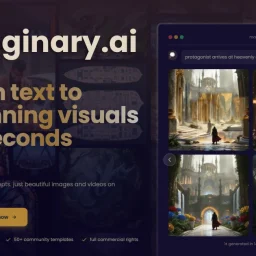
Creating stunning visuals from text prompts just got a lot easier, thanks to a innovative AI-powered solution designed specifically for creators. The problem it tackles is the tedious and time-consuming process of crafting complex prompts to achieve desired results, freeing up artists to focus on their craft. What stands out about this product is its ability to understand intent in any language, allowing users to simply write in plain language and receive high-quality images and videos on demand. The AI engine is capable of delivering diverse and unique outputs, making it an ideal tool for those who need rapid iterations and varied results. Notably, the product boasts a range of key features, including the ability to generate four variations in seconds, making it perfect for tight deadlines. It also offers style references, video generation, and more, built right in. Additionally, users can integrate the product into their workflow via a full REST API with comprehensive documentation and examples. The pricing model is straightforward, with a pay-as-you-go approach that eliminates forced subscriptions. Users can choose from a range of plans, including a novice pack with no commitment, or higher-tier plans with varying levels of support and credits. All plans include full commercial rights, with no hidden fees, and users can cancel anytime. With over 600 creators worldwide already trusting this product, it's clear that it's making a significant impact in the creative community. By simplifying the process of creating stunning visuals, this AI-powered solution is empowering artists to bring their ideas to life quickly and easily.
Automated video generation is reshaping how independent creators scale their output. FacelessGenie addresses a real constraint in that workflow: the gap between having a content idea and possessing the technical skills, equipment, and hours required to produce it professionally. The platform takes a creator's topic or brief and handles the entire pipeline—scriptwriting, voiceover generation, visual composition, music selection, and final editing—delivering a finished video ready to upload. The product targets creators operating across YouTube, Instagram, and TikTok. Rather than focusing on a single format, FacelessGenie covers multiple content archetypes: character-driven narratives, talking objects, explainer videos, reaction content, gameplay captures, and AI-generated visuals. It supports both short-form content and long-form pieces up to twenty minutes, allowing creators to experiment across platform-native formats rather than repurposing a single video. What distinguishes FacelessGenie in a crowded field is its breadth of pre-built templates and its claimed consistency in output quality. The site showcases example channels in specific niches—stoicism, history, science, finance, pet care, and self-improvement—each designed to demonstrate that the AI-generated videos can approximate the visual and narrative style of established, successful channels. This signals both capability and deliberate positioning toward profitable niches rather than arbitrary content. The platform has accumulated measurable traction. Its user base includes over twelve thousand creators, with four hundred of them reaching audiences beyond one hundred thousand subscribers. Videos produced through FacelessGenie claim to have generated more than one billion cumulative views. The product carries a 4.9-star rating across over two thousand reviews, suggesting consistent user satisfaction. One gap in the available information is transparency around pricing and business model. The site mentions getting started but does not disclose whether FacelessGenie operates on a subscription model, usage-based pricing, or another structure—a material detail for creators evaluating whether the tool fits their economics. The core value proposition is clear: compress the production cycle from hours or days to a single afternoon. For creators managing multiple niches or chasing trending formats, that compression has direct business impact. Whether the efficiency gains justify adoption depends on whether creators prioritize the tool's automation over hands-on creative control.