Catalyst Healthspan Audit
Personal trainers typically sell training sessions. This startup reversed the equation by building assessment first, mak...
Launchory
We built Launchory to solve the discoverability problem for startups. Our platform offers instant approval, permanent do...
Best AI Designer Startups & Tools
Agents that generate design concepts and creative assets.
Recently Listed
2 launches
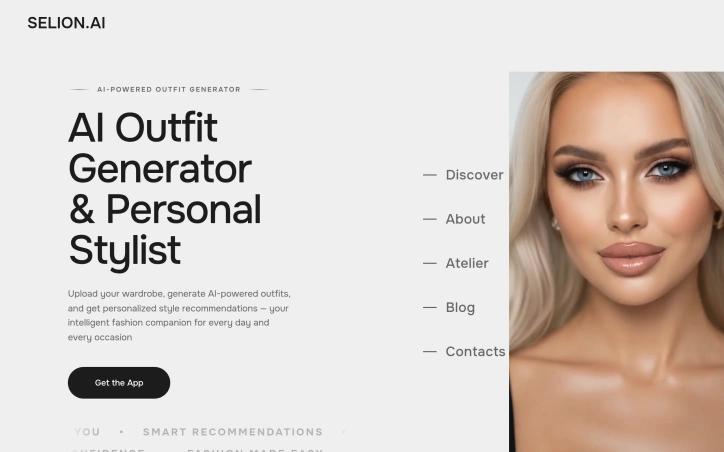
Anyone staring at a closet crammed with clothes yet feeling they have “nothing to wear” is the exact customer Selion targets. By translating every hanger, shoebox, and jewelry drawer into searchable, analyzable data, the app removes the daily decision fatigue that comes with dressing well. Fashion-conscious professionals, frequent travelers, and anyone who juggles multiple dress codes in a single week will find the app particularly useful. The standout aspect is the granularity of the AI scan. Rather than lumping garments into broad buckets like “shirt” or “jeans,” it identifies fabric, exact colorway, pattern, and seasonal suitability as soon as you snap a picture. This depth of indexing lets its engine mix and match with fewer obvious repeats and a higher hit rate of genuinely fresh combinations. The step promised next—rendering any suggested look on your own body in augmented reality—turns abstract outfits into self-evident choices before you commit fabric to skin. Day-to-day, the critical feature is the micro-routine: open the app, give it thirty seconds, walk out dressed. Users also gain a virtual travel planner that pre-loads a destination-weather appropriate capsule before the suitcase gets zipped, and a usage tracker that quietly surfaces forgotten items that deserve a second run. Among these, the “never think what to wear” promise is the boldest, because the more you rely on it, the richer your decision profile becomes—effectively turning your own closet into a living lookbook that evolves faster than seasonal trends. Pricing remains refreshingly straightforward: the core app is free on iOS and Android with no paywall descriptions in the material supplied, so the initial ramp-up cost is strictly measured in photo-taking minutes.

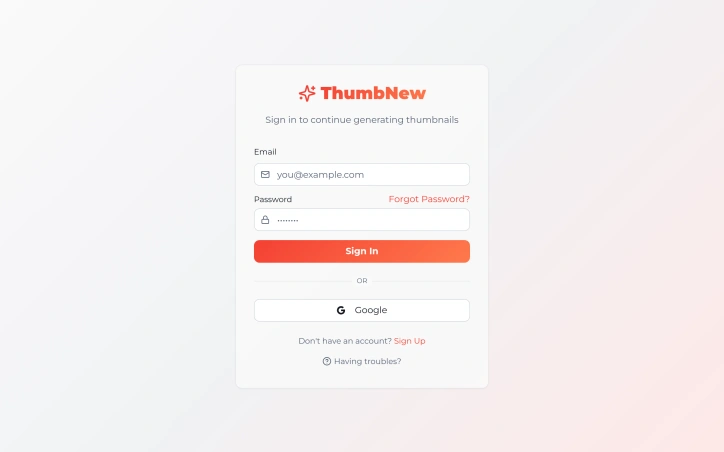
Generating effective YouTube thumbnails has long been a significant bottleneck for content creators. Professionals either pay substantial fees to hire designers or invest considerable time learning design software, often producing underwhelming results. ThumbNew addresses this friction by automating the thumbnail creation process, transforming what typically requires hours of work into a 30-second task. The platform targets creators across all tiers—from solo content makers to growing channels with limited budgets—who need high-quality visuals that actually drive clicks. Rather than settling for mediocre designs or burning through creative energy, creators can generate professional thumbnails in minutes using an intuitive workflow. What distinguishes ThumbNew is its grounding in proven design principles. The AI doesn't randomly generate graphics; it constructs thumbnails using neural networks trained to recognize patterns that trigger engagement. The system emphasizes clarity, contrast, and facial recognition elements that research demonstrates perform well in YouTube's crowded homepage environment. This data-driven approach positions it far beyond basic templating tools, instead leveraging insights about viewer behavior to optimize for actual click-through rates. The platform delivers high-resolution 1280x720 outputs suitable for any content niche, whether gaming, education, business, lifestyle, or tutorial-based channels. More critically, ThumbNew optimizes for mobile viewing—over 70 percent of YouTube watches occur on mobile devices. This means thumbnails remain legible and visually compelling even at small sizes, a consideration many creators overlook but which significantly impacts performance. A free tier makes the platform accessible to new creators experimenting before committing resources. The service occupies the practical middle ground between expensive design agencies and time-intensive DIY approaches. For the modern creator economy, where speed directly translates to output and growth, ThumbNew eliminates a genuine operational bottleneck. By reducing design friction to seconds, the platform allows creators to maintain focus on content production—their actual core competency. This automation delivers tangible value without requiring significant learning curves or substantial budget commitments.