
Best Apps for kids Startups & Tools

Safe tools for learning, stories, focus, and journaling.

Recently Listed

3 launches

Sort
Meet Anvi

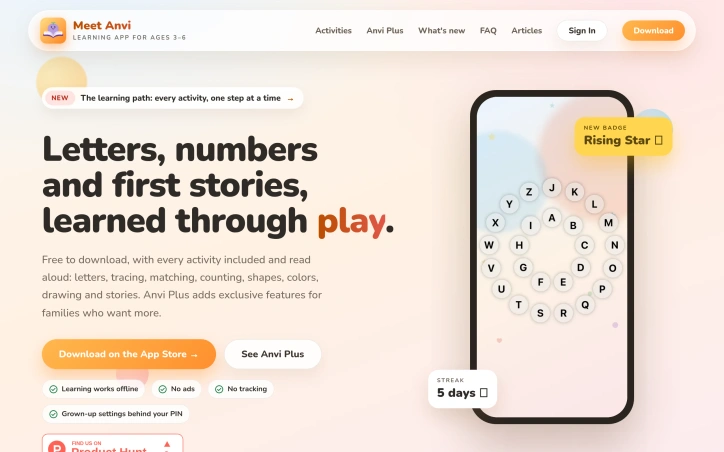
Learning through play, without distraction—that's the premise behind a new educational app designed for young children who aren't yet reading independently. Anvi targets families with children aged three to six, positioning itself as an alternative to ad-laden apps and digital experiences that track user behavior. The app works entirely offline on iPhone and iPad, a deliberate design choice that eliminates connectivity dependencies while addressing legitimate parental concerns about data collection. The product centers on a structured learning path that guides children through foundational skills—letters, numbers, basic reading, and drawing—at their own pace. Every activity includes voice narration so children can engage with content before they can read, removing that barrier while building confidence. The interface presents activities on a single colorful grid, designed for young children to navigate independently, with built-in feedback mechanisms like star collection, daily streaks, and badges to sustain engagement. What distinguishes Anvi is its commitment to parental oversight paired with genuine privacy. Behind a PIN-protected area, grown-ups access a weekly summary of their child's progress, a skills heat map showing which areas need attention, and controls to set daily time limits. When time expires, the app doesn't abruptly cut off—it winds down gently, a small but meaningful detail that reflects thoughtful product design. The core app is free, including letters, tracing, matching, counting, shapes, colors, drawing, and sixty illustrated stories. For families wanting additional features, Anvi Plus adds math puzzles and a thinking activity where children explain their drawings verbally, accessible to parents for review. The subscription model—one plan covering all children on an account—acknowledges that many families have multiple young learners. Anvi Plus pricing runs $1.99 weekly, $5.99 monthly, or $39.99 annually, with no ads or tracking in either tier. The offline-first architecture and the minimal permission footprint position this squarely against mainstream learning apps, which often monetize through data or interrupt-driven monetization. For parents seeking structured early learning without surveillance capitalism, the value proposition is clear.
Apps-for-kids
P
Pawan Rai

Learning through play, without distraction—that's the premise behind a new educational app designed for young children who aren't yet reading independently. Anvi targets families with children aged three to six, positioning itself as an alternative to ad-laden apps and digital experiences that track user behavior. The app works entirely offline on iPhone and iPad, a deliberate design choice that eliminates connectivity dependencies while addressing legitimate parental concerns about data collection. The product centers on a structured learning path that guides children through foundational skills—letters, numbers, basic reading, and drawing—at their own pace. Every activity includes voice narration so children can engage with content before they can read, removing that barrier while building confidence. The interface presents activities on a single colorful grid, designed for young children to navigate independently, with built-in feedback mechanisms like star collection, daily streaks, and badges to sustain engagement. What distinguishes Anvi is its commitment to parental oversight paired with genuine privacy. Behind a PIN-protected area, grown-ups access a weekly summary of their child's progress, a skills heat map showing which areas need attention, and controls to set daily time limits. When time expires, the app doesn't abruptly cut off—it winds down gently, a small but meaningful detail that reflects thoughtful product design. The core app is free, including letters, tracing, matching, counting, shapes, colors, drawing, and sixty illustrated stories. For families wanting additional features, Anvi Plus adds math puzzles and a thinking activity where children explain their drawings verbally, accessible to parents for review. The subscription model—one plan covering all children on an account—acknowledges that many families have multiple young learners. Anvi Plus pricing runs $1.99 weekly, $5.99 monthly, or $39.99 annually, with no ads or tracking in either tier. The offline-first architecture and the minimal permission footprint position this squarely against mainstream learning apps, which often monetize through data or interrupt-driven monetization. For parents seeking structured early learning without surveillance capitalism, the value proposition is clear.

Meet Anvi preview

Key features

  • Offline-First Learning: Works entirely offline on iPhone and iPad without internet connectivity
  • Voice Narration Support: Every activity includes narration so children can engage before they can read
See full listing
My Sleepy Tale

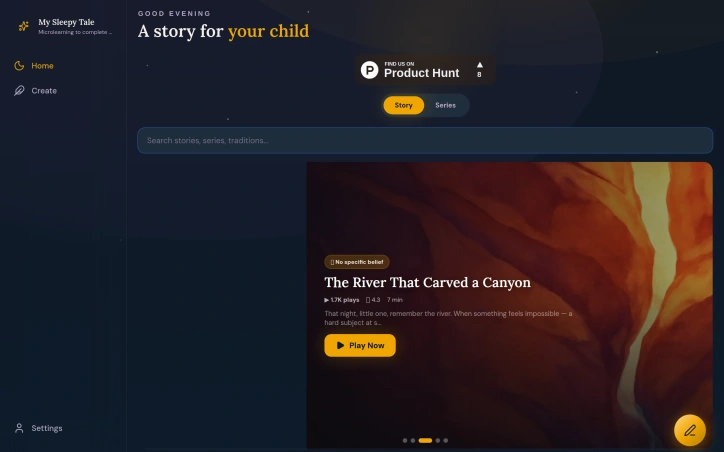
Bedtime storytelling is a treasured tradition for many families, but finding engaging and diverse stories that cater to their child's cultural background can be a challenge. My Sleepy Tale addresses this issue by providing a vast library of personalized bedtime stories that reflect a wide range of cultural traditions. The platform is designed for families with children aged 3-10, offering a gentle and calming experience that is free from screens during storytelling. What sets it apart is its extensive collection of over 200 audio bedtime stories, available in English, French, and Spanish, and spanning more than 20 cultural traditions, including Hindu, Islamic, Sikh, Christian, and Buddhist, among others. The stories are not only entertaining but also educational, teaching valuable lessons such as kindness, courage, gratitude, and respect. The platform's content is diverse, ranging from popular series like Panchatantra Tales and Stories of the Prophets to more contemporary themes like FIFA World Cup and Tallest Towers in the World. Notably, the platform is entirely free, with no credit card required, making it accessible to a wide audience. The absence of any catch or subscription model is a significant advantage, allowing families to explore the content without any financial commitment. The platform's value proposition is further enhanced by its adoption in not just homes but also in daycares, schools, and camps, underscoring its versatility and appeal to a broader audience.
Bedtime storytelling is a treasured tradition for many families, but finding engaging and diverse stories that cater to their child's cultural background can be a challenge. My Sleepy Tale addresses this issue by providing a vast library of personalized bedtime stories that reflect a wide range of cultural traditions. The platform is designed for families with children aged 3-10, offering a gentle and calming experience that is free from screens during storytelling. What sets it apart is its extensive collection of over 200 audio bedtime stories, available in English, French, and Spanish, and spanning more than 20 cultural traditions, including Hindu, Islamic, Sikh, Christian, and Buddhist, among others. The stories are not only entertaining but also educational, teaching valuable lessons such as kindness, courage, gratitude, and respect. The platform's content is diverse, ranging from popular series like Panchatantra Tales and Stories of the Prophets to more contemporary themes like FIFA World Cup and Tallest Towers in the World. Notably, the platform is entirely free, with no credit card required, making it accessible to a wide audience. The absence of any catch or subscription model is a significant advantage, allowing families to explore the content without any financial commitment. The platform's value proposition is further enhanced by its adoption in not just homes but also in daycares, schools, and camps, underscoring its versatility and appeal to a broader audience.

My Sleepy Tale preview

Key features

  • Cultural Diversity: Stories reflect a wide range of cultural traditions.
  • Personalized Stories: Vast library of bedtime stories tailored to child's background.
See full listing
Star Chart Kids

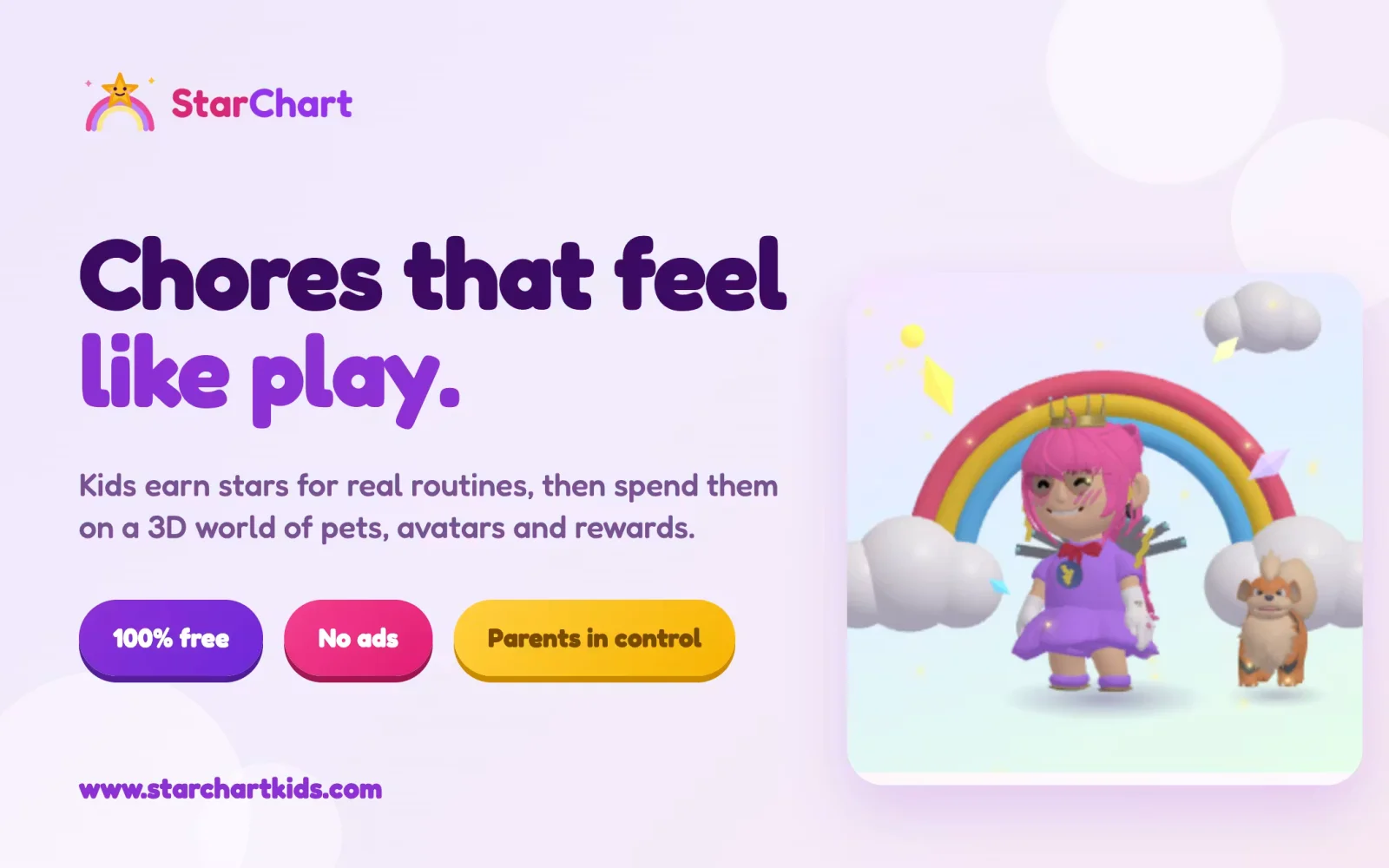
Morning routines have become a battleground in countless households, where parents repeat themselves endlessly and children resist getting ready. Star Chart Kids addresses this friction by transforming daily tasks into a game that motivates kids to complete routines independently while keeping parents fully in control. The app targets families exhausted by negotiation loops around bedtime, breakfast, and chores. Rather than nagging, parents create visual task lists that children check off, earning stars for completion. This approach capitalizes on intrinsic motivation through immediate feedback and collectible rewards. What sets this product apart is its philosophy around monetization. It operates entirely free with no ads, subscriptions, or loot-box mechanics. Rewards unlock customizable elements like 3D pets, avatars, and interactive worlds, but parents maintain approval authority over real-life rewards like screen time or outings. This gatekeeping prevents the reward system from becoming a source of family conflict. The interface centers on simplicity. Kids see their next task, complete it with a tap, and immediately experience celebration through animations and star accrual. The app supports multiple children with separate avatars and tracking, allowing parents to manage household routines in one dashboard. Stars accumulate in a spendable bank while a lifetime progress tracker runs parallel, giving kids both immediate feedback and longer-term accomplishment. Three-dimensional pet characters serve as persistent companions, responding with happiness dances when tasks complete. This emotional anchoring appears designed to build attachment and investment in the routine loop, making the game element feel less arbitrary than a simple point counter. The product acknowledges that kids crave autonomy. Avatars, pet customization, and saving toward chosen rewards give children agency within boundaries parents control. This balance between kid empowerment and parental oversight is rare in this category. Availability spans browsers and mobile platforms, removing friction for families across devices. By eliminating subscription paywalls and ad interruptions, the app removes common obstacles to adoption that plague competitor products in the family-management space. For parents questioning whether another app will solve morning chaos, Star Chart Kids frames the problem not as tracking chores but making them feel rewarding rather than coercive. The execution reflects that belief throughout.
Apps-for-kids
A
Arijanit Jashari

Morning routines have become a battleground in countless households, where parents repeat themselves endlessly and children resist getting ready. Star Chart Kids addresses this friction by transforming daily tasks into a game that motivates kids to complete routines independently while keeping parents fully in control. The app targets families exhausted by negotiation loops around bedtime, breakfast, and chores. Rather than nagging, parents create visual task lists that children check off, earning stars for completion. This approach capitalizes on intrinsic motivation through immediate feedback and collectible rewards. What sets this product apart is its philosophy around monetization. It operates entirely free with no ads, subscriptions, or loot-box mechanics. Rewards unlock customizable elements like 3D pets, avatars, and interactive worlds, but parents maintain approval authority over real-life rewards like screen time or outings. This gatekeeping prevents the reward system from becoming a source of family conflict. The interface centers on simplicity. Kids see their next task, complete it with a tap, and immediately experience celebration through animations and star accrual. The app supports multiple children with separate avatars and tracking, allowing parents to manage household routines in one dashboard. Stars accumulate in a spendable bank while a lifetime progress tracker runs parallel, giving kids both immediate feedback and longer-term accomplishment. Three-dimensional pet characters serve as persistent companions, responding with happiness dances when tasks complete. This emotional anchoring appears designed to build attachment and investment in the routine loop, making the game element feel less arbitrary than a simple point counter. The product acknowledges that kids crave autonomy. Avatars, pet customization, and saving toward chosen rewards give children agency within boundaries parents control. This balance between kid empowerment and parental oversight is rare in this category. Availability spans browsers and mobile platforms, removing friction for families across devices. By eliminating subscription paywalls and ad interruptions, the app removes common obstacles to adoption that plague competitor products in the family-management space. For parents questioning whether another app will solve morning chaos, Star Chart Kids frames the problem not as tracking chores but making them feel rewarding rather than coercive. The execution reflects that belief throughout.

Star Chart Kids preview

Key features

  • Visual Task Lists: Children check off daily tasks and immediately earn stars upon completion
  • Spendable Star Rewards: Stars accumulate in a bank that children can spend on chosen rewards
See full listing