Launchory
We built Launchory to solve the discoverability problem for startups. Our platform offers instant approval, permanent do...

Catalyst Healthspan Audit
Personal trainers typically sell training sessions. This startup reversed the equation by building assessment first, mak...
Best Family Startups & Tools
Recently Listed
6 launches
Families facing bereavement often struggle to transform scattered photographs and fragmented memories into meaningful tributes. Omoide Kasane addresses this gap by automating the construction of memorial content without compromising dignity or accuracy. The service targets three distinct audiences: families seeking to preserve life stories and create keepsakes, funeral companies wanting to offer additional services to clients, and organizations like temples or life-history services supporting end-of-life reflection. It accomplishes this through a three-part workflow that inputs 5-20 family photographs and recalled moments, then outputs a corrected portrait photo, a written life narrative in natural Japanese, and a 2-3 minute memorial film suitable for viewing at funeral services or family gatherings. What distinguishes Omoide Kasane from superficial memorial tools is its deliberate ethical design. The service explicitly refuses to synthesize deceased individuals speaking, to invent biographical details, or to claim reproduction of personality. Instead, it positions AI as a compositional assistant—handling photo enhancement, structural organization, and text generation—while reserving human judgment for fact verification, name confirmation, tone refinement, and final approval. This split reflects a mature understanding of where automation adds value without displacing the decision-making authority of those who actually knew the deceased. The privacy approach mirrors this philosophy. The public-facing demo processes all data locally within the browser, transmitting nothing to external servers. This design choice simultaneously addresses technical security concerns and demonstrates respect for the sensitivity of memorial materials. The workflow itself moves methodically through collection, drafting, and finalization. Families provide photographs and narrative fragments in their own words. The system generates a photo edit and text draft. Reviewers then approve or adjust details—names, dates, voice—before receiving the finished outputs. This iterative review cycle, mandatory before any sharing, prevents both the hollow templating common in memorial services and the jarring authenticity problems of purely automated solutions. Omoide Kasane operates under pilot pricing frameworks (9,800 yen for self-directed families, 19,800 yen with staff verification), framed explicitly as exploratory rather than final. The service remains in prototype stage, with browser-based demos available for local testing. The core insight driving the product—that memory work requires both technological assistance and human authority—positions it thoughtfully within a grief-aware market segment where efficiency alone would feel disrespectful.


Household meal coordination consumes countless hours for families juggling diverse dietary requirements, and the resulting food waste and budget overruns compound the frustration. MealGeni addresses this friction by automating the entire workflow from recipe generation through shopping list creation, powered by AI trained to handle the complexity of multi-generational households. The product's scope is remarkably comprehensive. Rather than treating meal planning as a single-person concern, MealGeni extends its intelligence across breakfast, lunch, dinner, snacks, baby food, toddler meals, school lunchboxes, and even pet meals. This breadth matters because most existing solutions either force families to use multiple apps or ignore certain household members' needs entirely. By unifying these requirements, the platform eliminates the context-switching that drives planning fatigue. The personalization engine absorbs meaningful constraints: dietary preferences, health goals, household budget, number of people to feed, available ingredients, and cooking time. This nuanced approach means the generated meal plans aren't generic templates but plans actually tethered to a family's real life. The speed of generation—creating full weekly plans in seconds—converts an afternoon chore into a few-minute task. Integration across the planning pipeline strengthens the product's value proposition. Generating recipes is useful; automatically converting those recipes into an organized, deduplicated shopping list is where the platform becomes genuinely useful. Users get recommendations structured for actual grocery shopping rather than scattered ingredients. The system also tracks nutrition and flags food waste, lending itself to both health-conscious families and those motivated by environmental or budget concerns. MealGeni positions itself as free to start, suggesting a freemium model that lets families test core functionality without initial commitment. The publicly available recipe library and monthly dinner planners provide additional content touchpoints beyond the core app. The primary strength lies in synthesis: most meal-planning apps handle one or two parts of the problem well, while MealGeni attempts to close the entire loop from decision-making through execution. Whether that ambition translates into a cohesive product experience depends on execution quality, but the surface value proposition is clear. For households spending time and money on meal coordination, the app makes a compelling case that AI can genuinely simplify a persistent household task.


Bedtime storytelling is a treasured tradition for many families, but finding engaging and diverse stories that cater to their child's cultural background can be a challenge. My Sleepy Tale addresses this issue by providing a vast library of personalized bedtime stories that reflect a wide range of cultural traditions. The platform is designed for families with children aged 3-10, offering a gentle and calming experience that is free from screens during storytelling. What sets it apart is its extensive collection of over 200 audio bedtime stories, available in English, French, and Spanish, and spanning more than 20 cultural traditions, including Hindu, Islamic, Sikh, Christian, and Buddhist, among others. The stories are not only entertaining but also educational, teaching valuable lessons such as kindness, courage, gratitude, and respect. The platform's content is diverse, ranging from popular series like Panchatantra Tales and Stories of the Prophets to more contemporary themes like FIFA World Cup and Tallest Towers in the World. Notably, the platform is entirely free, with no credit card required, making it accessible to a wide audience. The absence of any catch or subscription model is a significant advantage, allowing families to explore the content without any financial commitment. The platform's value proposition is further enhanced by its adoption in not just homes but also in daycares, schools, and camps, underscoring its versatility and appeal to a broader audience.


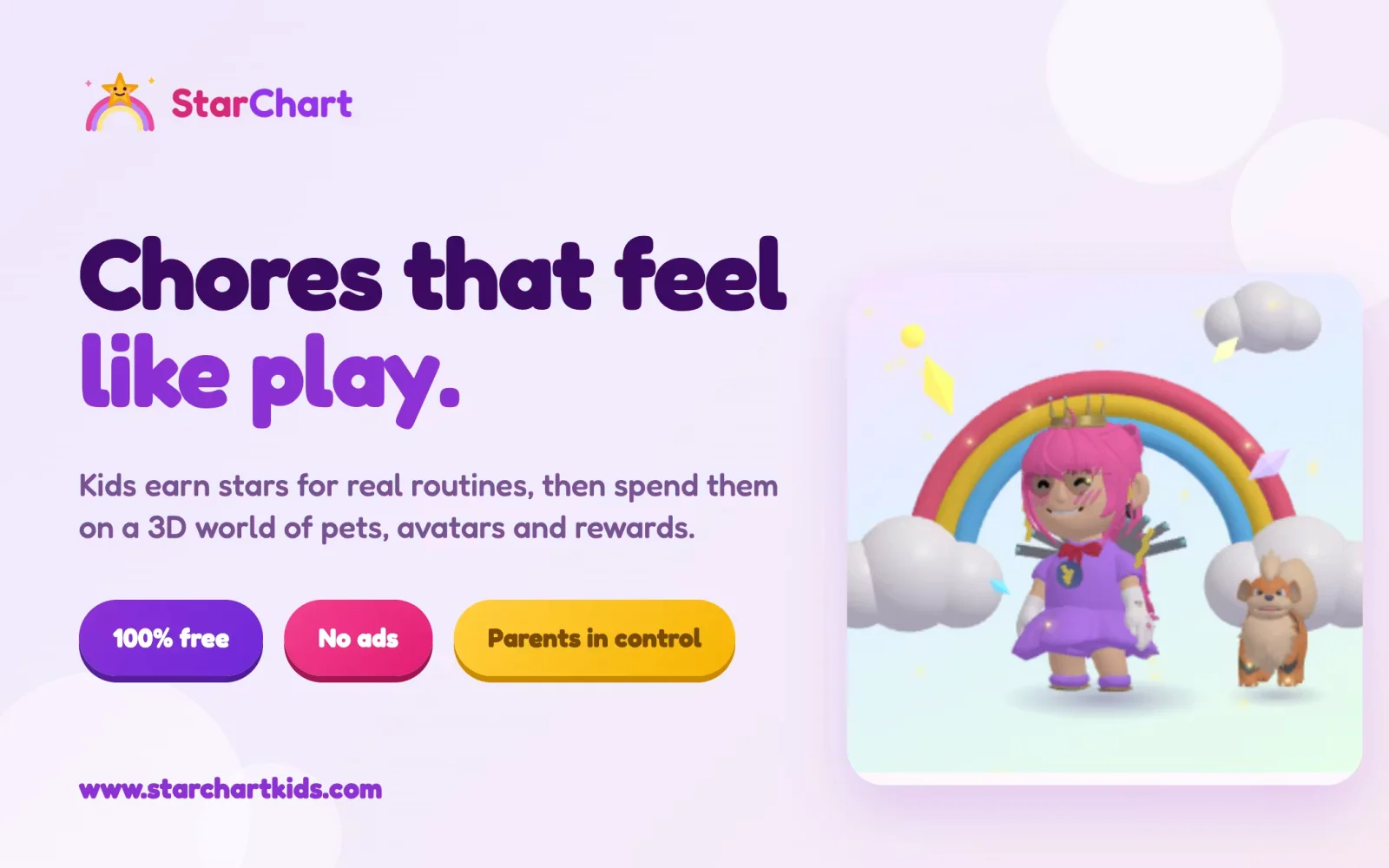
Morning routines have become a battleground in countless households, where parents repeat themselves endlessly and children resist getting ready. Star Chart Kids addresses this friction by transforming daily tasks into a game that motivates kids to complete routines independently while keeping parents fully in control. The app targets families exhausted by negotiation loops around bedtime, breakfast, and chores. Rather than nagging, parents create visual task lists that children check off, earning stars for completion. This approach capitalizes on intrinsic motivation through immediate feedback and collectible rewards. What sets this product apart is its philosophy around monetization. It operates entirely free with no ads, subscriptions, or loot-box mechanics. Rewards unlock customizable elements like 3D pets, avatars, and interactive worlds, but parents maintain approval authority over real-life rewards like screen time or outings. This gatekeeping prevents the reward system from becoming a source of family conflict. The interface centers on simplicity. Kids see their next task, complete it with a tap, and immediately experience celebration through animations and star accrual. The app supports multiple children with separate avatars and tracking, allowing parents to manage household routines in one dashboard. Stars accumulate in a spendable bank while a lifetime progress tracker runs parallel, giving kids both immediate feedback and longer-term accomplishment. Three-dimensional pet characters serve as persistent companions, responding with happiness dances when tasks complete. This emotional anchoring appears designed to build attachment and investment in the routine loop, making the game element feel less arbitrary than a simple point counter. The product acknowledges that kids crave autonomy. Avatars, pet customization, and saving toward chosen rewards give children agency within boundaries parents control. This balance between kid empowerment and parental oversight is rare in this category. Availability spans browsers and mobile platforms, removing friction for families across devices. By eliminating subscription paywalls and ad interruptions, the app removes common obstacles to adoption that plague competitor products in the family-management space. For parents questioning whether another app will solve morning chaos, Star Chart Kids frames the problem not as tracking chores but making them feel rewarding rather than coercive. The execution reflects that belief throughout.
Navigating the vast online landscape for reliable pregnancy and baby care information can be a daunting task for expectant parents. Mamenza addresses this challenge by offering a comprehensive resource that guides families through every step of pregnancy and the first year of parenthood. The platform is designed for families from diverse backgrounds and life situations, providing a welcoming and inclusive environment. What stands out about Mamenza is its commitment to delivering trustworthy and scientifically-backed information. The website features a range of practical tools, including due date calculators, birth plan generators, and pregnancy week-by-week guides. These resources are designed to be both informative and easy to use, helping parents-to-be track their baby's development and prepare for the arrival of their child. The platform's content is structured around key themes, including pregnancy, birth, baby care, and naming inspiration. The pregnancy calendar is a notable feature, offering weekly updates on the baby's size, physical changes, and tips for expectant parents. Additionally, Mamenza provides a range of downloadable resources, such as a clinic bag checklist, to help families prepare for the practical aspects of parenthood. Mamenza's focus on providing reliable and accessible information sets it apart from other online resources. While the website does not explicitly mention its pricing or business model, it is clear that the platform is designed to be a valuable companion for families during a critical period in their lives. By offering a mix of free tools and guides, Mamenza establishes itself as a trusted and supportive resource for expectant parents and new families.


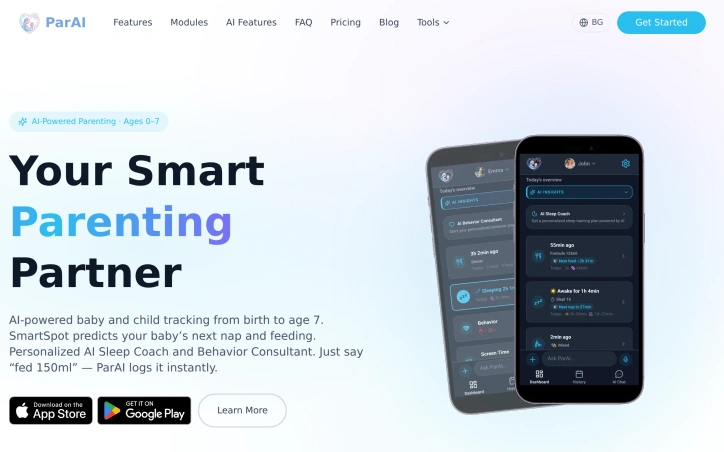
New parents often find themselves drowning in a sea of information and anxiety as they navigate the challenges of childcare. ParAI addresses this issue by providing a comprehensive platform for tracking a child's development from birth to age seven. The application's target audience is clearly parents seeking a reliable and trustworthy tool to monitor their child's growth, manage daily routines, and gain personalized insights. What stands out about ParAI is its integration of artificial intelligence into various aspects of childcare tracking. The AI-powered assistant allows parents to log activities using natural language, making it easy to record feedings, sleep patterns, and other important events. The application's SmartSpot feature predicts a child's next nap or feeding, providing proactive alerts to help parents stay ahead of their child's needs. The key features of ParAI include detailed tracking of feeding, sleep, and growth, as well as developmental milestones and behavior analysis. The application also offers a 24/7 AI chat support, allowing parents to ask questions and receive instant answers backed by reputable health organizations such as the American Academy of Pediatrics, World Health Organization, and Centers for Disease Control and Prevention. ParAI's focus on security and data privacy is evident in its encryption and secure data storage practices, ensuring that sensitive family information remains protected. While pricing details are not explicitly mentioned, the application's various modules, including Baby, Child, Pregnancy, and Planning, suggest a potentially tiered or modular pricing structure. Overall, ParAI offers a robust and reassuring solution for parents seeking to manage the complexities of childcare with confidence.