@fuck.it
Email privacy has become an afterthought at mainstream providers, which treat inboxes as data sources to be mined for ad...
Categories
Best Influencer marketing platforms Startups & Tools
Identify and manage influencer campaigns and collaborations.
Recently Listed
2 launches
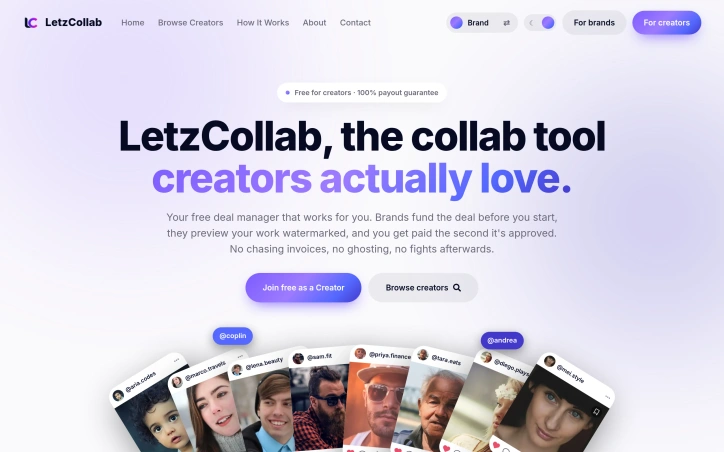
Creator-brand collaborations are plagued by scattered communication, manual invoicing, payment delays, and persistent disputes over content rights. LetzCollab consolidates this friction into a single marketplace where brands hire creators and creators deliver sponsored content through a structured, escrow-backed process. The platform addresses two distinct audiences. Brands struggle with discovery, vetting creators, managing deliverables, and handling payments without friction. Creators face ghosting, delayed compensation, and ambiguity around usage rights. LetzCollab's architecture tackles both sides by creating a protected environment for the entire transaction lifecycle. Several features demonstrate genuine insight into creator economics. The watermarked preview system stands out as a particularly clever mechanic: brands receive watermarked versions of work until they approve delivery, at which point the clean file is released. This protects creators from content theft while giving brands legitimate grounds to evaluate quality before committing. Digital rights agreements signed with each collaboration remove post-delivery disputes over geographic scope, duration, and usage rights. These details settle expectations upfront rather than leaving them ambiguous. The payment structure significantly shifts risk. Brands fund the transaction before work begins, and creators receive payment only after delivery is accepted. This inverts the typical dynamic where creators chase brands for money, instead guaranteeing payouts within the platform's system. Creator onboarding emphasizes verification over self-reporting. Connected accounts on Instagram, YouTube, TikTok, LinkedIn, and Pinterest allow the platform to confirm audience sizes and ownership rather than relying on claimed follower counts. Creators control what work appears publicly and which offers they accept. A points system rewards completed collaborations with escalating visibility to larger brands. The platform itself costs nothing to join and use, removing entry barriers. The marketplace mechanics are straightforward: creators publish packages at custom pricing or negotiate deals directly, while brands filter by niche, platform, and budget before sending hire requests. The emphasis on verified profiles and real metrics reduces the information asymmetry that typically favors brands in creator negotiations. The revenue model remains opaque from the published materials. Free creator access is clearly stated, but no information exists about how brands are charged or what commission structures exist. For a platform aiming to be a trusted middleman in creator deals, transparency about its own business model would strengthen confidence in its neutrality. This gap aside, the product design demonstrates understanding of creator pain points and genuine effort to solve them structurally.
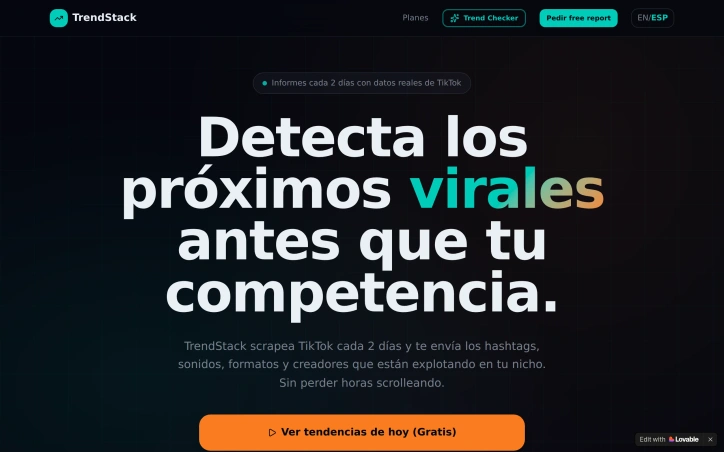
Manual trend discovery on TikTok remains a time-intensive bottleneck for content creators and marketing agencies. Identifying which hashtags, sounds, and video formats are gaining momentum requires hours of platform scrolling—and by the time patterns emerge, competitors have already moved in. TrendStack automates this workflow by scraping TikTok every two days, extracting trending data from specific niches, and delivering structured reports via email. The product targets three distinct personas with differentiated messaging. Agencies receive data-backed campaign briefs complete with examples of working videos, replacing guesswork with concrete reference material. Social media managers gain pre-assembled content calendars, eliminating the "what should I post?" paralysis. Individual creators learn which sounds and video structures are ascending before saturation occurs, enabling them to adapt trends with authenticity rather than imitation. TrendStack's feature set reflects strategic prioritization. Standard reports include top hashtags with volume estimates, trending sounds with artist attribution, and emerging video formats. The Pro tier adds creator profiles and cross-referenced web context. The Premium tier introduces forward-looking tools: pre-written content scripts and 48-72 hour trend predictions. This progression from data observation to actionable templates reduces the gap between trend identification and content production. Operationally, the product's biweekly update cycle differentiates it from slower alternatives. TikTok trends accelerate at platform speed, not monthly reporting speed—and the two-day refresh rate keeps pace with that velocity. The immediate delivery of a current report upon signup removes waiting periods and allows users to extract value from day one. Pricing starts at €9.99 monthly for single-niche access, scaling across Basic, Pro, and Premium tiers to accommodate different team sizes and strategic needs. The underlying assumption—that systematized trend detection creates competitive advantage—has intuitive appeal. Whether the product delivers hinges on two critical factors: the accuracy and completeness of its underlying scraping and analysis, and how quickly users can execute on insights before broader market adoption neutralizes the lead. For fast-moving content teams, the velocity advantage may be decisive. For others, the value depends entirely on the quality of trends captured and the actionability of resulting recommendations.