
Pathmind
- No match
Machine translation — the English original is authoritative.
The Story
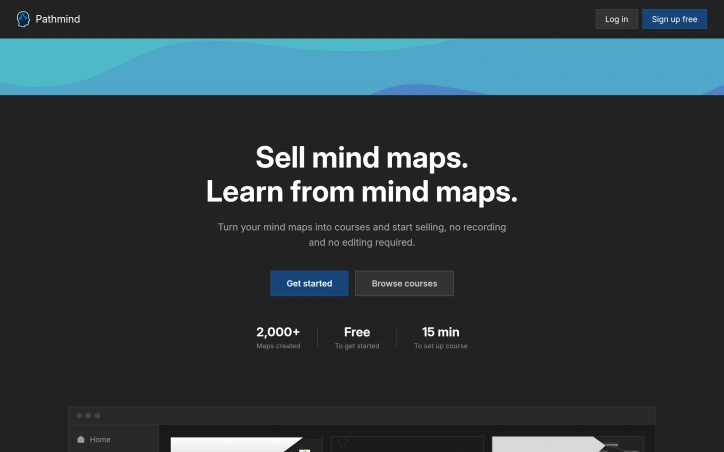
I built Pathmind in 2024 as i wanted to make a productivity tool easily accessible from the browser (therefore it started as a chrome extension). However it didn't quite meet my expectations that's why in July 2025 i purchased the domain pathmind.app to be home to my new mind mapping platform. Once i finished the interactive node system which allowed you to script functionality on mind maps and i updated the interface i got the idea of entering into a new space of online education further building on the idea. That's when i introduced Pathmind Courses and that's what i'm working on up until this day, it's a fully free platform for anyone to post interactive courses or sell them to others.
AI Overview
AI-generatedVisual learning is gaining traction in education, yet many educators lack the technical infrastructure to monetize their expertise. Pathmind addresses this gap by allowing creators to convert mind maps directly into sellable courses without requiring video production, editing expertise, or complex course-building knowledge. The platform targets course creators, educators, and subject matter experts who want to package and distribute knowledge through a visual-first format rather than traditional lectures or text-heavy materials.
The core innovation lies in its simplicity: creators map out topics as interactive nodes, enrich them with text, videos, images, and documents, then publish the entire structure as a course. Learners navigate these mind maps as interactive learning paths, creating an engaging alternative to linear course formats. This approach eliminates the high friction points that prevent many experts from becoming educators—no recording sessions, no post-production editing, no platform complexity. The setup process takes approximately fifteen minutes, a deliberately low barrier designed to encourage adoption among non-technical users.
Pathmind's node-based system extends beyond basic mind mapping. The platform includes an interactive scripting layer that allows creators to add conditional logic and dynamic functionality to their maps, enabling more sophisticated course design than static diagrams alone. This technical depth is concealed beneath an accessible interface, allowing both non-technical content creators and those seeking advanced customization to work within the same tool.
The business model reflects a creator-friendly philosophy. The platform operates free of charge, supporting both free course distribution and paid offerings. Creators retain full control over pricing and access, with the revenue model supporting recurring income as new learners discover and purchase courses. This removes financial barriers to entry for emerging educators while enabling established instructors to reach audiences without expensive course development platforms.
The founder's evolution from browser-based productivity extension to education-focused platform indicates iterative customer discovery and willingness to pivot toward market demand. The transition to Pathmind Courses in July 2025 suggests stronger market validation in online education than in general productivity tools.
Pathmind faces competition from established players like MindMeister and Miro, which offer broader collaboration features, though neither emphasizes course monetization. The platform's focus on educational content packaging distinguishes it, though may limit adoption among users seeking general-purpose diagramming tools. The interactive node system with scripting capabilities provides genuine product depth, yet market education will be crucial—users must understand how this visual approach meaningfully differs from and improves upon traditional course platforms.
Founder Diary
DevlogThe maker hasn't posted a diary entry yet.
Key Features
Visual Course Builder
Convert mind maps directly into courses without video production or complex course platforms.
Interactive Node System
Enrich content with text, videos, images, and documents within interactive mind map structures.
Conditional Logic Scripting
Add dynamic functionality and conditional logic to course nodes for advanced customization.
15-Minute Onboarding
Setup takes approximately fifteen minutes with an accessible interface for non-technical creators.
Use Cases
-
1
Course Creators
Package and distribute knowledge through visual-first formats without requiring video production or complex tools.
-
2
Subject Matter Experts
Create and monetize specialized courses while maintaining full control over pricing and access.
-
3
Non-Technical Educators
Build interactive courses in approximately fifteen minutes without requiring technical expertise.
FAQ
Can I create courses without making videos? ▾
How much does it cost to use Pathmind? ▾
How long does it take to create a course? ▾
Pricing
Platform is free for creators; creators can offer free or paid courses at their own pricing.
Tech Stack & Tags
Discussion
No comments yet — be the first!
Join the conversation — sign up to comment.
Sign up freeCommunity Support
Boost this project on Sell With boost
Meet the Founder

More in Online learning

LangLime
Dear Duolingo, I'm fed up of spending weeks lear...

Ziyo
Ziyo is a 𝘴𝘵𝘶𝘱𝘪𝘥𝘭𝘺 simple Japanese online Kanji...

Pyzit
I built Pyzit to remove friction from learning a...

Study Share
I built Study Share because students waste time...
MCQS ZONE
As an educator with a Computer Science backgroun...
Grade Curve Calculator
I built this free tool to help teachers fairly a...