Catalyst Healthspan Audit
Personal trainers typically sell training sessions. This startup reversed the equation by building assessment first, mak...
Launchory
We built Launchory to solve the discoverability problem for startups. Our platform offers instant approval, permanent do...
Best Advertising tools Startups & Tools
Plan, run, and measure ad campaigns with analytics and tracking.
Recently Listed
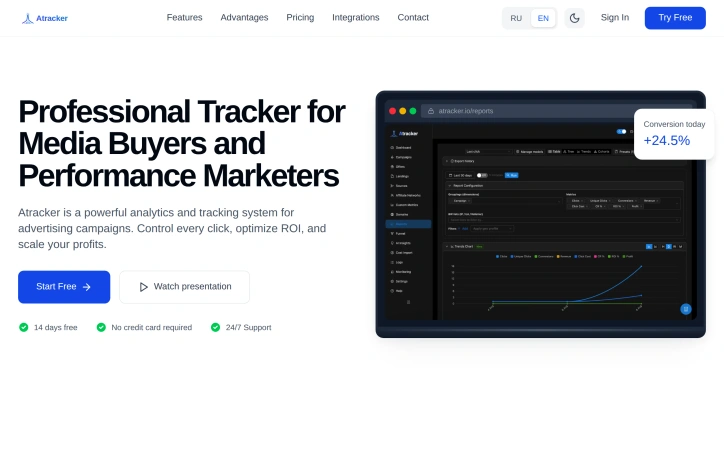
12 launchesFragmented data haunts performance marketing teams. Atracker addresses this with a unified analytics and tracking platform designed specifically for media buyers and performance marketers who need granular visibility into their advertising spend. The product tackles a concrete problem: organizations managing paid traffic campaigns often lack a centralized view of campaign performance across channels. Atracker consolidates this data into a single dashboard, offering real-time analytics and unified tracking that lets teams monitor individual clicks and campaign ROI. This centralization enables faster decision-making, allowing teams to identify underperforming campaigns and shut them down before wasting additional budget, while simultaneously scaling strategies that deliver results. What distinguishes Atracker from basic analytics tools is its explicit focus on the media buying workflow. Rather than generic event tracking, the platform emphasizes ROI optimization and campaign control as primary functions. The real-time analytics capability is particularly relevant for performance marketers who operate in high-velocity environments where delayed insights translate directly to wasted spend. The platform includes integrations with other tools in the marketing stack, indicating recognition that media buyers work across multiple platforms and need data to flow seamlessly. The single-dashboard approach reduces the friction of context-switching between systems, a genuine pain point in the industry. Atracker offers an accessible entry point through a 14-day free trial that requires no credit card, lowering the barrier for teams evaluating tools. The inclusion of 24/7 support suggests the company positions itself as a service rather than a self-service tool, acknowledging that performance marketers often operate outside standard business hours and may need immediate assistance. The product explicitly targets performance marketers and media buying teams—a narrow but underserved segment. These organizations typically operate on thin margins where even small optimization improvements compound quickly, making tools that promise ROI control and campaign-level transparency attractive. No explicit pricing details appear in available materials, though the free trial model and support positioning indicate a subscription-based business model likely targeting small to mid-market agencies and in-house marketing teams managing substantial advertising budgets.

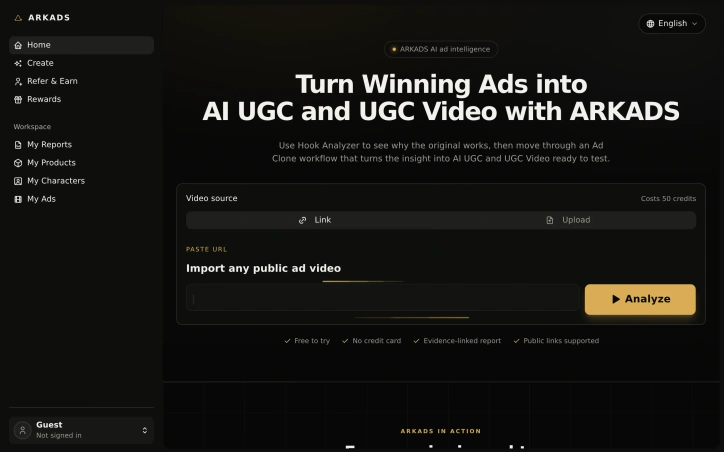
Marketing teams waste countless hours reverse-engineering winning ads, scrubbing through video, taking notes, and manually rebuilding those insights into new creative. ARKADS automates this loop by combining two functions: Hook Analyzer, which dissects what works in existing ads, and Ad Clone, which transforms those findings into finished AI UGC videos ready for testing. The core problem is clear. Ad analysts need to understand why a reference creative performs, then hand those insights to writers and producers who regenerate the concept. That handoff is inefficient and loses context. ARKADS collapses this workflow into a single connected process that keeps research evidence connected to every downstream decision. What distinguishes the product is its commitment to evidence linking. Rather than offering generic recommendations, Hook Analyzer ties each finding to the specific frame or transcript segment that supports it. When Ad Clone builds a brief from the analysis, those insights carry forward as structured inputs—audience, problem, promise, proof, transformation—that can be edited before scripting and rendering. This approach replaces guesswork with cited reasoning. The product targets marketing teams managing paid social campaigns at volume. It accepts ads from TikTok, Instagram, Facebook, or direct video upload. The Hook Analyzer is free to try without a credit card, lowering the friction to experimentation. Video analysis costs 50 credits. The Ad Clone workflow then renders individual hook variations and clips on demand, with per-clip charging and refunds if a take fails, plus free merging for final assembly. This modular pricing model means failed experiments don't carry unnecessary cost. Visual consistency is another practical strength. Rather than managing multiple actors across different UGC takes, Ad Clone carries one actor reference through the entire workflow, solving a common friction point in production. The product sits between research tools and production software. It assumes marketing teams have winning ads to learn from and need a faster path from insight to testable video. For teams running rapid test-and-iterate creative cycles, that speed advantage is meaningful. For teams building one campaign at a time, the ROI may be harder to justify. The main question is execution depth. The website shows illustrative outputs but disclaims them as non-customer results. Real-world performance remains unclear.

Many e-commerce merchants face a costly disconnect: their ad platforms optimize for revenue and ROAS, but profitability tells a different story. After accounting for COGS, fulfillment fees, transaction costs, and VAT, orders that look profitable in Google Ads or Meta often destroy margins. Profit Bid targets this exact pain point, positioning itself as a bridge between online stores and advertising platforms that prioritizes actual profit over vanity metrics. The core innovation is straightforward but powerful. Rather than relying on traditional conversion signals based on revenue, Profit Bid ingests real cost data from e-commerce platforms, calculates true order-level and SKU-level profitability, and feeds margin-adjusted signals back to ad networks. This means Smart Bidding in Google Ads, optimization in Meta, and similar algorithms across TikTok, Microsoft, Pinterest, and Amazon all learn from profit signals instead of revenue. The platform achieves this through a first-party tracking pixel that matches ad clicks to resulting orders and uploads weighted conversion data with profit margins baked in. The product ecosystem is comprehensive. On the store side, Profit Bid integrates with six major platforms: Shopify, WooCommerce, BigCommerce, PrestaShop, Shopware, and OpenCart. Ad platform coverage spans Google Ads, Meta, TikTok, Microsoft Ads, Pinterest, and Amazon, meaning merchants can update their entire media stack with profit data in one integration. The claimed 50ms sync time and 99.99% uptime suggest serious infrastructure investment, though no transparency is offered on how these metrics are calculated or monitored. Feature-wise, the dashboard consolidates the metrics that matter: POAS, margins, ad spend, and net profit after advertising costs. A product labeling system automatically sorts SKUs into winners and losers based on profit contribution, then syncs these tags to ad platforms for cleaner campaign targeting. The addition of Proby, an AI agent, hints at a future where profit optimization becomes increasingly autonomous, though specifics on what this agent actually recommends remain vague. For merchants struggling with unprofitable growth or those managing complex SKU portfolios with varying margins, Profit Bid addresses a real problem that most platforms ignore. The breadth of integrations is noteworthy, as is the commitment to calculating true profitability rather than asking merchants to estimate it. Pricing details are absent from available materials, though the platform offers a free tier to start.


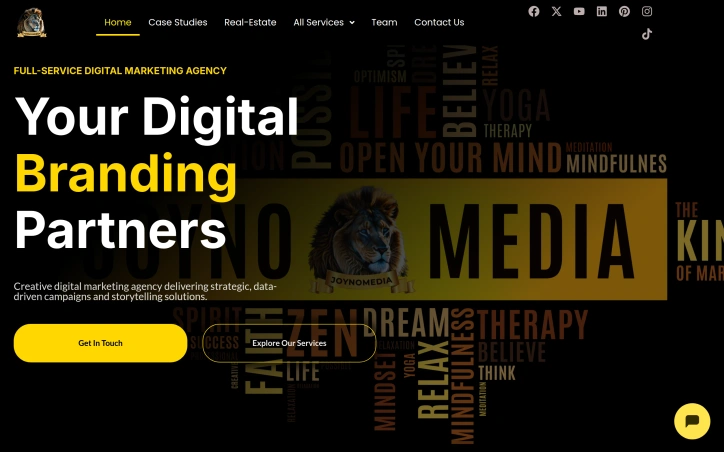
Digital marketing teams often operate in silos—web design separate from social strategy, branding disconnected from performance analytics. Joyno Media consolidates these functions by offering integrated services across web design, branding, social media marketing, and SEO. The agency differentiates itself through a stated commitment to combining creative execution with data-driven strategy. Rather than treating digital channels as isolated initiatives, they position social media, web design, and branding as interconnected elements of a customer journey. This integrated approach is sound: brand coherence across touchpoints drives stronger results than fragmented efforts. The service lineup addresses core digital marketing needs. Web development emphasizes responsive design and performance optimization. Social media campaigns are framed as adaptive and personalized to individual customer behavior. Branding services build distinctive visual identities. SEO is included as a component, reflecting the importance of organic visibility. The company reports over a decade of operating history, 200+ client relationships, and 500+ completed projects, along with a claimed 98% success rate. These metrics remain unvalidated—there is no definition of what constitutes success, nor supporting case studies or client testimonials. The agency emerged from recognizing that businesses struggle with the technical and strategic complexity of managing multiple digital channels simultaneously. This positions them as a solution for organizations lacking dedicated in-house expertise but requiring professional-grade presence and marketing execution. A notable gap: the available information contains no pricing details, service packages, contract terms, or engagement models. Prospective clients would need this information to evaluate cost and commitment levels. Joyno Media's core proposition—integrated digital marketing with equal weight on creative quality and measurable results—is sound in theory. Success depends on whether the team possesses sufficient strategic depth, project management discipline, and expertise to execute this across diverse client needs. Assessing actual delivery against positioning requires direct engagement with the agency.

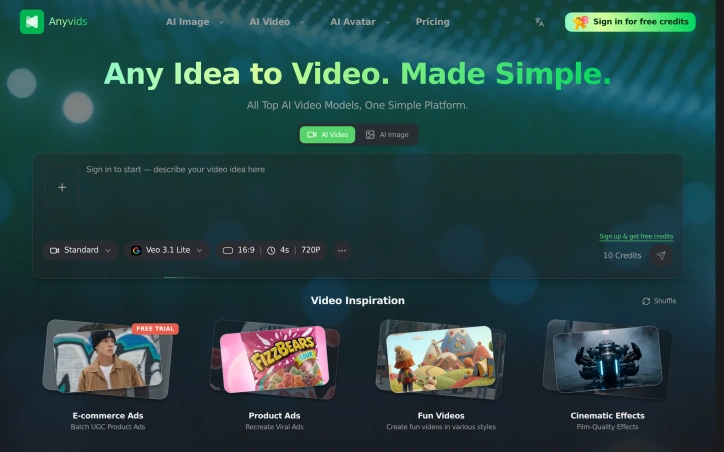
Consolidating multiple AI creative tools into a single platform addresses a genuine friction point for content creators. This service brings together various video and image generation models under one roof, eliminating the context-switching that plagues creative workflows. The platform's value proposition centers on three practical problems: navigating between specialized tools, choosing among competing models, and understanding true costs. By housing multiple top-tier generation capabilities—from text-to-video synthesis to character animation and avatar creation—users can move through their entire creative pipeline without frequent tool-switching. What distinguishes this offering is its commitment to pricing clarity. Rather than hiding generation costs behind opaque tier structures, the platform displays credit expenditure per operation, maintains searchable usage history, and explicitly outlines refund policies. The entry-level subscription removes watermarks and grants commercial usage rights, features typically reserved for premium tiers elsewhere. The integrated editing environment allows for prompt-based refinements, character swapping, and upscaling without exporting to separate applications. This architectural choice substantially reduces friction in iterative creative work. For creators juggling multiple subscriptions and platform APIs, the consolidation offers both cognitive simplification and cost transparency. Whether this efficiency gain justifies yet another subscription depends on existing tool usage patterns and budget constraints, but the platform appears thoughtfully designed around actual creator pain points rather than artificial feature bundling.
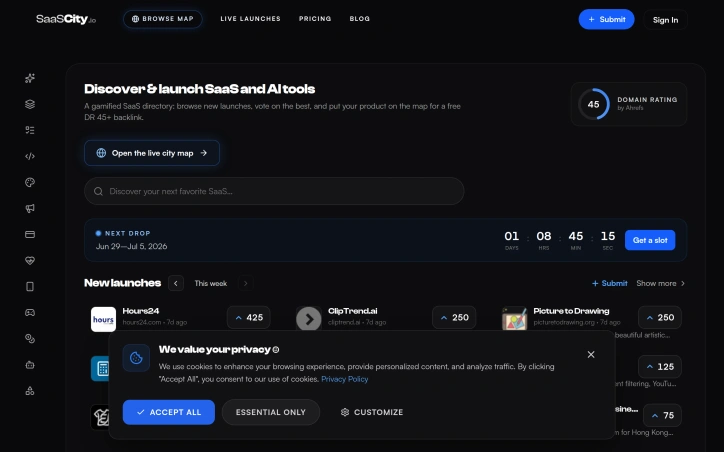
Launching a SaaS product faces a brutal discoverability problem: thousands of tools debut weekly, yet most founders struggle to break through noise and reach investors, early adopters, and media. SaaSCity tackles this by reimagining the startup directory as a gamified marketplace where products compete for attention rather than disappearing into spreadsheets. The core appeal is elegantly visual: each product listing materializes as a 3D building standing on an interactive city map, replacing the sterile table-based directories that dominate the space. This isn't mere aesthetics—it's a mechanism for memorable browsing and social sharing. Founders gain a persistent, indexable landing page with SEO equity (the platform advertises a Domain Rating 45 backlink, using Ahrefs' authority metric to signal value), creating compounding discoverability beyond the launch moment. What distinguishes SaaSCity from static product aggregators is its competitive layer. The "Best SaaS" leaderboard shows products ranked by category—Design Tools, Developer Tools, AI & Machine Learning, Fintech, and others—with vote counts visible next to each entry. This voting mechanic incentivizes community engagement while surfacing quality products to the top. Founders compete not just for listings but for rankings, turning launches into events rather than one-time posts. The platform's breadth is genuine. The scraped content shows active product flow across authentic verticals: specialized tools like ClipTrend.ai (AI video generation from photos), Etryon (apparel virtual try-ons), and SEOBrain (automated SEO agents) appear alongside established categories. The "New Launches" section demonstrates weekly refresh rates, with products added 4–7 days apart, indicating sustained supply-side activity and avoiding the ghost-directory fate that kills many aggregators. The business model remains deliberately simple: free listing for all products, with clear messaging that founders receive a backlink benefit without stated paid tiers or premium upgrades. This accessibility removes friction for bootstrapped teams and early-stage companies most likely to benefit from discovery. A live countdown timer ("Next drop Jun 29–Jul 5") signals recurring launch windows, creating rhythm and FOMO—standard launch-platform psychology but executed with visual emphasis. The accumulated vote counts (ranging from 50 to 5.6K across visible products) hint at meaningful community usage, though aggregate numbers remain private, making it difficult to assess true platform scale. SaaSCity succeeds where many directories fail by combining practical SEO value, gamification mechanics that reward quality, and a visual experience that makes exploration feel less like research and more like discovery. For early-stage SaaS makers, the free backlink and leaderboard ranking opportunity creates concrete incentives to launch here rather than disappear into the void.

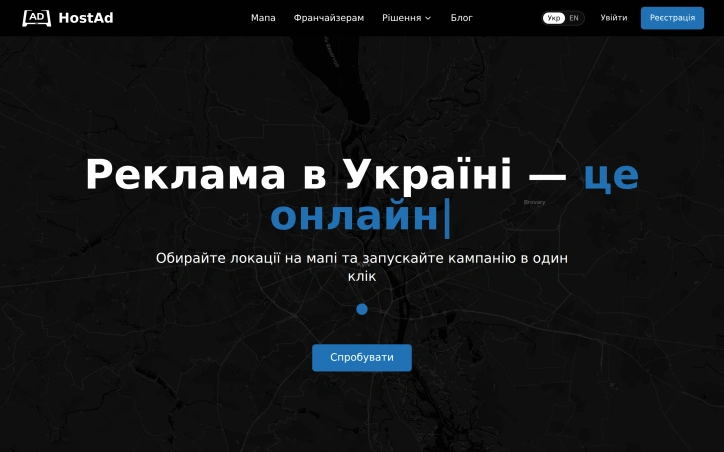
Digital advertising on public screens is a crowded and complex space, but one Ukrainian company is working to simplify the process for advertisers. HostAd is designed to make it easy for businesses to reach thousands of people daily with a streamlined and transparent process. At its core, the platform is geared towards advertisers in the offline sector, providing a straightforward way to launch targeted campaigns across various digital screens. What stands out about HostAd is its emphasis on ease of use and efficiency. The platform allows users to browse and select ad locations on a map, pay online, and track results in real-time, all within a single, user-friendly interface. This end-to-end digital experience eliminates the need for manual paperwork and minimizes the time required to launch a campaign. HostAd's intelligent scaling capabilities also enable advertisers to manage multiple campaigns from a single dashboard, automating routine tasks and freeing up resources for more strategic activities. The platform offers a range of features that support effective advertising, including detailed analytics, audience targeting options, and 24/7 support. Advertisers can access their campaign data and manage their accounts from anywhere, using a mobile device or computer. HostAd's transparent pricing model is also noteworthy, with no hidden fees or charges. While specific pricing details are not provided, the platform's minimum campaign budget is explicitly mentioned, giving advertisers a clear understanding of the costs involved. Overall, HostAd is a compelling solution for businesses looking to harness the power of digital advertising on public screens.

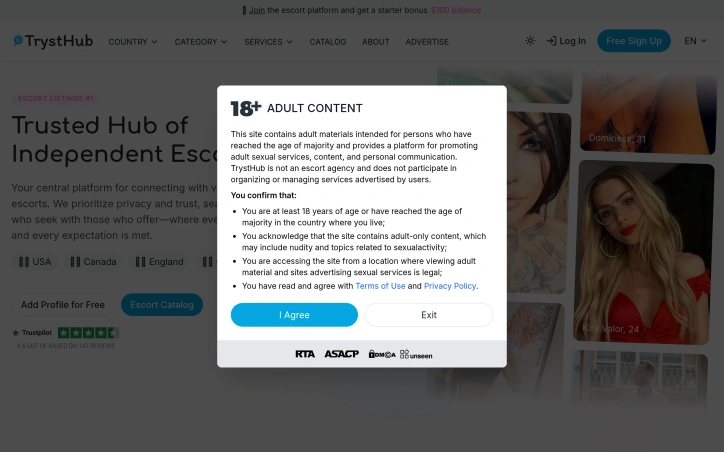
A centralized marketplace for independent escorts, TrystHub positions itself as a verified directory addressing the fragmentation and trust gaps that characterize the contemporary escort booking landscape. The platform serves both service providers seeking to build client bases and clients seeking vetted companions, operating across major markets in North America and Europe. The core appeal centers on verification. The platform emphasizes authenticated profiles—a notable differentiator in an industry historically plagued by scams and misrepresentation. TrystHub claims to verify profiles with real photos and guarantees service authenticity, a direct answer to client hesitation around fraudulent listings. The directory spans six escort categories: female, male, transgender, BDSM specialists, Asian, and same-day availability options, allowing users to filter by both service type and geographic proximity. Geographic coverage is substantial. Beyond broad regional categorization—USA, Canada, England, Germany—the platform supports local city-level search, with dedicated listings for Houston, Los Angeles, Washington, and multiple UK cities including London, Cambridge, and Manchester, alongside German markets like Berlin, Munich, and Hamburg. This geographic breadth suggests infrastructure designed for multinational operation and user convenience. From a business model perspective, TrystHub monetizes through provider acquisition. New users receive a $100 starter bonus upon joining, an incentive targeting both escorts establishing presence and clients discovering the platform. Beyond this promotional offer, specific pricing tiers and transaction fees remain unstated in available materials. The business model appears oriented toward commission or booking-based revenue, though explicit details are absent. The emphasis on privacy and trust recurs throughout messaging, addressing regulatory and reputational sensitivities central to this market segment. Real-time scheduling capabilities are positioned as a reliability signal, distinguishing active, responsive listings from outdated or non-responsive directories. What remains unclear is TrystHub's regulatory compliance strategy across fragmented jurisdictions. Escort service legality and platform liability vary significantly between the US, Canada, and European markets it serves. The platform's ability to sustain operations while navigating these legal variations will ultimately determine its viability. The verification infrastructure represents genuine technical and operational strength, yet broader platform success depends on regulatory resilience rather than feature set alone.
For businesses and agencies struggling to produce high-quality ad content at scale, SodaMarketing AI offers a compelling solution. The company's AI-powered creative studio addresses the long-standing issue of "The Creative Gap," where the demand for engaging ads outstrips the capacity to produce them. By leveraging cutting-edge technology, SodaMarketing AI enables users to generate hyper-realistic UGC video ads, cinematic commercials, and branded social content in a matter of seconds. What stands out about SodaMarketing AI is its ability to transform a simple product URL into a wide range of ad creatives. The platform's AI extracts key product features, brand identity, and images, allowing users to create diverse content without extensive manual input. The quality of the generated content is also noteworthy, with features like perfect lip-sync and 4K studio photoshoots that rival professional productions. The platform's capabilities are impressive, with features such as Exclusive AI Ambassadors, Omnichannel Ad Engine, and Cinematic Product Stories that enable users to create high-performing ad content. Users can also extend their videos up to 2 minutes with a single click, allowing for more nuanced storytelling. Additionally, the Auto-Prompt Engine simplifies the content creation process by automatically generating professional-grade cinematic instructions. SodaMarketing AI's pricing is straightforward, with a Pro plan available for $29 per month after a $1 trial. The trial includes 250 high-performance credits, giving users a taste of the platform's capabilities. Annual billing is also available, with a 30% discount. Overall, SodaMarketing AI has the potential to revolutionize the way businesses and agencies approach ad content creation, offering a powerful tool that can help them dominate their market without breaking the bank.

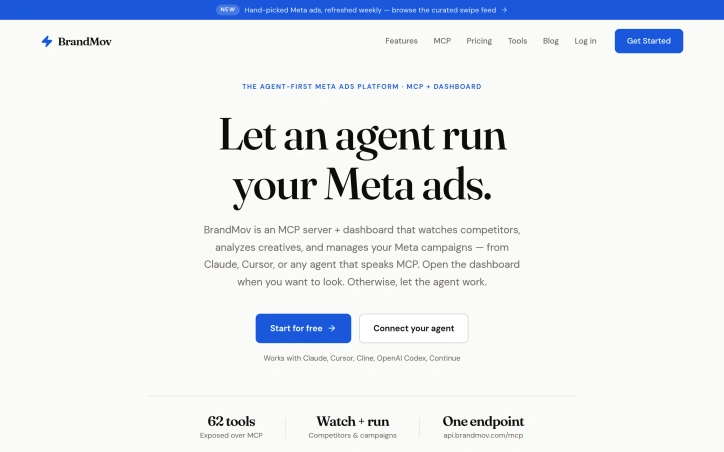
Managing Meta ad campaigns at scale combined with competitive intelligence typically demands substantial human effort—analysts spend hours tracking competitor moves, evaluating creative performance, and manually optimizing ad sets. BrandMov targets growth teams, performance marketers, and founders who want to offload this research and execution burden to AI agents while maintaining strategic control. The product takes an agent-first architecture: it's built as an MCP server with 39 exposed tools, allowing any compatible AI agent (Claude, Cursor, Cline, Continue, and others) to watch competitors, pull creatives on schedule, and manage Meta campaigns directly through a single API endpoint. This is distinctive—rather than building another dashboard-first tool that happens to work with agents, BrandMov inverts the priority. The agent is the primary interface; the dashboard is a secondary view for human review and intervention. The standout capability is real-time competitor monitoring. Teams can set up watchlists to track advertiser activity, and agents autonomously scan for new creative patterns, score them against frameworks like Hook-Hold-Click-Buy, and alert when meaningful shifts emerge. This transforms competitive intelligence from a manual research task into continuous background work. The system ships with curated DTC watchlists, reducing setup friction. The dashboard maintains alignment between human intent and agent execution. Everything an agent does—watched competitors, collected creatives, campaign changes—flows into the dashboard with AI-generated analysis already rendered. This bidirectional model lets teams steer via chat or dashboard interchangeably; they're viewing and controlling the same underlying data. The technical implementation is pragmatic. Rather than requiring SDK installation or proprietary integrations, BrandMov exposes its surface through a single streamable HTTP endpoint that speaks the MCP protocol—an emerging standard for agent tool access. This positions it to work with whatever AI platforms teams already use without vendor lock-in. The core value proposition targets a genuine pain point: growth teams spend substantial time on competitive analysis and campaign management work. By delegating routine competitor monitoring and campaign optimization to agents, teams reclaim bandwidth for strategic decisions. The architecture trusts agents to handle execution while humans maintain directional control. The product is available free to start.

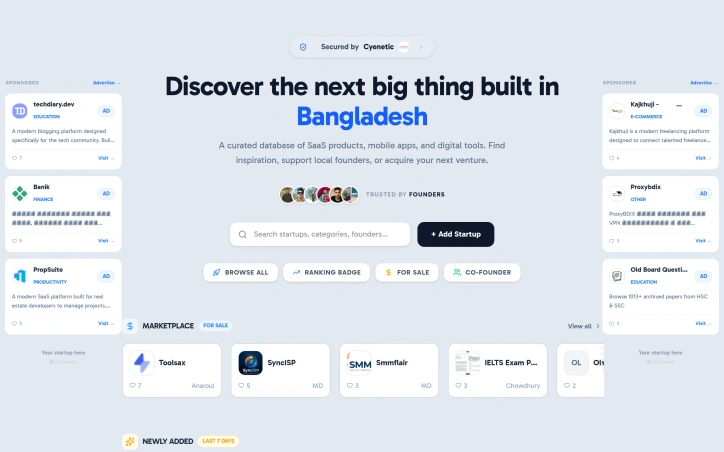
Bangladeshi SaaS builders finally have a stage that speaks their language. Home-grown ventures now face the daily struggle of getting noticed once they leave small chat groups and lean-meetup circles; global launchpads overflow with Silicon Valley flash and foreign celebrities, leaving local founders shouting into the void. BD SaaS Zone corrals that scattered audience into one easy-to-scan gallery, giving each product oxygen instead of noise. The directory is deliberately narrow in scope: real SaaS, mobile apps, and digital utilities that ship from Bangladesh. Every listing is curated first, which keeps the pixel-brochure clutter down to zero and ensures the feed stays focused on working products rather than pitch decks. Visitors come looking for quick inspiration, teammates, or acquisition targets; founders arrive to plant a flag and stay visible long after launch-day buzz fades. Nothing fancy or bloated: a simple search, taxonomy filters covering fourteen niches from AI to HR, and cleanly marked “For Sale” or “Seeking Co-Founder” tags when the listing signals intent to exit or scale. Pricing clings to reality—one advert slot in the sponsored marquee costs exactly ৳120 per month, a figure that fits better coffee than most AWS bills. Founders can also claim a discount on security audits through the site’s partnership with Cyenetic Solutions, a welcome perk at a stage where every saved taka goes toward product polish. For now the site stays refreshingly minimal: add your startup, grab the ranking badge code, and let organic traffic do the rest. Early adopters get prime category placement before every vertical is filled, making the current moment unusually favorable for anyone shipping code from Dhaka, Chittagong, or Sylhet.

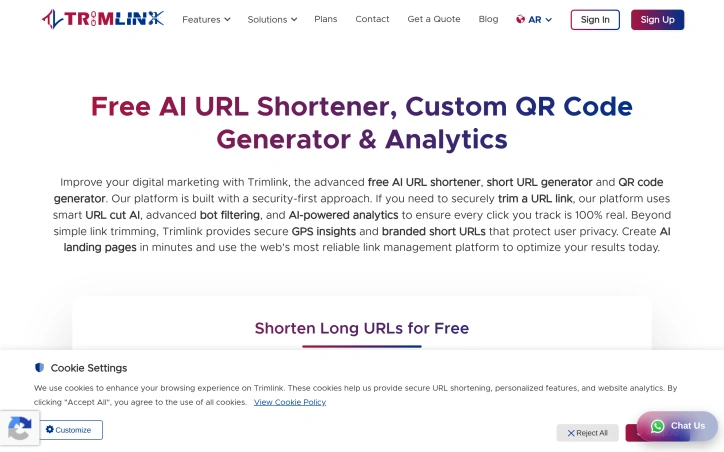
Marketing teams operating without clean analytics data make decisions in the dark. This core frustration drives Trimlink, a URL shortening platform built explicitly for professionals who refuse to act on inflated click metrics. The problem isn't new—most link shorteners fail to distinguish legitimate user clicks from bot traffic, corrupting the data that campaigns depend on. Trimlink addresses this by integrating bot filtering directly into its analytics engine, ensuring that every metric reflects real human behavior. The platform positions itself as a Bitly and Rebrandly alternative aimed at two segments: established marketing organizations that demand accuracy at scale, and startups seeking reliable link management without premium price tags. A free tier provides basic link shortening and QR code generation, with premium plans unlocking advanced capabilities. The company emphasizes this freemium model as democratizing tools previously locked behind expensive enterprise subscriptions. Beyond bot filtering, Trimlink's feature set reveals an attempt to build a complete link management ecosystem. GPS and geolocation analytics let marketers understand not just whether a link was clicked, but where. UTM parameter tracking integrates with standard campaign attribution workflows. Live traffic dashboards provide real-time engagement visibility. The platform supports branded custom domains to reinforce brand consistency in shortened links, addressing a key complaint about generic shorteners that dilute brand identity. AI-powered landing page creation and bulk import functionality extend the product's scope beyond simple link trimming. Where Trimlink distinguishes itself is in combining these features with an explicit security and privacy orientation. The company foregrounds bot detection and malicious URL checking rather than treating them as afterthoughts. For marketing teams evaluating alternatives to established players, this emphasis on data integrity could prove decisive. The integration of QR code generation, survey builders, and user access controls suggests the company is competing on comprehensiveness rather than simplicity. The platform's free tier removes friction for exploration, though specifics on premium pricing remain undisclosed in available materials. For agencies and marketing departments frustrated by click inflation and inaccurate campaign attribution, Trimlink presents a credible alternative worth testing.