Launchory
We built Launchory to solve the discoverability problem for startups. Our platform offers instant approval, permanent do...

Catalyst Healthspan Audit
Personal trainers typically sell training sessions. This startup reversed the equation by building assessment first, mak...
Best Ecommerce Startups & Tools
Recently Listed
23 launches
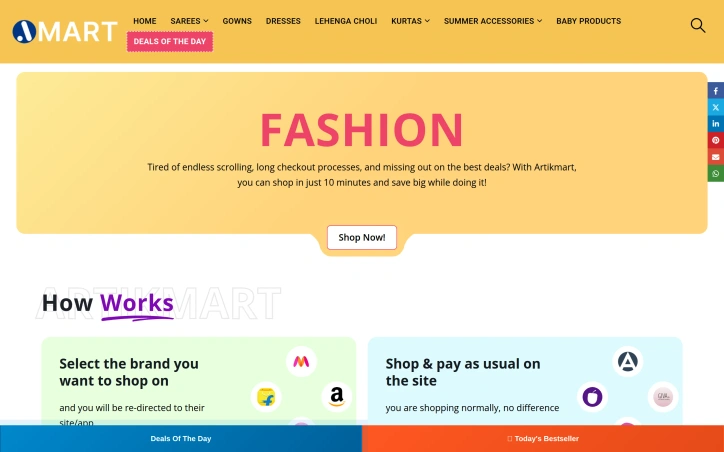
Navigating India's sprawling e-commerce marketplace exhausts fashion shoppers overwhelmed by choice. Artik Mart addresses this friction through curation, offering a streamlined path to Indian fashion staples and contemporary wear. The platform targets women seeking traditional and contemporary Indian garments—lehengas, sarees, kurtis, and dresses alongside shapewear and swimwear. Its mission centers on filtering the noise endemic to Indian e-commerce through product curation and honest comparisons, building shopper confidence in selections made. Rather than holding inventory, Artik Mart operates as an aggregation layer, redirecting customers to partner brand sites where they complete purchases directly. This approach eliminates transaction friction while maintaining lean operations. What distinguishes the platform is editorial focus paired with speed. The claimed ten-minute shopping window reflects an interface built for rapid browsing, while curated selections establish Artik Mart as an intentional filter in a market drowning in inventory. Categories—traditional Indian wear, contemporary dresses, activewear—organize products crisply compared to generalist marketplaces that bury Indian fashion brands under sprawling catalogs. Editorial curation isn't just selection; it's selection with reasoning behind it. The product catalog serves a specific market: Indian women seeking occasion wear, everyday clothing, and intimate apparel. Categories encompass wedding lehengas and formal sarees to shapewear and high-waisted athletic leggings, covering both traditional and modern Indian fashion in one destination. The range reflects the founder's stated focus on wellness, beauty, and fashion, though the website emphasizes apparel heavily. The business model relies on partnerships and affiliate arrangements, indicated by "Co-Powered By" branding throughout the site. The platform charges users nothing—revenue flows through partner commissions or referral fees. The specific terms and commission structures remain proprietary. For Indian fashion shoppers drowning in e-commerce choice, Artik Mart delivers a focused alternative rooted in editorial judgment. It trades breadth for intentionality, betting that expert curation reduces decision fatigue and builds purchase confidence. Success depends entirely on whether the curated selections genuinely reflect audience taste and whether referred traffic converts at partner brands. The platform lives or dies by the accuracy of its selections and the relevance of its partnerships.

Direct-to-consumer wellness commerce has become increasingly competitive, but most players default to generic supplement positioning. Nahfa Store stands apart by focusing on a narrower, more curated product line centered on Talbina—a barley-based porridge mix—paired with honey and targeted nutritional supplements under the HTWO Healthcare brand. The store serves health-conscious consumers in India seeking authenticated natural nutrition with transparent sourcing claims. Rather than chasing SKU expansion across every conceivable supplement category, the company has built depth within a specific product family, offering Talbina formulated for different life stages and health needs: versions for women, babies, seniors, and general wellness, each positioned as addressing distinct nutritional requirements. This segmentation reflects actual customer demand differentiation rather than arbitrary product proliferation. The catalog emphasizes combo offerings that bundle honey with Talbina variants at discounted price points—a practical value proposition that reduces decision friction for customers new to the category while encouraging larger basket sizes. Pricing anchors around Rs. 270 per unit with combo packages discounted from Rs. 650 to Rs. 585, positioning the products as accessible premium rather than luxury wellness. From a business model standpoint, the company employs a clear incentive structure: free shipping on orders exceeding Rs. 999, which works mathematically for their price point and encourages customers to cross the threshold through complementary product selection. This pricing architecture simultaneously improves unit economics and basket size without requiring artificial promotions. The site demonstrates competent execution in e-commerce fundamentals—clean product hierarchy, social media presence, straightforward navigation. However, the messaging reflects patterns familiar across most wellness retailers, with differentiation claims centered on authenticity and natural positioning rather than distinctive brand narrative or innovation in product development. The store's competitive advantage rests in product curation and fulfillment reliability rather than marketing distinctiveness. For customers in India specifically seeking certified Talbina and honey products with reliable delivery, Nahfa Store removes friction from the purchase journey. The narrower focus versus sprawling supplement shops creates clarity about what the brand represents, though broader market expansion would require either deeper product development or meaningful category expansion beyond the current HTWO Healthcare portfolio.


Creators building an audience spend considerable time researching and comparing tools for everything from video editing to newsletter platforms to affiliate networks. CloutStack consolidates this research into a single directory of 594 platforms organized across 49 categories, covering the entire creator economy stack from design and editing through publishing, analytics, monetization, and financial management. The directory's structure reflects real creator workflows. Rather than generic categorization, it groups tools by function and use case: design tools, video platforms, email marketing services, project management software, payment processors, and specialized creator-focused services like UGC work platforms and merch vendors. Each tool listing includes transparent pricing, target audience information, and user reviews, reducing the guesswork in tool selection. What distinguishes CloutStack is its coverage of the less glamorous but essential parts of creator business. Beyond the obvious video editing and publishing tools, the directory includes sections for accounting, legal, hiring, and brand deals—the administrative and commercial infrastructure creators often discover only through expensive trial and error. The inclusion of free tiers and pricing starting points, ranging from free with paid upgrades to one-time purchases like Procreate's $12.99, helps creators at different revenue stages find appropriate solutions. The platform functions as a browsable reference rather than a sales platform. A search function and categorized views make systematic exploration possible, while the inclusion of alternatives within each category prevents single-option thinking. Tool listings focus on functionality and cost rather than marketing language. CloutStack addresses a real friction point in creator workflows—the time spent evaluating tools is time not spent creating or building an audience. By aggregating pricing, reviews, and functionality in one place, it reduces the cognitive load of tool discovery. The directory proves particularly valuable for newer creators who lack networks for tool recommendations and for established creators filling gaps in their workflow. The breadth of coverage means creators at various stages and in different niches will find relevant options rather than defaulting to whatever tools rank highest in generic software reviews.


An Arabic-focused e-commerce platform, Rukn positions itself as a no-code solution for entrepreneurs and small business owners across the Middle East. It addresses a clear pain point: the challenge of launching a professional online storefront without technical expertise or significant capital investment. The target audience spans small retailers, home-based entrepreneurs, restaurant owners, and traditional businesses looking to establish or expand their digital presence. Rukn's value proposition centers on speed and simplicity—stores go live in minutes rather than weeks, with users selecting from over 100 pre-built templates and customizing without writing code. What distinguishes Rukn from competitors is its deliberate omnichannel strategy. Rather than treating the online store as isolated, Rukn integrates it with physical retail operations and social commerce, allowing merchants to manage inventory, orders, and customers across their website, in-store system, Facebook, and Instagram from a single dashboard. This unified control eliminates the fragmentation that typically plagues multi-channel sellers. The platform bundles practical necessities into its offering: domain registration, SSL certificates, payment processing via Visa and Mastercard, and cash-on-delivery options suited to regional preferences. Built-in marketing tools—discount mechanisms, promotional features, and advertising integration—reduce the need for expensive third-party services during early growth stages. Rukn emphasizes its progression from launch to scale. Rather than positioning itself as a basic store builder, the platform markets itself as capable of growing with merchants, handling diverse product types and business models through flexibility in design and functionality. The company claims its users see a 250% improvement in success rates, though this figure lacks context around methodology or comparative baseline. The platform operates on a freemium model with premium tiers available, and current promotion offers a 20% discount on annual packages. Free trials are explicitly mentioned, lowering the barrier to testing the product. Rukn's success hinges on execution of these promises and support quality for its target market. Omnichannel capability is genuinely valuable for retailers, and the no-code thesis has proven across other geographies. The regional focus—designing explicitly for Arabic commerce patterns including cash-on-delivery prominence—suggests thoughtful localization rather than generic globalization. Whether this translates to competitive advantage depends on how well the platform delivers on speed-of-setup claims and ongoing merchant support.


Shipping label processing represents a persistent friction point for e-commerce sellers, consuming time that could be spent on core business operations. eLabelCropper targets this specific bottleneck by offering a browser-based toolkit that automates the tedious work of preparing PDFs for thermal printers across multiple marketplaces. The product's core strength lies in its frictionless approach to a real operational problem. Rather than requiring software installation or account creation, sellers upload shipping label PDFs and receive output optimized for standard 4x6 thermal printers. The tool handles cropping, splitting, rotation, and formatting automatically. For sellers working across multiple platforms—whether Indian marketplaces like Meesho and Flipkart or global platforms such as Shopify and Etsy—supporting 35+ utilities across 16+ platforms eliminates the need to learn different workarounds for each service. The privacy model warrants emphasis. All processing occurs locally within the browser using native web technologies, meaning shipping labels and customer data remain on the user's device rather than transiting through external servers. This addresses a legitimate concern for sellers handling sensitive customer information at scale. Bulk processing capability extends the tool's utility beyond single-label workflows. Users can upload multiple PDFs simultaneously, and the system merges them into a single ready-to-print file. For sellers processing dozens or hundreds of shipments daily, this represents meaningful time savings. Platform-specific tooling adds further value—the system automatically separates packing slips from shipping labels on supported marketplaces like Meesho and Amazon, reducing manual sorting. The positioning as a completely free offering with no signup requirements and no feature limits distinguishes it in a space where shipping label tools typically operate on subscription or freemium models. This accessibility appears deliberate, lowering barriers to adoption among price-sensitive seller communities in emerging markets. The product's scope is narrow and purposeful. It does not attempt to be a comprehensive shipping management system or inventory platform. This focus suggests the developers understand their users' immediate pain point—label formatting—rather than building feature bloat around it. The tool works across Chrome, Firefox, Safari, and Edge, ensuring broad browser compatibility. The claimed user base of over 10,000 sellers suggests real market traction, though the product remains positioned as a utility rather than a platform. For sellers seeking a straightforward, zero-friction solution to daily label processing, eLabelCropper fills a genuine operational need.


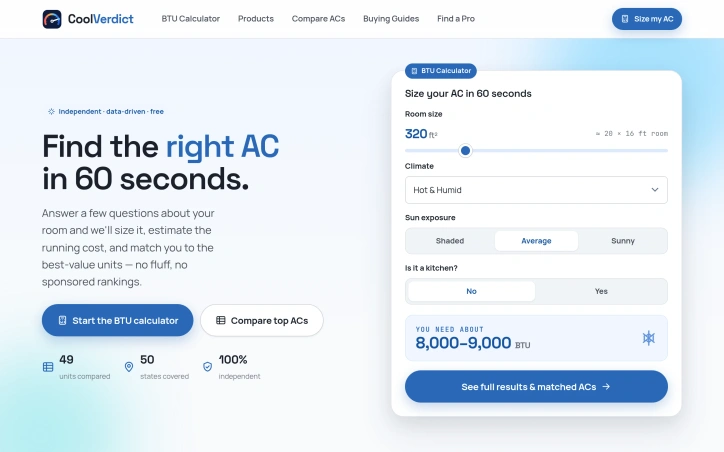
Navigating the air conditioning market leaves most homeowners confused by conflicting reviews and marked-up pricing. CoolVerdict addresses this fundamental problem by combining an automated BTU calculator with unbiased product comparison, helping consumers determine their exact cooling needs and find appropriately-sized units without sponsored rankings clouding the results. The service targets the typical homeowner facing an AC purchase decision. In roughly 60 seconds, users answer questions about room dimensions, local climate patterns, sun exposure, and whether the space is a kitchen. The tool then calculates the required BTU range and presents matching units from a database of 49 models across 50 states. The company emphasizes full independence—none of the recommendations carry paid placement or affiliate bias. What sets CoolVerdict apart is its focus on sizing accuracy. Rather than steering buyers toward expensive over-sized units or undersized bargains that fail to cool effectively, the calculator accounts for real variables: a 320-square-foot room in a cool climate requires different cooling capacity than the same space in a hot, humid region. This specificity reduces buyer's remorse and prevents wasted investment. The platform extends beyond the calculator itself. It connects homeowners with vetted local HVAC professionals to handle installation, converting the digital recommendation into an actual completed transaction. The site also curates an "HVAC Pulse" feed of industry news covering heat pump adoption trends, district-level cooling infrastructure decisions, and market forecasts, giving users broader context beyond their immediate purchase consideration. The problem CoolVerdict solves is real and widespread: consumers currently choose between trust and independence when evaluating AC units, and pricing remains opaque across the industry. By removing financial incentives from the recommendation engine, the company eliminates a central source of buyer confusion and manipulation. For homeowners in the market for a new AC unit, CoolVerdict cuts through noise and sizing confusion with data-driven recommendations. Its emphasis on climate-specific calculations and independence from sponsored placement addresses a genuine gap in how cooling systems are currently marketed and selected.

Cutting through the overwhelming selection of AI and creative tools requires more than a search engine. Yooiu tackles this problem head-on as a curated directory designed specifically for creators and developers who need to evaluate and adopt new products quickly. Rather than surfacing everything the internet has to offer, the platform filters products through a handpicked lens, emphasizing tools that address genuine problems. The directory spans a wide range of categories: image generation, writing assistance, code generation, and various AI-powered applications. Recent products include academic tools like StudyX and TeachQuill, creative utilities like digibouquet and a PNG-to-SVG converter, assessment tools like the ADHD Test and facial analysis apps, and niche applications such as Destinininja, a life-sim game, and Suivi Feu Medoc, which tracks wildfire data in real time. This breadth reflects both the sprawling nature of the AI and creative tools market and the platform's ambition to be genuinely comprehensive. What distinguishes Yooiu is its organizational structure. The platform organizes products into Featured, Premium, and Newest sections, allowing users to navigate by either hand-picked quality or recency. Featured products get prominent placement with descriptions that emphasize privacy and functionality—Love Meter shares results through an unguessable token and noindex directive, while Bento Page enforces architectural privacy with no telemetry. This attention to privacy-preserving details indicates the platform curates not just for functionality but also for responsible design practices. The platform's monetization includes a premium placement tier. Creators can opt for faster approval and greater visibility by listing products on paid plans, establishing a revenue stream from product makers seeking promotion alongside free, organically-discovered listings. The platform's discovery interface prioritizes browsing over searching, with ranking lists and category-based navigation that encourage exploration. For creators and developers fatigued by endless tool evaluation, this curation offers real value. The curated approach, however, inherently limits breadth—any product not in Yooiu's collection remains undiscovered through this platform, and the curation criteria, while emphasizing quality and real-world utility, remain largely implicit.


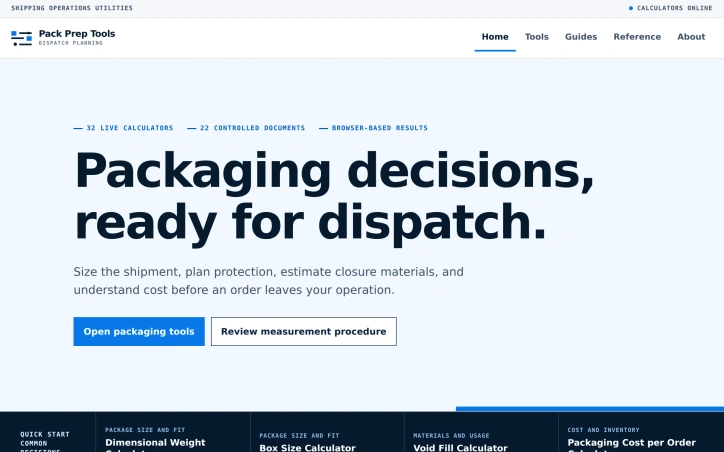
Small sellers often face a recurring operational bottleneck: making packaging decisions that balance cost, speed, and product safety. Pack Prep Tools addresses this friction by bundling 32 focused calculators into a browser-based system designed to guide users through standardized packaging workflows. The product's architecture reflects clear operational thinking. Rather than offering one kitchen-sink calculator, the platform organizes tools around a four-stage dispatch flow: measuring the final shipment, sizing protective materials, estimating closure requirements, and modeling total cost. This structure mirrors how small operations actually move orders out the door, turning an abstract calculation problem into a sequence of practical decisions. The calculator portfolio spans three operational domains. Package preparation tools handle box sizing, void fill estimation, and tape planning. Cost tracking calculators combine material usage with waste allowance and labor hours to project per-order economics. Supply-side tools address inventory and pallet planning, including cases-per-pallet calculations and unit load optimization. The breadth suggests the founder understands where small sellers typically stumble: not just which box to choose, but how many boxes to buy, when to reorder, and what a packed order actually costs. What distinguishes Pack Prep Tools from generic shipping calculators is its pairing of computational tools with reference documentation. The product includes 22 controlled documents comprising measurement guides and reference sheets. These aren't cursory tooltips; they cover substantive territory like dimensional weight divisors and clearance planning. For sellers unfamiliar with the mechanics behind their own operations, this documentation bridges a real knowledge gap. The product targets a specific customer: small ecommerce operators or fulfillment teams making packaging decisions at volume. The problem isn't one-off decisions but establishing repeatable processes and cost baselines for orders in flight. A seller who knows their box sizes but not their void fill strategy, or who suspects their packing labor is untracked, finds specific value here. Pack Prep Tools operates as a utility rather than a platform. It asks users to input their own product dimensions, protective material preferences, and labor costs, then returns calculated outputs. This approach scales to many different business models and product categories without requiring the seller to fit their operation to the tool. For operations already tracking these inputs, the calculators become immediate force multipliers on decision-making speed.

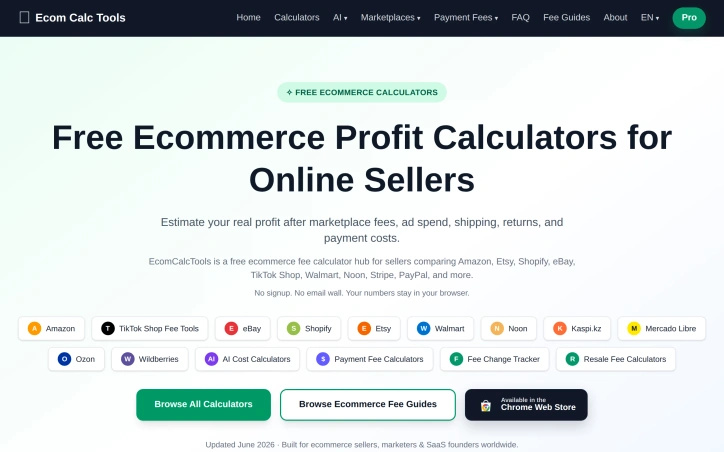
Ecommerce sellers, marketers, and SaaS founders constantly grapple with complex fee structures and calculations across multiple platforms. Ecom Calc Tools directly addresses this pain point by offering a suite of free online calculators that simplify the process of estimating real profits after accounting for various marketplace fees, ad spend, shipping, returns, and payment costs. The platform is designed for users who need to compare costs across different ecommerce platforms like Amazon, Etsy, Shopify, eBay, and TikTok Shop, as well as payment providers such as Stripe and PayPal. What sets Ecom Calc Tools apart is its commitment to transparency and data verifiability. Every calculator documents its sources, assumptions, and update policy, allowing users to review the underlying numbers and methodology. The calculators are built using official fee sources and transparent formulas, and users can report corrections if they identify any discrepancies. This approach fosters trust and ensures that users can rely on the calculations for making informed business decisions. Notably, all calculations run directly in the user's browser, eliminating the need for signup, email registration, or data storage. This design choice prioritizes user privacy and convenience. The platform also provides in-depth guides on various ecommerce fees and margins, updated for 2026, which serve as a valuable resource for users seeking to understand platform costs. With a wide range of calculators available, including ecommerce, marketing, SaaS, finance, and payment tools, Ecom Calc Tools caters to a broad user base. The absence of a signup process or email wall makes it easily accessible for quick checks and side-by-side comparisons, making it a practical resource for day-to-day planning. The entire suite of tools is available for free, with no explicitly mentioned pricing or business model to restrict access.

Simplifying payments for businesses and individuals in Kenya is a significant challenge, given the fragmented nature of the country's payment systems. CitaPay addresses this issue head-on, offering a unified platform that enables the acceptance of various payment methods including M-Pesa, card, and bank payments. The target users are businesses and individuals looking to streamline their payment processes, suggesting that the platform is geared towards merchants, e-commerce businesses, and possibly freelancers or small business owners. What stands out about CitaPay is its focus on enhancing business efficiency through fast settlement and real-time notifications. By facilitating on and off-ramp movements and providing virtual accounts, the platform aims to make financial transactions smoother and more manageable. This suggests that CitaPay is not just a payment gateway but a comprehensive financial management tool. The platform's ability to consolidate different payment methods into a single interface is a key feature. The real-time notifications and fast settlement are also crucial for businesses that require timely updates on their transactions to manage their cash flow effectively. Furthermore, the provision of virtual accounts indicates a robust infrastructure that can cater to the diverse needs of its users. Unfortunately, the available information does not provide details on CitaPay's pricing or business model. However, based on the information provided, it is clear that CitaPay is designed to be a versatile and efficient payment solution for Kenyan businesses and individuals, offering a range of functionalities that simplify financial transactions and enhance operational efficiency. Overall, CitaPay has the potential to significantly impact the payment landscape in Kenya by offering a unified, efficient, and user-friendly platform.


For businesses and individuals looking to securely manage cryptocurrency transactions, a new solution has emerged in the form of a non-custodial wallet. The primary issue this product addresses is the insecurity associated with crypto transactions, providing a safe and confidential environment for users to store their assets and receive cryptocurrency payments on their websites. At its core, this wallet is designed with security and confidentiality in mind, ensuring that users have control over their assets without relying on a third-party custodian. This is particularly significant for entities that wish to maintain the integrity and privacy of their financial transactions. By being non-custodial, it empowers users with full control and agency over their funds. Notably, the wallet's ability to facilitate the acceptance of crypto payments directly on users' websites expands its utility beyond personal asset management, positioning it as a versatile tool for both individuals and businesses. The straightforward option to either create a new wallet or open an existing one suggests a user-friendly approach, potentially easing the onboarding process for new users. While specific details regarding the pricing or business model are not provided, the emphasis on core functionality underscores the product's focus on delivering a fundamental, secure service. This suggests that the developers are prioritizing the establishment of a robust and reliable platform. Overall, the Pecunia Wallet offers a meaningful solution to the problem of insecure cryptocurrency transactions, catering to a demographic that values security, confidentiality, and control over their digital assets. By focusing on these key aspects, it establishes itself as a noteworthy option in the cryptocurrency wallet and payment processing space.

Online businesses and marketers often struggle to access verified accounts for various services, hindering their ability to operate efficiently. PvaAccMarket addresses this issue by offering a marketplace where customers can buy high-quality, phone-verified accounts for popular platforms such as Google, Facebook, and Amazon. The target audience is clearly entrepreneurs and businesses that rely on these services to function. What stands out about PvaAccMarket is its emphasis on providing a seamless and secure purchasing experience. The platform accepts cryptocurrency payments, ensuring that transactions are private and secure. The website also highlights its fast processing times, with account delivery typically occurring within 24 hours after payment confirmation. In fact, the platform assures instant delivery after payment, making it a convenient option for those who need accounts quickly. The platform's key features include a straightforward ordering process, where customers can select the types and quantities of accounts they need, and a secure payment system that holds funds until the customer confirms receipt of their accounts. Additionally, PvaAccMarket offers 24/7 support to address any customer queries or issues. The website also mentions that it provides the lowest prices in the market, with bulk discounts available, making it an attractive option for businesses with high demands. PvaAccMarket's business model is based on selling verified accounts, with payment accepted in USDT and Bitcoin. The platform provides detailed payment instructions after order confirmation, and it guarantees that transactions are completely private. Overall, PvaAccMarket is designed to simplify the process of acquiring verified accounts, making it an attractive solution for businesses and entrepreneurs seeking to streamline their operations.


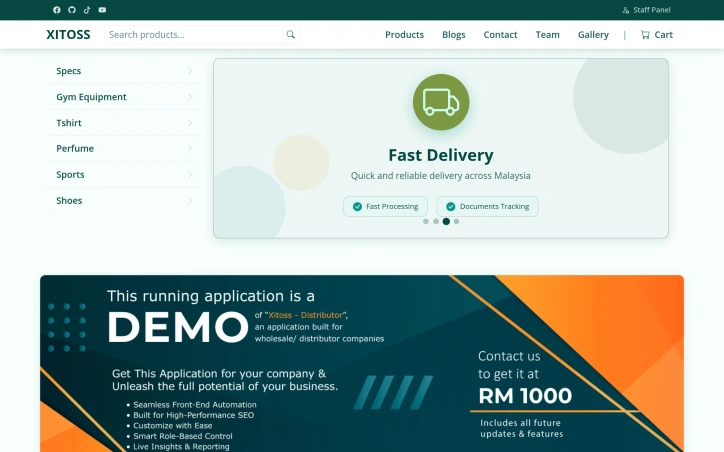
Suppliers, wholesalers, and distribution companies often struggle to manage their business operations efficiently while maintaining a professional online presence. Xitoss addresses this issue by providing a comprehensive business management software that combines e-commerce functionality with powerful operational tools. The platform is designed to help these companies streamline their daily operations and showcase their products in a single, cohesive platform. What stands out about Xitoss is its focus on delivering a tailored solution for distribution businesses, allowing them to manage their operations and online presence in one place. The platform's e-commerce-style website enables companies to present their products professionally, while its business management tools facilitate efficient day-to-day operations. The platform's capabilities include document tracking and fast delivery across Malaysia, indicating a focus on logistical efficiency. Additionally, Xitoss offers a range of product categories, including specs, gym equipment, and apparel, suggesting a flexible and adaptable product management system. The software can be easily deployed on a company's own VPS and fully customized to meet specific business needs, providing a high degree of control and flexibility. While specific pricing details are not provided, the platform's customizability and on-premise deployment option suggest that it may be geared towards larger or more established businesses with specific technical requirements. Overall, Xitoss presents a robust solution for distribution businesses seeking to streamline their operations and enhance their online presence. Its focus on delivering a comprehensive and customizable platform makes it a compelling option for companies in this sector.

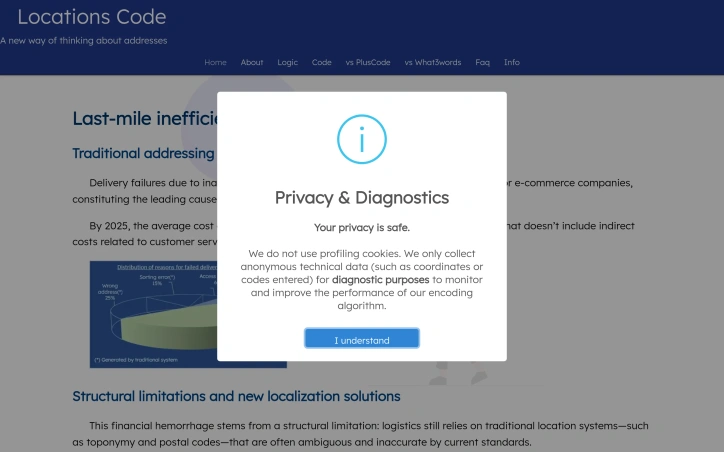
Inefficient last-mile delivery is a major pain point for e-commerce companies, with inaccurate addresses being the primary cause of logistics failures. Locations Code tackles this issue head-on by introducing an open standard for supply chain and last-mile delivery. The company's solution replaces traditional addressing systems with an 8-character encoding of GPS coordinates, providing a stable and secure way to identify delivery points. What stands out about Locations Code is its commitment to being open source and independent of proprietary databases or administrative frameworks. This sets it apart from competitors like What3words and Google's Plus Code, which rely on closed systems. By providing a simple, technologically validated element, Locations Code eliminates ambiguities in address descriptions, making it easier to automate logistics processes. The product's key features include its ability to work offline, ease of integration into any tech stack, and its application in various industries beyond logistics, such as robotics, drones, and IoT devices. The company provides detailed documentation, available on GitHub, YouTube, and Medium, making it easier for developers to understand and implement the solution. Locations Code is designed for businesses struggling with logistics inefficiencies, particularly those in the e-commerce sector. By adopting this open standard, companies can reduce delivery failures and associated costs, improving overall customer satisfaction. Notably, the product's open-source nature means that there are no licensing fees or proprietary restrictions, although the website does not explicitly mention pricing or business model details. Overall, Locations Code presents a compelling solution to a pressing problem, and its open and interoperable design makes it an attractive option for businesses seeking a reliable and scalable logistics solution.

Merchants struggling with rising customer acquisition costs face a persistent dilemma: driving traffic to their Shopify stores costs money, but customers often leave after purchasing a single item, eroding profit margins. V Bundles addresses this challenge by consolidating the tools merchants typically need to increase average order value—quantity breaks, product bundles, upsells, free gifts, and subscriptions—into a single, lightweight application. The core problem V Bundles solves is fragmentation. Previously, merchants attempting to implement comprehensive AOV strategies found themselves installing multiple expensive apps, each adding code bloat that slowed their storefronts and created visual inconsistency. The result was often worse conversions, not better. V Bundles eliminates this trade-off by offering a unified interface where merchants can create quantity breaks, mix-and-match bundle builders, Buy X Get Y offers, and sticky add-to-cart buttons without writing code. Setup is straightforward. The application offers a five-minute installation process and includes a seven-day free trial, making the barrier to entry low. The app includes 120+ pre-built theme templates, so merchants don't need design or development resources to launch campaigns that match their brand. Real customer feedback in the app's listing confirms this simplicity—store owners report quick implementations and responsive support for custom modifications. The feature set covers the primary AOV levers. Quantity discounts reward bulk purchases automatically at checkout. Free gift and add-on mechanics work at the cart level. The builder interface lets customers customize bundles themselves, which increases perceived value. Cross-sell and frequently-bought-together recommendations capture upsell opportunities at the right moment. Subscriptions enable recurring revenue streams. A real-time analytics dashboard tracks campaign performance. The app maintains a 5.0 rating on the Shopify App Store and is used by over 1,000 merchants. Customer testimonials highlight particular strengths: ease of use, responsive support teams willing to implement store-specific customizations, and measurable AOV increases. One merchant noted that volume discount features alone enabled a product line expansion (2-packs and 3-packs) that would have been difficult to manage manually. V Bundles targets Shopify merchants of all sizes who want to maximize revenue per visitor but lack the technical resources or budget to juggle multiple point solutions. For this audience, consolidation and simplicity represent the genuine value proposition.


Fragmented operations tools are a persistent problem for business owners managing multiple sales channels, inventory, and customer support simultaneously. CShop consolidates these scattered functions into a unified backend designed specifically for retail operations, restaurants, and bars seeking centralized control over commerce and customer interaction. The platform directly addresses a real operational pain point by unifying product management, order fulfillment, helpdesk support, and financial reporting in one dashboard. Rather than toggling between inventory systems, marketplace connectors, and communication tools, business owners get a single source of truth for stock levels across all channels. What distinguishes CShop is its intentional focus on specific business verticals instead of attempting universal coverage. Restaurants and bars benefit from ingredient-based stock tracking that automatically hides menu items when components deplete, integrated karaoke queue management, and kitchen views optimized for real-time prep workflows. Retail operators get omnichannel synchronization to keep inventory consistent across storefronts and third-party marketplaces. Event-focused businesses can leverage native QR code ticketing and entry flow management. The Telegram integration stands out as particularly thoughtful. Rather than forcing customers to visit a web interface, CShop embeds a full-featured sales bot directly into Telegram—users can browse, purchase, track orders, and submit support tickets without leaving the messaging app. The helpdesk system similarly operates across web and Telegram channels, reducing fragmentation in how support requests arrive and get handled. The architecture prioritizes security through domain separation: the customer-facing storefront lives on your branded domain while the admin backend remains isolated. Encrypted Go-backend communication and two-factor authentication support address legitimate concerns for businesses handling customer data and transactions. Customization controls remain with business owners, allowing direct management of colors, logos, and legal pages from the admin dashboard without requiring developer involvement. Financial reporting, low-stock alerts, audit logs, and built-in tax compliance round out the operational backbone. The onboarding process suggests professional setup involvement rather than pure self-service, and pricing details don't appear in available materials.


For indie makers and SaaS founders struggling to gain visibility in a crowded market, BacklinkLog positions itself as a shortcut—a curated directory designed to connect emerging products with discovery-minded audiences. Rather than betting on organic search or paid ads alone, the service offers a dedicated listing page that aggregates the key information potential customers need: product descriptions, screenshots, category tags, and direct links. The directory's value proposition rests on three operational claims. First, listings reach search engine indexes within 24 hours, suggesting visibility acceleration beyond typical website indexing timelines. Second, placements remain permanent as long as the subscription holds, eliminating the rotating feature carousel common in other directories. Third, each listing gets structured markup and keyword optimization to improve discoverability through both search engines and the directory's internal taxonomy. The product emerges at an interesting inflection point. Marketplace directories for indie products have proliferated—ProductHunt, Indie Hackers, and various niche aggregators all compete for founder attention. BacklinkLog's differentiation hinges on permanence and search integration rather than the social ranking or community voting mechanisms that dominate competitors. This reflects a deliberate bet that founders care more about sustained, indexable visibility than viral launch moments. The approval process advertises instant turnaround and a seven-day refund window, removing friction from the onboarding path. The absence of hidden fees is mentioned explicitly, suggesting prior frustration in the category warranted this emphasis. Beyond the standard listing tier, Premium and Sponsor options exist, with sponsors receiving featured badges and priority placement—a tiered model that mirrors conventional directory economics. The directory itself showcases products across various categories: travel compliance trackers, philosophy apps, file management tools, cash flow forecasting software, AI receptionists, and AI automation assistants. This heterogeneity suggests either broad acceptance criteria or effective long-tail positioning. The core tension: whether permanent listings and 24-hour indexing sufficiently justify subscription costs when free alternatives and social platforms already serve founder discovery. BacklinkLog's answer is that lasting visibility, earned through structured data rather than viral luck, matters more than novelty. Whether that resonates depends on individual founder priorities.

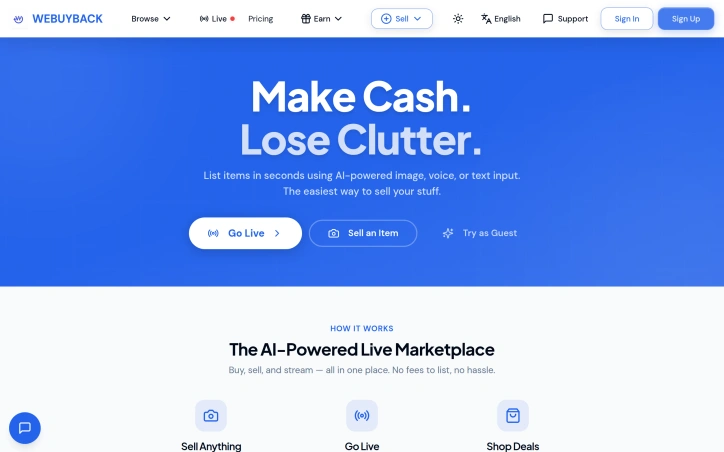
Simplifying the secondhand resale experience has become a critical gap in the marketplace as Gen Z seeks friction-free ways to monetize possessions they no longer need. WeBuyBack confronts this challenge by stripping away the complexity that plagues traditional resale platforms, where lengthy listings, unclear pricing, and cumbersome processes actively deter sellers despite significant demand for these goods. The core insight is straightforward: younger sellers prioritize speed and convenience above all other factors. Rather than requiring detailed product descriptions, multiple images, and buyer negotiations, WeBuyBack collapses the selling process into its essence—snap a photo, post it, receive payment. This friction reduction represents the platform's primary competitive advantage and the rationale behind its positioning as the antidote to modern digital clutter management. The target demographic is explicit and precise: Gen Z users drowning in unwanted items who view accumulation not as legacy goods to carefully price but as potential quick cash. For this audience, the traditional marketplace experience isn't merely slow—it's fundamentally misaligned with their expectations and ingrained behavioral patterns. WeBuyBack operates on the thesis that many sellers would gladly accept lower prices in exchange for saved time and simplified processes, a value exchange that resonates deeply within this generation. The platform emphasizes accessibility and speed as its defining advantages. The ability to participate without navigating complex product categorization or managing individual buyer interactions appeals to a generation raised on application experiences centered around single-action workflows and instant gratification. By automating or eliminating intermediate steps, WeBuyBack removes psychological friction that prevents participation. The available public information does not address pricing mechanisms, commission structures, or specific feature capabilities beyond the core selling workflow. The founder's framing prioritizes ease of use and market alignment over technological innovation, indicating the business model depends on transaction volume and velocity rather than premium features or advanced seller tools. The critical question for WeBuyBack is whether the promised simplification of resale can sustain user engagement and transaction frequency beyond initial novelty, and whether the unit economics of quick, low-friction transactions support a sustainable business long-term. The insight is sound and the positioning is clear, but execution at scale in a crowded resale market remains unproven.

Finding the right software solution in a crowded marketplace has become its own problem. Direct2App tackles this by functioning as a curated directory and discovery platform for SaaS and AI tools, aimed at both technology buyers overwhelmed by options and startup founders struggling for visibility. The platform organizes tools across numerous categories—from Analytics and Artificial Intelligence to Marketing and Software as a Service—allowing users to browse, compare, and discover solutions rather than relying solely on generic search results or paid advertising. The community component encourages ongoing engagement, positioning it as more than a static directory; members receive updates on new launches and purchasing guidance. What distinguishes Direct2App is its dual-market approach. While the platform serves end users seeking vetted software solutions, it simultaneously operates as a distribution channel for SaaS companies and early-stage startups. The "Sell With Boost" marketplace feature enables founders to showcase their products alongside carefully curated listings, gaining exposure to an audience actively searching for new tools. This creates natural incentive alignment—the platform succeeds when it attracts serious tool-seekers, which in turn draws quality submissions from builders. The emphasis on curation appears central to its value proposition. Rather than functioning as an open submission dump like some directories, Direct2App surfaces featured products, suggesting editorial judgment about what belongs at the top. This curation helps users avoid decision paralysis and makes a listing more meaningful—a featured spot carries weight precisely because it isn't automatically granted to everything submitted. The platform also appears to recognize the importance of technical visibility for startups. The mention of "dofollow backlinks" indicates that Direct2App positions itself as a channel not just for discovery but for search engine optimization, where a listing provides both direct traffic and domain authority benefits for featured products. This is particularly relevant for bootstrapped founders who cannot afford premium advertising but understand the compounding value of backlinks. The categorization strategy spans a wide range of software types rather than narrowing to a single niche, which increases the platform's relevance across different professional contexts. A designer can discover productivity tools alongside a finance professional seeking analytics solutions. For technology buyers, Direct2App simplifies the research phase of vendor selection. For startup founders, it offers an accessible venue for distribution and authority building without requiring paid marketing spend—though the platform itself monetizes through its marketplace positioning.


For optical retailers struggling to complete eyewear sales without requiring customers to visit their stores, Optogrid offers a software solution that measures pupillary distance—a critical measurement for lens fitting—entirely remotely through a standard photo upload. The platform addresses a significant friction point in online eyewear sales: the requirement for in-person pupillary distance measurements, which has traditionally been the primary reason customers abandon online orders at optical retailers. The solution targets small to mid-sized optical shops looking to expand beyond their physical locations or serve existing customers with greater convenience. By eliminating the need for specialized measurement hardware, Optogrid enables any optical store with a web presence to offer remote measurement services, potentially transforming location-based retailers into nationwide operations without additional infrastructure investment. What distinguishes Optogrid is its apparent simplicity paired with claimed precision. The system operates on any browser and device, requires no special equipment beyond a smartphone camera, and claims to deliver measurements accurate to within ±1 millimeter—calibrated against a physical reference object visible in each photo. This calibration approach addresses a fundamental challenge in photo-based measurement: ensuring consistency despite variations in camera quality and distance. The company indicates that optical stores using the platform can complete remote orders in under five minutes, a significant improvement over traditional measurement workflows. The software extends beyond measurement into operational management, offering data storage and automation features designed to reduce inconsistencies and improve team collaboration. This positions Optogrid as a modest workflow system rather than a standalone measurement tool, though the website provides limited detail on these management capabilities. The practical appeal is evident: optometrists avoid manual measurement protocols or outdated techniques, customers avoid store visits, and retailers can serve customers unable to visit physical locations. For chains or franchises, the ability to serve customers remotely from day one carries competitive advantage, particularly in markets where in-store-only purchasing remains standard. The website provides no explicit pricing information or tiered service details, though it offers free trials. The simplicity of deployment—functioning on existing infrastructure without specialized hardware—suggests the product aims for accessibility, though total cost of implementation or subscription details remain absent from publicly available materials.