Launchory
We built Launchory to solve the discoverability problem for startups. Our platform offers instant approval, permanent do...

Catalyst Healthspan Audit
Personal trainers typically sell training sessions. This startup reversed the equation by building assessment first, mak...
Best Travel Startups & Tools
Recently Listed
11 launches
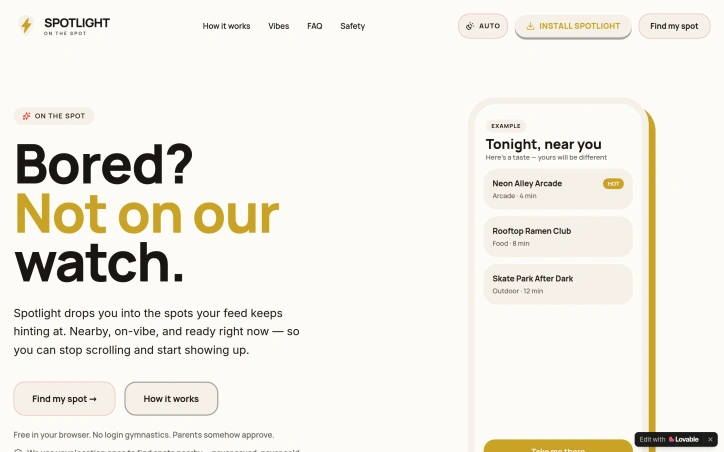
Everyone's been there: friends texting "you pick" and suddenly 20 minutes vanish deciding between pizza and that new bar downtown. Spotlight targets this exact friction point, offering a way to discover nearby venues matched to your current mood in three taps instead of endless group chat back-and-forth. The core insight is sharp. The app doesn't attempt to be a general discovery platform; it solves the specific problem of matching nearby locations to your current vibe. Rather than generic recommendations, users select from specific mood categories—sugar rush, golden hour, rainy day, first date, adrenaline, late-night study spots, or large group activities—and get matched to real places within a short radius. This vibe-driven narrowing sidesteps the paralysis of infinite choice and produces relevant results. What distinguishes Spotlight from standard location apps is its privacy posture and friction-free onboarding. The service requires no login or account creation. It pulls your location once to find nearby spots, then discards that data immediately. Saved spots live only on your phone; clear them and nothing persists. This privacy-first stance feels calculated for an app aimed at teenagers and young adults whose parents apparently scrutinize data practices. The interface prioritizes speed. Users select a location, pick a vibe, then tap for directions. The app claims an average of 60 seconds from opening to heading out the door. It also generates shareable spot screenshots designed to drop into group chats—clever positioning given its "ditch the group chat" messaging, which actually means replacing endless decision-making with a faster alternative rather than eliminating group coordination entirely. The platform surfaces 10,000+ nearby spots, though how this database is curated or maintained isn't addressed in the available materials. It operates as a free web-based service, eliminating download friction. The underlying business model isn't disclosed from the content provided. The positioning targets a specific user: the friend everyone texts for restaurant picks or activity ideas. Spotlight positions itself as the tool that lets you fulfill those requests without memorizing every hidden gem within 10 minutes. The core promise—knowing the vibe but not the venue—is genuine. Whether the app can attract beyond this niche, reaching casual users who don't need to be the plan-maker, remains open. But solving a real social friction point gives it solid traction.

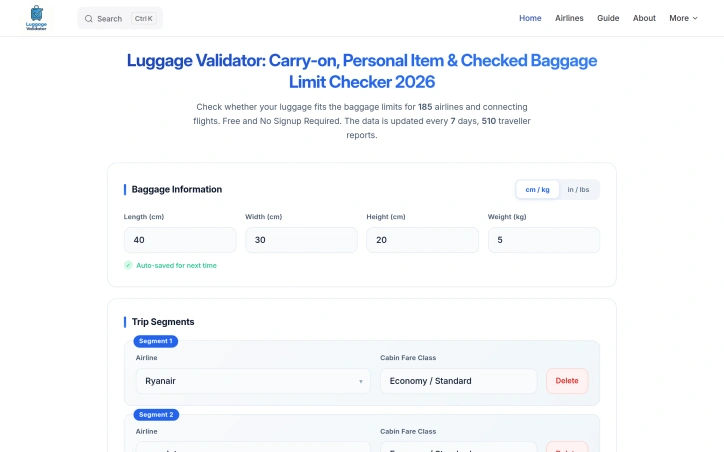
Unexpected baggage fees at the airport are one of travel's most frustrating surprises, with carriers charging $50 to $100 or more for oversized luggage. Luggage Validator addresses this problem head-on by letting travelers verify whether their bags comply with specific airlines' limits before they pack or head to the airport. The product is built for anyone flying with multiple carriers or connecting between airlines, where baggage rules can differ significantly. Its core offering is straightforward: input your luggage dimensions and weight, select your airlines and cabin classes, and get an instant yes-or-no answer on compliance across each leg of your journey. What distinguishes Luggage Validator is its commitment to accuracy. The founder, who built the tool after personally experiencing gate fees, has verified baggage rules across 185 airlines against their official websites and commits to weekly updates to catch policy changes. The data isn't just aspirational—it's grounded in real airport experiences, with over 510 travelers contributing actual incidents they've encountered. This human-sourced feedback layer adds credibility that purely algorithmic rule databases often lack. Beyond the calculator itself, the platform includes an airline baggage strictness scoring system that rates carriers on a 1-to-10 scale based on allowance size, weight limits, gate enforcement practices, and fees. Guides comparing baggage policies across airlines and explainers on emerging regulations—such as the 2027 EU free cabin bag mandate—give travelers context around the numbers. The tool is free and requires no account creation, removing friction for casual users checking a single trip. The interface lets users input multiple trip segments with different airlines and cabin classes, auto-saving data between sessions. A compliance checker delivers the verdict users actually need: will my specific bags work? The founder's approach reflects a refreshingly direct philosophy: publish the airline's official website as the source of truth on each page and invite corrections from users when rules drift. This transparency about data provenance and willingness to crowdsource updates suggests a product built in response to real traveler frustration rather than abstract market positioning. For anyone who has fought with an airline over baggage dimensions, the value proposition is immediate.
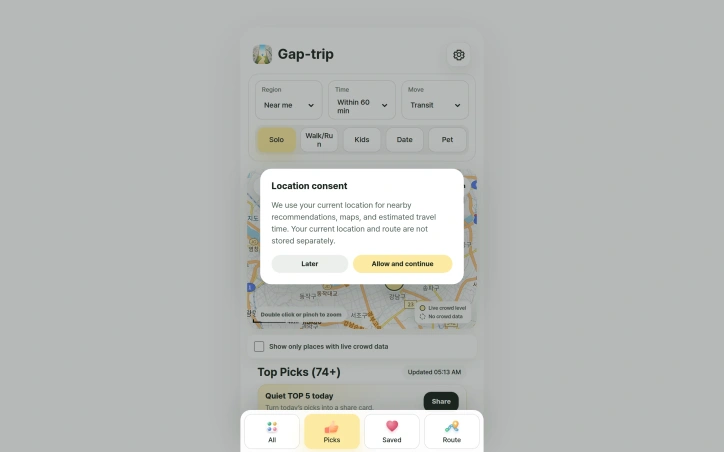
Planning casual daytips across South Korea typically requires juggling multiple applications—checking crowd conditions, weather forecasts, transit maps, and facility details separately before committing to a destination. Gap-trip consolidates these signals into a single Android app designed to streamline the outing selection process. The app targets local travelers and commuters looking to escape to nearby attractions without the planning friction. It covers all Korean regions and allows users to filter destinations by proximity (within 30, 60, or 90 minutes of travel), mode of transport (public transit, car, or walking focus), and destination type. The interface emphasizes real-time crowd congestion data where municipal sources provide it, supplemented by facility information, weather conditions, and estimated travel times. What distinguishes Gap-trip is its pragmatic approach to data integration. Rather than promising comprehensive information, the app surfaces only the signals available for each location, positioning itself as a planning aid rather than an authoritative source. Users can save favorite locations, build light courses for connected recommendations, and receive notifications when previously crowded spots become feasible to visit. The app also flags the nearest transit stations and surrounding context before users leave home, addressing a common friction point in Korean commuting. The feature set reflects a hyperlocal focus. The app provides real-time congestion indicators only in regions where public data supports them, avoiding the false precision that plagues many travel planning tools. Filtering by travel method rather than just distance acknowledges that a 30-minute walk, car ride, or train journey present fundamentally different use cases. Saved courses and notification triggers for low-congestion periods add friction-reduction for frequent users. Gap-trip operates on a freemium model. The base app is free and ad-supported. A paid option called Gap-trip Pass, priced at 2,900 won monthly, removes advertising and enhances notification and course functionality. This positioning targets budget-conscious users while capturing revenue from power users who plan frequent outings. The app remains in active development, with recent updates addressing stability and interface improvements.

Group travel planning traditionally falls on one person: the organizer who opens browser tab after tab comparing flights, hotels, restaurants, and attractions across countless platforms, never confident they've found the best option or overlooked a gem. SearchSpot targets this pain point by consolidating the research phase into a single workspace that pulls data from over twenty different OTAs, travel platforms, social media, and content sites. The product's core value proposition centers on elimination of context switching. Rather than toggling between booking sites, review aggregators, and safety databases, users describe what they want—budget constraints, trip vibe, must-haves—and SearchSpot surfaces curated recommendations with explicit reasoning for why each option was selected or rejected. The platform crawls multiple sources for pricing and card offers, filters reviews by real travelers using signals from Google Maps, Reddit, and social platforms, and includes exhaustive research on legal requirements, weather, and safety information. What distinguishes SearchSpot is its commitment to the full trip lifecycle. Beyond comparing individual components, it links flights, accommodations, activities, and restaurants into an interconnected itinerary. When a user adjusts a single detail, the entire plan recalculates to maintain budget alignment and timeline consistency. This approach recognizes that travel planning isn't actually about finding one perfect hotel—it's about orchestrating thousands of small decisions that compound. The filtering visualization is particularly instructive. Instead of dumping a thousand options at the user, SearchSpot shows the funnel of its reasoning: 250 hotels found, 50 match your vibe, 12 fit your budget, 4 finalists. This transforms research from a cognitive burden into a transparent narrowing process where users can see what was eliminated and why. The company commits to remaining free indefinitely, lowering the barrier to adoption compared to subscription-based travel planning tools. Integration with calendar and map applications suggests an opinionated view about how planning works in practice—not just in isolation, but synchronized across a user's existing digital life. SearchSpot aims at a specific problem: the exhaustion of being the trip organizer. It targets not necessarily the most frequent traveler, but the person in every group who gets voluntold to plan.

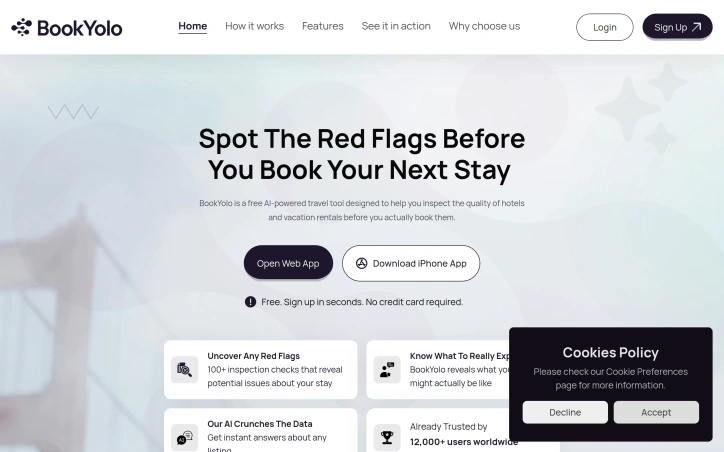
Travelers often face unexpected surprises when arriving at their booked accommodations, be it a hotel, vacation rental, or other types of stays. BookYolo addresses this issue by providing a free AI-powered travel tool that inspects the quality of these accommodations before booking. The target audience is travelers seeking to avoid unpleasant surprises and make informed decisions about their stays. What stands out about BookYolo is its comprehensive approach to evaluating accommodations. The tool performs over 100 inspection checks to uncover potential red flags, providing users with a detailed understanding of what to expect. The AI-driven technology crunches data to deliver instant answers about any listing, giving users confidence in their booking decisions. The key features of BookYolo include its ability to cover a wide range of accommodations, from vacation rentals and hotels to resorts, hostels, and motels. The tool is easily accessible via a web app and an iPhone app, making it convenient for users to check the quality of their next stay. The sign-up process is straightforward, requiring no credit card information and taking only seconds to complete. With over 12,000 users worldwide, BookYolo has established a notable user base. The tool is recognized by leading travel and tech outlets, further validating its credibility. Notably, BookYolo is free to use, with no explicit mention of any premium features or paid tiers. Overall, BookYolo offers a valuable solution for travelers seeking to make informed decisions about their accommodations, and its ease of use and comprehensive inspection capabilities make it a compelling choice.

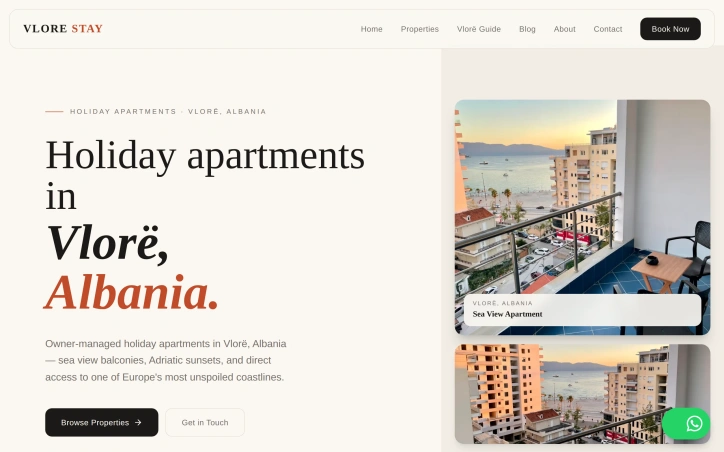
Travelers looking for holiday apartments in Vlorë, Albania are often saddled with hefty platform fees and inflexible booking arrangements when using traditional booking websites. VloreStay addresses this problem by connecting guests directly with local owners, cutting out intermediaries and the associated costs. The platform is geared towards travelers seeking authentic, owner-managed accommodations in prime locations. What stands out about VloreStay is its commitment to transparency and direct communication. Guests can WhatsApp or call the owners directly, ensuring fast and personalized responses to their queries. The owners, who live in Vlorë and manage their properties themselves, provide a level of local insight and flexibility that is often lacking in traditional booking platforms. The properties on offer are characterized by their sea views, balconies, and proximity to the Adriatic coastline. The platform's key features include direct contact with owners, flexible check-in and check-out arrangements, and the ability to make custom requests. By booking directly with VloreStay, guests can save up to 20% on accommodation costs compared to using Booking.com, as they avoid the 15% platform fee typically charged by the latter. The transparent pricing model ensures that guests know exactly what they're paying, with no hidden fees or surprises. VloreStay's business model is built around owner-managed properties, with all five listed apartments being personally overseen by the local owners. The average guest rating of 9.7 out of 10 suggests a high level of satisfaction with the accommodations and the service provided. By eliminating platform fees and fostering direct communication between guests and owners, VloreStay offers a more personalized and cost-effective alternative to traditional booking platforms.

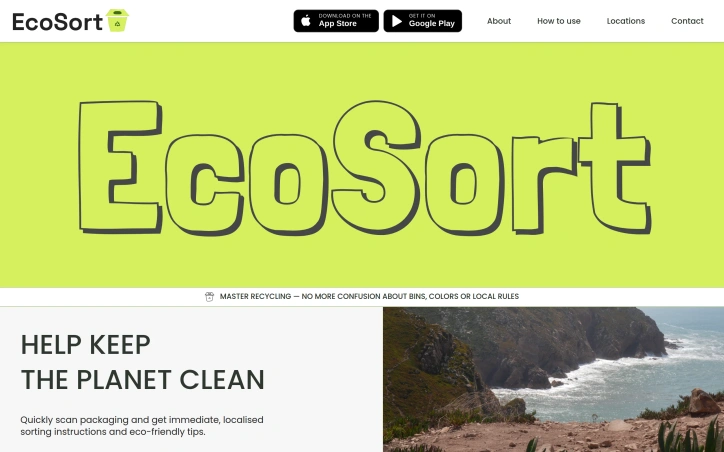
Waste management is a pressing global issue, and a significant part of the problem lies in the confusion surrounding recycling practices. Different regions have varying rules and guidelines, leaving individuals uncertain about how to dispose of waste correctly. EcoSort addresses this issue by providing a user-friendly solution for people to sort their waste effectively. The app is designed for individuals who want to make a positive impact on the environment but struggle with the complexities of local recycling regulations. What stands out about EcoSort is its commitment to making waste management effortless and accessible. By using a simple scanning process, users can quickly determine how to dispose of packaging waste and receive eco-friendly tips. The app's localized approach is also noteworthy, as it caters to specific regions and languages, ensuring that users receive relevant and accurate information. The app's key features include its ability to provide localized sorting instructions, support for multiple languages, and coverage of several countries, including Spain, France, Italy, Germany, Austria, Netherlands, and Portugal. Users can select their language and country, scan packaging, and receive immediate guidance on how to dispose of it. The app also encourages user feedback and provides a clear disclaimer, stating that its guidance is based on publicly available recycling guidelines and should be used as a suggestion rather than a definitive authority. Overall, EcoSort is a valuable resource for individuals seeking to reduce their environmental footprint. By simplifying the waste management process and providing accessible guidance, EcoSort empowers users to make a positive impact. While the app's pricing model is not explicitly stated, its availability on the App Store and Google Play suggests that it is accessible to a wide range of users.

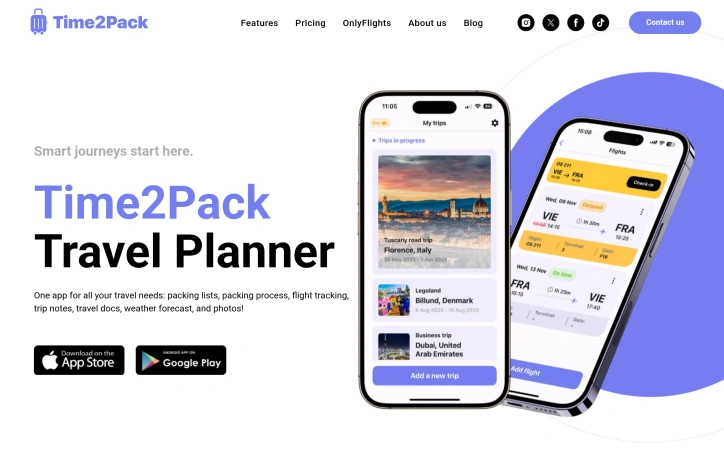
Travel planning can be a daunting task, involving numerous details that are easy to overlook. For travelers seeking to simplify their journey, Time2Pack offers a comprehensive solution. The app is designed for anyone embarking on a trip, whether it's a leisurely vacation or a business excursion, providing a centralized platform to manage every aspect of travel. What stands out about Time2Pack is its ability to cater to diverse travel needs, from creating customized packing lists to tracking flights and storing important documents. The app's packing list feature is particularly noteworthy, as it allows users to tailor their lists according to their specific trip requirements. Moreover, the gamified packing process makes the experience engaging and stress-free. The app's key features include real-time flight tracking with alerts for check-ins, delays, and gate changes, ensuring that travelers stay informed and on schedule. Additionally, users can store trip documents, notes, and photos in one easily accessible location, making it simple to retrieve important information or reminisce about past travels. Time2Pack is available for free, with no credit card required to get started. The app also promises an ad-free experience, allowing users to focus on their travel planning without interruptions. Overall, Time2Pack is an excellent choice for travelers seeking a streamlined and organized approach to planning their trips, and its commitment to being free underscores its mission to make travel less stressful and more enjoyable. With a growing user base of over 50,000 travelers, Time2Pack is establishing itself as a reliable and user-friendly travel companion.

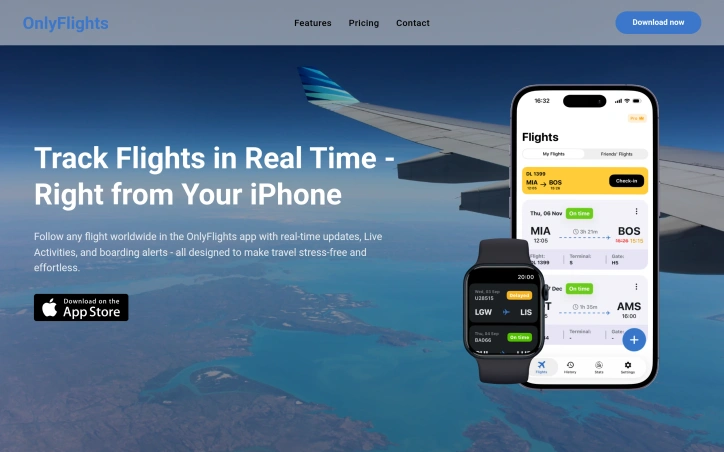
For travelers tired of cluttered and complicated flight tracking apps, OnlyFlights offers a refreshing alternative that cuts through the noise. By focusing on the essentials, it provides a straightforward and stress-free experience for users who want to stay informed about their flights without being overwhelmed by unnecessary features or notifications. The app is clearly geared towards individuals who fly occasionally, as well as those who value a clean and intuitive interface. What stands out about OnlyFlights is its commitment to simplicity and ease of use. The developers have deliberately avoided feature creep, instead concentrating on delivering a seamless and distraction-free experience that allows users to quickly access the information they need. The result is an app that feels calm and composed, even in the midst of travel chaos. Key features of the app include real-time flight tracking, live activities, and boarding alerts, all of which work together to keep users informed about the status of their flights. The app also allows users to keep a personal flight history and statistics, and to import flights from other apps with ease. Additionally, users can track flights directly from their lock screen and dynamic island, and use countdown widgets to keep track of upcoming flights. With over 50,000 users worldwide and 120,000 flights tracked since March 2025, the app has already gained significant traction. The developers are also actively working on new features, including calendar sync, which is promised soon.
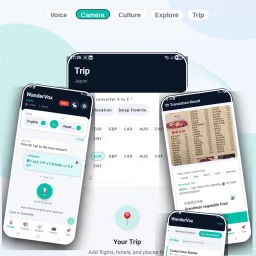
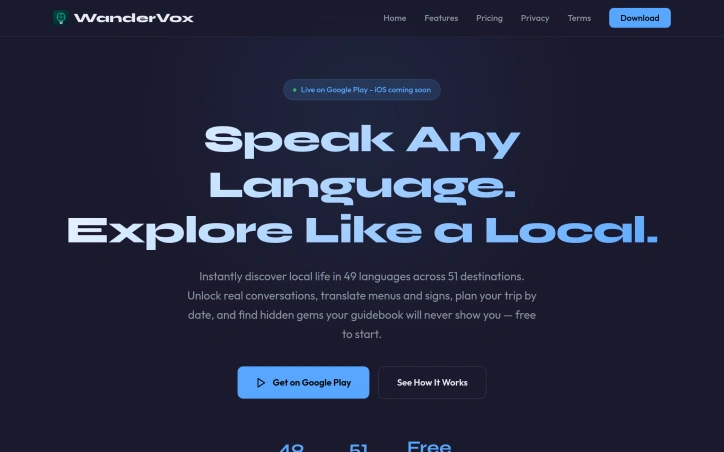
Traveling to foreign destinations can be a daunting experience, especially when language barriers hinder communication and navigation. WanderVox addresses this issue head-on, catering to travelers seeking to immerse themselves in local cultures. At its core, the app solves the problem of language barriers, enabling users to communicate effectively and discover hidden gems that often elude tourists. What stands out about WanderVox is its comprehensive approach to travel facilitation. It integrates multiple features that work together seamlessly to provide a holistic travel experience. The app's voice translation capability allows for instant speech-to-speech translation in 49 languages, facilitating real-time conversations with locals. The smart camera feature uses AI to detect and translate text from images, making it easier to understand menus, signs, and documents. The app's cultural guidance is another notable aspect, offering users essential local phrases, etiquette tips, and cultural insights for 51 destinations. This information is cached offline, ensuring access even without a signal. Additionally, the AI-curated local recommendations surface hyper-local suggestions, such as street food stalls and secret viewpoints, that are tailored to the user's location. WanderVox also includes a trip planner that organizes bookings, places, and reminders into a dated itinerary, complete with live currency conversion and booking reminders. Notably, Android users can translate typed text offline via on-device ML Kit, although voice and camera translation require a connection. The app is free to start, with availability on Google Play and a promised iOS release. By providing a robust set of features that cater to various aspects of travel, WanderVox positions itself as a valuable companion for travelers seeking an authentic experience.

Travel planning has become its own full-time job. Flight comparisons, hotel reviews, mapping, itinerary building—the mental fatigue alone stops many people from traveling as much as they'd like. Existing AI tools promise to help, but they often hand back a pile of options that still requires the traveler to synthesize and decide. That's where DestList enters: a done-for-you travel planning service that tackles the actual problem—the cognitive load of turning disparate choices into a coherent trip. What distinguishes DestList is its deliberate hybrid model. Rather than relying entirely on AI-generated suggestions, the company layers human travel curation on top. An AI engine organizes research, structures itineraries, and handles the volume of options available; human travel experts then review and refine those recommendations to ensure they feel intentional, grounded, and trustworthy. This combination addresses a real gap: automation without human judgment often produces technically correct but uninspired results. The service delivers end-to-end planning outputs. Users input their preferences, budget, and travel style, and receive structured recommendations including curated flights, vetted accommodations, day-by-day itineraries, mapped routes, and ongoing planning support. Everything arrives in one consolidated place, eliminating the scattered-tabs chaos that characterizes most trip planning today. The founder's motivation grounds the product in genuine frustration rather than abstract tech enthusiasm. The recognition that the hardest part of planning isn't gathering information—it's synthesizing it into something coherent and confidence-inspiring—reveals thoughtful product thinking. DestList positions itself not as a research aggregator but as a planning solution that removes mental overhead. For travelers who have the budget to outsource planning and want professional-grade itineraries without the DIY overhead, DestList fills a clear niche. The company's success ultimately depends on whether human curators can scale this model economically and whether the AI-human handoff genuinely improves on either approach alone. But the core insight—that planning is harder than information availability—is sound, and the execution model is more honest than pure AI generation.