
Catalyst Healthspan Audit
Personal trainers typically sell training sessions. This startup reversed the equation by building assessment first, mak...
Launchory
We built Launchory to solve the discoverability problem for startups. Our platform offers instant approval, permanent do...
Best Travel Planning Startups & Tools
Plan, book, and manage trips effectively.
Recently Listed
5 launches
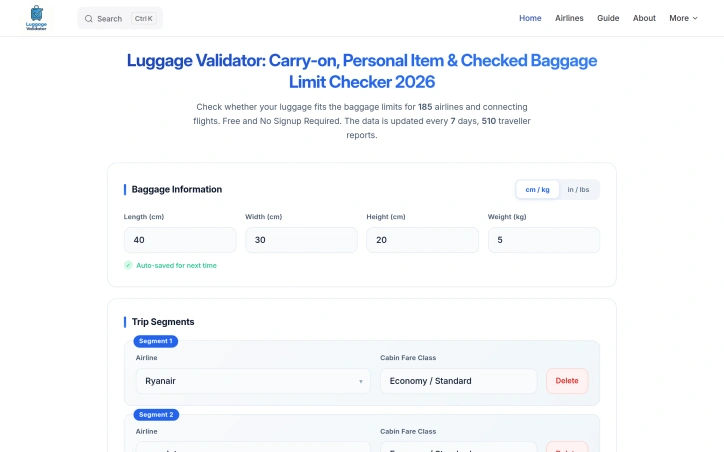
Unexpected baggage fees at the airport are one of travel's most frustrating surprises, with carriers charging $50 to $100 or more for oversized luggage. Luggage Validator addresses this problem head-on by letting travelers verify whether their bags comply with specific airlines' limits before they pack or head to the airport. The product is built for anyone flying with multiple carriers or connecting between airlines, where baggage rules can differ significantly. Its core offering is straightforward: input your luggage dimensions and weight, select your airlines and cabin classes, and get an instant yes-or-no answer on compliance across each leg of your journey. What distinguishes Luggage Validator is its commitment to accuracy. The founder, who built the tool after personally experiencing gate fees, has verified baggage rules across 185 airlines against their official websites and commits to weekly updates to catch policy changes. The data isn't just aspirational—it's grounded in real airport experiences, with over 510 travelers contributing actual incidents they've encountered. This human-sourced feedback layer adds credibility that purely algorithmic rule databases often lack. Beyond the calculator itself, the platform includes an airline baggage strictness scoring system that rates carriers on a 1-to-10 scale based on allowance size, weight limits, gate enforcement practices, and fees. Guides comparing baggage policies across airlines and explainers on emerging regulations—such as the 2027 EU free cabin bag mandate—give travelers context around the numbers. The tool is free and requires no account creation, removing friction for casual users checking a single trip. The interface lets users input multiple trip segments with different airlines and cabin classes, auto-saving data between sessions. A compliance checker delivers the verdict users actually need: will my specific bags work? The founder's approach reflects a refreshingly direct philosophy: publish the airline's official website as the source of truth on each page and invite corrections from users when rules drift. This transparency about data provenance and willingness to crowdsource updates suggests a product built in response to real traveler frustration rather than abstract market positioning. For anyone who has fought with an airline over baggage dimensions, the value proposition is immediate.

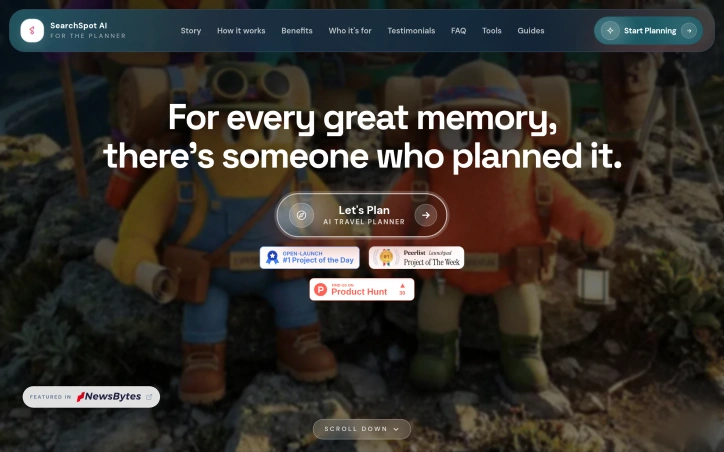
Group travel planning traditionally falls on one person: the organizer who opens browser tab after tab comparing flights, hotels, restaurants, and attractions across countless platforms, never confident they've found the best option or overlooked a gem. SearchSpot targets this pain point by consolidating the research phase into a single workspace that pulls data from over twenty different OTAs, travel platforms, social media, and content sites. The product's core value proposition centers on elimination of context switching. Rather than toggling between booking sites, review aggregators, and safety databases, users describe what they want—budget constraints, trip vibe, must-haves—and SearchSpot surfaces curated recommendations with explicit reasoning for why each option was selected or rejected. The platform crawls multiple sources for pricing and card offers, filters reviews by real travelers using signals from Google Maps, Reddit, and social platforms, and includes exhaustive research on legal requirements, weather, and safety information. What distinguishes SearchSpot is its commitment to the full trip lifecycle. Beyond comparing individual components, it links flights, accommodations, activities, and restaurants into an interconnected itinerary. When a user adjusts a single detail, the entire plan recalculates to maintain budget alignment and timeline consistency. This approach recognizes that travel planning isn't actually about finding one perfect hotel—it's about orchestrating thousands of small decisions that compound. The filtering visualization is particularly instructive. Instead of dumping a thousand options at the user, SearchSpot shows the funnel of its reasoning: 250 hotels found, 50 match your vibe, 12 fit your budget, 4 finalists. This transforms research from a cognitive burden into a transparent narrowing process where users can see what was eliminated and why. The company commits to remaining free indefinitely, lowering the barrier to adoption compared to subscription-based travel planning tools. Integration with calendar and map applications suggests an opinionated view about how planning works in practice—not just in isolation, but synchronized across a user's existing digital life. SearchSpot aims at a specific problem: the exhaustion of being the trip organizer. It targets not necessarily the most frequent traveler, but the person in every group who gets voluntold to plan.

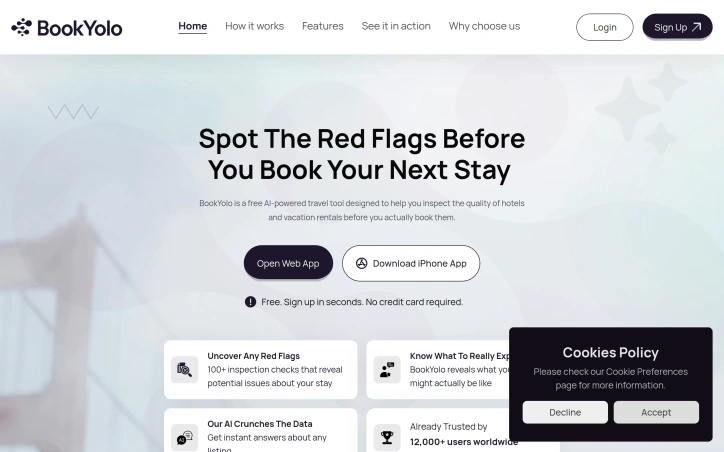
Travelers often face unexpected surprises when arriving at their booked accommodations, be it a hotel, vacation rental, or other types of stays. BookYolo addresses this issue by providing a free AI-powered travel tool that inspects the quality of these accommodations before booking. The target audience is travelers seeking to avoid unpleasant surprises and make informed decisions about their stays. What stands out about BookYolo is its comprehensive approach to evaluating accommodations. The tool performs over 100 inspection checks to uncover potential red flags, providing users with a detailed understanding of what to expect. The AI-driven technology crunches data to deliver instant answers about any listing, giving users confidence in their booking decisions. The key features of BookYolo include its ability to cover a wide range of accommodations, from vacation rentals and hotels to resorts, hostels, and motels. The tool is easily accessible via a web app and an iPhone app, making it convenient for users to check the quality of their next stay. The sign-up process is straightforward, requiring no credit card information and taking only seconds to complete. With over 12,000 users worldwide, BookYolo has established a notable user base. The tool is recognized by leading travel and tech outlets, further validating its credibility. Notably, BookYolo is free to use, with no explicit mention of any premium features or paid tiers. Overall, BookYolo offers a valuable solution for travelers seeking to make informed decisions about their accommodations, and its ease of use and comprehensive inspection capabilities make it a compelling choice.

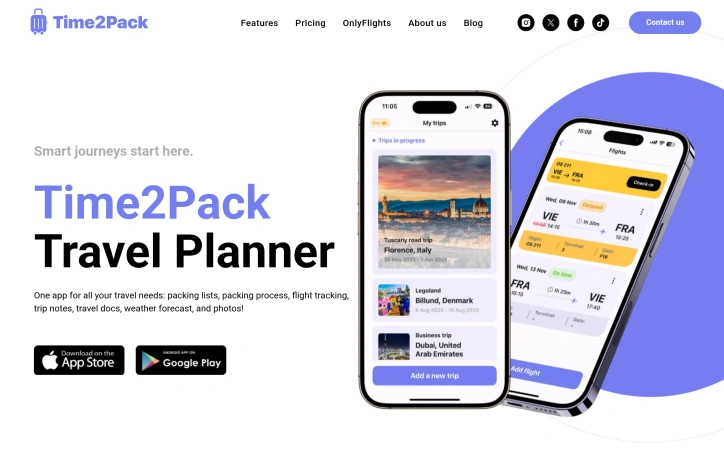
Travel planning can be a daunting task, involving numerous details that are easy to overlook. For travelers seeking to simplify their journey, Time2Pack offers a comprehensive solution. The app is designed for anyone embarking on a trip, whether it's a leisurely vacation or a business excursion, providing a centralized platform to manage every aspect of travel. What stands out about Time2Pack is its ability to cater to diverse travel needs, from creating customized packing lists to tracking flights and storing important documents. The app's packing list feature is particularly noteworthy, as it allows users to tailor their lists according to their specific trip requirements. Moreover, the gamified packing process makes the experience engaging and stress-free. The app's key features include real-time flight tracking with alerts for check-ins, delays, and gate changes, ensuring that travelers stay informed and on schedule. Additionally, users can store trip documents, notes, and photos in one easily accessible location, making it simple to retrieve important information or reminisce about past travels. Time2Pack is available for free, with no credit card required to get started. The app also promises an ad-free experience, allowing users to focus on their travel planning without interruptions. Overall, Time2Pack is an excellent choice for travelers seeking a streamlined and organized approach to planning their trips, and its commitment to being free underscores its mission to make travel less stressful and more enjoyable. With a growing user base of over 50,000 travelers, Time2Pack is establishing itself as a reliable and user-friendly travel companion.

Travel planning has become its own full-time job. Flight comparisons, hotel reviews, mapping, itinerary building—the mental fatigue alone stops many people from traveling as much as they'd like. Existing AI tools promise to help, but they often hand back a pile of options that still requires the traveler to synthesize and decide. That's where DestList enters: a done-for-you travel planning service that tackles the actual problem—the cognitive load of turning disparate choices into a coherent trip. What distinguishes DestList is its deliberate hybrid model. Rather than relying entirely on AI-generated suggestions, the company layers human travel curation on top. An AI engine organizes research, structures itineraries, and handles the volume of options available; human travel experts then review and refine those recommendations to ensure they feel intentional, grounded, and trustworthy. This combination addresses a real gap: automation without human judgment often produces technically correct but uninspired results. The service delivers end-to-end planning outputs. Users input their preferences, budget, and travel style, and receive structured recommendations including curated flights, vetted accommodations, day-by-day itineraries, mapped routes, and ongoing planning support. Everything arrives in one consolidated place, eliminating the scattered-tabs chaos that characterizes most trip planning today. The founder's motivation grounds the product in genuine frustration rather than abstract tech enthusiasm. The recognition that the hardest part of planning isn't gathering information—it's synthesizing it into something coherent and confidence-inspiring—reveals thoughtful product thinking. DestList positions itself not as a research aggregator but as a planning solution that removes mental overhead. For travelers who have the budget to outsource planning and want professional-grade itineraries without the DIY overhead, DestList fills a clear niche. The company's success ultimately depends on whether human curators can scale this model economically and whether the AI-human handoff genuinely improves on either approach alone. But the core insight—that planning is harder than information availability—is sound, and the execution model is more honest than pure AI generation.