
UpTimeTools
- No match
Machine translation — the English original is authoritative.
The Story
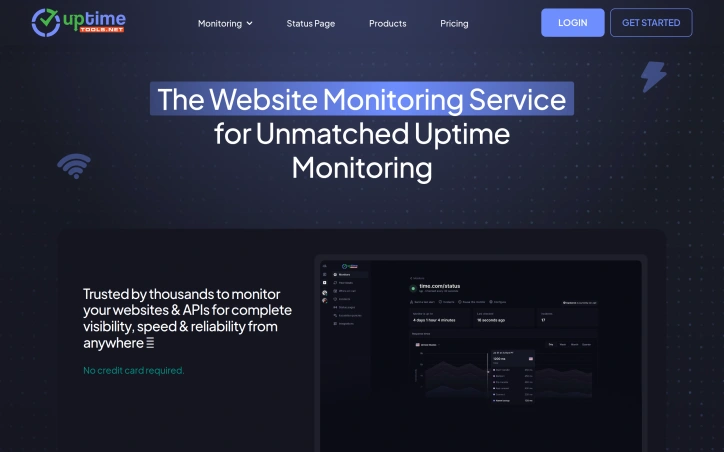
UpTimeTools is a cloud-based SaaS platform that provides continuous monitoring and performance management for websites, APIs, servers, and online services. The platform helps businesses detect downtime, monitor response times, verify SSL certificates, track page speed, observe real user experience, and receive instant alerts through multiple notification channels. Customers subscribe to recurring plans to access monitoring dashboards, analytics, status pages, reporting tools, and API integrations that improve service reliability and operational visibility. The service is delivered entirely online without physical products and is used by developers, IT teams, digital agencies, and organizations that require proactive infrastructure monitoring and uptime management.
AI Overview
AI-generatedOrganizations managing web infrastructure face a consistent blind spot: they discover outages through customer complaints rather than automated detection. A website might fail silently, an API might return errors intermittently, or performance might degrade without anyone noticing. UpTimeTools addresses this gap by providing continuous monitoring and alerting across websites, APIs, and servers, with instant notification when something breaks.
The platform targets developers, IT operations teams, and digital agencies that need proactive visibility into service reliability. These users benefit from catching issues before customers encounter them, rather than learning about problems through support channels.
Several product decisions distinguish UpTimeTools from conventional monitoring solutions. The platform combines basic uptime checking with synthetic testing—verifying critical user flows by running real browser tests that go beyond simple connectivity checks. API monitoring operates as a parallel capability, allowing independent tracking of back-end availability. Real user monitoring captures how services actually perform for visitors in production, revealing issues that lab conditions would miss.
The alerting design confronts a real operational problem: false positives erode trust in monitoring systems. Group checks combine results from multiple sources to confirm genuine incidents rather than triggering on transient hiccups. Notifications fan out through SMS, email, phone calls, Slack, and other integrated channels, reducing the risk that critical alerts get missed.
The feature set reflects operational maturity. Private location monitoring enables tracking of infrastructure behind firewalls. Custom status pages communicate incident status to stakeholders. Detailed reporting identifies performance trends and optimization opportunities. The platform operates 80 global monitoring points, enabling geo-distributed testing.
The pricing structure emphasizes accessibility. UpTimeTools operates on recurring subscription plans with no credit card required to begin using the service. The company bundles synthetic monitoring, API monitoring, and 20+ integrations into all plans rather than reserving them for premium tiers, positioning comprehensive monitoring as baseline functionality. Premium plans include unlimited user accounts, enabling growing teams to scale without per-user surcharges. Single sign-on works across all subscription levels.
The platform delivers enterprise-class capabilities—synthetic testing, real user monitoring, alert routing, incident status pages—with emphasis on simplicity. For teams that can't justify dedicated monitoring engineers or afford enterprise monitoring platforms, UpTimeTools provides a practical alternative that starts simple and grows with operational complexity.
Founder Diary
DevlogThe maker hasn't posted a diary entry yet.
Key Features
Uptime Monitoring
Continuous monitoring and alerting across websites, APIs, and servers with instant notifications.
Synthetic Testing
Verifies critical user flows by running real browser tests that go beyond simple connectivity checks.
Real User Monitoring
Captures how services actually perform for visitors in production.
Group Checks
Combines results from multiple sources to confirm genuine incidents rather than triggering on transient hiccups.
Multi-Channel Alerts
Notifications fan out through SMS, email, phone calls, Slack, and other integrated channels.
Global Monitoring Points
Operates 80 global monitoring points enabling geo-distributed testing.
Use Cases
-
1
Developers
Catch issues before customers encounter them rather than learning about problems through support channels.
-
2
IT Operations Teams
Gain proactive visibility into service reliability and prevent outages through continuous monitoring.
-
3
Digital Agencies
Monitor client infrastructure and communicate incident status to stakeholders through custom status pages.
FAQ
How does website uptime monitoring work? ▾
What is synthetic testing and why do I need it? ▾
How can I reduce false alerts? ▾
Does uptime monitoring include API monitoring? ▾
Pricing
Recurring subscription plans with comprehensive features bundled across all tiers; no credit card required to start.
Tech Stack & Tags
Founder's Resources
Discussion (1)

For now we use Hetrixtools, but we will take a look as the site looks solid
Join the conversation — sign up to comment.
Sign up freeCommunity Support
Boost this project on Sell With boost