#ai coding Startups & Tools
Discover the best ai coding startups, tools, and products on SellWithBoost.
Managing multiple Model Context Protocol servers across different AI coding tools creates a fragmented configuration nightmare. Developers end up with scattered settings across JSON and TOML files, unable to see the complete picture of what's active where. KyttoMCP directly addresses this coordination problem with a focused control panel designed around the specific workflows of teams using Claude, Cursor, VS Code, and other compatible clients. The product's core strength is its unified matrix view. Rather than hunting through configuration files, users can see at a glance which MCP servers are enabled across each client and toggle them from one interface. This single source of truth eliminates the most immediate friction point in managing multi-server setups. Beyond visibility, KyttoMCP includes practical operational safeguards. It estimates the context window cost of each server's tool definitions, letting users optimize their configuration without accidentally bloating context usage. Before any configuration change, the tool creates timestamped backups. Changes themselves are written atomically, preventing the corrupted or truncated files that plague JSON editing. These design choices reflect a philosophy of "built for trust"—the application prioritizes data safety and user confidence over aggressive feature expansion. The local-first architecture reinforces this positioning. Configuration files remain on the user's computer; there's no cloud account, no sync service, no third-party intermediary between the user and their settings. This stands out against the industry trend toward cloud-hosted management tools and appeals directly to users who value control and privacy. The pricing model is equally straightforward. KyttoMCP is free throughout its beta phase with no account required. Installation is platform-specific: a DMG file for macOS and a Windows installer, with documented launch procedures including handling for unsigned-developer warnings. The product targets a specific segment: developers and teams managing MCP complexity across multiple tools. It doesn't attempt to abstract away MCP servers themselves or add entirely new functionality. Instead, it solves a genuine coordination problem that emerges as MCP adoption grows. For teams already juggling multiple AI clients and MCP server configurations, KyttoMCP eliminates a category of repetitive maintenance work. Its strength lies in this focused scope and its commitment to safety and transparency.
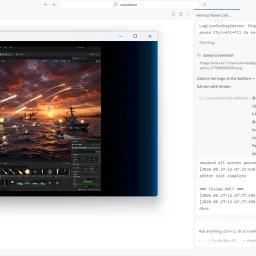
The development process is about to undergo a significant transformation with the introduction of innovative AI-powered solutions. ZeroSphere tackles a critical bottleneck in AI-driven development: execution. Current coding agents excel at generating code, but struggle with the subsequent steps, such as launching applications, interacting with software, and debugging. The company addresses this shortcoming by providing AI agents with their own isolated workspace on the user's machine, enabling them to work independently without accessing the primary desktop. What stands out about ZeroSphere is its ability to empower AI agents to take ownership of the entire development loop, from writing code to testing and iterating. The AI agent can launch applications, observe outcomes, and interact with software, freeing human developers from mundane tasks. The company's technology is built natively in Rust, ensuring native performance and zero latency overhead, even when handling massive multi-agent context states. Notably, ZeroSphere's Virtual Display Agent can see and interact with the application's UI, validating pixels, reading tables, and clicking interfaces just like a human engineer. The isolated workspace also ensures that users maintain full control of their primary desktop. The product's Bring Your Own Key (BYOK) and secure architecture allow users to integrate their own API keys without subscriptions or cloud lock-in. The company's vision is to create persistent software agents that can work on real projects over extended periods, not just respond to prompts. A demo showcases ZeroSphere successfully running a 37-hour Unreal Engine project, demonstrating its capabilities. While pricing details are not explicitly mentioned, access to the product is available directly through the website, with users able to request access for Linux or Windows. Overall, ZeroSphere has the potential to revolutionize the development process by harnessing the power of AI agents to automate complex tasks.