#software engineering Startups & Tools
Discover the best software engineering startups, tools, and products on SellWithBoost.

Performant data visualization in the browser has long required choosing between rich functionality and the responsiveness users expect. KanuniLabs addresses this by delivering a data grid and pivot table component that processes a million rows without blocking the user interface, handling sorting, filtering, and aggregation through a Web Worker engine that keeps the main thread responsive. The product targets React teams and vanilla JavaScript developers who need to display, analyze, and export large datasets. It shines where off-the-shelf grids typically falter: applications that must handle real-world data volumes without sacrificing interactivity. The founder's engineering philosophy surfaces clearly in the execution—the most difficult problem solved was not the performance itself but making that performance accessible through a straightforward installation process. Web Workers typically require framework-specific configuration across bundler environments. KanuniLabs compiles the worker directly into the package and launches it from a Blob URL, meaning developers install the library and immediately have a functioning grid without additional setup in Vite, Next.js, webpack, or plain HTML. DataGrid provides virtualized rendering of rows and columns with built-in sorting, filtering, grouping, and export capabilities. PivotGrid layers drag-and-drop field manipulation and aggregation on the same engine, making it suitable for users who need to explore data interactively. Both components support 12 locales including Arabic with full right-to-left rendering and six themes across light and dark variants. Calculated fields incorporate a formula editor designed around content security policies, avoiding dangerous eval patterns while still offering live preview and editing. The licensing model clarifies a straightforward split: 98 of 136 documented features work without a license key, covering the functionality most teams rely on—virtualization, filtering, grouping, and basic export. No watermarks, trial timers, or sign-ups gate access to this tier, even for commercial use. The paid edition adds inline editing, master-detail views, styled Excel and PDF export, calculated fields with advanced functionality, and drill-down navigation. A single key covers both components. The approach inverts the typical freemium structure: the free tier delivers a complete product rather than a time-limited taste, making it genuinely useful for smaller teams and side projects while clearly signaling where businesses requiring full feature coverage should invest. Verification is built into the product philosophy. The site runs a live playground with a million-row dataset under user control, making performance claims reproducible rather than theoretical. This transparency, combined with the straightforward business model and the pragmatic focus on solving real installation headaches, distinguishes the offering.
I built StackLedge because most software directories are filled with spam and abandoned projects. I wanted a clean, hand-curated platform dedicated strictly to APIs, developer tools, and AI agents. Every submission is manually reviewed. We do not accept low-effort wrappers or thin content. We also run a badge-trade program to help early-stage founders build their domain authority while growing our community.
Menu bar system monitors solve a real friction point for Mac users: the need to quickly check CPU, memory, and thermal performance without opening Activity Monitor or third-party bloatware. MacBar addresses this with a lightweight, native alternative that stays out of the way until needed. The product installs entirely on your terms. Rather than downloading a prebuilt binary, the terminal installation command builds MacBar locally on your machine, with checksum verification to prevent tampering. This approach eliminates a common trust barrier between users and developer tools. The application collects no telemetry and requires no account, making it straightforward for privacy-conscious users to adopt without suspicion of data harvesting downstream. The monitoring capabilities deliver what users expect from a menu bar app: real-time CPU usage, temperature readings, clock speed, and memory stats. The interface includes a per-core CPU breakdown and a 60-second history graph, which adds useful context beyond the current snapshot. For Mac users who want to diagnose sudden slowdowns or track thermal behavior under load, this granularity matters. The technical implementation choices reinforce the privacy position. MacBar is built as native code and comes ad-hoc signed rather than notarized, a trade-off that keeps installation simple at the cost of a one-time security warning. The developers have committed to supporting Apple Silicon going forward while ending updates for Intel Macs after version 1.2.5, a pragmatic decision reflecting the real-world platform shift in the Mac ecosystem. Installation presents three paths: a hardened terminal command, a ZIP file, or compilation from source via Xcode. The terminal route is the default recommendation and avoids Gatekeeper friction entirely. This layered approach accommodates different user risk tolerances and technical comfort levels. The pricing model is straightforward: the application is free. This, combined with open-source development and no account requirements, positions MacBar as a genuine public service rather than a loss leader or future revenue trap. MacBar targets a specific audience: technical Mac users who want transparency in their system performance without the overhead of full-featured system utilities. It does not attempt to be everything; it stays in the menu bar and reports metrics. For users in that niche, it removes friction and requires no compromise on privacy.

Preparation for job interviews remains a pain point for countless professionals, particularly those in competitive tech markets. Many candidates struggle not just with answering questions convincingly, but also with understanding how to position their experience through both resume formatting and verbal communication. InterviPrep addresses this multifaceted challenge through an AI-driven platform that combines mock interviewing, performance feedback, and resume optimization in a single solution. The platform targets job seekers across experience levels—from students entering the workforce to established professionals making career transitions. The approach is particularly well-suited to candidates in India and other markets where both technical expertise and structured behavioral responses determine hiring outcomes. What distinguishes InterviPrep is its integration of complementary preparation tools beyond the core mock interview. Users can convert any job description into a targeted interview session, with the AI conducting follow-up questions that adapt to responses. The platform provides granular feedback across communication quality, technical knowledge, behavioral responses, confidence, and presentation. On the resume side, ATS scoring identifies formatting and content issues that prevent applications from reaching human reviewers—a real obstacle for applicants unfamiliar with how modern recruiting systems filter submissions. The ecosystem extends further. A salary calculator, gratuity estimator, offer negotiation templates, and career gap explanation tools address the broader job transition process. This surrounding toolkit acknowledges that interview readiness is only one component of successful job seeking. The product documentation claims a user base of 50,000 professionals, a 4.6 out of 5 rating, and 12 million logged interview sessions. Testimonials from professionals at established companies like TCS and Zomato highlight confidence gains and tangible offer improvements. The platform's strength lies in treating interview preparation as a systems problem rather than an isolated skill gap. By combining realistic AI conversation practice with immediate performance analytics and ancillary career tools, it reduces friction across the entire job search cycle. The focus on ATS optimization particularly matters, as many candidates optimize their responses without considering whether their resume reaches hiring managers in the first place. The site mentions a free mock interview option, suggesting a freemium model. For job seekers willing to commit time to structured practice, InterviPrep offers a pragmatic alternative to generic interview guides or expensive coaching services.

Indonesian language models have historically struggled with a fundamental structural challenge: the language's rich system of affixes and word modifications gets fractured by tokenization approaches designed for English. Veyra, a 75-million-parameter language model, addresses this problem through an alternative architecture that treats Indonesian on its own terms. The core innovation is the NMU framework—ninmeni meaning unit—which assigns a fixed ID to each character. Rather than breaking down inflected words into subword tokens, the model ingests complete words with all their affixes intact. This preserves the semantic structure that Indonesian speakers naturally recognize, training the model on authentic linguistic patterns instead of reconstructed approximations. The approach reflects a deliberate design philosophy: that language models should learn from a language's native roots, not translated or adapted paradigms. The model was built entirely from scratch using this framework, with the 75M parameter size chosen as a conscious validation point. Developers can verify model capabilities through systematic evaluation rather than selective demonstration. The focus remains deliberately narrow: Indonesian language performance shapes corpus selection, evaluation priorities, and development direction. Veyra shows unexpected capability beyond its primary scope. Despite no explicit English training, it generates grammatically sound English sentences—an artifact of how the NMU character-level encoding treats Latin characters universally across both languages. Developers treat this as an observable phenomenon rather than a marketed feature, documenting it while continuing to investigate the mechanism. The product positions itself as a tool for builders working specifically with Indonesian language applications. By rejecting the usual transfer-learning approach that adapts English-trained models for other languages, it offers a model trained in the way Indonesian actually works. This appeals to developers seeking more authentic language understanding for Indonesian, teams building primarily for Indonesian-speaking users, and researchers interested in non-English-centric language model design. The emphasis on documented evaluation and transparency about capabilities—including what remains unverified—indicates a research-first mindset that prioritizes credibility over marketing claims. No pricing information appears in available materials, suggesting this may be an open-source or research-stage project focused on validating the NMU framework before commercial deployment. That restraint itself signals maturity: the commitment to prove the approach works before scaling operations.

Hosting that prioritizes both performance and accessibility defines this platform's core value proposition. VavaHost targets creators, developers, and small business owners who need reliable web infrastructure without navigating complex technical setups or absorbing enterprise-level costs. The service addresses a genuine gap: offering competent hosting to those who want to launch WordPress sites, e-commerce storefronts, or custom applications without getting bogged down in infrastructure management. The offering centers on three technical anchors: LiteSpeed Enterprise as the web server, NVMe SSD storage for speed, and Imunify360 for security. These aren't trendy choices—they're mature, proven technologies that directly affect user experience. Combined with free SSL certificates and cPanel access, the platform provides the tools developers expect without requiring separate subscriptions or additional fees. The ability to run Node.js, Python, and Discord bots alongside WordPress suggests a platform designed for modern, diverse workloads rather than pure WordPress hosting. Support for PHP versions 7.4 through 8.5 gives users reasonable flexibility without excessive version sprawl. What distinguishes VavaHost commercially is the risk-free trial structure. A three-day free trial requiring no credit card removes the primary friction point for prospective users deciding whether to migrate or launch their projects. This is paired with a 30-day money-back guarantee and no setup fees—a combination that signals confidence in the product and reduces customer acquisition friction. The pricing strategy remains straightforward. The published Bronze plan starts at $0.99 monthly, paired with core features like one-click WordPress deployment, weekly backups, and full cPanel access. While specific allocations for CPU, RAM, and bandwidth vary by tier, the disclosed resource limits in the trial interface suggest transparent pricing rather than surprise overages. The 24/7 VIP support claim carries weight in a market where budget hosting often means minimal support. The company frames itself as engineering-forward—emphasizing LiteSpeed performance, enterprise-grade security tools, and developer-focused features—while maintaining price positioning that appeals to cost-conscious builders. Whether this balance holds during scaling or feature expansion remains a longer-term question, but the current offering competently addresses the intersection of performance, security, and price for its stated audience.

Organizations selecting SOCKS5 proxy infrastructure face a fragmented market where vendor claims often lack independent verification. This comparison site addresses that gap by benchmarking major providers against standardized criteria rather than relying on marketing materials. The platform targets enterprises and mid-market teams conducting web scraping, data collection, or testing operations where proxy selection directly impacts both cost and reliability. It also serves developers and agencies evaluating solutions at various price points, from budget options under $2 per gigabyte to premium services at $8+ per gigabyte. What distinguishes this resource is its commitment to independent testing methodology. Rather than publishing vendor-supplied numbers, the site conducts its own benchmarks across 180 test runs per provider, measuring success rates, latency from multiple geographic probes (Frankfurt, Ashburn, Singapore), and throughput. The scoring framework weights five dimensions—success rate at 35 percent, latency and throughput at 25 percent, cost per IP/GB at 20 percent, pool quality at 12 percent, and support tooling at 8 percent. This transparency allows readers to understand trade-offs between competing priorities. The comparison table presents practical specifications: pool sizes ranging from 2 million to 150 million IPs, latency from 620 milliseconds to 1,300 milliseconds, and supported protocols. Scores cluster between 8.2 and 9.8, suggesting narrow performance differentials at the top tier. Top-ranked providers like Oxylabs and Bright Data offer pools exceeding 100 million IPs with sub-700 millisecond latency, while budget alternatives like IPRoyal deliver comparable SOCKS5 support at 1,100 milliseconds latency for fraction-of-the-price positioning. The site distinguishes datacenter SOCKS5 (for speed and consistency) from residential options, addressing different use cases. Provider reviews are keyed to specific personas—scraping teams needing scale get Oxylabs, agencies requiring granular targeting get Bright Data, and cost-conscious mid-market teams get Smartproxy. One notable gap: the site discloses affiliate relationships but doesn't articulate how those relationships are managed or whether they influence editorial placement. The methodology section mentions measuring HTTP 2xx success rates as-is without context about whether this metric equally applies across providers supporting different protocol stacks. For teams with limited proxy expertise, this resource reduces decision friction through structured comparison. The independent benchmarking claim is substantive, though readers should verify that test scenarios match their specific workload requirements—latency from Frankfurt probes doesn't necessarily predict performance for US-centric operations, for example.

Repetitive operational work drains resources and costs businesses money. Companies struggle to find AI solutions that don't require extensive technical expertise or enormous budgets, leading many teams to maintain manual workflows even when automation could transform their efficiency. Axdox addresses this gap by positioning itself as a practical AI and automation firm focused on helping businesses adopt intelligent technology without complexity or prohibitive costs. The company operates across three core verticals—voice automation, workflow orchestration, and custom AI development—targeting industries like healthcare, fintech, and SaaS that stand to benefit most from operational transformation. The company's value proposition centers on three differentiators. First, it applies AI as a foundational element rather than a superficial addition, building automation into every solution. Second, it handles the entire journey from initial consultation through deployment and ongoing support, reducing friction for clients unfamiliar with AI implementation. Third, it emphasizes data-driven optimization, using analytics and testing to validate that implementations actually deliver promised results. Axdox's service portfolio spans voice agents that handle customer calls and lead qualification, n8n workflow automation for connecting disparate business tools, custom AI agents built for specific operational needs, alongside web development and digital marketing services. The company claims these solutions drive a 50 percent reduction in operational costs with ROI achievable within 90 days, though the achievability of these metrics depends heavily on client circumstances and implementation scope. What distinguishes Axdox from the crowded automation consulting space is its explicit commitment to customization. Rather than selling packaged software, the founders describe approaching each engagement by deeply understanding client processes first, then building tailored solutions. This bespoke model commands premium pricing but promises better fit than generic platforms. The company's founding narrative—bootstrapped by Shri Siva J and Kavitha L out of frustration with the gap between AI capability and practical affordability—suggests alignment with the problem it claims to solve. The emphasis on making AI empower people rather than replace them frames automation as augmentation rather than workforce displacement, a positioning that resonates with businesses cautious about AI adoption. Axdox serves businesses ready to invest in operational transformation but lacking internal AI expertise. It competes on customization and support depth rather than technology novelty, positioning itself as a strategic partner through implementation rather than a vendor of off-the-shelf tools.

Privacy-conscious Mac users have gained a powerful ally in network management. NetMute addresses a growing frustration among computer users: the invisible background traffic that apps generate constantly, consuming bandwidth and exposing personal data without explicit permission. The core problem is straightforward but often overlooked. Most applications connect to dozens of external services—tracking pixels, analytics platforms, and advertising networks—silently transmitting data throughout your computing session. Users rarely understand the full scope of these connections or how to control them. NetMute surfaces this activity and puts the user in charge. The product offers more than simple blocking. Its Tracker Shield feature silences over 1,100 known tracking services at the network level, from advertising and analytics platforms to social media trackers and fingerprinting services. Rather than requiring users to manually identify and block individual tracking domains, a single toggle activates system-wide protection. The approach extends beyond individual tracker URLs; blocking Facebook's tracking infrastructure blocks all its subdomains automatically. Beyond tracker shielding, NetMute provides granular per-app firewall control. Users can block apps entirely from the internet or surgically disable specific endpoints while keeping others active. The application includes a privacy scoring system that rates each app based on its network behavior, helping users identify particularly intrusive software. Real-time traffic monitoring shows exactly what data flows between apps and external servers, with 90 days of searchable history stored locally on the Mac. Context-aware networking features round out the capability set. Network profiles adapt security settings based on location—stricter rules for untrusted networks like hotel Wi-Fi, looser restrictions for home networks. The software integrates with macOS Focus modes, automatically disconnecting certain apps when focus settings activate. The business model stands out for simplicity: a one-time purchase with no ongoing subscription fees. The app operates locally without requiring cloud services, meaning traffic analysis never leaves your Mac. NetMute targets privacy-focused Mac users who want transparency into app behavior and direct control over network access. It appeals to those frustrated by invisible tracking, users on limited bandwidth connections, and anyone seeking to reclaim network resources currently consumed by background activity. For this audience, NetMute transforms network management from a mysterious background process into an understandable, controllable system.

Freelancers and businesses in South Africa now have a dedicated marketplace purpose-built for local talent networks and ZAR-denominated work. Aura Social addresses a genuine friction point in freelance marketwork by enabling transactions entirely in South African Rand through PayFast, sidestepping the currency conversion overhead and international banking delays that characterize competing platforms. For freelancers operating outside major talent hubs, this localization removes barriers to cash flow and makes income more predictable. The platform serves two distinct audiences: service providers offering design, development, writing, and marketing expertise who want steady work without geographic arbitrage pressure, and project owners seeking vetted talent without navigating global platforms designed for different labor markets. The core mechanism is simple—businesses post work free of charge and hire from a verified freelancer pool, while service providers build income and reputation through completed projects. Several design choices distinguish Aura Social from the broader marketplace category. The escrow protection mechanism builds confidence for both sides, particularly important when establishing trust in newer platforms. The verification layer for freelancers creates a quality signal that reduces hiring friction for businesses unfamiliar with portfolio evaluation across borders. The dual approach—accepting both project postings and service listings—accommodates different working styles, whether participants prefer discrete projects or ongoing arrangements. The platform covers necessary marketplace mechanics: project browsing, service discovery, profile building, and portfolio documentation. This breadth keeps the feature set focused without attempting to compete on ancillary services like accounting or contract templates that larger competitors offer. Pricing structure shows product discipline. The free project posting model eliminates activation friction for new businesses testing the platform. The founder emphasizes escrow protection and local currency payment, suggesting the revenue model operates on transaction fees rather than listings or membership tiers, though specific rates remain unstated. Aura Social succeeds by constraining scope to a real market gap rather than trying to be a global competitor. Local currency, domestic verification, and regional payment infrastructure are not marginal features for South African workers—they are often deal-breakers on international platforms. By solving for that specific context, the marketplace creates conditions for sustainable freelance work rather than gig economy extraction, which is a distinct value proposition in emerging markets where earning power and payment reliability matter as much as opportunity volume.

Developers who have grown weary of subscription-based AI coding assistants and the associated data privacy concerns now have an alternative. Bodega One Code addresses the issue of costly and proprietary coding tools by offering a local-first AI coding IDE that runs on the user's own hardware. What stands out about this product is its commitment to user ownership and control. By allowing users to choose their preferred large language model (LLM) and run it locally, Bodega One Code eliminates the need for reliance on third-party servers and the associated risks of data exposure. The product's air-gap mode ensures that sensitive information remains on the user's machine. The IDE itself is fully-featured, incorporating an AI chat and an autonomous agent that reviews its own work before completing tasks. Users can hand off tasks to the agent, which runs in the background on its own git worktree, allowing for parallel processing and isolated task management. The "Loops" feature enables users to automate recurring tasks, such as doc syncs and dead-code sweeps, on a scheduled basis. Notably, the product is available for download at no cost, with no forced subscriptions. Users have the flexibility to choose from over 10 LLM providers or run models locally using tools like Ollama or LM Studio. By decoupling the coding tool from subscription fees and proprietary infrastructure, Bodega One Code offers a compelling alternative for developers seeking a more autonomous and cost-effective solution. The product's design and features suggest that it is geared towards developers who value control over their coding environment and are looking for a customizable and extensible tool. By providing a local-first AI coding IDE, Bodega One Code is poised to appeal to developers who prioritize data privacy and are seeking a more flexible and cost-effective coding solution.

Automating resource changes in Windows executables after compilation remains a tedious manual process for many development teams. Resource Tuner Console addresses this gap by providing a command-line interface that enables developers to modify resources in 32- and 64-bit Windows PE files without recompiling source code. The product targets Windows engineers, build managers, and DevOps leads who need to update application resources during the final stages of their build pipeline. It particularly suits mid-sized teams at companies between 20 and 500 employees that maintain dedicated release infrastructure, as well as smaller vendors and independent developers without dedicated release engineering staff. What distinguishes Resource Tuner Console is its focus on post-build workflow automation. Rather than treating resource editing as something that must happen at compile time, the tool enables teams to modify icons, version numbers, strings, manifests, and bitmaps as a scripted step after compilation completes. This separation of concerns offers concrete benefits: teams can adapt branding or patch versioning details without touching source code or recompiling, significantly reducing turnaround time for minor updates. The tool integrates into existing build automation by accepting command-line inputs and working within batch scripts or other Windows applications. The product emphasizes speed and consistency as primary value drivers. The marketing materials claim a substantial performance advantage over traditional GUI-based resource editors, positioning it as enabling teams to move faster and reduce human error when applying changes across multiple executables. For organizations that ship multiple versions of the same application or need to customize executables for different customers or partners, the ability to template these changes and apply them automatically addresses a real workflow pain point. Resource Tuner Console serves a specific use case within Windows development rather than attempting broad appeal. Its utility concentrates on scenarios where post-build resource customization offers enough friction reduction to justify the learning curve of command-line scripting. Teams already invested in build automation and release management processes will see the clearest value. Those still relying on manual resource editing or older GUI tools will find the switch worthwhile, though the tool assumes basic comfort with scripting and Windows executable formats.

Recruiting decisions rest on incomplete information, yet most AI tools compound the problem by hiding their reasoning under a layer of polish. MindRecruiter addresses the core frustration: recruiters who want to understand why an AI system reached a particular conclusion before trusting it with a hiring decision. The product breaks this down into a two-stage thinking model. First, it surfaces raw reasoning across six structured dimensions: an initial hypothesis, underlying assumptions that might be flawed, an alternative evaluation angle, potential red flags, unexpected considerations, and a recommended next step. Only then does it synthesize these into a professional-grade conclusion suitable for documentation or stakeholder communication. The theory is sound—that gap between unfiltered reasoning and polished output contains the actual decision-making insight. The interface is designed for speed and flexibility. Users paste job descriptions, candidate profiles, or hiring scenarios directly into a web interface. A Chrome extension adds one-click analysis for LinkedIn profiles and job postings without scraping or storing data. File uploads support PDFs, Word documents, and images. The entry barrier is deliberately low: four free analyses available immediately without authentication. For extended use, the token system removes friction while maintaining privacy. Free tokens last 30 days and persist only on the user's device—no account creation, no email tracking, no data transmission. This is a genuine technical choice rather than marketing language. Every session remains local, and the company states it doesn't log or store anything, a rare commitment in an industry where data hoarding has become default practice. The ambitions here are measured rather than grandiose. MindRecruiter is explicitly positioned as a private beta experiment rather than a polished product, which signals genuine research into how AI transparency in hiring could work rather than a rush to market. It's part of a broader free suite under SKILLSINPUT.AI that includes resume generation, salary tools, and career roadmaps. What's genuinely missing are real constraints: evidence of how the reasoning holds up on complex hiring decisions, whether six dimensions exhaust all recruiting scenarios, or what the actual output quality looks like beyond template prompts. The transparency promise is the entire product—if that reasoning is shallow or misses domain-specific nuance, the tool fails immediately. For recruiters skeptical of black-box AI but willing to experiment with something genuinely transparent, this is worth testing. For those seeking a production-ready system, it's still too experimental.

Preparing for technical interviews typically forces candidates into exhausting fragmentation: hunting for relevant questions across scattered blog posts, switching to separate coding platforms for DSA practice, and hoping they can communicate their thinking clearly during the actual interview. Stack Interview consolidates this workflow into a unified, free platform targeting developers aiming for senior-level roles. The platform tackles three specific pain points head-on. Its question bank of 1,000+ scenarios focuses on modern stack technologies—React, Node.js, Next.js, MongoDB, SQL, and system design—rather than generic definitions. These are architected around realistic problems candidates encounter in interviews at top companies. The second pillar, 215+ data structures and algorithms problems, comes with live code execution directly in the browser, eliminating the friction of local setup. Rather than leaving communication to chance, the platform includes an AI-driven mock interview feature that accepts voice input, scores responses across technical depth and communication clarity, and tailors questions to a candidate's selected target company. What distinguishes Stack Interview from existing interview prep resources is its scope consolidation. Most platforms optimize for one dimension—question banks, coding environments, or interview simulation. By integrating all three with supporting analytics like weakness tracking and company-specific readiness scoring, the tool reduces context switching and cognitive load during preparation. The business model reflects an unusual commitment to accessibility: everything is available for free with no paywall. The founder, a solo developer, built this after struggling with the exact inefficiencies the platform now solves. That origin story carries weight because the product solves real friction rather than imagined problems. The platform does target a specific audience. Candidates preparing for mid-to-senior roles in full-stack development will find the most value; those pursuing other specialties or junior-level positions may find the content overscoped. The voice-based AI interview feature, while innovative, lacks published data on performance across different accents, speech patterns, or technical communication styles. For developers serious about cracking interviews at competitive companies and tired of juggling multiple preparation tools, Stack Interview represents a meaningful consolidation. Its free-forever model removes friction to trying it, and its focus on architectural thinking over trivia aligns with how serious companies actually interview senior engineers.

Developers frequently face a significant hurdle when switching between programming languages, namely finding equivalent libraries and packages. Package Pal addresses this challenge by providing a platform that instantly suggests alternatives across multiple languages. The tool is specifically designed for developers who need to migrate projects, refactor legacy services, or learn new frameworks. What stands out about Package Pal is its use of state-of-the-art AI to bridge the gap between different package ecosystems. By leveraging this technology, it enables developers to map their existing knowledge from one language to another seamlessly. The tool's ability to provide instant translations, complete with documentation URLs, installation commands, and usage examples, is particularly noteworthy. The key features of Package Pal include cross-language support for over 15 popular languages, an IDE extension that allows for in-editor package discovery, and the option to run queries client-side using a user's own Gemini API key. This last feature is especially useful for users who require higher rate limits. Additionally, the tool provides a sidebar explorer that automatically scans the active file and lists all dependencies and their alternatives in a clean tree view. Package Pal is available as a free VS Code extension, with a clear emphasis on privacy. The tool is committed to protecting user data and provides transparent information about its data collection practices and use of third-party cookies. Users have control over their data, and the option to opt out of personalized advertising is available through Google Ad Settings or aboutads.info. Overall, Package Pal is a valuable resource for developers navigating the complexities of cross-language development.

As development teams increasingly adopt AI-powered coding tools, they face a new challenge: ensuring the quality of AI-generated code. The rise of AI-assisted coding has led to faster development velocities, but often at the cost of thorough code reviews. Engineers may commit code without fully examining it, leading to abstruse bugs and lengthy debugging sessions in production. git-lrc addresses this issue by providing a solution that encourages developers to review their code at the point of commit. What stands out about git-lrc is its focus on integrating code review into the developer's existing workflow, rather than introducing a new dashboard or separate review process. By triggering AI-assisted code reviews on commit, git-lrc provides a nudge to developers to examine their code changes carefully. The tool is designed to put the developer in control, allowing them to skip or manually review and "vouch" for their changes. These review decisions are recorded in the git log, providing a record of the team's review diligence. Key features of git-lrc include its automated review triggers, manual review and vouching capabilities, and recording of review decisions in the git log. The tool is also extremely easy to set up, requiring just 60 seconds to get started. Notably, git-lrc is completely free to use, thanks to its reliance on Google Gemini's free tier, with no limits on the number of reviews. By integrating code review into the commit process, git-lrc aims to improve the quality of code and reduce production bugs. Its straightforward setup and free pricing make it an attractive option for development teams looking to enhance their code review processes.
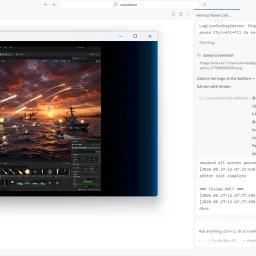
The development process is about to undergo a significant transformation with the introduction of innovative AI-powered solutions. ZeroSphere tackles a critical bottleneck in AI-driven development: execution. Current coding agents excel at generating code, but struggle with the subsequent steps, such as launching applications, interacting with software, and debugging. The company addresses this shortcoming by providing AI agents with their own isolated workspace on the user's machine, enabling them to work independently without accessing the primary desktop. What stands out about ZeroSphere is its ability to empower AI agents to take ownership of the entire development loop, from writing code to testing and iterating. The AI agent can launch applications, observe outcomes, and interact with software, freeing human developers from mundane tasks. The company's technology is built natively in Rust, ensuring native performance and zero latency overhead, even when handling massive multi-agent context states. Notably, ZeroSphere's Virtual Display Agent can see and interact with the application's UI, validating pixels, reading tables, and clicking interfaces just like a human engineer. The isolated workspace also ensures that users maintain full control of their primary desktop. The product's Bring Your Own Key (BYOK) and secure architecture allow users to integrate their own API keys without subscriptions or cloud lock-in. The company's vision is to create persistent software agents that can work on real projects over extended periods, not just respond to prompts. A demo showcases ZeroSphere successfully running a 37-hour Unreal Engine project, demonstrating its capabilities. While pricing details are not explicitly mentioned, access to the product is available directly through the website, with users able to request access for Linux or Windows. Overall, ZeroSphere has the potential to revolutionize the development process by harnessing the power of AI agents to automate complex tasks.

For developers and indie makers looking to launch their products and get discovered, Nick Launches offers a suite of tools and resources to help them succeed. The platform is designed to support those building AI products, providing practical guidance and strategic support to accelerate their launch. What stands out about Nick Launches is its focus on the AI product development community, catering to a specific niche within the broader tech landscape. The website highlights a curated list of recent product launches, showcasing a diverse range of tools and applications across categories like AI, education, content creation, and more. This suggests that the platform not only supports product launches but also fosters a community around emerging technologies. The key features of Nick Launches include its product launch services, which promise to get products in front of thousands of builders and provide a permanent backlink from a high-authority site for SEO benefits. The platform also offers a directory submission service, implying that it helps products gain visibility through targeted listings. Additionally, the website features a collection of tools and resources, including tutorials and reviews, aimed at helping developers build and launch their products more effectively. While the pricing or business model details are not explicitly stated, the platform's revenue streams can be inferred from its services. The directory submission service and product launch offerings suggest that Nick Launches generates revenue through these paid services, potentially catering to a range of budgets and needs within the developer and indie maker community. Overall, Nick Launches positions itself as a valuable resource for those looking to launch and grow their AI products, providing a combination of visibility, community, and practical support.

For web developers, digital marketers, and businesses looking to streamline their online workflows and boost their digital presence, Puspa Chaulagai offers a suite of expertly crafted online tools and applications. As a seasoned web enthusiast turned developer and SEO expert, Chaulagai has channeled his passion into creating solutions that save time and optimize digital processes. What stands out about Chaulagai's offerings is his commitment to delivering value through a blend of creativity, strategy, and technology. His tools and applications are built with a focus on clean UI/UX, SEO best practices, fast performance, and mobile-friendliness, ensuring they are not only useful but also provide a seamless user experience across various devices. Among his notable creations are the Stylish Name Maker and its AI-powered counterpart, designed to generate stylish and fancy text for gaming and social media profiles. Additionally, Chaulagai has developed a range of free online tools, including a character counter and analyzer, and an SEO meta tag generator, which cater to diverse needs such as writing, SEO, and development. Chaulagai's expertise extends beyond tool development to SEO optimization and digital marketing, where he leverages his knowledge of technical SEO, on-page SEO, and content structuring to help brands grow. His proficiency in web and app development using modern frameworks further underscores his capability to deliver robust and reliable solutions. While pricing details are not explicitly mentioned, Chaulagai does indicate his availability for consultation, suggesting a potential revenue stream through service-based offerings. Overall, Puspa Chaulagai's work is a testament to the power of self-directed learning and innovation, providing valuable resources for those navigating the digital landscape.

Inefficient last-mile delivery is a major pain point for e-commerce companies, with inaccurate addresses being the primary cause of logistics failures. Locations Code tackles this issue head-on by introducing an open standard for supply chain and last-mile delivery. The company's solution replaces traditional addressing systems with an 8-character encoding of GPS coordinates, providing a stable and secure way to identify delivery points. What stands out about Locations Code is its commitment to being open source and independent of proprietary databases or administrative frameworks. This sets it apart from competitors like What3words and Google's Plus Code, which rely on closed systems. By providing a simple, technologically validated element, Locations Code eliminates ambiguities in address descriptions, making it easier to automate logistics processes. The product's key features include its ability to work offline, ease of integration into any tech stack, and its application in various industries beyond logistics, such as robotics, drones, and IoT devices. The company provides detailed documentation, available on GitHub, YouTube, and Medium, making it easier for developers to understand and implement the solution. Locations Code is designed for businesses struggling with logistics inefficiencies, particularly those in the e-commerce sector. By adopting this open standard, companies can reduce delivery failures and associated costs, improving overall customer satisfaction. Notably, the product's open-source nature means that there are no licensing fees or proprietary restrictions, although the website does not explicitly mention pricing or business model details. Overall, Locations Code presents a compelling solution to a pressing problem, and its open and interoperable design makes it an attractive option for businesses seeking a reliable and scalable logistics solution.