#ai agents Startups & Tools
Discover the best ai agents startups, tools, and products on SellWithBoost.

Social media management at scale has historically required juggling multiple platforms and tools. Groniz addresses this fragmentation by centralizing posting and scheduling across 32+ networks—from X and Instagram to niche platforms like Bluesky, Mastodon, and Farcaster—accessible directly from Claude Code or any MCP client. The core insight driving Groniz is that creators and agencies increasingly rely on AI agents to handle repetitive tasks. Rather than building yet another dashboard, the platform inverts the traditional model: AI agents post natively through MCP and CLI integrations, treating social distribution as a programmable task rather than a human-centric workflow. For solo creators, this means telling Claude Code to cross-post a thread in one command. For agencies managing multiple client accounts, the Codex scripting capability enables batch scheduling across an entire client roster. What distinguishes Groniz is its dual-mode architecture. The same core powers both agent-driven automation and a traditional web console—not as an afterthought, but as a full-featured social suite. The console includes drag-and-drop visual scheduling, AI-assisted caption generation tuned per platform, automatic image and video sizing for each network, and comprehensive analytics. This flexibility matters: creators who prefer clicking can adopt the same connectors their AI teammates use, creating a unified ecosystem rather than forcing teams to pick between automation and human control. The product's AI layer goes beyond scheduling. Captions are formatted platform-specifically (threads for X, carousels for Instagram), and the system handles authentication and network-specific formatting transparently. The analytics consolidate reach, engagement, and growth across networks into shareable reports. For teams, Groniz layers in workspace management, role-based permissions, approval workflows for content review, and "auto actions" that trigger engagement boosts when posts hit engagement milestones. The shared content calendar keeps collaborators synchronized. The platform supports an unusually broad network roster. Beyond the obvious players, Groniz connects to Discord, Telegram, Slack, Reddit, Pinterest, Twitch, dev.to, Nostr, and others—a depth that addresses genuine pain points for communities operating across fragmented spaces. Pricing details remain sparse in available materials, though the platform advertises no credit card required and month-to-month cancellation, suggesting a freemium or paid trial approach. The multiworkspace framing hints at tiered plans scaled to individual creators, agencies, and team use cases.
Scattered AI tools fracture workflows, forcing users to juggle browser tabs, separate applications, and disconnected windows just to access different models. Prism consolidates this chaos into a unified macOS workspace, eliminating the friction of context-switching and letting users stay focused on their actual work. Built natively in SwiftUI for macOS, Prism brings together multiple AI models, code assistance, local model support, and agent automation into one integrated environment. Users invoke the application via a single hotkey from any app, gaining instant access to a suite of tools without leaving their current workspace. The product targets knowledge workers and developers who rely on AI for writing, coding, and analysis—anyone drowning in scattered tools who wants a streamlined alternative. The standout capabilities center on flexibility and consolidation. Prism allows users to compare leading AI providers within a single thread, switching between models mid-conversation without disrupting context. This is a practical solution to the lock-in problem: users aren't forced to commit to one provider but can instead evaluate and swap based on task requirements. The application also supports local GGUF models with minimal setup friction, appealing to privacy-conscious users or those with specific model preferences. Beyond chat, Prism includes a native code companion with an integrated terminal, bringing development workflows into the same environment. The platform's agent features—AI that watches, summarizes, and acts automatically—suggest a system designed to anticipate user needs rather than simply respond to them. Integration with MCP and custom tools enables connections to files, databases, and APIs, expanding what users can accomplish without leaving the application. User testimonials highlight the experience as seamless integration with macOS itself. One key differentiator is the frictionless interaction model: hitting a hotkey, asking a question, and returning to work creates a flow that respects user attention rather than demanding it. The ability to swap models mid-session without breaking conversation context directly addresses a common pain point in multi-model workflows. Prism operates under a paid licensing model, with promotional messaging around limited-time lifetime access offers paired with cloud credits. Specific pricing details remain behind a link, though the site references tiered options. For macOS users struggling with AI tool fragmentation, Prism presents a consolidated alternative that prioritizes native integration, model flexibility, and minimal friction in the core interaction loop.

Managing a coaching practice involves juggling multiple moving parts—client files, session notes, appointment scheduling, follow-up exercises—that often pull attention away from actual coaching. CoachPro Tools consolidates these functions into a single platform designed specifically for the realities of coaching work. Built by a coach for coaches, the platform addresses the administrative overhead that fractures focus during and between sessions. The core value proposition is straightforward: coaches open a single tool when a client issue surfaces, work through it interactively in real time, and have everything saved to the client's file automatically. A coach using the system notes that session documentation happens live in the platform rather than requiring after-call transcription into notes. The feature set reflects this practice-focused design. Each client gets a dedicated workspace with session history, agreements tracked on a Kanban board, a timeline of progress and milestones, and access to over 249 built-in interactive tools—frameworks like the Wheel of Life and SWOT analysis, all integrated into the interface. Coaches can run tools during screen-shared sessions or send them via link for clients to complete between appointments. The platform also includes a calendar, video calling, public booking links, and practice statistics. A notable addition is WhatsApp integration powered by an AI agent. Coaches connect their WhatsApp number to the platform, configure it with their own pricing, hours, FAQs, and booking link, and an AI agent responds to client inquiries automatically. The coach continues to see and manage every conversation from within the platform. The AI can run on Claude, OpenAI, or Gemini, with the coach providing their own information so responses stay grounded in the coach's actual offerings. The onboarding claim promises zero setup time requiring no technical knowledge. The platform operates on a subscription model with plans available and a 30-day money-back guarantee, though the marketing material does not specify pricing. The company mentions lifetime access options, suggesting confidence in long-term retention. The target audience concentrates in Latin America and Spain. The integration of session tools, client management, scheduling, and AI-assisted support in one interface addresses a real operational gap for coaches managing multiple clients while handling administrative workflows.
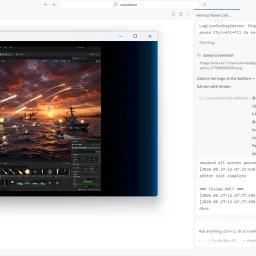
The development process is about to undergo a significant transformation with the introduction of innovative AI-powered solutions. ZeroSphere tackles a critical bottleneck in AI-driven development: execution. Current coding agents excel at generating code, but struggle with the subsequent steps, such as launching applications, interacting with software, and debugging. The company addresses this shortcoming by providing AI agents with their own isolated workspace on the user's machine, enabling them to work independently without accessing the primary desktop. What stands out about ZeroSphere is its ability to empower AI agents to take ownership of the entire development loop, from writing code to testing and iterating. The AI agent can launch applications, observe outcomes, and interact with software, freeing human developers from mundane tasks. The company's technology is built natively in Rust, ensuring native performance and zero latency overhead, even when handling massive multi-agent context states. Notably, ZeroSphere's Virtual Display Agent can see and interact with the application's UI, validating pixels, reading tables, and clicking interfaces just like a human engineer. The isolated workspace also ensures that users maintain full control of their primary desktop. The product's Bring Your Own Key (BYOK) and secure architecture allow users to integrate their own API keys without subscriptions or cloud lock-in. The company's vision is to create persistent software agents that can work on real projects over extended periods, not just respond to prompts. A demo showcases ZeroSphere successfully running a 37-hour Unreal Engine project, demonstrating its capabilities. While pricing details are not explicitly mentioned, access to the product is available directly through the website, with users able to request access for Linux or Windows. Overall, ZeroSphere has the potential to revolutionize the development process by harnessing the power of AI agents to automate complex tasks.

For traders seeking to refine their trading strategy and curb impulsive decisions, SnapPChart offers a unique solution. At its core, the platform addresses the issue of uncertainty and self-doubt that often accompanies trading, particularly when done alone. The problem it tackles is the tendency to question one's own interpretation of a trade setup, and whether it aligns with predefined rules. What stands out about SnapPChart is its reliance on AI-driven analysis to provide an objective review of a trader's setup. By uploading a chart screenshot from popular platforms like TradingView or ThinkOrSwim, users receive a graded trade plan complete with entry, stop, and target prices, risk-to-reward ratio, and a concise rationale. This analysis is designed to help traders verify their own assessments and avoid costly mistakes. The platform's key feature is its ability to provide an honest, unbiased evaluation of a trade setup. This is supported by an AI Trading Coach and Trading Profile, which enable users to identify patterns in their trading behavior, such as chasing entries or neglecting risk management. By doing so, SnapPChart aims to foster more disciplined and self-aware trading practices. Notably, users can try the service for free, with the first analysis offered at no cost and no credit card required. This allows potential users to test the platform's capabilities before committing to further analyses. Overall, SnapPChart presents a compelling solution for traders seeking to enhance their decision-making process and trading outcomes.
Managing Meta ad campaigns at scale combined with competitive intelligence typically demands substantial human effort—analysts spend hours tracking competitor moves, evaluating creative performance, and manually optimizing ad sets. BrandMov targets growth teams, performance marketers, and founders who want to offload this research and execution burden to AI agents while maintaining strategic control. The product takes an agent-first architecture: it's built as an MCP server with 39 exposed tools, allowing any compatible AI agent (Claude, Cursor, Cline, Continue, and others) to watch competitors, pull creatives on schedule, and manage Meta campaigns directly through a single API endpoint. This is distinctive—rather than building another dashboard-first tool that happens to work with agents, BrandMov inverts the priority. The agent is the primary interface; the dashboard is a secondary view for human review and intervention. The standout capability is real-time competitor monitoring. Teams can set up watchlists to track advertiser activity, and agents autonomously scan for new creative patterns, score them against frameworks like Hook-Hold-Click-Buy, and alert when meaningful shifts emerge. This transforms competitive intelligence from a manual research task into continuous background work. The system ships with curated DTC watchlists, reducing setup friction. The dashboard maintains alignment between human intent and agent execution. Everything an agent does—watched competitors, collected creatives, campaign changes—flows into the dashboard with AI-generated analysis already rendered. This bidirectional model lets teams steer via chat or dashboard interchangeably; they're viewing and controlling the same underlying data. The technical implementation is pragmatic. Rather than requiring SDK installation or proprietary integrations, BrandMov exposes its surface through a single streamable HTTP endpoint that speaks the MCP protocol—an emerging standard for agent tool access. This positions it to work with whatever AI platforms teams already use without vendor lock-in. The core value proposition targets a genuine pain point: growth teams spend substantial time on competitive analysis and campaign management work. By delegating routine competitor monitoring and campaign optimization to agents, teams reclaim bandwidth for strategic decisions. The architecture trusts agents to handle execution while humans maintain directional control. The product is available free to start.