#website auditing Startups & Tools
Discover the best website auditing startups, tools, and products on SellWithBoost.
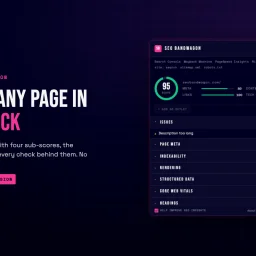
Chrome extension users seeking to evaluate webpage SEO without the overhead of premium tools now have an accessible option. SEO Bandwagon addresses the friction point of expensive auditing platforms by offering a free extension that delivers professional-grade analysis directly within the browser. The extension grades any page on a 0 to 100 scale with corresponding letter grades, then surfaces findings across twelve analytical categories. This breadth of coverage sets it apart from lighter SEO tools, spanning page metadata and indexability through structured data validation, Core Web Vitals, headings hierarchy, link analysis, and content metrics. All core functionality executes in the browser without requiring an account, removing a common barrier to adoption for casual auditing. The feature set reflects practical SEO concerns. Page meta checks validate title and meta description lengths against Google's display thresholds. Indexability diagnostics flag issues affecting crawlability and reveal redirect chains. Rendering analysis compares server HTML against the page as JavaScript interprets it, with options to preview the page as different crawlers would see it. Structured data checks catch JSON-LD, Microdata, and RDFa issues while identifying which rich results the page qualifies for. Core Web Vitals reporting draws measurements directly from the browser session. Optional touches enhance workflow efficiency. Users can export complete analyses as CSV or JSON, copy Google search results, and access a right-click context menu linking to Google's PageSpeed Insights and the Wayback Machine. Creating a free account adds a Citations tab for local business directory validation, domain information displayed beneath Google search results, and synchronization of analyses to a personal dashboard. The company's monetization separates cleanly from the extension itself. SEO Bandwagon offers paid plans for rank tracking and professional SEO services, but the free extension remains untethered from those offerings. This separation preserves the utility of the free tool and avoids the trial-to-paid conversion pressure that undercuts other freemium SEO platforms. For small business owners, content creators, and developers who need periodic SEO spot checks without subscription commitment, the extension fills a genuine gap between manual review and enterprise-grade platforms.

Conversion leaks drain revenue quietly and continuously. Leakly identifies exactly where customers abandon during the purchase journey, then ranks the fixes that will recover the most visitors. The platform targets any business optimizing a sales funnel—SaaS companies, e-commerce operations, or any product with a measurable signup or purchase flow. The product's core strength is its approach to prioritization. Rather than presenting a list of observations, Leakly orders findings by impact (recovery potential) multiplied by confidence and effort. This ranking discipline cuts through the noise that paralyzes conversion optimization—the feeling that everything is broken. The platform also refreshes its findings automatically when you run audits again after shipping changes, showing which leaks actually closed and which persisted. Leakly reads pages the way customers do, analyzing copy, information hierarchy, visual flow, and mobile experience across the entire funnel. It connects findings to actual drop-off data when you link analytics platforms like PostHog or Google Analytics, turning observations into measured stage-by-stage evidence. The tool examines five distinct leak categories: UX friction (navigation and cognitive load), messaging clarity (value proposition and CTAs), signup and onboarding friction, trust signals (social proof and security), and conversion mechanics (pricing and motivation). The unusual signal here is the single "Conversion Health" score computed across the whole funnel. Rather than fragmenting feedback into dozens of individual findings, Leakly produces one number that shifts as you ship fixes. This design suggests intentionality around making optimization feel like progress rather than endless problem-finding. The onboarding is frictionless—paste a URL, no tag installation or account setup required. An audit completes in roughly 60 seconds. The tool is free to start with no credit card. Integrations with analytics platforms and services like Stripe appear to be planned, with Amplitude, Clarity, and Segment mentioned as forthcoming connectors. The implicit business model relies on free conversion audits drawing users into a platform that deepens with analytics integrations and likely paid tiers. Leakly positions itself against hunches and vibes, betting that teams running multiple audits and connecting real data will see enough value to upgrade.