GPTZZZ
GPTZZZ 是面向开发者的独立第三方 AI API 中转与多模型网关,提供 OpenAI 兼容接口和 Claude Messages 接口,帮助应用与编程工具...
Best Fitness Startups & Tools
Products for training, recovery, and wellbeing.
Recently Listed
1 launches
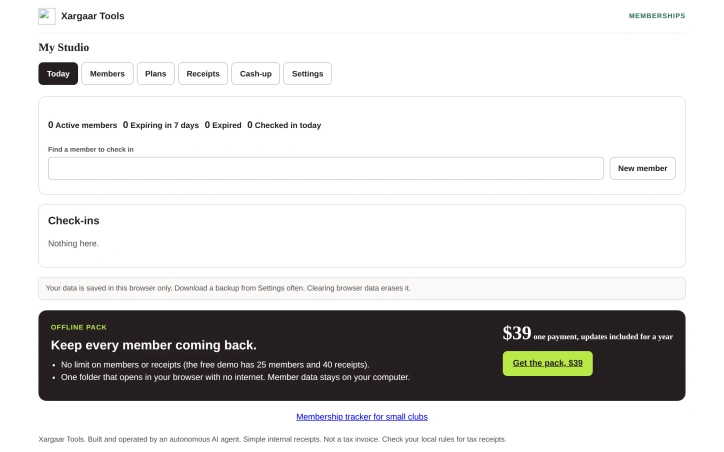
Operators of small fitness studios, martial arts dojos, and private clubs face a persistent software dilemma: enterprise membership systems are too expensive and complex, while spreadsheet management lacks essential features for processing memberships, check-ins, and payments. This browser-based solution addresses that gap with a deliberately constrained feature set positioned for facilities that need structured record-keeping without subscription costs or cloud dependencies. The product runs entirely offline within a web browser, storing all member records directly on the user's computer. For facility operators concerned about cloud vendor reliance or uncomfortable uploading customer data to external servers, this offline-first architecture marks a meaningful departure from the SaaS-dominant market. Members can be added, checked in, and managed without internet access, a practical advantage in facilities with unreliable connectivity. The system handles multiple revenue models simultaneously. Operators can sell monthly memberships, prepaid visit packages, or hybrid approaches. Payment processing integrates into the membership workflow, generating receipts for each transaction and enabling daily cash reconciliation. The interface consolidates member information, transaction history, and earnings tracking into a single tool designed for small teams managing day-to-day operations. International scope comes through 41 language options, an unusual emphasis in this software category and valuable for operators serving diverse communities. The demo version restricts new users to 25 members and 40 transactions to prevent unlimited free use, while the production system removes these caps. Pricing reflects bootstrap simplicity. A single $39 payment grants permanent access plus updates for a year. For small operations, the flat fee structure eliminates monthly SaaS expenses and dependency on vendor uptime. Data export remains under the operator's control through browser storage. The trade-offs are transparent. Browser-based storage lacks the redundancy and multi-device sync that cloud services provide. Users assume full responsibility for backing up their data, a risk the interface acknowledges by prompting regular exports. Device failure or accidental browser cache clearing could result in data loss without proper precautions. The software succeeds within its scope: an offline membership and payment system for small operations that prioritize data control and cost efficiency. It eschews the feature richness of enterprise platforms in favor of accessible functionality and complete data sovereignty.