Catalyst Healthspan Audit
Personal trainers typically sell training sessions. This startup reversed the equation by building assessment first, mak...
Launchory
We built Launchory to solve the discoverability problem for startups. Our platform offers instant approval, permanent do...
Best Social media scheduling tools Startups & Tools
Schedule posts across multiple social platforms.
Recently Listed
1 launches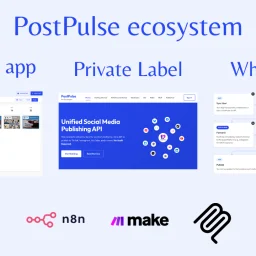
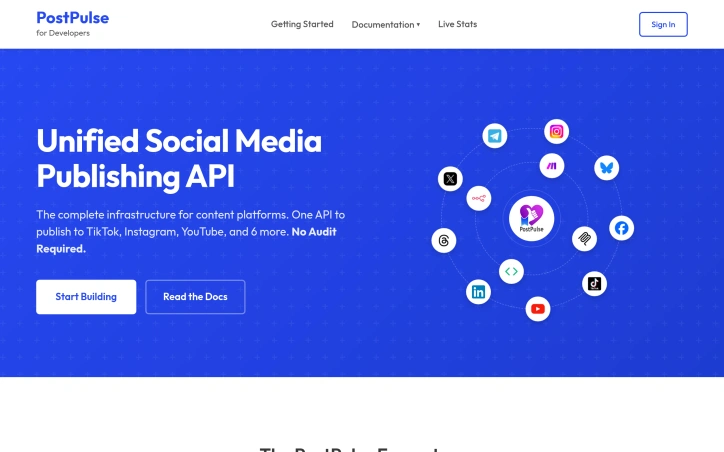
Developers managing social media integrations across multiple platforms face a fragmented ecosystem. Each service—Meta, TikTok, Google, and others—maintains separate API documentation, authentication flows, and platform-specific requirements. Beyond the technical complexity, integrating these services requires passing individual developer app reviews, a process that can consume months. Once integrated, the maintenance burden proves equally taxing: token refreshes, rate limits, API version changes, and deprecations demand ongoing attention. PostPulse addresses this consolidation problem by positioning itself as a centralized integration layer. Rather than building direct connections to nine or more social platforms individually, developers can route their publishing logic through a single API, delegating the platform-specific work to PostPulse's infrastructure. The company handles the full compliance and operational overhead: managing developer app approvals, maintaining authentication tokens, absorbing API changes, and monitoring rate limits across platforms. This shift from custom integration to outsourced connectivity appeals primarily to companies building social features—whether publishing tools, content management platforms, or marketing applications—without dedicated platform engineering resources. For smaller teams or bootstrapped startups, the appeal is clear: avoid months of parallel integration work and redirect engineering capacity toward core product features. The core value proposition rests on complexity reduction and maintenance economics. Instead of a team member tracking Meta's latest API deprecations or managing token lifecycle across platforms, that responsibility becomes PostPulse's. The unit economics improve when integration work—particularly the audit phase—would otherwise stall shipping or require hiring specialized expertise. The company positions itself as solving a genuine infrastructure gap. While social platforms have published APIs for years, the friction surrounding them remains high enough that many developers prefer to pay for abstraction. The degree to which PostPulse successfully executes that abstraction—covering not just happy-path publishing but edge cases, rate limiting, and versioning—will determine whether the product becomes table stakes or remains a worthwhile optimization. Pricing and business model details were not provided in available materials.