Catalyst Healthspan Audit
Personal trainers typically sell training sessions. This startup reversed the equation by building assessment first, mak...
Launchory
We built Launchory to solve the discoverability problem for startups. Our platform offers instant approval, permanent do...
Best Website builders Startups & Tools
No-code platforms and templates to build websites quickly without coding expertise.
Recently Listed
11 launchesSmall businesses operating brick-and-mortar locations—restaurants, salons, shops—often maintain active Google Maps presence with reviews and photos but lack either the technical knowledge or budget to build a proper website. Blasa solves this gap by automatically converting a Google Maps listing into a fully functional, multilingual business website. The product's core strength lies in its content philosophy: the website draws exclusively from genuine customer reviews, photos, and business metadata already on Google. Nothing is AI-invented. Headlines, testimonials, and competitive advantages all trace back to what real customers have written. This authenticity-first approach distinguishes it from template-based website builders that generate generic copy. Multilingual support emerges as a notable capability. Rather than treating languages as an afterthought, Blasa defaults to generating websites in the language of the reviews plus English, with proper right-to-left formatting for Arabic, Hebrew, Persian, and Urdu. This design choice acknowledges the reality of modern local businesses serving diverse neighborhoods. The user experience reduces to its essentials: paste a Google Maps link, and the system handles everything else. No code, no template selection, no form-filling. The AI derives a color scheme from the business's logo and selects typography based on the business name, creating thematic coherence without manual configuration. The resulting website publishes immediately on a custom subdomain. From a discovery standpoint, Blasa embeds LocalBusiness structured data and applies SEO optimizations, helping websites surface in search results and AI assistant recommendations. For a local business competing against larger establishments, this integration with machine-searchable data matters. The pricing model reflects accessibility as a core principle. The free tier includes a complete multilingual website with structured data and SEO capabilities, offset by a small labeled advertisement. The Growth plan costs $19.99 annually, dropping to roughly $1.67 per month. An alternative $39.99 one-time purchase conveys permanent ownership. These price points remain within reach for micro-enterprises that might otherwise skip having a web presence entirely. The product targets an underserved segment: businesses too small to justify agency fees or developer time, yet established enough to have genuine customer reviews worth showcasing. For this audience, Blasa addresses a genuine friction point in moving online.


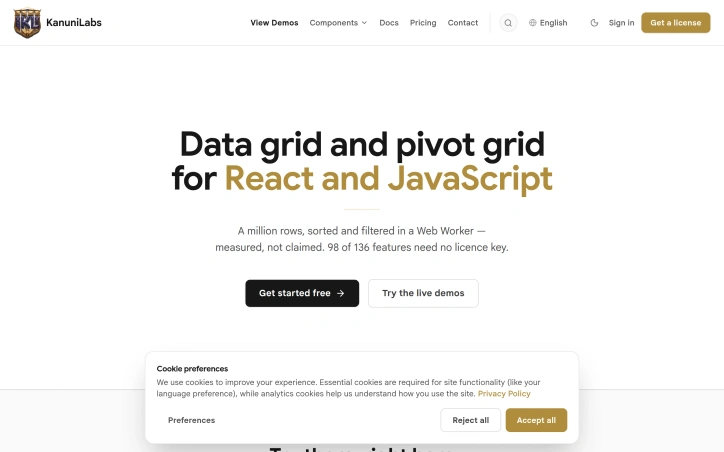
Performant data visualization in the browser has long required choosing between rich functionality and the responsiveness users expect. KanuniLabs addresses this by delivering a data grid and pivot table component that processes a million rows without blocking the user interface, handling sorting, filtering, and aggregation through a Web Worker engine that keeps the main thread responsive. The product targets React teams and vanilla JavaScript developers who need to display, analyze, and export large datasets. It shines where off-the-shelf grids typically falter: applications that must handle real-world data volumes without sacrificing interactivity. The founder's engineering philosophy surfaces clearly in the execution—the most difficult problem solved was not the performance itself but making that performance accessible through a straightforward installation process. Web Workers typically require framework-specific configuration across bundler environments. KanuniLabs compiles the worker directly into the package and launches it from a Blob URL, meaning developers install the library and immediately have a functioning grid without additional setup in Vite, Next.js, webpack, or plain HTML. DataGrid provides virtualized rendering of rows and columns with built-in sorting, filtering, grouping, and export capabilities. PivotGrid layers drag-and-drop field manipulation and aggregation on the same engine, making it suitable for users who need to explore data interactively. Both components support 12 locales including Arabic with full right-to-left rendering and six themes across light and dark variants. Calculated fields incorporate a formula editor designed around content security policies, avoiding dangerous eval patterns while still offering live preview and editing. The licensing model clarifies a straightforward split: 98 of 136 documented features work without a license key, covering the functionality most teams rely on—virtualization, filtering, grouping, and basic export. No watermarks, trial timers, or sign-ups gate access to this tier, even for commercial use. The paid edition adds inline editing, master-detail views, styled Excel and PDF export, calculated fields with advanced functionality, and drill-down navigation. A single key covers both components. The approach inverts the typical freemium structure: the free tier delivers a complete product rather than a time-limited taste, making it genuinely useful for smaller teams and side projects while clearly signaling where businesses requiring full feature coverage should invest. Verification is built into the product philosophy. The site runs a live playground with a million-row dataset under user control, making performance claims reproducible rather than theoretical. This transparency, combined with the straightforward business model and the pragmatic focus on solving real installation headaches, distinguishes the offering.

Removing backgrounds from images has long required either manual effort or expensive software. Bg Remover addresses this friction by bringing AI-powered editing directly to browsers, eliminating the need for installations or account signups. The platform targets eCommerce businesses, social media content creators, designers, and marketers who regularly need clean product shots and professional-looking visuals. The tool delivers on its core promise: processing images through AI that detects edges and fine details like hair and fabric textures with precision, completing the work in seconds rather than minutes. What distinguishes Bg Remover in a crowded space is its execution. The browser-based approach means users upload an image and receive a transparent PNG without friction. The live preview comparison, which lets users drag a slider to inspect the output against the original, demonstrates confidence in the edge detection quality. The platform claims hair-level precision with no halos or manual touch-ups required. Support for major formats including PNG, JPG, and WEBP, with a generous 20MB file size limit, covers the typical use cases. Beyond background removal, the platform positions itself as a broader image editing suite. The offerings include a background changer for different contexts, an image upscaler for resolution improvements, and color correction tools. All of these run in-browser, avoiding the upload-wait-download cycle users typically endure with cloud services. The stated user base of 250,000 creators worldwide suggests meaningful traction. The missing element from the public-facing materials is clarity on the business model and pricing. This could indicate either a completely free offering or a freemium model with premium features not highlighted on the homepage. Also absent from the marketing materials is acknowledgment of limitations. Every AI background removal tool has edge cases where it struggles, whether with complex hair, transparent objects, or unusual lighting. Prospective users should test the tool before committing workflows to it. For creators and businesses tired of expensive editing software or manual cleanup work, Bg Remover offers a low-friction entry point. The test-without-signup approach lets potential users validate the tool's output quality for their specific use cases before deciding whether it fits their workflow.

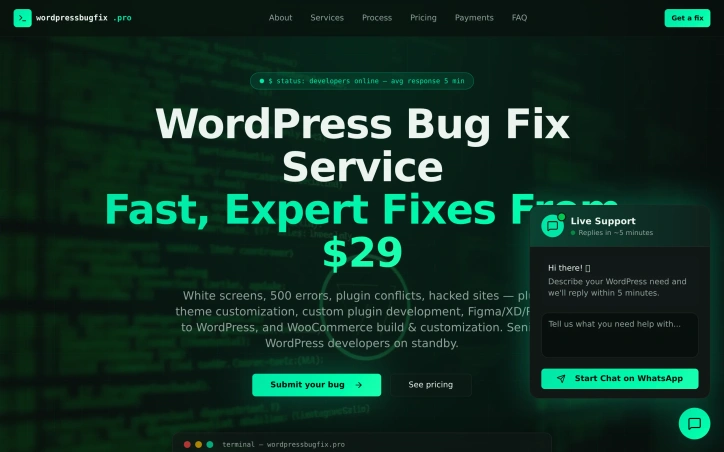
Managing emergency WordPress issues can derail site owners—unexpected outages, plugin conflicts, and security breaches demand immediate expert attention, yet finding reliable developers who won't overcharge or drag out repairs remains difficult. WordPress Bug Fix Service addresses this pain point directly, positioning itself as a fast-response alternative for both acute problems and broader customization work. The service maintains senior developers available around the clock with a stated average response time of five minutes. Their scope extends beyond emergency repairs to encompass theme customization, Figma-to-WordPress conversions, custom plugin development, WooCommerce store builds, malware cleanup, and performance optimization. This breadth indicates the team handles everything from quick surgical fixes to complete rebuilds, reducing the operational friction of juggling multiple vendors for different WordPress tasks. The payment structure sets itself apart from subscription-based support models. Clients pay 25 percent upfront to initiate work, then the remaining 75 percent only after the fix ships and performs as expected. This arrangement distributes financial risk and eliminates hidden fees—a departure from traditional WordPress agencies that charge retainers or require long-term commitments. The service credits 1,200 resolved bugs and maintains a 100 percent satisfaction guarantee, though these claims lack independent verification in the available materials. The workflow emphasizes transparency: initial assessment includes reproducing the issue and providing a flat-rate quote before any major work begins. Developers work on staging environments first, minimizing production risk. The diagnostic approach shown in their marketing materials depicts systematic problem-solving rather than a black-box operation. Practical considerations merit attention. The service requires clients to provide temporary access to wp-admin and hosting credentials, introducing security decisions that conscientious site owners must evaluate. Additionally, five-minute average response times assume developers are genuinely staffed to handle demand spikes; such averages mask variation across queue depths and time zones. The product targets site owners facing unexpected downtime who value speed and predictable costs over traditional agency relationships. For WordPress professionals or shops managing multiple sites, the per-fix pricing model costs significantly more over time than annual retainers. For isolated problems requiring expert diagnosis, however, the approach delivers clear value.

Developers building backend systems spend countless hours recreating the same database interfaces across projects: grids to list records, forms to add and edit entries, modals for data capture, export buttons. ArtiGrid targets this inefficiency by automatically generating complete CRUD interfaces from database table structures, converting what typically takes hours of manual coding into a configuration task. The tool addresses a real pain point for PHP developers working in Laravel, CodeIgniter, or vanilla PHP who need to expose database tables to internal teams or end users. Whether managing customer records, product catalogs, appointment schedules, or inventory systems, teams can configure ArtiGrid once and generate a working admin interface immediately rather than hand-building grids, forms, validation, and AJAX calls for every table. What distinguishes ArtiGrid from conventional CRUD generators is its framework-agnostic design. Rather than locking developers into a specific framework, it integrates into existing codebases without requiring architectural restructuring. The generated interfaces use an MVC-friendly approach, meaning teams can adopt it incrementally without rewriting their applications. The product goes beyond basic CRUD functionality. It includes AJAX-powered data grids that load without full page refreshes, built-in search and filtering, pagination, column sorting, and instant export to Excel, PDF, and CSV formats. More sophisticated use cases benefit from support for charts, dashboards, nested tables, and fields that understand database relationships. Automatic CRUD forms inside modals handle create and edit operations without requiring custom markup. For teams seeking an even faster workflow, ArtiGrid Builder Pro shifts the experience from code-based configuration to visual database browsing. Users point the tool at a table and receive a working admin panel ready for review and deployment, eliminating configuration code entirely. The tool supports PHP 8 and emphasizes fast load times through AJAX interactions that avoid full-page reloads. This focus on responsiveness applies even to generated admin panels that might traditionally feel sluggish. ArtiGrid solves a legitimate problem for PHP teams building administrative interfaces repetitively. Its framework flexibility and feature scope beyond simple CRUD make it a compelling option for back-office development workflows.


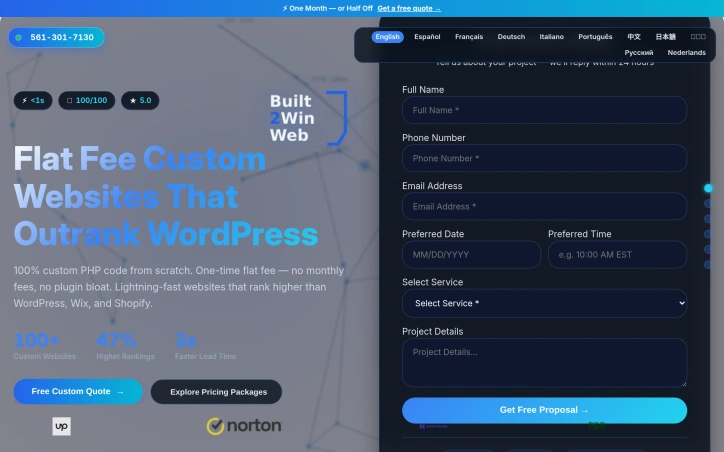
Web development has long been dominated by WordPress and drag-and-drop platforms that promise quick solutions but deliver slow, bloated sites paired with ongoing monthly fees. BuiltToWinWeb addresses this pain point by offering hand-coded PHP websites built entirely from scratch with a single flat fee and no monthly subscriptions. The service caters to businesses across industries—law firms, accounting practices, construction companies, medical clinics, and digital agencies—that need professional websites to rank competitively on Google. Rather than choosing between expensive custom development and impersonal templates, clients get custom-built solutions designed specifically for their needs. What distinguishes BuiltToWinWeb from competitors is its commitment to code quality over convenience. Every website is built from raw HTML, CSS, JavaScript, and PHP without reliance on templates, plugins, or platform-specific constraints. This approach translates to measurable results: the company highlights a portfolio of over 100 custom sites with an average PageSpeed score of 98, faster load times than WordPress alternatives, and better search rankings. The founder credits lightning-fast performance as the reason sites built this way outrank platform-based competitors. The service offerings span business websites, ecommerce storefronts, custom database applications, and WordPress migration projects. Case studies demonstrate practical features tailored to industry verticals: law firms receive intake forms and case tracking, accounting firms get client portals and appointment booking, construction companies get project galleries with quote forms. These aren't added features bolted onto a generic template—they're designed into the site architecture. The business model reinforces the no-monthly-fees positioning. Clients pay a single flat fee upfront for a complete website and own the result entirely. Package options exist for different project scopes, with quotes provided within 24 hours. The tension worth noting: custom PHP development requires more upfront thought and potentially higher initial costs than WordPress solutions, and it trades the flexibility of plugin ecosystems for specialized development. But for businesses prioritizing performance, ownership, and search ranking—and willing to pay once rather than forever—the tradeoff reads as deliberate rather than limiting. BuiltToWinWeb occupies a specific niche: businesses that view their website as a long-term asset, not a platform to rent.
Indian doctors and clinics are struggling to establish an online presence, with a staggering 57% lacking a website and only 28% owning their digital home. RetailGrowthAI addresses this issue by providing a comprehensive solution to help these healthcare professionals gain visibility in the age of AI-driven search. The company's focus is on creating authority websites for doctors and clinics, optimized for Generative Engine Optimization (GEO), which enables them to be cited by AI engines like ChatGPT, Gemini, and Google AI Overviews. What stands out about RetailGrowthAI's offering is its emphasis on building custom authority websites that live on the clinic's own domain, rather than being confined to subdirectories of listing platforms. This approach allows clinics to establish a strong digital identity and be quoted verbatim by AI engines when patients search for services like "best dentist near me". The company's GEO expertise ensures that the content is structured to meet the requirements of AI engines, making it more likely to be cited. The key features of RetailGrowthAI's product include the creation of an authority website with doctor bio, treatment library, condition guides, and booking functionality, all integrated with Google Business Profile and WhatsApp click-to-book. The company's "Hanuman Protocol" is also mentioned, although its specifics are not detailed. Notably, RetailGrowthAI delivers its Phase 01 offering in just 14 days, with pricing starting at ₹4,999. Overall, RetailGrowthAI is well-positioned to help Indian doctors and clinics overcome their online visibility challenges and thrive in an AI-driven search landscape.


For local businesses struggling to establish a strong online presence, a new AI-powered platform offers a streamlined solution. InMinutes is designed for entrepreneurs who want to launch and grow their online business quickly without compromising on design. The platform's AI engine generates high-quality websites in minutes, catering to various business types, from restaurants to real estate agencies. What stands out about InMinutes is its ability to deliver premium, minimalist websites out of the box, ensuring a polished brand image. The platform's AI-driven approach not only builds websites rapidly but also acts as a built-in business growth advisor, providing data-driven guidance on optimizing the platform for search engines and scaling the audience. This dual functionality sets it apart from traditional website builders. Key features of the platform include a live dashboard for monitoring website performance, a preview editor for making changes before publishing, and integrations with popular tools like Stripe and PayPal for e-commerce functionality. The platform also offers a fully-featured online store with zero platform fees, allowing businesses to keep every sale. The starter plan is priced at $19 per month, with a token-based system governing usage. Overall, InMinutes offers a compelling solution for local businesses seeking to establish a robust online presence quickly and efficiently. By combining rapid website generation with built-in growth guidance, the platform addresses a significant pain point for entrepreneurs, enabling them to focus on growing their business rather than getting bogged down in technical details.


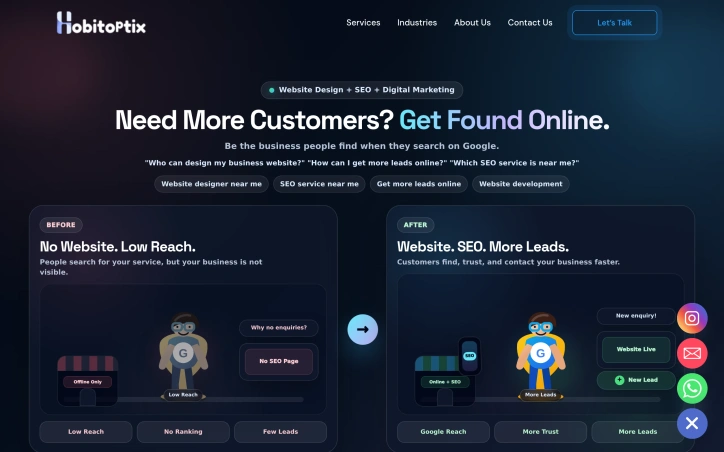
In today's digital landscape, businesses, especially those in the tourism and hospitality sectors, struggle to establish a robust online presence, resulting in lost opportunities and reduced customer engagement. Hobitoptix addresses this issue by providing comprehensive web creation and digital marketing solutions tailored to the needs of businesses like holiday stays, resorts, and villas. The company's expertise lies in crafting fast, secure, and SEO-friendly websites that not only enhance a business's visibility but also foster trust and encourage visitors to take action. What stands out is their holistic approach, encompassing everything from website development and SEO to content creation, domain setup, and hosting, effectively providing businesses with a complete online growth system. A key feature of their offering is the focus on creating a clear and compelling online presence through mobile-first design, AI search visibility, and lead-focused content. By ensuring that a website is both search-ready and provides a seamless user experience, Hobitoptix enables businesses to attract more customers and convert visitors into paying clients. While specific pricing details are not provided, the company invites potential clients to discuss their business growth plans and offers a free consultation, indicating a tailored approach to meeting the unique needs of each business. Overall, Hobitoptix delivers a robust and integrated solution for businesses seeking to strengthen their online footprint and drive growth through effective web creation and digital marketing strategies.
A Varanasi-based digital agency founded by Shashwat Maurya, Synor addresses a gap in the Indian software market where regional businesses need production-grade custom applications but have historically been forced to either hire expensive enterprise software houses or settle for template-based solutions. The agency's primary value is demonstrated through two live projects launched within six months of its founding. TheDawai is a full-stack pharmacy e-commerce platform paired with backend management software for the healthcare sector in Uttar Pradesh. Shivora Technologies operates as a multi-tenant school management system currently supporting five or more institutions with real-time data management across the state. Both systems handle production workloads—processing actual transactions, managing student and patient records, and supporting dozens of concurrent users continuously. What distinguishes Synor from the broader landscape of web agencies and freelancers in UP is the scope of what it builds. The deliverables are not websites, landing pages, or WordPress installations. Instead, Synor delivers systems designed to manage sensitive data reliably, operate under real load, and scale to institutional needs. The education and healthcare sectors demand this level of robustness, and the fact that both projects reached operational status in six months indicates engineering competence and execution efficiency uncommon in the regional market. The agency frames these two projects as proof of capability. For organizations in healthcare, education, or other sectors needing custom software, Synor claims it can deliver what previously required engagement with large enterprise vendors charging ₹20-50 lakhs over 18+ months. This represents a significant acceleration of both timeline and cost structure for institutions that historically had limited alternatives between expensive vendors and generic solutions. No specific pricing or business model details are disclosed in the available content. The agency operates on a project basis, handling the design, development, and deployment of domain-specific software platforms. For clients in UP's institutional and commercial sectors needing custom software built at industrial grade and delivered rapidly, Synor offers an alternative to both expensive enterprise consultancies and generic template solutions, backed by documented examples of execution.


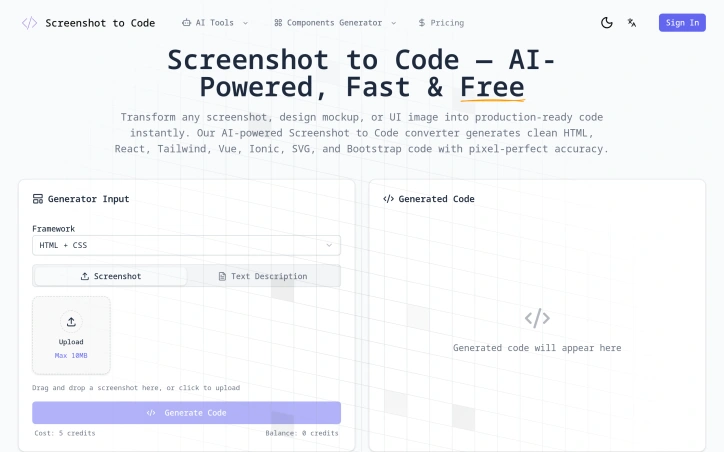
Automating the conversion of visual designs into functional code addresses a genuine pain point in modern development workflows. Screenshot to Code targets developers and designers grappling with design-to-development handoffs, whether that's individuals prototyping quickly or teams moving designs from Figma into production applications. The tool eliminates hours of manual HTML, CSS, and JavaScript work required to match mockups pixel-for-pixel. What distinguishes this product is its range of framework support and execution speed. Rather than locking users into a single output format, Screenshot to Code generates code across multiple paradigms: vanilla HTML and CSS, React with JSX and TypeScript support, Vue single-file components, Next.js components, Tailwind CSS utility classes, Bootstrap, Ionic, and SVG. This flexibility means developers can feed it a screenshot and receive output in their framework of choice. The core technology uses AI-powered visual recognition to identify UI components—buttons, forms, navigation menus, cards, images—with the precision required for production work. It reconstructs these elements while preserving layout, spacing, typography, colors, and responsive breakpoints exactly as they appear in the original design. Users can upload PNG, JPG, or WebP files from any source: website screenshots, Figma designs, Sketch mockups, or hand-drawn wireframes. The tool outputs semantic, well-structured code suitable for direct integration into projects. Generated code is downloaded or copied directly to the clipboard. What the tool notably doesn't do is generate application logic or backend integration—it strictly converts visual elements to front-end code. Developers still need to wire up interactivity and data flows themselves. The product operates on a credit-based system, with each conversion consuming a fixed number of credits, though explicit pricing details aren't available. The value proposition is straightforward: it removes the bottleneck of translating visual designs into responsive, semantic code. For teams with heavy design-to-code workflows, that efficiency gain is meaningful. The tool's real-world effectiveness ultimately depends on how it handles complex nested layouts and edge cases beyond simple UI patterns.