Gantt Gen AI
- No match
Machine translation — the English original is authoritative.
The Story
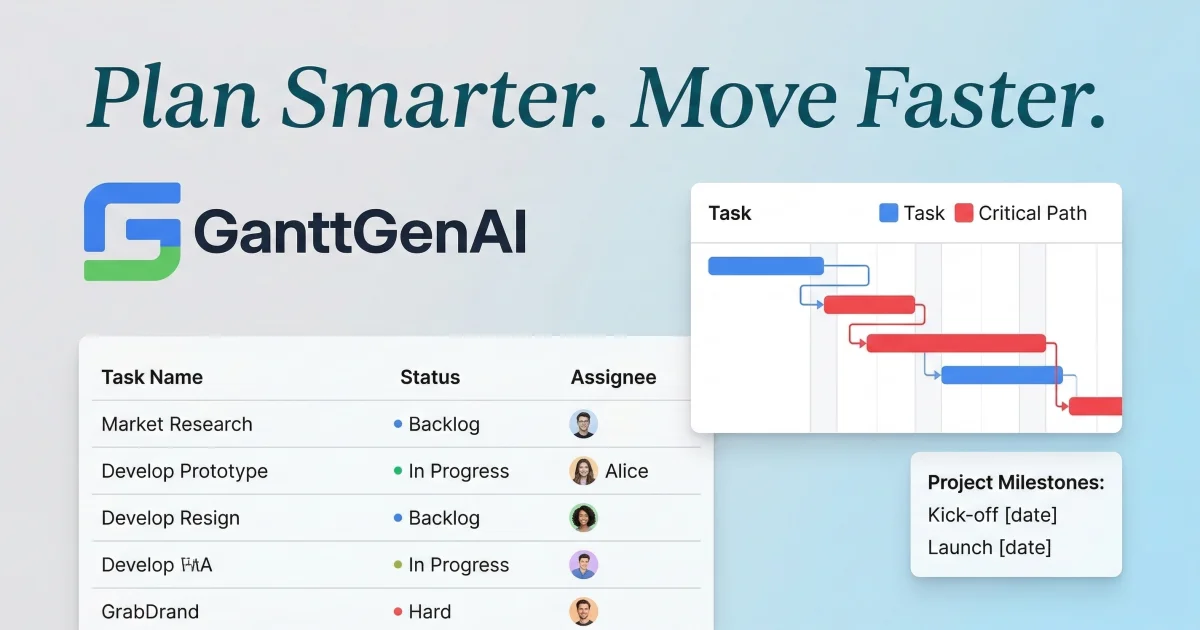
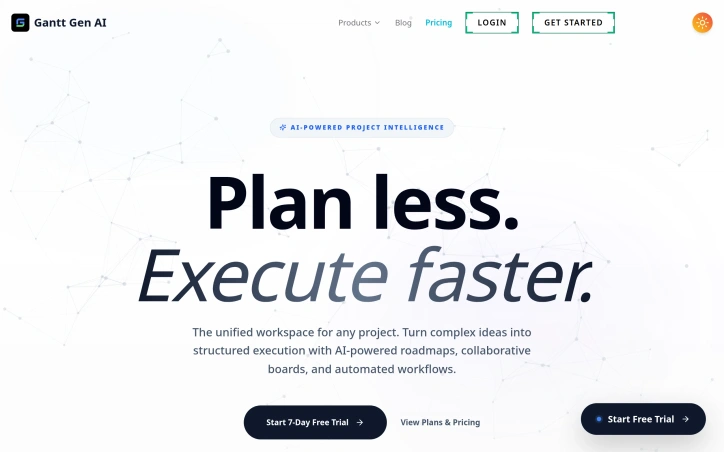
I built Gantt Gen AI to simplify project planning with AI-powered Gantt charts, Kanban boards, and collaborative whiteboards. It transforms complex ideas into structured execution, saving time and effort. My tool helps high-output teams plan less and execute faster.
AI Overview
AI-generatedProject planning typically requires juggling multiple tools—spreadsheets for timelines, separate boards for task management, chat apps for collaboration, and feedback systems scattered across platforms. Gantt Gen AI consolidates this fragmented workflow into a single workspace designed for teams that need to move quickly without getting bogged down in planning overhead.
The core appeal is straightforward: users describe their project in natural language, and the AI generates a structured Gantt chart with tasks, timelines, and dependencies. This text-to-chart approach eliminates the tedious manual work of creating roadmaps from scratch. Beyond Gantt charts, the platform integrates Kanban boards, collaborative whiteboards called NoteBoards, and a product intelligence layer that surfaces insights from user feedback and tickets. The unified approach means teams stay within one interface rather than context-switching between tools.
What distinguishes Gantt Gen AI is its positioning across diverse project types. Rather than targeting only software teams, the marketing emphasizes applicability to marketing campaigns, PhD research, event planning, manufacturing, agencies, and nonprofits. This breadth suggests the founder recognized that project planning is universal, even if the terminology and workflows vary. The platform's ability to sync rough ideas from NoteBoards directly into project roadmaps creates a natural workflow from brainstorming to execution.
The product intelligence feature stands out as a strategic differentiator. Instead of teams manually analyzing customer feedback, the tool can surface high-impact opportunities and generate feature specifications directly from raw input. This moves beyond simple project scheduling into strategic product planning—a higher-value proposition than competitors offering only Gantt generation.
On the business side, Gantt Gen AI offers a seven-day free trial to test core functionality, though specific pricing tiers are not disclosed in the available materials. The existence of a plans page suggests a freemium or tiered model typical of collaboration tools.
The main question for potential users is whether AI-generated plans require as much refinement as manually built ones, and whether the "plan less, execute faster" messaging translates to genuine time savings. For teams exhausted by planning overhead, the premise is compelling. For those needing precise control over every dependency, the automation-first approach may require adjustment.
Founder Diary
DevlogThe maker hasn't posted a diary entry yet.
Key Features
AI Gantt Generation
Creates structured Gantt charts with tasks, timelines, and dependencies from natural language descriptions.
Kanban Boards
Integrated task management boards within the unified workspace.
Collaborative NoteBoards
Whiteboards for brainstorming that sync directly into project roadmaps.
Product Intelligence
Analyzes customer feedback and tickets to surface opportunities and generate feature specifications.
Unified Workspace
Consolidates project planning, task management, collaboration, and feedback in a single interface.
Use Cases
-
1
Software Teams
Manage complex project dependencies and timelines without switching between multiple tools.
-
2
Marketing Campaigns
Plan campaign timelines and integrate team feedback directly into roadmaps.
-
3
Research & Academia
Coordinate PhD research projects with complex dependencies in one workspace.
-
4
Event Planning
Consolidate event logistics, timelines, and team collaboration without context-switching.
FAQ
How much does Gantt Gen AI cost? ▾
Can I use Gantt Gen AI for non-software projects? ▾
What is the product intelligence feature? ▾
How does the AI generate Gantt charts? ▾
Pricing
Seven-day free trial available; specific pricing tiers not disclosed but freemium or tiered model is implied by existence of plans page.
Tech Stack & Tags
Discussion
No comments yet — be the first!
Join the conversation — sign up to comment.
Sign up freeCommunity Support
Boost this project on Sell With boost
Meet the Founder

More in Project management software
Snippetly
Snippetly helps developers and teams capture, or...

Chatquick AI
Create audiobooks, podcasts, and interactive aud...

Focus Session by SyncTasks
Select your tasks and enter a distraction-free m...

Dropstone
Dropstone: World's first generational recursive...

Krisp AI Note Taker Mobile
Meetings don’t wait. Neither should your notes....
Stash
Capture anything on your Mac with Stash. This sm...