Catalyst Healthspan Audit
Personal trainers typically sell training sessions. This startup reversed the equation by building assessment first, mak...
Launchory
We built Launchory to solve the discoverability problem for startups. Our platform offers instant approval, permanent do...
Best Blogging platforms Startups & Tools
Online publishing tools to create, manage, and publish blog content.
Recently Listed
9 launches
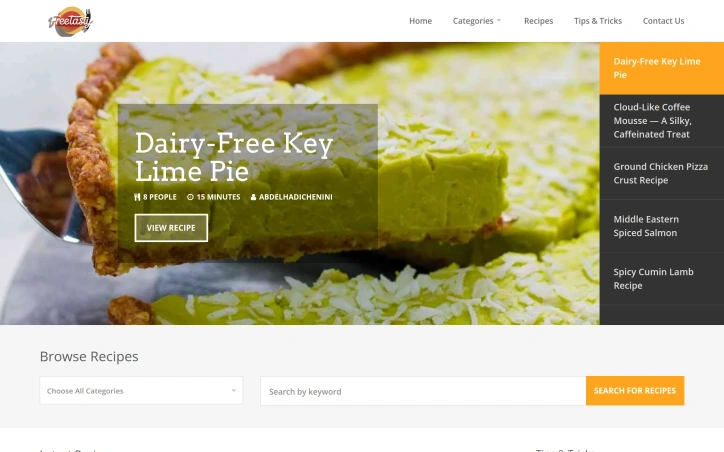
Budget-conscious home cooks seeking variety without compromise will find Foodysis a straightforward resource for weeknight dinners. The platform addresses a genuine gap in recipe discovery by bundling accessibility with dietary specificity, proving that eating well on a modest budget remains entirely feasible. The collection spans over 600 recipes with heavy representation across Middle Eastern and Indian cuisines, alongside comfort food staples. What immediately stands out is the deliberate categorization by dietary requirement, not as an afterthought but as a primary organizing principle. Users can filter for keto, vegan, gluten-free, and dairy-free options without friction. Most recipes clock in at 15-25 minutes, with several marked as quick-win 0-minute preparations, suggesting an emphasis on busy schedules rather than weekend projects. The recipe variety mirrors modern eating habits. Alongside traditional categories like salads and pasta, the platform features dedicated sections for air fryer cooking, a modality that has expanded significantly in home kitchens over the past few years. Each recipe includes serving size, prep time, and difficulty rating, giving users realistic expectations before they commit ingredients and effort. The interface supports browsing by cuisine, dietary requirement, or ingredient category, with search functionality for targeted discovery. This multi-axis approach acknowledges that home cooks don't think in straight lines; they may browse for vegan Indian recipes one evening and dairy-free desserts the next. Foodysis succeeds where many recipe platforms flounder: it delivers breadth without overwhelming, respects dietary diversity as legitimate rather than niche, and keeps friction minimal. The real test, however, lies in execution: whether recipes genuinely deliver on their difficulty ratings and prep time estimates, whether ingredient lists remain realistic for budget shopping, and whether dietary labeling is accurate. The foundation is solid. The promise is clear.
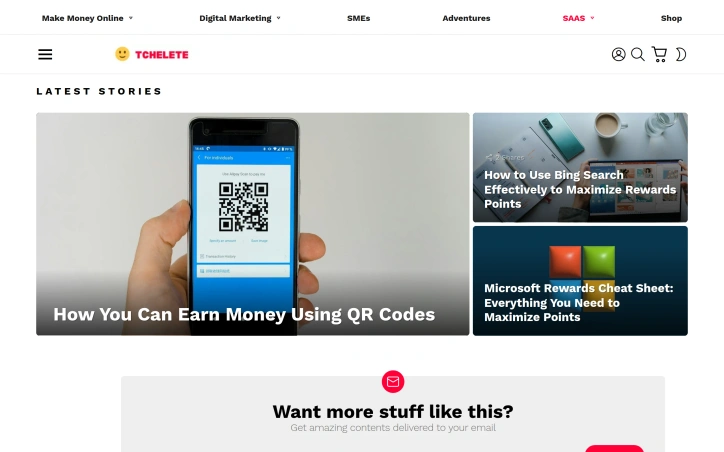
Online businesses often struggle to find reliable information and resources to help them succeed, but Tchelete aims to fill this knowledge gap. The platform is designed for entrepreneurs and businesses looking to thrive in the online space, providing them with valuable insights and expertise on making money online, content creation, and digital marketing. At its core, Tchelete is built on the founder's personal experiences and knowledge gained from navigating the online business landscape. By sharing this expertise, the platform offers a unique perspective that is informed by real-world trials and tribulations. The website's content is geared towards empowering online businesses with the information they need to overcome common challenges. One notable aspect of Tchelete is its straightforward and user-friendly interface, which makes it easy for visitors to navigate and find relevant content. The site also offers a newsletter subscription service, allowing users to stay up-to-date with the latest stories and insights. Additionally, the platform provides users with the ability to log in using their social media accounts or create a username, suggesting a potential member or community aspect, although the full extent of this functionality is not immediately clear from the available content. While the pricing model or revenue streams are not explicitly stated on the website, the presence of a cart functionality suggests that Tchelete might be exploring e-commerce or selling digital products. Overall, Tchelete is a resource for online businesses seeking guidance and knowledge to drive their success. Its focus on sharing practical expertise and experiences sets it apart, and its user-friendly design makes it accessible to a wide range of users.

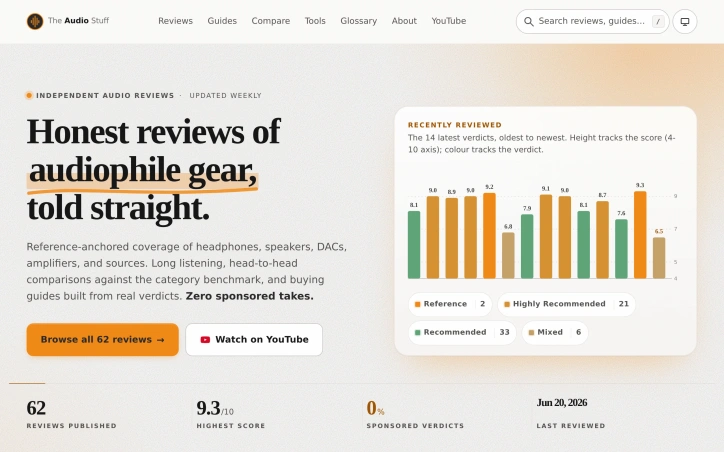
Audiophiles seeking unbiased reviews of high-end audio equipment have a valuable resource in The Audio Stuff. This website delivers in-depth, comparative reviews of various audiophile gear, including headphones, speakers, DACs, amplifiers, and sources, helping enthusiasts make informed purchasing decisions. The site's commitment to honesty and transparency is evident in its strict no-sponsored-content policy, ensuring that all reviews are based solely on the reviewer's thorough testing and comparison. What stands out about The Audio Stuff is its rigorous review methodology, which involves long listening sessions and head-to-head comparisons against category benchmarks. This approach provides readers with a clear understanding of each product's strengths and weaknesses. The site's reviews are also accompanied by buying guides built from real verdicts, further assisting readers in their purchasing decisions. The Audio Stuff's content is comprehensive, covering a range of products from various manufacturers. The reviews are detailed, with scores and verdicts that help readers quickly grasp the reviewer's opinion. The site also features video reviews on YouTube, offering an alternative format for those who prefer visual content. Some products reviewed on the site come with significant price tags, such as the HIFIMAN Arya Unveiled at $1,299 and the HIFIMAN Serenade at $999, while others, like the Douk Audio U2 Pro, are more affordable at $70. By providing unbiased, in-depth reviews, The Audio Stuff addresses a significant need in the audiophile community, helping enthusiasts navigate the complex and often biased landscape of audio equipment reviews. The site's commitment to honesty and transparency makes it a trustworthy resource for those seeking to invest in high-quality audio gear.

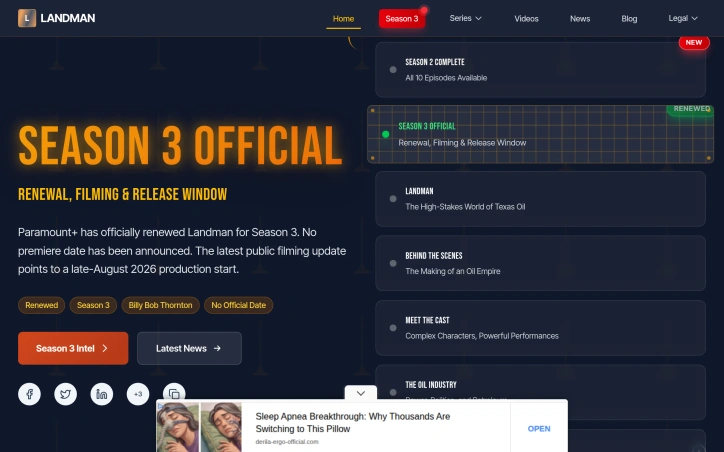
Fans of the Paramount+ series Landman have a go-to destination for comprehensive updates, recaps, and analysis, thanks to this unofficial fan site. The site is dedicated to exploring the world of Landman, catering to enthusiasts who crave a deeper understanding of the show and its characters. By aggregating news, episode guides, and behind-the-scenes content, it solves the problem of scattered information across multiple sources. What stands out about this site is its detailed examination of the show's narrative and characters. In-depth articles analyze the motivations and actions of key characters, providing insight into their roles in the unfolding drama. The site also contextualizes the show within the real-world oil industry, offering articles on the impact of private equity, the dynamics of oil dynasties, and the politics surrounding pipeline infrastructure. Key features of the site include its coverage of complete seasons, with episode guides and recaps, as well as news on the show's renewal and production updates. The site's content is organized into clear categories, making it easy for visitors to find specific information or explore related topics. The site's focus on providing valuable content without mentioning any pricing or business model suggests that it is likely supported by advertising or donations, allowing it to remain a free resource for fans. Overall, the Landman Unofficial Site is a valuable resource for anyone invested in the series, offering a rich and nuanced understanding of the show and its world.

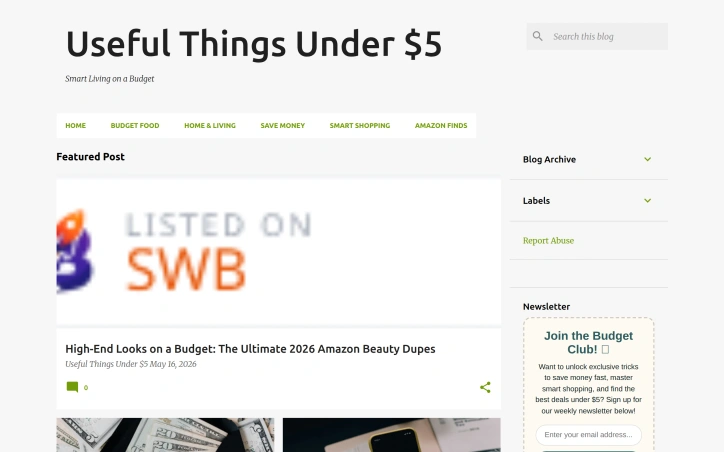
Frugal living is a growing concern for many individuals seeking to optimize their daily lives without breaking the bank. Useful Things Under $5 is a blog that directly addresses this need by providing smart money-saving tips and budget-friendly ideas for home decor and meals. The site is geared towards individuals who want to live better on a limited budget, focusing on making informed choices that don't compromise on quality. The blog stands out for its practical approach to frugal living, with recent posts delving into topics such as affordable beauty dupes, sustainable living, and healthy meal options under $5. The content is informative and directly applicable to readers' everyday lives. The site's emphasis on smart shopping and saving money is evident in its articles, which tackle real questions and concerns that budget-conscious individuals face. Notably, the blog offers a newsletter subscription service, dubbed the "Budget Club," which promises to deliver exclusive money-saving tricks and deal-finding tips to subscribers. This feature suggests a commitment to engaging with readers beyond the blog itself. The site also includes clear links to various social media platforms and other pages, such as the About Us and Privacy Policy sections, indicating a transparent and accessible operation. The blog's content is centered around providing valuable information without any explicit mention of a pricing model or revenue stream. The founder's mission is centered on sharing knowledge and expertise, and the newsletter appears to be a key component of this effort. Overall, Useful Things Under $5 delivers on its promise to help individuals navigate the world of budget-friendly living, making it a valuable resource for those seeking to save money without sacrificing quality.
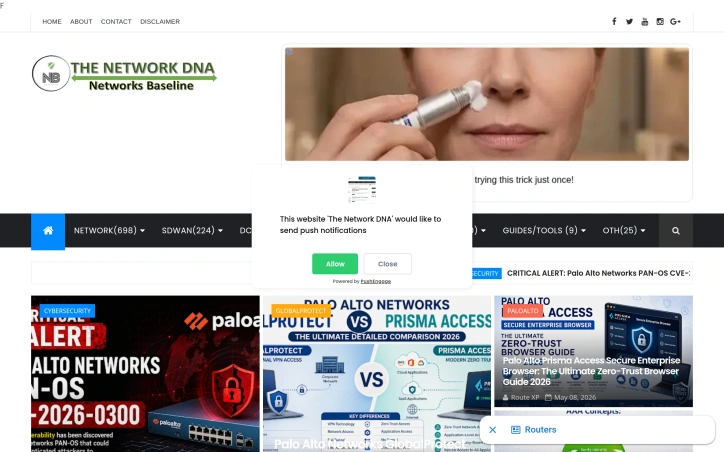
Professionals in the networking, cloud, and security technology sectors often struggle to find reliable and comprehensive information, as it is typically scattered across various sources. The Network DNA addresses this issue by providing a single, authoritative source of information. By consolidating in-depth analysis and tutorials on complex technical topics, it simplifies the process of staying up-to-date with the latest developments in the field. The content on The Network DNA stands out for its technical depth and focus on comparison-based analysis, such as the detailed examination of Cisco ISE versus HPE Aruba Clearpass for Network Access Control, and Palo Alto Networks GlobalProtect versus Prisma Access Agent. This approach enables professionals to make informed decisions by understanding the differences between competing solutions. The platform also covers a range of topics, from interview questions for specific technologies like F5 Load Balancer, to cybersecurity alerts and guides on emerging technologies. One of the key features of The Network DNA is its commitment to providing actionable insights and detailed explanations on complex technical concepts. The platform's YouTube channel further expands its reach, offering an additional resource for professionals seeking to deepen their understanding of networking, cloud, and security technologies. The Network DNA offers various donation tiers, ranging from $25 to $500, with corresponding yearly or monthly contributions, indicating a reliance on supporter funding to sustain its operations. Overall, The Network DNA is a valuable resource for professionals seeking to stay ahead in the rapidly evolving landscape of networking, cloud, and security technology.

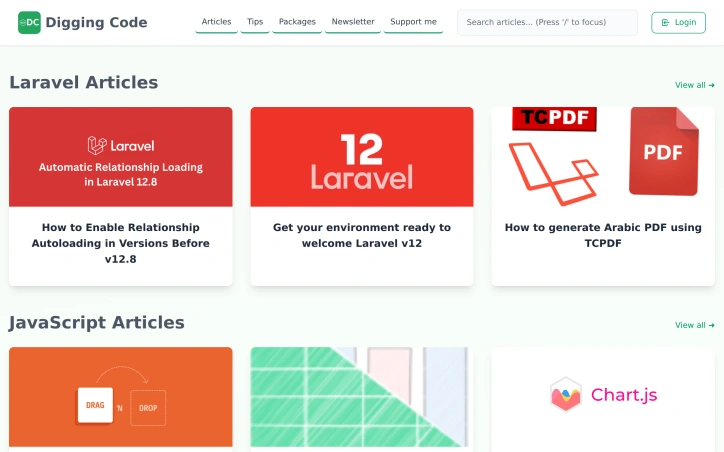
Laravel artisans and JavaScript tinkerers exhausted by scattered, clickbait-laden tutorials now have a concise oasis in Digging Code. The site zeroes in on the daily friction points that slow modern web developers: relationship autoloading without the newest framework release, Arabic PDF generation in legacy PHP projects, or injecting services directly into Blade so the template layer stops feeling second-class. Each article is packaged as a drop-in solution rather than an abstract sermon, making it especially valuable for solo engineers, bootstrappers, and small agency teams who have neither time nor budget for trial-and-error. What separates Digging Code from the crowded tutorial sphere is its ruthless focus on reusable patterns. Instead of ending at “it works on my machine,” the pieces explicitly model the edge cases—such as making Eloquent’s increment method fire model events—so any fork will behave the same in CI as on localhost. The site also operates as a living package registry: over sixteen thousand developers have already spotted Filepond, Parsley-JS and lesser-known Laravel helpers listed on the same page that teaches how to use them, collapsing the usual gap between discovery and documentation. Content flows across four verticals. Laravel articles unlock internals the official docs only hint at, JavaScript how-tos bridge the vanilla-to-framework chasm, Eloquent tips turn the ORM into a precision instrument, and Blade guidance proves templates can be expressive without devolving into logic soup. Readers who want to give back are invited to add their own tips or suggest additional packages; nothing else on the page hints at paywalls, sponsorship tiers or pro upsells. The tone is thus unequivocally community-first: no ads obstruct the lessons, tracking is kept minimal, and the only transaction on offer is a newsletter opt-in that promises “fresh content delivered straight to you.” In a landscape increasingly cluttered with gated knowledge, that simplicity feels almost radical.

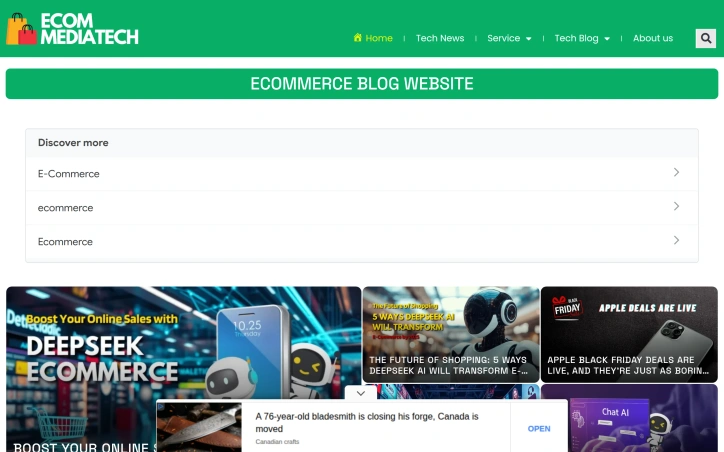
Store owners and developers navigating platform ecosystems will find a dedicated resource in this editorial hub. The site focuses on curating structured reviews and tool recommendations across four major ecommerce platforms: Shopify, Magento, WooCommerce, and WordPress, with an emphasis on third-party app integrations. The core value lies in consolidating app research across fragmented sources. Rather than piecing together scattered documentation and user reviews, readers encounter structured comparisons and contextual guidance for tool selection. The editorial approach maintains professional distance, presenting analysis as vendor-agnostic rather than vendor-sponsored. For developers and merchants in the WooCommerce and WordPress spheres—segments often overlooked by mainstream ecommerce coverage—this represents meaningful editorial attention. The multi-platform scope also surfaces broader ecosystem trends affecting store operators managing presence across multiple platforms. Limitations are inherent to the format. Blog-based editorial models depend heavily on SEO velocity and organic discovery, which means niche tool comparisons may struggle to reach their intended audience. Keeping pace with rapid app ecosystem changes presents ongoing content refresh demands. Audience scale and revenue viability remain opaque from outside. For ecommerce teams building tool evaluation frameworks, this site merits a bookmark as a reference layer in the research process.

For SaaS founders drowning in infrastructure work, this blogging platform strips away the complexity that typically comes with managing WordPress installations, databases, and hosting. Rather than spending cycles on technical setup, founders can focus on content strategy and growth. ShipMyBlog targets this pain point by delivering a fully hosted blogging solution with AI-powered content generation built in. The platform's architecture eliminates the traditional blogging tech stack. There's no WordPress to maintain, no plugins to update, no databases to manage, and no servers to scale. All hosting is handled by the platform, including SSL certificates and domain management. For founders accustomed to wrestling with WordPress or similar CMS platforms, this hands-off approach represents a meaningful shift in operational burden. What distinguishes ShipMyBlog from both AI writing services and traditional hosting solutions is its integration layer. The platform connects Google Search Console, WordPress, Shopify, and Wix, allowing users to publish across multiple channels. More compellingly, it automatically injects affiliate links and product banners into generated posts, effectively monetizing content upon publication. The platform automatically connects articles through AI-driven interlinking to boost SEO authority, handling a task that typically requires manual editorial work. The indexing speed is positioned as a core advantage. Rather than waiting for Google's crawlers to discover new content, ShipMyBlog pings Google immediately upon publishing, letting articles begin competing for rankings while competitors await organic discovery. This taps into a legitimate pain point for content-driven growth, where SEO velocity directly impacts early traffic. Pricing is structured around credits rather than a traditional per-post model. The free tier includes manual features, while paid tiers range from $19 per month (60 credits) through agency plans at $199 per year. A lifetime option at $499 includes unlimited generation. Credits never expire, eliminating monthly usage pressure. A beta discount code offers 30 percent off paid plans. The competitive positioning emphasizes cost and convenience. Compared to Jasper or Copy.ai at $49+ monthly, ShipMyBlog undercuts on price and includes hosting. WordPress plus AI typically requires separate hosting expense and involves manual workflows. For founders skeptical of setup complexity and seeking an all-in-one solution with reasonable pricing, the platform's promise of low-friction, one-click content creation warrants serious consideration.