Catalyst Healthspan Audit
Personal trainers typically sell training sessions. This startup reversed the equation by building assessment first, mak...
Launchory
We built Launchory to solve the discoverability problem for startups. Our platform offers instant approval, permanent do...
Best Social & Community Startups & Tools
Recently Listed
36 launches
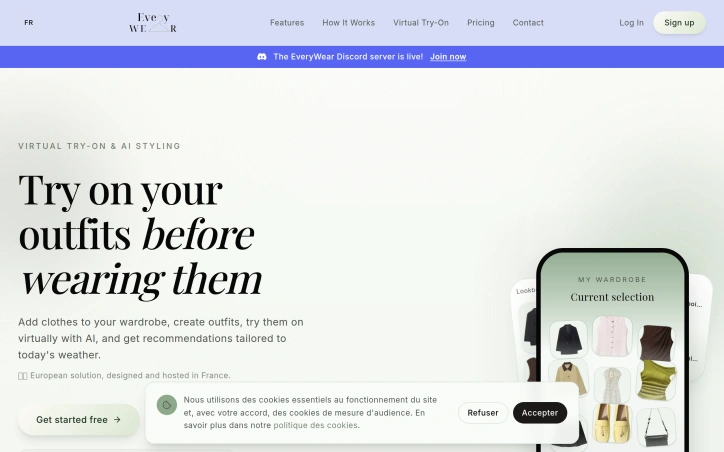
Create outfits with AI, organize your digital wardrobe and try clothes virtually. European AI fashion assistant, made in France.

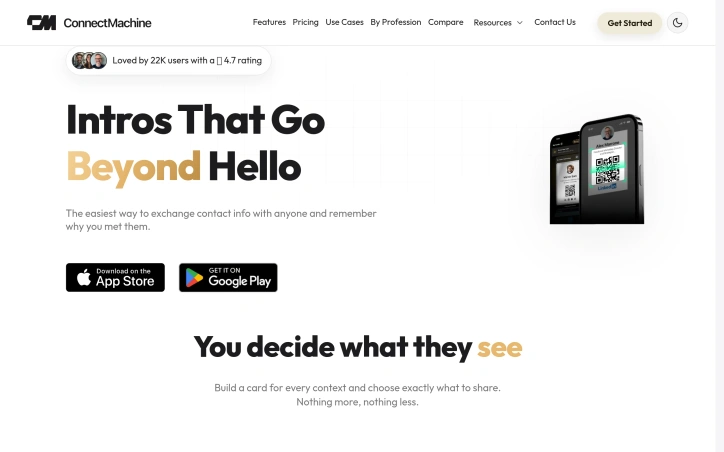
Professionals who network actively know the problem well: you exchange contact information with dozens of people, take notes frantically during conversations, and within weeks, you've forgotten why that particular connection mattered. ConnectMachine addresses this friction by building a digital business card system designed around memory and context rather than just contact exchange. The product sits at the intersection of three common workplace problems. First, it replaces the logistical hassle of physical cards with digital alternatives that recipients access by scanning a QR code or clicking a share link, requiring no app download on their end. Second, it automates the drudgery of manual data entry by using computer vision to scan physical business cards and extract contact information instantly. Third, and most distinctively, it adds AI-powered note-taking and optional conversation recording directly to contacts, turning the address book into something closer to a lightweight CRM indexed by human relationships rather than just names and numbers. What stands out is the control layer built into card sharing. Rather than maintaining a single digital identity, users create context-specific cards and choose precisely which details appear on each one. This granularity appeals to professionals who network across very different audiences—a consultant might share different information with a client versus an investor versus a peer at a conference. The AI Concierge feature pushes further into automation, offering integration with calendars and contact lists to handle scheduling and search queries conversationally. For team use, ConnectMachine adds centralized billing, seat management, and analytics alongside the individual premium features. The company's traction metrics warrant attention. With 22,000 users across 91 countries and a 4.7-star rating, the product has cleared the threshold of demonstrated demand. The claim that 15,000 smart cards are shared monthly suggests meaningful engagement, not just installations. The team also cites shipping 26 features in two weeks based on user feedback, indicating a product development pace and responsiveness to the market. Pricing aligns with freemium SaaS norms. The free tier provides essential functionality, while the $5.99 monthly individual plan unlocks unlimited card scans, CRM integration, and the AI features. Teams pay the same per-seat rate with added administrative oversight. The structure removes friction for single users while offering path-to-revenue through both individual upgrades and team licensing. The product addresses a real inefficiency in how professionals manage relationships, and its feature set—combining card exchange, memory augmentation, and workflow automation—is cohesive rather than scattered. Whether it becomes a networking essential depends on execution and whether teams adopt it as standard infrastructure rather than individual tools.
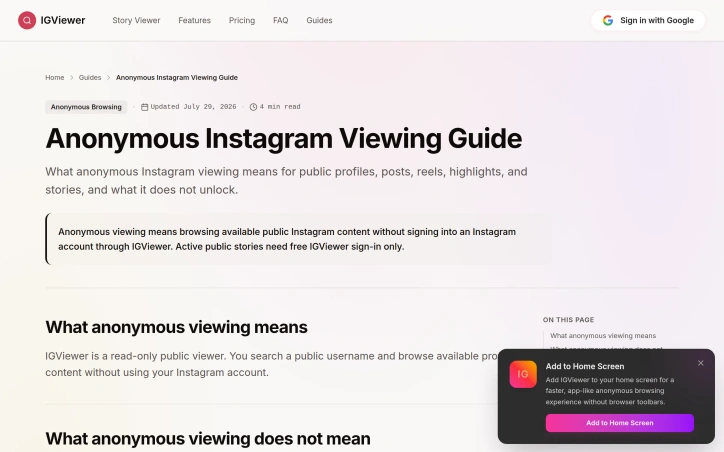
Anonymous Instagram browsing has practical applications across research, competitive analysis, and casual content discovery, yet it typically requires logging in to your own account and notifying profile owners. This tool strips away those frictions by offering a read-only web interface that displays publicly available Instagram profiles, posts, reels, highlights, and stories without requiring users to authenticate with Instagram credentials. The product targets several audiences: researchers studying public Instagram data, content creators benchmarking competitor metrics and studying optimal posting times, and casual users who simply want to explore profiles without engagement friction. The core value proposition centers on privacy preservation—users never hand over Instagram passwords, and browsing activity remains unattached to their Instagram account, so profile owners receive no notifications of visits. What distinguishes this offering is its transparent scope limitation. Unlike tools that promise access to private content, IGViewer explicitly acknowledges what it cannot do: unlock private accounts, access hidden stories, view private messages, or bypass Instagram's security. It operates strictly within publicly accessible content, which removes legal and ethical ambiguity. The feature set reflects this focused approach. Users can preview recent public reels, browse highlight collections, and search public profiles. For creators, additional tools help with posting strategy—generating captions with hashtags, identifying optimal posting times, and planning carousel structures. The viewer includes separate interfaces for profiles, reels, stories, and highlights, each tailored to its content type. Monetization relies on a credit-based model layered atop a free tier. Initial browsing carries no cost: the first two pages of posts or reels are free, with older pages consuming one credit each. Highlights introduce a slightly higher barrier—users receive one free unlock daily, then additional unlocks cost two credits per profile. The business model surfaces real constraints on the tool's usage without creating a hard paywall for casual exploration. The positioning emphasizes safety for users compared to tools that harvest login credentials. IGViewer's read-only architecture and reliance on publicly available content align the product with Instagram's terms of service, a critical consideration for tools operating in Instagram's ecosystem.

Budget-conscious home cooks seeking variety without compromise will find Foodysis a straightforward resource for weeknight dinners. The platform addresses a genuine gap in recipe discovery by bundling accessibility with dietary specificity, proving that eating well on a modest budget remains entirely feasible. The collection spans over 600 recipes with heavy representation across Middle Eastern and Indian cuisines, alongside comfort food staples. What immediately stands out is the deliberate categorization by dietary requirement, not as an afterthought but as a primary organizing principle. Users can filter for keto, vegan, gluten-free, and dairy-free options without friction. Most recipes clock in at 15-25 minutes, with several marked as quick-win 0-minute preparations, suggesting an emphasis on busy schedules rather than weekend projects. The recipe variety mirrors modern eating habits. Alongside traditional categories like salads and pasta, the platform features dedicated sections for air fryer cooking, a modality that has expanded significantly in home kitchens over the past few years. Each recipe includes serving size, prep time, and difficulty rating, giving users realistic expectations before they commit ingredients and effort. The interface supports browsing by cuisine, dietary requirement, or ingredient category, with search functionality for targeted discovery. This multi-axis approach acknowledges that home cooks don't think in straight lines; they may browse for vegan Indian recipes one evening and dairy-free desserts the next. Foodysis succeeds where many recipe platforms flounder: it delivers breadth without overwhelming, respects dietary diversity as legitimate rather than niche, and keeps friction minimal. The real test, however, lies in execution: whether recipes genuinely deliver on their difficulty ratings and prep time estimates, whether ingredient lists remain realistic for budget shopping, and whether dietary labeling is accurate. The foundation is solid. The promise is clear.
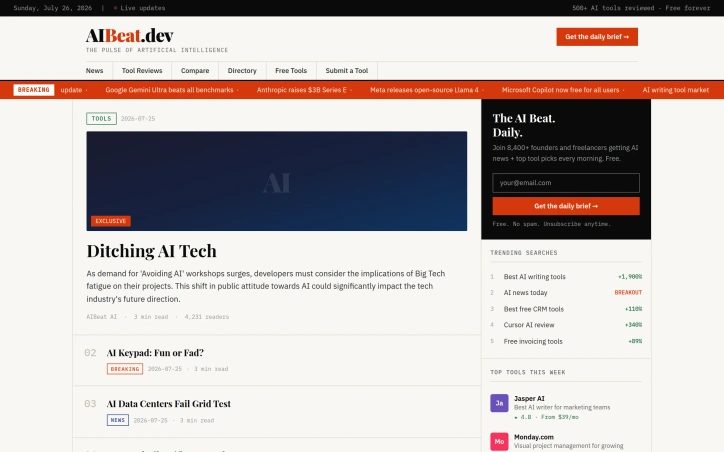
Staying informed about the latest developments in artificial intelligence is a challenge for founders, developers, and innovators. With the rapid pace of advancements in AI, it is crucial to have a reliable source of news, insights, and tool reviews. AIBeat.dev delivers on this need, providing a one-stop destination for AI enthusiasts to stay ahead of the curve. What stands out about AIBeat.dev is its comprehensive coverage of the AI landscape, featuring breaking news, in-depth analysis, and reviews of over 500 AI tools. The platform's content is curated to cater to the needs of its target audience, providing valuable insights into the implications of AI on various industries and aspects of business. The daily brief is a key feature of AIBeat.dev, offering subscribers a concise summary of the most important AI news and tool picks every morning. With a subscriber base of over 8,400 founders and freelancers, this feature has clearly resonated with the AI community. The platform also showcases top tools, categorized by their applications and ratings, making it easier for users to discover and evaluate AI solutions. AIBeat.dev is built using modern technology, leveraging Next.js and TypeScript to deliver a seamless user experience. The platform's commitment to providing high-quality content is evident in its in-depth articles and analysis, such as its coverage of the impact of AI safety features on cybersecurity research. The service is offered free of charge, with no spam, and users can unsubscribe at any time. Overall, AIBeat.dev is a valuable resource for anyone looking to stay informed about the latest developments in AI and discover new tools and solutions to drive innovation.

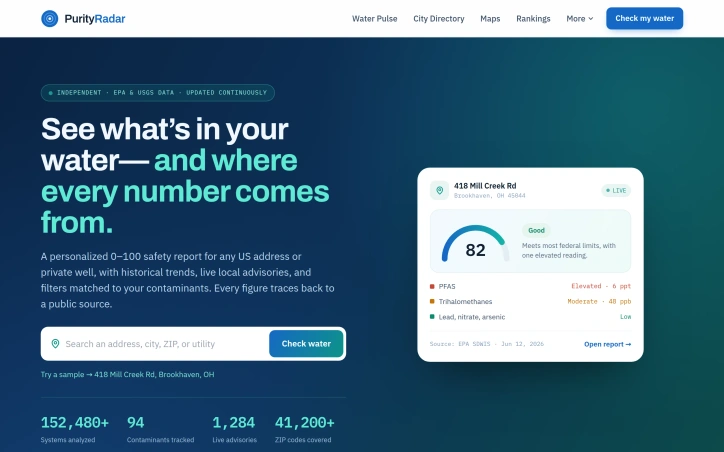
Most water quality checkers reduce the complexity of contamination risk to a single number, leaving residents with incomplete information about what's actually flowing from their taps. PurityRadar addresses this gap by transforming fragmented EPA and USGS data into personalized safety reports that span historical trends, localized advisories, and traceable sourcing. The platform targets homeowners and renters concerned about water quality—particularly those on private wells, where most existing tools provide no data at all. By modeling contamination risk across geographic areas using USGS datasets, PurityRadar extends beyond municipal systems to serve populations typically excluded from water quality monitoring. What distinguishes this product is its fundamental commitment to transparency. Rather than presenting opaque scores, each reported figure links directly to its original EPA or USGS source, stamped with publication dates and expert reviewer attribution. This sourcing architecture removes the black box element that undermines trust in competing tools. For users, this means tracing the chain from their address down to the actual data collection point—no anonymous algorithms, no hidden adjustments. The feature set reflects this philosophy throughout. Historical trend visualization shows how water quality has shifted over years rather than capturing a static snapshot. Live local advisories for boil-water orders and main breaks arrive geographically targeted, avoiding the false certainty of stale information. The 0-100 safety scoring framework remains accessible for quick assessment, but it functions as an entry point rather than the entire answer. Contaminant-specific filters let users focus on substances relevant to their location and risk profile. Coverage spans major US cities—the site samples New York, Los Angeles, Chicago, Houston, and others, breaking down contamination profiles by specific systems and flagged facilities within each region. Private well modeling represents a competitive advantage, as most water quality tools omit this segment entirely. The platform builds on public data sources—EPA Safe Drinking Water Information System records and USGS databases—creating a sustainable foundation that sidesteps the common bottleneck of proprietary testing requirements. Users cannot debate the underlying facts, only their interpretation, which refocuses the conversation toward actionable decision-making rather than score-chasing and brand loyalty.

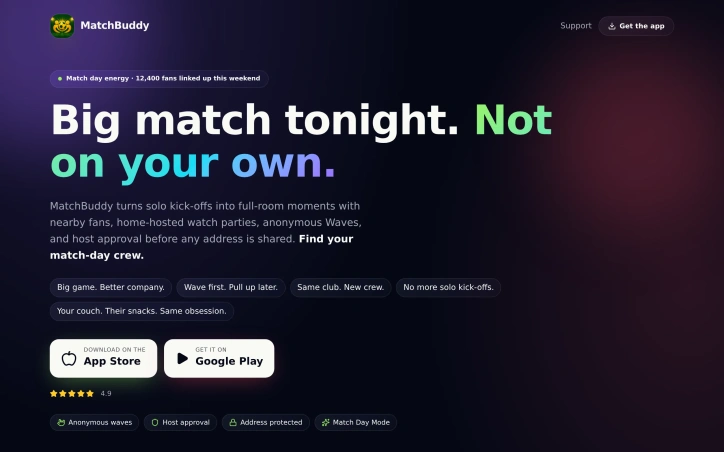
Isolated sports fans searching for community at match time have long had limited options beyond screaming at a television alone. This app directly addresses that isolation by connecting viewers who want to watch fixtures together on the same night, particularly serving supporters of teams without local fanbases or people living far from their established friend groups. The core experience centers on several distinctive mechanics. Users browse upcoming fixtures and select a match they want to watch. The central "wave" feature functions as a mutual opt-in connection: potential viewers can anonymously signal nearby fans with the same fixture in mind, and only after hosts approve their waves does a real conversation unlock. This approval gate deliberately manages the friction and risk of inviting strangers into a home, addressing a genuine safety concern that blocks many people from trying communal viewing. Hosts list watch parties with granular detail: vibe categorization (Loud, Chill, Family), screen specifications, available extras like snacks and projectors, house rules, and spot availability. Addresses remain hidden until approval, creating a progressive trust model rather than forcing transparency upfront. Listings accumulate ratings, and profiles display verification status and hosting history, establishing reputation signals common to peer-to-peer platforms. The location layer is well-integrated. Search returns nearby fans within a specific radius, indexed by area or self-identified vibe, making discovery hyper-local and event-centric. The product never tries to build abstract community; it purely answers one question: who wants to watch this specific match within walking distance of me, right now? The design choices reflect pragmatic thinking about how people actually consume sports. Match Day Mode surfaces only active fixtures, and the interface prioritizes upcoming games chronologically. The temporary nature of watch parties—they exist for a few hours around kickoff, then dissolve—eliminates the onboarding friction of joining persistent communities. There's no social graph to build, no feed to maintain; you engage once per match you care about. One listing shows venues available for free with shared snack costs, though no explicit pricing model or commission structure is mentioned in the available materials. This event-driven matching fills a real gap for people who love sports but lack the circumstantial luck of compatible friends nearby. The friction reduction through gradual approval and anonymity makes it substantially more viable than simply inviting acquaintances into your living room.

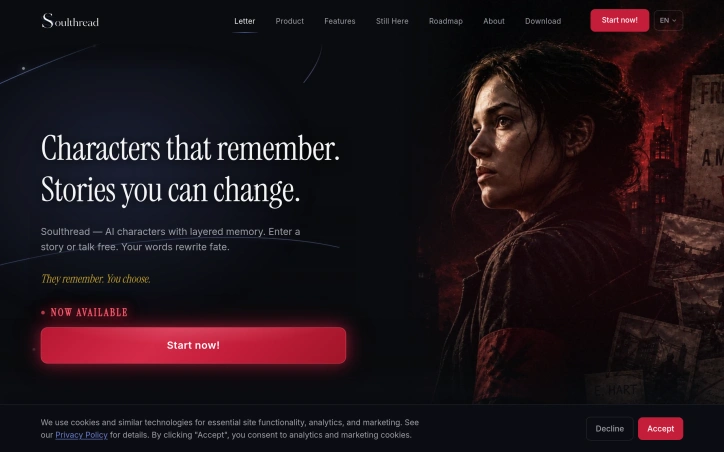
Most AI chatbots suffer from amnesia. Conversations reset, context vanishes, and users find themselves re-explaining the same details repeatedly. Soulthread tackles this persistent problem by building AI characters designed to retain meaningful information and maintain coherent relationships across extended interactions. The platform targets adults seeking something beyond throwaway chat loops. Rather than brief, contextless exchanges, Soulthread positions itself as a space for deeper AI companionship where continuity matters and characters evolve based on accumulated experiences. What distinguishes Soulthread from generic chatbots is its architectural focus on layered long-term memory. The system doesn't merely log conversation history; instead, it constructs characters with persistent identity traits, emotional complexity, and behavioral consistency. This approach addresses a core frustration with current AI companions: the uncanny sensation of talking to someone who has no real sense of who they are or what you mean to them. The product offers two complementary modes. Story Mode presents curated narratives where users navigate branching scenarios and their decisions carry meaningful consequences. The platform launches with Still Here: Red Long Night, an alternate-history Cold War resistance narrative with a cast of eight characters. Free Chat provides open-ended conversation without narrative structure. Both modes support text and voice interactions, and the system can orchestrate multi-character scenes, adding another layer of complexity beyond single-character dialogue. The community presence reveals engagement beyond the typical chatbot audience. Users share reflective posts that suggest emotional investment in their interactions, hinting at the product's pitch: relationships with characters that recognize and remember them feel qualitatively different from algorithmic small talk. Soulthread also emphasizes world-building as a differentiator. The marketing materials include terminology like Your World with roles for participants, creators, and directors, suggesting users might eventually contribute to or customize narrative spaces. This worldbuilding focus signals ambitions beyond a simple character chat interface. The company does not disclose pricing in available materials. Distribution spans mobile and web platforms, with native applications available through standard app stores and a direct APK option for Android users outside standard distribution channels. Soulthread's value proposition hinges on a reasonable insight: AI relationships deteriorate without context. Whether layered memory systems genuinely solve this problem at scale remains an open question, but the execution suggests a team prioritizing narrative depth and character consistency over conversational breadth.

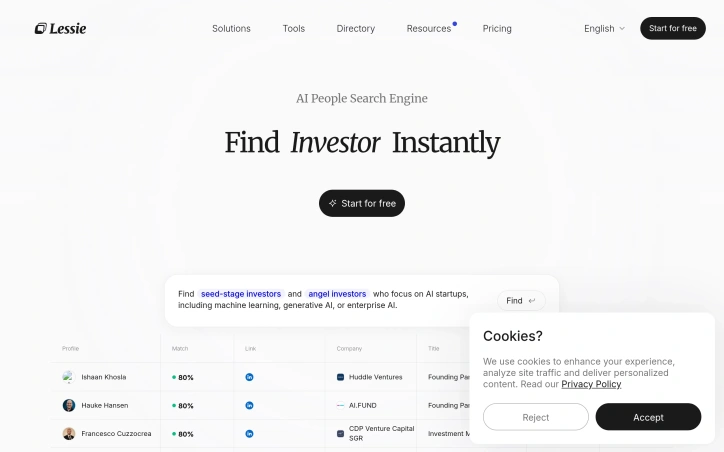
Discovering people across various online platforms can be a daunting and time-consuming task, especially for those seeking influencers, leads, or talent. A new tool aims to change that by streamlining the search process. By aggregating profiles from multiple sources, including LinkedIn, Twitter, and GitHub, Lessie AI provides a centralized hub to find the right connections. The platform appears to simplify the discovery process, making it easier for users to identify and vet potential candidates. Saving time and increasing productivity are key benefits for businesses and individuals who can now focus on other critical tasks. The service's ability to consolidate profiles from diverse platforms into a single, easily accessible location is a notable advantage. Lessie AI's potential to transform the way people search for and connect with others online is significant. Its effectiveness will likely depend on the accuracy and comprehensiveness of its profile aggregation, as well as the usability of its interface. As an emerging solution, it is worth considering for those looking to streamline their search processes.

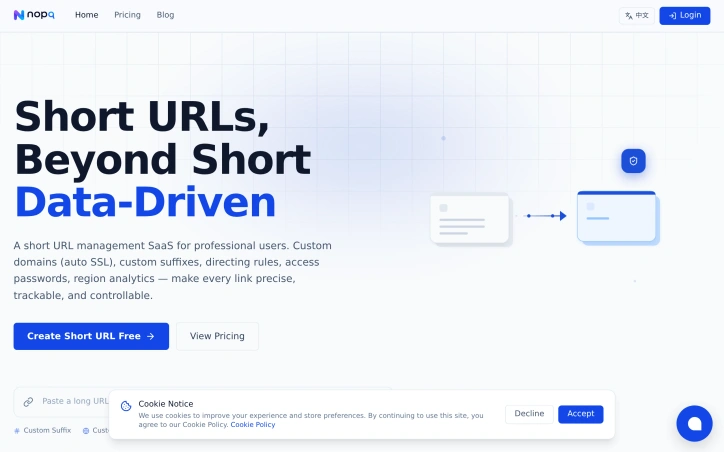
Professionals managing marketing campaigns and brand presence increasingly need control over their links. Standard URL shorteners offer basic shortening without the infrastructure necessary for sophisticated campaigns, brand consistency, or actionable insight into link performance. NOPQ positions itself as a link management platform rather than a simple shortening tool, targeting teams that require custom branding, detailed analytics, and dynamic routing capabilities. The platform distinguishes itself through three core pillars: brand ownership, traffic control, and transparent analytics. On the branding side, users can attach custom domains with automatic SSL certificate provisioning, ensuring every shortened link reflects their brand rather than a generic shortener domain. The routing engine allows sophisticated traffic distribution—URLs can direct visitors based on language preferences, conduct A/B testing through randomized splitting, or apply weighted priority rules that funnel different audiences to different destinations through a single link. Analytics constitute another primary differentiator. The dashboard tracks visits, unique IP counts, geographic distribution down to city-level granularity, device and browser breakdowns, referrer sources, and temporal trends. This depth of insight goes beyond typical link shortener offerings, enabling campaign teams to understand not just how many people clicked, but who clicked and from where. Feature completeness rounds out the offering. Access controls include password protection, expiration dates, and click limits. Link customization extends to custom suffixes and organizational grouping. The platform supports multiple rules per link, with free users limited to one rule per link. The business model keeps complexity low. A free tier allows 10 short links with basic functionality, suitable for light personal use. The VIP tier, priced at $2 per 30 days, unlocks unlimited links and rules, extended data retention, and three custom domains. An enterprise custom tier addresses team collaboration, independent deployment options, API integration, and SLA guarantees, though specific pricing remains negotiable. NOPQ's positioning reflects a market shift toward link management as infrastructure rather than link shortening as utility. For teams running campaigns, managing multiple brands, or requiring campaign attribution, the platform offers genuine capability. The transparent pricing and clear feature differentiation acknowledge that users have legitimate needs across scales. Whether the feature depth justifies adoption overhead for lighter use cases is a secondary consideration—the platform clearly targets professionals with concrete requirements.
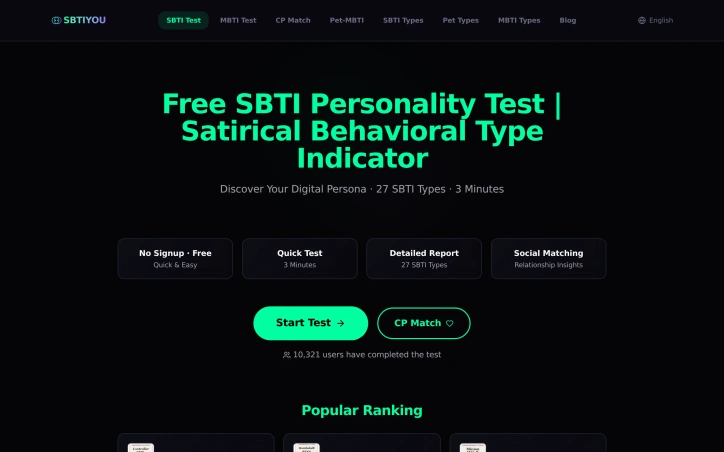
Understanding one's personality is a crucial aspect of personal and professional growth, and that's where SBTIYOU's Personality Test Platform comes into play. The platform is designed for individuals seeking to discover their professional personality types, suggesting it is geared towards those looking to enhance their career development or simply gain a deeper understanding of themselves. The platform stands out by offering not one, but two comprehensive personality tests: the MBTI 16 Type Personality Test and the SBTI 27 Type Personality Test, alongside guides for 16 Personality Types and Cyber Archetypes. This dual approach indicates a more nuanced understanding of personality, catering to different aspects or dimensions of an individual's professional persona. The inclusion of a blog and FAQ section further enhances the user experience, providing additional resources and support for those navigating the platform. Key features of the platform include the interactive personality tests, which require JavaScript to be enabled in the browser to function fully. The tests are accompanied by detailed guides for each personality type, suggesting a robust framework for understanding and interpreting test results. While the platform's business model or pricing strategy is not explicitly stated, the fact that it is described as "Free Personality Test" implies that at least the basic tests are accessible without cost. Overall, SBTIYOU's Personality Test Platform is a valuable resource for individuals interested in exploring their professional personalities through a multifaceted lens. By providing two distinct yet complementary approaches to personality testing, the platform offers a rich and potentially insightful experience for its users.

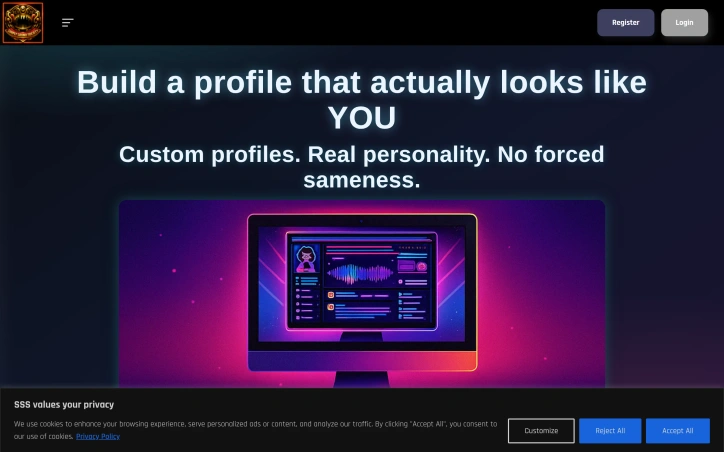
The online social landscape has become homogenized, with many platforms forcing users into a mold of conformity. Simply Sound Society offers a breath of fresh air by providing a social hub where users can express themselves freely, unencumbered by the generic profiles and limited interaction that plague other sites. The platform is geared towards individuals seeking a more authentic online experience, where they can showcase their personality and connect with like-minded people. What stands out about Simply Sound Society is its commitment to customization and self-expression. Users can build a digital home that reflects their identity, with a wide range of theme controls, neon effects, and dynamic fonts at their disposal. The platform's emphasis on personalization is reminiscent of the early days of social media, when sites like MySpace allowed users to showcase their creativity. The result is a vibrant community with diverse and eclectic profiles that truly feel like their owners' own spaces. Key features of the platform include real-time chat, forums, and Q&A sections, which facilitate interaction and discussion among members. The site also incorporates gamification elements, such as badges and SocietyStars, to encourage engagement and reward participation. With its robust set of features and focus on user expression, Simply Sound Society is poised to attract users seeking a more meaningful online experience. As the platform continues to grow, its early adopters are already praising its ability to foster genuine connections and creative freedom.

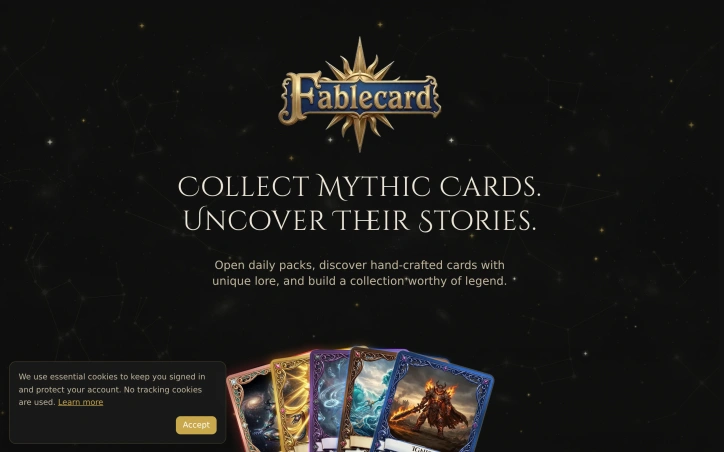
For fans of collectible card games looking for a solo experience that doesn't require downloads or complicated setup, Fablecard offers a refreshingly straightforward alternative. The platform lets users collect, discover, and build a collection of digital cards, each with its own unique lore and artwork. At its core, Fablecard solves the problem of accessibility, allowing players to jump in directly from their browser and start collecting. What stands out about Fablecard is its richly detailed world and the depth of storytelling behind each card. Cards are grouped into themed sets, each with its own distinct visual identity, characters, and narrative. As users collect cards, they're not just accumulating a collection - they're uncovering a hidden story that only reveals itself once they've gathered every card in a set. The visual effects on the cards are also noteworthy, with higher rarity cards featuring increasingly stunning animations and auras. The platform is designed to be easy to use, with users able to browse the full catalog of cards and sets without even needing to sign up. Once they start collecting, they can open free packs daily or purchase more with in-game currency. There are three tiers of packs available, each with different odds of containing rare or legendary cards. The business model is straightforward: users can start collecting for free, and then buy more packs with Gold if they choose to. The varying pack tiers and card rarities add an element of excitement and strategy to the collecting process. Overall, Fablecard is a compelling option for anyone looking for a solo collectible card experience that's rich in storytelling and easy to dive into.

For users seeking an alternative to traditional cable television, SmarterTV FR offers a premium IPTV subscription service that provides access to a vast library of content. The service is designed for entertainment enthusiasts who want to stream live TV, movies, and series on various devices, including Android, Smart TV, iOS, and PC. By offering a comprehensive IPTV solution, SmarterTV FR aims to help users break free from the constraints of conventional cable costs. One of the standout aspects of SmarterTV FR is its extensive content offering, which includes 5000+ movies and 10,000+ series, in addition to live channels from around the world. The service is compatible with a range of devices, making it convenient for users to stream their favorite content anywhere, anytime. The availability of popular live channels, such as Al Jazeera, CNN, and ESPN, further enhances the service's appeal. The service's key features include a user-friendly streaming app, daily updates, and premium support. SmarterTV FR also provides a 24-hour free trial, allowing users to test the service before committing to a paid plan. The pricing structure is straightforward, with options for monthly, 6-month, and 12-month subscriptions, ranging from €9.99 to €49.99 per year. Overall, SmarterTV FR is a robust IPTV solution that caters to the diverse entertainment needs of its users. With its extensive content library, compatibility with various devices, and flexible pricing plans, it presents a compelling alternative to traditional cable television. By providing a seamless streaming experience, SmarterTV FR has positioned itself as a viable option for those seeking to upgrade their entertainment experience.
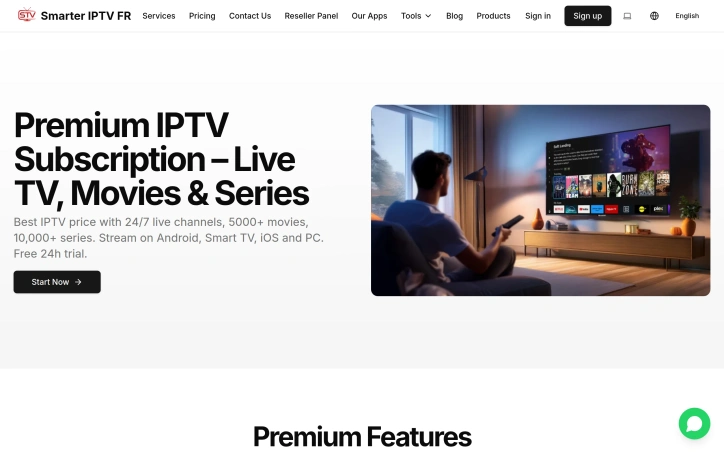

For users seeking a comprehensive entertainment solution, Smarter IPTV offers a premium subscription service that consolidates live TV, movies, and series into a single, accessible platform. The company's primary objective is to provide an affordable alternative to traditional cable costs, catering to a diverse audience with varied viewing preferences. With a vast library comprising 5000+ movies and 10,000+ series, alongside a broad selection of live channels from around the world, Smarter IPTV's content offering is undeniably extensive. The service's compatibility with multiple devices, including Android, Smart TV, iOS, and PC, ensures that users can stream their preferred content anywhere, anytime. Notable features include a free 24-hour trial, allowing potential subscribers to test the service, and a promise of daily updates to keep the content fresh. A key aspect that stands out about Smarter IPTV is its emphasis on accessibility and flexibility. The service is designed to be device-agnostic, supporting a range of platforms and devices. The variety of subscription plans available, including options for 1, 6, and 12 months, caters to different user needs and budgets. The pricing for these plans is clearly outlined, with costs ranging from €9.99 for a monthly subscription to €49.99 for a yearly commitment, with discounts available for longer-term commitments. Overall, Smarter IPTV's comprehensive content offering, coupled with its compatibility across various devices and flexible subscription plans, positions it as a viable option for those looking to move away from traditional cable television. By providing a broad range of entertainment content at competitive prices, Smarter IPTV directly addresses the needs of users seeking a more flexible and cost-effective entertainment solution.
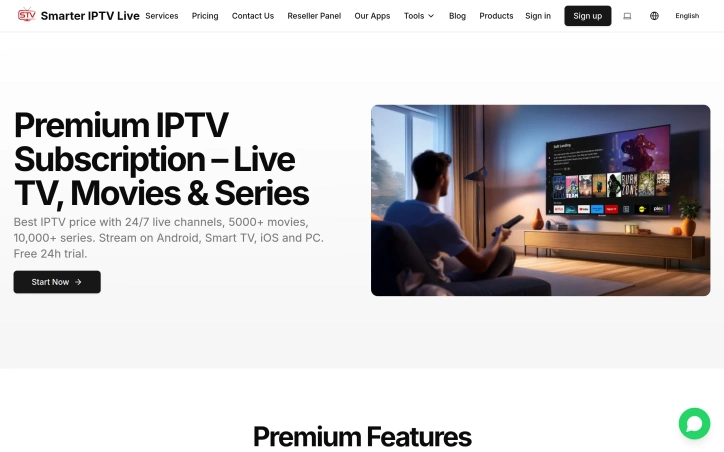

For entertainment enthusiasts looking for a comprehensive and flexible viewing experience, SmarterTV FR offers a premium IPTV subscription service that bundles live TV, movies, and series into one convenient package. This solution is particularly suited for individuals seeking to cut the cord on traditional cable services in favor of a more personalized and cost-effective alternative. The standout feature of this service is its broad compatibility with various devices, allowing users to stream their favorite content on Android, iOS, Smart TV, and PC. With access to over 5000 movies and 10,000 series, alongside a wide array of live channels from around the world, users are spoiled for choice. The service also highlights its ability to aggregate content from major streaming platforms, effectively acting as a one-stop-shop for diverse entertainment needs. Key features worth noting include the high-definition streaming quality, with support for HD, FHD, and 4K resolutions, and the daily updates to its content offerings. The service also provides a free 24-hour trial, giving potential subscribers a risk-free opportunity to test its capabilities. Additionally, the option to stream on multiple devices simultaneously is a significant advantage for households with varied viewing preferences. Pricing plans are structured to accommodate different user commitments, ranging from a monthly subscription to a more cost-effective 12-month plan, with prices starting at €9.99 per month and decreasing to €4.17 per month for the annual commitment. The service also boasts a "satisfied or refund" policy, underscoring its confidence in the quality of the viewing experience it provides. Overall, SmarterTV FR presents a compelling alternative to traditional TV viewing, offering a rich content library, broad device compatibility, and flexible pricing.
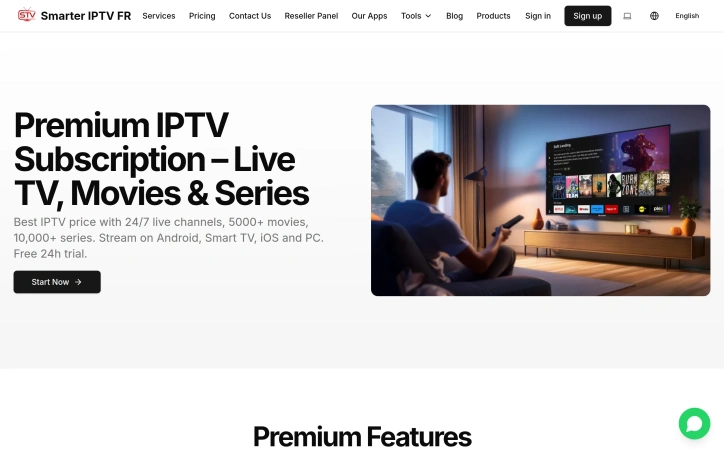

The rise of streaming services has transformed the way we consume entertainment, and Smartertv Live is positioning itself as a comprehensive solution for those seeking a unified streaming experience. For individuals tired of juggling multiple subscriptions and searching for a one-stop-shop for live TV, movies, and series, Smartertv Live promises to deliver. At its core, Smartertv Live offers a premium IPTV subscription service that aggregates a vast library of content, including 5000+ movies and 10,000+ series, alongside live channels from around the world. What stands out is the service's compatibility with a wide range of devices, allowing users to stream their favorite content on Android, Smart TV, iOS, and PC. The service boasts an impressive array of features, including access to popular live channels such as Al Jazeera, CNN, and ESPN, as well as content from major streaming platforms like Netflix and Disney+. Users can browse the latest additions to the service's library, which includes titles like "Dune" and "Avatar". Smartertv Live operates on a subscription-based model, with users able to choose from a range of plans, including a monthly, 6-month, and 12-month option. The service also offers a 24-hour free trial, allowing potential customers to test the service before committing. Pricing starts at €9.99 per month for the basic plan, with discounts available for longer-term commitments, such as the 12-month plan, which costs €49.99. Overall, Smartertv Live presents itself as a robust alternative to traditional cable TV, offering a flexible and feature-rich streaming solution.
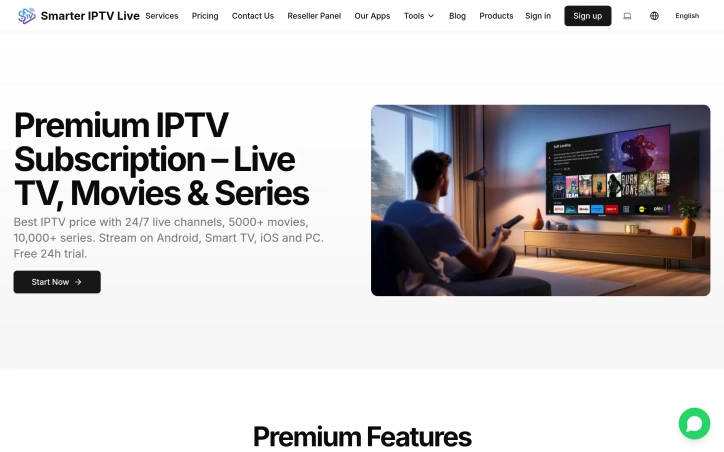
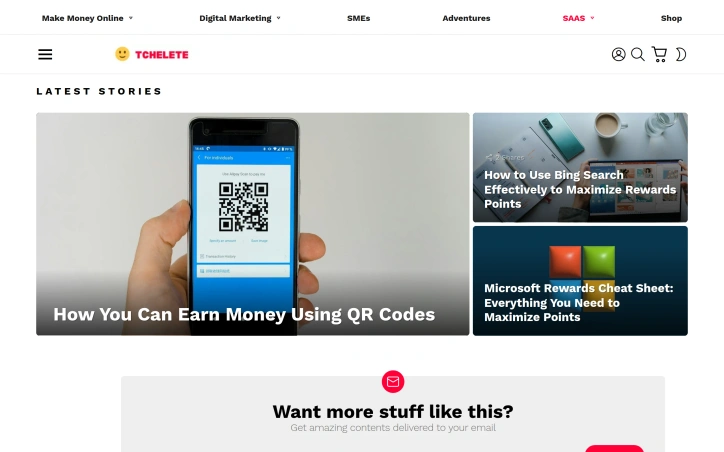
Online businesses often struggle to find reliable information and resources to help them succeed, but Tchelete aims to fill this knowledge gap. The platform is designed for entrepreneurs and businesses looking to thrive in the online space, providing them with valuable insights and expertise on making money online, content creation, and digital marketing. At its core, Tchelete is built on the founder's personal experiences and knowledge gained from navigating the online business landscape. By sharing this expertise, the platform offers a unique perspective that is informed by real-world trials and tribulations. The website's content is geared towards empowering online businesses with the information they need to overcome common challenges. One notable aspect of Tchelete is its straightforward and user-friendly interface, which makes it easy for visitors to navigate and find relevant content. The site also offers a newsletter subscription service, allowing users to stay up-to-date with the latest stories and insights. Additionally, the platform provides users with the ability to log in using their social media accounts or create a username, suggesting a potential member or community aspect, although the full extent of this functionality is not immediately clear from the available content. While the pricing model or revenue streams are not explicitly stated on the website, the presence of a cart functionality suggests that Tchelete might be exploring e-commerce or selling digital products. Overall, Tchelete is a resource for online businesses seeking guidance and knowledge to drive their success. Its focus on sharing practical expertise and experiences sets it apart, and its user-friendly design makes it accessible to a wide range of users.

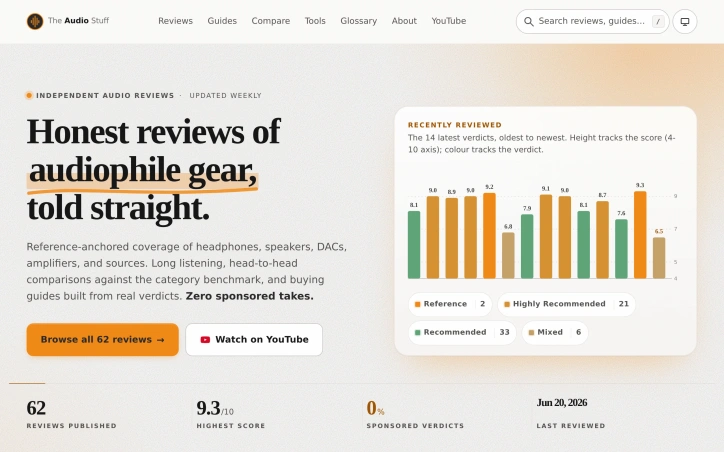
Audiophiles seeking unbiased reviews of high-end audio equipment have a valuable resource in The Audio Stuff. This website delivers in-depth, comparative reviews of various audiophile gear, including headphones, speakers, DACs, amplifiers, and sources, helping enthusiasts make informed purchasing decisions. The site's commitment to honesty and transparency is evident in its strict no-sponsored-content policy, ensuring that all reviews are based solely on the reviewer's thorough testing and comparison. What stands out about The Audio Stuff is its rigorous review methodology, which involves long listening sessions and head-to-head comparisons against category benchmarks. This approach provides readers with a clear understanding of each product's strengths and weaknesses. The site's reviews are also accompanied by buying guides built from real verdicts, further assisting readers in their purchasing decisions. The Audio Stuff's content is comprehensive, covering a range of products from various manufacturers. The reviews are detailed, with scores and verdicts that help readers quickly grasp the reviewer's opinion. The site also features video reviews on YouTube, offering an alternative format for those who prefer visual content. Some products reviewed on the site come with significant price tags, such as the HIFIMAN Arya Unveiled at $1,299 and the HIFIMAN Serenade at $999, while others, like the Douk Audio U2 Pro, are more affordable at $70. By providing unbiased, in-depth reviews, The Audio Stuff addresses a significant need in the audiophile community, helping enthusiasts navigate the complex and often biased landscape of audio equipment reviews. The site's commitment to honesty and transparency makes it a trustworthy resource for those seeking to invest in high-quality audio gear.

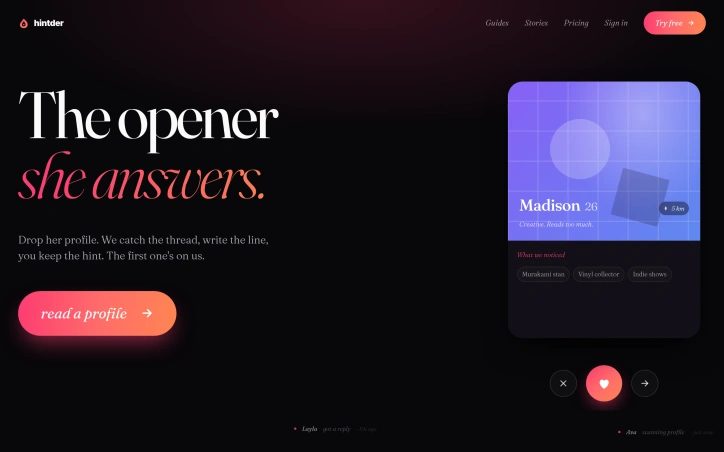
Online dating has become a numbers game, with users swiping through countless profiles and struggling to craft opening messages that stand out. Hintder aims to change this by helping users create engaging and personalized messages that increase their chances of getting a response. The platform is designed for individuals who are tired of generic openers and want to make a meaningful connection with their matches. What stands out about Hintder is its ability to analyze a user's profile and suggest creative and confident opening lines. The platform uses a profile's unique details to craft messages that sound like they were written by the user themselves, but with a dash of humor and wit. The examples provided show how Hintder takes a user's profile and turns it into a clever and engaging opener, such as poking fun at a user's claim that they "cook better than grandma" or referencing a shared interest in a particular author. Hintder's key feature is its profile analysis capability, which extracts relevant details from a user's profile and uses them to craft a personalized message. The platform is compatible with multiple dating apps, and users can simply drag and drop a profile into the scanner to get started. The platform also assures users that their screenshots are not saved or used to train AI models, providing a level of anonymity and control. While the exact pricing model is not explicitly stated, the platform invites users to try it for free, suggesting that there may be a freemium or trial-based model in place. Overall, Hintder offers a unique solution to the problem of crafting engaging opening messages, and its focus on personalization and creativity makes it an attractive option for users looking to stand out in the online dating world.