
Best Ecommerce Startups & Tools

Recently Listed

23 launches

Sort
Gizzapp PAY WHAT YOU WANT software store

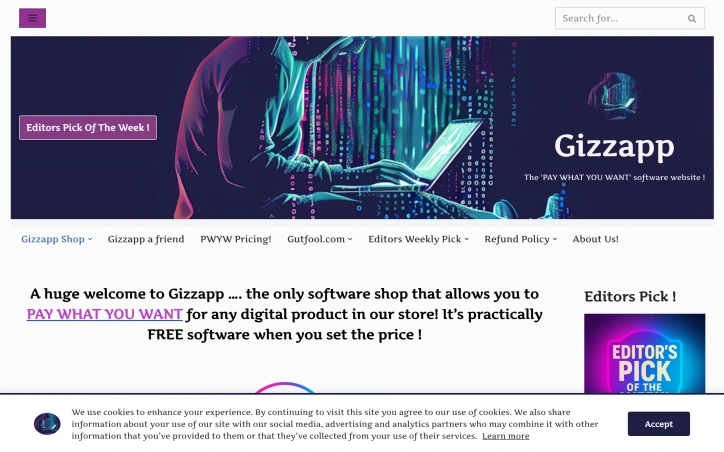
The fundamental tension between software creators and users over pricing finds an unconventional answer in this digital product marketplace. By letting customers set their own price for any software download, the platform directly addresses a persistent frustration: the climbing cost of digital tools that regularly exceed $50, $100, or more per license. Gizzapp targets anyone priced out of traditional software markets—freelancers on tight budgets, students, small business owners, and privacy-conscious users who want tools without premium pricing barriers. The model itself is the primary differentiator. Rather than fixed pricing tiers or subscription models, purchasers name their own price at checkout, creating a direct relationship between perceived value and actual payment. The current catalog emphasizes security and privacy tools alongside practical utilities. Encryption software like CipherVault offers military-grade AES-GCM protection for sensitive files. IP masking tools and proxy finders help users manage their digital footprint. Email management solutions address list cleaning and deduplication. Video and audio conversion tools round out the technical capabilities, while WordPress plugins and SEO utilities serve the website-building audience. YouTube downloading functionality is also available. The breadth of categories—spanning encryption, downloaders, email tools, proxy checkers, and conversion software—positions the marketplace as a generalist store rather than a niche-focused platform. This diversity appeals to users seeking a single destination for varied software needs, though the wide range of products raises questions about curation and quality consistency across different categories. The "pay what you want" model creates inherent tension. For customers, it's liberating: users might download premium tools for minimal cost or freely evaluate software before deciding its worth. For creators, the model depends entirely on customer goodwill and honesty. The platform mentions donations for some products, signaling that voluntary contributions likely won't sustain all offerings indefinitely. Whether this pricing approach achieves sustainable scale remains uncertain, but the concept challenges conventional software distribution by prioritizing accessibility over profit margin—a positioning that fundamentally reorders expectations around what digital tools should cost.

Marketplace-sites
S
Spymarq

The fundamental tension between software creators and users over pricing finds an unconventional answer in this digital product marketplace. By letting customers set their own price for any software download, the platform directly addresses a persistent frustration: the climbing cost of digital tools that regularly exceed $50, $100, or more per license. Gizzapp targets anyone priced out of traditional software markets—freelancers on tight budgets, students, small business owners, and privacy-conscious users who want tools without premium pricing barriers. The model itself is the primary differentiator. Rather than fixed pricing tiers or subscription models, purchasers name their own price at checkout, creating a direct relationship between perceived value and actual payment. The current catalog emphasizes security and privacy tools alongside practical utilities. Encryption software like CipherVault offers military-grade AES-GCM protection for sensitive files. IP masking tools and proxy finders help users manage their digital footprint. Email management solutions address list cleaning and deduplication. Video and audio conversion tools round out the technical capabilities, while WordPress plugins and SEO utilities serve the website-building audience. YouTube downloading functionality is also available. The breadth of categories—spanning encryption, downloaders, email tools, proxy checkers, and conversion software—positions the marketplace as a generalist store rather than a niche-focused platform. This diversity appeals to users seeking a single destination for varied software needs, though the wide range of products raises questions about curation and quality consistency across different categories. The "pay what you want" model creates inherent tension. For customers, it's liberating: users might download premium tools for minimal cost or freely evaluate software before deciding its worth. For creators, the model depends entirely on customer goodwill and honesty. The platform mentions donations for some products, signaling that voluntary contributions likely won't sustain all offerings indefinitely. Whether this pricing approach achieves sustainable scale remains uncertain, but the concept challenges conventional software distribution by prioritizing accessibility over profit margin—a positioning that fundamentally reorders expectations around what digital tools should cost.

Gizzapp PAY WHAT YOU WANT software store   preview

Key features

  • Pay What You Want Pricing: Customers set their own price at checkout for any software download
  • Encryption Software: Military-grade AES-GCM protection for sensitive files via CipherVault
See full listing
UCP

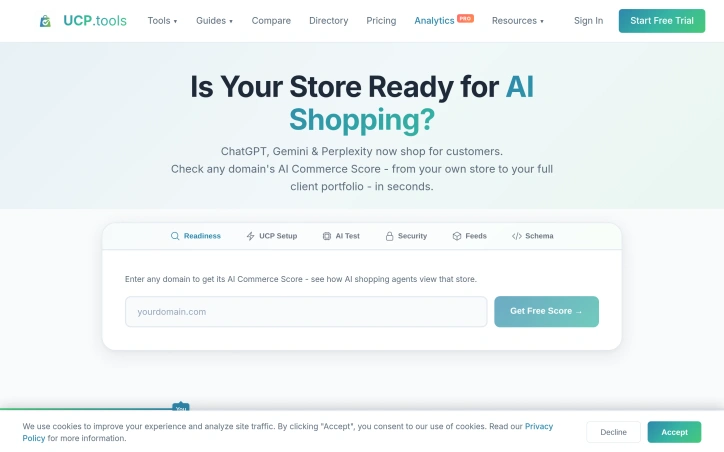
As AI shopping agents become mainstream, e-commerce stores face a new operational requirement: compatibility with systems like ChatGPT, Gemini, and Perplexity that browse and purchase independently. The Universal Commerce Protocol (UCP) provides the technical standard for this integration, but implementing it correctly poses a challenge for merchants across different platforms. UCPtools addresses this gap by offering a free validation platform that quickly assesses whether a store meets the standard and identifies specific remediation steps. The service validates compliance against both UCP and ACP standards co-developed by Google, Shopify, Etsy, Wayfair, Target, and Walmart, with endorsements from 25+ organizations including Stripe and PayPal. This consortium backing lends credibility to the standards themselves. The tool operates independently of these organizations—a positioning that increases merchant trust by distancing it from vendor interests. What distinguishes UCPtools from a basic compliance checker is its emphasis on actionable diagnostics. Rather than returning a simple pass/fail score, it provides an AI Readiness Score scaled 0-100 that breaks down performance across four dimensions: whether AI agents can discover the store, whether they can complete checkout, what payment methods the store supports, and security measures like signing keys and HTTPS encryption. This granular approach guides merchants toward specific fixes rather than leaving them with abstract compliance gaps. The tool supports multiple major platforms—Shopify, WooCommerce, BigCommerce, and Magento—with platform-specific implementation guides. Shopify merchants benefit from native UCP integration through the Shop app, while others are directed to manual setup or third-party solutions. The core service returns results in 30 seconds at no cost, removing financial friction from adoption. The broader context makes the timing relevant. With AI shopping agents now functional and operational, store visibility to these systems has shifted from experimental feature to pragmatic business necessity. A merchant's absence from AI-powered purchasing channels represents a form of digital invisibility that UCPtools helps rectify. The tool's free-forever model and technical precision position it as foundational infrastructure for the emerging AI commerce ecosystem rather than a premium advisory service.

Ecommerce-platforms
P
Peter Kap

As AI shopping agents become mainstream, e-commerce stores face a new operational requirement: compatibility with systems like ChatGPT, Gemini, and Perplexity that browse and purchase independently. The Universal Commerce Protocol (UCP) provides the technical standard for this integration, but implementing it correctly poses a challenge for merchants across different platforms. UCPtools addresses this gap by offering a free validation platform that quickly assesses whether a store meets the standard and identifies specific remediation steps. The service validates compliance against both UCP and ACP standards co-developed by Google, Shopify, Etsy, Wayfair, Target, and Walmart, with endorsements from 25+ organizations including Stripe and PayPal. This consortium backing lends credibility to the standards themselves. The tool operates independently of these organizations—a positioning that increases merchant trust by distancing it from vendor interests. What distinguishes UCPtools from a basic compliance checker is its emphasis on actionable diagnostics. Rather than returning a simple pass/fail score, it provides an AI Readiness Score scaled 0-100 that breaks down performance across four dimensions: whether AI agents can discover the store, whether they can complete checkout, what payment methods the store supports, and security measures like signing keys and HTTPS encryption. This granular approach guides merchants toward specific fixes rather than leaving them with abstract compliance gaps. The tool supports multiple major platforms—Shopify, WooCommerce, BigCommerce, and Magento—with platform-specific implementation guides. Shopify merchants benefit from native UCP integration through the Shop app, while others are directed to manual setup or third-party solutions. The core service returns results in 30 seconds at no cost, removing financial friction from adoption. The broader context makes the timing relevant. With AI shopping agents now functional and operational, store visibility to these systems has shifted from experimental feature to pragmatic business necessity. A merchant's absence from AI-powered purchasing channels represents a form of digital invisibility that UCPtools helps rectify. The tool's free-forever model and technical precision position it as foundational infrastructure for the emerging AI commerce ecosystem rather than a premium advisory service.

UCP preview

Key features

  • Compliance Validation: Assesses whether e-commerce stores meet UCP and ACP standards for AI shopping agent compatibility.
  • AI Readiness Score: Provides a 0-100 score with breakdowns across agent discovery, checkout completion, payment methods, and security.
See full listing
SSENSELESS

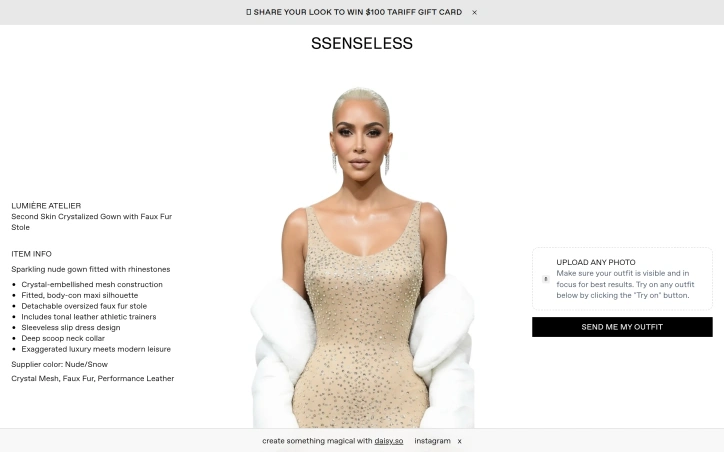
Fashion e-commerce has long been a realm where users are expected to navigate extensive product catalogs and filtering options to find their desired items. However, this can be a daunting task for those not familiar with online shopping or for individuals with specific tastes who struggle to describe their preferences. SSENSELESS seeks to address this issue by providing an AI-powered fashion transformation tool that takes user-provided photos as input. The service encourages users to upload images of themselves wearing outfits they'd like to transform, and the accompanying AI then generates new, SSENSE-inspired looks based on the original image. Supported file formats include JPG, PNG, and WEBP, with a file size limit of 50MB. While there are no specific requirements for image quality or composition, it's recommended that users ensure their outfit is centered and well-lit. One notable aspect of SSENSELESS is its accessibility feature, which allows anyone to create their own SSENSE-inspired looks without necessarily having to navigate the company's extensive product catalog. This can be particularly beneficial for individuals with specific style preferences or those who may not be familiar with online shopping. Key features worth noting include the ability to upload any photo and let AI generate new looks, as well as a "Try on" button that allows users to see different outfits without having to physically try them on. While pricing information is not explicitly mentioned, the founder's statement about tariffs making it possible for everyone to become SSENSELESS with a photo implies an effort to make high-end fashion more accessible and inclusive. Overall, SSENSELESS presents itself as a user-friendly and innovative tool that can cater to users who struggle to navigate traditional e-commerce platforms or describe their style preferences. As the service continues to develop, it will be interesting to see how its AI-powered transformation capabilities continue to evolve and expand beyond fashion e-commerce.
Ecommerce-platforms

Fashion e-commerce has long been a realm where users are expected to navigate extensive product catalogs and filtering options to find their desired items. However, this can be a daunting task for those not familiar with online shopping or for individuals with specific tastes who struggle to describe their preferences. SSENSELESS seeks to address this issue by providing an AI-powered fashion transformation tool that takes user-provided photos as input. The service encourages users to upload images of themselves wearing outfits they'd like to transform, and the accompanying AI then generates new, SSENSE-inspired looks based on the original image. Supported file formats include JPG, PNG, and WEBP, with a file size limit of 50MB. While there are no specific requirements for image quality or composition, it's recommended that users ensure their outfit is centered and well-lit. One notable aspect of SSENSELESS is its accessibility feature, which allows anyone to create their own SSENSE-inspired looks without necessarily having to navigate the company's extensive product catalog. This can be particularly beneficial for individuals with specific style preferences or those who may not be familiar with online shopping. Key features worth noting include the ability to upload any photo and let AI generate new looks, as well as a "Try on" button that allows users to see different outfits without having to physically try them on. While pricing information is not explicitly mentioned, the founder's statement about tariffs making it possible for everyone to become SSENSELESS with a photo implies an effort to make high-end fashion more accessible and inclusive. Overall, SSENSELESS presents itself as a user-friendly and innovative tool that can cater to users who struggle to navigate traditional e-commerce platforms or describe their style preferences. As the service continues to develop, it will be interesting to see how its AI-powered transformation capabilities continue to evolve and expand beyond fashion e-commerce.

SSENSELESS preview

Key features

  • Photo-Based Look Generation: AI transforms user photos into SSENSE-inspired fashion looks.
  • Virtual Try-On Feature: View different outfits without physically trying them on.
See full listing