Catalyst Healthspan Audit
Personal trainers typically sell training sessions. This startup reversed the equation by building assessment first, mak...
Launchory
We built Launchory to solve the discoverability problem for startups. Our platform offers instant approval, permanent do...
Best SEO tools Startups & Tools
Optimize sites for search rankings and visibility.
Recently Listed
24 launches
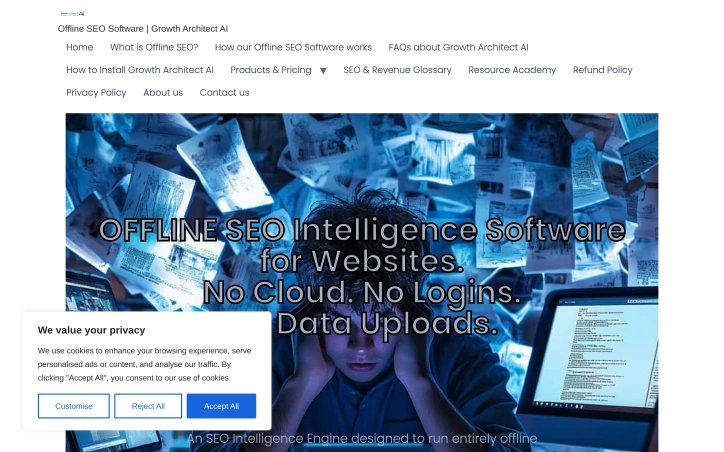
For SEO professionals tired of fragmented workflows and data exposure, this offline analysis platform offers a compelling alternative to the cloud-first tools that dominate the market. The software tackles a real pain point: the need to consolidate insights from Google Analytics, Google Search Console, and Screaming Frog SEO Spider without surrendering data to third-party servers. The core differentiation lies in its commitment to local processing. Rather than uploading client data or proprietary website intelligence to external systems, the platform runs entirely on the user's own computer using Microsoft Excel as its analysis engine. This appeals directly to agencies and consultants managing sensitive client information, as well as individual practitioners concerned about data control and privacy. No cloud infrastructure, no subscription tracking, no ongoing account management needed. The platform delivers structured automation through ten built-in deep-dive analyses that surface specific, actionable problems: pages receiving traffic but generating no revenue, rankings without clicks, missing landing pages, thin content that still indexes, and other blind spots that typically require manual investigation across fragmented tools. The interface prioritizes speed and clarity, diagnosing issues in under a minute without requiring users to build custom dashboards or configure complex workflows. What sets this apart from competitors is both its positioning and its limitations. The offline-first approach appeals to a genuine subset of the market skeptical of cloud dependencies, but it also constrains real-time collaboration and data freshness in ways cloud solutions don't. The software functions as an integration layer rather than a replacement for existing tools, accepting exports from each platform and processing them locally. This workflow requires some manual orchestration compared to API-driven alternatives, but also eliminates dependency on third-party API stability. The licensing model operates on a time-based structure, contrasting with the monthly subscriptions typical of SaaS competitors, though specific costs are not disclosed in available materials. The value proposition centers on privacy, control, and cost predictability rather than feature breadth or collaboration capabilities. The software targets a specific buyer: professionals who already use the standard SEO toolkit and want faster analysis without compromising data handling. It succeeds most clearly where privacy concerns, regulatory requirements, or competitive sensitivity make cloud storage untenable. For teams requiring real-time collaboration or agencies handling large volumes of properties, the offline constraint may feel restrictive. For solitary practitioners or tightly controlled client relationships, it offers a genuine productivity advantage.

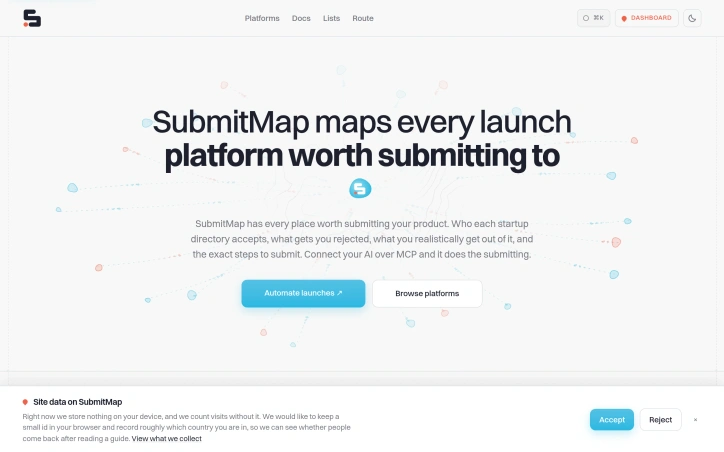
Launching a product means navigating hundreds of startup directories, each with different requirements, approval processes, and link quality. Most founders waste hours on forms that ultimately reject them or provide valueless backlinks. This directory aggregator cuts through that problem by curating verified information on 823 platforms and automating the submission process. The core value lies in its research foundation. Rather than guessing which directories accept their product type, founders get transparent data on acceptance criteria, approval timelines, and link quality metrics like domain rating. The filtering system lets users narrow down by product category (AI tools, SaaS, developer tools, etc.), pricing model, and approval speed. Each directory entry includes specific details: whether the link is nofollow or followed, domain authority, and exactly what the submission form requires. This upfront transparency prevents the wasted effort the founder experienced when filling in elaborate forms only to face rejection. What distinguishes this from a simple directory listing is the MCP integration. By connecting an AI agent to SubmitMap through Model Context Protocol, founders can automate qualification and submission across multiple platforms simultaneously. The agent evaluates which directories match the product profile, plans the submission sequence, and executes forms without manual intervention. For AI-native product teams, this shifts launch logistics from a tedious evening task to a configured workflow. The product selection is notably rigorous. The curated list spans established platforms like Product Hunt and Hacker News alongside niche directories for specific categories. Domain ratings range from 60+ to 97, helping founders distinguish between high-authority directories and smaller specialized boards. Some directories offer free listings (324 platforms), while others operate on freemium or paid models. This variety ensures founders can build a launch strategy suited to their resources and visibility goals. The absence of explicit pricing for SubmitMap itself in the scraped content leaves the business model unclear—it may operate as a free service, a freemium tool, or a paid subscription. Regardless, the value proposition is direct: founders eliminate hours of form-filling research, gain visibility into which directories actually matter, and for those using agents, delegate the entire submission workflow. SubmitMap answers a specific, recurring founder pain point with thoroughness. By combining hand-researched directory data with automation capability, it treats product launches as a solved problem rather than a recurring friction point.

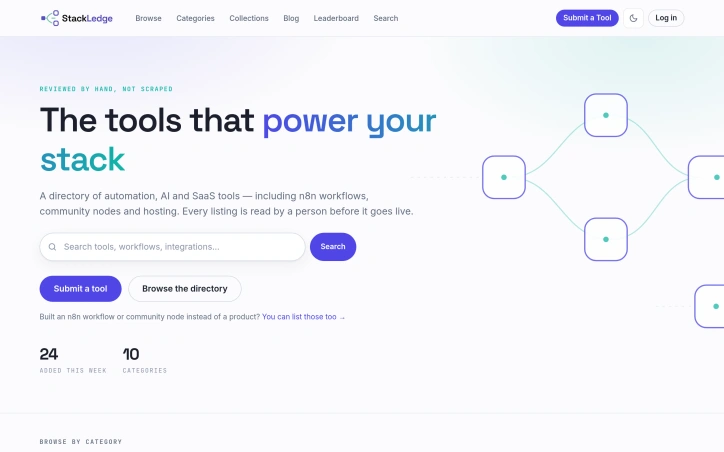
I built StackLedge because most software directories are filled with spam and abandoned projects. I wanted a clean, hand-curated platform dedicated strictly to APIs, developer tools, and AI agents. Every submission is manually reviewed. We do not accept low-effort wrappers or thin content. We also run a badge-trade program to help early-stage founders build their domain authority while growing our community.

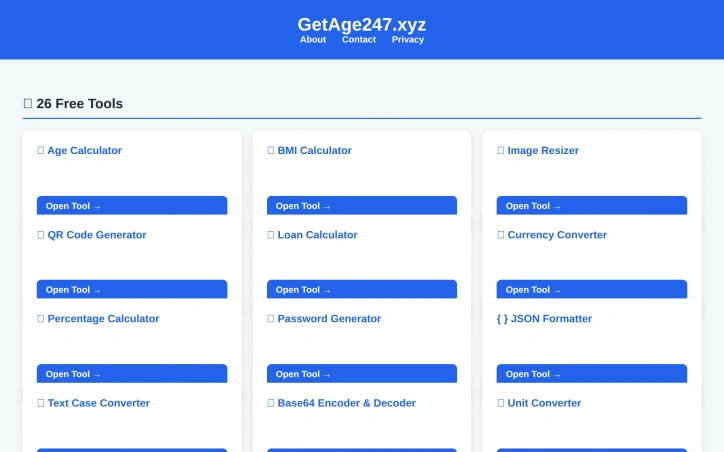
Browser-based utility platforms fill a genuine gap for people who need quick digital solutions without the friction of downloading software or creating accounts. GetAge247 positions itself as a comprehensive collection answering this need, aggregating 26 tools across multiple categories from basic calculations to content generation. The platform targets a broad spectrum: students managing coursework, freelancers handling client work, developers needing SEO utilities, content creators editing media, and casual internet users tackling everyday tasks. This breadth reflects a recognition that utility needs are fragmented but often similar across professions and skill levels. What distinguishes GetAge247 is its categorical organization rather than minimalism. Rather than offering one or two multipurpose tools, it provides focused single-purpose utilities: separate age, BMI, and GPA calculators; dedicated image and document conversion tools; distinct generators for UUIDs, passwords, QR codes, and resume content. This approach trades interface simplicity for comprehensiveness, allowing users to find a tool purpose-built for their specific task. The tool set itself shows practical curation. Technical users get utilities like JSON formatting, Base64 encoding, robots.txt generation, and schema markup creation. Productivity-oriented users access resume builders, invoice generators, and cover letter assistants. Casual users benefit from calculators, converters, and media tools. Image resizing and JPG to PDF conversion address common content creation needs. The inclusion of a YouTube thumbnail downloader suggests attention to creator workflows. All tools operate in the browser without requiring installation or account creation, removing traditional friction points. This accessibility model aligns with the stated positioning around simplicity for non-technical users. The platform's monetization model remains implicit from available information, though the founder describes it as entirely free. The emphasis on adding tools and guides based on user feedback suggests an ongoing service approach rather than a static collection. This positions GetAge247 less as a launched product and more as a continuously maintained utility repository. The core value proposition is straightforward: aggregated, accessible web utilities eliminating the need to hunt across multiple sites or install software. For users who run into diverse digital tasks and prefer centralized, no-friction solutions, the breadth of offerings creates genuine utility, even if individual tools might be duplicated elsewhere online.

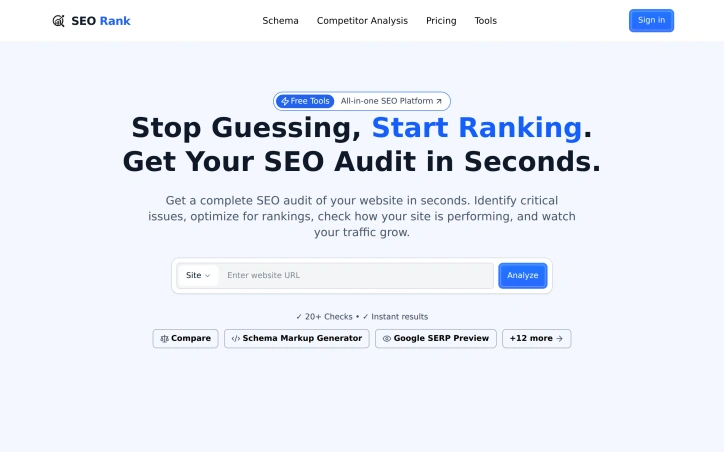
Website optimization has traditionally demanded either expensive agency engagement or significant technical expertise. SEO Rank addresses this friction by delivering comprehensive site analysis through a free platform accessible to marketers, agencies, developers, and business owners of any skill level. The product bundles over twenty automated checks and seventeen tools into a single interface designed for speed. Rather than requiring hours of investigation, users receive instant insights into on-page optimization, content quality, technical SEO health, and mobile usability. The tool evaluates title tags, meta descriptions, heading structure, image alt text, Open Graph and Twitter Card setup, canonical tag usage, internal link quality, schema markup, security protocols, and accessibility compliance among other factors. What distinguishes this platform within the crowded SEO audit space is its integrated Google Search Console connection. This addition directly addresses a critical gap that frustrated early users: audit scores revealed problems, but offered no visibility into whether fixes actually improved performance. By surfacing real metrics like search impressions, clicks, and keyword rankings alongside audit results, the platform enables users to quantify the impact of their optimization efforts and compare performance across time periods. The feature roster also includes practical utilities beyond site auditing. A schema markup generator helps users create properly formatted structured data for articles, products, FAQs, and local business listings. A Google SERP preview tool shows how page titles and meta descriptions render in search results across desktop and mobile. Additional offerings include domain rating assessment, meta tag generation, and keyword density analysis. The roadmap indicates expansion is planned, with XML sitemap validators, robots.txt testing, backlink checking, and AI-powered content optimization flagged as coming features. This signals an ambition to evolve beyond diagnostic tools toward a more complete optimization suite. By eliminating cost barriers and condensing extensive analysis into seconds rather than days, SEO Rank targets a market segment genuinely underserved by premium SEO platforms. For small agencies and independent marketers managing multiple sites, or for business owners seeking baseline performance metrics without professional consultant fees, the product delivers clear utility. The Search Console integration particularly strengthens its position by connecting diagnostic data to real-world search performance, transforming audit scores from abstract recommendations into measurable outcomes.

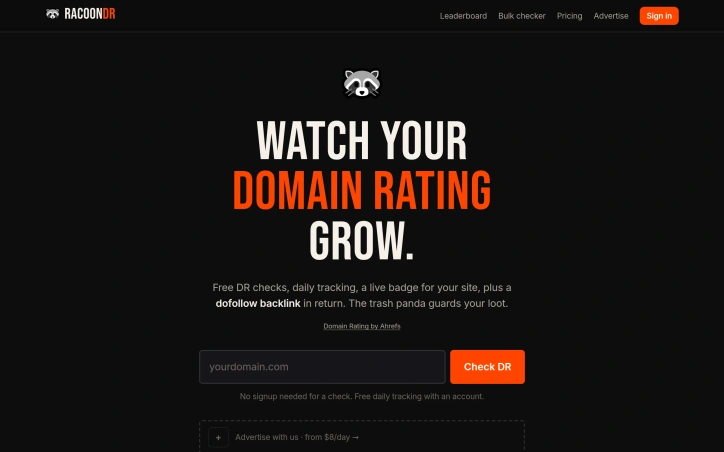
Getting domain rating data has traditionally required either expensive SEO tools or signing up for accounts you might not want. RacoonDR addresses this friction by offering free, instant DR checks without requiring any registration, plus daily tracking once you create an account. The service targets website owners and SEO professionals who want to monitor how their domain rating evolves over time without paying subscription fees or dealing with signup barriers. The product's core appeal lies in its simplicity and the incentive structure built around it. Rather than charging upfront, RacoonDR offers its tracking service free and generates value by placing lightweight SVG badges on participating sites. When a user displays the badge on their website, RacoonDR automatically verifies its placement and converts the link to the site into a dofollow backlink. This creates a mutually beneficial exchange where site owners gain free tracking and a small badge, while RacoonDR builds a network of dofollow links. For users unwilling to display the badge, a Pro tier priced at $5.99 per month provides 15 dofollow links without any badge requirement. The feature set supports the core use case effectively. Users can look up any domain's rating instantly and view historical charts tracking how that rating changes. Each checked domain gets its own public page, and the service displays global rank and domain age alongside the rating. A leaderboard highlights top gainers each month, adding a competitive element. The badge itself is impressively lightweight at under 3 kilobytes, reducing performance impact for sites that choose to display it. By making DR lookup and tracking free and frictionless, RacoonDR democratizes access to domain rating intelligence that competitors often gate behind paywalls. The badge-for-backlink model is clever, turning users into advocates who actively market the tool by hosting its badge. This approach bootstraps both user growth and SEO value simultaneously. For websites with modest domains seeking free tracking or those willing to trade a small badge display for a dofollow link, RacoonDR presents a genuine alternative to paid SEO tools.

Many website owners focus on Google rankings without considering how AI systems understand their brand. A growing group of startups and established businesses now face an unfamiliar problem: they rank well in traditional search but remain invisible to ChatGPT, Gemini, Copilot, and Perplexity. These AI-powered search engines rely on different signals than Google, and most businesses have no insight into where their visibility breaks down. This audit service directly addresses that blind spot. Rather than guessing why AI systems overlook a business, founders and business owners can run a comprehensive assessment that measures how AI systems interpret their website. The assessment covers six key dimensions: technical readiness (crawlability, indexing, structured data, metadata), entity clarity (who you are and what you offer), citation signals, content architecture, authority and trust signals, and competitor positioning relative to AI recommendations. The audit produces a measurable AI Visibility Score paired with specific findings rather than vague observations. This appeals to founders who want concrete data instead of assumptions. The underlying framework emphasizes clarity (defining what the business is), answer-driven content (pages structured around buyer questions), authority (building citations and trusted mentions), and technical fundamentals (schema, hierarchy, internal links). The target audience is clear: D2C and ecommerce brands, service consultants, agencies, and small businesses building visibility beyond Google. These segments typically invest in search optimization but lack strategies for AI discovery. The service fills a genuine gap in how businesses think about discoverability, moving beyond a single search engine to a landscape where multiple AI systems drive traffic. What makes this particularly relevant is timing. As AI-powered search gains adoption, early-moving businesses can optimize for these systems before competition intensifies. The audit enables that, providing both a snapshot of current AI visibility and a roadmap for improvement. The founder's positioning reflects a clear conviction: AI visibility should be measurable, not mysterious. In a market where most business owners still treat AI visibility as an afterthought, this service offers a practical entry point for businesses ready to get ahead of the shift.

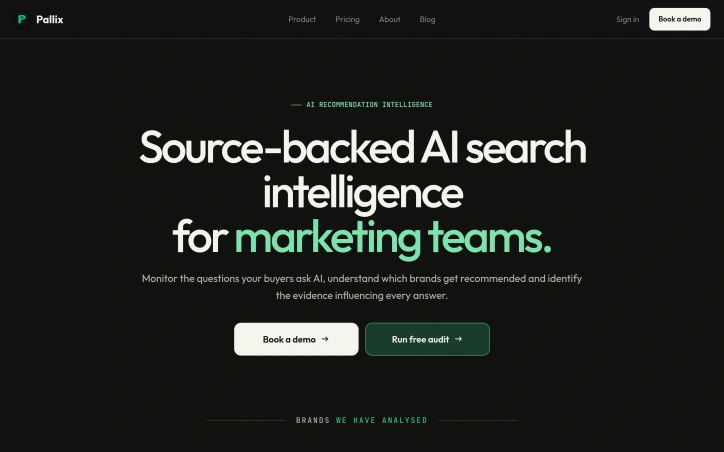
Indian e-commerce and consumer brands operate largely blind to their presence in AI-generated search results, a gap that Pallix addresses head-on. The platform monitors how brands appear across AI engines, maps the sources and communities influencing those recommendations, and surfaces the most impactful fixes to improve visibility and competitive positioning. The core insight driving Pallix's approach is radical transparency. Rather than serving up opaque visibility scores, the platform shows the exact domains, URLs, and communities that shaped each AI recommendation. When MuscleBlaze or Fire-Bolt receives a mention in an AI-generated answer, marketers see precisely where that citation came from, whether it was a Reddit thread, YouTube video, or news article. This source-level granularity transforms abstract metrics into actionable intelligence. The workflow Pallix enforces moves teams from observation to measurement in a structured cycle. After tracking visibility metrics and citation patterns, the platform identifies gaps in sourcing, competitive blind spots, and technical issues blocking AI crawlers. It then ranks these opportunities by predicted impact, effort required, and supporting evidence, converting the evidence layer into a prioritized work queue. The final step closes the loop by measuring whether visibility shifted after fixes were deployed. The platform targets marketing teams, agencies, and brands directly, positioning itself as infrastructure for managing AI search visibility much as SEO tools manage organic search. Brands including Mama Earth, The Whole Truth, and Yoga Bar have used Pallix to analyze their positioning, indicating traction among scaled Indian consumer brands. A free audit is available, and the platform offers a trial, though permanent pricing details remain undisclosed. The emphasis on transparency in both product design and business model—a corrective to the opaque tools already in the market—sets a different tone for the space. For any brand whose buyers ask questions of AI systems, Pallix translates black-box recommendations into visible, addressable problems backed by real sources and measurable outcomes.
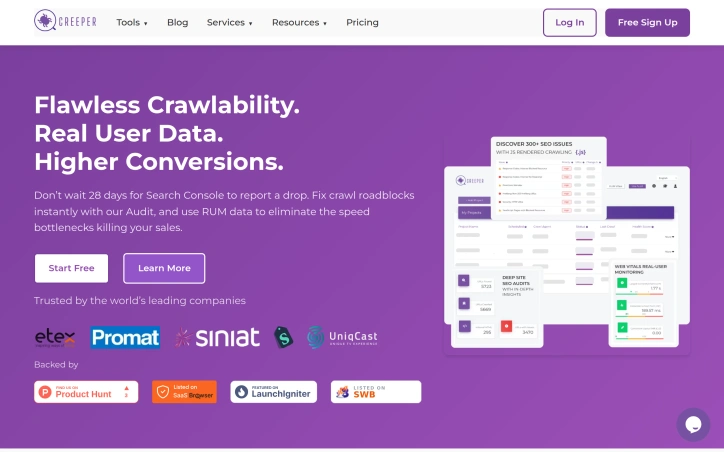
Technical SEO auditing has long suffered from a fundamental mismatch: tools measure lab-based scores that don't correlate with what actual users experience or whether a business makes money. Creeper tackles this disconnect by pairing automated site audits with real user monitoring, giving teams both the technical roadmap and the conversion data they need. The product identifies over 300 technical SEO issues—crawl errors, indexability problems, on-page structure flaws—that traditional audits cover. But the differentiator is its emphasis on real user data. Rather than chasing artificial 100/100 lab scores, teams monitor the Web Vitals that matter: largest contentful paint, interaction to next paint, and cumulative layout shift, measured across actual devices and locations. This grounds optimization work in what users experience, not what simulators predict. Creeper explicitly positions itself against the health score trap that dominates the SEO tool market. That framing works because many site owners have chased perfect scores only to watch conversions stagnate. The core insight is sound: real users and real conversions matter more than algorithm-pleasing metrics. The product operates as both self-service and services-led. The self-service layers include site audits and RUM dashboards. For teams that prefer outsourced work, Creeper offers done-for-you speed optimization and SEO audit implementation, both backed by guarantees. Case studies demonstrate results: one small software vendor saw organic traffic climb 458 percent over six months; a construction materials company recovered 73 percent of decayed traffic and fixed over 130 technical issues in the same timeframe. The value proposition is clear for mid-market and enterprise sites struggling with technical debt or performance. Small startups with minimal traffic might find the RUM component less critical, but any site running meaningful user volumes stands to benefit. The integration of audit and monitoring under one roof beats forcing teams to manage separate tools. Pricing is handled through direct contact, a consultative approach that suits the done-for-you services but creates friction for self-serve buyers wanting a quick trial.

Scattered SEO data across multiple platforms has become a critical pain point for agencies and internal teams trying to move from analysis to implementation. SEO Automation Hub addresses this by consolidating audits, competitor intelligence, and content generation into a single operational workspace designed around clear workflows rather than dashboard reporting. The platform targets three distinct user groups: agencies looking to standardize client deliverables, independent consultants seeking to demonstrate methodology and control, and internal teams needing alignment between SEO, content, and development functions. Each gets a workspace structured around a four-step progression: acquiring signals from connected sources, evaluating them to separate genuine urgencies from noise, assigning insights as concrete tasks with clear ownership, and measuring the results of interventions. What distinguishes this product is its emphasis on actionability over metrics accumulation. The interface promises a readable path for decision-makers and executors alike, moving past the typical export-and-spreadsheet model that plagues multi-platform SEO work. The technical audit surfaces Lighthouse metrics, critical pages, and prioritized improvements in a structured roadmap. Google Search Console integration lifts query data, page performance, and competitive signals without requiring separate tabs and manual consolidation. The competitor analysis module goes beyond feature parity comparisons to identify strategic gaps and market positioning opportunities. Content generation gets particular attention here. Rather than disconnected AI writing, the platform generates briefs, on-page structures, and full articles calibrated to the domain's existing performance and market context. Topic research feeds into this, uncovering trend-worthy subjects and backlink opportunities that convert to editorial tasks. The work management layer—labeled Pipeline SEO—bundles all of this into weekly workflows with prioritization logic based on impact and effort. The product clearly positions itself for teams that have moved beyond one-off audits and now operate SEO as a continuous discipline with multiple stakeholders. An internal team might use this to keep content creators and developers aligned on shared SEO priorities. A consultant could use it to show clients not just what's broken but the method for fixing it systematically. An agency could scale delivery across clients without losing consistency. The platform offers a seven-day free trial with limited reporting access, suggesting a freemium model, though specific pricing tiers are not detailed in available materials. This approach lowers barrier to evaluation while funneling users toward paid tiers as project scope grows.


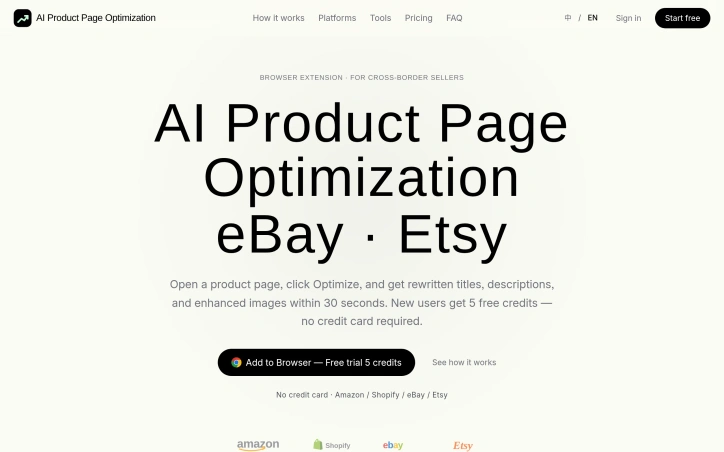
Cross-border e-commerce sellers face a persistent workflow problem: rewriting product listings across multiple marketplaces to match platform-specific search algorithms while maintaining readability for AI shopping assistants. Most existing tools treat the work as a generic copywriting task or lock sellers into a single platform. This browser extension solves that gap by automating the rewrite process directly within the product pages sellers already manage. The product tackles four major marketplaces—Amazon, Shopify, eBay, and Etsy—each with distinct search behaviors and formatting constraints. Rather than abstracting the work away from the platform, the extension operates in-browser, pulling titles, bullet points, descriptions, and images from a live listing and returning rewritten versions within 30 seconds. Sellers can review the AI-generated copy and processed images in a dashboard before publishing, preserving control over the final output while eliminating the manual rewrite cycle. What distinguishes this offering is its practical execution: it avoids the trap of being either too specialized (Amazon-only tools) or too generic (writers that ignore marketplace rules). The platform-specific approach means optimization for Amazon accounts for Rufus, its conversational shopping layer, while Etsy optimization preserves the handmade story that drives buyer intent on that platform. The browser extension model also solves a friction point—sellers don't need to export inventory, run batch jobs elsewhere, and re-import; they click Optimize on the page they're already editing. The feature set extends beyond rewrites. An image SEO checker analyzes resolution, file size, format, and filename against visual search standards. A machine-readable checker reveals which product schema fields AI search engines can parse. A community feature shows before-and-after examples from other sellers, providing both inspiration and implicit social proof. The business model is straightforward: five free credits for new users (no credit card required for trial) and a $19.90 monthly subscription. This pricing structure is aggressive enough to attract cost-conscious sellers while remaining affordable for regular optimization work. The core strength is narrow focus—the product does one thing across four platforms and does it fast. For sellers managing inventory on multiple marketplaces, the time savings alone justify the subscription.

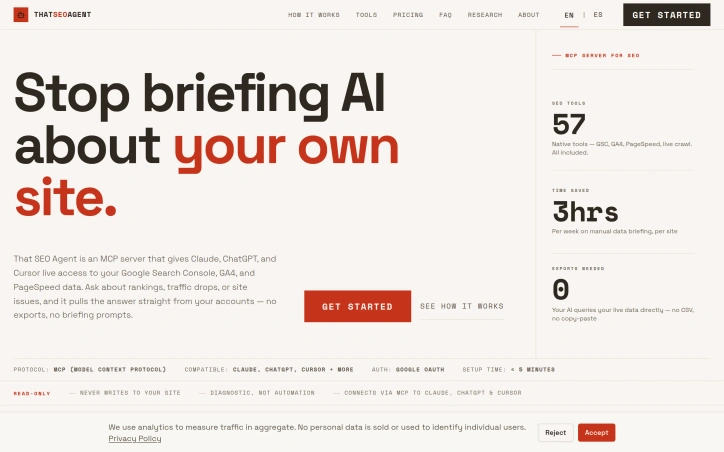
SEO professionals typically spend hours each week preparing data before AI tools can provide meaningful analysis. That SEO Agent directly addresses this inefficiency by eliminating what its creators call the "briefing tax" — the routine task of exporting metrics from Google Search Console, GA4, and PageSpeed, then manually copying and pasting them into conversation prompts. The product targets SEO consultants, particularly those managing multiple client properties. By connecting through the Model Context Protocol, the tool grants Claude, ChatGPT, and Cursor direct read-only access to a user's live Google accounts. This eliminates the need to manually assemble data exports before asking questions about rankings, traffic patterns, and technical site health. The platform distinguishes itself through scope and lack of constraints. It includes 57 native tools distributed across five functional categories: core Search Console queries, advanced GSC analysis, Google Analytics 4 reporting, technical SEO audits, and site management features. Critically, none of these tools hide behind pricing tiers or add-on fees. Users gain full access to the entire toolkit regardless of their plan. Setup requires minimal effort. After granting read-only Google OAuth access, users copy an API key and add a configuration block to their AI tool's settings in less than five minutes. The system then automatically discovers and registers sites by pulling Search Console properties directly. All communication flows through the MCP protocol, and the service never stores user credentials. The read-only architecture keeps the product strictly diagnostic. It retrieves and organizes existing data but cannot modify websites or accounts. This conservative design appeals to professionals managing client properties who need strict boundaries around account access. The core value proposition centers on workflow efficiency. By eliminating the copy-paste cycle, users avoid context-switching overhead and the contextual pollution of stuffing AI conversations with export files. For consultants managing multiple properties, this time savings compounds meaningfully. The platform explicitly promises zero additional costs per site or query, suggesting a straightforward pricing model. The product's appeal ultimately rests on a single thesis: getting live SEO data into AI conversations without manual intermediation.
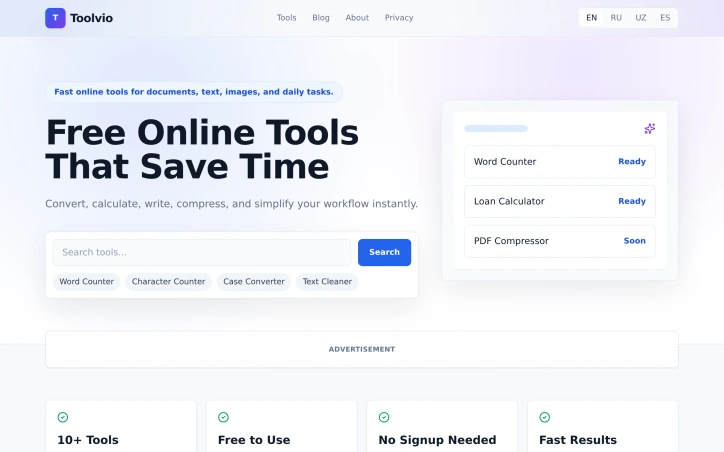
Digital workers constantly switch between apps and websites to handle routine tasks like counting words, converting text cases, calculating loan payments, or compressing files. Toolvio consolidates these scattered utilities into a single, free web-based platform designed for speed and simplicity. The service offers a focused library of utilities organized across six categories: text tools, calculators, PDF tools, image tools, AI features, and SEO utilities. The text suite includes word and character counters, case converters, text cleaners, slug generators, and duplicate line removers. The calculator section covers percentages, mortgages, business loans, standard loans, age calculations, and credit card payoff projections. Several tools remain in development, including image compression, PDF compression, PDF-to-Word conversion, and AI text summarization. What distinguishes Toolvio from similar tool aggregators is its zero-friction access model. No signup required, no hidden paywalls, and no login gates prevent immediate use. The tools run client-side, meaning files process locally rather than uploading to external servers, which carries privacy implications that appeal to security-conscious users. The interface emphasizes speed, with straightforward conversions and calculations delivering results instantly. The platform targets professionals and students handling routine digital tasks without dedicated software. Someone drafting content benefits from the word counter and character tracker. Freelancers and small business owners use the loan and mortgage calculators for client estimates. Writers toggle between case conversion and text cleaning. The tools address genuine friction points in everyday workflows without requiring installation or signup. The weakness evident in the available content is incompleteness. Multiple valuable features—image compression, PDF compression, PDF-to-Word conversion, and an AI summarizer—exist only as coming-soon placeholders. Until these launch, users comparing Toolvio against other tool aggregators may find the available toolset too narrow for a primary destination. The stated growth strategy centers on continuous expansion and educational resources. As additional tools become available, Toolvio could evolve into a genuine one-stop alternative for routine document and text processing tasks. Currently, it serves as a useful collection for specific needs—particularly text analytics and simple financial calculations—rather than a comprehensive replacement for dedicated software. For anyone avoiding sign-ups and installing apps, though, Toolvio removes barriers to getting work done quickly.

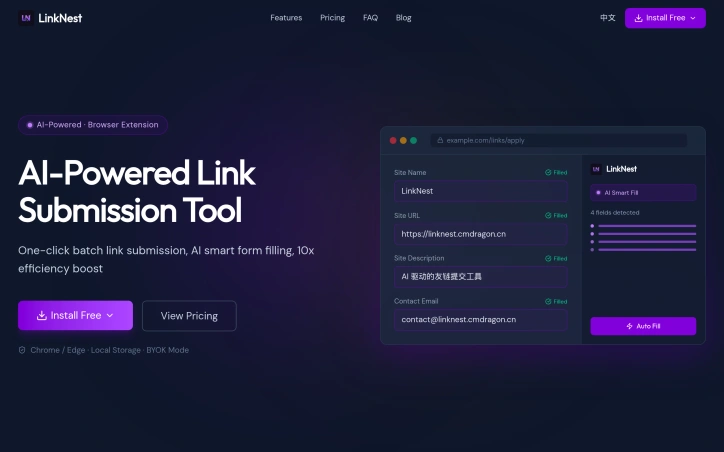
SEO professionals and independent bloggers often waste a significant amount of time manually submitting links to numerous websites, a task that involves tedious repetition of copying and filling out forms. LinkNest addresses this issue by providing an AI-powered browser extension that automates the process of identifying form fields and intelligently filling them with optimized content. The extension is designed to cater to the needs of SEO professionals and independent bloggers who seek to streamline their workflow and reduce the time spent on link submission. What stands out about LinkNest is its ability to significantly reduce the time required for link submission, from hours to mere minutes. Its AI-driven approach enables it to recognize and fill out form fields accurately, eliminating the need for manual data entry. The extension's capability to generate differentiated content and automatically detect the language of the target site further enhances its utility. LinkNest offers a range of features that make it an attractive solution for those involved in link building. Its floating menu allows users to access various capabilities, including filling out site information and generating virtual data. The extension also supports multiple profiles, enabling users to manage different sites and configurations efficiently. Additionally, its BYOK (Bring Your Own Key) mode allows users to utilize their own AI API key, providing flexibility in controlling costs. The pricing model for LinkNest includes a free version with limited functionality, a Pro version at $8 per month, and a Lifetime subscription for a one-time payment of $99. The free version has restrictions on the number of submissions and the number of links that can be managed, while the Pro and Lifetime versions offer unlimited submissions and links, along with additional features such as data import and export capabilities.

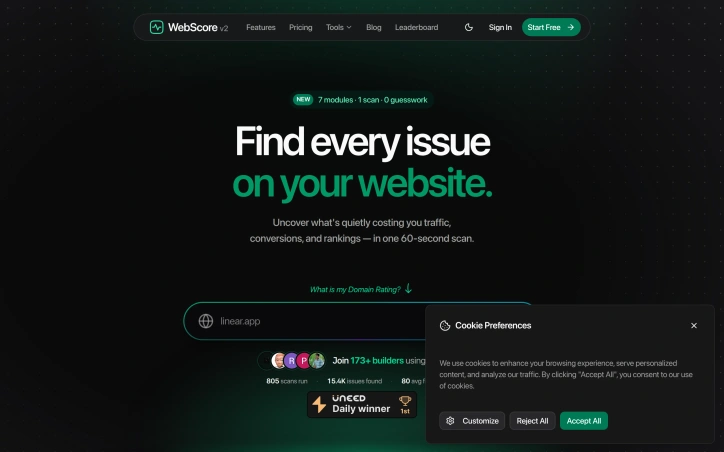
For developers and agencies managing multiple websites, the task of identifying and fixing issues that impact traffic, conversions, and rankings can be overwhelming, requiring the use of multiple tools and piecing together disparate reports. WebScore addresses this challenge by providing a comprehensive website analysis and SEO audit tool that scans a site in 60 seconds, uncovering issues across seven key areas. The tool is particularly suited for teams seeking to streamline their workflow and prioritize fixes based on impact. What stands out about WebScore is its all-encompassing approach, checking not just one aspect of a website but performance, SEO, accessibility, security, best practices, domain metrics, and even AI-powered UI/UX audit. The level of detail provided in its reports is notable, offering actionable recommendations with clear explanations and impact scoring, allowing users to focus on the most critical issues first. The tool's capability to analyze Core Web Vitals with specific identification of slowing factors, along with technical and on-page SEO insights, security vulnerabilities, and accessibility issues, positions it as a versatile solution. The integration of AI for UI/UX audit, analyzing desktop and mobile screenshots to provide design improvement suggestions, further enhances its utility. WebScore offers a straightforward pricing model: users can scan their website for free, pay $3 per report, or opt for a one-time payment of $29.99 for lifetime access, with no credit card required for the initial scan. Overall, WebScore presents a compelling solution for those looking to comprehensively assess and improve their website's performance and standing across multiple dimensions.

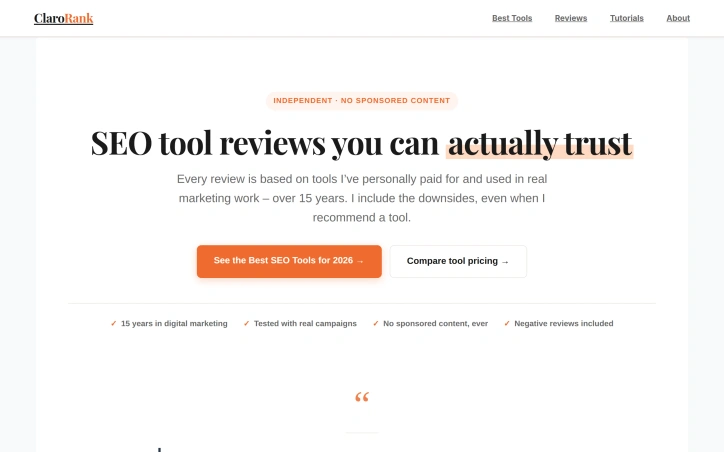
Independent SEO tool reviews are hard to come by, but ClaroRank is addressing this issue head-on. The platform is designed for digital marketers and SEO professionals who need unbiased recommendations for SEO tools that fit their specific needs and budgets. With 15 years of hands-on SEO experience, the founder has created a resource that cuts through the noise of sponsored content and provides genuine insights. What stands out about ClaroRank is its commitment to honesty and transparency. Every review is based on real-world usage and testing on actual client projects, ensuring that the ratings reflect the tools' true capabilities and limitations. The reviews cover a range of popular SEO tools, including SE Ranking, SEMrush, Ahrefs, and Mangools, and provide detailed analysis of their strengths and weaknesses. The platform offers a valuable resource for marketers at different stages of their journey. For those just starting out, it recommends tools like Mangools for keyword research and rank tracking. For agencies, it suggests SE Ranking and SEMrush for more comprehensive SEO needs. The reviews also highlight specific features, such as Ahrefs' extensive backlink index and Content Explorer. ClaroRank's business model is transparent, with clear disclosure of any commissions earned from promoting tools. The platform also keeps its pricing information up to date, verifying prices against the official sources. Some tools offer free trials, such as SE Ranking and SEMrush, which provide 14-day trials, while others, like Ahrefs, do not offer a free trial. Overall, ClaroRank is a trustworthy resource for marketers seeking reliable SEO tool reviews and recommendations.

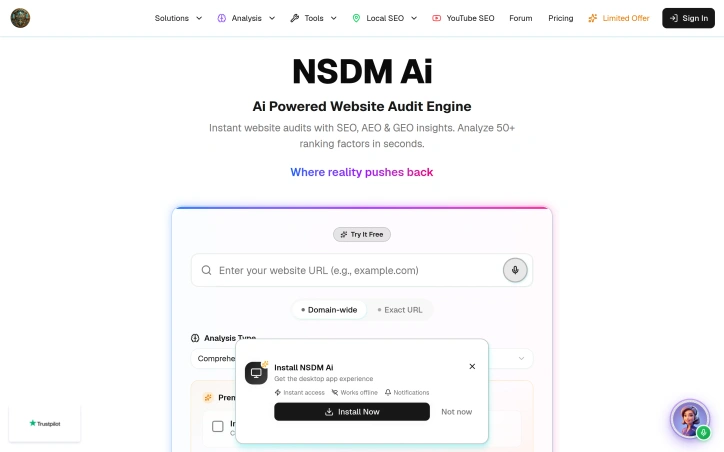
Optimizing a website for search engines is a complex task that involves analyzing numerous factors to improve visibility and ranking. NSDM Ai addresses this challenge by providing an AI-powered website audit engine that assesses SEO, AEO, and GEO in a single click. The tool is designed for a diverse range of users, including freelance SEO consultants, marketing agencies, business owners, content creators, and startup founders. What stands out about NSDM Ai is its comprehensive analysis capabilities, which go beyond traditional SEO by also considering AEO and GEO. This is particularly valuable in today's digital landscape, where AI-powered answer engines and voice search are becoming increasingly important. The tool's AI-powered engine analyzes over 50 ranking factors in real-time, providing instant and actionable insights that are backed by visual evidence and competitive benchmarking. The key features of NSDM Ai include its ability to crawl actual HTML, measure Core Web Vitals, and validate structured data, all of which are presented in a detailed report with priority-ranked findings and step-by-step fixing methods. Users can also export PDF reports with white-label options, making it a useful tool for agencies and consultants. Notably, NSDM Ai offers its core features for free, with no requirement for credit cards or subscriptions, making it an attractive option for those looking to improve their website's performance without incurring significant costs. Overall, NSDM Ai is a powerful tool that simplifies the process of optimizing a website for search engines and AI-powered answer engines.

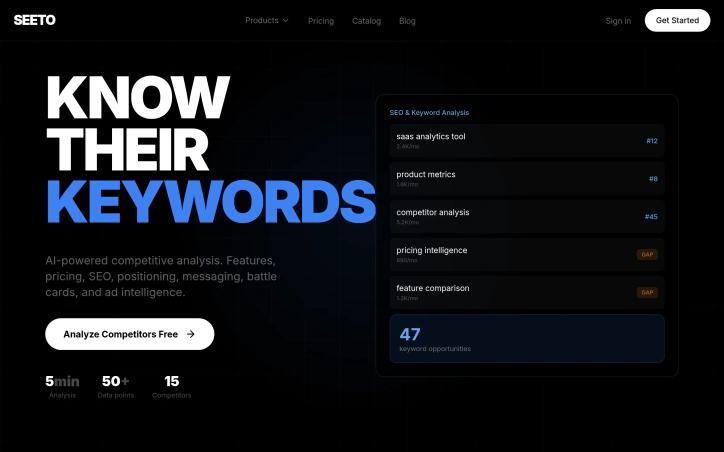
Competitor analysis is a crucial task for businesses, but it can be a tedious and time-consuming process. Seeto's AI-powered solution simplifies this task, providing actionable insights in minutes. The platform is designed for product teams, founders, CEOs, and marketing teams who need to stay ahead of the competition. What stands out about Seeto is its ability to automate the data collection process, eliminating the need for manual browsing, copying, and pasting into spreadsheets. The AI agent explores competitor websites, extracts relevant data, and compares it with the user's own product, providing a comprehensive analysis. The level of accuracy is impressive, with sources verified to ensure reliability. Seeto's key features include a feature comparison matrix, pricing intelligence, SEO insights, positioning analysis, and messaging differentiation. The platform provides a side-by-side comparison of features across competitors, helping teams identify gaps and opportunities. The data is presented in an interactive dashboard, making it easy to navigate and understand. The testimonials from satisfied customers demonstrate the value that Seeto brings to businesses. The feature comparison alone is worth the investment, according to one product manager. Others have reported significant benefits, including improved roadmap planning, 10x ROI on SEO insights, and avoiding underpricing by 40%. By streamlining competitor analysis, Seeto enables businesses to make informed decisions and stay competitive in their markets. With its robust capabilities and user-centric design, Seeto is an essential tool for teams that ship fast and compete to win.
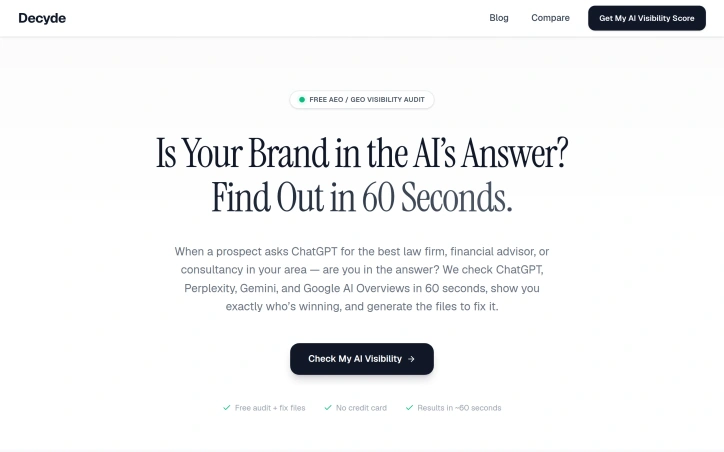
In today's digital landscape, businesses are increasingly reliant on AI platforms to drive customer engagement. However, manually monitoring brand visibility across these platforms is a time-consuming and incomplete task. Decyde's innovative solution addresses this issue by providing businesses with a comprehensive AI visibility tracking and AEO platform. The platform is particularly suited to local businesses and industries with high competition, such as law firms, financial advisors, and consultancies. What stands out about Decyde is its ability to scan multiple AI platforms, including ChatGPT, Perplexity, Gemini, and Google AI Overviews, in a mere 60 seconds. This rapid scanning capability provides businesses with a clear snapshot of their AI visibility score, benchmarked against their top competitors. The platform's detailed analysis includes a citation source map, highlighting the exact articles, Reddit threads, and review sites that each AI model is citing when recommending competitors. Decyde's key features include a personalized JSON-LD schema and llms.txt file generated for each business, allowing for easy implementation of recommended fixes to improve AI visibility. The platform also offers a local audit feature tailored to local businesses. By automating the process of tracking AI visibility, Decyde saves businesses time and provides actionable insights to enhance their online presence. Notably, Decyde offers a free AI visibility audit with no credit card required, giving businesses a risk-free opportunity to assess their AI visibility. While pricing details are not explicitly stated, the availability of a free audit suggests a potentially tiered business model. Overall, Decyde equips businesses with the tools necessary to optimize their AI visibility and stay ahead of the competition.

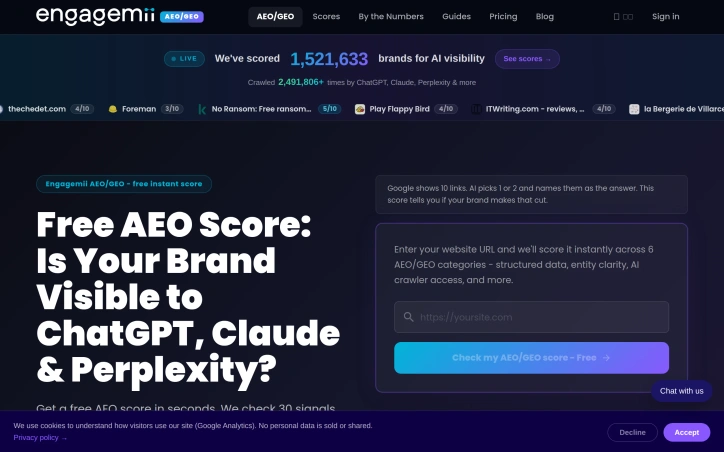
The rise of AI-powered search engines is changing the way businesses approach online visibility. As traditional search results are replaced by AI-generated answers, companies must adapt to remain relevant. Engagemii's AEO Score addresses this challenge by assessing a website's visibility to AI engines like ChatGPT, Claude, and Perplexity. The tool is designed for businesses that want to stay ahead of the curve and ensure their online presence is optimized for the AI era. What stands out about AEO Score is its focus on the specific signals that AI engines use to determine which sources to cite. By analyzing 30 signals across six categories, the tool provides a comprehensive picture of a website's AI visibility. The score, ranging from 0 to 10, gives businesses a clear indication of their online presence and identifies areas for improvement. The tool's key features include instant scoring, detailed audit reports, and actionable recommendations for improvement. Businesses can receive a free AEO score in under a minute, without requiring an account or credit card. For those seeking more in-depth analysis, a $29 audit report is available, providing a breakdown of issues with severity tags. Additionally, a $99 + $49/month Fix-It kit offers customized JSON-LD, llms.txt, and robots.txt patches to help businesses optimize their websites. AEO Score highlights the differences between traditional SEO and AEO, emphasizing that the signals AI engines weight are distinct from those used by Google's 10-blue-links algorithm. As AI continues to reshape the search landscape, businesses that prioritize AEO will be better positioned to maintain their online visibility. With Engagemii's AEO Score, companies can take the first step towards optimizing their websites for the AI era.