#ai chatbots Startups & Tools
Discover the best ai chatbots startups, tools, and products on SellWithBoost.
Communication across languages often breaks down not just linguistically but tonally. What someone means in their native language can feel awkward, overly formal, or unintentionally blunt when expressed in another tongue. Verbia addresses this friction with a browser extension designed to bridge the gap between intent and expression in text-based conversations. The product targets multilingual communicators, people who experience tone anxiety in writing, and anyone spending significant time responding on platforms like Gmail, Reddit, WhatsApp Web, Outlook, and QQ Mail. Rather than forcing users to leave the conversation and rebuild context in a separate tool, Verbia integrates directly into the communication flow, making the assist feel native to how people actually work. The core proposition centers on automation paired with human agency. The extension detects conversation context automatically on supported platforms, but always surfaces everything for review. Users express their meaning in any language and specify a desired tone, and Verbia generates a draft grounded in the detected context. This emphasis on human review at every stage positions the tool as an augment to judgment rather than a replacement. Three input modes adapt to different platforms. Automatic Mode handles detection on major services without intervention. For webmail, an AI Identify feature lets users request correction when needed. On other websites, Universal Mode lets users manually select the context text themselves. This tiered approach avoids the friction that limits many writing assistants, which force users into a single workflow regardless of platform. The product demonstrates particular strength in its scope and framing. Rather than positioning itself as a general AI chatbot alternative, it focuses narrowly on one task: turning what you already mean into something that reads naturally in context. The comparison to ChatGPT is instructive. ChatGPT can write replies but requires users to manually rebuild the entire situation, adding multiple steps before producing something usable. By detecting context, accepting voice or text input, and staying within the original application, Verbia eliminates unnecessary overhead. The walkthrough reveals thoughtful product design. Language support spans at least English and Chinese. Tone adaptation lets users control register. Draft review happens before anything gets sent. Integration into existing workflows keeps cognitive load low. What remains unclear is monetization. The website doesn't mention pricing or subscription details, making it difficult to assess value relative to free or cheaper alternatives.

Divination has traditionally been gated behind expensive appointments and limited availability, leaving people seeking practical guidance with few accessible options. Lenormand Live addresses this by offering an AI-powered Lenormand card reading platform available 24/7 with support for 15 languages. The platform focuses on Lenormand rather than Tarot, a deliberately practical choice. Lenormand's 36-card system emphasizes concrete, actionable guidance over psychological symbolism, making it better suited for questions about love, career, and life direction. The product offers ten different spreads ranging from simple three-card layouts to nine-by-nine grids for comprehensive analysis, ensuring both beginners and experienced practitioners find suitable options. What distinguishes Lenormand Live is its implementation of contextual card interpretation through what the platform calls adjacency—reading neighboring cards as semantic units rather than in isolation. This approach mirrors how professional readers work. AI-powered, it applies this technique consistently and instantly. The interface guides users to focus their intention before selecting cards, and the AI generates interpretable guidance based on both card positions and the user's specific question. The business model reflects thoughtful design. Users access free basic readings and standard card meanings without friction. Detailed AI interpretations that synthesize card positions with question context unlock through payment, creating a straightforward freemium structure. Payment options include Stripe and Alipay, acknowledging the platform's international audience. Privacy considerations receive explicit attention. Card selection occurs entirely in the browser, and the platform only sends question text and spread data to interpretation services when users explicitly request AI reports. Without login or payment, reading history isn't retained long-term. This transparency about data handling stands out in a space where divination platforms often operate with little scrutiny around user privacy. The product exists within a broader ecosystem. The founder operates related platforms for geomancy, Mayan calendar guidance, tarot, and traditional astrology, suggesting both conviction in AI-assisted divination and recognition that different systems serve different user needs. Lenormand Live targets practical people seeking accessible guidance who value both transparency and convenience. The execution demonstrates understanding that AI can enhance rather than replace divination's appeal when applied thoughtfully to established methodologies.

Fragmented communication channels cost organizations money in missed context and lost efficiency. When customer conversations span voice calls, SMS, and WhatsApp but live in separate systems, critical information vanishes between handoffs. Teams waste hours reconstructing customer history, escalations happen without context, and revenue opportunities slip away. Voicetta addresses this by consolidating every customer interaction—voice, SMS, WhatsApp, and messaging—into a unified conversation brain accessible across teams and systems. Rather than asking employees to piece together context from multiple platforms, teams see a complete, searchable timeline of every exchange with a customer, automatically transcribed and graded for quality. The product targets organizations where customer interaction quality directly impacts revenue: hotels managing guest experiences across booking and arrival, healthcare providers juggling patient calls and routine inquiries, real estate teams fielding leads at all hours, and enterprises deploying AI agents or hybrid human-AI support. The unifying thread is scale—managing high volumes of interactions across channels without losing context or growing headcount proportionally. What distinguishes Voicetta is its treatment of conversations as learnable assets rather than ephemeral events. The platform maintains a centralized "brain" that learns from interactions, grades them against defined standards, and surfaces performance patterns. The product also emphasizes it's API-first and works with any AI provider, appealing to organizations wanting to integrate into existing infrastructure rather than wholesale replacement. Core capabilities include automatic recording and transcription, performance grading with reasoning, pipeline visibility, and the ability to define behavior standards that consistently evaluate interactions. Teams access customer context at a glance—what a guest mentioned in SMS, what they asked in a call, what they've done across all channels—without asking around. Early adopters report measurable outcomes. One customer scaled call volume without adding headcount and achieved a 42 percent increase in close rates on inbound leads. A healthcare organization reduced time spent on routine inquiries, freeing specialists for complex cases, while providing 24/7 automated response coverage. Voicetta operates on a freemium model and is already running in production across hospitality, healthcare, and real estate.
Finding the right financial product in Cambodia can be a daunting task, especially with numerous options available. The MoneyKH AI Tool is designed to simplify this process by engaging users in a conversational interface that recommends suitable financial products based on their specific needs. The tool is particularly useful for individuals seeking financial products such as savings accounts, loans, wallets, insurance, and remittance services. It is tailored to the Cambodian market, drawing on data from over 50 verified institutions across seven product hubs. What sets the MoneyKH AI Tool apart is its adaptive questioning process. Unlike traditional quizzes that follow a fixed script, this AI-driven advisor asks follow-up questions based on the user's input, allowing for a more nuanced understanding of their requirements. The tool then provides a personalized recommendation, explaining why a particular product is suitable and offering a link to compare it with other options on the MoneyKH platform. The AI Tool's capabilities are noteworthy. It covers a wide range of financial products and is backed by directly verified data from institutions, rather than relying on scraped marketing information. The conversation is free, and users do not need to provide their email address to receive a recommendation. The average conversation lasts around 60 seconds, making it a quick and convenient solution for those seeking financial guidance. Notably, the tool's conversational nature allows users to ask follow-up questions and delve deeper into their financial options. The developer's goal is to provide an intuitive and user-friendly experience, moving away from rigid, pre-scored matrices that fail to account for individual circumstances. The service is offered at no cost to the user, with the cost to use being explicitly stated as $0.

Capturing qualified leads from existing website traffic remains one of the biggest challenges for businesses of all sizes. Most websites squander visitor interactions—traditional contact forms create friction that drives prospects away, while generic chatbots fail to understand business context or identify which visitors actually warrant follow-up. Zappiq AI addresses this gap with a conversational AI that deploys directly onto any website in minutes. Rather than forcing visitors through forms, the chatbot engages naturally, learns the specifics of the business, and evaluates whether each prospect meets basic qualification criteria. When someone shows genuine intent and fit, the system captures their information and notifies the business immediately, eliminating the delays that plague traditional lead pipelines. The product shines in how it handles the operational side of lead capture. Every conversation gets stored with full context—visitor questions, responses, contact details, and lead sources all appear in one unified dashboard. This context eliminates the scattered note-taking and email chains that typically derail follow-up. The system scores leads by intent, fit, and urgency so sales teams know which prospects to prioritize. It also tracks attribution, showing which marketing channel or ad actually drove each lead, giving businesses clarity on where their traffic originates. The conversational quality matters here too. The AI generates responses that feel human rather than robotic, which shapes how visitors perceive the business itself. Zappiq AI also respects brand ownership—there's no "Powered by Zappiq" footer on customer sites, keeping the interaction feel native to the business. Third-party validation backs the product's positioning. It has earned a 91-plus Crunchbase score, the highest rating among AI agent platforms, and appears on multiple industry shortlists including Capterra, GoodFirms, and Product Hunt. These don't guarantee product-market fit, but they indicate sustained recognition within the lead generation tool category. The business model is straightforward: a 14-day free trial with 100 conversations included and no credit card upfront. This removes friction for businesses testing whether conversational lead capture actually works for their traffic volume and visitor types. Zappiq AI targets small to mid-market businesses tired of watching website traffic evaporate. The value proposition is direct—convert more of the people who visit you already. For companies with meaningful web traffic but weak lead capture infrastructure, it's worth testing.

WordPress site owners constantly wrestle with the dual challenge of providing responsive customer support while keeping visitors engaged. Traditional AI chatbot solutions compound this problem by demanding complex API integrations, ongoing maintenance, and technical expertise that most website administrators lack. This plugin addresses that friction directly. Rather than pulling answers from the general internet, it uses retrieval-augmented generation (RAG) to ground responses in a site's actual content, delivering answers that are both accurate and contextually relevant to the business. This architecture shift eliminates the accuracy problems that come with generic AI responses while building customer trust through transparent sourcing. The implementation philosophy prioritizes simplicity over feature complexity. Setup takes minutes without requiring API key management or external service coordination. The chatbot automatically maintains its knowledge base as site content updates, removing the burden of manual retraining or version management that plagues other solutions. There is no server to configure, no backend infrastructure to oversee. Privacy by design is another differentiator. Because the system works within a WordPress site's own ecosystem and relies on its own content rather than third-party AI services, data handling remains under the site owner's control. This matters for businesses with privacy-conscious audiences or compliance requirements. The business model reflects this accessibility-first approach. Rather than adopting the software-as-a-service subscription model that dominates the chatbot space, the product uses one-time token purchases. A light-usage tier starts at $4.95 for five million tokens, with mid-range and high-volume options at $19.50 and $95 respectively. These purchases do not expire, and there are no hidden recurring fees. For WordPress operators with limited budgets or unpredictable chatbot usage, this removes the calculus of committing to monthly subscriptions. The product targets a specific underserved segment: small to medium WordPress sites that need support automation but lack the technical resources or budget for enterprise solutions. It does not promise to replace human support entirely, but rather to handle routine inquiries, reduce response time pressure on small teams, and create a more polished visitor experience. For that narrow use case, it presents a genuinely different approach to a common pain point.

For individuals seeking clarity on life's complexities, TarotGuide offers a unique solution by providing AI-powered tarot readings. The platform caters to those navigating love, career, and personal growth, making ancient tarot wisdom accessible to a modern audience. By leveraging advanced technology, TarotGuide bridges the gap between traditional mysticism and contemporary needs. The founder's vision is to democratize tarot readings, making them available to everyone. What stands out about TarotGuide is its dual approach to tarot readings. The platform features two distinct AI-powered tarot readers, Moonlight and Stella, each specializing in different areas. Moonlight focuses on love, relationships, and emotional growth, offering empathetic guidance, while Stella provides insight into career, finance, and major life decisions with a more analytical approach. This distinction allows users to choose the reader that best suits their query. The platform offers a range of tarot spreads and readings, including one-card draws, love readings, and more complex spreads like the Celtic Cross. Users can explore the meanings of all 78 tarot cards, browsing through the Major and Minor Arcana. The interface allows for both manual card selection and auto-draw options, catering to different user preferences. Upon signing up, users receive 20 free credits, enabling them to try various readings without initial commitment. The platform performs over 10,000 readings daily, indicating a level of engagement and trust among its user base. While specific pricing details for additional credits beyond the initial free allocation are not provided, the variety of free and paid options suggests a freemium model, allowing users to experience the service before potentially purchasing more credits.

Caring for plants can be a daunting task, especially for those new to the world of indoor gardening. Forgetfulness and uncertainty often plague plant enthusiasts, leading to neglect and a lack of confidence in their ability to nurture their plants. Virido addresses this issue head-on by providing a comprehensive solution for plant care. The app is designed for anyone looking to simplify the process of caring for their plants, regardless of their level of experience. What sets Virido apart is its reliance on AI technology to power its plant identification and care features. By taking a photo of a plant, users can instantly receive information on the plant's species, care requirements, and watering schedule. The app's AI-powered expert also offers personalized advice and diagnoses potential issues, providing users with a trusted resource for all their plant care needs. The app's features are geared towards making plant care as seamless as possible. Users can set up smart reminders to ensure they never forget to water or tend to their plants. For more advanced users, the Pro version unlocks additional tools and features, including unlimited plant identifications and access to a comprehensive plant library. For those looking to take their plant care to the next level, Virido offers a robust set of capabilities. While the specifics of the pricing model are not entirely clear, the distinction between the standard and Pro versions suggests that the app operates on a freemium model, with certain features reserved for paid users. Overall, Virido has the potential to be a valuable resource for plant enthusiasts, providing a one-stop-shop for all their plant care needs.
New parents often find themselves drowning in a sea of information and anxiety as they navigate the challenges of childcare. ParAI addresses this issue by providing a comprehensive platform for tracking a child's development from birth to age seven. The application's target audience is clearly parents seeking a reliable and trustworthy tool to monitor their child's growth, manage daily routines, and gain personalized insights. What stands out about ParAI is its integration of artificial intelligence into various aspects of childcare tracking. The AI-powered assistant allows parents to log activities using natural language, making it easy to record feedings, sleep patterns, and other important events. The application's SmartSpot feature predicts a child's next nap or feeding, providing proactive alerts to help parents stay ahead of their child's needs. The key features of ParAI include detailed tracking of feeding, sleep, and growth, as well as developmental milestones and behavior analysis. The application also offers a 24/7 AI chat support, allowing parents to ask questions and receive instant answers backed by reputable health organizations such as the American Academy of Pediatrics, World Health Organization, and Centers for Disease Control and Prevention. ParAI's focus on security and data privacy is evident in its encryption and secure data storage practices, ensuring that sensitive family information remains protected. While pricing details are not explicitly mentioned, the application's various modules, including Baby, Child, Pregnancy, and Planning, suggest a potentially tiered or modular pricing structure. Overall, ParAI offers a robust and reassuring solution for parents seeking to manage the complexities of childcare with confidence.

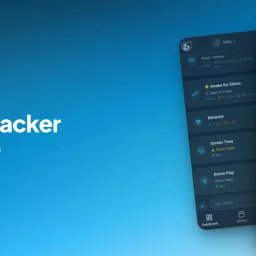
Consistency in fitness and nutrition is notoriously difficult. Most people know what they should do—eat better, exercise regularly, build sustainable habits—but fail at the execution. Willpower crumbles by midweek, life circumstances disrupt plans, and one slip-up becomes a total restart. NutriTracker positions itself as a solution to this endemic problem, offering an AI coach designed to help users navigate the gap between intention and practice. The product targets people who have already tried conventional approaches—fitness trackers, calorie counters, spreadsheets, even personal trainers—without achieving lasting change. The pitch is straightforward: rather than logging meals and hitting numerical targets, users engage in ongoing conversations with a customizable AI coach that learns their individual constraints and helps them recover from inevitable lapses instead of abandoning efforts altogether. What distinguishes NutriTracker from traditional fitness apps is its emphasis on adaptability and psychological resilience. The core insight is that most coaching fails when life interferes, so the system is designed to recognize disruptions and help users salvage a week rather than write it off entirely. The app integrates with health data platforms like Apple Health and MyFitnessPal, allowing the coach to reference actual activity, sleep, and nutrition data when offering advice tailored to the user's real circumstances rather than generic recommendations. The product also emphasizes user control and safety boundaries. The coach operates within explicit guardrails: it won't attempt diagnosis, prescribe treatments, or assume medical authority. Users can pause the coach's memory, delete shared information, and customize communication style and frequency. Data is encrypted and the company is GDPR compliant, catering to privacy-conscious users. A testimonial on the site claims one user found the app more effective than previous attempts at habit change, though such anecdotal evidence is inherently limited. The main limitation of the available information is opacity around pricing and business model. The site mentions pricing tiers exist but provides no details on cost, free trial availability, or subscription structure—crucial factors for potential customers evaluating whether the product is accessible to them. This gap makes it difficult to assess whether NutriTracker is positioned as a premium coaching alternative or a mass-market app.

For investors juggling multiple information streams across equities and digital assets, staying informed requires monitoring diverse news sources and market data throughout the day. Meyka addresses this fragmentation by consolidating real-time financial news and market updates in a single interface powered by AI technology. The platform targets active traders and investors who need timely market intelligence to inform trading decisions and portfolio adjustments. The core value proposition centers on AI-driven news aggregation combined with a conversational stock screener. Rather than passively consuming headlines, users can query the system directly through an AI chat interface to filter and analyze stocks based on their criteria and interests. This represents a shift from traditional news consumption toward a more interactive, on-demand approach to market intelligence. The platform appears to track a broad spectrum of assets—from major technology stocks and semiconductor companies to cryptocurrencies like Bitcoin and international markets—delivering coverage that reflects both macro trends and individual security movements. What distinguishes Meyka is the integration of natural language interaction into financial research. Users aren't limited to scrolling feeds; they can ask the AI screener questions about market conditions, sector performance, or specific assets and receive contextual responses. This approach acknowledges that investors have different information needs minute to minute and benefit from a system that adapts to their queries rather than forcing them through rigid category filters. The platform leverages real-time data, evident from headlines covering breaking developments like geopolitical tensions affecting oil prices, earnings announcements, and M&A activity. This emphasis on immediacy matters for a user base where news timing can meaningfully impact position decisions. The combination of breadth (stocks, crypto, commodities context) with depth (the ability to drill down through AI-assisted screening) positions the tool for traders managing diversified portfolios. Without explicit pricing details in the available materials, the business model remains opaque, though AI chat features increasingly signal premium-tier monetization in the fintech space. The product's reliance on proprietary news aggregation and data infrastructure suggests potential subscription-based revenue, though this remains speculation. Meyka tackles a legitimate pain point in modern investing: information overload. By automating news curation and embedding conversational analysis, it streamlines what would otherwise require tabs across multiple financial sites and news outlets.

Consolidating disparate AI tool subscriptions into a single unified platform, AiZolo targets creators and power users fatigued by the escalating costs and friction of managing multiple AI service accounts simultaneously. At its core, the product addresses a real pain point: the typical workflow of toggling between ChatGPT, Claude, Gemini, and other leading models across separate browser tabs and billing accounts. The value proposition hinges on two main elements. First, pricing compression—bundling access to GPT-4, Claude, Gemini Pro, Perplexity Sonar Pro, and Grok into a single $9.90 monthly subscription, positioned against the $110 baseline of maintaining individual subscriptions. Second, functionality consolidation that extends beyond mere aggregation. The platform enables direct side-by-side comparison of responses from multiple models, allowing users to query several AI systems simultaneously and evaluate outputs without manual copying and switching. Beyond the comparison interface, AiZolo packages a suite of generative creation tools. An AI video generator claims to produce professional-quality content from text prompts, complemented by image generation drawing from DALL-E and Midjourney-style models, and audio synthesis for voiceovers and music composition. A prompt library feature lets users save and organize templates for reuse across the connected AI models. The architecture also supports custom API key integration, which adds flexibility for users with existing subscriptions or free tier accounts they wish to continue utilizing. The platform encrypts these keys and claims unlimited token usage, effectively allowing a hybrid approach where users can mix AiZolo's bundled services with their own API keys. The breadth of the offering—claiming 2,000+ AI tools with weekly additions—suggests ambitions toward becoming a comprehensive AI workspace rather than a simple proxy service. For creators, developers, and AI researchers who genuinely use multiple models regularly, the cost savings alone make the premise compelling. The comparison features particularly differentiate the product; objectively evaluating which model produces the best output for a given task, without manual transcription between tabs, streamlines workflows considerably. What remains unclear from the public positioning is the technical depth of model access, exact response latencies compared to direct API usage, or how frequently the tool library actually expands. The free trial removes one barrier to testing these claims empirically.