
BLACK FRIDAY Premium $99 $69 Ends in 1 week 2 days See the deal →

Best Music Generation Startups & Tools

AI tools to compose original tracks and soundscapes.

Recently Listed

9 launches
Sort
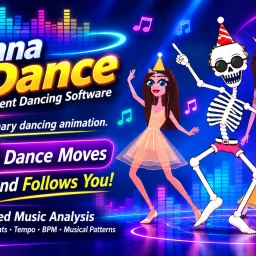
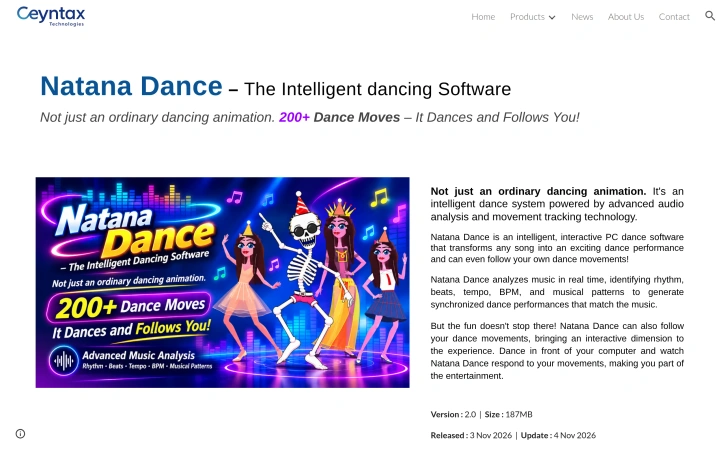
Natana Dance - The Intelligent dancing Software

Interactive dance software combines real-time music analysis with movement tracking to create synchronized performances tailored to any song. Designed for entertainment enthusiasts seeking an engaging, hands-on way to interact with music, this PC application transforms audio input into choreographed dance sequences while simultaneously responding to the user's own movements in front of the camera. The core innovation lies in its dual-mode functionality. The automatic dance generation engine deconstructs incoming audio to identify critical musical elements—beat patterns, rhythmic structures, tempo variations, and frequency distributions—then synthesizes this analysis into coherent dance sequences from a library of over 200 distinct movements. This technical approach moves beyond simple animation triggering by creating performances genuinely synchronized to the music's structure. The application's second capability, movement tracking, adds an interactive layer by monitoring the user's physical gestures and responding dynamically, creating a participatory entertainment experience rather than a passive viewing one. The software launches with two operational modes in its free tier. Auto Dance Mode handles unattended music playback with automatically generated choreography, while Follow Dance Mode engages the movement tracking system. Both operate within a framework of core features including music detection and dance generation. The free version carries intentional constraints: users work exclusively with a default skeleton character model, and no character switching functionality exists. However, no time restrictions or usage limitations apply to the free experience. The paid tier, now available as version 2.0, removes these constraints by introducing character customization alongside a third hybrid mode that combines automatic choreography and movement tracking simultaneously. It also eliminates interface notifications that appear in the free version. This tiering strategy targets casual users seeking a risk-free trial against creators and enthusiasts willing to pay for expanded creative options. At 187 megabytes, the software maintains a modest installation footprint. The rapid update cycle—released November 3, 2026, with a patch on November 4—signals development momentum and responsiveness to initial user feedback. The positioning represents a genuine intersection of audio engineering and computer vision, executed as consumer entertainment rather than professional dance production software.

Music-generation
D
Dushshantha R.

Interactive dance software combines real-time music analysis with movement tracking to create synchronized performances tailored to any song. Designed for entertainment enthusiasts seeking an engaging, hands-on way to interact with music, this PC application transforms audio input into choreographed dance sequences while simultaneously responding to the user's own movements in front of the camera. The core innovation lies in its dual-mode functionality. The automatic dance generation engine deconstructs incoming audio to identify critical musical elements—beat patterns, rhythmic structures, tempo variations, and frequency distributions—then synthesizes this analysis into coherent dance sequences from a library of over 200 distinct movements. This technical approach moves beyond simple animation triggering by creating performances genuinely synchronized to the music's structure. The application's second capability, movement tracking, adds an interactive layer by monitoring the user's physical gestures and responding dynamically, creating a participatory entertainment experience rather than a passive viewing one. The software launches with two operational modes in its free tier. Auto Dance Mode handles unattended music playback with automatically generated choreography, while Follow Dance Mode engages the movement tracking system. Both operate within a framework of core features including music detection and dance generation. The free version carries intentional constraints: users work exclusively with a default skeleton character model, and no character switching functionality exists. However, no time restrictions or usage limitations apply to the free experience. The paid tier, now available as version 2.0, removes these constraints by introducing character customization alongside a third hybrid mode that combines automatic choreography and movement tracking simultaneously. It also eliminates interface notifications that appear in the free version. This tiering strategy targets casual users seeking a risk-free trial against creators and enthusiasts willing to pay for expanded creative options. At 187 megabytes, the software maintains a modest installation footprint. The rapid update cycle—released November 3, 2026, with a patch on November 4—signals development momentum and responsiveness to initial user feedback. The positioning represents a genuine intersection of audio engineering and computer vision, executed as consumer entertainment rather than professional dance production software.

Natana Dance - The Intelligent dancing Software preview

Key features

  • Real-Time Music Analysis: Deconstructs incoming audio to identify beat patterns, rhythmic structures, tempo variations, and frequency distributions.
  • Movement Tracking System: Monitors user gestures through the camera and responds dynamically to create interactive responses.
See full listing
Riffuvo

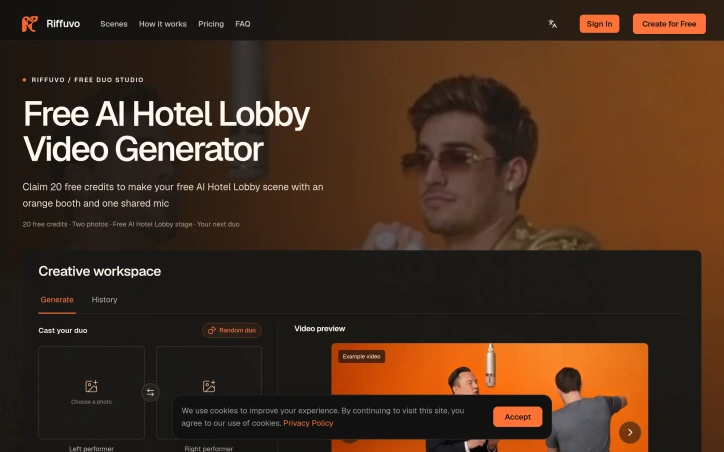
An AI video generator that reduces barrier to entry through a specifically scoped creative constraint, Riffuvo addresses creators who want quick, templated video content without the overhead of filming or extensive editing. The platform targets users who need fast turnaround for social media clips, team showcases, or entertainment content where a standardized setting suffices—think music duets, comedy bits, promotional videos, or character introductions. The product pivots around a deceptively simple premise: two subjects performing together in a fixed hotel lobby environment. By removing the need to conceptualize or describe a scene, Riffuvo lets users focus entirely on casting and minor parameter adjustments. The constraint becomes a feature, not a limitation. Sample videos demonstrate this flexibility—the platform produces videos of humans, animals, and stylized characters interacting in the same space, suggesting the actual generation quality scales across input types. Two technical choices stand out. First, the dual video model approach: Seedance enables optional reference audio and variable durations between five and fifteen seconds, while Veo offers fixed eight-second generations without audio support. This gives users a real trade-off to navigate based on their needs rather than a one-size-fits-all offering. Second, the onboarding is friction-light. New accounts receive twenty free credits immediately, reducing the commit required to test the platform. The interface design shows clarity around workflow sequencing. The three-step process—select performers, choose model and output format, then generate and download—eliminates decision fatigue through linear progression. Format options (9:16 and 16:9 aspect ratios) acknowledge that social distribution channels have specific technical requirements, though the website does not clarify credit costs per generation, leaving pricing transparency incomplete. One visual observation: the example videos trend toward novelty casting (boxer versus kangaroo, animated characters) rather than realistic performance scenarios. This suggests the platform excels at entertaining, unexpected pairings rather than genuine music collaborations or formal video work. The "hotel lobby" framing, while quirky, may appeal primarily to creators comfortable with that specific aesthetic or willing to work within its constraints for the speed benefit. What remains unclear from the available information is whether Riffuvo handles audio generation separately or relies on users providing their own sound, and whether the twenty-credit allotment scales meaningfully for ongoing use. The platform positions itself as approachable for experimentation, but long-term utility depends on post-trial pricing structure and credit economics.

Music-generation
W
win one

An AI video generator that reduces barrier to entry through a specifically scoped creative constraint, Riffuvo addresses creators who want quick, templated video content without the overhead of filming or extensive editing. The platform targets users who need fast turnaround for social media clips, team showcases, or entertainment content where a standardized setting suffices—think music duets, comedy bits, promotional videos, or character introductions. The product pivots around a deceptively simple premise: two subjects performing together in a fixed hotel lobby environment. By removing the need to conceptualize or describe a scene, Riffuvo lets users focus entirely on casting and minor parameter adjustments. The constraint becomes a feature, not a limitation. Sample videos demonstrate this flexibility—the platform produces videos of humans, animals, and stylized characters interacting in the same space, suggesting the actual generation quality scales across input types. Two technical choices stand out. First, the dual video model approach: Seedance enables optional reference audio and variable durations between five and fifteen seconds, while Veo offers fixed eight-second generations without audio support. This gives users a real trade-off to navigate based on their needs rather than a one-size-fits-all offering. Second, the onboarding is friction-light. New accounts receive twenty free credits immediately, reducing the commit required to test the platform. The interface design shows clarity around workflow sequencing. The three-step process—select performers, choose model and output format, then generate and download—eliminates decision fatigue through linear progression. Format options (9:16 and 16:9 aspect ratios) acknowledge that social distribution channels have specific technical requirements, though the website does not clarify credit costs per generation, leaving pricing transparency incomplete. One visual observation: the example videos trend toward novelty casting (boxer versus kangaroo, animated characters) rather than realistic performance scenarios. This suggests the platform excels at entertaining, unexpected pairings rather than genuine music collaborations or formal video work. The "hotel lobby" framing, while quirky, may appeal primarily to creators comfortable with that specific aesthetic or willing to work within its constraints for the speed benefit. What remains unclear from the available information is whether Riffuvo handles audio generation separately or relies on users providing their own sound, and whether the twenty-credit allotment scales meaningfully for ongoing use. The platform positions itself as approachable for experimentation, but long-term utility depends on post-trial pricing structure and credit economics.

Riffuvo preview

Key features

  • Dual Video Models: Choose between Seedance with optional audio and variable 5-15 second durations, or Veo with fixed 8-second generations.
  • Fixed Hotel Lobby Setting: Pre-set environment eliminates scene conceptualization, letting creators focus on casting.
See full listing
OnceSong

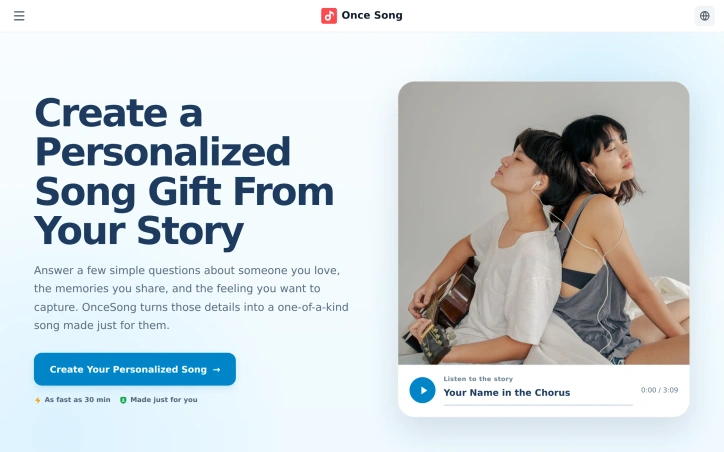
Personalizing a gift typically demands significant time and creativity, yet most people resort to generic presents that fail to capture the nuances of a relationship. OnceSong addresses this gap by automating the creation of custom songs built directly from a person's memories and stories, targeting gift-givers who want to deliver something emotionally resonant without requiring musical talent or hours of effort. The product works through a streamlined four-step process: users share memories and details about the recipient, select the emotional tone and musical style they want, review a private preview, and unlock the final song for delivery. The speed is notable—OnceSong promises completion in as little as 30 minutes, which positions it as practical even for last-minute gifting scenarios. One user reportedly submitted their story late at night and had a preview ready by morning, transforming a forgotten anniversary into a salvaged moment. What distinguishes OnceSong from generic music generation tools is its focus on emotional specificity. Rather than creating ambient background music, it weaves personal details directly into lyrics, including the recipient's name and references to shared memories. This approach produces songs that feel unmistakably tailored rather than template-based. Customer testimonials indicate the strategy works: recipients respond with visible emotional reactions, replaying songs repeatedly, and the product captures moments that words alone cannot convey. The personalization extends to musical preferences as well. Users can specify genre, vocal style, and overall mood, giving them control over how their story translates into sound rather than receiving a one-size-fits-all output. This flexibility acknowledges that the same memory might call for an upbeat pop arrangement or a gentle acoustic interpretation depending on context and relationship. The customer reviews provide credible validation of the core value proposition. Stories span diverse use cases—anniversaries, milestone birthdays, going-away gifts—and reviewers consistently emphasize the uniqueness of their songs and the emotional impact on recipients. The Trustpilot ratings are uniformly high, with verified reviews from multiple countries. OnceSong targets an underserved market segment: people with meaningful relationships but limited creative resources who nonetheless want to give gifts that feel genuinely considered. By removing technical barriers and compressing the creation timeline, the product makes personalized audio gifts accessible to anyone willing to spend a few minutes reflecting on why someone matters to them. For gift-givers tired of defaulting to generic purchases, it offers a genuinely differentiated alternative.

Music-generation
T
TOOLREEL

Personalizing a gift typically demands significant time and creativity, yet most people resort to generic presents that fail to capture the nuances of a relationship. OnceSong addresses this gap by automating the creation of custom songs built directly from a person's memories and stories, targeting gift-givers who want to deliver something emotionally resonant without requiring musical talent or hours of effort. The product works through a streamlined four-step process: users share memories and details about the recipient, select the emotional tone and musical style they want, review a private preview, and unlock the final song for delivery. The speed is notable—OnceSong promises completion in as little as 30 minutes, which positions it as practical even for last-minute gifting scenarios. One user reportedly submitted their story late at night and had a preview ready by morning, transforming a forgotten anniversary into a salvaged moment. What distinguishes OnceSong from generic music generation tools is its focus on emotional specificity. Rather than creating ambient background music, it weaves personal details directly into lyrics, including the recipient's name and references to shared memories. This approach produces songs that feel unmistakably tailored rather than template-based. Customer testimonials indicate the strategy works: recipients respond with visible emotional reactions, replaying songs repeatedly, and the product captures moments that words alone cannot convey. The personalization extends to musical preferences as well. Users can specify genre, vocal style, and overall mood, giving them control over how their story translates into sound rather than receiving a one-size-fits-all output. This flexibility acknowledges that the same memory might call for an upbeat pop arrangement or a gentle acoustic interpretation depending on context and relationship. The customer reviews provide credible validation of the core value proposition. Stories span diverse use cases—anniversaries, milestone birthdays, going-away gifts—and reviewers consistently emphasize the uniqueness of their songs and the emotional impact on recipients. The Trustpilot ratings are uniformly high, with verified reviews from multiple countries. OnceSong targets an underserved market segment: people with meaningful relationships but limited creative resources who nonetheless want to give gifts that feel genuinely considered. By removing technical barriers and compressing the creation timeline, the product makes personalized audio gifts accessible to anyone willing to spend a few minutes reflecting on why someone matters to them. For gift-givers tired of defaulting to generic purchases, it offers a genuinely differentiated alternative.

OnceSong preview

Key features

  • Memory-Based Songwriting: Creates custom songs woven directly from personal memories and stories about the recipient
  • Fast Turnaround: Completes songs in as little as 30 minutes
See full listing
MakeBPM

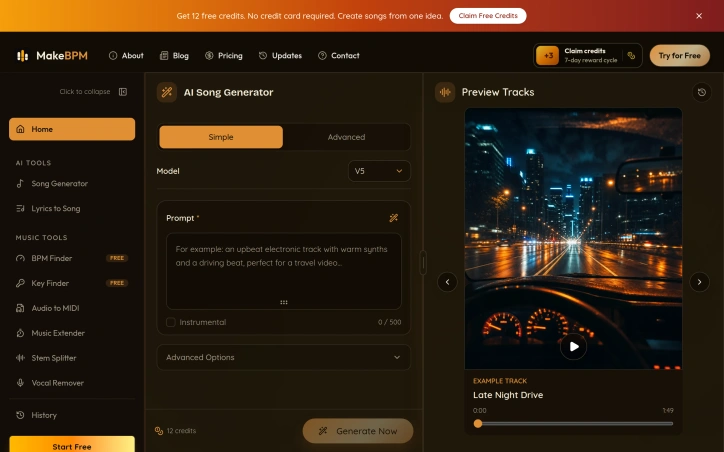
Democratizing music production, MakeBPM offers creators a path to generating professional-quality songs, beats, and soundtracks without formal training or production expertise. The platform targets content creators across multiple domains—video producers, podcasters, game developers, and individuals marking personal milestones—who need quick, credible background music but lack the time or skill to produce it themselves. The core offering addresses a real friction point: the gap between creative ambition and production capability. Rather than hunting for stock music or attempting to learn production software, users simply describe their musical vision, and the AI generates complete tracks with vocals, lyrics, melodies, arrangements, and accompanying artwork. What distinguishes MakeBPM is its flexible input model. Beyond simple mood and genre prompts, the platform accepts user-written lyrics and reference audio files, giving creators three distinct paths to music generation. This flexibility matters because creative work rarely begins at the same place. Some users arrive with a concept, others with finished lyrics, and still others with a reference track that captures the exact vibe they need. The platform accommodates all three scenarios. The range of output formats is comprehensive. MakeBPM can generate full vocal songs, instrumental beats, background music, and scene-specific soundtracks, making it applicable across creative work—from video intros and podcast backings to game audio and wedding playlists. Generation happens remarkably quickly, turning input into finished tracks within minutes rather than hours. The platform offers a free trial providing 12 credits, described as enough for one generation with two track options and valid for seven days. This lowers the barrier to experimentation. Beyond this, the service operates on a credit-based pricing model, though the website does not detail specific tier pricing. The workflow itself is intentionally stripped down. Users describe, wait while AI composes, then download and use the results. No music theory required. No production software to learn. This simplicity is the core value proposition. MakeBPM fills a specific niche: creators who need original music fast but lack production skills or budget for commissioned work. The breadth of documented use cases—from commercial campaigns to personal moments—suggests genuine versatility beyond typical stock music scenarios. For its intended audience, the product removes a substantial creative bottleneck.

Music-generation
Q
QIAO ZHANG

Democratizing music production, MakeBPM offers creators a path to generating professional-quality songs, beats, and soundtracks without formal training or production expertise. The platform targets content creators across multiple domains—video producers, podcasters, game developers, and individuals marking personal milestones—who need quick, credible background music but lack the time or skill to produce it themselves. The core offering addresses a real friction point: the gap between creative ambition and production capability. Rather than hunting for stock music or attempting to learn production software, users simply describe their musical vision, and the AI generates complete tracks with vocals, lyrics, melodies, arrangements, and accompanying artwork. What distinguishes MakeBPM is its flexible input model. Beyond simple mood and genre prompts, the platform accepts user-written lyrics and reference audio files, giving creators three distinct paths to music generation. This flexibility matters because creative work rarely begins at the same place. Some users arrive with a concept, others with finished lyrics, and still others with a reference track that captures the exact vibe they need. The platform accommodates all three scenarios. The range of output formats is comprehensive. MakeBPM can generate full vocal songs, instrumental beats, background music, and scene-specific soundtracks, making it applicable across creative work—from video intros and podcast backings to game audio and wedding playlists. Generation happens remarkably quickly, turning input into finished tracks within minutes rather than hours. The platform offers a free trial providing 12 credits, described as enough for one generation with two track options and valid for seven days. This lowers the barrier to experimentation. Beyond this, the service operates on a credit-based pricing model, though the website does not detail specific tier pricing. The workflow itself is intentionally stripped down. Users describe, wait while AI composes, then download and use the results. No music theory required. No production software to learn. This simplicity is the core value proposition. MakeBPM fills a specific niche: creators who need original music fast but lack production skills or budget for commissioned work. The breadth of documented use cases—from commercial campaigns to personal moments—suggests genuine versatility beyond typical stock music scenarios. For its intended audience, the product removes a substantial creative bottleneck.

MakeBPM preview

Key features

  • AI Track Generation: Generates complete songs with vocals, lyrics, melodies, arrangements, and accompanying artwork from text descriptions.
  • Flexible Input Paths: Accepts text prompts, user-written lyrics, and reference audio files for personalized music creation.
See full listing
TonesMatch

Matching the tone of a legendary guitar riff requires more than inspiration—it demands knowing the exact amp settings, pickup position, and signal chain used in the original recording. TonesMatch addresses this challenge with a database of over 13,000 community-researched guitar tones and a system that adapts settings to individual equipment configurations. The platform targets guitarists and bass players of all skill levels who want to replicate professional tones on their own gear, from bedroom practitioners to working musicians. What distinguishes TonesMatch from generic tone-advice resources is its commitment to real data. Rather than using AI to conjure plausible-sounding settings, the service catalogs tones from documented studio recordings and rig rundowns, with confidence scores tied to research sources. This prevents the common trap of AI-generated hallucinations: every amp setting the platform recommends actually exists on the specified amplifier, with correct preset names and parameter ranges. The product's adaptive intelligence recognizes that a Marshall Plexi and a Yamaha modeling amp respond differently to the same settings. TonesMatch profiles gear characteristics—distinguishing between tube and modeling amplifiers, single-coil and humbucker pickups, and 12 cabinet voicings—then recalculates recommendations for each user's specific equipment. The underlying database includes 2,000+ profiled guitars, 1,500+ amps, and 879 pedals across more than 1,000 brands, ensuring compatibility with both boutique and mainstream gear. The workflow is designed for speed. Users browse tones free, select a song, input their gear configuration, and receive settings in approximately 30 seconds. The interface highlights trending tones—this week's most-matched classic riffs and solos—giving users a sense of community activity and popular targets. For guitarists tired of trial-and-error tone chasing or struggling to translate YouTube rig videos to their own equipment, TonesMatch offers a data-driven alternative. By replacing speculation with researched settings calibrated to individual gear, it removes friction from a process that traditionally required either extensive experimentation or technical knowledge few players possess. The emphasis on real gear data and actual amp parameters separates it from more speculative AI tone-matching approaches flooding the market.

Music-generation
A
Audio AI

Matching the tone of a legendary guitar riff requires more than inspiration—it demands knowing the exact amp settings, pickup position, and signal chain used in the original recording. TonesMatch addresses this challenge with a database of over 13,000 community-researched guitar tones and a system that adapts settings to individual equipment configurations. The platform targets guitarists and bass players of all skill levels who want to replicate professional tones on their own gear, from bedroom practitioners to working musicians. What distinguishes TonesMatch from generic tone-advice resources is its commitment to real data. Rather than using AI to conjure plausible-sounding settings, the service catalogs tones from documented studio recordings and rig rundowns, with confidence scores tied to research sources. This prevents the common trap of AI-generated hallucinations: every amp setting the platform recommends actually exists on the specified amplifier, with correct preset names and parameter ranges. The product's adaptive intelligence recognizes that a Marshall Plexi and a Yamaha modeling amp respond differently to the same settings. TonesMatch profiles gear characteristics—distinguishing between tube and modeling amplifiers, single-coil and humbucker pickups, and 12 cabinet voicings—then recalculates recommendations for each user's specific equipment. The underlying database includes 2,000+ profiled guitars, 1,500+ amps, and 879 pedals across more than 1,000 brands, ensuring compatibility with both boutique and mainstream gear. The workflow is designed for speed. Users browse tones free, select a song, input their gear configuration, and receive settings in approximately 30 seconds. The interface highlights trending tones—this week's most-matched classic riffs and solos—giving users a sense of community activity and popular targets. For guitarists tired of trial-and-error tone chasing or struggling to translate YouTube rig videos to their own equipment, TonesMatch offers a data-driven alternative. By replacing speculation with researched settings calibrated to individual gear, it removes friction from a process that traditionally required either extensive experimentation or technical knowledge few players possess. The emphasis on real gear data and actual amp parameters separates it from more speculative AI tone-matching approaches flooding the market.

TonesMatch preview

Key features

  • Community-Researched Database: Over 13,000 documented guitar tones from studio recordings and rig rundowns
  • Adaptive Gear Profiling: Settings automatically recalculated for individual equipment including 2,000+ guitars, 1,500+ amps, and 879 pedals
See full listing
MixMaster Pro

Fragmented audio production workflows have long forced music producers to bounce between specialized tools for mixing analysis and feedback, creating an environment where context gets lost between sessions. MixMaster Pro consolidates this experience by centralizing mix analysis within a single platform that maintains the full history of revisions, analyses, and reference materials. The core value proposition eliminates the friction of exporting mixes, uploading them to separate services, and manually reconciling feedback across systems. By keeping all analytical data in one place, the platform allows producers to focus on the creative work of mixing rather than tool administration. The platform includes Maya Studio coaching, a feature designed to understand a producer's specific mix evolution and provide contextual guidance. Rather than delivering generic analysis, this coaching mechanism tracks how a mix changes over time and delivers insights tailored to that progression. This approach recognizes that mixing is iterative—what matters isn't just the current state of a mix, but how it's evolving and what pattern of decisions led to it. The target audience is music producers who have reached a level of sophistication where they're actively seeking tools to improve their mixes. Producers working with multiple projects or those who struggle to identify mix issues by ear alone represent the natural customer base. The platform's success will be determined by whether the AI analysis meets professional audio standards and whether the coaching feature identifies mix problems that experienced producers typically overlook. Producers frustrated with tool fragmentation will find the unified approach compelling. Given the sparse website content and lack of detailed technical specifications, professional validation of the AI's analytical quality should precede any commitment for critical production work.

Music-generation
G
Guy F

Fragmented audio production workflows have long forced music producers to bounce between specialized tools for mixing analysis and feedback, creating an environment where context gets lost between sessions. MixMaster Pro consolidates this experience by centralizing mix analysis within a single platform that maintains the full history of revisions, analyses, and reference materials. The core value proposition eliminates the friction of exporting mixes, uploading them to separate services, and manually reconciling feedback across systems. By keeping all analytical data in one place, the platform allows producers to focus on the creative work of mixing rather than tool administration. The platform includes Maya Studio coaching, a feature designed to understand a producer's specific mix evolution and provide contextual guidance. Rather than delivering generic analysis, this coaching mechanism tracks how a mix changes over time and delivers insights tailored to that progression. This approach recognizes that mixing is iterative—what matters isn't just the current state of a mix, but how it's evolving and what pattern of decisions led to it. The target audience is music producers who have reached a level of sophistication where they're actively seeking tools to improve their mixes. Producers working with multiple projects or those who struggle to identify mix issues by ear alone represent the natural customer base. The platform's success will be determined by whether the AI analysis meets professional audio standards and whether the coaching feature identifies mix problems that experienced producers typically overlook. Producers frustrated with tool fragmentation will find the unified approach compelling. Given the sparse website content and lack of detailed technical specifications, professional validation of the AI's analytical quality should precede any commitment for critical production work.

MixMaster Pro preview

Key features

  • Centralized Mix Analysis: maintains the full history of revisions, analyses, and reference materials
  • Maya Studio Coaching: provides contextual guidance based on a producer's specific mix evolution
See full listing
S

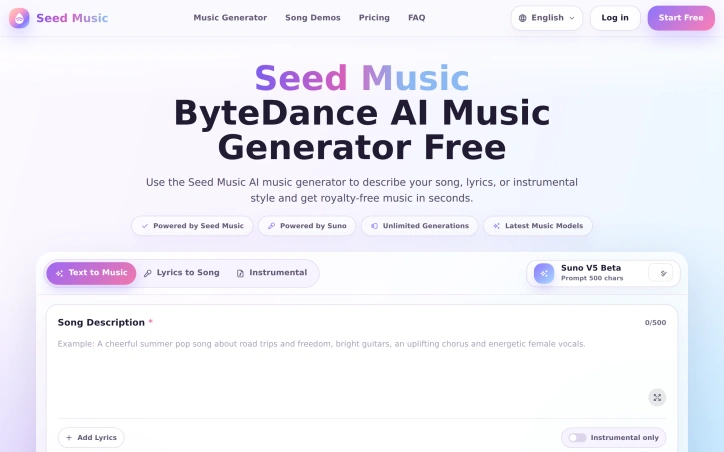
Music creators and businesses often struggle to find royalty-free music that fits their specific needs. Seed Music addresses this challenge by leveraging AI to generate full songs from text prompts, lyrics, or instrumental ideas. The platform is designed for anyone seeking commercial-ready tracks instantly, without the hassle of licensing fees or extensive musical production expertise. What stands out about Seed Music is its versatility and ease of use. Users can choose from different workflows, including text-to-music, lyrics-to-song, and instrumental creation, allowing them to tailor their music generation process to their specific creative vision. The platform's AI is powered by Suno, with multiple models available, including the latest Suno V5 Beta. The key features of Seed Music include its ability to automatically generate lyrics and musical style from a single prompt, create complete vocal-song tracks, and produce multiple variations per request. The platform also showcases a variety of song samples across different genres, demonstrating its capability to produce diverse musical styles. Seed Music is offered free, with no explicit limitations or tiered pricing mentioned. The generated music is royalty-free, making it suitable for commercial use. The platform's capabilities and free availability make it an attractive option for creators, businesses, and musicians looking to produce high-quality music without the associated costs and complexities of traditional music production. Overall, Seed Music presents a compelling solution for those seeking to generate music quickly and easily, with a range of creative possibilities.
Music-generation
H
Hong Le Nguyen

Music creators and businesses often struggle to find royalty-free music that fits their specific needs. Seed Music addresses this challenge by leveraging AI to generate full songs from text prompts, lyrics, or instrumental ideas. The platform is designed for anyone seeking commercial-ready tracks instantly, without the hassle of licensing fees or extensive musical production expertise. What stands out about Seed Music is its versatility and ease of use. Users can choose from different workflows, including text-to-music, lyrics-to-song, and instrumental creation, allowing them to tailor their music generation process to their specific creative vision. The platform's AI is powered by Suno, with multiple models available, including the latest Suno V5 Beta. The key features of Seed Music include its ability to automatically generate lyrics and musical style from a single prompt, create complete vocal-song tracks, and produce multiple variations per request. The platform also showcases a variety of song samples across different genres, demonstrating its capability to produce diverse musical styles. Seed Music is offered free, with no explicit limitations or tiered pricing mentioned. The generated music is royalty-free, making it suitable for commercial use. The platform's capabilities and free availability make it an attractive option for creators, businesses, and musicians looking to produce high-quality music without the associated costs and complexities of traditional music production. Overall, Seed Music presents a compelling solution for those seeking to generate music quickly and easily, with a range of creative possibilities.

Seed Music preview
S

Key features

  • Text-to-Music: generates music from text prompts
  • Lyrics Generation: automatically generates lyrics from a single prompt
See full listing
T

For musicians seeking to recreate the iconic guitar tones of their favorite songs, TonesMatch offers a cutting-edge solution. The platform is designed for guitarists and bass players who want to achieve authentic sounds using their existing gear. By leveraging a vast database of researched tones and real-world gear data, TonesMatch provides users with precise amp settings, pickup positions, and pedal chain recommendations tailored to their specific equipment. What sets TonesMatch apart is its reliance on real-recording analysis and a gear-aware AI that adapts to the unique characteristics of a user's rig. The platform's massive library of cataloged guitars, amps, and pedals ensures compatibility with a wide range of brands and models. With over 17,816 tones supported, users can browse a vast repository of iconic sounds, from distorted riffs to soaring solos. The process of using TonesMatch is straightforward: users select a song, input their gear, and receive customized settings in a matter of seconds. The platform's AI engine takes into account the specific controls and EQ voicings of a user's amp, ensuring that the recommended settings are not only accurate but also practical. Notably, every tone is researched and sourced from studio session notes, rig rundowns, and guitar communities, providing a high level of confidence in the results. By delivering precise, gear-aware tone matching, TonesMatch empowers musicians to achieve their desired sounds without the need for trial and error or expensive equipment upgrades.


Music-generation
H
Hong Le Nguyen

For musicians seeking to recreate the iconic guitar tones of their favorite songs, TonesMatch offers a cutting-edge solution. The platform is designed for guitarists and bass players who want to achieve authentic sounds using their existing gear. By leveraging a vast database of researched tones and real-world gear data, TonesMatch provides users with precise amp settings, pickup positions, and pedal chain recommendations tailored to their specific equipment. What sets TonesMatch apart is its reliance on real-recording analysis and a gear-aware AI that adapts to the unique characteristics of a user's rig. The platform's massive library of cataloged guitars, amps, and pedals ensures compatibility with a wide range of brands and models. With over 17,816 tones supported, users can browse a vast repository of iconic sounds, from distorted riffs to soaring solos. The process of using TonesMatch is straightforward: users select a song, input their gear, and receive customized settings in a matter of seconds. The platform's AI engine takes into account the specific controls and EQ voicings of a user's amp, ensuring that the recommended settings are not only accurate but also practical. Notably, every tone is researched and sourced from studio session notes, rig rundowns, and guitar communities, providing a high level of confidence in the results. By delivering precise, gear-aware tone matching, TonesMatch empowers musicians to achieve their desired sounds without the need for trial and error or expensive equipment upgrades.

TonesMatch preview
T

Key features

  • Gear-Aware AI: Adapts to the unique characteristics of a user's rig
  • Massive Tone Library: Supports over 17,816 tones
See full listing
MemoTune

Creating music from personal stories typically requires musical expertise, production software, and hours of work. MemoTune eliminates these barriers by automating the entire process—turning autobiographical narratives into fully produced songs with original lyrics and instrumentation in minutes. The platform targets people celebrating life milestones, content creators seeking royalty-free audio, and anyone interested in songwriting without formal training. What distinguishes MemoTune is its commitment to maintaining narrative fidelity. Rather than generating random outputs, the platform uses guided inputs to ensure generated songs stay true to the user's original story and emotional intent. This focus on thematic accuracy differentiates it from generic text-to-music tools. The feature set is comprehensive. Beyond basic song generation, MemoTune offers voice cloning and voice cover capabilities, enabling users to hear songs performed in custom vocals. Additional tools include a vocal remover, song extender for lengthening tracks, instrumental generator, and section replacement features—essentially a complete music production toolkit. The platform supports multiple genres and generates creator-ready exports in MP3 and WAV formats with commercial licensing options. The use cases span personal celebrations and professional applications. Users can generate customized songs for birthdays, anniversaries, proposals, and memorials. Content creators generate royalty-free background music for YouTube and TikTok, podcasters create branded intro and outro tracks, game developers produce background loops and battle music, and songwriters prototype ideas to overcome creative blocks. This broad positioning indicates MemoTune views itself as both a sentimental gift generator and a legitimate productivity tool for creators. The platform's value proposition rests on one core assertion: that AI-generated music can authentically capture personal stories when properly constrained through guided inputs. This claim is stronger than most music generation competitors make. The real test of MemoTune's success will be whether the guided-input approach consistently produces songs that users actually want to keep and share—a higher bar than simply generating technically competent audio.

Music-generation
A
Alvy VV

Creating music from personal stories typically requires musical expertise, production software, and hours of work. MemoTune eliminates these barriers by automating the entire process—turning autobiographical narratives into fully produced songs with original lyrics and instrumentation in minutes. The platform targets people celebrating life milestones, content creators seeking royalty-free audio, and anyone interested in songwriting without formal training. What distinguishes MemoTune is its commitment to maintaining narrative fidelity. Rather than generating random outputs, the platform uses guided inputs to ensure generated songs stay true to the user's original story and emotional intent. This focus on thematic accuracy differentiates it from generic text-to-music tools. The feature set is comprehensive. Beyond basic song generation, MemoTune offers voice cloning and voice cover capabilities, enabling users to hear songs performed in custom vocals. Additional tools include a vocal remover, song extender for lengthening tracks, instrumental generator, and section replacement features—essentially a complete music production toolkit. The platform supports multiple genres and generates creator-ready exports in MP3 and WAV formats with commercial licensing options. The use cases span personal celebrations and professional applications. Users can generate customized songs for birthdays, anniversaries, proposals, and memorials. Content creators generate royalty-free background music for YouTube and TikTok, podcasters create branded intro and outro tracks, game developers produce background loops and battle music, and songwriters prototype ideas to overcome creative blocks. This broad positioning indicates MemoTune views itself as both a sentimental gift generator and a legitimate productivity tool for creators. The platform's value proposition rests on one core assertion: that AI-generated music can authentically capture personal stories when properly constrained through guided inputs. This claim is stronger than most music generation competitors make. The real test of MemoTune's success will be whether the guided-input approach consistently produces songs that users actually want to keep and share—a higher bar than simply generating technically competent audio.

MemoTune preview

Key features

  • Story to Song: Converts personal narratives into fully produced songs with original lyrics and instrumentation in minutes
  • Voice Cloning: Enables users to hear songs performed in custom vocals
See full listing