Xtra Hands Family Chore App
Household chore management remains one of parenting's persistent friction points, and Xtra Hands positions itself as the...
Catalyst Healthspan Audit
Personal trainers typically sell training sessions. This startup reversed the equation by building assessment first, mak...
Best Customer support tools Startups & Tools
Customer support software helps businesses manage and streamline support operations, typically including ticketing, live chat, knowledge base, and CRM integrations.
Recently Listed
6 launches
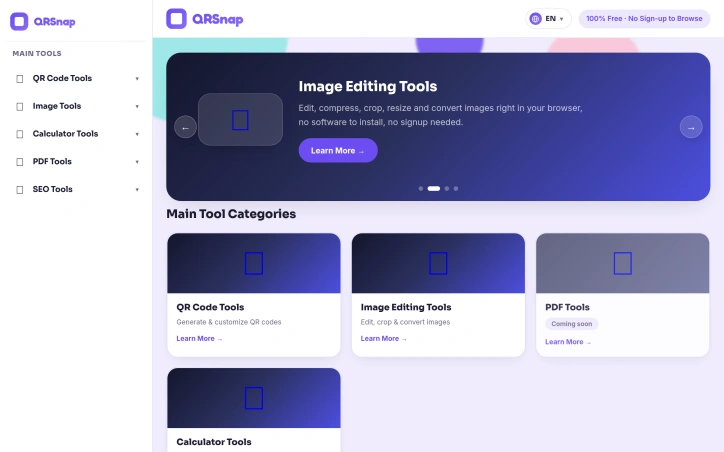
Consolidating dozens of free online utilities into a single dashboard, QRSnap addresses a fundamental friction point for internet users: tool fragmentation. Rather than bouncing between specialized websites to generate a QR code, compress an image, or calculate loan amortization, users can access everything from one streamlined platform. The product targets a broad base: students needing quick calculations, small business owners managing digital assets, content creators editing images on the fly, and developers requiring on-demand utilities. The pitch is straightforward—eliminate tool hopping, reduce cognitive load, and speed up routine digital work. QRSnap's strength lies in the breadth of its initial toolset. The QR code suite extends beyond simple link encoding, offering WiFi QR generation, business card QR codes, and barcode creation with customization options like color, logo insertion, and frame styles. The image editing toolkit covers compression, cropping, resizing, and multi-format conversion (JPG to PNG, WebP conversion, image-to-PDF transformation). A diverse calculator collection spans financial planning (compound interest, loan amortization), health metrics (pregnancy tracking, body fat estimation), and time tracking—categories that appeal to different user segments rather than narrow specialization. The design philosophy emphasizes accessibility. The browser-based, no-signup approach requires no software installation. This removes traditional friction: users open a link and start working. The interface prioritizes simplicity, positioning the tools as straightforward alternatives to more feature-bloated competitors. The roadmap includes PDF tools—merging, splitting, compressing, and conversion utilities—currently marked coming soon. The founders envision the platform as extensible. An SEO checker addresses website owners' needs. Several advertised tools remain incomplete. The PDF suite is not yet live, and the SEO category only includes a website checker. This gap between vision and current functionality matters for users evaluating adoption. QRSnap occupies a practical niche: it won't replace specialized software for power users, but it eliminates friction in tool discovery and consolidation for casual to moderate users. Free, quick-loading utilities that require zero registration align with how many people actually work online, making simplicity the primary competitive advantage. Whether QRSnap becomes a go-to utility hub depends on execution consistency and continued tool expansion.

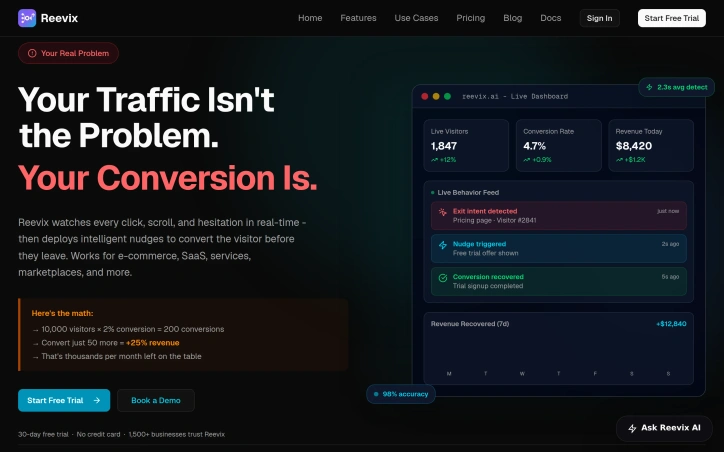
Conversion optimization is a perennial challenge for businesses with an online presence, and Reevix is a cutting-edge solution designed to tackle this problem head-on. Specifically, it targets companies struggling with low conversion rates, including e-commerce, SaaS, services, and marketplaces. By leveraging AI-powered real-time analysis of visitor behavior, Reevix identifies friction points that lead to lost conversions and deploys targeted interventions to nudge visitors toward a sale or sign-up. What stands out about Reevix is its ability to process every click, scroll, and interaction instantly, adapting its approach to the specific needs of different business types. The platform's AI engine classifies visitor intent, detects barriers to conversion, and fires off tailored nudges to overcome these obstacles. This could include offering reassurance or social proof to hesitant visitors or triggering urgency messaging to encourage a purchase. Reevix's capabilities include real-time intelligence, vertical-aware nudges, and measurable results that allow businesses to track the revenue recovered through its interventions. Users can access a live dashboard showing visitor behavior, conversion rates, and revenue impact. The platform is also SOC 2 compliant and has been trusted by over 1,500 businesses. Reevix is available on the Shopify App Store and offers a 30-day free trial with no credit card required. While specific pricing details are not provided, the absence of upfront costs or commitments makes it an attractive option for businesses looking to boost conversions. The company's focus on delivering tangible results is underscored by its claim of having recovered over $12 million in revenue for its clients. By providing a robust and adaptable conversion optimization solution, Reevix is well-positioned to support businesses across various industries in maximizing their online potential.

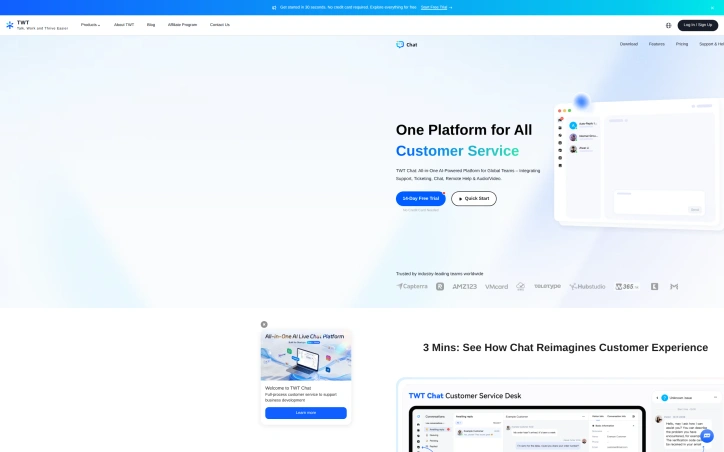
Customer support teams struggling with fragmented communication and inefficient processes have a potent solution in the form of an AI-powered, all-in-one customer service platform. Designed to unify support, ticketing, chat, and remote assistance, this platform is tailored for global teams seeking to streamline their customer interactions. The problem it tackles is multifaceted - it not only aims to reduce the complexity of using multiple tools but also addresses the challenges of providing customer support across different languages and time zones. What stands out about this platform is its commitment to simplicity and cost-effectiveness. It offers unlimited conversations without charging extra for growth, thereby eliminating the financial unpredictability associated with pay-per-use models. The integration of AI deep learning technology is also noteworthy, as it enables the provision of real-time professional replies, thereby freeing up a significant amount of support effort. The platform's capabilities, such as two-way real-time auto-translation, screen sharing, and live annotation, facilitate effective communication with global customers and help resolve complex issues promptly. Its multi-device sync feature ensures continuous service, allowing teams to handle alerts, tickets, and chats on the go. The platform caters to various industries, including SaaS, e-commerce, education, and finance, providing tailored solutions to meet their specific needs. The business model is straightforward, with a 14-day free trial that doesn't require a credit card. The transparent pricing is based on a fixed model, devoid of surge fees, making it an attractive option for businesses looking to manage their customer support costs effectively. Overall, this platform presents a compelling solution for global teams seeking to enhance their customer experience while improving operational efficiency.
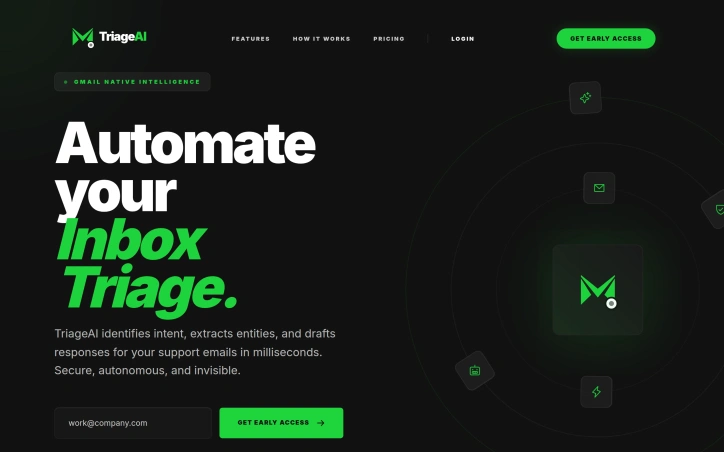
Founders overwhelmed by support emails can now breathe a sigh of relief thanks to an innovative AI-powered solution that automates inbox triage. At its core, this product is designed to alleviate the drudgery of sorting through numerous support emails, freeing up valuable time for business building. Its target audience is clearly founders and businesses looking to streamline their customer support processes. What stands out about this product is its emphasis on precision engineering and security. It boasts an impressive 99.2% classification accuracy and processes emails in under 120 milliseconds, all while maintaining a zero-storage policy that ensures emails are purged immediately after processing. The product's proprietary engine uses local LLM processing to identify intent, urgency, and category with high precision. The product's capabilities are noteworthy, particularly its ability to draft responses to support emails, synchronize with a company's brand voice and internal policies, and flag urgent complaints and high-value leads. Its integration with Gmail is seamless, allowing for invisible side-loading directly inside the inbox without requiring new dashboards or context switching. Setup is straightforward, requiring just three steps to get started, including connecting the inbox via OAuth 2.0, setting rules based on business logic and FAQs, and reviewing drafts in the Gmail sidebar. While the product is currently in open beta, it is limiting access to 500 organizations per region, indicating a controlled rollout. The focus on hardware-level security, precision engineering, and autonomous operation underscores the product's commitment to providing a robust and secure solution for founders looking to reclaim their focus. Overall, this AI-powered email triage solution has the potential to significantly reduce the administrative burden on founders, allowing them to concentrate on high-priority tasks.

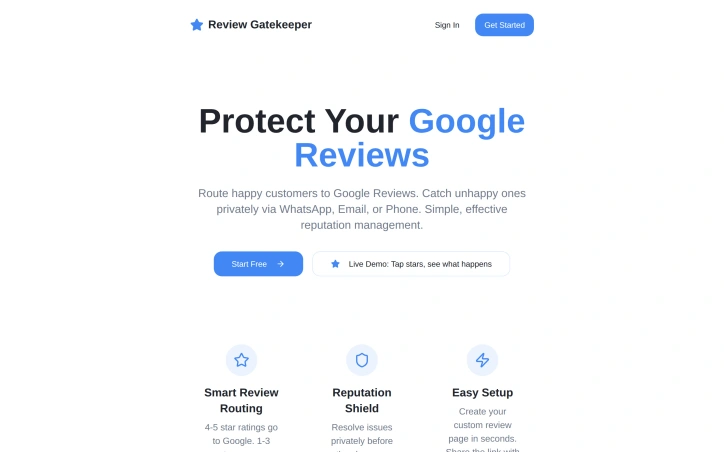
Negative reviews can devastate a restaurant's online reputation almost overnight, with a single bad experience potentially tanking ratings across multiple platforms. Review Gatekeeper addresses this pain point by intercepting unhappy customer feedback before it reaches public review sites like Google and Yelp, redirecting complaints into private conversations where restaurant owners can address underlying issues and retain customer relationships. The approach reflects a fundamental shift in how service-based businesses should think about reputation management. Rather than simply responding to bad reviews after they're published or attempting damage control, Review Gatekeeper reframes the challenge entirely—it catches problems earlier in the complaint lifecycle. This enables restaurant owners to transform what would become a potentially damaging public review into a constructive private dialogue where issues get diagnosed and resolved. When a customer's complaint is genuinely addressed, a negative public review never materializes. This strategy protects ratings while simultaneously improving the actual customer experience that generates complaints in the first place. The product works by intercepting customer dissatisfaction signals before they reach public platforms. When a customer indicates unhappiness through Review Gatekeeper's system, the feedback routes into a private channel where the restaurant can respond, understand the root cause, and work toward resolution. The mechanism aligns two normally competing objectives: the restaurant's need to protect its online reputation and the customer's desire to have legitimate problems fixed. Resolved privately, issues don't leave permanent public scars. The target customer is clearly the restaurant owner or manager navigating intense competitive pressure from review-driven discovery platforms. In markets where Google and Yelp ratings significantly influence dining decisions and customer acquisition, even a small cluster of low-star reviews measurably impacts reservations and foot traffic. Review Gatekeeper positions itself as defense against that volatility, particularly against isolated negative experiences that risk defining a restaurant's online presence. The specific pricing model and revenue structure are not addressed in available materials. What's evident is that Review Gatekeeper solves a high-stakes problem for a precise audience: restaurant operators who recognize that controlling the narrative before negative feedback goes public is more valuable than managing the fallout afterward.

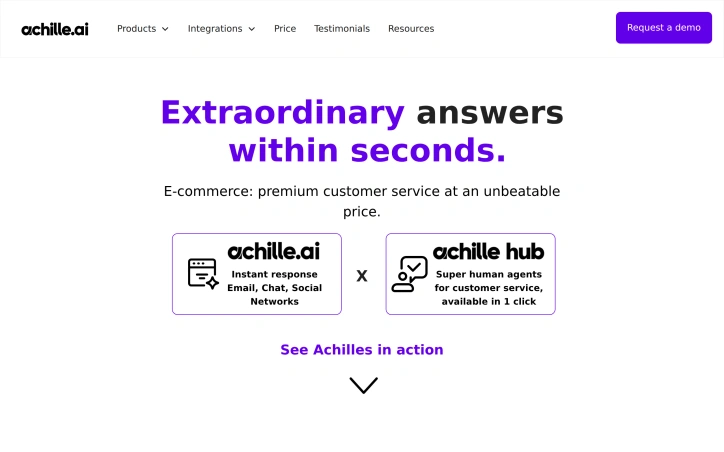
E-commerce and fast-growing SaaS brands drown in repetitive support questions: “Where is my order?”, “How do I reset my seat license?”, “Do you ship to France?”. Achille AI turns that flood into a two-tier defense system—machines handle the routine while skilled agents devote time to customers who truly need a human brain. The company explicitly targets online retailers and subscription software teams who already run Gorgias, Zendesk, Salesforce, SAP, Shopify or Zapier and want automation without ripping out their existing stack. The product’s first draw is the multilingual muscle that labels and routes tickets in over thirty languages straight within the apps teams already use. Instead of forcing merchants into yet another dashboard, data flows through an API hook in minutes. A second attraction is built-in root-cause analytics: every resolved conversation feeds a loop that surfaces product frictions, shipping gaps or billing hiccups so brands can eliminate questions instead of answering them forever. Finally, the tone set by client testimonials signals a rare pairing of speed with empathy; founders speak of peace of mind when opening the inbox, not panic at an overnight pile-up. Core capabilities include end-to-end automation that remains GDPR-compliant and stores nothing outside the customer’s own permissions, AI co-pilot assistance that suggests next-best actions inside the agent view, and 24/7 responsiveness with KPI tracking so managers measure deflection and customer satisfaction in one place. The company’s public material does not detail price tiers; it funnels visitors from the homepage to a “Request a demo” form and replaces traditional pricing pages with a call to talk to an expert. For merchants and app vendors that value speed, brand-safe traction within Europe, and the wish to answer fewer, better questions over time, Achille AI presents a plug-and-play upgrade path rather than a disruptive migration project.