Catalyst Healthspan Audit
Personal trainers typically sell training sessions. This startup reversed the equation by building assessment first, mak...

Xtra Hands Family Chore App
Household chore management remains one of parenting's persistent friction points, and Xtra Hands positions itself as the...
Best Design resources Startups & Tools
A grab bag of useful resources for designers.
Recently Listed
8 launches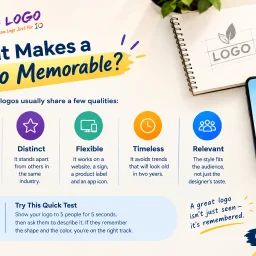
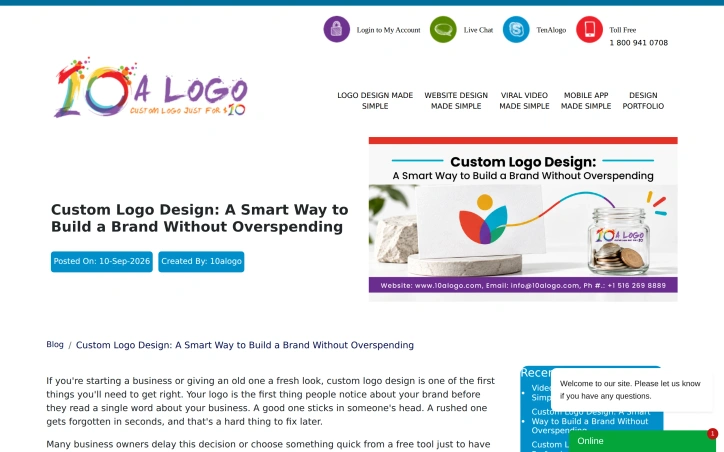
Branding delays plague early-stage companies. Founders often postpone logo design or resort to generic free tools just to populate their website, unknowingly undermining their professional credibility. 10alogo targets this exact friction point: startups and growing businesses that need a polished brand identity without enterprise-level budgets. The service's philosophy runs counter to the common misconception that affordable design means inferior work. The website content frames cost as a function of operational overhead rather than designer skill, a distinction that makes the offering credible for budget-conscious founders. The company positions affordability as accessible professionalism, not a compromise on quality. What distinguishes this approach is the emphasis on research before design. Rather than jumping straight to visual output, the process begins with understanding the business, its audience, and the emotional response the brand should trigger. This foundation-first methodology surfaces repeatedly in the company's messaging: color choices, simplicity, and strategic thinking drive the final result, not decorative complexity. The claim that weak logos fail not from poor execution but from lack of strategic grounding reflects a coherent worldview about design's purpose. The company frames logo design as foundational infrastructure. A coherent brand identity compounds across touchpoints: websites, packaging, social media, email signatures, and invoices all reinforce recognition and trust. This systems thinking appeals to founders concerned with cohesion across their growing operations. 10alogo offers a broader suite beyond logo design, including website design, viral video production, and mobile app development, positioning itself as a more comprehensive branding partner than its name suggests. This expansion potential could matter for founders building out their full digital presence. The mention of a portfolio, live chat, and toll-free support indicates a staffed operation rather than an automated tool, a distinction worth noting for customers who value human consultation. The most significant gap is transparency around pricing and turnaround timelines. The website emphasizes affordability conceptually but never states actual costs or delivery expectations. For early-stage founders evaluating service options against specific budget constraints, this vagueness introduces friction into the decision-making process. Specificity here would strengthen the value proposition considerably. For startups that recognize their logo as a lever for brand legitimacy but lack five-figure design budgets, 10alogo addresses a real need: professional logos grounded in strategy rather than either free-tool shortcuts or luxury agency pricing.
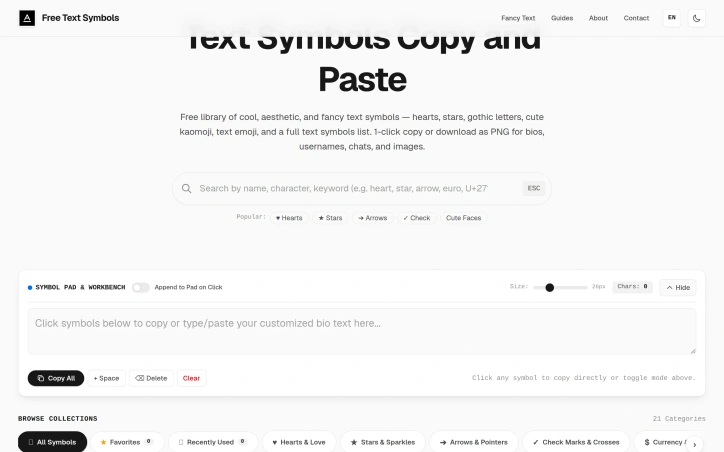
Finding the perfect aesthetic character scattered across Unicode databases and emoji lists requires patience most online creators don't have. Free Text Symbols addresses this friction by consolidating specialized glyphs and decorative characters into a single, organized repository built specifically for people who want to customize their digital presence. The service targets Discord users, social media enthusiasts, and anyone designing usernames, bios, or chat messages where standard letters feel insufficient. Whether someone needs hearts, stars, arrows, fancy Unicode letters, or adorable kaomoji faces, the platform eliminates the time spent hunting across the web for alternatives. What distinguishes Free Text Symbols is its categorical organization and deliberate curation. Rather than presenting an overwhelming sea of Unicode, the interface breaks symbols into 21 distinct categories ranging from geometric shapes to religious symbols, with practical groupings like Music & Chess and Food & Drink. Each category contains substantial collections—hearts alone number 62 variations, while arrows offer 174 directional options. This depth signals genuine investment in comprehensiveness rather than a minimal symbol dump. The interface prioritizes speed. Users can copy any symbol with a single click, bypassing the typical friction of navigation and highlighting text. For those needing graphical assets, the platform supports PNG download for integration into images or designs. The workbench feature appends selected symbols to a persistent pad, allowing batch copying—a practical workflow for someone collecting multiple symbols for a single project. Supporting features include a search function, a favorites system for bookmarking preferred symbols, and automatic tracking of recently used characters. These elements acknowledge that users develop symbol preferences over time and benefit from quick access to personalized collections. The platform presents itself as a free service with no premium tiers or payment mechanisms mentioned, positioning it as accessible to users regardless of budget. This approach lowers barriers for the target audience, mostly younger users and hobbyists who expect free access to creative tools. Free Text Symbols executes a focused mission: making aesthetic text customization frictionless for creators who need characters beyond the standard keyboard.
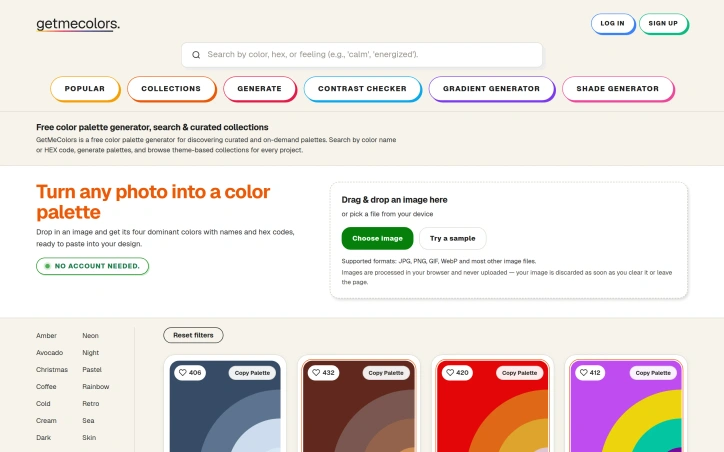
Designers and digital creators working across branding, UI, and web projects have long needed accessible tools for discovering color combinations that work cohesively. GetMeColors fills this gap by offering a free, account-free platform that combines palette generation with searchable collections of curated color schemes. The product stands out for its simplicity and privacy-conscious approach. Rather than requiring signup or uploading images to external servers, the tool processes images directly in the browser, extracting dominant colors without storing user data. This privacy-first design removes friction for quick, exploratory work. The interface is straightforward, letting users either generate palettes on the fly or browse from an organized collection of themed combinations like Golden Hour and Lavender Fog. The core features address two distinct workflows. The palette generator accepts images and identifies four dominant colors along with their hex codes, ready to implement immediately. The search and collection functionality indexes palettes by theme, color name, and hex code, making it easy to find inspiration within specific domains like food styling, seasonal aesthetics, or gradient palettes. Named color combinations help users communicate palette choices without relying on hex codes alone. Social validation shapes the product discovery experience through a curated most liked section. Palettes such as Night Market and Deep Sea carry engagement signals that surface popular combinations. The collection browsing spans recognizable categories including coffee, Christmas, and earth tones, signaling deliberate curation around commercially relevant themes. The free pricing model removes barriers to adoption for casual and professional users alike. No subscription tier, account requirement, or payment option is mentioned, suggesting a sustainable freemium or ad-supported approach, though the specific business model remains unstated. This accessibility positions the tool as a discovery and brainstorming layer rather than a premium design application. For teams needing rapid palette iteration or designers seeking inspiration beyond algorithmic generation, the combination of curated selection and in-browser processing offers genuine utility. The product doesn't claim to replace color theory expertise, but it effectively democratizes palette selection for projects where collaborative choice matters more than algorithmic perfection.
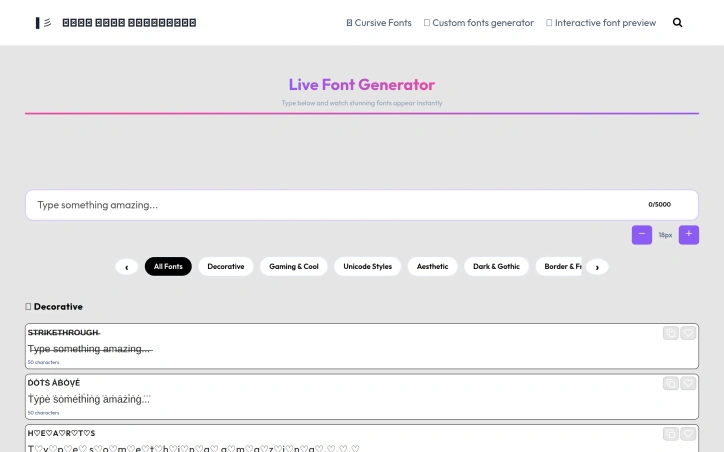
Typography tools have fragmented into two extremes: bloated font libraries with hundreds of unusable styles or bare-bones generators that offer little visual variety. Live Font Generator addresses a genuine friction point in social media—the disconnect between wanting distinctive text styling and the awkward reality that most platforms strip out custom fonts, leaving users with basic Unicode symbols as their only option. The product targets creators across social platforms: Instagram users wanting standout bios, Discord communities seeking custom usernames, TikTok personalities, and gaming communities. Anyone who has noticed that custom fonts render as empty boxes on phones understands the genuine problem the founder identified—tools that look good on desktop often fail in practice. What distinguishes Live Font Generator from competitors is its organizational approach. Rather than dumping 300+ styles in random order and leaving users to scroll endlessly, the tool categorizes its 200+ Unicode text styles by aesthetic type: cursive, gothic, bold, gaming, and others. This categorization directly solves the discoverability problem that makes most font generators frustrating. The founder's emphasis on cross-device compatibility testing also reflects practical thinking—ensuring styles render correctly across platforms, not just in the initial preview. The feature set is straightforward: users type text, preview how it appears in different styles instantly, and copy results with a single click. No registration gates access, no software installation required, and no fees. The browser-based model means accessibility from any device. The product covers most major platforms that accept Unicode symbols: Instagram, Facebook, TikTok, Discord, WhatsApp, Telegram, and Reddit all work with the generated text. According to the founder, the tool serves over 10,000 daily users across 150+ countries, suggesting it has found genuine product-market fit within a specific niche. The addition of newly launched style categories indicates active development. The limitations are inherent to the approach: this solves only the styling problem on platforms that accept Unicode but restrict custom fonts. The business model remains implicit, with the free tool presumably monetizing through advertising or future premium features. For the specific use case of social media text styling, the product delivers on its promise with a more thoughtful interface than most competitors in a crowded category.

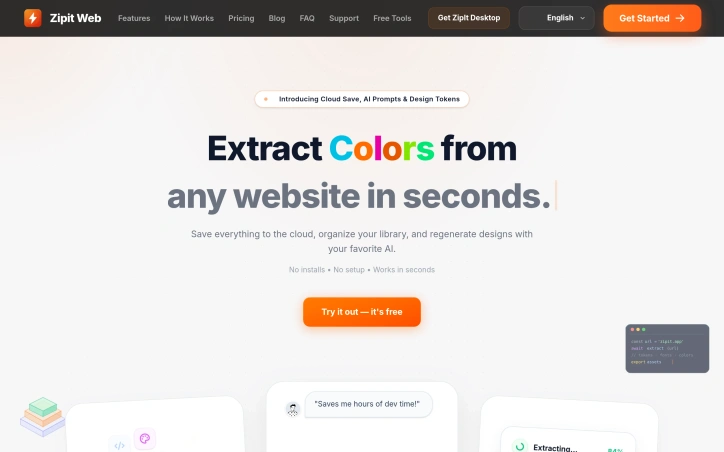
Designers and developers often struggle to recreate or analyze existing websites, spending hours poring over code and assets. Zipit Web solves this problem by allowing users to extract production-ready assets, code, and design systems from any website in seconds. The tool is geared towards UI/UX designers, frontend developers, Webflow creators, agencies, students, and AI builders who need to quickly analyze and reuse web inspiration. What stands out about Zipit Web is its ability to simplify the process of extracting valuable information from a website. With just one URL, users can access three powerful modes: Full Bundle, Design System, and Inspect Mode. These modes enable users to download entire websites, extract design tokens, and inspect live components with ease. The tool's speed and efficiency are notable, with the entire process taking mere seconds. Key features of Zipit Web include its asset extractor, which can grab images in original quality, and its ability to export production-ready source code, neatly organized. The tool also offers an AI-ready export feature, which provides clean text and structured data ready for AI models. Additionally, Zipit Web includes an accessibility audit feature, which runs a full WCAG audit on any page, and an SEO analysis feature, which parses and scores meta tags, Open Graph, and other SEO-related elements. The fact that Zipit Web is free to try, with no account needed and no installs required, makes it easily accessible to anyone. The tool also mentions a "Cloud Save" feature, which allows users to save everything to the cloud, organize their library, and regenerate designs with their favorite AI. Overall, Zipit Web is a powerful tool that can significantly streamline the design and development process for its target audience.
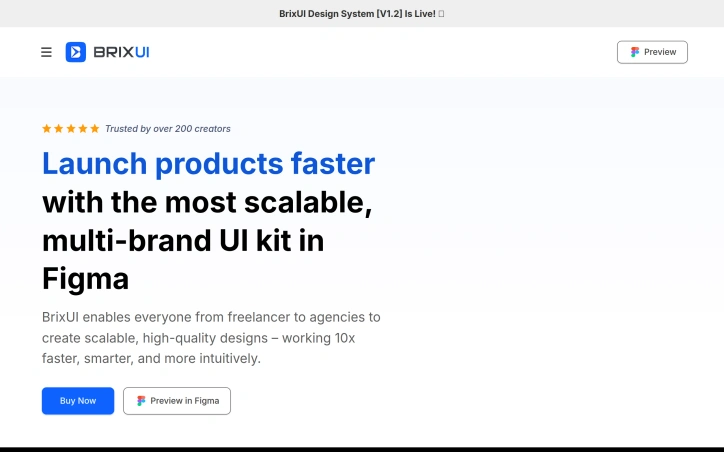
Figma's ecosystem of UI kits has grown crowded, but BrixUI addresses a genuine friction point that many designers face: the time-consuming work of building scalable component libraries and maintaining consistency across multiple brand variations. The product targets everyone from freelance designers to larger agencies who need to accelerate project timelines without compromising design quality or reinventing basic components. At its core, BrixUI is a comprehensive design system that launches with substantial assets. The library includes nearly 19,000 components and variants, over 1,900 global styles and tokens, plus 1,800 page sections and ready-to-use templates. An additional 3,600 icons and logo packs—sourced from open-source collections and custom creations—provide supplementary materials that designers would otherwise need to source separately. This scale is designed to minimize the setup work before meaningful design work can begin. What distinguishes BrixUI from commodity UI kits is its architecture. The system powers four distinct themes with light and dark mode variants, all built on a variable-driven structure. This approach allows designers to switch branding or color schemes globally without manually touching individual components, a meaningful productivity gain for teams managing multiple brands. The library prioritizes responsive design from the foundation, with breakpoints configured for mobile, tablet, desktop, and large desktop viewports, eliminating the common frustration of discovering layout issues across screen sizes late in the process. The "reverse styling" feature is particularly noteworthy. Components are designed to adapt seamlessly to any background color or image, a detail that generic UI kits often overlook. Scalability is embedded as well, with components dynamically adjusting based on configurable body font sizes to maintain proportional relationships. The inclusion of pre-built page sections and widget templates positions these as ready-to-use examples rather than blank starting points. The product has attracted over 200 creators, with version 1.2 recently launched, suggesting active development. Pricing and business model specifics are not detailed in available materials. For design teams operating across multiple brands or seeking to reduce component building overhead, BrixUI presents a feature-rich toolkit with deliberate architectural choices backing its scale.
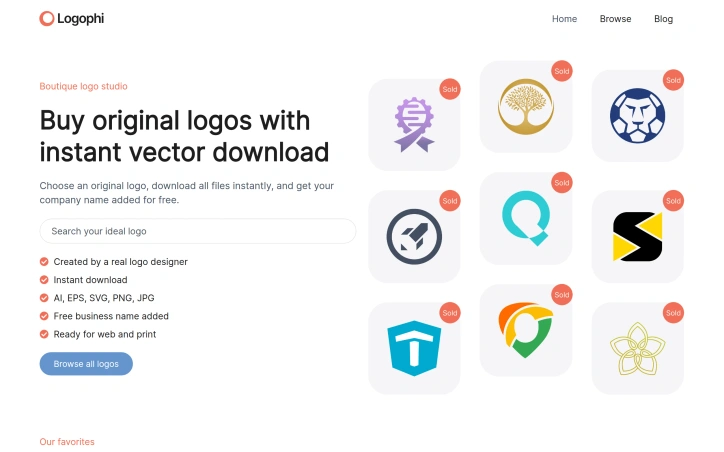
For entrepreneurs and small business owners who need a professional logo quickly, Logophi offers a compelling solution. The website provides a curated collection of original, handcrafted logos that can be purchased and downloaded instantly, eliminating the wait associated with custom design processes. What stands out about Logophi is its commitment to exclusivity; each logo is sold only once, ensuring that buyers receive a unique brand identity. The logos are designed by a real logo designer, and the website showcases a diverse range of designs, from minimalist to bold and symbolic. The process is straightforward: customers browse the collection, select a logo they like, and receive instant digital downloads in various formats, including AI, EPS, SVG, PNG, and JPG. The purchased logo comes with the buyer's business name added for free, and optional color adjustments are available at no extra cost. The commercial license is included, giving buyers full rights to use the logo across various platforms. Logophi's business model is based on a one-time sale for each logo, with prices ranging from $300 to $800. The website features a selection of logos at different price points, giving customers a sense of the design quality and variety available. Overall, Logophi provides a convenient and reassuring solution for startups and small businesses seeking a strong, memorable logo to establish their brand identity. By offering professionally designed, exclusive logos with instant download, Logophi helps new brands launch with confidence.

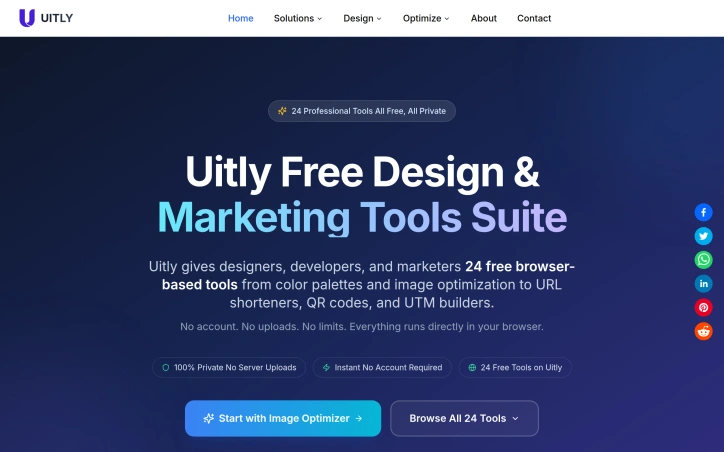
Designers, developers, and marketers often juggle multiple online tools to get their work done, only to be hindered by tedious signups, file uploads, and subscription fees. Uitly addresses this pain point by offering a suite of 24 professional-grade tools that run entirely within the browser, eliminating the need for account creation, file uploads, and payment. The target audience is clear: creatives and professionals seeking a convenient, private, and free solution for their design and marketing needs. What sets Uitly apart is its commitment to user privacy and convenience. By processing all data locally within the browser, Uitly ensures that users' files never leave their device, providing a secure experience. This approach also enables instant access to the tools without requiring registration or login. The breadth of tools available is impressive, covering tasks such as URL shortening, QR code generation, barcode scanning, and password creation, among others. Notable features include the ability to generate code-ready output in formats like CSS, JSON, and JSX, making it easy to integrate the results into production workflows. The tools are also designed to be device-agnostic, working seamlessly on desktop, tablet, or mobile devices. Additionally, features like the UTM builder, URL cleaner, and link preview generator demonstrate a clear understanding of marketers' needs. Uitly is completely free to use, with no paywalls or usage limits, making it an attractive option for individuals and teams alike. By forgoing traditional revenue streams like subscriptions, the platform relies on its simplicity and utility to drive user adoption, which has already resulted in 50,000 monthly users. With its robust feature set and commitment to privacy, Uitly is poised to become a go-to resource for designers, developers, and marketers seeking a reliable and hassle-free toolkit.