Best LLMs Startups & Tools

Recently Listed

32 launches

Sort
Lenormand Live

Divination has traditionally been gated behind expensive appointments and limited availability, leaving people seeking practical guidance with few accessible options. Lenormand Live addresses this by offering an AI-powered Lenormand card reading platform available 24/7 with support for 15 languages. The platform focuses on Lenormand rather than Tarot, a deliberately practical choice. Lenormand's 36-card system emphasizes concrete, actionable guidance over psychological symbolism, making it better suited for questions about love, career, and life direction. The product offers ten different spreads ranging from simple three-card layouts to nine-by-nine grids for comprehensive analysis, ensuring both beginners and experienced practitioners find suitable options. What distinguishes Lenormand Live is its implementation of contextual card interpretation through what the platform calls adjacency—reading neighboring cards as semantic units rather than in isolation. This approach mirrors how professional readers work. AI-powered, it applies this technique consistently and instantly. The interface guides users to focus their intention before selecting cards, and the AI generates interpretable guidance based on both card positions and the user's specific question. The business model reflects thoughtful design. Users access free basic readings and standard card meanings without friction. Detailed AI interpretations that synthesize card positions with question context unlock through payment, creating a straightforward freemium structure. Payment options include Stripe and Alipay, acknowledging the platform's international audience. Privacy considerations receive explicit attention. Card selection occurs entirely in the browser, and the platform only sends question text and spread data to interpretation services when users explicitly request AI reports. Without login or payment, reading history isn't retained long-term. This transparency about data handling stands out in a space where divination platforms often operate with little scrutiny around user privacy. The product exists within a broader ecosystem. The founder operates related platforms for geomancy, Mayan calendar guidance, tarot, and traditional astrology, suggesting both conviction in AI-assisted divination and recognition that different systems serve different user needs. Lenormand Live targets practical people seeking accessible guidance who value both transparency and convenience. The execution demonstrates understanding that AI can enhance rather than replace divination's appeal when applied thoughtfully to established methodologies.

Ai-chatbots
V
victory 2005

Divination has traditionally been gated behind expensive appointments and limited availability, leaving people seeking practical guidance with few accessible options. Lenormand Live addresses this by offering an AI-powered Lenormand card reading platform available 24/7 with support for 15 languages. The platform focuses on Lenormand rather than Tarot, a deliberately practical choice. Lenormand's 36-card system emphasizes concrete, actionable guidance over psychological symbolism, making it better suited for questions about love, career, and life direction. The product offers ten different spreads ranging from simple three-card layouts to nine-by-nine grids for comprehensive analysis, ensuring both beginners and experienced practitioners find suitable options. What distinguishes Lenormand Live is its implementation of contextual card interpretation through what the platform calls adjacency—reading neighboring cards as semantic units rather than in isolation. This approach mirrors how professional readers work. AI-powered, it applies this technique consistently and instantly. The interface guides users to focus their intention before selecting cards, and the AI generates interpretable guidance based on both card positions and the user's specific question. The business model reflects thoughtful design. Users access free basic readings and standard card meanings without friction. Detailed AI interpretations that synthesize card positions with question context unlock through payment, creating a straightforward freemium structure. Payment options include Stripe and Alipay, acknowledging the platform's international audience. Privacy considerations receive explicit attention. Card selection occurs entirely in the browser, and the platform only sends question text and spread data to interpretation services when users explicitly request AI reports. Without login or payment, reading history isn't retained long-term. This transparency about data handling stands out in a space where divination platforms often operate with little scrutiny around user privacy. The product exists within a broader ecosystem. The founder operates related platforms for geomancy, Mayan calendar guidance, tarot, and traditional astrology, suggesting both conviction in AI-assisted divination and recognition that different systems serve different user needs. Lenormand Live targets practical people seeking accessible guidance who value both transparency and convenience. The execution demonstrates understanding that AI can enhance rather than replace divination's appeal when applied thoughtfully to established methodologies.

Lenormand Live preview

Key features

  • 24/7 AI-Powered Readings: Offers Lenormand card readings available around the clock with AI-generated interpretations.
  • Multilingual Support: Supports 15 languages to serve an international audience.
See full listing
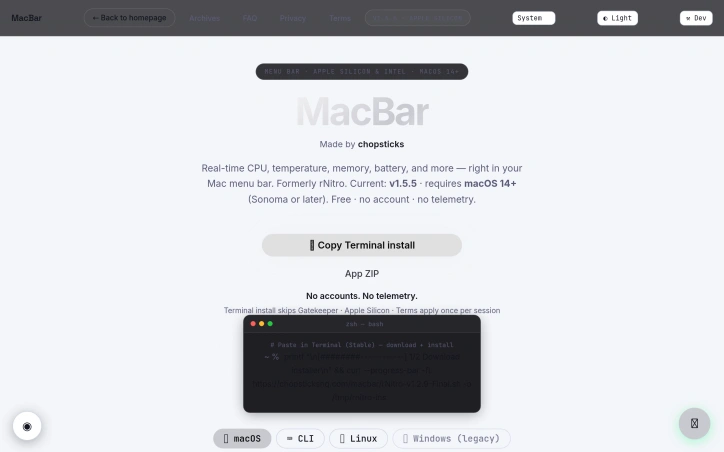
MacBar

Menu bar system monitors solve a real friction point for Mac users: the need to quickly check CPU, memory, and thermal performance without opening Activity Monitor or third-party bloatware. MacBar addresses this with a lightweight, native alternative that stays out of the way until needed. The product installs entirely on your terms. Rather than downloading a prebuilt binary, the terminal installation command builds MacBar locally on your machine, with checksum verification to prevent tampering. This approach eliminates a common trust barrier between users and developer tools. The application collects no telemetry and requires no account, making it straightforward for privacy-conscious users to adopt without suspicion of data harvesting downstream. The monitoring capabilities deliver what users expect from a menu bar app: real-time CPU usage, temperature readings, clock speed, and memory stats. The interface includes a per-core CPU breakdown and a 60-second history graph, which adds useful context beyond the current snapshot. For Mac users who want to diagnose sudden slowdowns or track thermal behavior under load, this granularity matters. The technical implementation choices reinforce the privacy position. MacBar is built as native code and comes ad-hoc signed rather than notarized, a trade-off that keeps installation simple at the cost of a one-time security warning. The developers have committed to supporting Apple Silicon going forward while ending updates for Intel Macs after version 1.2.5, a pragmatic decision reflecting the real-world platform shift in the Mac ecosystem. Installation presents three paths: a hardened terminal command, a ZIP file, or compilation from source via Xcode. The terminal route is the default recommendation and avoids Gatekeeper friction entirely. This layered approach accommodates different user risk tolerances and technical comfort levels. The pricing model is straightforward: the application is free. This, combined with open-source development and no account requirements, positions MacBar as a genuine public service rather than a loss leader or future revenue trap. MacBar targets a specific audience: technical Mac users who want transparency in their system performance without the overhead of full-featured system utilities. It does not attempt to be everything; it stays in the menu bar and reports metrics. For users in that niche, it removes friction and requires no compromise on privacy.
Llm-developer-tools
M
MZX Lam

Menu bar system monitors solve a real friction point for Mac users: the need to quickly check CPU, memory, and thermal performance without opening Activity Monitor or third-party bloatware. MacBar addresses this with a lightweight, native alternative that stays out of the way until needed. The product installs entirely on your terms. Rather than downloading a prebuilt binary, the terminal installation command builds MacBar locally on your machine, with checksum verification to prevent tampering. This approach eliminates a common trust barrier between users and developer tools. The application collects no telemetry and requires no account, making it straightforward for privacy-conscious users to adopt without suspicion of data harvesting downstream. The monitoring capabilities deliver what users expect from a menu bar app: real-time CPU usage, temperature readings, clock speed, and memory stats. The interface includes a per-core CPU breakdown and a 60-second history graph, which adds useful context beyond the current snapshot. For Mac users who want to diagnose sudden slowdowns or track thermal behavior under load, this granularity matters. The technical implementation choices reinforce the privacy position. MacBar is built as native code and comes ad-hoc signed rather than notarized, a trade-off that keeps installation simple at the cost of a one-time security warning. The developers have committed to supporting Apple Silicon going forward while ending updates for Intel Macs after version 1.2.5, a pragmatic decision reflecting the real-world platform shift in the Mac ecosystem. Installation presents three paths: a hardened terminal command, a ZIP file, or compilation from source via Xcode. The terminal route is the default recommendation and avoids Gatekeeper friction entirely. This layered approach accommodates different user risk tolerances and technical comfort levels. The pricing model is straightforward: the application is free. This, combined with open-source development and no account requirements, positions MacBar as a genuine public service rather than a loss leader or future revenue trap. MacBar targets a specific audience: technical Mac users who want transparency in their system performance without the overhead of full-featured system utilities. It does not attempt to be everything; it stays in the menu bar and reports metrics. For users in that niche, it removes friction and requires no compromise on privacy.

MacBar preview

Key features

  • Real-Time System Monitoring: Displays CPU usage, temperature readings, clock speed, and memory stats in the menu bar
  • Privacy-Focused Design: Collects no telemetry, requires no account, and builds locally with checksum verification
See full listing
cs.AI

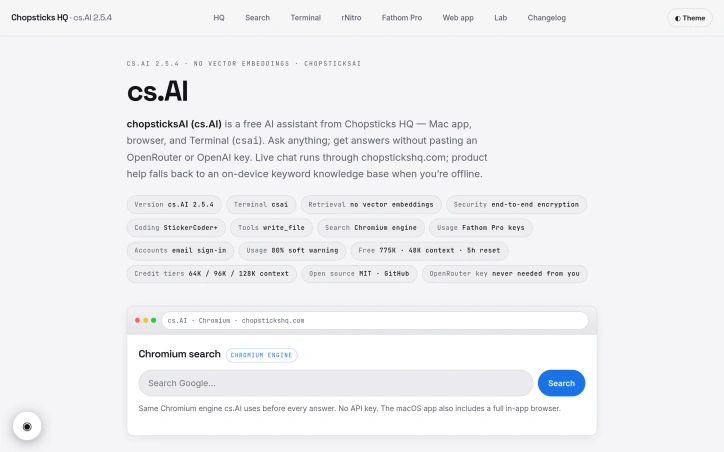
Eliminating API key friction remains a persistent pain point for Mac users exploring AI tools. Chopsticks HQ addresses this with chopsticksAI (cs.AI), a free AI assistant available across macOS, browser, and terminal that requires no key setup to get started. The product targets developers and general users alike who want accessible AI assistance without the overhead of configuring third-party services. What distinguishes cs.AI is its committed approach to removing barriers. The free tier provides 775,000 tokens with 48,000 context window, resetting every five hours—substantial enough for daily exploration without paywalls. The product spans three distinct interfaces: a native macOS app with integrated Chromium browser, a web application, and a full-screen terminal CLI invoked via csai command. This multi-surface design reflects genuine consideration for how users interact with their tools across different workflows. The technical architecture reveals thoughtful engineering choices. Every answer is grounded in a live Chromium web search before generation. A dual-model pipeline handles responses: NVIDIA's Nemotron 3 Ultra drafts the answer, then Google's Gemma 4 26B reviews, corrects, and eliminates redundancy without introducing unsupported facts. This review stage adds quality control at generation time rather than as an afterthought. End-to-end encryption protects conversations, while an offline mode with keyword-based knowledge base ensures partial functionality without connectivity. cs.AI's knowledge base encompasses Chopsticks HQ's product suite, making it particularly useful for users within their ecosystem. The MIT open-source license and reliance on Fathom Pro keys rather than third-party API credentials signal a self-contained infrastructure strategy. Pricing remains flexible and transparent. Free users encounter a soft warning at eighty percent usage. Credit tiers escalate capacity: two credits unlock 800,000 tokens with 64K context; five credits reach 900,000 tokens and 96K context; ten credits top out at one million tokens with 128K context. This credit-based model avoids the subscription fatigue of many competitors. The product successfully executes on a specific thesis: capable AI assistance without friction. For Mac users and developers seeking straightforward access without vendor lock-in or setup complexity, cs.AI removes legitimate obstacles to adoption. The combination of generous free allowances, multiple access points, and offline resilience makes it a credible alternative for those fatigued by API key management and service sprawl.

Ai-chatbots
M
MZX Lam

Eliminating API key friction remains a persistent pain point for Mac users exploring AI tools. Chopsticks HQ addresses this with chopsticksAI (cs.AI), a free AI assistant available across macOS, browser, and terminal that requires no key setup to get started. The product targets developers and general users alike who want accessible AI assistance without the overhead of configuring third-party services. What distinguishes cs.AI is its committed approach to removing barriers. The free tier provides 775,000 tokens with 48,000 context window, resetting every five hours—substantial enough for daily exploration without paywalls. The product spans three distinct interfaces: a native macOS app with integrated Chromium browser, a web application, and a full-screen terminal CLI invoked via csai command. This multi-surface design reflects genuine consideration for how users interact with their tools across different workflows. The technical architecture reveals thoughtful engineering choices. Every answer is grounded in a live Chromium web search before generation. A dual-model pipeline handles responses: NVIDIA's Nemotron 3 Ultra drafts the answer, then Google's Gemma 4 26B reviews, corrects, and eliminates redundancy without introducing unsupported facts. This review stage adds quality control at generation time rather than as an afterthought. End-to-end encryption protects conversations, while an offline mode with keyword-based knowledge base ensures partial functionality without connectivity. cs.AI's knowledge base encompasses Chopsticks HQ's product suite, making it particularly useful for users within their ecosystem. The MIT open-source license and reliance on Fathom Pro keys rather than third-party API credentials signal a self-contained infrastructure strategy. Pricing remains flexible and transparent. Free users encounter a soft warning at eighty percent usage. Credit tiers escalate capacity: two credits unlock 800,000 tokens with 64K context; five credits reach 900,000 tokens and 96K context; ten credits top out at one million tokens with 128K context. This credit-based model avoids the subscription fatigue of many competitors. The product successfully executes on a specific thesis: capable AI assistance without friction. For Mac users and developers seeking straightforward access without vendor lock-in or setup complexity, cs.AI removes legitimate obstacles to adoption. The combination of generous free allowances, multiple access points, and offline resilience makes it a credible alternative for those fatigued by API key management and service sprawl.

cs.AI preview

Key features

  • Multi-Platform Access: Available as a native macOS app, web application, and terminal CLI
  • No API Key Setup: Requires no configuration or third-party service setup to begin using
See full listing
Veyra

Indonesian language models have historically struggled with a fundamental structural challenge: the language's rich system of affixes and word modifications gets fractured by tokenization approaches designed for English. Veyra, a 75-million-parameter language model, addresses this problem through an alternative architecture that treats Indonesian on its own terms. The core innovation is the NMU framework—ninmeni meaning unit—which assigns a fixed ID to each character. Rather than breaking down inflected words into subword tokens, the model ingests complete words with all their affixes intact. This preserves the semantic structure that Indonesian speakers naturally recognize, training the model on authentic linguistic patterns instead of reconstructed approximations. The approach reflects a deliberate design philosophy: that language models should learn from a language's native roots, not translated or adapted paradigms. The model was built entirely from scratch using this framework, with the 75M parameter size chosen as a conscious validation point. Developers can verify model capabilities through systematic evaluation rather than selective demonstration. The focus remains deliberately narrow: Indonesian language performance shapes corpus selection, evaluation priorities, and development direction. Veyra shows unexpected capability beyond its primary scope. Despite no explicit English training, it generates grammatically sound English sentences—an artifact of how the NMU character-level encoding treats Latin characters universally across both languages. Developers treat this as an observable phenomenon rather than a marketed feature, documenting it while continuing to investigate the mechanism. The product positions itself as a tool for builders working specifically with Indonesian language applications. By rejecting the usual transfer-learning approach that adapts English-trained models for other languages, it offers a model trained in the way Indonesian actually works. This appeals to developers seeking more authentic language understanding for Indonesian, teams building primarily for Indonesian-speaking users, and researchers interested in non-English-centric language model design. The emphasis on documented evaluation and transparency about capabilities—including what remains unverified—indicates a research-first mindset that prioritizes credibility over marketing claims. No pricing information appears in available materials, suggesting this may be an open-source or research-stage project focused on validating the NMU framework before commercial deployment. That restraint itself signals maturity: the commitment to prove the approach works before scaling operations.


Foundation-models
E
Emylton Leunufna

Indonesian language models have historically struggled with a fundamental structural challenge: the language's rich system of affixes and word modifications gets fractured by tokenization approaches designed for English. Veyra, a 75-million-parameter language model, addresses this problem through an alternative architecture that treats Indonesian on its own terms. The core innovation is the NMU framework—ninmeni meaning unit—which assigns a fixed ID to each character. Rather than breaking down inflected words into subword tokens, the model ingests complete words with all their affixes intact. This preserves the semantic structure that Indonesian speakers naturally recognize, training the model on authentic linguistic patterns instead of reconstructed approximations. The approach reflects a deliberate design philosophy: that language models should learn from a language's native roots, not translated or adapted paradigms. The model was built entirely from scratch using this framework, with the 75M parameter size chosen as a conscious validation point. Developers can verify model capabilities through systematic evaluation rather than selective demonstration. The focus remains deliberately narrow: Indonesian language performance shapes corpus selection, evaluation priorities, and development direction. Veyra shows unexpected capability beyond its primary scope. Despite no explicit English training, it generates grammatically sound English sentences—an artifact of how the NMU character-level encoding treats Latin characters universally across both languages. Developers treat this as an observable phenomenon rather than a marketed feature, documenting it while continuing to investigate the mechanism. The product positions itself as a tool for builders working specifically with Indonesian language applications. By rejecting the usual transfer-learning approach that adapts English-trained models for other languages, it offers a model trained in the way Indonesian actually works. This appeals to developers seeking more authentic language understanding for Indonesian, teams building primarily for Indonesian-speaking users, and researchers interested in non-English-centric language model design. The emphasis on documented evaluation and transparency about capabilities—including what remains unverified—indicates a research-first mindset that prioritizes credibility over marketing claims. No pricing information appears in available materials, suggesting this may be an open-source or research-stage project focused on validating the NMU framework before commercial deployment. That restraint itself signals maturity: the commitment to prove the approach works before scaling operations.

Veyra preview

Key features

  • Character-Level Tokenization: Uses the NMU framework to assign fixed IDs to each character, preserving complete words with all affixes intact instead of fragmenting them.
  • Indonesian Language Optimization: Built from scratch specifically for Indonesian with corpus selection and evaluation priorities centered on authentic linguistic patterns.
See full listing
Prism

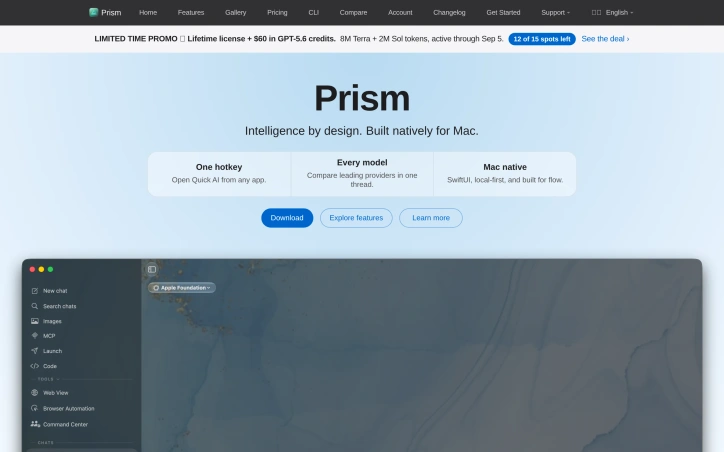
Scattered AI tools fracture workflows, forcing users to juggle browser tabs, separate applications, and disconnected windows just to access different models. Prism consolidates this chaos into a unified macOS workspace, eliminating the friction of context-switching and letting users stay focused on their actual work. Built natively in SwiftUI for macOS, Prism brings together multiple AI models, code assistance, local model support, and agent automation into one integrated environment. Users invoke the application via a single hotkey from any app, gaining instant access to a suite of tools without leaving their current workspace. The product targets knowledge workers and developers who rely on AI for writing, coding, and analysis—anyone drowning in scattered tools who wants a streamlined alternative. The standout capabilities center on flexibility and consolidation. Prism allows users to compare leading AI providers within a single thread, switching between models mid-conversation without disrupting context. This is a practical solution to the lock-in problem: users aren't forced to commit to one provider but can instead evaluate and swap based on task requirements. The application also supports local GGUF models with minimal setup friction, appealing to privacy-conscious users or those with specific model preferences. Beyond chat, Prism includes a native code companion with an integrated terminal, bringing development workflows into the same environment. The platform's agent features—AI that watches, summarizes, and acts automatically—suggest a system designed to anticipate user needs rather than simply respond to them. Integration with MCP and custom tools enables connections to files, databases, and APIs, expanding what users can accomplish without leaving the application. User testimonials highlight the experience as seamless integration with macOS itself. One key differentiator is the frictionless interaction model: hitting a hotkey, asking a question, and returning to work creates a flow that respects user attention rather than demanding it. The ability to swap models mid-session without breaking conversation context directly addresses a common pain point in multi-model workflows. Prism operates under a paid licensing model, with promotional messaging around limited-time lifetime access offers paired with cloud credits. Specific pricing details remain behind a link, though the site references tiered options. For macOS users struggling with AI tool fragmentation, Prism presents a consolidated alternative that prioritizes native integration, model flexibility, and minimal friction in the core interaction loop.

Ai-chatbots
A
Aarav Goyal

Scattered AI tools fracture workflows, forcing users to juggle browser tabs, separate applications, and disconnected windows just to access different models. Prism consolidates this chaos into a unified macOS workspace, eliminating the friction of context-switching and letting users stay focused on their actual work. Built natively in SwiftUI for macOS, Prism brings together multiple AI models, code assistance, local model support, and agent automation into one integrated environment. Users invoke the application via a single hotkey from any app, gaining instant access to a suite of tools without leaving their current workspace. The product targets knowledge workers and developers who rely on AI for writing, coding, and analysis—anyone drowning in scattered tools who wants a streamlined alternative. The standout capabilities center on flexibility and consolidation. Prism allows users to compare leading AI providers within a single thread, switching between models mid-conversation without disrupting context. This is a practical solution to the lock-in problem: users aren't forced to commit to one provider but can instead evaluate and swap based on task requirements. The application also supports local GGUF models with minimal setup friction, appealing to privacy-conscious users or those with specific model preferences. Beyond chat, Prism includes a native code companion with an integrated terminal, bringing development workflows into the same environment. The platform's agent features—AI that watches, summarizes, and acts automatically—suggest a system designed to anticipate user needs rather than simply respond to them. Integration with MCP and custom tools enables connections to files, databases, and APIs, expanding what users can accomplish without leaving the application. User testimonials highlight the experience as seamless integration with macOS itself. One key differentiator is the frictionless interaction model: hitting a hotkey, asking a question, and returning to work creates a flow that respects user attention rather than demanding it. The ability to swap models mid-session without breaking conversation context directly addresses a common pain point in multi-model workflows. Prism operates under a paid licensing model, with promotional messaging around limited-time lifetime access offers paired with cloud credits. Specific pricing details remain behind a link, though the site references tiered options. For macOS users struggling with AI tool fragmentation, Prism presents a consolidated alternative that prioritizes native integration, model flexibility, and minimal friction in the core interaction loop.

Prism preview

Key features

  • Unified Workspace: Consolidates multiple AI tools, code assistance, local models, and agent automation into a single macOS application
  • Model Switching: Compare different AI providers and swap between models within a single conversation thread without losing context
See full listing
AIQualityHQ

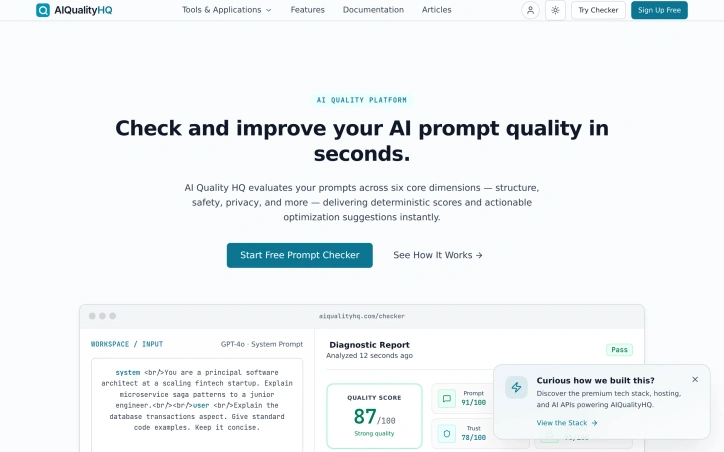
Teams that rely on AI models face a consistent risk: the quality of outputs depends directly on prompt quality. Poor prompts introduce hallucinations, leave systems vulnerable to injection attacks, and can inadvertently expose sensitive information. AIQualityHQ tackles this problem by providing instant validation for AI prompts before they reach production. The product is designed for developers and technical teams building AI-powered applications who need to ensure prompt safety and consistency without additional API costs or complexity. Its primary appeal is speed and transparency—the analysis engine runs locally in the browser within milliseconds, using deterministic structural rules rather than calling out to additional AI services. What distinguishes this product is its emphasis on deterministic analysis. Rather than relying on machine learning models or external APIs, AIQualityHQ uses rule-based heuristics and syntax checking to evaluate prompts across six dimensions: structure, memory, context, trust, privacy, and security. This approach means faster analysis (under 10 milliseconds), no privacy concerns from uploading prompts elsewhere, and results that do not depend on third-party API availability. The core workflow is straightforward: paste a prompt, run analysis, and receive both a quality score and specific recommendations for improvement. The platform flags common failure modes—prompt injection vectors, missing output constraints, exposed PII variables, and absent system instruction locks. For each issue detected, the tool provides actionable optimization suggestions rather than just reporting problems. Key capabilities include a diff view for comparing before-and-after versions of prompts and the ability to export results. The platform requires no signup and charges no fees, making experimentation low-friction. The product ships with example prompts to help users understand the analysis format. The main limitation appears to be scope: the tool focuses specifically on prompt quality rather than broader concerns like model selection, fine-tuning, or inference optimization. Users seeking comprehensive AI system auditing would need additional tools. Additionally, while browser-based analysis ensures privacy, it also means analysis is confined to what static rules can detect—issues that emerge only at runtime or in specific model behaviors may not surface. For teams managing multiple AI prompts in production or developing new AI features, this fills a genuine gap. The combination of zero cost, instant results, and focus on preventable failures makes it a practical addition to an AI development workflow.
Prompt-engineering-tools
P
Puneet Kralia

Teams that rely on AI models face a consistent risk: the quality of outputs depends directly on prompt quality. Poor prompts introduce hallucinations, leave systems vulnerable to injection attacks, and can inadvertently expose sensitive information. AIQualityHQ tackles this problem by providing instant validation for AI prompts before they reach production. The product is designed for developers and technical teams building AI-powered applications who need to ensure prompt safety and consistency without additional API costs or complexity. Its primary appeal is speed and transparency—the analysis engine runs locally in the browser within milliseconds, using deterministic structural rules rather than calling out to additional AI services. What distinguishes this product is its emphasis on deterministic analysis. Rather than relying on machine learning models or external APIs, AIQualityHQ uses rule-based heuristics and syntax checking to evaluate prompts across six dimensions: structure, memory, context, trust, privacy, and security. This approach means faster analysis (under 10 milliseconds), no privacy concerns from uploading prompts elsewhere, and results that do not depend on third-party API availability. The core workflow is straightforward: paste a prompt, run analysis, and receive both a quality score and specific recommendations for improvement. The platform flags common failure modes—prompt injection vectors, missing output constraints, exposed PII variables, and absent system instruction locks. For each issue detected, the tool provides actionable optimization suggestions rather than just reporting problems. Key capabilities include a diff view for comparing before-and-after versions of prompts and the ability to export results. The platform requires no signup and charges no fees, making experimentation low-friction. The product ships with example prompts to help users understand the analysis format. The main limitation appears to be scope: the tool focuses specifically on prompt quality rather than broader concerns like model selection, fine-tuning, or inference optimization. Users seeking comprehensive AI system auditing would need additional tools. Additionally, while browser-based analysis ensures privacy, it also means analysis is confined to what static rules can detect—issues that emerge only at runtime or in specific model behaviors may not surface. For teams managing multiple AI prompts in production or developing new AI features, this fills a genuine gap. The combination of zero cost, instant results, and focus on preventable failures makes it a practical addition to an AI development workflow.

AIQualityHQ preview

Key features

  • Deterministic Engine: Get consistent prompt quality scores in under 10 milliseconds without relying on random or expensive LLM API calls.
  • Six-Dimension Analysis: Evaluate your prompts instantly across structure, memory, context, trust, privacy, and security criteria.
See full listing
M

Finding the right financial product in Cambodia can be a daunting task, especially with numerous options available. The MoneyKH AI Tool is designed to simplify this process by engaging users in a conversational interface that recommends suitable financial products based on their specific needs. The tool is particularly useful for individuals seeking financial products such as savings accounts, loans, wallets, insurance, and remittance services. It is tailored to the Cambodian market, drawing on data from over 50 verified institutions across seven product hubs. What sets the MoneyKH AI Tool apart is its adaptive questioning process. Unlike traditional quizzes that follow a fixed script, this AI-driven advisor asks follow-up questions based on the user's input, allowing for a more nuanced understanding of their requirements. The tool then provides a personalized recommendation, explaining why a particular product is suitable and offering a link to compare it with other options on the MoneyKH platform. The AI Tool's capabilities are noteworthy. It covers a wide range of financial products and is backed by directly verified data from institutions, rather than relying on scraped marketing information. The conversation is free, and users do not need to provide their email address to receive a recommendation. The average conversation lasts around 60 seconds, making it a quick and convenient solution for those seeking financial guidance. Notably, the tool's conversational nature allows users to ask follow-up questions and delve deeper into their financial options. The developer's goal is to provide an intuitive and user-friendly experience, moving away from rigid, pre-scored matrices that fail to account for individual circumstances. The service is offered at no cost to the user, with the cost to use being explicitly stated as $0.


Finding the right financial product in Cambodia can be a daunting task, especially with numerous options available. The MoneyKH AI Tool is designed to simplify this process by engaging users in a conversational interface that recommends suitable financial products based on their specific needs. The tool is particularly useful for individuals seeking financial products such as savings accounts, loans, wallets, insurance, and remittance services. It is tailored to the Cambodian market, drawing on data from over 50 verified institutions across seven product hubs. What sets the MoneyKH AI Tool apart is its adaptive questioning process. Unlike traditional quizzes that follow a fixed script, this AI-driven advisor asks follow-up questions based on the user's input, allowing for a more nuanced understanding of their requirements. The tool then provides a personalized recommendation, explaining why a particular product is suitable and offering a link to compare it with other options on the MoneyKH platform. The AI Tool's capabilities are noteworthy. It covers a wide range of financial products and is backed by directly verified data from institutions, rather than relying on scraped marketing information. The conversation is free, and users do not need to provide their email address to receive a recommendation. The average conversation lasts around 60 seconds, making it a quick and convenient solution for those seeking financial guidance. Notably, the tool's conversational nature allows users to ask follow-up questions and delve deeper into their financial options. The developer's goal is to provide an intuitive and user-friendly experience, moving away from rigid, pre-scored matrices that fail to account for individual circumstances. The service is offered at no cost to the user, with the cost to use being explicitly stated as $0.

MoneyKH AI Tool preview
M

Key features

  • Conversational Interface: Engages users through an AI-driven interface that recommends financial products based on their specific needs
  • Adaptive Questioning: Asks follow-up questions based on user input to achieve a more nuanced understanding of requirements
See full listing
Tarovent

Seeking clarity without commitment, Tarovent offers a streamlined tarot reading experience that reduces the friction between curiosity and insight. The service addresses a specific frustration among tarot users: the need to determine whether a question requires a full reading before investing time and money into it. The product targets people navigating personal questions across relationships, career shifts, and daily decision-making. Rather than forcing users into lengthy readings or subscriptions, Tarovent allows anyone to pull a single card for free, answer a specific question, and decide whether deeper exploration makes sense. This low-stakes entry point works against the perception that tarot requires significant commitment or belief. What distinguishes Tarovent is its structured approach to question formation. Before selecting a spread, users articulate what they actually want to know rather than receiving generic readings. The interface offers entry points organized by context: love and relationship patterns, career pressures and transitions, crossroads requiring directional clarity, and daily mood checks. This specificity moves the reading away from fortune-telling theater toward directed self-reflection. The product depth mirrors this philosophy. Three spread options exist: the single card for immediate answers, the three-card spread for examining present dynamics, and the ten-card Celtic Cross for complex situations. Users who want to save readings and maintain a daily practice can create an account, receiving one free card daily while retaining full control over when and whether to pay for additional spreads. Transparency about tarot's limitations stands out in the interface itself. The product acknowledges that readings support personal guidance and self-reflection but cannot verify hidden facts, make promises, or reveal another person's private thoughts. This honesty counters the inflated claims that typically cloud tarot spaces, positioning the tool as genuinely useful rather than miraculous. The business model avoids subscription friction altogether. Users pay once per deeper reading if needed, keeping their relationship to the tool optional and exploratory. Combined with the daily free card for registered users, this approach removes pressure while sustaining revenue from people who find genuine value in the service. Tarovent ultimately succeeds because it respects user skepticism and autonomy, letting the experience justify itself through a single card rather than demanding upfront faith or commitment.


Ai-chatbots
番茄炒蛋

Seeking clarity without commitment, Tarovent offers a streamlined tarot reading experience that reduces the friction between curiosity and insight. The service addresses a specific frustration among tarot users: the need to determine whether a question requires a full reading before investing time and money into it. The product targets people navigating personal questions across relationships, career shifts, and daily decision-making. Rather than forcing users into lengthy readings or subscriptions, Tarovent allows anyone to pull a single card for free, answer a specific question, and decide whether deeper exploration makes sense. This low-stakes entry point works against the perception that tarot requires significant commitment or belief. What distinguishes Tarovent is its structured approach to question formation. Before selecting a spread, users articulate what they actually want to know rather than receiving generic readings. The interface offers entry points organized by context: love and relationship patterns, career pressures and transitions, crossroads requiring directional clarity, and daily mood checks. This specificity moves the reading away from fortune-telling theater toward directed self-reflection. The product depth mirrors this philosophy. Three spread options exist: the single card for immediate answers, the three-card spread for examining present dynamics, and the ten-card Celtic Cross for complex situations. Users who want to save readings and maintain a daily practice can create an account, receiving one free card daily while retaining full control over when and whether to pay for additional spreads. Transparency about tarot's limitations stands out in the interface itself. The product acknowledges that readings support personal guidance and self-reflection but cannot verify hidden facts, make promises, or reveal another person's private thoughts. This honesty counters the inflated claims that typically cloud tarot spaces, positioning the tool as genuinely useful rather than miraculous. The business model avoids subscription friction altogether. Users pay once per deeper reading if needed, keeping their relationship to the tool optional and exploratory. Combined with the daily free card for registered users, this approach removes pressure while sustaining revenue from people who find genuine value in the service. Tarovent ultimately succeeds because it respects user skepticism and autonomy, letting the experience justify itself through a single card rather than demanding upfront faith or commitment.

Tarovent preview

Key features

  • Structured Question Formation: Users articulate what they want to know before selecting a spread.
  • Contextual Entry Points: Interface offers entry points organized by context such as love and relationship patterns.
See full listing
Zappiq AI

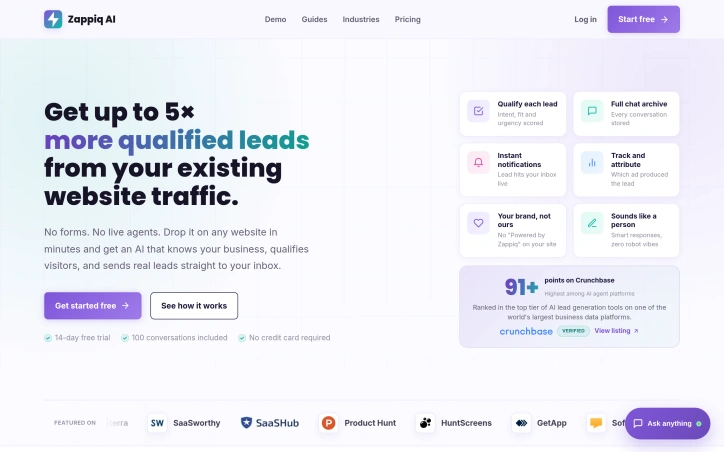
Capturing qualified leads from existing website traffic remains one of the biggest challenges for businesses of all sizes. Most websites squander visitor interactions—traditional contact forms create friction that drives prospects away, while generic chatbots fail to understand business context or identify which visitors actually warrant follow-up. Zappiq AI addresses this gap with a conversational AI that deploys directly onto any website in minutes. Rather than forcing visitors through forms, the chatbot engages naturally, learns the specifics of the business, and evaluates whether each prospect meets basic qualification criteria. When someone shows genuine intent and fit, the system captures their information and notifies the business immediately, eliminating the delays that plague traditional lead pipelines. The product shines in how it handles the operational side of lead capture. Every conversation gets stored with full context—visitor questions, responses, contact details, and lead sources all appear in one unified dashboard. This context eliminates the scattered note-taking and email chains that typically derail follow-up. The system scores leads by intent, fit, and urgency so sales teams know which prospects to prioritize. It also tracks attribution, showing which marketing channel or ad actually drove each lead, giving businesses clarity on where their traffic originates. The conversational quality matters here too. The AI generates responses that feel human rather than robotic, which shapes how visitors perceive the business itself. Zappiq AI also respects brand ownership—there's no "Powered by Zappiq" footer on customer sites, keeping the interaction feel native to the business. Third-party validation backs the product's positioning. It has earned a 91-plus Crunchbase score, the highest rating among AI agent platforms, and appears on multiple industry shortlists including Capterra, GoodFirms, and Product Hunt. These don't guarantee product-market fit, but they indicate sustained recognition within the lead generation tool category. The business model is straightforward: a 14-day free trial with 100 conversations included and no credit card upfront. This removes friction for businesses testing whether conversational lead capture actually works for their traffic volume and visitor types. Zappiq AI targets small to mid-market businesses tired of watching website traffic evaporate. The value proposition is direct—convert more of the people who visit you already. For companies with meaningful web traffic but weak lead capture infrastructure, it's worth testing.

Ai-chatbots
A
Ansar Ali

Capturing qualified leads from existing website traffic remains one of the biggest challenges for businesses of all sizes. Most websites squander visitor interactions—traditional contact forms create friction that drives prospects away, while generic chatbots fail to understand business context or identify which visitors actually warrant follow-up. Zappiq AI addresses this gap with a conversational AI that deploys directly onto any website in minutes. Rather than forcing visitors through forms, the chatbot engages naturally, learns the specifics of the business, and evaluates whether each prospect meets basic qualification criteria. When someone shows genuine intent and fit, the system captures their information and notifies the business immediately, eliminating the delays that plague traditional lead pipelines. The product shines in how it handles the operational side of lead capture. Every conversation gets stored with full context—visitor questions, responses, contact details, and lead sources all appear in one unified dashboard. This context eliminates the scattered note-taking and email chains that typically derail follow-up. The system scores leads by intent, fit, and urgency so sales teams know which prospects to prioritize. It also tracks attribution, showing which marketing channel or ad actually drove each lead, giving businesses clarity on where their traffic originates. The conversational quality matters here too. The AI generates responses that feel human rather than robotic, which shapes how visitors perceive the business itself. Zappiq AI also respects brand ownership—there's no "Powered by Zappiq" footer on customer sites, keeping the interaction feel native to the business. Third-party validation backs the product's positioning. It has earned a 91-plus Crunchbase score, the highest rating among AI agent platforms, and appears on multiple industry shortlists including Capterra, GoodFirms, and Product Hunt. These don't guarantee product-market fit, but they indicate sustained recognition within the lead generation tool category. The business model is straightforward: a 14-day free trial with 100 conversations included and no credit card upfront. This removes friction for businesses testing whether conversational lead capture actually works for their traffic volume and visitor types. Zappiq AI targets small to mid-market businesses tired of watching website traffic evaporate. The value proposition is direct—convert more of the people who visit you already. For companies with meaningful web traffic but weak lead capture infrastructure, it's worth testing.

Zappiq AI preview

Key features

  • Website Deployment: Conversational AI that installs directly onto any website in minutes without complex integration.
  • Lead Qualification: Evaluates visitor intent and fit against business criteria before capturing their information.
See full listing
ChatBudgie

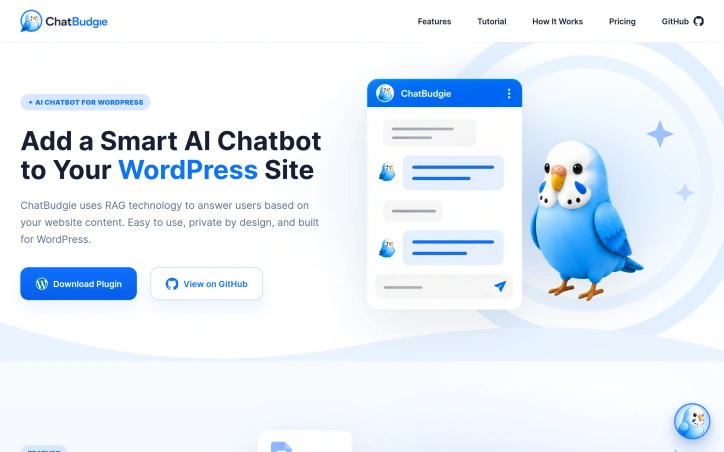
WordPress site owners constantly wrestle with the dual challenge of providing responsive customer support while keeping visitors engaged. Traditional AI chatbot solutions compound this problem by demanding complex API integrations, ongoing maintenance, and technical expertise that most website administrators lack. This plugin addresses that friction directly. Rather than pulling answers from the general internet, it uses retrieval-augmented generation (RAG) to ground responses in a site's actual content, delivering answers that are both accurate and contextually relevant to the business. This architecture shift eliminates the accuracy problems that come with generic AI responses while building customer trust through transparent sourcing. The implementation philosophy prioritizes simplicity over feature complexity. Setup takes minutes without requiring API key management or external service coordination. The chatbot automatically maintains its knowledge base as site content updates, removing the burden of manual retraining or version management that plagues other solutions. There is no server to configure, no backend infrastructure to oversee. Privacy by design is another differentiator. Because the system works within a WordPress site's own ecosystem and relies on its own content rather than third-party AI services, data handling remains under the site owner's control. This matters for businesses with privacy-conscious audiences or compliance requirements. The business model reflects this accessibility-first approach. Rather than adopting the software-as-a-service subscription model that dominates the chatbot space, the product uses one-time token purchases. A light-usage tier starts at $4.95 for five million tokens, with mid-range and high-volume options at $19.50 and $95 respectively. These purchases do not expire, and there are no hidden recurring fees. For WordPress operators with limited budgets or unpredictable chatbot usage, this removes the calculus of committing to monthly subscriptions. The product targets a specific underserved segment: small to medium WordPress sites that need support automation but lack the technical resources or budget for enterprise solutions. It does not promise to replace human support entirely, but rather to handle routine inquiries, reduce response time pressure on small teams, and create a more polished visitor experience. For that narrow use case, it presents a genuinely different approach to a common pain point.

Ai-chatbots
Z
Zhao Yingze

WordPress site owners constantly wrestle with the dual challenge of providing responsive customer support while keeping visitors engaged. Traditional AI chatbot solutions compound this problem by demanding complex API integrations, ongoing maintenance, and technical expertise that most website administrators lack. This plugin addresses that friction directly. Rather than pulling answers from the general internet, it uses retrieval-augmented generation (RAG) to ground responses in a site's actual content, delivering answers that are both accurate and contextually relevant to the business. This architecture shift eliminates the accuracy problems that come with generic AI responses while building customer trust through transparent sourcing. The implementation philosophy prioritizes simplicity over feature complexity. Setup takes minutes without requiring API key management or external service coordination. The chatbot automatically maintains its knowledge base as site content updates, removing the burden of manual retraining or version management that plagues other solutions. There is no server to configure, no backend infrastructure to oversee. Privacy by design is another differentiator. Because the system works within a WordPress site's own ecosystem and relies on its own content rather than third-party AI services, data handling remains under the site owner's control. This matters for businesses with privacy-conscious audiences or compliance requirements. The business model reflects this accessibility-first approach. Rather than adopting the software-as-a-service subscription model that dominates the chatbot space, the product uses one-time token purchases. A light-usage tier starts at $4.95 for five million tokens, with mid-range and high-volume options at $19.50 and $95 respectively. These purchases do not expire, and there are no hidden recurring fees. For WordPress operators with limited budgets or unpredictable chatbot usage, this removes the calculus of committing to monthly subscriptions. The product targets a specific underserved segment: small to medium WordPress sites that need support automation but lack the technical resources or budget for enterprise solutions. It does not promise to replace human support entirely, but rather to handle routine inquiries, reduce response time pressure on small teams, and create a more polished visitor experience. For that narrow use case, it presents a genuinely different approach to a common pain point.

ChatBudgie preview

Key features

  • RAG-Powered Responses: Grounds chatbot answers in site content for accuracy and relevance
  • Minutes to Setup: Requires no API keys or external service coordination
See full listing
VibeBot

Creating and managing Discord bots can be a daunting task, especially for those without coding knowledge. VibeBot addresses this issue by providing a platform that allows users to build and deploy AI-powered Discord bots without requiring any programming expertise. The target audience is clearly Discord server administrators who struggle with managing multiple bots for various tasks such as moderation, music, and custom commands. What stands out about VibeBot is its innovative use of AI technology to simplify the bot creation process. Users can simply describe what they want their bot to do in plain English, and the AI will generate the necessary features and deploy the bot in under 30 seconds. This autonomous AI technology is a game-changer, enabling users to create complex bots with ease. The platform offers a range of key features, including AI moderation, music players, economy systems, and ticket handlers. The AI moderation agent is particularly noteworthy, as it can detect toxicity in real-time and take smart actions such as warning, muting, or banning users based on context. Additionally, VibeBot offers 18+ integrations, allowing users to connect their bot to various services. VibeBot offers a free 3-day trial, and its pricing starts at $5 per month, with the option to cancel at any time. The platform is hosted 24/7, ensuring zero maintenance and auto-scaling. With over 2,500 Discord servers already using VibeBot and a 4.9/5 rating from 200+ reviews, it's clear that the platform is delivering on its promise to simplify Discord bot creation. Overall, VibeBot is an impressive solution that is sure to appeal to Discord server administrators looking to streamline their bot management.


Ai-chatbots
F
FADI M

Creating and managing Discord bots can be a daunting task, especially for those without coding knowledge. VibeBot addresses this issue by providing a platform that allows users to build and deploy AI-powered Discord bots without requiring any programming expertise. The target audience is clearly Discord server administrators who struggle with managing multiple bots for various tasks such as moderation, music, and custom commands. What stands out about VibeBot is its innovative use of AI technology to simplify the bot creation process. Users can simply describe what they want their bot to do in plain English, and the AI will generate the necessary features and deploy the bot in under 30 seconds. This autonomous AI technology is a game-changer, enabling users to create complex bots with ease. The platform offers a range of key features, including AI moderation, music players, economy systems, and ticket handlers. The AI moderation agent is particularly noteworthy, as it can detect toxicity in real-time and take smart actions such as warning, muting, or banning users based on context. Additionally, VibeBot offers 18+ integrations, allowing users to connect their bot to various services. VibeBot offers a free 3-day trial, and its pricing starts at $5 per month, with the option to cancel at any time. The platform is hosted 24/7, ensuring zero maintenance and auto-scaling. With over 2,500 Discord servers already using VibeBot and a 4.9/5 rating from 200+ reviews, it's clear that the platform is delivering on its promise to simplify Discord bot creation. Overall, VibeBot is an impressive solution that is sure to appeal to Discord server administrators looking to streamline their bot management.

VibeBot preview

Key features

  • AI Moderation: Detects toxicity in real-time and takes smart actions.
  • Music Players: Allows users to play music in their Discord servers.
See full listing
Astic

Users seeking more depth and personalization in astrology and tarot readings have a new option with Astic. The creator's motivation stems from a desire to move beyond generic, cookie-cutter horoscopes and offer users a more meaningful and tailored experience. Astic is geared towards individuals looking for introspective insights and guidance on various aspects of their lives, such as love, career, and personal growth. What stands out about Astic is its holistic approach, blending astrology and tarot archetypes to provide users with nuanced and multi-faceted readings. The platform's emphasis on user input and honest reflection creates a sense of agency and ownership over the reading process. The various reading options, such as open question, love compatibility, and year ahead, cater to different user needs and preferences. The reading process is transparent, with three distinct steps that prioritize user input, thoughtful analysis, and personalized interpretation. Users are encouraged to ask real questions and receive a customized report that is both informative and thought-provoking. The resulting readings are designed to be revisitable, with users able to save a representative image and revisit their insights at a later time. One user testimonial highlights the impact of Astic's readings, with Aria24 sharing a powerful emotional response to the hidden pattern section of her love compatibility reading. While pricing details are not explicitly stated, the overall tone suggests a product that is designed to provide lasting value to users. By focusing on the user's personal journey and offering a rich, interpretive experience, Astic distinguishes itself in the realm of astrology and tarot readings.


Users seeking more depth and personalization in astrology and tarot readings have a new option with Astic. The creator's motivation stems from a desire to move beyond generic, cookie-cutter horoscopes and offer users a more meaningful and tailored experience. Astic is geared towards individuals looking for introspective insights and guidance on various aspects of their lives, such as love, career, and personal growth. What stands out about Astic is its holistic approach, blending astrology and tarot archetypes to provide users with nuanced and multi-faceted readings. The platform's emphasis on user input and honest reflection creates a sense of agency and ownership over the reading process. The various reading options, such as open question, love compatibility, and year ahead, cater to different user needs and preferences. The reading process is transparent, with three distinct steps that prioritize user input, thoughtful analysis, and personalized interpretation. Users are encouraged to ask real questions and receive a customized report that is both informative and thought-provoking. The resulting readings are designed to be revisitable, with users able to save a representative image and revisit their insights at a later time. One user testimonial highlights the impact of Astic's readings, with Aria24 sharing a powerful emotional response to the hidden pattern section of her love compatibility reading. While pricing details are not explicitly stated, the overall tone suggests a product that is designed to provide lasting value to users. By focusing on the user's personal journey and offering a rich, interpretive experience, Astic distinguishes itself in the realm of astrology and tarot readings.

Astic preview

Key features

  • Holistic Approach: Blends astrology and tarot archetypes for nuanced readings
  • User Input: Prioritizes user input for personalized interpretation
See full listing
TarotGuide

For individuals seeking clarity on life's complexities, TarotGuide offers a unique solution by providing AI-powered tarot readings. The platform caters to those navigating love, career, and personal growth, making ancient tarot wisdom accessible to a modern audience. By leveraging advanced technology, TarotGuide bridges the gap between traditional mysticism and contemporary needs. The founder's vision is to democratize tarot readings, making them available to everyone. What stands out about TarotGuide is its dual approach to tarot readings. The platform features two distinct AI-powered tarot readers, Moonlight and Stella, each specializing in different areas. Moonlight focuses on love, relationships, and emotional growth, offering empathetic guidance, while Stella provides insight into career, finance, and major life decisions with a more analytical approach. This distinction allows users to choose the reader that best suits their query. The platform offers a range of tarot spreads and readings, including one-card draws, love readings, and more complex spreads like the Celtic Cross. Users can explore the meanings of all 78 tarot cards, browsing through the Major and Minor Arcana. The interface allows for both manual card selection and auto-draw options, catering to different user preferences. Upon signing up, users receive 20 free credits, enabling them to try various readings without initial commitment. The platform performs over 10,000 readings daily, indicating a level of engagement and trust among its user base. While specific pricing details for additional credits beyond the initial free allocation are not provided, the variety of free and paid options suggests a freemium model, allowing users to experience the service before potentially purchasing more credits.


Ai-chatbots
W
weifeng chu

For individuals seeking clarity on life's complexities, TarotGuide offers a unique solution by providing AI-powered tarot readings. The platform caters to those navigating love, career, and personal growth, making ancient tarot wisdom accessible to a modern audience. By leveraging advanced technology, TarotGuide bridges the gap between traditional mysticism and contemporary needs. The founder's vision is to democratize tarot readings, making them available to everyone. What stands out about TarotGuide is its dual approach to tarot readings. The platform features two distinct AI-powered tarot readers, Moonlight and Stella, each specializing in different areas. Moonlight focuses on love, relationships, and emotional growth, offering empathetic guidance, while Stella provides insight into career, finance, and major life decisions with a more analytical approach. This distinction allows users to choose the reader that best suits their query. The platform offers a range of tarot spreads and readings, including one-card draws, love readings, and more complex spreads like the Celtic Cross. Users can explore the meanings of all 78 tarot cards, browsing through the Major and Minor Arcana. The interface allows for both manual card selection and auto-draw options, catering to different user preferences. Upon signing up, users receive 20 free credits, enabling them to try various readings without initial commitment. The platform performs over 10,000 readings daily, indicating a level of engagement and trust among its user base. While specific pricing details for additional credits beyond the initial free allocation are not provided, the variety of free and paid options suggests a freemium model, allowing users to experience the service before potentially purchasing more credits.

TarotGuide preview

Key features

  • Tarot Readers: Two distinct AI-powered readers, Moonlight and Stella, specialize in different areas
  • Tarot Spreads: Offers various spreads including one-card draws and complex spreads like Celtic Cross
See full listing
IPROG A.I

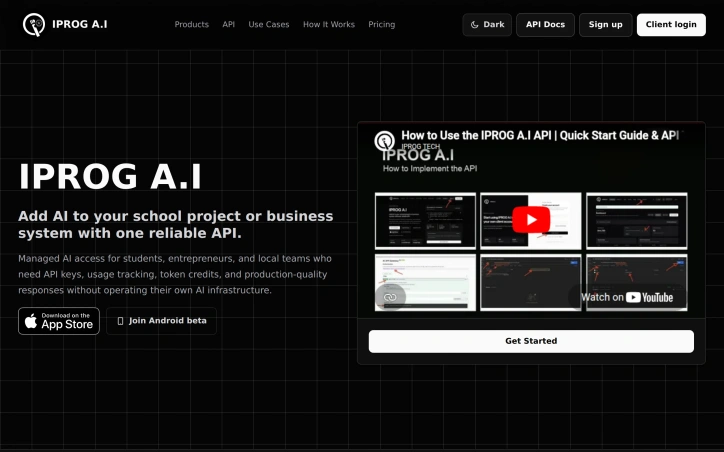
Managed access to AI infrastructure is a significant hurdle for students, entrepreneurs, and local teams looking to integrate AI into their projects. IPROG A.I addresses this challenge by providing a straightforward API that enables users to add AI capabilities to their systems without the need to operate their own AI infrastructure. The solution is designed with students and entrepreneurs in mind, simplifying the process of integrating AI into various applications, from school projects and research tools to business systems and customer support tools. What stands out about IPROG A.I is its practical approach to making AI accessible. It caters to users who need production-quality AI responses without the complexity of managing their own AI infrastructure. The API is designed to be developer-friendly, allowing users to create an account, obtain an API key, and start sending prompts and tracking token usage with ease. The product offers two main paths for integrating AI: a direct API for custom workflows and a hosted chatbot widget for websites. The API allows for full control over prompt design and response handling, making it suitable for integration into various systems, including web apps, POS, LMS, and CRM. The chatbot widget, on the other hand, enables users to embed a ready-to-use AI chatbot on their website with a single script tag, allowing visitors to ask questions based on uploaded business knowledge. Notably, IPROG A.I accommodates users who may not have access to credit cards by offering local payment options for topping up token credits. This feature, combined with its production-quality AI responses, positions IPROG A.I as a viable solution for students and entrepreneurs who want to build competitive projects. The service provides 5,000 free test tokens upon sign-up, allowing users to test the API before committing to a purchase.

Ai-infrastructure-tools
J
Jayson Presto

Managed access to AI infrastructure is a significant hurdle for students, entrepreneurs, and local teams looking to integrate AI into their projects. IPROG A.I addresses this challenge by providing a straightforward API that enables users to add AI capabilities to their systems without the need to operate their own AI infrastructure. The solution is designed with students and entrepreneurs in mind, simplifying the process of integrating AI into various applications, from school projects and research tools to business systems and customer support tools. What stands out about IPROG A.I is its practical approach to making AI accessible. It caters to users who need production-quality AI responses without the complexity of managing their own AI infrastructure. The API is designed to be developer-friendly, allowing users to create an account, obtain an API key, and start sending prompts and tracking token usage with ease. The product offers two main paths for integrating AI: a direct API for custom workflows and a hosted chatbot widget for websites. The API allows for full control over prompt design and response handling, making it suitable for integration into various systems, including web apps, POS, LMS, and CRM. The chatbot widget, on the other hand, enables users to embed a ready-to-use AI chatbot on their website with a single script tag, allowing visitors to ask questions based on uploaded business knowledge. Notably, IPROG A.I accommodates users who may not have access to credit cards by offering local payment options for topping up token credits. This feature, combined with its production-quality AI responses, positions IPROG A.I as a viable solution for students and entrepreneurs who want to build competitive projects. The service provides 5,000 free test tokens upon sign-up, allowing users to test the API before committing to a purchase.

IPROG A.I preview

Key features

  • API Integration: Enables users to add AI capabilities to their systems without operating their own AI infrastructure
  • Chatbot Widget: Allows users to embed a ready-to-use AI chatbot on their website with a single script tag
See full listing
AISA

The need for accurate AI skills assessment is growing as companies increasingly integrate AI into their operations. Traditional methods of evaluating AI proficiency, such as multiple-choice quizzes, often fall short because they don't accurately reflect real-world AI usage. AISA addresses this issue by providing a conversational AI literacy test that measures how individuals actually use AI. What stands out about AISA is its interactive approach, engaging users in a twenty-minute conversation with Aisa, an AI interviewer that adapts to the user's role and experience. This conversation is evaluated in real-time by a second AI, which scores the user's strengths, gaps, and growth path across five dimensions. The result is a personalized report, including a persona classification, dimension scores, and a prioritized learning plan, culminating in a certificate that can be added to LinkedIn in one click. AISA's key features include its conversational assessment, a deep report that provides detailed insights into a user's AI skills, and a global AI skills leaderboard that allows users to compare their abilities with others. Additionally, AISA offers personalized AI coaching on WhatsApp, with daily lessons tailored to the user's assessment results. The platform is geared towards individuals looking to demonstrate their AI proficiency and towards teams and hiring managers seeking to assess their workforce's AI readiness. Notably, AISA provides its AI certification online for free, with no requirement for prior courses or training programs. The certification is derived directly from the conversational assessment, making it a unique and efficient way to validate AI skills. While AISA's pricing model for its additional features and services for teams is not explicitly detailed, the core AI certification assessment is free, making it an accessible entry point for individuals and organizations.


Ai-metrics-and-evaluation
O
Ozan Dagdeviren

The need for accurate AI skills assessment is growing as companies increasingly integrate AI into their operations. Traditional methods of evaluating AI proficiency, such as multiple-choice quizzes, often fall short because they don't accurately reflect real-world AI usage. AISA addresses this issue by providing a conversational AI literacy test that measures how individuals actually use AI. What stands out about AISA is its interactive approach, engaging users in a twenty-minute conversation with Aisa, an AI interviewer that adapts to the user's role and experience. This conversation is evaluated in real-time by a second AI, which scores the user's strengths, gaps, and growth path across five dimensions. The result is a personalized report, including a persona classification, dimension scores, and a prioritized learning plan, culminating in a certificate that can be added to LinkedIn in one click. AISA's key features include its conversational assessment, a deep report that provides detailed insights into a user's AI skills, and a global AI skills leaderboard that allows users to compare their abilities with others. Additionally, AISA offers personalized AI coaching on WhatsApp, with daily lessons tailored to the user's assessment results. The platform is geared towards individuals looking to demonstrate their AI proficiency and towards teams and hiring managers seeking to assess their workforce's AI readiness. Notably, AISA provides its AI certification online for free, with no requirement for prior courses or training programs. The certification is derived directly from the conversational assessment, making it a unique and efficient way to validate AI skills. While AISA's pricing model for its additional features and services for teams is not explicitly detailed, the core AI certification assessment is free, making it an accessible entry point for individuals and organizations.

AISA preview

Key features

  • Conversational Assessment: measures AI skills through a conversation with an AI interviewer
  • Deep Report: provides detailed insights into a user's AI skills across five dimensions
See full listing
Noro AI

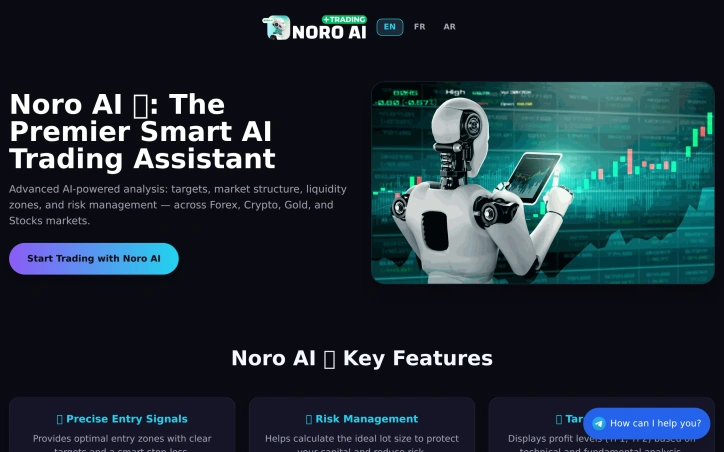
For traders seeking to make informed decisions across various markets, Noro AI offers a sophisticated artificial intelligence-powered trading assistant. At its core, the platform addresses the complexities of manual analysis and risk management, aiming to simplify the trading process. The target audience is serious traders operating in Forex, Crypto, Gold, and Stocks markets who require advanced tools to refine their trading strategies. One standout aspect of Noro AI is its comprehensive approach to market analysis, covering market structure, liquidity zones, and momentum to provide precise entry and exit signals. The AI-driven analysis is bolstered by features such as smart stop-loss and take-profit targets, risk management calculators, and trend analysis, which collectively enable traders to make data-driven decisions. The platform's ability to understand market context and detect liquidity zones further enhances its analytical capabilities. The platform's key features include instant alerts for potential trend reversals, ultra-low latency alerts for timely notifications, and continuous weekly updates to ensure maximum performance. Additionally, Noro AI prioritizes security and privacy, employing full encryption to safeguard user data. Noro AI operates on a tiered pricing model, with options ranging from a monthly subscription of $499 to a one-time lifetime payment of $7,499. The higher-tier plans, including the yearly and lifetime subscriptions, offer additional benefits such as 1-on-1 onboarding sessions, deep-dive weekly reports, and private wealth consultation. For select plans, professional account management is available, where expert AI and human traders manage the user's capital for optimal returns, with a profit-sharing model that aligns the interests of the user and the management team.

Ai-infrastructure-tools
M
MAELAYNIN ELMOUMENE

For traders seeking to make informed decisions across various markets, Noro AI offers a sophisticated artificial intelligence-powered trading assistant. At its core, the platform addresses the complexities of manual analysis and risk management, aiming to simplify the trading process. The target audience is serious traders operating in Forex, Crypto, Gold, and Stocks markets who require advanced tools to refine their trading strategies. One standout aspect of Noro AI is its comprehensive approach to market analysis, covering market structure, liquidity zones, and momentum to provide precise entry and exit signals. The AI-driven analysis is bolstered by features such as smart stop-loss and take-profit targets, risk management calculators, and trend analysis, which collectively enable traders to make data-driven decisions. The platform's ability to understand market context and detect liquidity zones further enhances its analytical capabilities. The platform's key features include instant alerts for potential trend reversals, ultra-low latency alerts for timely notifications, and continuous weekly updates to ensure maximum performance. Additionally, Noro AI prioritizes security and privacy, employing full encryption to safeguard user data. Noro AI operates on a tiered pricing model, with options ranging from a monthly subscription of $499 to a one-time lifetime payment of $7,499. The higher-tier plans, including the yearly and lifetime subscriptions, offer additional benefits such as 1-on-1 onboarding sessions, deep-dive weekly reports, and private wealth consultation. For select plans, professional account management is available, where expert AI and human traders manage the user's capital for optimal returns, with a profit-sharing model that aligns the interests of the user and the management team.

Noro AI preview

Key features

  • Market Analysis: Provides precise entry and exit signals by analyzing market structure, liquidity zones, and momentum.
  • Risk Management: Offers smart stop-loss and take-profit targets and risk management calculators.
See full listing
Virido

Caring for plants can be a daunting task, especially for those new to the world of indoor gardening. Forgetfulness and uncertainty often plague plant enthusiasts, leading to neglect and a lack of confidence in their ability to nurture their plants. Virido addresses this issue head-on by providing a comprehensive solution for plant care. The app is designed for anyone looking to simplify the process of caring for their plants, regardless of their level of experience. What sets Virido apart is its reliance on AI technology to power its plant identification and care features. By taking a photo of a plant, users can instantly receive information on the plant's species, care requirements, and watering schedule. The app's AI-powered expert also offers personalized advice and diagnoses potential issues, providing users with a trusted resource for all their plant care needs. The app's features are geared towards making plant care as seamless as possible. Users can set up smart reminders to ensure they never forget to water or tend to their plants. For more advanced users, the Pro version unlocks additional tools and features, including unlimited plant identifications and access to a comprehensive plant library. For those looking to take their plant care to the next level, Virido offers a robust set of capabilities. While the specifics of the pricing model are not entirely clear, the distinction between the standard and Pro versions suggests that the app operates on a freemium model, with certain features reserved for paid users. Overall, Virido has the potential to be a valuable resource for plant enthusiasts, providing a one-stop-shop for all their plant care needs.
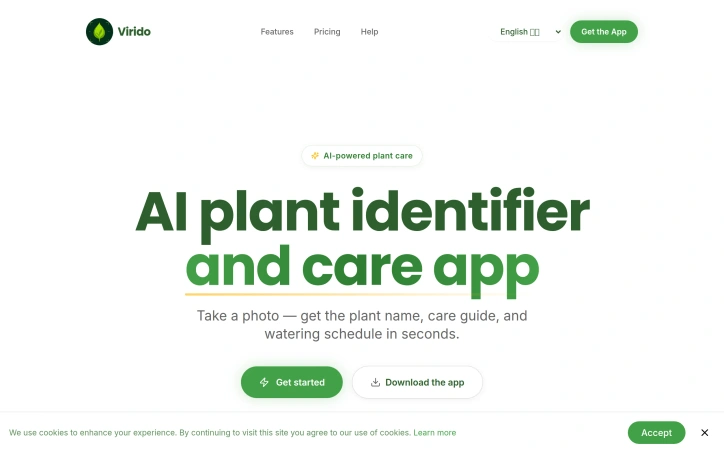
Caring for plants can be a daunting task, especially for those new to the world of indoor gardening. Forgetfulness and uncertainty often plague plant enthusiasts, leading to neglect and a lack of confidence in their ability to nurture their plants. Virido addresses this issue head-on by providing a comprehensive solution for plant care. The app is designed for anyone looking to simplify the process of caring for their plants, regardless of their level of experience. What sets Virido apart is its reliance on AI technology to power its plant identification and care features. By taking a photo of a plant, users can instantly receive information on the plant's species, care requirements, and watering schedule. The app's AI-powered expert also offers personalized advice and diagnoses potential issues, providing users with a trusted resource for all their plant care needs. The app's features are geared towards making plant care as seamless as possible. Users can set up smart reminders to ensure they never forget to water or tend to their plants. For more advanced users, the Pro version unlocks additional tools and features, including unlimited plant identifications and access to a comprehensive plant library. For those looking to take their plant care to the next level, Virido offers a robust set of capabilities. While the specifics of the pricing model are not entirely clear, the distinction between the standard and Pro versions suggests that the app operates on a freemium model, with certain features reserved for paid users. Overall, Virido has the potential to be a valuable resource for plant enthusiasts, providing a one-stop-shop for all their plant care needs.

Virido preview

Key features

  • Plant Identification: identify plants by taking a photo
  • Personalized Advice: receive tailored advice from AI-powered expert
See full listing
PromptUnit

Budget hemorrhage is the silent killer of every AI initiative that grew faster than the finance spreadsheet. PromptUnit attacks that problem head-on: it shows engineering teams exactly where their tokens bleed cash and then patches the wound without touching a line of code. Seed-stage startups accruing five-figure OpenAI bills and mid-market companies trying to rein in a mosaic of LLM providers finally have a single valve to turn. The product deploys like an analytics layer that refuses to stay passive. Once you swap one environment variable—yes, truly one—the proxy begins logging every request in “shadow mode,” generating real-time dashboards that break cost, latency and usage down by model, feature and even individual prompt type. After a couple of weeks it presents an itemized forecast: keep current behavior and pay $12,400 next month, or let PromptUnit route intelligently and pay $6,960 instead. Enablement happens with a toggle, revertible just as fast. Routing decisions are explained in English next to every call rather than buried in an inscrutable algorithm. If GPT-4o-mini can hit the quality bar for a routine summarization task, the dashboard explicitly credits the $0.07 saved; if a complex code-generation request stays on GPT-4o, the rationale is right there. Automatic failover means the proxy never becomes a single point of failure—it steps aside the moment it stumbles. GDPR residency controls and guarantees that your prompts never feed anyone else’s training set complete the enterprise hygiene checklist. PromptUnit is chargeable only on verified savings, skimmed at a flat 20% of the delta. No savings, no invoice; turning it off permanently is always one click away. That alignment of profit motive and customer thrift turns loose change into an obvious install, not another procurement debate.


Prompt-engineering-tools
‪Igal Kalnisky‬‏

Budget hemorrhage is the silent killer of every AI initiative that grew faster than the finance spreadsheet. PromptUnit attacks that problem head-on: it shows engineering teams exactly where their tokens bleed cash and then patches the wound without touching a line of code. Seed-stage startups accruing five-figure OpenAI bills and mid-market companies trying to rein in a mosaic of LLM providers finally have a single valve to turn. The product deploys like an analytics layer that refuses to stay passive. Once you swap one environment variable—yes, truly one—the proxy begins logging every request in “shadow mode,” generating real-time dashboards that break cost, latency and usage down by model, feature and even individual prompt type. After a couple of weeks it presents an itemized forecast: keep current behavior and pay $12,400 next month, or let PromptUnit route intelligently and pay $6,960 instead. Enablement happens with a toggle, revertible just as fast. Routing decisions are explained in English next to every call rather than buried in an inscrutable algorithm. If GPT-4o-mini can hit the quality bar for a routine summarization task, the dashboard explicitly credits the $0.07 saved; if a complex code-generation request stays on GPT-4o, the rationale is right there. Automatic failover means the proxy never becomes a single point of failure—it steps aside the moment it stumbles. GDPR residency controls and guarantees that your prompts never feed anyone else’s training set complete the enterprise hygiene checklist. PromptUnit is chargeable only on verified savings, skimmed at a flat 20% of the delta. No savings, no invoice; turning it off permanently is always one click away. That alignment of profit motive and customer thrift turns loose change into an obvious install, not another procurement debate.

PromptUnit preview

Key features

  • Token Cost Visibility: Real-time dashboards breaking down costs, latency, and usage by model, feature, and individual prompt type
  • Shadow Mode Deployment: Deploys with a single environment variable swap and monitors requests without touching code
See full listing
ExplainThisCode

Developers regularly encounter codebases written in unfamiliar patterns, legacy languages, or architectures outside their expertise—and the gap between code literacy and actual understanding can significantly slow productivity. ExplainThisCode targets this friction by providing AI-generated explanations of code snippets adapted to individual skill levels, eliminating the need to hunt through documentation or rely on colleagues for clarification. The product's core strength lies in its recognition that code comprehension isn't one-size-fits-all. Rather than generating a single explanation, it tailors output to the user's proficiency: beginners receive analogies and step-by-step walkthroughs, while experienced developers get architectural context and complexity analysis. This approach, powered by GPT-4 and Claude, treats understanding as a variable problem rather than a commodity feature. The tool supports eighteen programming languages, reducing barriers for polyglot teams. The interface emphasizes frictionless experimentation. Users can paste code, upload files, reference GitHub repositories directly, or integrate via API without signing up—a deliberate choice that prioritizes discovery over gatekeeping. Explanations stream token-by-token as they generate, providing immediate feedback rather than forcing users to wait for complete responses. The product bundles explanation depth (quick summaries through comparative analysis) with analysis modes focused on security vulnerabilities and performance bottlenecks, making it pragmatic for code review and auditing workflows. The API pathway is notable. Rather than positioning itself as a chat interface for code (a territory crowded with general-purpose AI assistants), ExplainThisCode frames itself as a purpose-built microservice that teams can embed into existing development tools—an architecture that acknowledges where code explanation actually happens: in IDEs, documentation platforms, and CI/CD pipelines, not in dedicated browser tabs. The pricing structure reflects this positioning. A free tier caps requests at twenty per day, sufficient for casual exploration but clearly designed to convert regular users. The Pro plan at nineteen dollars monthly grants five hundred requests daily and unlocks API access, supporting both individual developers and small teams. Enterprise contracts accommodate large organizations with custom limits, team SSO, and deployment flexibility including self-hosted options. The main limitation is scope: the tool excels at explaining what code does and highlighting potential issues, but doesn't appear to help users *refactor* or *improve* the code in place. It remains fundamentally an explanatory tool, not a development partner. That's a rational constraint—it keeps the product focused—but it leaves a logical follow-on workflow unaddressed.

Llm-developer-tools
E
Elizabeth Stein

Developers regularly encounter codebases written in unfamiliar patterns, legacy languages, or architectures outside their expertise—and the gap between code literacy and actual understanding can significantly slow productivity. ExplainThisCode targets this friction by providing AI-generated explanations of code snippets adapted to individual skill levels, eliminating the need to hunt through documentation or rely on colleagues for clarification. The product's core strength lies in its recognition that code comprehension isn't one-size-fits-all. Rather than generating a single explanation, it tailors output to the user's proficiency: beginners receive analogies and step-by-step walkthroughs, while experienced developers get architectural context and complexity analysis. This approach, powered by GPT-4 and Claude, treats understanding as a variable problem rather than a commodity feature. The tool supports eighteen programming languages, reducing barriers for polyglot teams. The interface emphasizes frictionless experimentation. Users can paste code, upload files, reference GitHub repositories directly, or integrate via API without signing up—a deliberate choice that prioritizes discovery over gatekeeping. Explanations stream token-by-token as they generate, providing immediate feedback rather than forcing users to wait for complete responses. The product bundles explanation depth (quick summaries through comparative analysis) with analysis modes focused on security vulnerabilities and performance bottlenecks, making it pragmatic for code review and auditing workflows. The API pathway is notable. Rather than positioning itself as a chat interface for code (a territory crowded with general-purpose AI assistants), ExplainThisCode frames itself as a purpose-built microservice that teams can embed into existing development tools—an architecture that acknowledges where code explanation actually happens: in IDEs, documentation platforms, and CI/CD pipelines, not in dedicated browser tabs. The pricing structure reflects this positioning. A free tier caps requests at twenty per day, sufficient for casual exploration but clearly designed to convert regular users. The Pro plan at nineteen dollars monthly grants five hundred requests daily and unlocks API access, supporting both individual developers and small teams. Enterprise contracts accommodate large organizations with custom limits, team SSO, and deployment flexibility including self-hosted options. The main limitation is scope: the tool excels at explaining what code does and highlighting potential issues, but doesn't appear to help users *refactor* or *improve* the code in place. It remains fundamentally an explanatory tool, not a development partner. That's a rational constraint—it keeps the product focused—but it leaves a logical follow-on workflow unaddressed.

ExplainThisCode preview

Key features

  • Skill-Adaptive Explanations: Tailors output by proficiency level, from beginner analogies to architectural analysis for experienced developers
  • Multi-Language Support: Supports eighteen programming languages for polyglot teams
See full listing
GetImageToPrompt

Reverse image-to-prompt conversion is becoming a critical workflow for AI artists, and GetImageToPrompt addresses this directly. The tool analyzes uploaded images and generates detailed text prompts optimized for popular generative AI models like Midjourney, Flux, DALL-E 3, and Stable Diffusion. For creators working across multiple AI platforms, this eliminates the friction of manually describing visual references or reverse-engineering prompts from images. The product targets four distinct user segments. AI artists and character designers use it to create reusable, consistent prompts across different models. Visual designers convert reference images into structured prompts for creative workflows. Marketing teams extract visual descriptions for campaigns and social media. Developers and researchers leverage the tool's JSON output for programmatic access and analysis. What sets GetImageToPrompt apart is its privacy-first positioning. Images are processed in real-time but never stored on servers, addressing the primary concern creators have when uploading visual assets to online tools. The free, unlimited access model removes friction entirely—no credits system, no sign-up requirement, no usage caps. This approach prioritizes accessibility over monetization. The feature set reflects practical needs in prompt engineering. Beyond basic image analysis, the tool extracts subject details, compositional elements, lighting effects, and artistic style tags. An OCR feature flags text elements within images, useful for designs containing typography. The prompt override functionality lets users modify outputs with natural language instructions like "make the dress yellow" or "add cinematic lighting," enabling quick iterations without re-uploading. Output flexibility matters for different workflows. The JSON prompt mode delivers structured data suitable for developers and advanced workflows, while standard text output serves artists working directly with image generators. The product also showcases gallery examples across anime, cinematic, and photorealistic styles, demonstrating consistency across output types. The website mentions optimization for specific model versions like Midjourney v6.1 and Flux 1.1 Pro, suggesting the tool maintains awareness of evolving model strengths and syntax preferences. This targeted optimization reduces the trial-and-error cycle many creators face when adapting prompts between platforms. The core value proposition is straightforward: accelerate the creative reference-to-prompt conversion process while protecting user privacy. For a market where AI-generated content creation is becoming commonplace, a free tool that removes both technical and trust barriers fills a genuine gap.

Prompt-engineering-tools
J
Javed Akhter

Reverse image-to-prompt conversion is becoming a critical workflow for AI artists, and GetImageToPrompt addresses this directly. The tool analyzes uploaded images and generates detailed text prompts optimized for popular generative AI models like Midjourney, Flux, DALL-E 3, and Stable Diffusion. For creators working across multiple AI platforms, this eliminates the friction of manually describing visual references or reverse-engineering prompts from images. The product targets four distinct user segments. AI artists and character designers use it to create reusable, consistent prompts across different models. Visual designers convert reference images into structured prompts for creative workflows. Marketing teams extract visual descriptions for campaigns and social media. Developers and researchers leverage the tool's JSON output for programmatic access and analysis. What sets GetImageToPrompt apart is its privacy-first positioning. Images are processed in real-time but never stored on servers, addressing the primary concern creators have when uploading visual assets to online tools. The free, unlimited access model removes friction entirely—no credits system, no sign-up requirement, no usage caps. This approach prioritizes accessibility over monetization. The feature set reflects practical needs in prompt engineering. Beyond basic image analysis, the tool extracts subject details, compositional elements, lighting effects, and artistic style tags. An OCR feature flags text elements within images, useful for designs containing typography. The prompt override functionality lets users modify outputs with natural language instructions like "make the dress yellow" or "add cinematic lighting," enabling quick iterations without re-uploading. Output flexibility matters for different workflows. The JSON prompt mode delivers structured data suitable for developers and advanced workflows, while standard text output serves artists working directly with image generators. The product also showcases gallery examples across anime, cinematic, and photorealistic styles, demonstrating consistency across output types. The website mentions optimization for specific model versions like Midjourney v6.1 and Flux 1.1 Pro, suggesting the tool maintains awareness of evolving model strengths and syntax preferences. This targeted optimization reduces the trial-and-error cycle many creators face when adapting prompts between platforms. The core value proposition is straightforward: accelerate the creative reference-to-prompt conversion process while protecting user privacy. For a market where AI-generated content creation is becoming commonplace, a free tool that removes both technical and trust barriers fills a genuine gap.

GetImageToPrompt preview

Key features

  • Image-to-Prompt Generation: Analyzes uploaded images and generates detailed text prompts optimized for Midjourney, Flux, DALL-E 3, and Stable Diffusion.
  • Privacy-First Processing: Images are processed in real-time but never stored on servers.
See full listing