Catalyst Healthspan Audit
Personal trainers typically sell training sessions. This startup reversed the equation by building assessment first, mak...
Launchory
We built Launchory to solve the discoverability problem for startups. Our platform offers instant approval, permanent do...
Best Knowledge base software Startups & Tools
Knowledge base software stores and surfaces answers from docs, notes, and apps. It centralizes team know‑how, speeds research, and guides builders and analysts.
Recently Listed
7 launches
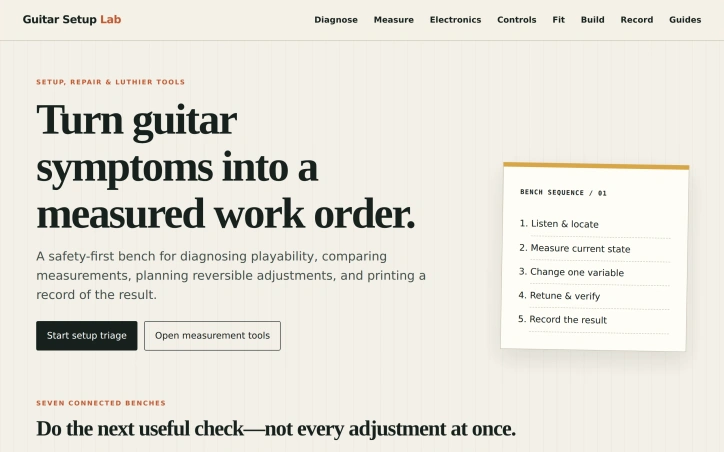
Diagnosing and repairing guitar problems systematically has long been the domain of experienced technicians working from intuition and acquired knowledge. Guitar Setup Lab transforms setup and repair work by replacing guesswork with measurement-based diagnostics, structured workflows, and documented records that reduce the risk of permanent damage to instruments. The platform organizes work around logical dependencies: stable strings and tuning come before adjusting neck relief; relief settings precede bridge action; pickup clearance follows the determined string path. This sequenced approach prevents the common mistake of adjusting multiple variables simultaneously, which obscures cause and effect. Seven interconnected diagnostic benches guide users through measurement, adjustment planning, and documentation according to this dependency chain rather than attempting every possible fix at once. The tool excels in breadth. Beyond basic playability diagnostics like fret buzz and action height, it handles specialized measurements for pickup compatibility, control hardware fit, electronics troubleshooting, and geometry planning for instrument builders. Built-in guides interpret measurements in context—converting between units, explaining what values mean for playability, and suggesting appropriate next steps. For professionals, the software generates shop-ready intake forms, quotes, job records, and condition documentation that create accountability and improve client communication. A standout feature is the geometry bench for instrument building, which calculates fret coordinates, spacing, multiscale layouts, and tremolo balance from measured physical datums. This bridges the gap between design intent and fabrication, eliminating the import errors and label misreadings that plague aftermarket component sourcing. Users can project string spread to verify pickup compatibility before ordering parts, or check control cavity geometry against manufacturer specifications. The product targets both independent guitarists managing their own instruments and professional luthiers running repair shops. Guitarists gain confidence in basic setup decisions; luthiers gain structured workflows that reduce liability and improve shop efficiency through systematic documentation. One notable aspect is the emphasis on reversibility—setup is framed as a series of measured checks and isolated adjustments rather than permanent modifications. This philosophy permeates the tool's design, from the diagnostic flow to the printed records that serve as before-and-after evidence of work completed. The offering sits at the intersection of professional tooling and accessibility, assuming users lack formal training but care about precision and process. It provides the measurement guidance, conversion logic, and decision frameworks that separate confident adjustment from guesswork.

Finding the right information quickly remains a perennial friction point for engineers and learners. Knowledge exists everywhere—scattered across documentation, Stack Overflow threads, expired blog posts, and bookmarks from years ago—but rarely in a format designed for how people actually need to use it. CheatGrid addresses this by centralizing technical and professional knowledge across 1,300 topics into a single searchable platform organized around consistent principles. The core offering centers on structured cheat sheets formatted uniformly across every topic: a concept column, paired examples, and detailed descriptions arranged by frequency of use rather than alphabetical ordering. This consistency means users learn the layout once and navigate any subject without cognitive overhead. Each sheet includes a mind map and quick index for discovering what a topic contains, from fundamental techniques to advanced patterns most references gloss over. What distinguishes CheatGrid beyond the cheat sheets themselves is its investment in retention mechanisms. Spaced-repetition flashcards present beginner-friendly explanations with concrete examples, timed to resurface just before a user would typically forget them. Practice tests layer in active recall with realistic wrong answers, multiple study modes, and explanations grounding every question. For professionals pursuing certifications, the platform bundles these three formats together for specific exams including AWS, Azure, CISSP, Security+, PMP, CFA, and CPA, aligning content to official exam domains. The breadth is notable: coverage spans programming, cloud infrastructure, AI, DevOps, data systems, security, and professional development skills, unified under one subscription. Users can star rows for personal vaults, track progress through streaks and XP systems, and jump between related concepts through cross-referenced links. The product targets two distinct audiences. For practitioners who constantly reference half-remembered concepts, the platform consolidates what would otherwise require dozens of browser tabs and context-switching across incompatible sources. For learners—whether pursuing certifications or acquiring new technical skills—the spaced-repetition and practice test features transform it from a lookup tool into an active learning system, addressing the gap between passive reading and retention. The consistent table-based structure and integrated learning features address a real workflow problem: most reference materials optimize for completeness or searchability, not for how people actually learn or reference knowledge under time pressure. CheatGrid reorganizes around those practical constraints instead.


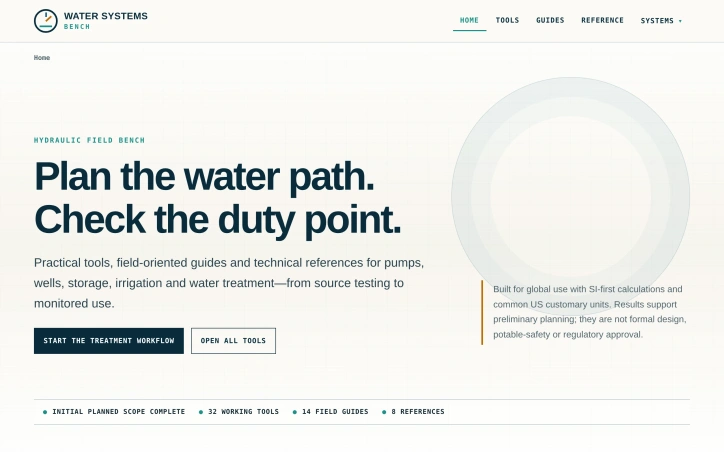
Coordinating water infrastructure decisions requires holding multiple variables in mind simultaneously. Storage affects pump requirements. Pipe diameter determines friction losses. Treatment depends on water quality results. For decades, engineers and planners have scattered these calculations across spreadsheets and disconnected tools. Water Systems Bench consolidates this landscape by modeling systems as integrated wholes rather than isolated problems. The platform addresses a specific inefficiency in planning. When one decision cascades into upstream and downstream changes, fragmentation creates blind spots. Changing pipe size requires recalculating friction and pressure. Adding treatment stages shifts system cost and power demand. The tool makes these dependencies visible by organizing work into four connected clusters: pump and pressure calculations, source and storage modeling, irrigation system design, and water quality treatment. The product delivers 32 working calculators across these domains. Users can model pump duty points, size water softeners based on measured hardness, balance reverse-osmosis flows, or interpret laboratory test reports. The interface pairs calculators with 14 field guides covering practical topics like pump curve reading and troubleshooting, plus technical references for conversions, formulas, and pipe specifications. What distinguishes this offering from generic engineering calculators is its architecture. Rather than isolated tools, the system models water flowing from source to endpoint. A designer building an irrigation system must address storage capacity first, which determines pumping duty, which affects pipe sizing and pressure requirements. This sequential logic reflects how decisions actually unfold in real planning work. The interface emphasizes transparency in methodology. Each calculator shows underlying formulas and acknowledges limitations rather than presenting results as universal truths. Documentation directs users to verify calculations against manufacturer specifications, local regulations, and site conditions. This epistemic clarity prevents misuse of tools as substitutes for professional judgment. For water infrastructure professionals managing multiple projects or advising clients on system design, the consolidated interface addresses a genuine friction point in current practice.

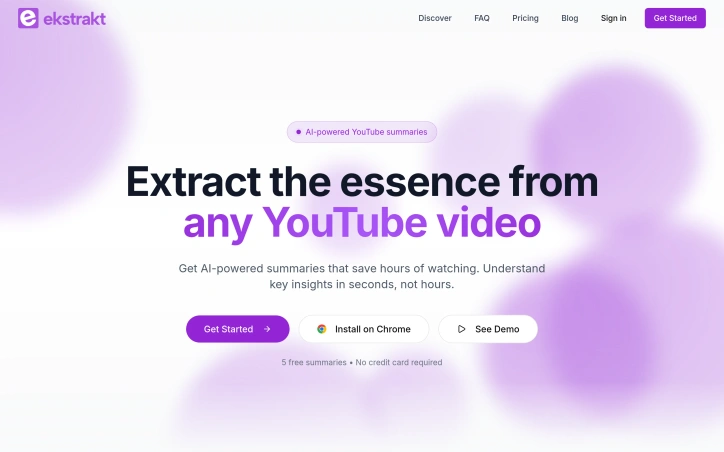
Millions of hours get consumed in video watching that nobody has time for. ekstrakt tackles this friction by offering AI-powered summaries of YouTube content, transforming lengthy videos into digestible insights. The service addresses a recognizable pain point: the two-hour lecture you need to understand, the three-hour podcast everyone's discussing but you can't fit into your week, the tutorials stuffed with filler, or the growing graveyard of saved videos you'll realistically never watch. The product distinguishes itself through flexible summary options rather than forcing viewers into a single format. Users can choose from four summary types depending on their immediate need. A quick skim mode provides the fastest overview. A detailed summary offers more comprehensive coverage. The "Straight to Answer" function targets users hunting for specific information in lengthy instructional content. The most interactive option lets users interrogate summaries by asking follow-up questions, with the system returning exact video moments and context rather than paraphrased text. Multi-language support spans 22 languages, removing the barrier of foreign-language content without requiring manual translation workflows. The platform's reach extends across web browsers, a Chrome extension that enables single-click summarization directly on YouTube, and forthcoming mobile applications. This multi-channel availability means users can engage with summaries wherever they consume content. The business model lowers friction to adoption with a free tier offering five summaries without requiring a credit card. This allows users to evaluate the service before commitment and sidesteps the common objection that summarization tools demand upfront payment for unproven value. The specifics of how summaries transition from free to paid usage remains unstated in available materials. ekstrakt competes in a growing space of video summarization tools, but its strength lies in offering user control rather than imposing a fixed output. By allowing multiple summary depths on the same content and providing query-based exploration rather than read-only text, the product acknowledges that different use cases demand different approaches. Whether someone needs a 60-second overview or wants to extract a specific claim from a 90-minute discussion, the tool adapts rather than forcing a single lens. The value proposition anchors on time savings, a compelling argument in a content-saturated world where viewers face genuine scarcity of hours. For knowledge workers, students, and anyone maintaining an aspirational backlog of educational content, ekstrakt offers a practical solution to stay informed without the time tax.

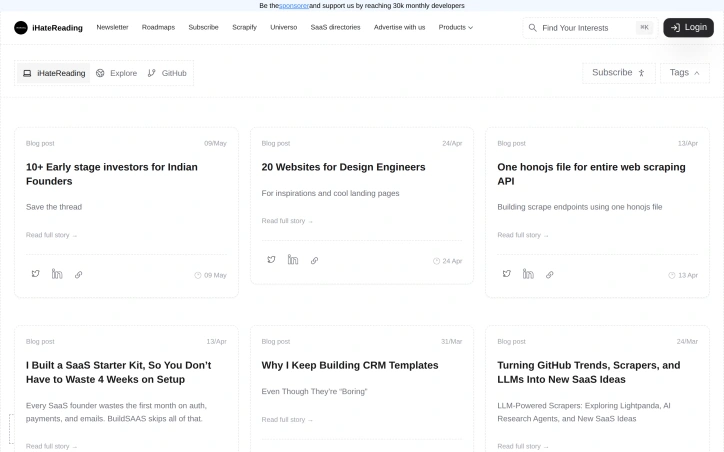
Simplifying complex concepts is a daunting task, but one that iHateReading tackles with ease. The website's mission is to make learning more accessible by deconstructing intricate topics into bite-sized, easy-to-follow guides. By doing so, it aims to alleviate the issue of information overwhelm that often plagues individuals seeking to understand how products are built. The site's approach is straightforward, presenting technical information in a clear and concise manner. The content is well-structured, allowing users to navigate through topics with ease. The idea is to empower users with a deeper understanding of complex subjects, and the site's simple, uncluttered design facilitates this goal. While still a relatively new resource, iHateReading demonstrates significant potential in making technical knowledge more approachable. Its unique value proposition lies in its ability to distill complicated information into manageable chunks. For individuals seeking to expand their knowledge without getting bogged down in technical jargon, iHateReading is a valuable resource worth exploring. With its clean presentation and focused content, it's a site that could become a go-to destination for those looking to learn without the overwhelm.
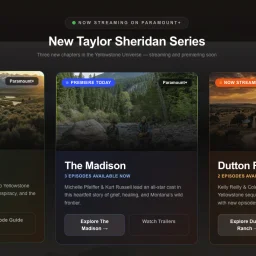
Fans of the Yellowstone universe have a comprehensive resource to dive into the complex Dutton family saga thanks to Dutton Legacy. The website solves the problem of disjointed storytelling across multiple series and timelines, providing a one-stop guide for enthusiasts to explore the complete story. By doing so, it caters to viewers seeking a deeper understanding of the Yellowstone universe, from the pioneering journey of 1883 to the modern-day struggles depicted in Yellowstone. The attention to detail on display is impressive, with in-depth analysis of key characters and events that have shaped the Dutton family's history. The website features an interactive lineage map and a timeline that spans over a century, allowing visitors to navigate the narrative chronologically. Character spotlights and analysis articles, such as the piece on Spencer Dutton's journey, demonstrate a clear dedication to helping fans grasp the nuances of the story. Notable features include episode guides, trailers, and a "Quick Q&A" section that addresses specific questions about the series, such as the accuracy of the 1923 timeline. The website also keeps visitors up-to-date with the latest developments in the Yellowstone universe, including new releases and premiere dates. By providing a centralized hub for fans to engage with the Dutton family saga, Dutton Legacy has established itself as a valuable resource for anyone invested in the world of Yellowstone. Unfortunately, the website does not provide any information about its pricing or business model. Overall, the site's comprehensive coverage and user-friendly features make it an essential destination for enthusiasts seeking to immerse themselves in the Yellowstone universe.


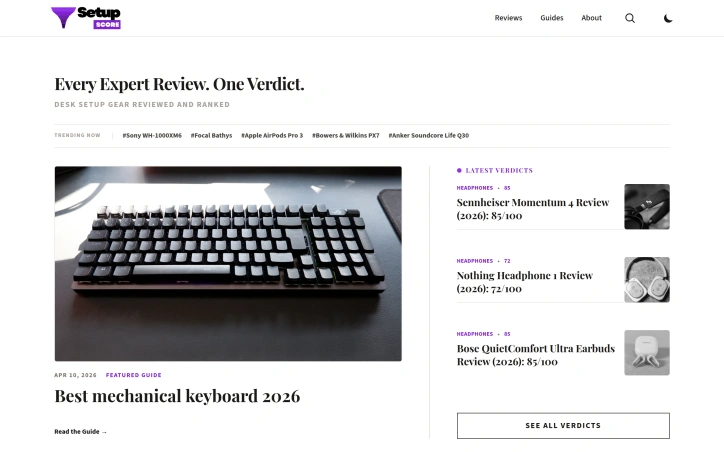
Comparison fatigue in home office equipment shopping has a new antidote. The fundamental challenge isn't locating reviews—it's reconciling them. When one reviewer praises a monitor's "vivid colors" and another lauds its "excellent color reproduction," these might describe the same attribute or entirely different aspects. Add conflicting scores across different scales, YouTube videos revealing issues nobody documented, and Reddit threads flagging compatibility problems, and a simple purchase decision becomes time-consuming detective work. SetupScore addresses this by aggregating and cross-referencing 20 to 50 independent sources per product, including expert reviews, YouTube analyses, Reddit discussions, and Amazon customer feedback. Rather than asking users to synthesize conflicting opinions, the platform produces an algorithmic score that surfaces where reviewers actually agree, where they diverge, and what trade-offs exist. The scoring is explicit about limitations and doesn't hide negative findings just because they complicate the narrative. The current catalog focuses on keyboards, monitors, and headphones—the most frequently reviewed categories in home office setups. Each product listing includes a numerical verdict alongside a breakdown showing category-specific performance and how different sources evaluated particular attributes. This matters for anyone choosing equipment for specific work like photo editing versus video production, where "good color accuracy" means different things. What distinguishes SetupScore from existing review aggregators is its stated commitment to algorithmic scoring without editorial bias or pay-for-placement arrangements. The founder built it out of personal frustration with the 15-tab review process, and the product's scope reflects that origin—narrow enough to do the cross-referencing thoroughly, broad enough to cover the most-reviewed categories. There's no pretense of completeness; instead, it acknowledges what it covers and what it doesn't. For knowledge workers who value consolidated data over editorial guidance, the value proposition is straightforward: systematized comparison without the editorial noise. SetupScore's strength lies in acknowledging a genuine pain point—not finding information, but untangling contradictory information—and building a tool explicitly designed around that problem.