Catalyst Healthspan Audit
Personal trainers typically sell training sessions. This startup reversed the equation by building assessment first, mak...
Launchory
We built Launchory to solve the discoverability problem for startups. Our platform offers instant approval, permanent do...
Best Graphic design tools Startups & Tools
Apps for UI mockups, photo editing, motion, and AI visuals.
Recently Listed
15 launches
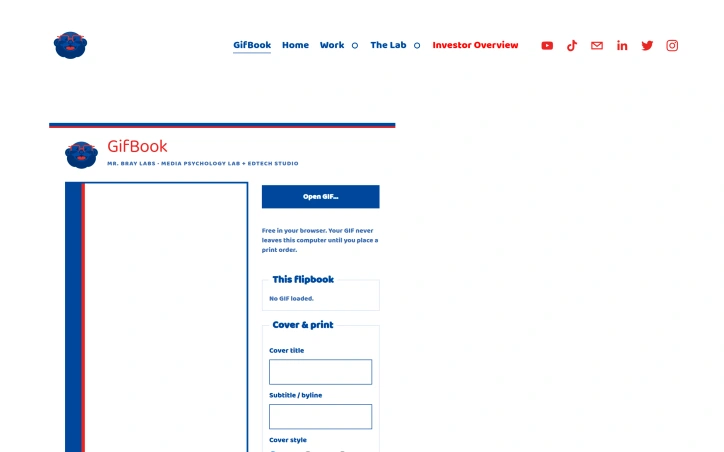
Animators and content creators who want to give their digital work a physical presence now have a straightforward solution with GifBook. The service converts animated GIFs into flipbooks that can be previewed interactively in a browser, printed at home for free, or ordered as professionally bound copies. This bridges a meaningful gap between the ephemeral nature of digital animation and the tangible appeal of physical media. The product's architecture prioritizes both accessibility and user privacy. Users upload a GIF, watch it rendered as a clickable flipbook preview, and maintain complete control over their content until they choose to order prints. The workflow emphasizes transparency through real-time mockups of the final product, reducing uncertainty about the physical outcome before committing to payment. This preview-before-purchase approach eliminates common friction points in custom printing services. Customization options cover practical branding elements: users can add cover titles, subtitles, bylines, choose cover styles and frame types, and upload custom cover images. The print layout defaults to US Letter with an eight-up configuration and includes page numbers and binding guides. All print-at-home files arrive as PDFs ready for personal printing with clearly marked crop lines and gutter specifications. The pricing model offers three tiers of commitment. The free option lets anyone generate and print PDFs at home with no cost. Mid-market customers can purchase professionally printed five-packs for 25 dollars per pack, which includes binding, shipping, and handling throughout the US and Canada. Customers can order multiple packs, supporting both small runs and larger circulation needs. The studio handles print production and quality, while Squarespace manages checkout and payment processing. The business model distinguishes itself through a three-tier approach: free accessibility lowers experimentation barriers, while the print-on-demand option monetizes through transparent per-pack pricing. The offering avoids unnecessary platform complexity, positioning itself as a utility for creators and animators rather than a feature-heavy service. The product design demonstrates an understanding of how digital animation lives separate from tactile media, and GifBook directly addresses that disconnect with economy and clarity.

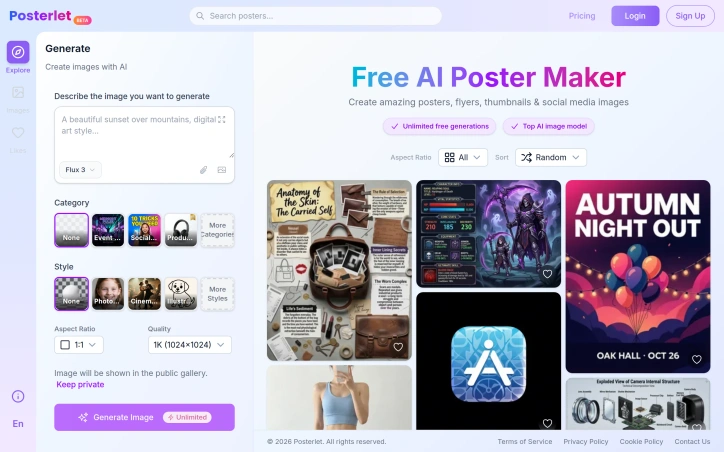
Designing marketing materials has traditionally required either hiring a professional or learning specialized tools. Posterlet addresses this friction by offering an AI-powered generation system that produces posters, flyers, thumbnails, and invitations directly from text descriptions. The target audience spans creators, small business owners, and marketers who need visual assets quickly without design expertise or budget constraints. The core appeal lies in its accessibility and zero friction entry point. Users describe what they want and select from a range of visual styles—photorealistic, cinematic, watercolor, flat vector, minimalist, and retro—before generating an image. The interface offers practical customization options including aspect ratio selection and quality settings, along with the ability to keep generations private or contribute them to a public gallery. All of this comes without any cost barrier, with unlimited free image generation available. What distinguishes Posterlet from other AI image generators is its focus on specific use cases. Rather than generic image generation, the tool provides templated categories like event flyers, social media content, and product thumbnails. This structure reduces the cognitive load for users who aren't trained in composition or design principles. The style selector transforms identical prompts across different aesthetic directions, giving users creative flexibility without requiring them to articulate complex visual parameters. The business model centers on free access with unlimited generation, banking on broad adoption and potential future monetization through premium features or API access. The public gallery option introduces a social element that could drive engagement and word-of-mouth discovery. The mention of using a top-tier AI model suggests competitive image quality, though actual output depends on how effectively users construct prompts and how well the underlying model handles the specific categories and styles offered. For anyone bootstrapping a project or managing marketing on a lean budget, the entry cost is an immediate advantage. The real measure of utility comes down to how production-ready the generated assets are out-of-the-box and whether users find the style and category options sufficiently diverse for their needs. The unlimited free tier removes all friction from trying the product.

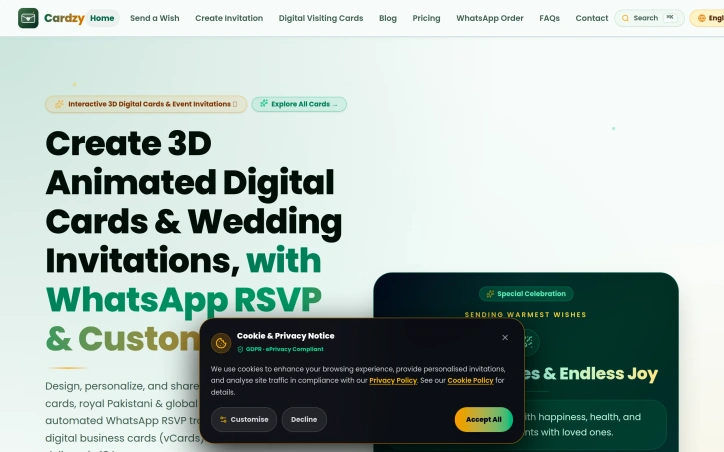
Digital greeting and invitation services have proliferated in recent years, but most treat personalization as an afterthought and rely on email or generic links as the primary delivery mechanism. Cardzy tackles a different market segment by anchoring its platform to WhatsApp and building culturally-aware templates that resonate with South Asian audiences and diaspora communities. The core problem Cardzy solves is straightforward: traditional printed cards carry shipping delays and environmental costs, while bland digital alternatives lack personality and local cultural relevance. The platform targets three overlapping user segments—anyone marking milestones like birthdays and anniversaries, couples planning weddings, and professionals seeking contactless business card alternatives. What distinguishes Cardzy from simpler card makers is its focus on interactive 3D animated designs paired with functional RSVP tracking. Users upload photos and select from over 34 celebration themes, many culturally specific to Pakistani, Middle Eastern, and Indian traditions. They synthesize background music in regional styles, write messages in 18 languages, and send invitations directly through WhatsApp, SMS, or QR code rather than forcing recipients to click external links. This creates a friction-free experience where guests confirm attendance with real-time RSVP updates flowing back to hosts. The feature set branches into three tiers. Wish cards for general greetings remain free indefinitely, removing friction for casual sharing. Event invitations unlock premium capabilities: Google Maps integration for venue details, countdown timers, customizable dress codes, and a host dashboard for tracking confirmations. Smart vCards extend the platform into corporate networking, letting professionals share digital business cards. Pricing follows a freemium model with the foundation entirely free. Users test the product with basic wish cards and multilingual support before upgrading to premium event invitations for a small fee, though specific pricing tiers remain unspecified in available materials. This removes barriers to trial while creating a clear upgrade path for events where RSVP tracking and rich customization justify spending. The execution reflects genuine market research. Supporting 18 languages and building templates around both global holidays and culturally-specific celebrations suggests the founders understand diaspora communities send cards across borders. Embedding WhatsApp rather than defaulting to email or web links shows localization thinking that transcends simple translation. Cardzy occupies an under-served niche: digital invitations optimized for South Asian celebrations, built on infrastructure those communities actually use, with pricing that starts free.
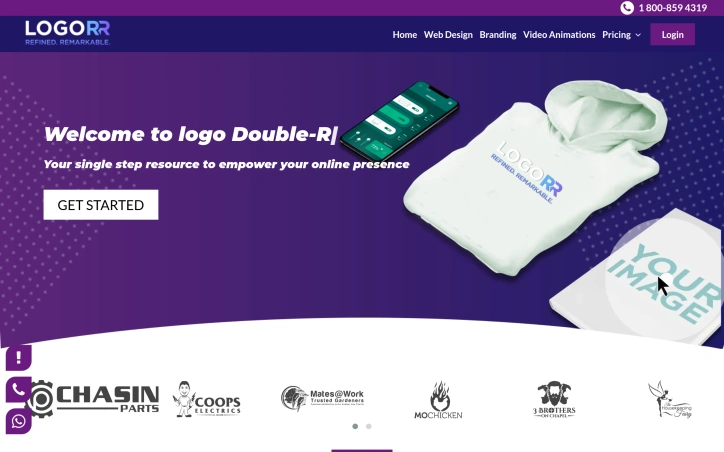
Affordability has long been the barrier keeping small businesses and startups from professional design work. Logo Double-R addresses this directly by offering custom logo design, website design, and video animation services starting at $49, positioning itself as an alternative to high-cost design agencies that price out emerging companies and solo entrepreneurs. The service targets business owners who need to establish a visual brand but operate under tight budget constraints. Rather than the multi-thousand-dollar engagements typical of traditional design firms, Logo Double-R collapses that cost barrier significantly. The founder's model centers on the premise that professional branding should not require substantial capital investment, a positioning that resonates with cost-conscious founders building from scratch. What sets the offering apart is the simplicity of the value proposition combined with a breadth of services. Most budget logo services stop at logos. Logo Double-R bundles website design and video animation into the same accessible price range, allowing customers to address multiple branding needs without piecing together vendors. The inclusion of a 100 percent satisfaction guarantee reduces perceived risk for first-time buyers uncertain about remote design services. This guarantee suggests confidence in deliverable quality and serves as a differentiator in a space where reputation matters. The company presents itself as a single-step resource for building online presence, acknowledging that most small businesses need more than a logo alone to compete digitally. The expanded service menu across design disciplines means customers can consolidate vendor relationships and reduce coordination overhead. A USA-based phone line (1-800-859-4319) provides direct contact capability, which is notable for budget service tiers that often default to email-only support. The pricing model appears constructed around volume and operational efficiency rather than boutique positioning. By standardizing packages and streamlining processes, the company achieves margins that allow aggressive pricing while maintaining profitability. This is a deliberate business choice that trades customization and hand-holding for accessibility. The primary limitation is that the scraped website content provides little insight into process quality, designer credentials, or typical turnaround times. The brand positioning emphasizes affordability and speed rather than award-winning design credentials, which is appropriate for the market segment but signals that clients should set expectations accordingly. This is a service built for businesses that need functional branding quickly and cheaply, not for those seeking design that becomes a competitive moat. For that precise audience, the offering delivers.

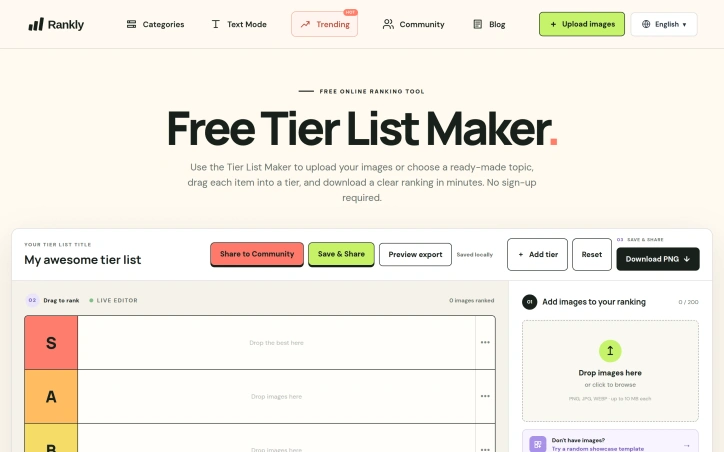
Ranking things is a universal pastime, yet the tools available for creating visually organized tier lists have historically been either cluttered with unnecessary features or hidden behind account requirements. Tier List Maker strips away the friction by delivering a straightforward, no-signup-required platform for turning ranked items into shareable images. The product targets a broad audience, from gaming enthusiasts comparing video game characters and weapons to film fans debating cinema quality to casual users ranking everyday items like fast food chains or fruits. The interface reflects a deliberate design philosophy: users can immediately start working by uploading images, selecting from a ready-made template, and dragging items into custom tier rows within a single session. What distinguishes Tier List Maker in a crowded category is its aggressive focus on simplicity. The platform accepts up to 200 images per ranking, with individual file size limits of 10 megabytes, supporting PNG, JPG, and WEBP formats. The drag-and-drop interface requires no learning curve. Most importantly, the export functionality is built in from the start—users can generate a clean PNG download of their complete ranking in minutes, making the tool genuinely fit for sharing on social media or communities. The template library demonstrates production value and market awareness. Rather than offering generic tier systems, Tier List Maker provides curated starting points across multiple niches: gaming templates for Pokémon, Genshin Impact, Honkai Star Rail, Marvel Rivals, League of Legends, and others, each pre-populated with relevant assets. Non-gaming verticals receive similar treatment, with templates for DC movies, fast food chains, and fruit nutrition comparisons. Several templates include quality-of-life features like role-based filters or searchability. The pricing structure is straightforward: the service is entirely free. No premium tier, no image upload limits requiring payment, no watermarks on exports. This approach positions Tier List Maker as a genuinely accessible community tool rather than a freemium product. The platform does carry functional constraints—templates consist of pre-populated assets rather than continuously updating, and customization depth stops at tier labels rather than extensive styling options. These boundaries reflect the core philosophy of doing one thing well. Tier List Maker succeeds because it acknowledges a genuine behavioral need, removes every obstacle between intent and completion, and delivers a polished output without asking for money or registration.

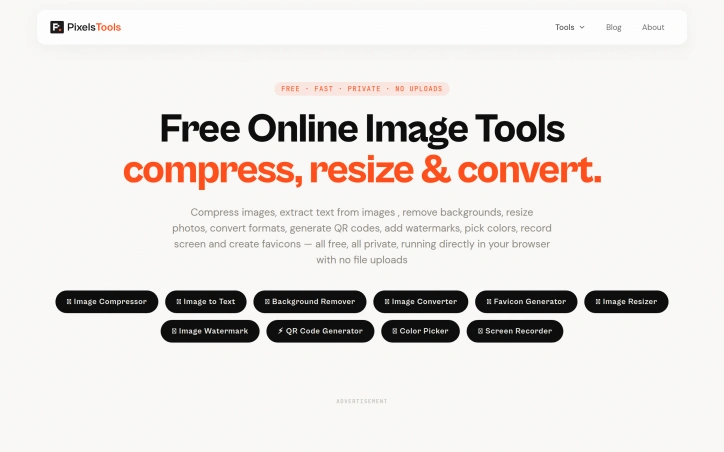
Anyone tired of uploading files to mysterious servers for simple image tasks now has an alternative. PixelTools addresses a straightforward but persistent problem: users need quick image and document processing without surrendering their files to third-party servers. The product targets anyone who handles images regularly but values privacy and speed—content creators, developers, designers, and professionals who want instant results without friction or data exposure. What distinguishes PixelTools is its execution of a privacy-first architecture. Every tool runs entirely in the browser using WebAssembly and browser APIs, eliminating the traditional server upload bottleneck. This approach delivers genuinely instant processing since computation happens locally on the user's device rather than queuing in a server pipeline. The developer behind the project built it explicitly to solve a personal frustration with existing workflows, bringing authentic motivation to the product. The current toolkit spans ten utilities: image compression, text extraction via OCR, AI-powered background removal, format conversion between PNG, JPG, and WebP, favicon generation, image resizing with preset templates, watermarking, QR code generation, a color picker for palette building, and screen recording with audio. This breadth addresses common image workflows without forcing users to juggle multiple tabs or services. The business model relies entirely on non-intrusive advertising, keeping all tools permanently free while avoiding accounts, subscriptions, or file limits. Users download or process their work without friction. This approach appeals to cost-conscious individuals and small teams who might otherwise piece together expensive software or resort to less legitimate alternatives. Technically, the product reflects solid frontend engineering. The developer brings five years of professional experience building React and Next.js applications, with demonstrated expertise in performance optimization and responsive design. That background shows in the product's interface and stability. The main limitation lies in feature scope. While the ten tools cover common tasks well, they remain fairly focused. Advanced image editing, batch operations across all tools, or custom processing pipelines remain absent. For users needing specialized functionality beyond these core utilities, more comprehensive solutions may prove necessary. PixelTools succeeds by doing one thing well: giving users fast, private image processing without requiring trust in unknown servers or payment. For that specific need, it delivers reliably.

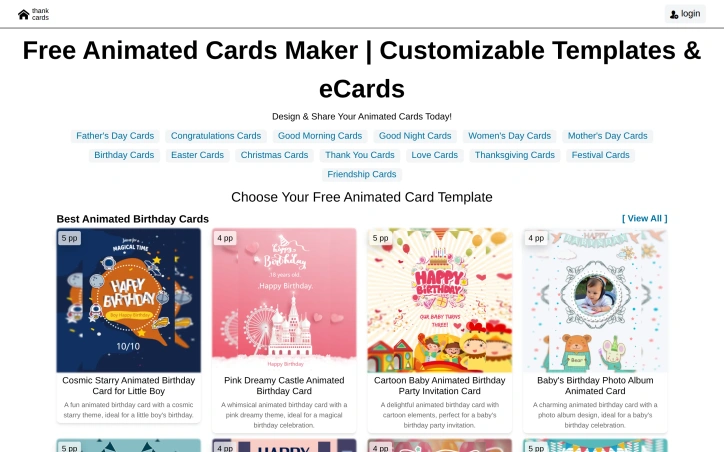
Animated greeting cards address a universal need: sending personalized, memorable messages for life's occasions. Thank Cards positions itself as an accessible solution for anyone who wants to create visually engaging cards without requiring design expertise or technical skills. The product's core offering centers on a library of pre-built animated templates spanning virtually every greeting card occasion. The template catalog ranges from birthday cards with playful themes like cosmic starry designs and cartoon elements to relationship-focused cards for anniversaries, weddings, and confessions. Seasonal options cover holidays from Christmas and Easter to Father's Day and Thanksgiving, with additional categories for friendship, gratitude, and festival celebrations. Each template includes customizable elements, allowing users to personalize their cards while maintaining polished visual results. What distinguishes Thank Cards in a crowded space is the animation layer. Rather than static designs, users create cards with built-in motion graphics, which adds visual interest and emotional resonance. This approach appeals to users seeking to stand out when delivering digital greetings, particularly valuable as physical cards decline and digital alternatives become the default. The barrier to entry is minimal. The platform eliminates design tool complexity that intimidates non-technical users. Instead of manipulating layers and learning design software, users select a template and customize predefined elements. Sharing is integrated directly into the workflow, removing another friction point. The template diversity reflects substantial content investment. The platform supports not just major holidays but granular occasions like monthly birthday greetings and specific relationship milestones. This breadth addresses users who find generic cards unsuitable for their exact situation. The platform operates as a free offering, with no explicit mention of pricing tiers or premium features. This model removes financial friction from trial and adoption, though the underlying monetization strategy remains undisclosed. For individuals and families seeking an alternative to purchased greeting cards, plus anyone wanting to send more personal digital messages without design effort, Thank Cards delivers clear value. The combination of animated templates, customization flexibility, and streamlined sharing addresses the practical need for accessible, modern greeting card alternatives.
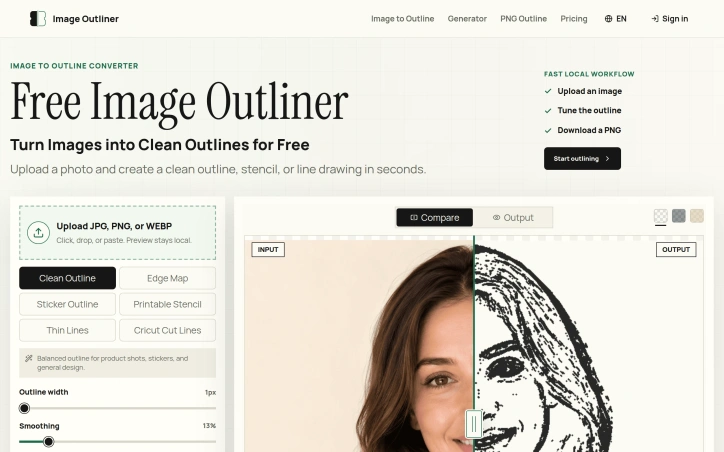
Converting images into clean, usable outlines is a task that has long plagued creatives, requiring either expensive design software or tedious manual tracing. Image Outliner addresses this issue head-on, providing a straightforward solution for individuals looking to transform their photos into crisp line drawings. The tool is designed with a specific user in mind: crafters, designers, and artists seeking to create outlines for various applications such as Cricut projects, stickers, tattoo stencils, or coloring pages. It delivers on its promise by offering a range of output styles tailored to different use cases, including clean outlines, printable stencils, and Cricut cut lines. What stands out about Image Outliner is its commitment to a fast and private workflow. The entire process, from uploading an image to downloading a PNG, occurs locally in the browser, ensuring that users' data remains private. The tool also provides a range of controls to customize the output, including stroke width, smoothing, and threshold, allowing users to fine-tune their outlines to suit their needs. Key features include the ability to upload various image formats, preview and adjust the outline in real-time, and download transparent PNGs. For users requiring a more polished result, an AI Enhance feature is available, although this comes at a cost, with one credit being used per enhancement. The product's focus on practical output is evident in its design, with features such as edge map previews and Cricut-ready outlines demonstrating a clear understanding of the needs of its target users. Overall, Image Outliner offers a valuable solution for creatives looking to simplify the process of creating clean, usable outlines from their images.

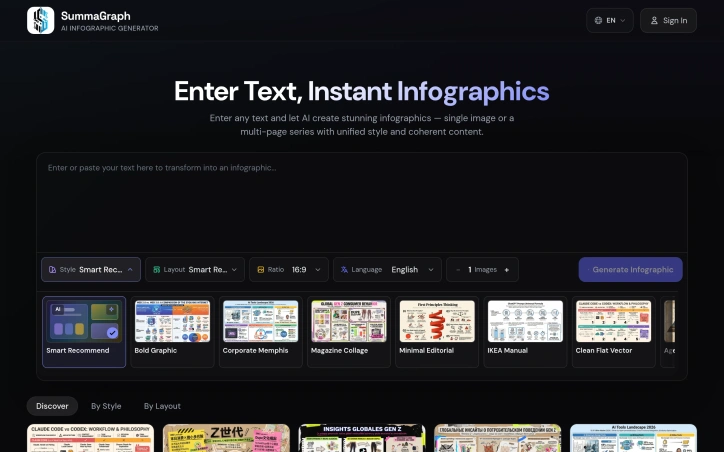
Transforming text into visually appealing infographics is a task that marketers, educators, creators, and students often struggle with, due to the need for design skills and software expertise. A new AI-powered solution addresses this challenge by enabling users to generate high-quality infographics from plain text in seconds. At its core, this product leverages artificial intelligence to read the content, understand its structure, and create a unique visual representation from scratch. This approach ensures that every output is tailored to the message being conveyed, rather than relying on recycled templates. The result is a polished and readable infographic, even when dealing with dense content. What stands out about this product is its ability to offer a high degree of customization, with 17 active visual styles and 20 layout systems that can be combined to produce 340 different combinations. The AI also provides Auto recommendations to simplify the process. Additionally, the product supports 9+ output languages, making it a versatile tool for a diverse user base. The process of creating an infographic is streamlined into three steps: pasting the text, choosing a style and layout, and publishing the visual. The product can handle various types of content, including articles, notes, and research summaries. For longer content, a Series Mode feature allows users to split it into 2-10 connected pages. Users can access the product with free starter credits, and for higher-volume usage, one-time credit packs are available in Lite and Pro options. Overall, this AI-powered infographic generator offers a powerful solution for users seeking to create professional-looking visuals without requiring extensive design experience.

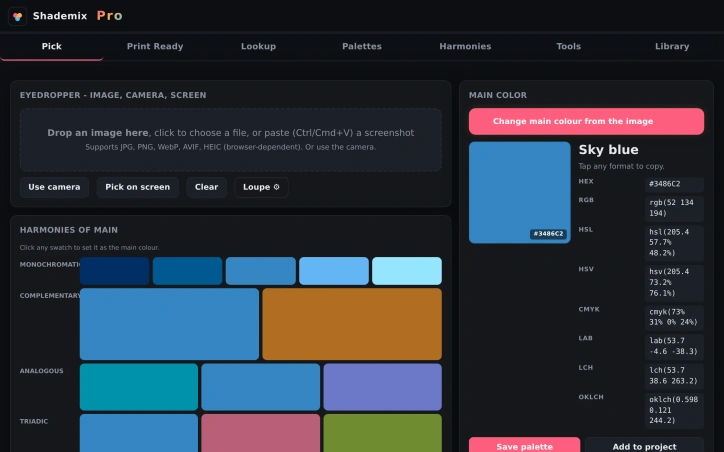
Color management is a complex task that designers face daily, particularly when working with multiple color systems such as Pantone, RAL, and NCS. Shademix addresses this challenge by providing a comprehensive, free online tool that simplifies color selection, conversion, and palette creation. The product is specifically designed for designers who need to ensure accurate color representation across different professional color libraries and require accessibility checking. What stands out about Shademix is its versatility and range of features. The tool allows users to pick colors from images, camera feeds, or screens, and supports a variety of file formats, including JPG, PNG, and WebP. The eyedropper feature offers sub-pixel precision, enabling designers to extract colors accurately. The dominant colors feature automatically generates a 25-color palette from an image, while the harmonies feature generates color schemes based on a chosen color. The product's capabilities extend beyond color picking and palette creation. It includes a range of analysis tools, such as a WCAG contrast checker, color blindness simulation, and CMYK gamut warning, which help designers ensure their color choices are accessible and suitable for different mediums. Additionally, Shademix allows users to export palettes in various formats, including CSS, SVG, and Adobe .ase, making it easy to integrate the tool into different design workflows. Notably, Shademix is available for free, with no explicit mention of a pricing model or tiered plans. The product is accessible on the web, mobile, Mac, and Vision Pro, making it a versatile solution for designers working across different platforms. Overall, Shademix is a valuable resource for designers seeking to streamline their color management processes and ensure color accuracy across different systems and mediums.

Getting a tattoo that truly represents one's personal story or emotional journey can be a daunting task, as individuals often struggle to translate their feelings into visual language. InkSoul tackles this problem head-on by harnessing the power of AI to generate unique tattoo designs inspired by users' memories and emotions. The platform is geared towards individuals seeking a meaningful and personalized tattoo experience. What sets InkSoul apart is its emotion-first AI approach, which doesn't just generate random images based on user prompts. Instead, it extracts the essence of the user's story and incorporates meaningful symbolism into every design. The three-stage conversational flow allows users to describe their memories or feelings, refine their design preferences through optional poetic questions, and then choose from high-definition design variants. Key features of the platform include its ability to generate three distinct concept directions in under five seconds, four signature styles rendered at 2048×2048 resolution, and a unique Soul Certificate that verifies the one-of-a-kind nature of each design. Users can also browse curated tattoo idea galleries with interactive mini-generators to spark their creativity. New users are offered two free credits to experience the full design quality before committing to a purchase. The platform explicitly states that designs are AI-generated for inspiration only and advises users to consult a licensed tattoo artist before getting inked. Overall, InkSoul offers a innovative solution for individuals seeking a personalized and meaningful tattoo experience, and its unique approach to AI-driven design generation makes it a compelling option for those looking to transform their emotions into art.
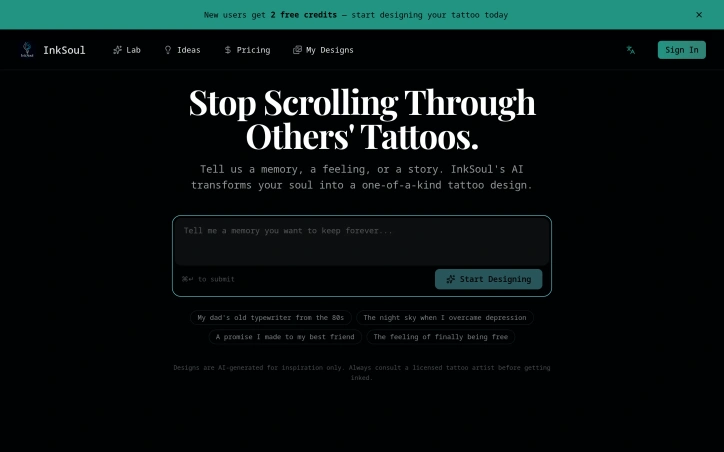
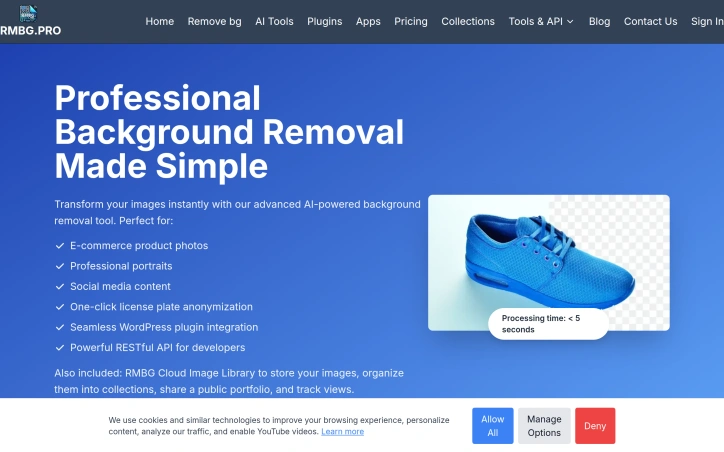
Image editing can be a tedious task, especially when it comes to removing backgrounds from photos. RMBG PRO's advanced AI-powered tool simplifies this process, making it an ideal solution for e-commerce businesses, professional photographers, and social media content creators. The platform's ability to automatically remove backgrounds from images in under five seconds is a significant time-saver, allowing users to focus on other aspects of their work. What stands out about RMBG PRO is its comprehensive suite of features that go beyond just background removal. The tool also allows users to remove watermarks and objects from images with precision, add custom background colors or images, and even upload logos or watermarks to brand their photos. The platform's batch processing capabilities and RESTful API integration make it an attractive option for businesses and developers looking to integrate background removal capabilities into their own applications. The RMBG Cloud Image Library is another notable feature, providing a centralized storage solution for processed images, allowing users to organize them into collections, share public portfolios, and track views. The seamless WordPress plugin integration is also a significant advantage for users with WordPress websites. Overall, RMBG PRO offers a robust set of features that cater to a wide range of image editing needs. Notably, the platform does not explicitly mention its pricing or business model, suggesting that users may need to explore the website further or contact the company directly to learn more about its costs and plans.

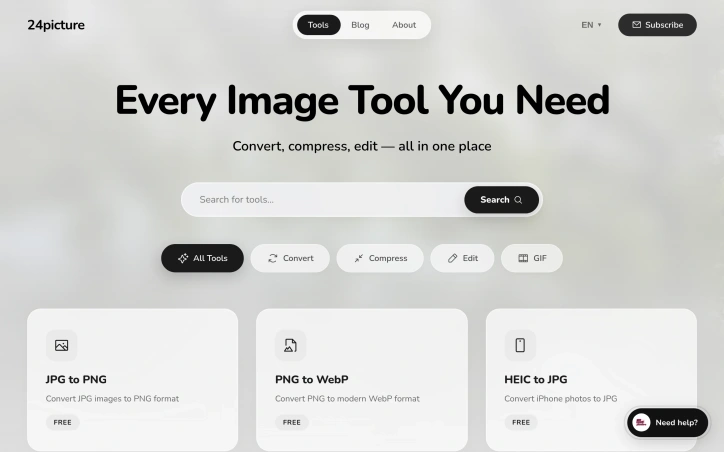
For creators seeking a comprehensive and streamlined solution for their image editing needs, 24Picture offers a robust platform that consolidates a wide range of image tools in one place. The problem of navigating multiple complicated and scattered image editing tools is a significant pain point that 24Picture aims to alleviate. By providing an all-encompassing suite of image tools, the platform caters to the diverse needs of creators worldwide. What stands out about 24Picture is its commitment to being fast, free, and powerful, making it an attractive solution for creators who require efficient and cost-effective image editing capabilities. The platform boasts over 20 professional image tools that enable users to convert, compress, and edit images with ease. The availability of AI-powered batch processing is a notable feature that enhances the platform's capabilities. Noteworthy features of 24Picture include its image conversion tools, which support a wide range of formats, including JPG, PNG, WebP, HEIC, SVG, AVIF, and TIFF. Additionally, the platform offers image compression, resizing, and cropping capabilities, as well as a full-featured image editor and a GIF maker. The presence of specialized tools like the SVG optimizer and Base64 converter further underscores the platform's versatility. The platform's blog is also a valuable resource, offering tips, tutorials, and industry insights on topics such as image compression, resizing best practices, and the benefits of using WebP. While 24Picture's pricing model is not explicitly stated, the platform is touted as being "free," suggesting that it may operate on an open-core or freemium model. Overall, 24Picture is a valuable resource for creators seeking a comprehensive and user-friendly image editing solution.
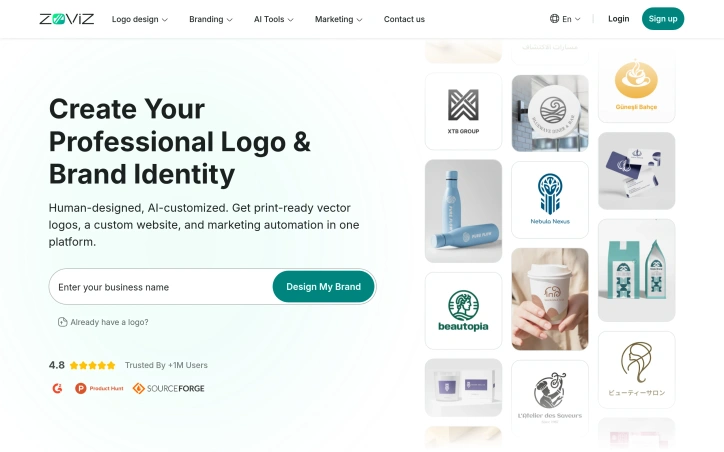
Entrepreneurs launching new brands face a sprawling toolbox problem: logo makers, design platforms, website builders, and marketing tools operate in silos, creating friction and brand inconsistency across channels. Zoviz consolidates this fragmented landscape into a single platform aimed at startups, small business owners, and teams that need to move quickly without hiring designers. The platform's core strength lies in its unified ecosystem where every asset automatically syncs with a centralized brand kit. Create a logo, and your colors, fonts, and design guidelines propagate through every downstream asset—social media graphics, business cards, websites, email signatures, and marketing materials. This eliminates the tedious manual rebranding work that plagues businesses juggling multiple tools. Feature-wise, Zoviz extends well beyond logo generation. The AI-powered logo maker draws from over one million curated icons and supports more than a hundred languages, including right-to-left scripts, making it practical for international founders. The platform also includes generators for social media video and image content, website building, posters, and what the company terms its "AI Marketing Studio"—tools for composing ad copy and campaign assets. A brand kit gets generated alongside the logo, packaging together fonts, colors, variations, and usage guidelines in a format teams or external designers can follow. The technical depth stands out: Zoviz offers a developer API for programmatic SVG logo generation, which the company claims as a unique capability. The platform has secured placement on Microsoft Azure Marketplace, signaling enterprise legitimacy. The company reports more than one million users across 190+ countries. Pricing operates on a pay-as-you-go credit model with starting points at $2, making it accessible for testing and suitable for the cash-constrained startup audience it targets. Zoviz's fundamental value proposition—consolidating branding, design, and marketing under one roof with unified brand controls—directly addresses a real workflow friction point. Whether the AI-generated assets reach the quality standards startups expect, and whether the builder interfaces deliver the promised simplicity, remains a question only hands-on testing can answer.

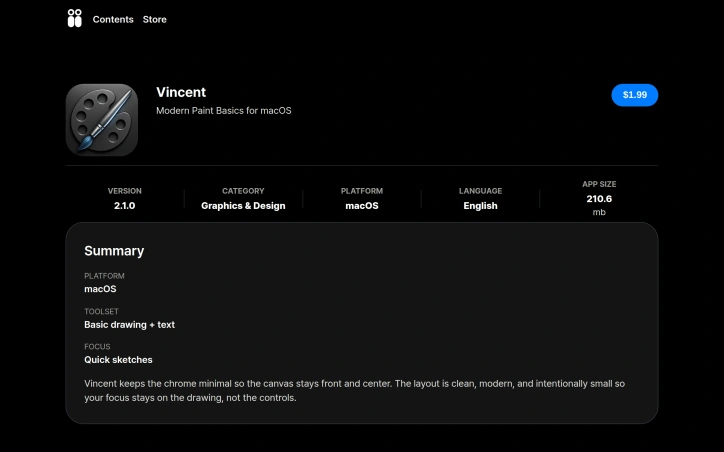
Minimalist design tools have carved out a niche for creators who value speed and clarity over feature sprawl, and Vincent carves out a distinctive position in this landscape. The macOS application is a deliberate throwback to the simplicity of MS Paint, reimagined for contemporary workflows. It targets designers, illustrators, and product teams who need to capture visual ideas quickly without the cognitive load of navigating complex menus or managing countless palettes. The core appeal rests on disciplined restraint. Rather than competing with Photoshop, Figma, or other comprehensive design suites, Vincent strips painting down to essentials: freehand drawing, fill buckets, erasing, and basic selection tools. The interface reflects this philosophy through a spacious, contemporary layout that keeps controls visible without encroaching on canvas real estate. Text tools that sit directly on the canvas allow quick annotations and labels without breaking sketching flow, and the addition of crop, rotate, and tonal adjustments in version 2.0 provides just enough image manipulation for rough asset cleanup. What distinguishes Vincent from other minimalist sketch tools is its deliberate embrace of the MS Paint metaphor. Rather than introducing novel interaction patterns, the application leans into a workflow most designers learned years ago, lowering the barrier to adoption. Someone familiar with basic paint programs can open Vincent and start working immediately. This matters when the goal is capturing ideas before they evaporate. The version history suggests thoughtful iteration. Version 2.0 sharpened the interface and expanded the toolset with text and lightweight edits, addressing the gap between quick sketching and minimal asset refinement. The current 2.1.0 represents continued polish rather than feature creep. At 210.6 megabytes, the application footprint remains lean. The business model relies on direct sales, with a GitHub repository suggesting openness to technical transparency and privacy policy documentation indicating basic compliance standards. For creators who find mainstream design tools bloated and distracting, Vincent offers a focused alternative that prioritizes intention over feature breadth. It is software that gets out of the way and trusts the canvas to be enough.