Catalyst Healthspan Audit
Personal trainers typically sell training sessions. This startup reversed the equation by building assessment first, mak...
Launchory
We built Launchory to solve the discoverability problem for startups. Our platform offers instant approval, permanent do...
Best Security software Startups & Tools
Security and privacy tools that protect apps, data, and access: threat detection, pentesting, monitoring, passwordless login, and PII vaults.
Recently Listed
18 launches
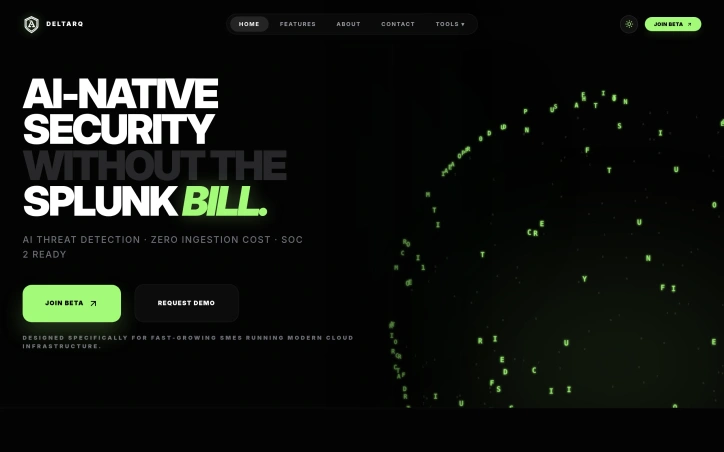
Winning enterprise deals shouldn't require an engineering team to abandon feature development for weeks of compliance busywork. Yet this exact scenario has become routine for startups seeking customers among large organizations that demand SOC 2 certification and exhaustive security questionnaires before signing contracts. DELTARQ targets this friction point with a unified platform combining AI-native threat detection, security operations automation, and compliance management designed specifically for resource-constrained technical teams. The core insight driving the product is sound: traditional security tools divide into two inadequate categories for startups. Enterprise-grade SIEM and SOAR platforms command high costs, lengthy implementation timelines, and require dedicated security personnel to manage alert noise. Compliance software delivers checklists without actually preventing breaches. DELTARQ attempts to collapse this false choice by automating both active threat detection and compliance documentation simultaneously. The product's technical differentiation centers on two commitments. First, it embeds AI throughout its architecture to function as an autonomous security engineer, identifying and blocking network threats without human intervention. Second, it operates entirely within a customer's local infrastructure rather than routing sensitive data through external cloud systems, addressing data residency concerns that often derail enterprise evaluations. For startups navigating sales processes with large customers, this architecture choice eliminates a common objection while reducing the compliance surface area. The platform consolidates three distinct functions—SIEM for log analysis and threat detection, SOAR for automated response workflows, and SOC 2 compliance automation—into a single integration point. This consolidation matters operationally: it reduces deployment complexity and tool proliferation, keeping total cost of ownership low while maintaining enterprise-grade capabilities. The compliance automation piece directly addresses the quantified pain point from the founder's experience: the ability to generate required documentation and evidence automatically rather than through manual effort substantially accelerates enterprise sales cycles. The target customer appears precisely defined: technical teams at SaaS companies that have achieved product-market fit and face enterprise sales requirements but lack dedicated security infrastructure. These organizations typically have the engineering sophistication to deploy and maintain local infrastructure but insufficient scale to justify a full security operations center. The positioning emphasizes pragmatism over comprehensiveness. DELTARQ makes an implicit acknowledgment that startups need adequate security and compliance, not maximum-sophistication security theater. For founders tired of compliance friction, the value proposition translates directly into recovered engineering velocity and shorter sales cycles.

Browser tabs containing bank logins, client files, and sensitive emails remain completely unprotected throughout the workday. Locksy solves this by adding encryption and automatic locking directly within the browser, eliminating the need for traditional password managers or manual security rituals. The product targets anyone who handles confidential information in a browser but finds existing security tools either invasive or inconvenient—remote workers, consultants, and professionals dealing with sensitive client materials fall into this category. Locksy's defining characteristic is its refusal to rely on cloud infrastructure. All encryption happens locally on the user's device, meaning data never leaves the browser itself. This architecture eliminates an entire category of risk that cloud-based competitors cannot escape: the possibility of a central breach, subpoenaed logs, or a company pivoting toward data monetization. The product functions offline, removing dependency on internet connectivity for basic security operations. Auto-locking addresses the behavioral side of security—where users fail to manually protect information. By making protection automatic rather than optional, the product closes the gap between intention and action. The company's bootstrapped foundation shapes its entire approach differently than venture-backed security startups. While competitors pile on features to justify premium subscriptions, Locksy provides free access to core functionality. This reflects confidence in the value proposition and an emphasis on removing adoption friction rather than maximizing revenue per user immediately. The founders articulate their philosophy clearly: they built Locksy out of frustration with security products that sacrifice usability in the name of safety. That focus on combining practical convenience with actual security distinguishes the positioning. Rather than attempting to replace password managers or become an identity platform, Locksy tackles one specific problem exceptionally rather than many problems adequately. The product mentions military-grade encryption, though specifics on cryptographic standards or implementation details aren't disclosed in available materials. For a security product, greater technical transparency would strengthen confidence among informed users, though the offline-first architecture already eliminates major attack surfaces that cloud competitors face. Locksy represents a meaningful attempt to solve a real problem—unprotected browser tabs—without the surveillance capitalist undertones that plague many privacy-focused tools.

Defensive security has long relied on detection and response, but most tools operate in reactive mode, alerting teams after attackers have already penetrated defenses. WraithWall inverts this logic by embedding deception infrastructure at the perimeter and inside networks, forcing adversaries to reveal their methods before they can reach critical assets. The platform orchestrates honeypots, canaries, credential lures, and BGP monitors as an integrated detection layer. Rather than generating alerts on suspicious activity, these systems capture the full behavioral signature of an attack, including tool choices, timing, payloads, and lateral movement patterns. This evidence feeds a correlation engine that links disparate sessions into campaign clusters, transforming isolated alerts into forensically sound incident narratives. What distinguishes WraithWall from traditional honeypot projects is its claim to operate as a live production system rather than an isolated research environment. The website displays real telemetry from an operational deployment, including threat counts, session captures, and canary triggers. A documented case from May 2026 illustrates this model in practice: when the Cowrie SSH honeypot detected six high-severity sessions within eight minutes, the platform correlated identical payloads and authorized keys modifications across source IPs to identify a coordinated worm campaign rather than six independent attacks. This jump from signal-to-noise reduction to campaign attribution represents the core value proposition. The platform prioritizes evidence integrity and operator transparency. Logs are marked immutable, session telemetry includes fingerprinting through JA3 hashes and HASSH profiles, and findings are mapped to MITRE tactics to improve clarity for downstream incident handlers. By design, deception engagement eliminates false positives that plague production alerts: if a canary or honeypot responds, an attacker has interacted with it, removing guesswork. The attacker journey visualization sequences this data into a coherent narrative across reconnaissance, interaction, deception engagement, correlation, and intelligence output. This staged model acknowledges that not all threats move through every phase and that correlation quality depends on capturing behavior across multiple touch points. WraithWall positions itself for security teams prioritizing attribution accuracy and forensic quality over alert volume, targeting organizations running mature incident response practices. Pricing and licensing details are not disclosed in public materials.


The proxy market operates largely on vendor claims and marketing speak, leaving buyers to guess whether they're getting true performance, quality IP pools, or real value. 5Proxy addresses this information gap by publishing independent benchmarks and comparison data for major proxy providers, targeting businesses that rely on proxies for web scraping, SEO monitoring, and social media automation. The core offering is a searchable directory that ranks and compares eight leading proxy networks—Oxylabs, Bright Data, IPRoyal, and others—across standardized metrics. Each provider receives a verified score based on speed, success rate, pool quality, and price. The site publishes detailed performance data including median latency ranging from 620ms to 1100ms across providers, IP pool size from 8 million to 191 million addresses, geographic coverage spanning 150 to 200 countries, and entry-level pricing points. What distinguishes 5Proxy from vendor websites is its transparent testing methodology. Rather than relying on provider self-reporting, the team runs their own benchmarks across a 10-region test framework, publicly assigning gold, silver, and bronze awards based on weighted performance criteria. This methodology builds credibility with buyers skeptical of marketing claims by surfacing reproducible test data. The platform's comparison table allows users to filter by proxy type—residential, mobile 4G/5G, ISP/static, or datacenter—sort by performance metrics or price, and compare providers side by side. Pricing data is normalized across providers, with entry prices ranging from $0.80 per GB to $8.40 per GB depending on the provider and proxy type selected. For the target audience, this delivers genuine utility. Web scraping teams and SEO professionals typically spend weeks testing multiple providers to understand latency tradeoffs, pool quality, and actual pricing before committing. 5Proxy compresses this research by surfacing verified performance data and side-by-side comparisons in one place. The reliance on independent testing rather than vendor claims directly counters the inflated marketing typical of the proxy market. The current limitation is scope: the ranking includes only eight providers, and smaller or emerging proxy services don't appear. For procurement teams evaluating the full proxy landscape, 5Proxy serves as a strong starting point but not an exhaustive resource. Still, for buyers choosing between established providers, it cuts through noise and delivers the transparent comparison the market lacks.

Mobile phishing campaigns have moved beyond simple email tricks. They arrive as text messages that impersonate banks, QR codes that redirect to credential-harvesting pages, notifications from seemingly trusted apps, and links embedded in screenshots shared across messaging platforms. EdgePhishGuard tackles this expanding threat surface by placing a security checkpoint directly on the user's Android device, where the decision happens fastest. The product addresses a genuine gap in mobile security. Most anti-phishing solutions operate on the server side, requiring users to upload suspicious content to cloud services before they get a verdict. EdgePhishGuard inverts this model. Its core analysis runs locally using TensorFlow Lite models that identify linguistic and structural phishing patterns without leaving the device. The approach protects privacy while reducing latency and eliminating friction. What distinguishes this tool is its breadth of input modes. Users can paste suspicious links or text directly, scan QR codes through the camera, extract URLs from screenshots via OCR, or share content from notification bars and messaging apps. This multi-modal design acknowledges how phishing actually reaches people in practice: rarely as a bare URL, often embedded in context that requires extraction or interpretation. The OCR and QR reading capabilities transform the app from a link validator into a content analyzer that handles the obfuscation tactics modern attackers use. The product doesn't attempt to make decisions for users. Instead, it surfaces the reasoning behind its risk assessment, showing detected language, identified patterns, domain reputation signals, and specific recommendations. Users can adjust the alert threshold themselves, creating a control mechanism rather than an on-off switch. This approach aligns with security best practices that favor informed decision-making over black-box automation. Support for multiple languages, with language detection routing content to the appropriate local model, suggests consideration for non-English-speaking populations who may face phishing tailored to their linguistic and cultural context. This practical detail distinguishes EdgePhishGuard from larger security platforms that often overlook regional variations in attack patterns. The absence of pricing information on the landing page leaves questions about the business model unanswered. Whether this will be free, subscription-based, or ad-supported matters to potential users considering adoption. Regardless, the local-processing architecture and transparent risk scoring represent a meaningful departure from the surveillance-heavy approach many mobile security tools take. For users skeptical of uploading sensitive information to cloud services, EdgePhishGuard offers a credible alternative.


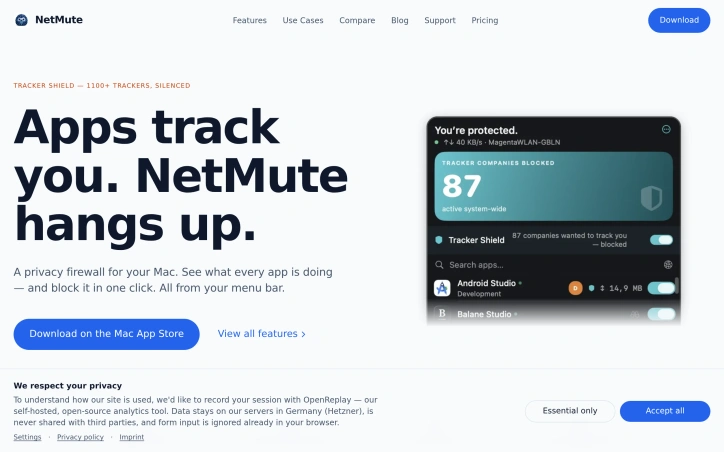
Privacy-conscious Mac users have gained a powerful ally in network management. NetMute addresses a growing frustration among computer users: the invisible background traffic that apps generate constantly, consuming bandwidth and exposing personal data without explicit permission. The core problem is straightforward but often overlooked. Most applications connect to dozens of external services—tracking pixels, analytics platforms, and advertising networks—silently transmitting data throughout your computing session. Users rarely understand the full scope of these connections or how to control them. NetMute surfaces this activity and puts the user in charge. The product offers more than simple blocking. Its Tracker Shield feature silences over 1,100 known tracking services at the network level, from advertising and analytics platforms to social media trackers and fingerprinting services. Rather than requiring users to manually identify and block individual tracking domains, a single toggle activates system-wide protection. The approach extends beyond individual tracker URLs; blocking Facebook's tracking infrastructure blocks all its subdomains automatically. Beyond tracker shielding, NetMute provides granular per-app firewall control. Users can block apps entirely from the internet or surgically disable specific endpoints while keeping others active. The application includes a privacy scoring system that rates each app based on its network behavior, helping users identify particularly intrusive software. Real-time traffic monitoring shows exactly what data flows between apps and external servers, with 90 days of searchable history stored locally on the Mac. Context-aware networking features round out the capability set. Network profiles adapt security settings based on location—stricter rules for untrusted networks like hotel Wi-Fi, looser restrictions for home networks. The software integrates with macOS Focus modes, automatically disconnecting certain apps when focus settings activate. The business model stands out for simplicity: a one-time purchase with no ongoing subscription fees. The app operates locally without requiring cloud services, meaning traffic analysis never leaves your Mac. NetMute targets privacy-focused Mac users who want transparency into app behavior and direct control over network access. It appeals to those frustrated by invisible tracking, users on limited bandwidth connections, and anyone seeking to reclaim network resources currently consumed by background activity. For this audience, NetMute transforms network management from a mysterious background process into an understandable, controllable system.

Distinguishing authentic photographs from AI-generated or manipulated content has become a critical challenge as synthetic media proliferates. PhotoProof addresses this need with an automated detection system that evaluates images for signs of artificial generation, editing, deepfaking, and other forms of manipulation. The platform targets a diverse audience: journalists and researchers verifying source material, marketplaces and platforms combating fraudulent listings, educators teaching media literacy, and individuals checking social media profiles or dating app photos. A text detector identifies AI-writing patterns, while video analysis is announced as forthcoming. What differentiates PhotoProof is its multi-layered analytical approach. Every image undergoes five complementary forensic checks: visual pattern analysis searching for synthetic textures and unnatural lighting, metadata inspection examining camera and software records, scene consistency evaluation to identify anatomical or compositional anomalies, source type classification to determine whether an image originated as a camera capture or screenshot, and recompression detection to find traces of editing or manipulation. The system trains on over ten generative models including Midjourney, DALL-E 3, Stable Diffusion, Adobe Firefly, and others. The platform prioritizes speed and privacy. Analysis completes in under 45 seconds. Files are not retained beyond necessity, and all data transfer is encrypted. Rather than presenting definitive verdicts, PhotoProof delivers probabilistic confidence scores with clear explanations of the forensic signals supporting each assessment. The company transparently acknowledges that no detection tool can identify every model with certainty, and that both false positives and false negatives occur. The business model follows a freemium structure. New users receive three free image or text checks without providing credit card information, lowering barriers to casual verification while establishing a path to paid tiers for regular users. This approach allows individuals and organizations to trial the service before committing financially. PhotoProof fills a genuine gap in digital verification for an era where synthetic media rivals authentic photography in quality and distribution speed. The service provides practical forensic analysis accessible to users without specialized expertise in digital forensics, making image verification a realistic task for journalists, investigators, marketplace operators, and concerned individuals alike.


Managing numerous software packages on macOS can be a daunting task, with multiple updates to track and install across various sources. Version Tracker addresses this challenge by providing a unified solution to monitor and update over 100,000 packages, ensuring users stay current with the latest software versions. The developer's primary goal is to simplify the update process, catering to individuals who value staying up-to-date with the latest software releases. By doing so, Version Tracker brings efficiency and security to the forefront, verifying code signing, notarization, and known vulnerabilities for every app. One of the standout aspects of Version Tracker is its comprehensive coverage of various package sources, including package managers, development runtimes, and app updaters. The app integrates data from 47 sources, encompassing Adobe Creative Cloud, npm, pip, Cargo, and many more. This breadth of coverage allows users to manage their entire software ecosystem within a single dashboard. Key features of Version Tracker include a real-time dashboard displaying outdated counts, charts, and categories, as well as one-click updates with progress tracking and auto-removal from the outdated list. The app also prioritizes security, with Apple code signing verification, notarization validation, and CVE database enrichment. Users can try Version Tracker free for 7 days, with no sign-up required. The app is signed and notarized by Apple, ensuring a secure user experience. The developer also highlights that Version Tracker is a natural replacement for MacUpdater, which is now discontinued. Overall, Version Tracker offers a robust solution for managing software updates on macOS, making it an attractive option for individuals seeking to streamline their update process.

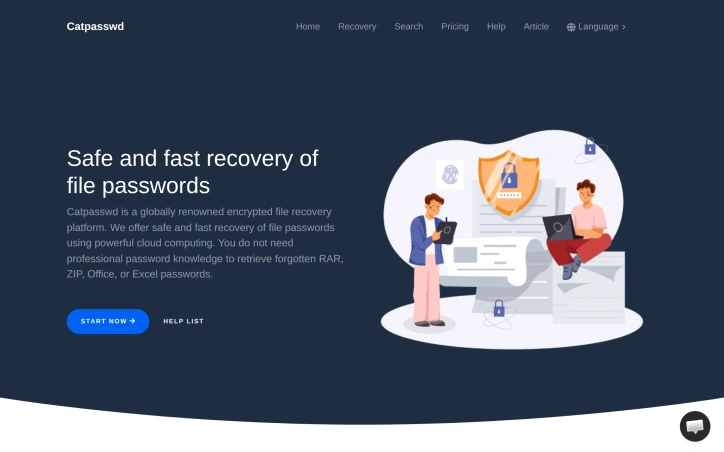
Encrypted file access loss represents a genuine problem for individuals and businesses storing sensitive data in compressed or password-protected formats. Catpasswd targets users who have forgotten passwords or lost access to RAR, ZIP, Microsoft Office, and Excel files—a surprisingly common scenario that often leaves people believing their data is permanently inaccessible. The core value proposition centers on cloud-based password recovery without requiring technical expertise. The platform maintains a database of tens of millions of password combinations, which it uses to attempt recovery matches against users' encrypted files. This crowdsourced password collection approach increases recovery success rates compared to brute-force alternatives, though it also raises implicit trust questions about how these password collections were sourced and secured. The product's standout features are its accessibility and speed. The recovery process appears straightforward enough for non-technical users, with testimonials indicating the service succeeds where other password-cracking tools fail. The existence of a free recovery mode acknowledges users in genuine need, differentiating it from competitors who monetize all recovery attempts. The platform claims to serve over 100,000 users globally, suggesting meaningful product-market fit in an underserved niche. A notable limitation is the scope restriction to specific file formats. Users needing recovery for database files, disk images, or other encrypted containers fall outside Catpasswd's coverage. The reliance on password database matching also means recovery depends on whether the password exists in the company's collection—unusual or recently created passwords may never be recovered, leaving users unaware of this constraint upfront. Pricing details remain absent from available materials. The 100,000-user metric indicates growth, though without churn or retention context it is unclear whether these represent active users or cumulative accounts created. The platform occupies a defensible position in the legitimate password recovery space, distinct from malicious credential-cracking tools. For users facing genuine file access loss, particularly with common passwords, Catpasswd offers a practical alternative to data resignation.

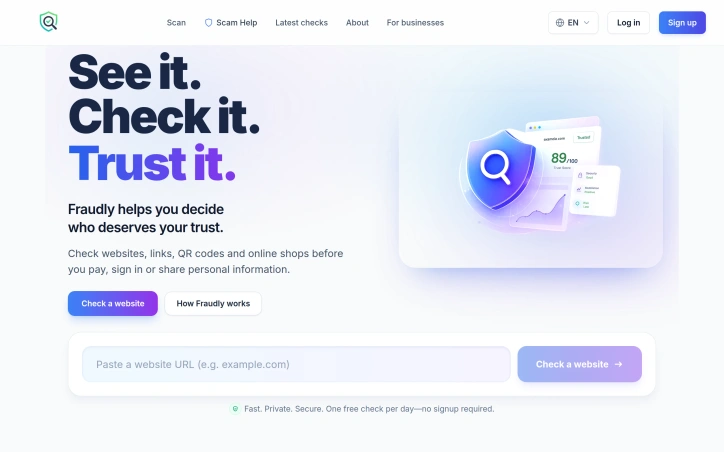
Securing online transactions before they happen addresses a real gap in consumer safety. Fraudly tackles the moment between seeing a link or storefront and deciding whether to trust it with money, credentials, or personal information. The product targets everyday internet users—shoppers, email checkers, QR code scanners, social media link-followers—who encounter suspicious websites constantly but lack reliable tools to evaluate legitimacy in seconds. The core differentiator centers on explainability. Rather than hiding behind opaque risk scores, Fraudly breaks down trust signals across specific dimensions like website safety, business reputation, and shopping intelligence. Users see the reasoning behind each assessment, enabling them to make informed judgments rather than blindly accepting automated warnings. This design philosophy extends beyond marketing; the company explicitly positions itself against unnecessary fear-mongering, acknowledging that not every website fits neatly into safe or unsafe categories. The product reaches users across multiple contexts. The web interface handles website checks with one free analysis daily, no signup required. A mobile app extends functionality to pasted links from messages and emails, QR code scanning in parking lots and cafes, and screenshot analysis—catching suspicious links embedded in images users receive. Browser extensions for Chrome and Microsoft Edge offer passive protection, warning users during normal browsing rather than forcing manual checks. Privacy forms another stated pillar. Unlike many security tools that build detailed browsing profiles, Fraudly commits to not tracking users or commercializing their activity data. This matters because trust products themselves become targets if they collect and monetize user behavior. The Trust Profile synthesizes analysis from multiple established security sources using AI, combining rather than inventing conclusions. The company positions this as stronger than manually researching across separate services. The website reveals little about accuracy rates, false positive performance, or how it handles emerging scams. A sample Trust Profile shows a four-star rating with an 84 confidence score, but public examples don't illuminate edge case handling. The free tier caps users at one daily check, which may frustrate power users or security professionals needing unlimited access. No premium pricing appears on the site. For consumers tired of making trust decisions blindly, the product delivers focused value that explains itself.

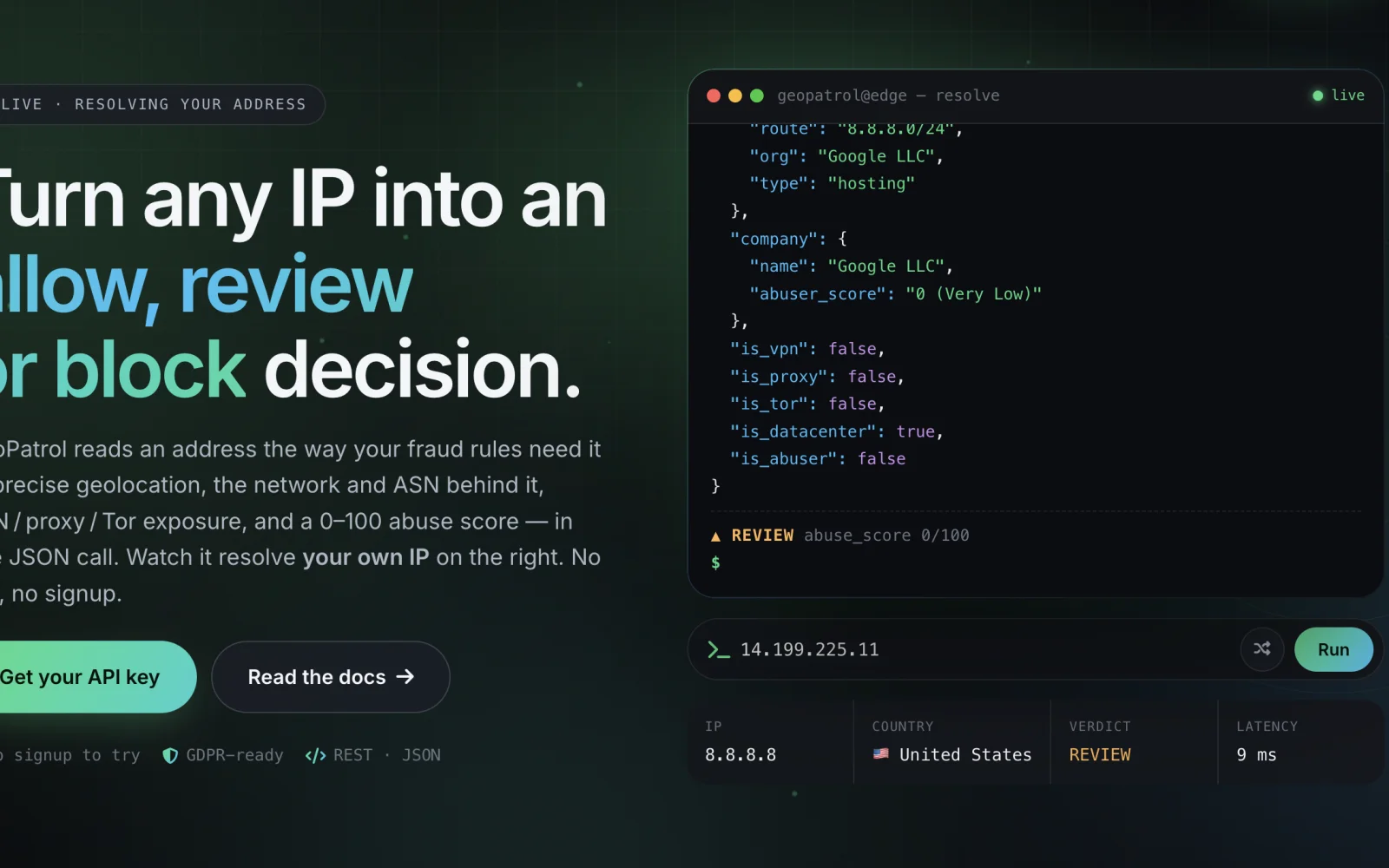
Developers and security teams need to make real-time decisions about incoming IP addresses—whether to allow a transaction, flag it for review, or block it outright. GeoPatrol simplifies this by packaging IP intelligence into a single API call that returns location, network metadata, and a risk score in under 15 milliseconds. The platform stands out through its commitment to live data assembly rather than relying on stale, precompiled databases. Instead of serving old snapshots, GeoPatrol queries routing tables, regional registries, threat feeds, and global probes on each request, then cross-references the results to produce more granular and accurate answers. Published benchmarks claim 99.6% location accuracy and responses in 12 ms at the p95, substantially faster than the 85 ms median from traditional database-driven services. The API returns over 40 data fields per lookup, compared to roughly 15 from typical alternatives. GeoPatrol's feature set is built for fraud and security workflows. Pinpoint geolocation covers city-level precision with latitude, longitude, timezone, and currency. A single 0–100 risk score condenses signals from blocklists, darknet feeds, and historical abuse patterns. Privacy detection flags VPNs, proxies, Tor exits, private relays, and datacenter IPs—critical for identifying obfuscated traffic. Network and ASN data reveal the operator and announced BGP routes behind each address. The platform supports both IPv4 and IPv6. The platform distributes queries across 42 edge nodes globally, delivering sub-15 millisecond responses backed by a 99.99% uptime SLA. The API is designed for compliance, requiring no personal data and offering GDPR-ready, versioned responses with stable field definitions. GeoPatrol operates as a cloud-based SaaS platform billed on recurring subscriptions; specific pricing is not publicly disclosed. A no-signup demo lets prospective users test resolution of their own IP without credentials, reducing friction for evaluation. The product serves businesses handling authentication, payment processing, account security, or fraud-sensitive workflows where understanding an IP's provenance and risk profile directly informs access decisions. Developers find it valuable as a pre-built alternative to assembling intelligence from multiple disparate sources or maintaining custom geolocation infrastructure.

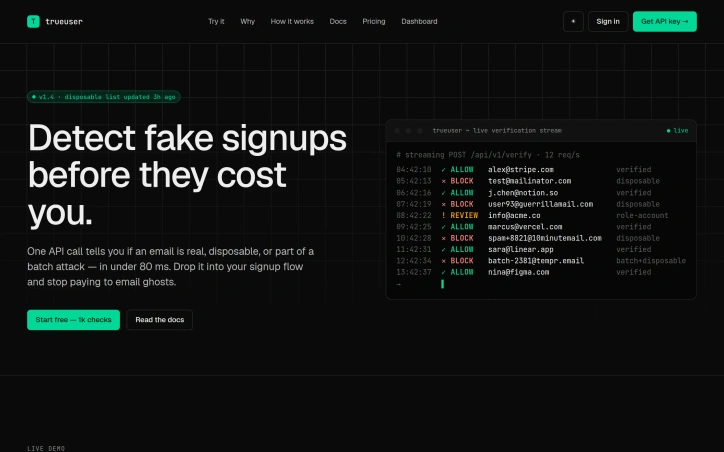
Fraudulent signups remain a persistent issue in the digital landscape, bleeding resources from businesses through unnecessary transactional emails and wasted onboarding efforts. TrueUser offers a solution to this problem with its email verification API, specifically designed for businesses suffering from fake and disposable signups. By integrating TrueUser into their signup flow, companies can verify the authenticity of user email addresses in under 80 milliseconds. What stands out about TrueUser is its comprehensive approach to email verification, checking 14 signals that include disposable domain matching, MX and SMTP probing, and batch-velocity fingerprinting. This robust verification process enables businesses to identify not only disposable email addresses but also coordinated batch signup attacks. The company's dedication to staying ahead of emerging threats is evident in its active tracking of disposable domains, with over 5,439 domains monitored and a list that is updated regularly to include new providers. TrueUser provides businesses with a flexible system, allowing them to either directly use the verdict provided by the API or create their own policy based on the raw signals returned. Every API call is streamed to the company's dashboard, facilitating replay and tuning. The live verification stream demonstrates the API's effectiveness in real-time, showcasing its ability to quickly identify and block suspicious signups. The service starts free, with 1,000 free checks available, indicating a freemium model that allows potential customers to test the API before committing to a paid plan. Overall, TrueUser presents a compelling solution for businesses seeking to mitigate the financial and operational impacts of fake signups.

Minimalism in system utilities often means hiding important information behind layers of complexity. NetDot takes the opposite approach, stripping network monitoring down to its essence: a single dot in the menu bar that vanishes when your connection drops and displays link speed when active. The product targets macOS users who need constant awareness of their network status without sacrificing screen real estate or visual simplicity. The core insight behind the design is that most people don't need comprehensive network dashboards—they need quick answers. Is my connection active? How fast is it? NetDot answers both questions instantly. Connection type appears next to the dot, whether that's Wi-Fi, Ethernet, or a VPN tunnel, so users can distinguish between network sources at a glance. The link speed readout reflects actual hardware capability rather than throughput, providing accurate information that remains constant regardless of network load. For users who need more detail, clicking the dot reveals IP address, gateway, DNS settings, and MTU values. This layered approach preserves the menu bar's elegance while offering depth for power users and network-conscious professionals who troubleshoot connectivity issues regularly. Developers, network engineers, and remote workers constitute the obvious audience, though anyone managing multiple network interfaces or VPN connections benefits from quick access to this information. The technical implementation is polished for its scope. The app runs as a universal binary across both Apple Silicon and Intel Macs, with support for macOS 13 Ventura and later. The focus on hardware link speed rather than real-time throughput is deliberately chosen—it eliminates the need for constant polling that would drain battery or CPU, keeping the utility lightweight. The design philosophy centers on removing friction from network awareness, and the execution delivers exactly that. Pricing sits at $2.99 as a one-time purchase through the Mac App Store, a straightforward model with no subscriptions or ongoing costs. The price point is accessible for individual users while not undercutting the actual value delivered. For anyone tired of pulling up System Settings or running terminal commands to check basic network status, NetDot offers a faster alternative that stays visible without being intrusive.

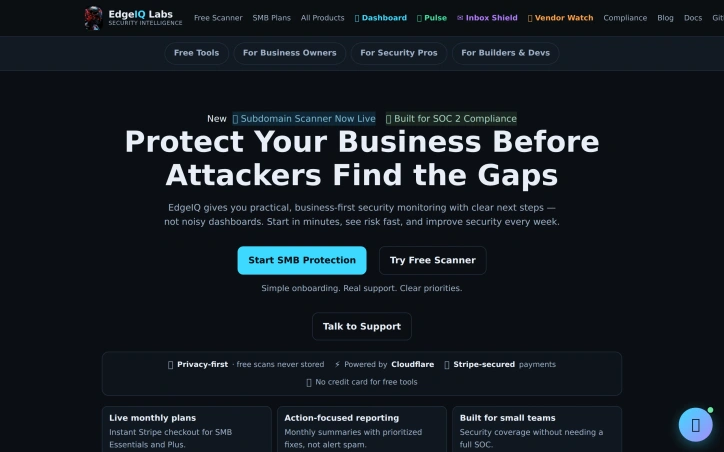
Cybersecurity is a complex and often daunting task for small businesses, which typically lack the resources and expertise to effectively protect themselves against ever-evolving threats. EdgeIQ Labs addresses this challenge by providing practical, business-first security monitoring solutions that help small businesses identify and address vulnerabilities before they can be exploited. The company's tools are designed to be easy to use, with simple onboarding and real support, making them accessible to business owners, security professionals, and developers alike. What stands out about EdgeIQ Labs is its focus on delivering lightweight, functional utilities that integrate seamlessly into existing workflows, avoiding the complexity and overhead often associated with enterprise security solutions. The company's approach prioritizes action-focused reporting, providing monthly summaries with prioritized fixes rather than alert spam, making it easier for small teams to manage their security posture. EdgeIQ Labs offers a range of free tools, including an SSL security scanner, headers analyzer, XSS quick scan, and subdomain scanner, which provide instant insights into potential security risks. For businesses requiring more comprehensive monitoring, the company offers paid plans, including SMB Essentials and Plus, with instant Stripe checkout. The free tools are complemented by a 13-step SMB cybersecurity checklist, which is available for free and provides a clear roadmap for improving security. The company's commitment to privacy-first practices is evident in its assurance that free scans are never stored, and its use of Stripe-secured payments provides an additional layer of security for transactions. Overall, EdgeIQ Labs provides a compelling solution for small businesses seeking to enhance their cybersecurity without the burden of complex and costly enterprise solutions.

In today's digital landscape, sharing sensitive information is a necessary but perilous task. Standard QR codes and plain text are ill-equipped to handle confidential data, leaving it vulnerable to breaches and unauthorized access. CryptonQR addresses this pressing issue by providing a secure and private way to share sensitive information. The platform is designed for individuals and organizations that require a high level of data protection, such as businesses handling confidential client information or individuals sharing personal data. What sets CryptonQR apart is its commitment to user privacy and security. The platform employs a zero-knowledge approach, ensuring that only the user holds the encryption key. This means that even if the platform's servers are compromised, the data remains encrypted and unreadable. The use of military-grade AES-256-GCM encryption further reinforces this promise, providing a robust defense against potential threats. The key feature of CryptonQR is its ability to generate secure, encrypted QR codes. This allows users to share sensitive information with confidence, knowing that it is protected from unauthorized access. The platform's focus on encryption and user control is a significant departure from many other tools, which often store user data on their servers, creating a single point of failure. Unfortunately, the platform's pricing and business model are not explicitly stated, leaving potential users to investigate further. Nonetheless, CryptonQR's dedication to user privacy and security makes it an attractive solution for those seeking a reliable and confidential way to share sensitive information. By putting control firmly in the user's hands, CryptonQR is redefining the way we share confidential data.

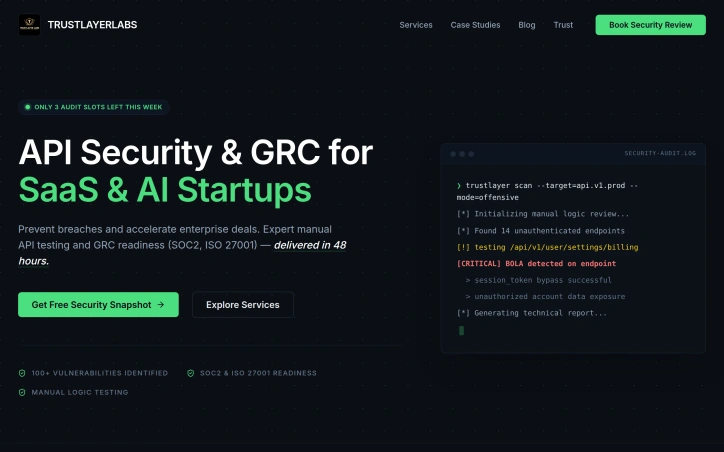
Cybersecurity is a critical concern for rapidly growing technology companies, particularly those in the SaaS and AI sectors. TrustLayer Labs addresses this need by providing expert API security testing and GRC readiness services. The company's focus is on identifying complex business logic flaws and API vulnerabilities that automated tools often miss, making it an attractive solution for startups looking to prevent data breaches and accelerate enterprise deal closures. What stands out about TrustLayer Labs is its deep offensive security expertise combined with a streamlined approach to compliance. The company's team manually hunts for vulnerabilities, rather than relying solely on automated scanning, to identify critical flaws such as Insecure Object Level Authorization and Broken Authentication Flow. This approach is particularly effective in identifying real attack paths that could lead to significant business loss. The company's services include deep manual review of REST, GraphQL, and gRPC endpoints, full-spectrum penetration testing, and multi-tenant isolation and cloud configuration review. These services are designed to eliminate common vulnerabilities such as BOLA, IDOR, and broken auth flows, and to verify prevention of XSS, SQLi, and logic bypass. TrustLayer Labs has identified over 100 vulnerabilities in production systems, demonstrating its capability in detecting and addressing security gaps. The company's expertise in AI and SaaS security, combined with its compliance readiness services, makes it a valuable partner for startups seeking to build trust with their customers and accelerate enterprise deal closures. With only three audit slots left in the week at the time of writing, it's clear that TrustLayer Labs is in demand, and its services are worth considering for any startup looking to bolster its cybersecurity posture.

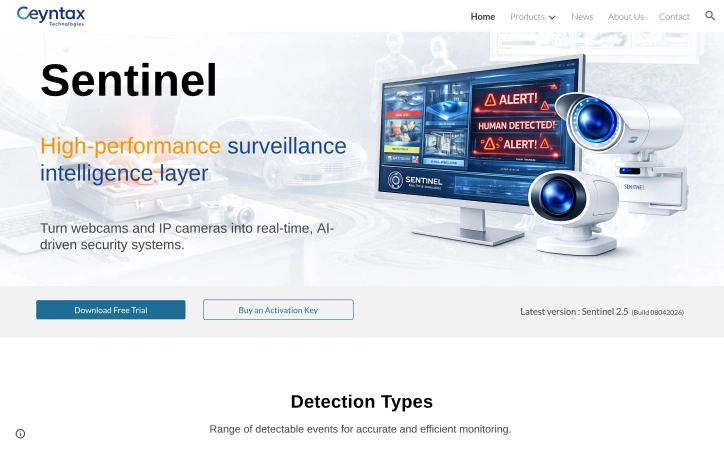
The headaches of outfitting a home or small business with enterprise-grade surveillance come down to cost, complexity, and false alarms. Sentinel neutralises all three by turning cheap webcams and IP cameras you already own into rule-based AI sentinels—no bloated NVR hardware, no recurring cloud fees, just a downloadable application that runs locally on Windows PCs. The sweet spot sits with residential caregivers, solo security managers, and lean startups that need hospital-grade vigilance without hospital-grade budgets. Where competing products flood users with generic motion bursts, Sentinel narrows the signal to highly specific events—falls, head slumps, motionless stretches, waving gestures, and even questionable neck angles—then issues instant desktop or phone alerts. Layer on top a zone painter and a human-count gate, and the software becomes context-aware, ignoring pets, rustling trees, and passing cars unless they step into a delineated area or violate a crowd count you set. Stand-out depth shows in the Care Assistance module. Fall detection and neck posture tracking are surgical counters to the two biggest risks in aged or desk-bound populations: sudden drop and long-term ergonomic injury. Add posture classification—standing, sitting, leaning, lying—and automated inactivity timers, and you have a system that doubles as a remote wellbeing nurse. These rules coexist with standard perimeter functions such as vehicle, animal, fire, face, and licence-plate recognition, each toggleable so a nursery play area can watch only for toppled toddlers while the loading dock next door worries exclusively about forklifts and tailgate thefts. Version 2.5 released April 2026 refines speed; early builds handle multiple 1080p streams without the GPU load associated with most AI diagnostics. Download the trial gratis straight from Ceynax’s site. When you decide to keep it, a one-time activation key ends the nagging—no subscriptions, no hidden camera limits, just an honest perpetual licence.

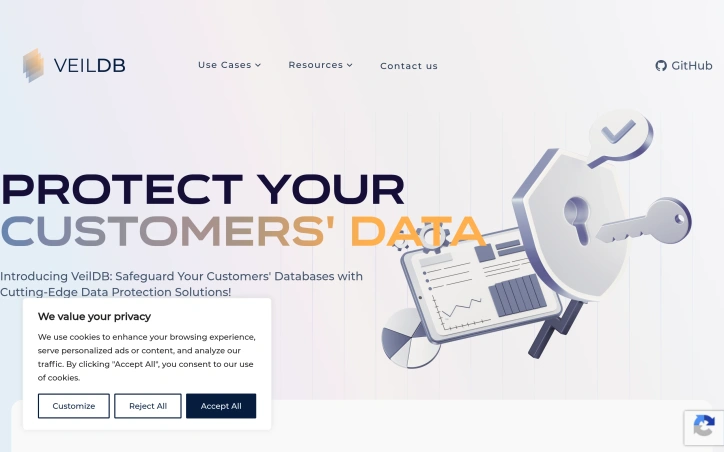
Protecting sensitive customer data during database operations remains a fundamental challenge for development teams. VeilDB addresses this by automating the process of masking and removing personally identifiable information from database backups, allowing teams to safely share sanitized copies without compromising data privacy or security. The platform targets development and QA teams that regularly need access to production-like data for testing and debugging but face compliance and privacy constraints. Rather than forcing developers to request backups from technical leads or work with artificial datasets, VeilDB enables self-service access to masked data through a straightforward workflow: connect your database, scan its contents, configure masking rules, and distribute sanitized backups to team members with appropriate access controls. What distinguishes VeilDB is its emphasis on practical usability. The platform features a visual rule builder that abstracts away technical complexity, letting teams define how to handle sensitive columns without writing code. Configuration rules can replace, update, or remove data based on user-defined parameters. The solution also introduces a scheduling system that automates backup creation and masking on a recurring basis, reducing manual intervention and ensuring teams always have access to current sanitized data. The access control model reflects a team-centric philosophy. Rather than a simple binary structure, VeilDB implements group-based permissions that allow organizations to segment database access across multiple team members with varying privilege levels. This is particularly valuable in larger organizations where developers working on different features or services require different data views. Integration appears straightforward. The platform supplies a command-line tool that developers can install locally, reducing friction compared to solutions requiring database-level modifications or complex deployment steps. The four-stage setup flow—application setup, database scanning, rule configuration, and team distribution—suggests a focus on reducing implementation complexity. One limitation evident from the available information is the absence of concrete pricing details or a published cost model. The website mentions documentation and a GitHub repository, suggesting some level of technical transparency, but specifics on whether the offering is open-source, subscription-based, or usage-metered remain unstated. Interested teams must request a demo to understand licensing terms. VeilDB occupies a practical niche in the data security landscape. For teams struggling with the tension between needing realistic data for development while maintaining privacy obligations, it offers a plausible solution that prioritizes ease of use alongside security fundamentals. The product's success will depend on how well the claimed integration simplicity holds up under real-world deployment.