#software engineering Startups & Tools
Discover the best software engineering startups, tools, and products on SellWithBoost.

Repetitive operational work drains resources and costs businesses money. Companies struggle to find AI solutions that don't require extensive technical expertise or enormous budgets, leading many teams to maintain manual workflows even when automation could transform their efficiency. Axdox addresses this gap by positioning itself as a practical AI and automation firm focused on helping businesses adopt intelligent technology without complexity or prohibitive costs. The company operates across three core verticals—voice automation, workflow orchestration, and custom AI development—targeting industries like healthcare, fintech, and SaaS that stand to benefit most from operational transformation. The company's value proposition centers on three differentiators. First, it applies AI as a foundational element rather than a superficial addition, building automation into every solution. Second, it handles the entire journey from initial consultation through deployment and ongoing support, reducing friction for clients unfamiliar with AI implementation. Third, it emphasizes data-driven optimization, using analytics and testing to validate that implementations actually deliver promised results. Axdox's service portfolio spans voice agents that handle customer calls and lead qualification, n8n workflow automation for connecting disparate business tools, custom AI agents built for specific operational needs, alongside web development and digital marketing services. The company claims these solutions drive a 50 percent reduction in operational costs with ROI achievable within 90 days, though the achievability of these metrics depends heavily on client circumstances and implementation scope. What distinguishes Axdox from the crowded automation consulting space is its explicit commitment to customization. Rather than selling packaged software, the founders describe approaching each engagement by deeply understanding client processes first, then building tailored solutions. This bespoke model commands premium pricing but promises better fit than generic platforms. The company's founding narrative—bootstrapped by Shri Siva J and Kavitha L out of frustration with the gap between AI capability and practical affordability—suggests alignment with the problem it claims to solve. The emphasis on making AI empower people rather than replace them frames automation as augmentation rather than workforce displacement, a positioning that resonates with businesses cautious about AI adoption. Axdox serves businesses ready to invest in operational transformation but lacking internal AI expertise. It competes on customization and support depth rather than technology novelty, positioning itself as a strategic partner through implementation rather than a vendor of off-the-shelf tools.

Privacy-conscious Mac users have gained a powerful ally in network management. NetMute addresses a growing frustration among computer users: the invisible background traffic that apps generate constantly, consuming bandwidth and exposing personal data without explicit permission. The core problem is straightforward but often overlooked. Most applications connect to dozens of external services—tracking pixels, analytics platforms, and advertising networks—silently transmitting data throughout your computing session. Users rarely understand the full scope of these connections or how to control them. NetMute surfaces this activity and puts the user in charge. The product offers more than simple blocking. Its Tracker Shield feature silences over 1,100 known tracking services at the network level, from advertising and analytics platforms to social media trackers and fingerprinting services. Rather than requiring users to manually identify and block individual tracking domains, a single toggle activates system-wide protection. The approach extends beyond individual tracker URLs; blocking Facebook's tracking infrastructure blocks all its subdomains automatically. Beyond tracker shielding, NetMute provides granular per-app firewall control. Users can block apps entirely from the internet or surgically disable specific endpoints while keeping others active. The application includes a privacy scoring system that rates each app based on its network behavior, helping users identify particularly intrusive software. Real-time traffic monitoring shows exactly what data flows between apps and external servers, with 90 days of searchable history stored locally on the Mac. Context-aware networking features round out the capability set. Network profiles adapt security settings based on location—stricter rules for untrusted networks like hotel Wi-Fi, looser restrictions for home networks. The software integrates with macOS Focus modes, automatically disconnecting certain apps when focus settings activate. The business model stands out for simplicity: a one-time purchase with no ongoing subscription fees. The app operates locally without requiring cloud services, meaning traffic analysis never leaves your Mac. NetMute targets privacy-focused Mac users who want transparency into app behavior and direct control over network access. It appeals to those frustrated by invisible tracking, users on limited bandwidth connections, and anyone seeking to reclaim network resources currently consumed by background activity. For this audience, NetMute transforms network management from a mysterious background process into an understandable, controllable system.

Freelancers and businesses in South Africa now have a dedicated marketplace purpose-built for local talent networks and ZAR-denominated work. Aura Social addresses a genuine friction point in freelance marketwork by enabling transactions entirely in South African Rand through PayFast, sidestepping the currency conversion overhead and international banking delays that characterize competing platforms. For freelancers operating outside major talent hubs, this localization removes barriers to cash flow and makes income more predictable. The platform serves two distinct audiences: service providers offering design, development, writing, and marketing expertise who want steady work without geographic arbitrage pressure, and project owners seeking vetted talent without navigating global platforms designed for different labor markets. The core mechanism is simple—businesses post work free of charge and hire from a verified freelancer pool, while service providers build income and reputation through completed projects. Several design choices distinguish Aura Social from the broader marketplace category. The escrow protection mechanism builds confidence for both sides, particularly important when establishing trust in newer platforms. The verification layer for freelancers creates a quality signal that reduces hiring friction for businesses unfamiliar with portfolio evaluation across borders. The dual approach—accepting both project postings and service listings—accommodates different working styles, whether participants prefer discrete projects or ongoing arrangements. The platform covers necessary marketplace mechanics: project browsing, service discovery, profile building, and portfolio documentation. This breadth keeps the feature set focused without attempting to compete on ancillary services like accounting or contract templates that larger competitors offer. Pricing structure shows product discipline. The free project posting model eliminates activation friction for new businesses testing the platform. The founder emphasizes escrow protection and local currency payment, suggesting the revenue model operates on transaction fees rather than listings or membership tiers, though specific rates remain unstated. Aura Social succeeds by constraining scope to a real market gap rather than trying to be a global competitor. Local currency, domestic verification, and regional payment infrastructure are not marginal features for South African workers—they are often deal-breakers on international platforms. By solving for that specific context, the marketplace creates conditions for sustainable freelance work rather than gig economy extraction, which is a distinct value proposition in emerging markets where earning power and payment reliability matter as much as opportunity volume.

Developers who have grown weary of subscription-based AI coding assistants and the associated data privacy concerns now have an alternative. Bodega One Code addresses the issue of costly and proprietary coding tools by offering a local-first AI coding IDE that runs on the user's own hardware. What stands out about this product is its commitment to user ownership and control. By allowing users to choose their preferred large language model (LLM) and run it locally, Bodega One Code eliminates the need for reliance on third-party servers and the associated risks of data exposure. The product's air-gap mode ensures that sensitive information remains on the user's machine. The IDE itself is fully-featured, incorporating an AI chat and an autonomous agent that reviews its own work before completing tasks. Users can hand off tasks to the agent, which runs in the background on its own git worktree, allowing for parallel processing and isolated task management. The "Loops" feature enables users to automate recurring tasks, such as doc syncs and dead-code sweeps, on a scheduled basis. Notably, the product is available for download at no cost, with no forced subscriptions. Users have the flexibility to choose from over 10 LLM providers or run models locally using tools like Ollama or LM Studio. By decoupling the coding tool from subscription fees and proprietary infrastructure, Bodega One Code offers a compelling alternative for developers seeking a more autonomous and cost-effective solution. The product's design and features suggest that it is geared towards developers who value control over their coding environment and are looking for a customizable and extensible tool. By providing a local-first AI coding IDE, Bodega One Code is poised to appeal to developers who prioritize data privacy and are seeking a more flexible and cost-effective coding solution.

Automating resource changes in Windows executables after compilation remains a tedious manual process for many development teams. Resource Tuner Console addresses this gap by providing a command-line interface that enables developers to modify resources in 32- and 64-bit Windows PE files without recompiling source code. The product targets Windows engineers, build managers, and DevOps leads who need to update application resources during the final stages of their build pipeline. It particularly suits mid-sized teams at companies between 20 and 500 employees that maintain dedicated release infrastructure, as well as smaller vendors and independent developers without dedicated release engineering staff. What distinguishes Resource Tuner Console is its focus on post-build workflow automation. Rather than treating resource editing as something that must happen at compile time, the tool enables teams to modify icons, version numbers, strings, manifests, and bitmaps as a scripted step after compilation completes. This separation of concerns offers concrete benefits: teams can adapt branding or patch versioning details without touching source code or recompiling, significantly reducing turnaround time for minor updates. The tool integrates into existing build automation by accepting command-line inputs and working within batch scripts or other Windows applications. The product emphasizes speed and consistency as primary value drivers. The marketing materials claim a substantial performance advantage over traditional GUI-based resource editors, positioning it as enabling teams to move faster and reduce human error when applying changes across multiple executables. For organizations that ship multiple versions of the same application or need to customize executables for different customers or partners, the ability to template these changes and apply them automatically addresses a real workflow pain point. Resource Tuner Console serves a specific use case within Windows development rather than attempting broad appeal. Its utility concentrates on scenarios where post-build resource customization offers enough friction reduction to justify the learning curve of command-line scripting. Teams already invested in build automation and release management processes will see the clearest value. Those still relying on manual resource editing or older GUI tools will find the switch worthwhile, though the tool assumes basic comfort with scripting and Windows executable formats.

Recruiting decisions rest on incomplete information, yet most AI tools compound the problem by hiding their reasoning under a layer of polish. MindRecruiter addresses the core frustration: recruiters who want to understand why an AI system reached a particular conclusion before trusting it with a hiring decision. The product breaks this down into a two-stage thinking model. First, it surfaces raw reasoning across six structured dimensions: an initial hypothesis, underlying assumptions that might be flawed, an alternative evaluation angle, potential red flags, unexpected considerations, and a recommended next step. Only then does it synthesize these into a professional-grade conclusion suitable for documentation or stakeholder communication. The theory is sound—that gap between unfiltered reasoning and polished output contains the actual decision-making insight. The interface is designed for speed and flexibility. Users paste job descriptions, candidate profiles, or hiring scenarios directly into a web interface. A Chrome extension adds one-click analysis for LinkedIn profiles and job postings without scraping or storing data. File uploads support PDFs, Word documents, and images. The entry barrier is deliberately low: four free analyses available immediately without authentication. For extended use, the token system removes friction while maintaining privacy. Free tokens last 30 days and persist only on the user's device—no account creation, no email tracking, no data transmission. This is a genuine technical choice rather than marketing language. Every session remains local, and the company states it doesn't log or store anything, a rare commitment in an industry where data hoarding has become default practice. The ambitions here are measured rather than grandiose. MindRecruiter is explicitly positioned as a private beta experiment rather than a polished product, which signals genuine research into how AI transparency in hiring could work rather than a rush to market. It's part of a broader free suite under SKILLSINPUT.AI that includes resume generation, salary tools, and career roadmaps. What's genuinely missing are real constraints: evidence of how the reasoning holds up on complex hiring decisions, whether six dimensions exhaust all recruiting scenarios, or what the actual output quality looks like beyond template prompts. The transparency promise is the entire product—if that reasoning is shallow or misses domain-specific nuance, the tool fails immediately. For recruiters skeptical of black-box AI but willing to experiment with something genuinely transparent, this is worth testing. For those seeking a production-ready system, it's still too experimental.

Preparing for technical interviews typically forces candidates into exhausting fragmentation: hunting for relevant questions across scattered blog posts, switching to separate coding platforms for DSA practice, and hoping they can communicate their thinking clearly during the actual interview. Stack Interview consolidates this workflow into a unified, free platform targeting developers aiming for senior-level roles. The platform tackles three specific pain points head-on. Its question bank of 1,000+ scenarios focuses on modern stack technologies—React, Node.js, Next.js, MongoDB, SQL, and system design—rather than generic definitions. These are architected around realistic problems candidates encounter in interviews at top companies. The second pillar, 215+ data structures and algorithms problems, comes with live code execution directly in the browser, eliminating the friction of local setup. Rather than leaving communication to chance, the platform includes an AI-driven mock interview feature that accepts voice input, scores responses across technical depth and communication clarity, and tailors questions to a candidate's selected target company. What distinguishes Stack Interview from existing interview prep resources is its scope consolidation. Most platforms optimize for one dimension—question banks, coding environments, or interview simulation. By integrating all three with supporting analytics like weakness tracking and company-specific readiness scoring, the tool reduces context switching and cognitive load during preparation. The business model reflects an unusual commitment to accessibility: everything is available for free with no paywall. The founder, a solo developer, built this after struggling with the exact inefficiencies the platform now solves. That origin story carries weight because the product solves real friction rather than imagined problems. The platform does target a specific audience. Candidates preparing for mid-to-senior roles in full-stack development will find the most value; those pursuing other specialties or junior-level positions may find the content overscoped. The voice-based AI interview feature, while innovative, lacks published data on performance across different accents, speech patterns, or technical communication styles. For developers serious about cracking interviews at competitive companies and tired of juggling multiple preparation tools, Stack Interview represents a meaningful consolidation. Its free-forever model removes friction to trying it, and its focus on architectural thinking over trivia aligns with how serious companies actually interview senior engineers.

Developers frequently face a significant hurdle when switching between programming languages, namely finding equivalent libraries and packages. Package Pal addresses this challenge by providing a platform that instantly suggests alternatives across multiple languages. The tool is specifically designed for developers who need to migrate projects, refactor legacy services, or learn new frameworks. What stands out about Package Pal is its use of state-of-the-art AI to bridge the gap between different package ecosystems. By leveraging this technology, it enables developers to map their existing knowledge from one language to another seamlessly. The tool's ability to provide instant translations, complete with documentation URLs, installation commands, and usage examples, is particularly noteworthy. The key features of Package Pal include cross-language support for over 15 popular languages, an IDE extension that allows for in-editor package discovery, and the option to run queries client-side using a user's own Gemini API key. This last feature is especially useful for users who require higher rate limits. Additionally, the tool provides a sidebar explorer that automatically scans the active file and lists all dependencies and their alternatives in a clean tree view. Package Pal is available as a free VS Code extension, with a clear emphasis on privacy. The tool is committed to protecting user data and provides transparent information about its data collection practices and use of third-party cookies. Users have control over their data, and the option to opt out of personalized advertising is available through Google Ad Settings or aboutads.info. Overall, Package Pal is a valuable resource for developers navigating the complexities of cross-language development.

As development teams increasingly adopt AI-powered coding tools, they face a new challenge: ensuring the quality of AI-generated code. The rise of AI-assisted coding has led to faster development velocities, but often at the cost of thorough code reviews. Engineers may commit code without fully examining it, leading to abstruse bugs and lengthy debugging sessions in production. git-lrc addresses this issue by providing a solution that encourages developers to review their code at the point of commit. What stands out about git-lrc is its focus on integrating code review into the developer's existing workflow, rather than introducing a new dashboard or separate review process. By triggering AI-assisted code reviews on commit, git-lrc provides a nudge to developers to examine their code changes carefully. The tool is designed to put the developer in control, allowing them to skip or manually review and "vouch" for their changes. These review decisions are recorded in the git log, providing a record of the team's review diligence. Key features of git-lrc include its automated review triggers, manual review and vouching capabilities, and recording of review decisions in the git log. The tool is also extremely easy to set up, requiring just 60 seconds to get started. Notably, git-lrc is completely free to use, thanks to its reliance on Google Gemini's free tier, with no limits on the number of reviews. By integrating code review into the commit process, git-lrc aims to improve the quality of code and reduce production bugs. Its straightforward setup and free pricing make it an attractive option for development teams looking to enhance their code review processes.
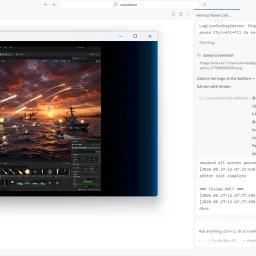
The development process is about to undergo a significant transformation with the introduction of innovative AI-powered solutions. ZeroSphere tackles a critical bottleneck in AI-driven development: execution. Current coding agents excel at generating code, but struggle with the subsequent steps, such as launching applications, interacting with software, and debugging. The company addresses this shortcoming by providing AI agents with their own isolated workspace on the user's machine, enabling them to work independently without accessing the primary desktop. What stands out about ZeroSphere is its ability to empower AI agents to take ownership of the entire development loop, from writing code to testing and iterating. The AI agent can launch applications, observe outcomes, and interact with software, freeing human developers from mundane tasks. The company's technology is built natively in Rust, ensuring native performance and zero latency overhead, even when handling massive multi-agent context states. Notably, ZeroSphere's Virtual Display Agent can see and interact with the application's UI, validating pixels, reading tables, and clicking interfaces just like a human engineer. The isolated workspace also ensures that users maintain full control of their primary desktop. The product's Bring Your Own Key (BYOK) and secure architecture allow users to integrate their own API keys without subscriptions or cloud lock-in. The company's vision is to create persistent software agents that can work on real projects over extended periods, not just respond to prompts. A demo showcases ZeroSphere successfully running a 37-hour Unreal Engine project, demonstrating its capabilities. While pricing details are not explicitly mentioned, access to the product is available directly through the website, with users able to request access for Linux or Windows. Overall, ZeroSphere has the potential to revolutionize the development process by harnessing the power of AI agents to automate complex tasks.

For developers and indie makers looking to launch their products and get discovered, Nick Launches offers a suite of tools and resources to help them succeed. The platform is designed to support those building AI products, providing practical guidance and strategic support to accelerate their launch. What stands out about Nick Launches is its focus on the AI product development community, catering to a specific niche within the broader tech landscape. The website highlights a curated list of recent product launches, showcasing a diverse range of tools and applications across categories like AI, education, content creation, and more. This suggests that the platform not only supports product launches but also fosters a community around emerging technologies. The key features of Nick Launches include its product launch services, which promise to get products in front of thousands of builders and provide a permanent backlink from a high-authority site for SEO benefits. The platform also offers a directory submission service, implying that it helps products gain visibility through targeted listings. Additionally, the website features a collection of tools and resources, including tutorials and reviews, aimed at helping developers build and launch their products more effectively. While the pricing or business model details are not explicitly stated, the platform's revenue streams can be inferred from its services. The directory submission service and product launch offerings suggest that Nick Launches generates revenue through these paid services, potentially catering to a range of budgets and needs within the developer and indie maker community. Overall, Nick Launches positions itself as a valuable resource for those looking to launch and grow their AI products, providing a combination of visibility, community, and practical support.

For web developers, digital marketers, and businesses looking to streamline their online workflows and boost their digital presence, Puspa Chaulagai offers a suite of expertly crafted online tools and applications. As a seasoned web enthusiast turned developer and SEO expert, Chaulagai has channeled his passion into creating solutions that save time and optimize digital processes. What stands out about Chaulagai's offerings is his commitment to delivering value through a blend of creativity, strategy, and technology. His tools and applications are built with a focus on clean UI/UX, SEO best practices, fast performance, and mobile-friendliness, ensuring they are not only useful but also provide a seamless user experience across various devices. Among his notable creations are the Stylish Name Maker and its AI-powered counterpart, designed to generate stylish and fancy text for gaming and social media profiles. Additionally, Chaulagai has developed a range of free online tools, including a character counter and analyzer, and an SEO meta tag generator, which cater to diverse needs such as writing, SEO, and development. Chaulagai's expertise extends beyond tool development to SEO optimization and digital marketing, where he leverages his knowledge of technical SEO, on-page SEO, and content structuring to help brands grow. His proficiency in web and app development using modern frameworks further underscores his capability to deliver robust and reliable solutions. While pricing details are not explicitly mentioned, Chaulagai does indicate his availability for consultation, suggesting a potential revenue stream through service-based offerings. Overall, Puspa Chaulagai's work is a testament to the power of self-directed learning and innovation, providing valuable resources for those navigating the digital landscape.

Inefficient last-mile delivery is a major pain point for e-commerce companies, with inaccurate addresses being the primary cause of logistics failures. Locations Code tackles this issue head-on by introducing an open standard for supply chain and last-mile delivery. The company's solution replaces traditional addressing systems with an 8-character encoding of GPS coordinates, providing a stable and secure way to identify delivery points. What stands out about Locations Code is its commitment to being open source and independent of proprietary databases or administrative frameworks. This sets it apart from competitors like What3words and Google's Plus Code, which rely on closed systems. By providing a simple, technologically validated element, Locations Code eliminates ambiguities in address descriptions, making it easier to automate logistics processes. The product's key features include its ability to work offline, ease of integration into any tech stack, and its application in various industries beyond logistics, such as robotics, drones, and IoT devices. The company provides detailed documentation, available on GitHub, YouTube, and Medium, making it easier for developers to understand and implement the solution. Locations Code is designed for businesses struggling with logistics inefficiencies, particularly those in the e-commerce sector. By adopting this open standard, companies can reduce delivery failures and associated costs, improving overall customer satisfaction. Notably, the product's open-source nature means that there are no licensing fees or proprietary restrictions, although the website does not explicitly mention pricing or business model details. Overall, Locations Code presents a compelling solution to a pressing problem, and its open and interoperable design makes it an attractive option for businesses seeking a reliable and scalable logistics solution.
Laravel artisans and JavaScript tinkerers exhausted by scattered, clickbait-laden tutorials now have a concise oasis in Digging Code. The site zeroes in on the daily friction points that slow modern web developers: relationship autoloading without the newest framework release, Arabic PDF generation in legacy PHP projects, or injecting services directly into Blade so the template layer stops feeling second-class. Each article is packaged as a drop-in solution rather than an abstract sermon, making it especially valuable for solo engineers, bootstrappers, and small agency teams who have neither time nor budget for trial-and-error. What separates Digging Code from the crowded tutorial sphere is its ruthless focus on reusable patterns. Instead of ending at “it works on my machine,” the pieces explicitly model the edge cases—such as making Eloquent’s increment method fire model events—so any fork will behave the same in CI as on localhost. The site also operates as a living package registry: over sixteen thousand developers have already spotted Filepond, Parsley-JS and lesser-known Laravel helpers listed on the same page that teaches how to use them, collapsing the usual gap between discovery and documentation. Content flows across four verticals. Laravel articles unlock internals the official docs only hint at, JavaScript how-tos bridge the vanilla-to-framework chasm, Eloquent tips turn the ORM into a precision instrument, and Blade guidance proves templates can be expressive without devolving into logic soup. Readers who want to give back are invited to add their own tips or suggest additional packages; nothing else on the page hints at paywalls, sponsorship tiers or pro upsells. The tone is thus unequivocally community-first: no ads obstruct the lessons, tracking is kept minimal, and the only transaction on offer is a newsletter opt-in that promises “fresh content delivered straight to you.” In a landscape increasingly cluttered with gated knowledge, that simplicity feels almost radical.

Cybersecurity in India's startup ecosystem is a crisis masquerading as a feature gap. With 87% of Indian SMBs operating without formal cybersecurity policies and 74% having experienced a cyberattack in the past year, the barrier isn't knowledge—it's access and affordability. Bachao.AI directly addresses this gap by automating vulnerability assessment and compliance mapping at a price point that actually fits SMB budgets. The company has identified a real arbitrage opportunity in India's security market: enterprise-grade scanning tools like Nuclei and ZAP are open source and cheap to run, but the expensive layer—human analysts interpreting findings, mapping them to regulatory frameworks, and advising on remediation—remains labour-intensive. Bachao.AI replaces that analyst tier with AI reasoning, delivering results in roughly two hours instead of weeks while undercutting traditional VAPT providers by 40–60%. The timing is precise. India's Digital Personal Data Protection Act enforcement begins May 13, 2027, with penalties up to ₹250 crore per violation. Simultaneously, the Securities and Exchange Board of India's Cyber Security & Resilience Framework mandates compliance audits across 7,500+ regulated entities. For companies in fintech, lending, healthcare, e-commerce, and regional banking—Bachao.AI's stated verticals—the product arrives at the exact moment regulation creates urgency. The feature set is comprehensive: the platform performs vulnerability assessment and penetration testing, auto-maps findings to DPDP and SEBI compliance schedules, includes phishing simulation and deepfake detection, offers dark web monitoring and cyber insurance scoring, and integrates SAST and software composition analysis. Reports are CERT-In aligned, a critical credibility signal in the Indian regulatory context. Users verify domain ownership via DNS TXT—establishing the legal authorization required under India's IT Act 2000—then receive actionable findings and remediation priorities. The first scan is free with no credit card required, lowering friction for initial adoption. The company is backed by engineers from Intuit and IDFC First Bank and holds DPDP Act certification. For an Indian SMB facing the May 2027 deadline pressure with minimal existing security infrastructure, the product's combination of automation, compliance mapping, and affordability directly solves a previously unsolved problem.

Anyone staring at a closet crammed with clothes yet feeling they have “nothing to wear” is the exact customer Selion targets. By translating every hanger, shoebox, and jewelry drawer into searchable, analyzable data, the app removes the daily decision fatigue that comes with dressing well. Fashion-conscious professionals, frequent travelers, and anyone who juggles multiple dress codes in a single week will find the app particularly useful. The standout aspect is the granularity of the AI scan. Rather than lumping garments into broad buckets like “shirt” or “jeans,” it identifies fabric, exact colorway, pattern, and seasonal suitability as soon as you snap a picture. This depth of indexing lets its engine mix and match with fewer obvious repeats and a higher hit rate of genuinely fresh combinations. The step promised next—rendering any suggested look on your own body in augmented reality—turns abstract outfits into self-evident choices before you commit fabric to skin. Day-to-day, the critical feature is the micro-routine: open the app, give it thirty seconds, walk out dressed. Users also gain a virtual travel planner that pre-loads a destination-weather appropriate capsule before the suitcase gets zipped, and a usage tracker that quietly surfaces forgotten items that deserve a second run. Among these, the “never think what to wear” promise is the boldest, because the more you rely on it, the richer your decision profile becomes—effectively turning your own closet into a living lookbook that evolves faster than seasonal trends. Pricing remains refreshingly straightforward: the core app is free on iOS and Android with no paywall descriptions in the material supplied, so the initial ramp-up cost is strictly measured in photo-taking minutes.

Bangladeshi SaaS builders finally have a stage that speaks their language. Home-grown ventures now face the daily struggle of getting noticed once they leave small chat groups and lean-meetup circles; global launchpads overflow with Silicon Valley flash and foreign celebrities, leaving local founders shouting into the void. BD SaaS Zone corrals that scattered audience into one easy-to-scan gallery, giving each product oxygen instead of noise. The directory is deliberately narrow in scope: real SaaS, mobile apps, and digital utilities that ship from Bangladesh. Every listing is curated first, which keeps the pixel-brochure clutter down to zero and ensures the feed stays focused on working products rather than pitch decks. Visitors come looking for quick inspiration, teammates, or acquisition targets; founders arrive to plant a flag and stay visible long after launch-day buzz fades. Nothing fancy or bloated: a simple search, taxonomy filters covering fourteen niches from AI to HR, and cleanly marked “For Sale” or “Seeking Co-Founder” tags when the listing signals intent to exit or scale. Pricing clings to reality—one advert slot in the sponsored marquee costs exactly ৳120 per month, a figure that fits better coffee than most AWS bills. Founders can also claim a discount on security audits through the site’s partnership with Cyenetic Solutions, a welcome perk at a stage where every saved taka goes toward product polish. For now the site stays refreshingly minimal: add your startup, grab the ranking badge code, and let organic traffic do the rest. Early adopters get prime category placement before every vertical is filled, making the current moment unusually favorable for anyone shipping code from Dhaka, Chittagong, or Sylhet.

Teams shipping web or mobile apps with limited QA headcount end up choosing between slow manual testing and brittle scripted automation. Agentiqa eliminates that compromise by letting product managers or engineers paste a URL and have an autonomous AI act as a tireless human tester. The tool starts where most cloud services stop: it runs directly on the developer’s machine so localhost and internal staging environments are covered without any CI setup. That fact alone makes it indispensable for startups that push nightly builds to feature branches hidden behind firewalls. Beyond local support, the agent examines the rendered interface as a user would, relying on computer vision instead of brittle DOM selectors. Once it discovers a bug—visual glitches, broken states, or purely frustrating UX—it records a video, writes concise reproduction steps, and folds the new insight into a reusable QA plan. Each iteration refines the plan, making the test suite self-healing and continuously more valuable over time. Privacy concerns have been addressed head-on: source code never leaves the developer’s workstation, and credentials are encrypted so the AI can type a password without ever learning its value. Companies bound by GDPR, HIPAA, or internal compliance rules can therefore invite the agent onto sensitive apps without opening a proverbial back door. The product is offered as a downloadable desktop client, complemented by Agentiqa Web for cloud runs that can be triggered from any browser. Pricing or usage tiers are not yet disclosed, yet “no per-run cloud overhead” signals an approachable model for smaller teams, while local-first execution removes the queueing penalty that often sabotages fast iterations.

Evaluating AI infrastructure tools sprawls across dozens of specialized vendors, pricing models, and documentation sites, creating significant friction for teams assembling their tech stack. Infrabase.ai consolidates this fragmentation into a single directory organized by functional category—vector databases, prompt engineering tools, observability platforms, inference APIs, and more—making it possible to compare options within each domain without hunting across the web. The directory serves builders deciding which AI infrastructure components to adopt: founders prototyping at seed stage, engineering teams scaling inference and observability, and architects selecting vector database solutions. The categories span the full infrastructure stack, from foundational services like vectorization and embedding APIs to higher-order tools for prompt management, agent monitoring, and evaluation frameworks. What distinguishes Infrabase from generic tool aggregators is the specificity of its curation. Each category contains substantive options rather than purely aspirational listings. The directory emphasizes practical attributes: it flags open-source projects alongside commercial offerings, marks free trial availability, and acknowledges the diversity of deployment models—serverless, self-hosted, EU-sovereign—relevant to different organizational constraints. This matters because infrastructure decisions often turn on operational characteristics like data residency and cost scaling, not just feature parity. The founder built Infrabase from direct experience evaluating infrastructure for a real project, accumulating working lists of products and technical notes substantial enough to justify sharing. This origin explains the site's practical bias. Rather than listing every tangential tool, it focuses on products that demonstrably function within specific categories. The selection acknowledges that the AI infrastructure market extends far beyond dominant cloud providers, a reality that reshapes purchasing power for teams taking AI seriously. The directory's limitations stem from its breadth. With sixty-one inference APIs, twenty vector databases, and comparable volumes across categories, individual product comparisons flatten into metadata. Users cannot evaluate full feature matrices, benchmark results, or integration patterns within the directory itself. The site succeeds by redirecting focus to vendor pages rather than attempting comprehensive comparison. For teams in early evaluation stages this works appropriately; for detailed diligence it points the right direction without replacing specialized analysis.

Catching database performance regressions before they reach users requires both visibility into query execution and the discipline to enforce latency budgets. Queryd addresses this gap by instrumenting SQL queries in Node.js applications with measurable performance guardrails. The tool wraps database clients at multiple levels—supporting postgres.js tagged templates, raw query functions, or Prisma—to intercept queries and measure their execution time against configurable thresholds. The product solves a real pain point for teams building latency-sensitive applications. Query performance degrades gradually, and without systematic detection, slow queries often go unnoticed until they cause visible impact. Queryd brings three mechanisms to prevent this: per-query latency thresholds that flag individual slow queries, per-request query budgets that set cumulative limits on database work within a single user request, and sampling controls that keep observability costs minimal in production. What distinguishes queryd is its pragmatic design philosophy. Rather than requiring a complete database abstraction or architectural restructuring, it integrates at the query execution layer across multiple driver APIs. The sampling-first approach acknowledges that continuous monitoring of all queries in high-traffic applications becomes prohibitively expensive; instead, teams can set sampling rates to stay within their observability budget while still surfacing meaningful regressions. Optional EXPLAIN ANALYZE integration allows deeper investigation of offending queries when needed, shifting between cheap signal and expensive detail. The implementation provides useful context awareness through request-scoped budgets—tracking not just individual query times but also cumulative query volume and duration within a single request. This catches a different class of performance issues: endpoints that perform many quick queries instead of fewer optimized ones. The configurable sink architecture suggests thoughtful extensibility, allowing teams to route alerts to their existing monitoring systems rather than forcing a new workflow. As an early-stage open-source project, queryd makes a modest but useful contribution to the Node.js observability ecosystem. It fills a specific niche—SQL query latency monitoring with minimal overhead—without attempting to be a comprehensive database performance platform. Teams already running SQL databases in production and concerned with query regressions will find the tool immediately applicable to their latency budgeting workflow.