
Best Marketing & Sales Startups & Tools

Recently Listed

84 launches

Sort
Unfollowers Track

Tracking follower changes on Instagram has become a concern for creators and businesses seeking deeper insight into their audience dynamics. Unfollowers Track addresses this need by providing users with visibility into who has followed and unfollowed them on the platform, converting raw follower data into actionable intelligence about social presence and engagement patterns. The tool is designed primarily for Instagram creators and businesses that want to understand their audience composition beyond vanity metrics. Rather than checking follower counts manually, users can access detailed records of follower changes, helping them identify patterns in audience retention and growth. This appeals to anyone from emerging content creators building their initial audience to established brands monitoring long-term follower trends. What distinguishes Unfollowers Track in a crowded field of social media analytics tools is its focused approach to a specific problem. Rather than attempting to be a comprehensive social media management platform, it concentrates on the unfollow tracking capability that many Instagram users have consistently sought. The simplicity of this focus—understanding exactly who unfollows and when—removes the friction of navigating overly complex dashboards or unnecessary features. The core functionality centers on providing complete visibility into follower movements. Users gain insights into who follows and unfollows, which directly supports efforts to maintain meaningful connections with their audience. For creators concerned with audience retention, this information is valuable for adjusting content strategy or identifying moments when audience sentiment may have shifted. For businesses, it offers a window into how marketing efforts are affecting follower loyalty. The product positions itself as a solution for understanding social growth and engagement patterns, metrics that matter increasingly to Instagram users monetizing their presence or building influence. By isolating the unfollow tracker as its primary offering, the tool sidesteps the complexity of platforms offering integrated direct messaging, scheduling, or analytics across multiple social networks. The straightforward value proposition—seeing who unfollows you—taps into a genuine frustration many Instagram users experience. While Instagram itself provides follower notifications in some cases, a dedicated tracking tool offers more systematic monitoring and historical records, transforming ephemeral platform notifications into persistent, reviewable data.


Social-media-management-tools
U
UnfollowersTrack

Tracking follower changes on Instagram has become a concern for creators and businesses seeking deeper insight into their audience dynamics. Unfollowers Track addresses this need by providing users with visibility into who has followed and unfollowed them on the platform, converting raw follower data into actionable intelligence about social presence and engagement patterns. The tool is designed primarily for Instagram creators and businesses that want to understand their audience composition beyond vanity metrics. Rather than checking follower counts manually, users can access detailed records of follower changes, helping them identify patterns in audience retention and growth. This appeals to anyone from emerging content creators building their initial audience to established brands monitoring long-term follower trends. What distinguishes Unfollowers Track in a crowded field of social media analytics tools is its focused approach to a specific problem. Rather than attempting to be a comprehensive social media management platform, it concentrates on the unfollow tracking capability that many Instagram users have consistently sought. The simplicity of this focus—understanding exactly who unfollows and when—removes the friction of navigating overly complex dashboards or unnecessary features. The core functionality centers on providing complete visibility into follower movements. Users gain insights into who follows and unfollows, which directly supports efforts to maintain meaningful connections with their audience. For creators concerned with audience retention, this information is valuable for adjusting content strategy or identifying moments when audience sentiment may have shifted. For businesses, it offers a window into how marketing efforts are affecting follower loyalty. The product positions itself as a solution for understanding social growth and engagement patterns, metrics that matter increasingly to Instagram users monetizing their presence or building influence. By isolating the unfollow tracker as its primary offering, the tool sidesteps the complexity of platforms offering integrated direct messaging, scheduling, or analytics across multiple social networks. The straightforward value proposition—seeing who unfollows you—taps into a genuine frustration many Instagram users experience. While Instagram itself provides follower notifications in some cases, a dedicated tracking tool offers more systematic monitoring and historical records, transforming ephemeral platform notifications into persistent, reviewable data.

Unfollowers Track preview

Key features

  • Follower Change Tracking: Provides visibility into who has followed and unfollowed you on Instagram
  • Historical Records: Maintains detailed records of follower changes for persistent review and analysis
See full listing
Youfiliate

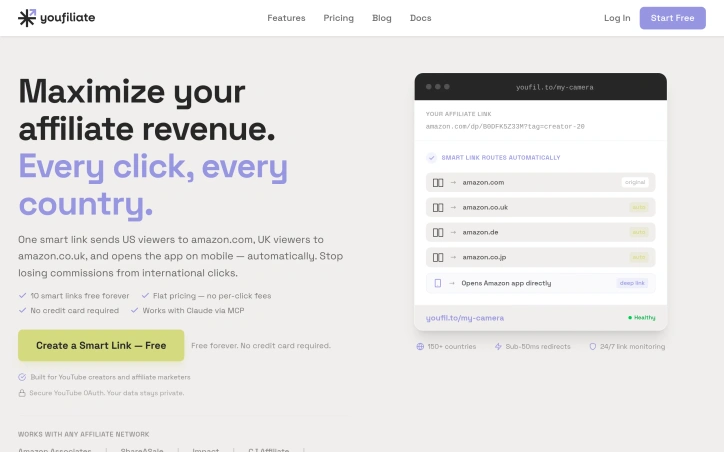
Affiliate link management has long been fragmented across multiple tools, leaving international creators systematically undermonetized. Youfiliate is built to consolidate and optimize the process for YouTube creators and affiliate marketers who split their audience across geographies. The core problem the product solves is geographic fragmentation. A standard affiliate link works only in the region it was created for. A US creator sharing an Amazon affiliate link loses commission from any viewer outside the US who clicks it—representing 40 percent of online traffic. Youfiliate routes viewers automatically to their local affiliate store: Americans to amazon.com, UK visitors to amazon.co.uk, German viewers to amazon.de. One link serves all regions. The second lever is mobile conversion. The product detects when a viewer is on mobile and opens the native Amazon app directly rather than loading a browser. This matters because app checkouts typically convert at higher rates than web flows. A viewer who falls into a clunky web experience may abandon the purchase entirely; direct app routing removes that friction point. Deep linking and geo-targeting are the technical standouts. Many tools offer one or the other. Youfiliate combines them into a single smart link that both geo-routes and app-opens, eliminating the need to maintain parallel affiliate programs for different regions and devices. The product includes click analytics segmented by country, device, and referrer, letting creators trace revenue back to specific videos and links. It also solves a less obvious but expensive problem: broken affiliate links. The product monitors destination links 24/7 and alerts creators when a link dies—addressing the reality that broken links often go undetected for weeks, silently bleeding affiliate revenue. Integration with YouTube is straightforward. One-click setup auto-converts all affiliate links already embedded in a channel's video descriptions to Youfiliate smart links, removing setup friction. The system works across affiliate networks including Amazon Associates, ShareASale, Impact, and CJ Affiliate, plus custom URLs. The pricing removes barriers to trial. Ten smart links are free forever, with no credit card required. Youfiliate uses flat pricing and charges no per-click fees, positioning itself as a simple utility rather than a scaling cost center. Against established competitors like Geniuslink and URL Genius, Youfiliate's positioning is clear: deep linking plus geo-targeting built natively into one tool, optimized for the way creators actually distribute content.
Affiliate-marketing
A
Andrew Pierce

Affiliate link management has long been fragmented across multiple tools, leaving international creators systematically undermonetized. Youfiliate is built to consolidate and optimize the process for YouTube creators and affiliate marketers who split their audience across geographies. The core problem the product solves is geographic fragmentation. A standard affiliate link works only in the region it was created for. A US creator sharing an Amazon affiliate link loses commission from any viewer outside the US who clicks it—representing 40 percent of online traffic. Youfiliate routes viewers automatically to their local affiliate store: Americans to amazon.com, UK visitors to amazon.co.uk, German viewers to amazon.de. One link serves all regions. The second lever is mobile conversion. The product detects when a viewer is on mobile and opens the native Amazon app directly rather than loading a browser. This matters because app checkouts typically convert at higher rates than web flows. A viewer who falls into a clunky web experience may abandon the purchase entirely; direct app routing removes that friction point. Deep linking and geo-targeting are the technical standouts. Many tools offer one or the other. Youfiliate combines them into a single smart link that both geo-routes and app-opens, eliminating the need to maintain parallel affiliate programs for different regions and devices. The product includes click analytics segmented by country, device, and referrer, letting creators trace revenue back to specific videos and links. It also solves a less obvious but expensive problem: broken affiliate links. The product monitors destination links 24/7 and alerts creators when a link dies—addressing the reality that broken links often go undetected for weeks, silently bleeding affiliate revenue. Integration with YouTube is straightforward. One-click setup auto-converts all affiliate links already embedded in a channel's video descriptions to Youfiliate smart links, removing setup friction. The system works across affiliate networks including Amazon Associates, ShareASale, Impact, and CJ Affiliate, plus custom URLs. The pricing removes barriers to trial. Ten smart links are free forever, with no credit card required. Youfiliate uses flat pricing and charges no per-click fees, positioning itself as a simple utility rather than a scaling cost center. Against established competitors like Geniuslink and URL Genius, Youfiliate's positioning is clear: deep linking plus geo-targeting built natively into one tool, optimized for the way creators actually distribute content.

Youfiliate preview

Key features

  • Geographic Smart Links: Automatically routes viewers to their local affiliate store by country
  • Mobile App Detection: Opens native affiliate apps directly on mobile devices for higher conversion rates
See full listing
PostPulse for Developers

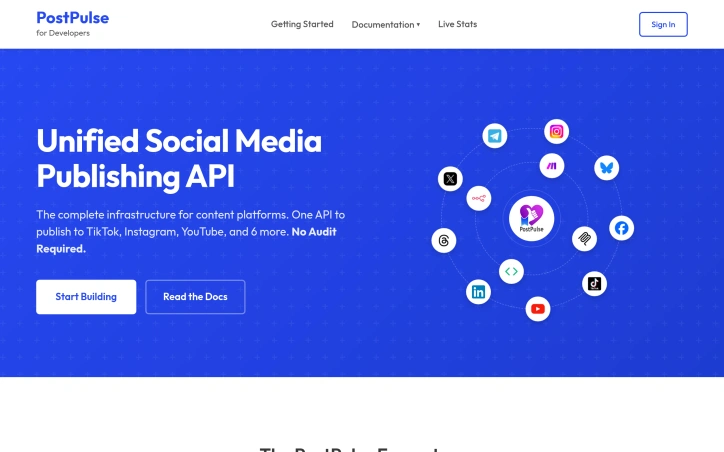
Developers managing social media integrations across multiple platforms face a fragmented ecosystem. Each service—Meta, TikTok, Google, and others—maintains separate API documentation, authentication flows, and platform-specific requirements. Beyond the technical complexity, integrating these services requires passing individual developer app reviews, a process that can consume months. Once integrated, the maintenance burden proves equally taxing: token refreshes, rate limits, API version changes, and deprecations demand ongoing attention. PostPulse addresses this consolidation problem by positioning itself as a centralized integration layer. Rather than building direct connections to nine or more social platforms individually, developers can route their publishing logic through a single API, delegating the platform-specific work to PostPulse's infrastructure. The company handles the full compliance and operational overhead: managing developer app approvals, maintaining authentication tokens, absorbing API changes, and monitoring rate limits across platforms. This shift from custom integration to outsourced connectivity appeals primarily to companies building social features—whether publishing tools, content management platforms, or marketing applications—without dedicated platform engineering resources. For smaller teams or bootstrapped startups, the appeal is clear: avoid months of parallel integration work and redirect engineering capacity toward core product features. The core value proposition rests on complexity reduction and maintenance economics. Instead of a team member tracking Meta's latest API deprecations or managing token lifecycle across platforms, that responsibility becomes PostPulse's. The unit economics improve when integration work—particularly the audit phase—would otherwise stall shipping or require hiring specialized expertise. The company positions itself as solving a genuine infrastructure gap. While social platforms have published APIs for years, the friction surrounding them remains high enough that many developers prefer to pay for abstraction. The degree to which PostPulse successfully executes that abstraction—covering not just happy-path publishing but edge cases, rate limiting, and versioning—will determine whether the product becomes table stakes or remains a worthwhile optimization. Pricing and business model details were not provided in available materials.
Social-media-scheduling-tools
O
Oleksandr Pohorelov

Developers managing social media integrations across multiple platforms face a fragmented ecosystem. Each service—Meta, TikTok, Google, and others—maintains separate API documentation, authentication flows, and platform-specific requirements. Beyond the technical complexity, integrating these services requires passing individual developer app reviews, a process that can consume months. Once integrated, the maintenance burden proves equally taxing: token refreshes, rate limits, API version changes, and deprecations demand ongoing attention. PostPulse addresses this consolidation problem by positioning itself as a centralized integration layer. Rather than building direct connections to nine or more social platforms individually, developers can route their publishing logic through a single API, delegating the platform-specific work to PostPulse's infrastructure. The company handles the full compliance and operational overhead: managing developer app approvals, maintaining authentication tokens, absorbing API changes, and monitoring rate limits across platforms. This shift from custom integration to outsourced connectivity appeals primarily to companies building social features—whether publishing tools, content management platforms, or marketing applications—without dedicated platform engineering resources. For smaller teams or bootstrapped startups, the appeal is clear: avoid months of parallel integration work and redirect engineering capacity toward core product features. The core value proposition rests on complexity reduction and maintenance economics. Instead of a team member tracking Meta's latest API deprecations or managing token lifecycle across platforms, that responsibility becomes PostPulse's. The unit economics improve when integration work—particularly the audit phase—would otherwise stall shipping or require hiring specialized expertise. The company positions itself as solving a genuine infrastructure gap. While social platforms have published APIs for years, the friction surrounding them remains high enough that many developers prefer to pay for abstraction. The degree to which PostPulse successfully executes that abstraction—covering not just happy-path publishing but edge cases, rate limiting, and versioning—will determine whether the product becomes table stakes or remains a worthwhile optimization. Pricing and business model details were not provided in available materials.

PostPulse for Developers preview

Key features

  • Centralized Integration Layer: Routes publishing logic through a single API instead of building individual connections to multiple social platforms
  • Compliance Management: Handles developer app approvals, authentication flows, and platform-specific requirements across all integrated services
See full listing
OutReign

Finding qualified leads remains a significant bottleneck in B2B sales, with teams traditionally drowning in boolean searches and manual research that consumes hours without guarantees of quality prospects. SalesOS tackles this problem by automating the entire discovery process, allowing sales teams to describe their ideal customer profile in natural language and receive ranked, enriched leads within minutes. The platform's core strength lies in its approach to qualification. Rather than overwhelming users with complex filtering options, it leverages AI to score prospects against custom ICPs and surfaces the most likely-to-convert candidates first. The claim of delivering a first lead in under two minutes reflects a genuine efficiency gain for teams accustomed to days-long prospecting cycles. The AI-driven matching reportedly achieves an 85 percent accuracy rate against ideal customer profiles, a measurable validation of its targeting capability. Beyond prospecting, SalesOS extends into the broader sales workflow. Its AI email generation feature personalizes outreach based on prospect profile data, job title, and company information, supporting the 2-4x higher reply rate claim mentioned in the marketing materials. The platform also includes lead scoring automation, smart meeting scheduling, pipeline visibility with forecasting tools, and real-time coaching for objection handling during calls. A workflow builder allows teams to construct automated follow-up sequences without requiring code, reducing friction for non-technical users. The pricing model reflects a credit-based approach layered with subscription tiers. The free plan provides dashboard access with sample data. Paid plans start at thirty-nine dollars monthly for four hundred prospects with email data, scaling to one hundred seventy-nine dollars monthly for three thousand prospects and unlimited sequences. Credits are consumed when revealing contact details—one credit per email, five per phone number—while searching and filtering remain free. This structure creates natural monetization around data access while allowing exploration without friction. The three-times faster prospecting claim, while valuable, would benefit from independent substantiation. For B2B sales teams struggling with traditional lead generation methods and seeking to accelerate their discovery process, SalesOS presents a credible alternative that combines automation with intelligence. The platform's design prioritizes speed and ease of use over customization complexity, making it most relevant for teams prioritizing velocity in lead finding over granular control.

Ai-sales-tools
B
brandon yakubov

Finding qualified leads remains a significant bottleneck in B2B sales, with teams traditionally drowning in boolean searches and manual research that consumes hours without guarantees of quality prospects. SalesOS tackles this problem by automating the entire discovery process, allowing sales teams to describe their ideal customer profile in natural language and receive ranked, enriched leads within minutes. The platform's core strength lies in its approach to qualification. Rather than overwhelming users with complex filtering options, it leverages AI to score prospects against custom ICPs and surfaces the most likely-to-convert candidates first. The claim of delivering a first lead in under two minutes reflects a genuine efficiency gain for teams accustomed to days-long prospecting cycles. The AI-driven matching reportedly achieves an 85 percent accuracy rate against ideal customer profiles, a measurable validation of its targeting capability. Beyond prospecting, SalesOS extends into the broader sales workflow. Its AI email generation feature personalizes outreach based on prospect profile data, job title, and company information, supporting the 2-4x higher reply rate claim mentioned in the marketing materials. The platform also includes lead scoring automation, smart meeting scheduling, pipeline visibility with forecasting tools, and real-time coaching for objection handling during calls. A workflow builder allows teams to construct automated follow-up sequences without requiring code, reducing friction for non-technical users. The pricing model reflects a credit-based approach layered with subscription tiers. The free plan provides dashboard access with sample data. Paid plans start at thirty-nine dollars monthly for four hundred prospects with email data, scaling to one hundred seventy-nine dollars monthly for three thousand prospects and unlimited sequences. Credits are consumed when revealing contact details—one credit per email, five per phone number—while searching and filtering remain free. This structure creates natural monetization around data access while allowing exploration without friction. The three-times faster prospecting claim, while valuable, would benefit from independent substantiation. For B2B sales teams struggling with traditional lead generation methods and seeking to accelerate their discovery process, SalesOS presents a credible alternative that combines automation with intelligence. The platform's design prioritizes speed and ease of use over customization complexity, making it most relevant for teams prioritizing velocity in lead finding over granular control.

OU

Key features

  • AI-Driven Matching: Leverages AI to score prospects against custom ICPs.
  • Email Generation: Personalizes outreach based on prospect profile data.
See full listing