#productivity Startups & Tools
Discover the best productivity startups, tools, and products on SellWithBoost.

Recognition happens everywhere in modern workplaces—in Slack channels, passing conversations, emails from partner teams—but performance reviews happen once a year in a form that flattens all that context into a narrow evaluation. The gap between continuous visibility and periodic assessment creates a fairness problem: contributions fade from memory, work outside a manager's direct oversight disappears, and employees end up reconstructing a paper trail for impact they've already delivered. Prixie addresses this disconnect head-on. The platform consists of two connected suites: Recognise handles daily recognition, rewards, analytics, and leaderboards in the flow of work, while Perform manages goals, performance reviews, engagement surveys, and 1:1s with structured feedback. Both feed into an engine called EngagementOS that turns recognition signals into actionable intelligence. The core insight is compelling: if you continuously capture who's being recognized, who's thriving, and where contributions cluster, you can surface disengagement early and make performance reviews resonate with actual work patterns rather than faded manager recollection. The system automates moments that matter—anniversaries, milestones, and recognition prompts—so visibility stays intentional rather than accidental. Integration appears central to the value proposition. Prixie connects to Slack, Teams, HRIS platforms like Workday, and SSO providers, positioning itself as an overlay on tools teams already use rather than a parallel system requiring new authentication. The platform surfaces insights proactively instead of burying them in reports managers must manually excavate. The feature set maps the narrative well: recognition feeds and analytics ladder up to measurable outcomes; engagement metrics connect to ROI claims for HR and leadership; continuous feedback channels sit alongside traditional review cycles. Automation handles administrative friction by prompting managers when recognition moments arise. Pricing follows a per-user model, with separate plans for Recognise alone and a fuller platform bundling Perform and EngagementOS together. The company emphasizes transparent, modular pricing without hidden fees on standard plans, with enterprise options available. For organizations where the performance-recognition gap creates visible culture friction, the unified approach to continuous signals and episodic reviews offers a direct answer. The product essentially rebuilds the annual review to remember what actually happened.

For small business owners and freelancers juggling multiple operational demands, creating professional receipts often falls into the category of necessary-but-tedious administrative work. SimpleReceiptMaker tackles this friction point directly with a free online tool designed to generate polished, print-ready receipts in under a minute. The platform addresses a genuinely practical pain point. Whether you're a restaurant owner, mechanics shop operator, or self-employed consultant, you need receipts that look legitimate and contain all required business information. SimpleReceiptMaker eliminates the need for expensive invoice software or time-consuming manual creation by providing a template-driven approach that requires no signup, login, or installed software. What distinguishes SimpleReceiptMaker in the crowded receipts-and-invoices space is its focus on simplicity and accessibility. The product ships with over 130 professionally designed templates spanning common business categories like retail, restaurants, transportation, and services. The customization layer is straightforward: users add their business details, items, pricing, and payment information, then select an export format. The company emphasizes three export options—PDF, PNG, and JPEG—alongside a WhatsApp integration that lets customers receive receipts immediately without email friction or copy-pasting. The feature set rounds out with practical touches. Automatic currency detection based on user location eliminates a minor but real point of friction. The tool supports 64+ currencies for international users. A Chrome extension extends the tool's reach beyond the browser. The company explicitly states it doesn't store receipt data, addressing a legitimate privacy concern for businesses handling customer information. The business model is transparently free, with no hidden paywalls mentioned in available materials. This positions SimpleReceiptMaker as an accessible option for micro-businesses and solopreneurs operating on tight budgets—the exact audience most likely to be priced out of traditional accounting software. Where the product excels is not in complexity or advanced features, but in removing barriers to adoption. No software installation. No account creation. No learning curve. For a freelancer or small vendor, that velocity matters. The 60-second creation cycle isn't mere marketing hyperbole—it reflects a deliberate design choice to keep the tool friction-free and focused on its core job: generating a receipt that looks professional and contains the right information.

Streaming content across borders often creates a subtitle problem: foreign-language shows either come with no English subtitles, or viewers miss the challenge of engaging with original-language dialogue. Netflix Live Translator solves this by intercepting Netflix subtitles in real-time and replacing them with translations in any of 106 languages, letting viewers watch without missing dialogue or context. The extension targets language learners, international viewers, and anyone seeking content access beyond what Netflix's built-in subtitle options provide. What distinguishes this tool from other subtitle translation extensions is its architecture: it runs entirely in the browser with no backend server, no account creation, and no data collection. The developer has committed to privacy by design—your API key never leaves your browser and only communicates directly with Google's translation API. The workflow is deliberately minimal. Users select source and target languages from a popup, and the extension automatically detects subtitles on screen, translates them via Google Cloud, and replaces the originals instantly. A caching system prevents redundant API calls for repeated subtitle lines, reducing both latency and translation costs. The economic model relies on users bringing their own Google Cloud credentials. Google's free tier provides 500,000 characters per month—approximately sixteen feature-length films—enough for casual viewers at no cost. With only ten reported users and no ratings on the Chrome Web Store, Netflix Live Translator remains a niche utility. The extension launched in February 2026 and carries minimal friction for adoption: installation requires only a straightforward API key setup, which the developer guides users through directly in the interface. The developer operates it as a free project funded by optional donations, signaling this is more passion project than commercial venture. For viewers frustrated by subtitle limitations on Netflix or language learners seeking immersive practice, the tool addresses a genuine gap. Its browser-native architecture avoids the privacy and latency concerns of server-dependent translators, and the zero-cost base model removes financial barriers for eligible users. The main constraint is dependency on Google Cloud's free tier—once exhausted, users must fund their own API calls—but for casual use, the offering remains practical.

B2B sales teams struggle with a fundamental paradox: lead volume without quality is worthless, yet validating raw leads manually is expensive and time-consuming. Leedrush addresses this by offering a dual-track platform where sales and revenue operations teams can either upload their own lists for instant verification and enrichment, or purchase pre-validated contacts from a marketplace with exclusive ownership guarantees. The product's most distinctive positioning lies in its lead ownership model. Unlike traditional intelligence platforms where multiple buyers compete for the same contacts, Leedrush sells each lead to a single buyer only. This eliminates the "burned-list" problem endemic to shared marketplaces, where a prospect receives identical outreach from multiple vendors. Combined with per-lead pricing rather than subscription fees, the economic model favors lean teams or those testing new segments without long-term commitments. The core workflow proves straightforward. Users upload a CSV file to a batch processor that enriches contacts with verified email addresses, phone numbers, and company data. The platform applies AI-driven scoring across intent signals—recent hiring patterns, technology stack changes, funding events—and matches prospects against user-defined ideal customer profiles. Processing happens asynchronously, with demonstrated batches moving from raw upload to CRM-ready contacts in roughly three minutes. Integration depth supports the sales stack most teams already use. Leedrush syncs directly with HubSpot and Salesforce, supports event-driven automation through Zapier, and posts alerts to Slack when high-scoring prospects match specified criteria. This eliminates manual export-import workflows and keeps intent signals visible to the entire revenue team. The platform maintains compliance certifications including SOC2 readiness and GDPR compliance, important assurances for teams operating across regulated markets. The free tier is genuinely functional—500 free credits allow a team to test the product with no payment method required. The $1.99 per-lead pay-as-you-go model shifts risk from the buyer to Leedrush, aligning incentives around actual prospect quality rather than volume sold. For teams drowning in list-buying subscriptions or maintaining expensive internal enrichment tooling, this alternative deserves serious evaluation.
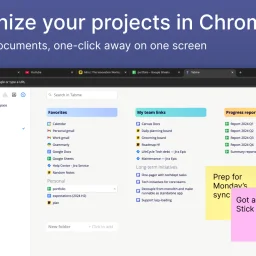
Organizing browser tabs has long been a point of friction for users who accumulate dozens of open pages and bookmarks scattered across multiple locations. Tabme, a Chrome extension, addresses this by consolidating tab management, bookmarking, and note-taking into a single interface with straightforward drag-and-drop controls. The extension handles several common browser headaches. Users can save individual tabs or entire sessions into folders with a single drag-and-drop action, reducing friction compared to manual bookmarking. Duplicate tab detection removes redundant pages with one click, directly addressing browser memory bloat that slows performance. Search functionality spans across open tabs, saved bookmarks, and recently closed tabs, eliminating the need to manually scroll through dozens of entries. A sticky notes feature lets users attach quick annotations directly to projects or collections. The product operates on a straightforward freemium model. The free tier maintains all data locally on the device, preserving privacy for users who prefer to avoid cloud dependencies. The Pro plan enables cross-device cloud synchronization and includes a web application for accessing bookmarks from any browser or phone. This structure caters to both casual users managing tabs on a single device and power users working across multiple machines. The "Mini" variant offers all features without overriding the new tab page, giving users control over how prominently the extension integrates with their workflow. User reviews emphasize simplicity and effectiveness. Comments praise the ease of organization, clean interface design, and productivity improvements. Reddit mentions suggest organic adoption and word-of-mouth traction. The extension maintains a top rating in the Chrome Store, reflecting consistent positive reception. Dark mode support and web-based access round out the feature set. Tabme serves both light organizers managing a handful of bookmarks and power users juggling dozens of projects across multiple devices.

Loan management in cooperative organizations typically requires juggling multiple spreadsheets, manual reconciliation, and constant back-and-forth communication. CoopTrack addresses this operational friction by providing a centralized platform designed specifically for how cooperatives function, eliminating the tedious administrative burden of tracking member balances, loan disbursements, and payment histories. The platform targets cooperatives of all sizes, from small community-based organizations to larger networks with hundreds of members. Its core strength lies in simplicity—the company emphasizes setup in under ten minutes, and the interface prioritizes ease of use over complex feature density. This focus on accessibility is deliberate; the tool is managed by cooperative staff rather than requiring member participation, meaning adoption friction is minimal. Key capabilities include real-time loan balance monitoring, member record management, automated payment tracking with balance updates, and financial reporting for decision-making. The platform also handles payment collection directly through PayPal and card processing, integrating a revenue mechanism into the same interface where cooperatives manage their operations. This consolidation reduces context-switching and data entry errors—a significant pain point for organizations relying on manual systems. Data security is a central design consideration, with the company emphasizing encryption and private storage of member financial information, which is critical for organizations handling sensitive cooperative finances. The absence of any requirement for members to install software or access the system directly further simplifies the operational model. Pricing is structured around cooperative size. The Starter tier at five dollars monthly supports up to fifty members with basic reporting; the Standard plan at ten dollars accommodates up to three hundred members and adds email notifications and priority support; the Premium offering at twenty-five dollars removes member limits and includes advanced analytics and export capabilities. All tiers include secure payment processing, and the requirement of no credit card for the free trial removes a common barrier to evaluation. The messaging positions CoopTrack as a replacement for error-prone manual processes rather than a comprehensive financial management system. For cooperatives managing loan portfolios without existing software infrastructure, the combination of low cost, quick implementation, and straightforward feature set represents a pragmatic alternative to spreadsheet-based workflows or expensive enterprise platforms designed for other organizational types.

Video creators worldwide face a persistent challenge: making content accessible across language barriers while managing tight production timelines. LingoFrame addresses this friction by automating subtitle generation and translation, eliminating the manual work that typically consumes hours and requires specialized skills. The platform targets three distinct audiences effectively. Educators can caption lessons to reach international students without language constraints. Marketing teams gain the ability to deploy multilingual campaigns at scale. Content creators benefit from improved discoverability and accessibility, which have become competitive advantages in crowded platforms. What sets LingoFrame apart is its streamlined workflow. Users upload video files and the system generates subtitles automatically, then offers customization options before exporting. The product provides flexibility in output formats—creators can download standard SRT files for external use or burn subtitles directly into video files. Multi-language translation capabilities are built into the core offering rather than treated as a premium add-on, though the credit system does meter access to these features. The feature set covers the essential needs of the subtitling workflow. Beyond basic caption generation, the platform handles the technically demanding task of translating subtitles while syncing them to video timing. Customization options suggest users can adjust styling, formatting, and language specifics to match their content aesthetic and regional preferences. Pricing employs a credit-based model with tiered options. New users receive 25 free credits to trial the service, lowering friction for initial adoption. Paid plans start at $4.99 for 30 credits, with a mid-tier offering at $12.99 for 100 credits marked as the platform's most popular option, and a premium tier at $29.99 for 300 credits. The credit allocation system accounts for different operation costs—subtitle generation, merging, and translation each consume credits at different rates, though exact time-to-credit conversions require calculation. LingoFrame occupies a practical position in the accessibility tooling space. It doesn't attempt to be a full video editing suite or compete with enterprise-grade localization platforms. Instead, it solves a specific, high-friction problem with a direct interface and transparent pricing. The free credit allowance and popular mid-tier option suggest the company targets creators and small teams rather than enterprise deployments, prioritizing ease of use over feature maximalism. For any producer managing multilingual content, the value proposition centers on the time savings and quality standardization that automation delivers.

Automating the tedious process of documenting workflows, this Chrome extension captures user interactions and transforms them into PDF guides complete with annotated screenshots. The tool addresses a genuine pain point: professionals across support, quality assurance, training, and product documentation spend considerable time manually taking screenshots, pasting them into documents, and writing descriptions for each step. ClickToGuide eliminates this friction by recording clicks and automatically generating corresponding visual content. The extension markets itself to a diverse audience. QA teams can quickly generate evidence for bug reports, HR departments can assemble onboarding materials, customer support representatives can create visual troubleshooting guides, and developers can document features before handoff. This multi-use positioning reflects a well-understood problem that spans multiple job functions within organizations. Several design choices set this apart from generic screen recording tools. The interface emphasizes simplicity: users record a workflow, review and edit the captured steps, then export directly to PDF. The extension highlights where users clicked with a red box, providing context without cluttering the visual. A built-in crop tool lets users focus on specific UI elements, and standard keyboard shortcuts for undo, redo, and clipboard image insertion keep the workflow fast. The editing interface is built for quick iteration rather than deep customization. The privacy model represents a conscious architectural decision. All processing happens locally in the browser rather than on remote servers, meaning users never transmit screen data to company infrastructure. For teams handling sensitive information or operating under strict data governance, this is a meaningful differentiator from cloud-dependent competitors. The business model centers on a lifetime license with cosmetic unlocks—removing watermarks and supporting unlimited steps. A launch promotion offered $5 off the license price. The extension remains early-stage; the Chrome Web Store listing shows only two users and the most recent version update dates to February 2026. The small user base suggests limited market penetration so far, though the product addresses real workflow problems that users across industries encounter daily.

Clinical placement matching represents one of healthcare education's persistent friction points, and Preceptor.Network proposes a direct solution to an unnecessarily manual problem. The platform targets students pursuing advanced nursing and physician assistant credentials—FNP, PMHNP, PA, DNP, and similar programs—who traditionally navigate preceptor recruitment through spreadsheets, department lists, and personal networking. Faculty coordinators simultaneously shoulder the burden of troubleshooting mismatched placements that fail to meet program requirements. The company's core insight is straightforward: institutional requirements can be codified into matching logic. Rather than treating preceptor directories as glorified listings, Preceptor.Network integrates directly with each school's clinical rules—specialty requirements, minimum hours, accepted credentials—and weights candidate preceptors against those parameters. The matching engine also factors in geographic availability and student location, producing ranked results sorted by fit score rather than undifferentiated lists. The onboarding flow underscores this automation philosophy. A student provides their school email address; the system recognizes the domain and retrieves their program enrollment automatically. This eliminates form filling and roster uploads. After selecting their course rotation, they receive preceptor recommendations ordered by relevance to their specific requirements. The three-step design feels deliberately friction-minimized, a direct counterpoint to the opaque, coordinator-dependent processes it displaces. For schools, the value proposition centers on reducing placement fulfillment burden at scale. Once program requirements are configured, the system handles cohorts ranging from twenty to thousands of students without adding administrative overhead. The platform claims to improve through repeated use—each completed match trains recommendations for future cycles. Pricing for students is direct: ten dollars per confirmed match with no subscription component. The school and preceptor business models remain less explicit, though the architecture suggests a two-sided marketplace where schools configure requirements and preceptors receive filtered requests ordered by relevance. What's notably absent is data on matching accuracy, program coverage breadth, or current adoption rates. For a product solving a coordination problem in a relatively niche market, these specifics would strengthen confidence in its claims. The email-domain auto-detection is genuinely useful, but the true value depends entirely on whether the matching algorithm actually reduces friction or simply reorders the guesswork it promises to eliminate. That gap between concept and execution remains the critical unknown.

Ephemeral file sharing strips friction from digital workflows. DropAI.zone addresses a specific pain point: getting a file to someone else's inbox in seconds, without signing up or navigating clunky interfaces. The service emphasizes simplicity. Users drag files, paste screenshots, or call an API, and immediately receive a shareable URL. Files auto-delete by default after 12 to 72 hours, addressing digital clutter anxiety. This ephemerality differentiates it from conventional file hosting, which defaults to permanence. What stands out is its dual architecture. The graphical interface prioritizes speed—no login, no forms, just drag-and-drop. Simultaneously, a REST API and MCP integration allow Claude, GPT, and other AI agents to programmatically upload and retrieve files. This targets a useful edge case: AI workflows generating logs and screenshots needing rapid, temporary storage without persistent infrastructure. The feature set scales with commitment. Guest users get 25 MB per file and 50 daily drops. Free accounts extend to 50 MB files and 200 drops daily, with a dashboard and one MCP API key. The Pro tier ($9 monthly) adds permanent storage options, encrypted drops, password protection, and analytics. The pricing strategy is transparent: the service works as genuinely free for casual users, then monetizes developers and power users willing to pay for higher quotas, storage, and API keys. No deceptive restrictions; the tiers honestly reflect different use cases. Beyond auto-deletion and URL sharing, DropAI.zone's feature novelty is limited. The appeal rests on execution—how seamlessly it handles the upload-to-share flow—rather than categorically new functionality. For users valuing simplicity and ephemerality over comprehensive file management, that's exactly the point. For others, it's a useful shortcut for a specific workflow.

Switching between ChatGPT, Gemini, Grok, and half a dozen other AI apps takes a toll on productivity and your wallet. Omni AI consolidates access to more than 20 leading AI models into a single iOS and Android application, positioning itself as the one-stop solution for users who want to leverage multiple AI systems without maintaining separate subscriptions. The app's core appeal is straightforward: rather than juggling tabs or apps, users can access GPT-5.2, Claude Sonnet 4.5, Grok 4.1, Gemini 3, DeepSeek R1, Mistral Large 3, Llama 4 Scout, Perplexity Sonar, and others all in one place. The real differentiation comes in how the app handles model selection. Omni AI displays the strengths and optimal use cases for each model, helping users understand which one to choose for coding, writing, math, research, or creative tasks. More importantly, the app allows mid-conversation model switching, letting users compare outputs directly without starting over. Beyond chat, Omni AI bundles image generation, video creation, and AI-powered web search into the same interface. Cross-device sync means conversations and preferences carry across phones and tablets, while organizational features like chat folders and specialized "expert AI assistants" for specific tasks bring structure to what could otherwise feel chaotic. The numbers suggest adoption is gaining traction. The app has reached 200,000 downloads, maintains a 4.5-star rating, and has processed over 175 million messages. These figures sit well within the range of a serious mobile application gaining early momentum, though still short of mainstream penetration. Pricing is approachable. The app is free to download with a freemium model; premium plans start at $5.99 per week, $9.99 per month, or $59.99 per year. This positions Omni AI as cheaper than maintaining subscriptions to OpenAI, Google, and xAI separately, though the exact cost-benefit depends on which models a user actually needs and how often they access premium features. For developers, researchers, writers, and anyone who regularly switches between different AI models, Omni AI removes friction. The real test will be whether the consolidated experience actually improves workflow quality or simply trades one form of switching—between apps—for another.

Modern habit-tracking apps have created an unexpected problem: the anxiety of maintaining perfect daily streaks. A new entrant in the productivity space takes direct aim at this phenomenon by replacing the all-or-nothing streak model with a more forgiving monthly framework. The product is designed for people who want to build genuine habits but get discouraged when life inevitably gets in the way—missing a day shouldn't derail months of progress. SetHabits positions itself explicitly around psychological sustainability rather than gamification. Where traditional trackers emphasize consecutive-day chains, this tool sets monthly targets (like completing a habit 20 out of 30 days) and visualizes progress through a clean calendar interface. The approach reflects a fundamental understanding of behavior change: consistency matters more than perfectionism, and shame typically undermines long-term progress rather than motivating it. The product philosophy centers on aggressive simplicity. Habits can be added and logged in seconds, and the interface resists the feature bloat that plagues most productivity software. Users see their monthly progress at a glance through visual calendar data without navigating graphs or reports. The free tier supports up to five habits alongside monthly calendar views, basic statistics, and daily reminders. A weekly habit-tips email is included across all plans. The business model employs a straightforward freemium structure. The Premium tier costs $3.99 monthly or $29.99 annually and adds unlimited habits, AI-powered insights, weekly summary emails, detailed statistics, and custom habit colors. A lifetime access option at $59.99 exists with supply intentionally capped at 100 licenses—a transparent scarcity strategy targeting early adopters. The pricing is genuinely accessible for individual users while providing credible upgrade incentives. What distinguishes this product most sharply is its counter-cultural positioning. Rather than amplifying the perfectionism baked into most habit software, it explicitly rejects streak anxiety in favor of a more realistic, sustainable approach. The execution matches the philosophy: minimal interface, limited features, and transparent pricing all signal that the team grasps what struggling habit-builders actually need. For people burned out on guilt-driven productivity tools, this represents a genuinely different value proposition grounded in behavioral realism rather than motivational hype.

Planning tool overload has become a genuine problem for solo consultants and growing firms. With hundreds of software solutions vying for attention and wallet space, the decision fatigue of choosing between CRM platforms that cost $200 monthly, automation tools, scheduling apps, and analytics software can consume valuable billable hours. Curalo addresses this friction head-on by functioning as a curated directory and recommendation engine specifically built for the consulting industry. The platform positions itself as the antidote to tool sprawl. Rather than presenting an exhaustive catalog of options, Curalo takes a curation stance, reviewing and scoring 126+ tools while packaging them into pre-built "stacks" — bundled workflows designed to solve specific consultant pain points. The Day One Stack guides new practitioners through initial setup with tools like Calendly, Bonsai, and Notion AI. The Proposal-to-Payment Stack combines Bonsai and QuickBooks to streamline deal closure. Those drowning in administrative overhead can adopt the Billable Hours Stack, which integrates scheduling, time tracking, accounting, and workflow automation into a unified system. What differentiates Curalo from a simple tool review site is this stack-centric approach. Each bundle isn't just a collection of vetted tools but a pre-thought workflow designed to be implemented in minutes. The platform also publishes 19+ playbooks and guides — including a noteworthy resource titled "From Solo to Firm: Scaling Your Consulting Practice" that acknowledges how technology needs shift across growth stages. A 60-second quiz helps consultants identify their immediate needs, making discovery frictionless. The review component is straightforward. Tools receive numerical scores (Calendly earns 89/100) alongside brief, plainspoken descriptions. For Calendly, Curalo emphasizes the core value proposition: eliminating scheduling back-and-forth through shared availability links. Pricing details are sparse in the available content, with only Calendly's $10/month baseline mentioned alongside its five-minute setup claim. The platform's positioning against expensive CRM solutions suggests the broader philosophy: recommend effective tools at reasonable cost rather than enterprise software with premium price tags. Curalo serves consultants at all practice stages who value their time over exploring every available option. It's most relevant for practitioners making their first technology decisions or those seeking to replace expensive, bloated platforms with focused, affordable alternatives.

Combining the timeless appeal of tic tac toe with the spectacle of mixed martial arts, this online game targets casual and competitive players seeking lighthearted multiplayer entertainment with a thematic twist. The intersection of simple strategy gaming and fighting culture creates a niche entry point for players who might otherwise overlook traditional board game adaptations. The product distinguishes itself through an uncompromising free-to-play model. Rather than relying on advertisements or pay-to-win mechanics—common pitfalls for browser-based games—MMA XOX commits to no monetization friction. This approach lowers barriers to entry and suggests confidence in user retention through engagement alone. The decision to eliminate ads and competitive purchasing options directly addresses widespread frustration with gaming platforms that prioritize revenue over player experience. What truly sets this offering apart is its ambition toward globalization. Supporting 17 languages including Turkish, Arabic, and Mandarin Chinese signals genuine international reach, not merely English-language gaming with translation buttons. This breadth hints at a development team or publisher thinking beyond English-speaking markets from the outset. The commitment to cross-platform compatibility and mobile responsiveness ensures players access the game regardless of device, a practical necessity in markets where smartphone-first internet usage dominates. The competitive infrastructure reveals sophisticated design expectations. Ranked matchmaking systems paired with global leaderboards transform what could be a throwaway browser game into a persistence layer where player progression matters. The inclusion of seasonal tournaments and private room creation for friends suggests the developers understand that casual games thrive when they balance frictionless pickup play with goals for committed players. Fighter characters allegedly feature unique abilities, implying strategic depth beyond traditional tic tac toe's mathematical exhaustion. The social features—friends systems, private lobbies, and global matchmaking—position this as community-oriented rather than solitary. This architecture benefits both retention and word-of-mouth growth, assuming the execution matches the design intent. The requirement that JavaScript be enabled is unsurprising for real-time multiplayer but worth noting for accessibility considerations. The core tension in the pitch is whether thematic wrapping around tic tac toe generates sufficient novelty to sustain a competitive gaming community. The infrastructure supports such ambitions, but success depends entirely on execution quality and marketing reach—factors the website text cannot reveal. For players tired of monetization dark patterns, the straightforward free model alone warrants investigation.

For businesses struggling to manage disconnected tools, repetitive manual processes, and outdated systems, CodeSol Technologies positions itself as a modernization partner for companies across industries. The Austin-based software development firm targets mid-market and enterprise clients seeking to streamline operations through digital transformation, with particular focus on healthcare, professional services, and home improvement sectors, though it claims to serve organizations of all sizes. The company's core offering centers on eliminating operational friction through automation and system consolidation. Rather than positioning itself as a single-product vendor, CodeSol emphasizes custom solutions tailored to specific workflow challenges. Their service portfolio spans custom website development, e-commerce platforms, workflow automation, and cloud infrastructure setup. This breadth suggests they function more as a systems integrator and development shop than a SaaS platform provider. What distinguishes their approach is an explicit emphasis on measurable business outcomes. The company references improvements in e-commerce checkout completion rates of 20 to 30 percent and explicitly frames solutions around efficiency gains and error reduction rather than technology for its own sake. Their marketing language consistently connects technical implementations back to business KPIs—reduced manual work translates to team capacity freed for revenue-generating activities, and data integration enables better decision-making. The company maintains a 5/5 Trustpilot rating, though the website doesn't specify review volume or time period, making this metric difficult to independently verify. Their claimed target regions include Texas and nationwide, suggesting both local and remote engagement capability. One notable limitation is the absence of transparent pricing information. All service offerings are presented as custom engagements requiring a consultation to quote, which is typical for professional services but leaves prospective clients without cost benchmarks. Similarly, the website lacks specific case studies with concrete metrics, customer testimonials beyond ratings, or details on typical project timelines and team composition. The company's positioning as a "data-driven" transformation partner is somewhat generic—most modern development firms make similar claims. However, their focus on workflow-specific automation and system integration rather than off-the-shelf solutions suggests genuine specialization. For businesses with genuine operational inefficiencies and budget for custom development, CodeSol appears to target a real need. Whether they deliver measurable ROI depends on execution and team expertise, factors the marketing materials don't adequately demonstrate.
A comprehensive suite of digital calculators addresses the gap for users seeking fast, straightforward solutions to everyday mathematical problems without navigating complex spreadsheets or specialized software. VIP Calculator serves a broad demographic spanning students, professionals, investors, and individuals managing personal finances or health metrics. The platform distinguishes itself through its breadth of coverage rather than depth in any single category. With over 25 calculators spanning health, finance, time and date operations, education, construction, and general mathematics, it functions as a utility library for varied use cases. The health section covers conventional metrics like BMI and calorie estimation alongside more specialized tools for pregnancy tracking and ovulation prediction. The financial calculators address both consumer lending and investment planning—covering mortgage and auto loan calculations, salary conversions, and sophisticated investment instruments including SIP growth projections, CAGR calculations, and compound interest scenarios. What stands out most is the inclusion of niche-specific tools that reveal understanding of specific user segments. The Google AdSense earnings calculator targets content creators; the GST calculator indicates focus on Indian and international markets with consumption tax requirements; the bra size calculator acknowledges underserved use cases in personal wellness. The mortgage and EMI calculators provide essential tools for major life financial decisions, while the GPA and grade calculators directly serve educational contexts where quick calculations matter for academic planning. The product appears designed for accessibility and speed of use—each calculator presumably offers minimal friction to reach results. There is no friction from authentication requirements or paywall mechanics; the platform operates entirely on a free model. This removes barriers to adoption for casual users performing occasional calculations, though the business model underlying a 25+ calculator platform isn't detailed in the available materials. From a user experience perspective, organizing calculators by life domain (health, finance, time, education, construction) suggests thoughtful information architecture. The emphasis on "trending" calculators on the homepage indicates usage analytics drive feature prominence, suggesting the platform learns which tools users actually need. The platform's strength lies in comprehensiveness and the absence of friction. For users needing occasional calculations across multiple domains, consolidation into a single web destination eliminates the effort of finding and vetting individual tools. The trade-off is likely that each calculator, given the breadth of the offering, may lack the depth or advanced options that specialized tools provide.

Protecting sensitive information in documents has become a compliance necessity for enterprises, yet traditional redaction workflows remain cumbersome and error-prone. PDF Redaction addresses this by combining artificial intelligence with local processing to identify and remove personally identifiable and health information without sending full documents to external servers. The product targets organizations handling confidential data—particularly in regulated sectors like healthcare, finance, government, and defense—where both data protection and operational efficiency matter equally. The platform's core differentiator is its hybrid workflow. Rather than relying entirely on automation, it gives users final authority over redactions detected by its AI engine. The system identifies sensitive information across fifty-plus categories using machine learning-powered optical character recognition, but the actual removal of data remains a human decision. Users can review AI-suggested redactions, adjust boxes, search for specific terms, or add manual redactions before exporting the final document. This balance between intelligent automation and human oversight addresses the real concern that purely automated approaches sometimes overcorrect or miss context. Deployment flexibility sets it apart further. The platform exists in three forms: a free web-based tool limited to twenty-five pages per document, an on-premise enterprise version called PDF Redaction Studio positioned for air-gapped security environments, and a REST API for developers integrating redaction into larger systems. This tiered approach accommodates organizations across the spectrum, from smaller operations to those with strict data sovereignty requirements. The on-premise option explicitly targets sectors like defense and government, suggesting the vendor understands the particular security architecture some institutions require. The technical foundation rests on open-source technologies—specifically Spark-PDF and ScaleDP—which the company highlights as evidence of reliability and transparency. This choice also suggests the product benefits from community scrutiny rather than proprietary black-box architecture. Beyond standard redaction, the platform offers a custom rule engine, allowing organizations to protect data patterns unique to their industry, and professional consulting services drawing on claimed expertise in machine learning, natural language processing, and document processing. Pricing transparency is minimal on the public website. The free tier allows unlimited documents with a twenty-five-page-per-document ceiling, positioning it as a viable starting point for testing. Enterprise and API pricing requires direct engagement. This model encourages adoption at smaller scales while reserving detailed pricing for conversations with accounts teams handling larger deployments.

Automating document generation has long been a pain point for businesses that need to produce high volumes of personalized outputs—invoices, contracts, certificates, and similar documents that require individual customization but follow standardized formats. PDFOutput addresses this friction by creating a bridge between two widely-used platforms: Google Docs for template design and Notion's database capabilities for data management. The core workflow is straightforward and practical. Users design a Google Document with placeholder variables, then connect it to a Notion database containing the information that should populate each field. The system handles the rest, generating individualized PDFs at scale without requiring users to manually merge data or use complex programming logic. This approach makes document automation accessible to non-technical teams—a significant advantage over traditional mail merge tools or custom integration solutions. What distinguishes PDFOutput from simpler alternatives is its focus on the complete document lifecycle. Rather than limiting functionality to basic text substitution, it targets a diverse range of use cases: operational documents like reports and invoices, contractual materials, achievement certificates, and commercial quotes. This breadth suggests the platform is designed for teams across multiple departments and verticals, whether they're in finance, operations, HR, or sales. The templating model itself deserves attention. Google Docs is familiar to nearly every business user, eliminating the learning curve associated with specialized template languages. Notion databases provide a structured, visual way to manage the source data without requiring spreadsheet expertise or database administration. By leveraging tools people already know, PDFOutput reduces adoption friction and makes it feasible for small teams to implement without dedicated technical support. The automation angle is crucial for the target market. Generating documents at scale—whether that means hundreds of customer invoices monthly or thousands of certificates for program participants—shifts from a tedious manual process to a reliable, repeatable workflow. This is valuable not just for efficiency but for consistency and compliance, ensuring every generated document maintains the same structure and formatting. The integration between these three components—Google Docs, Notion, and PDF output—is presented as seamless, though the actual depth of that integration would become clearer through hands-on use. For organizations already invested in either Notion or Google Workspace, this positioning makes natural sense as an extension of existing tooling rather than introducing a completely new platform into the stack.

Product launches scatter across social media, newsletters, and obscure forums, leaving both builders and discovery-hungry enthusiasts struggling to find emerging technology worth their attention. GreenRocket addresses this fragmentation by creating a dedicated hub where makers can showcase new products and users can explore the next generation of innovation in one place. The platform operates as a marketplace for visibility—a way for founders to break through the noise and reach people actively seeking novel tech rather than passively scrolling feeds. The positioning is straightforward: GreenRocket functions as a launchpad, emphasizing the active moment when products enter the market. This specificity matters. Unlike broad product directories or review sites that catalog anything and everything, GreenRocket narrows its focus to launches themselves, suggesting curated timing and momentum rather than a static library. That framing appeals to founders timing announcements strategically and to users who prefer discovery that carries editorial weight—the sense that products appearing here are actually worth noticing. The dual-sided marketplace is the core design. On one side, builders gain a venue to announce their work to an audience already primed for discovery. On the other, users looking for the next promising tool or service can browse launches in one destination rather than hunting across disparate channels. This two-way exchange creates network effects: better products attract more discoverers, which in turn incentivizes more quality launches, which brings back discoverers seeking fresh innovations. What the platform does well is solve a real visibility problem without overcomplicating the solution. Product launches are time-sensitive moments; capturing them in a structured, accessible format gives them shelf life beyond a single tweet or Product Hunt appearance. Builders get another distribution channel, and early adopters get a concentrated feed of what is actually new rather than what algorithms happen to surface. The simplicity of the value proposition—share and discover launches—is clean. There are no false claims about building community or replacing existing channels. The site understands its lane: it is a launchpad, not a ranking system, not a review platform, not a social network. That clarity is refreshing and grounded. For founders in crowded markets, an additional venue to announce their work has real utility. For users hunting fresh technology, a dedicated feed beats algorithmic feeds designed for engagement over relevance. The product fills a legitimate gap in how emerging tech reaches its audience.
Navigating Hacker News at scale presents a familiar problem for tech professionals and startup founders: the platform's prolific stream of posts makes it genuinely difficult to identify valuable stories amid inevitable noise. HackLens addresses this directly by providing a curated, streamlined interface to the same content, stripping away HN's characteristically sparse design in favor of a cleaner reading experience optimized for both discovery and sustained focus. Built by Berranova, an independent software company, HackLens targets the technical audience already invested in Hacker News but frustrated by the platform's inherent limitations. The product doesn't attempt to replace HN—it enhances it, pulling content directly from the source while adding organizational features HN itself deliberately avoids. The standout capabilities center on discovery and personalization at scale. A robust search function allows users to instantly locate specific stories, comments, and user profiles rather than scrolling through endless chronological feeds. Topic notifications represent the most significant quality-of-life improvement, alerting users when new stories match their interests rather than requiring them to actively monitor feeds. Cross-device synchronization ensures reading preferences and saved stories stay consistent whether users switch between desktops, tablets, or phones. The interface itself reflects intentional design philosophy. A minimal aesthetic keeps content central—no sidebar clutter or visual distractions. Dark mode support acknowledges that HN's core audience often reads during irregular hours and values eye comfort. Throughout, the emphasis lands on clarity and speed, recognizing that technical professionals measure interface overhead in lost productivity. Beyond the core feature set, HackLens positions itself carefully within the ecosystem. The site explicitly states it sources content from Hacker News and disclaims any affiliation with Y Combinator, avoiding confusion about institutional relationships. A straightforward support email provides a direct path for user feedback, suggesting the team remains committed to iteration. No pricing model appears on the public site, leaving the business structure unclear. For engineers and tech professionals already deeply invested in Hacker News, HackLens offers genuine ergonomic improvements over the source platform. It occupies a practical niche: not essential for casual readers, but meaningfully more usable for a specific audience with well-defined information management pain points.