Catalyst Healthspan Audit
Personal trainers typically sell training sessions. This startup reversed the equation by building assessment first, mak...
Launchory
We built Launchory to solve the discoverability problem for startups. Our platform offers instant approval, permanent do...
Best Design & Creative Startups & Tools
Recently Listed
143 launches
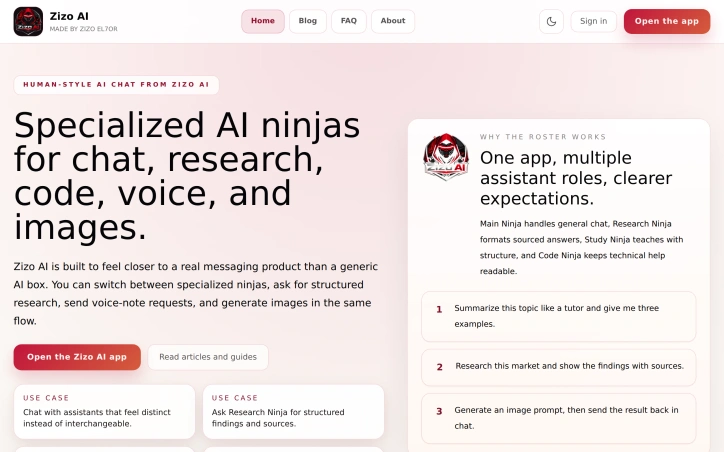
Fragmented AI assistance is becoming a frustration for users juggling multiple specialized tools. Zizo AI consolidates what would otherwise require hopping between different applications into a single, intentionally designed chat interface that distinguishes between specialized assistant roles rather than treating all AI interactions as interchangeable. The core insight driving Zizo's approach addresses a real design problem: generic AI assistants force users to over-engineer their requests to get quality outputs. By positioning distinct "ninjas"—each with a defined role, tone, and response structure—the platform sets clearer expectations for what each assistant delivers. The Main Ninja handles conversational queries, the Research Ninja formats sourced answers with citations, the Study Ninja teaches with structural clarity, and the Code Ninja prioritizes technical readability. This isn't simply renaming the same underlying AI; it's explicitly framing different interaction patterns so users select the right tool for the job without leaving the chat experience. The product distinguishes itself further through tight integration of modalities that competitors often bolt on as afterthoughts. Voice notes stay threaded to the conversation rather than isolated in a separate view, and image generation happens within the same composer that handles text and research prompts. This unified workflow preserves both the readability of text and the conversational benefits of voice replies without forcing users to stitch together fragmented experiences. The breadth of capabilities—research with sourced findings, code assistance, voice interaction, image generation, and structured learning—suggests Zizo targets users who might otherwise need multiple subscriptions. Students would find the Study Ninja and Research Ninja useful for assignments and projects, while developers might gravitate toward the Code Ninja. The company's recent articles addressing AI agents versus chatbots and AI research practices indicate it's positioning itself as educational infrastructure, not just another utility. What remains undemonstrated is how Zizo's specialized ninjas functionally differentiate from prompt-engineered variants of the same underlying model, or whether distinct personalities translate to meaningfully different outputs. The messaging emphasizes intentional design and clearer expectations, which is valuable, but actual performance differences between assistants aren't shown. Still, the consolidation of voice, research, images, and code into one flow with roles that carry distinct expectations addresses a legitimate friction point in how users interact with AI. The product feels built for people who find generic chatbots unsatisfying.

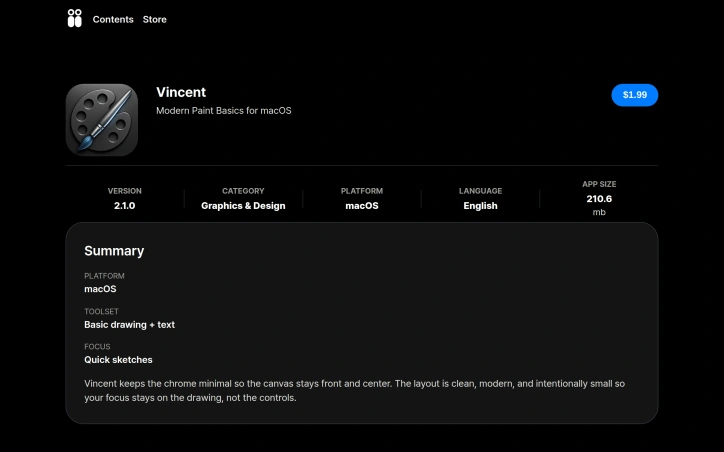
Minimalist design tools have carved out a niche for creators who value speed and clarity over feature sprawl, and Vincent carves out a distinctive position in this landscape. The macOS application is a deliberate throwback to the simplicity of MS Paint, reimagined for contemporary workflows. It targets designers, illustrators, and product teams who need to capture visual ideas quickly without the cognitive load of navigating complex menus or managing countless palettes. The core appeal rests on disciplined restraint. Rather than competing with Photoshop, Figma, or other comprehensive design suites, Vincent strips painting down to essentials: freehand drawing, fill buckets, erasing, and basic selection tools. The interface reflects this philosophy through a spacious, contemporary layout that keeps controls visible without encroaching on canvas real estate. Text tools that sit directly on the canvas allow quick annotations and labels without breaking sketching flow, and the addition of crop, rotate, and tonal adjustments in version 2.0 provides just enough image manipulation for rough asset cleanup. What distinguishes Vincent from other minimalist sketch tools is its deliberate embrace of the MS Paint metaphor. Rather than introducing novel interaction patterns, the application leans into a workflow most designers learned years ago, lowering the barrier to adoption. Someone familiar with basic paint programs can open Vincent and start working immediately. This matters when the goal is capturing ideas before they evaporate. The version history suggests thoughtful iteration. Version 2.0 sharpened the interface and expanded the toolset with text and lightweight edits, addressing the gap between quick sketching and minimal asset refinement. The current 2.1.0 represents continued polish rather than feature creep. At 210.6 megabytes, the application footprint remains lean. The business model relies on direct sales, with a GitHub repository suggesting openness to technical transparency and privacy policy documentation indicating basic compliance standards. For creators who find mainstream design tools bloated and distracting, Vincent offers a focused alternative that prioritizes intention over feature breadth. It is software that gets out of the way and trusts the canvas to be enough.

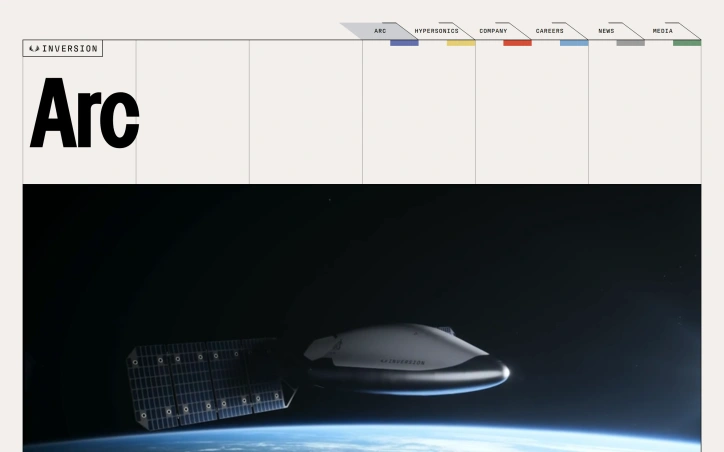
Inversion's Arc solves a critical problem for governments and organizations that require rapid delivery of mission-critical cargo to remote or austere environments. The company's solution enables precise, on-demand logistics from space, leveraging a constellation of pre-positioned spacecraft to achieve global access in under an hour. What stands out about Arc is its ambitious scope and Inversion's confidence in executing it. With a reusable, autonomous design and low-cost approach, the company aims to unlock space as a new logistics domain. This vision is backed by the success of Ray, their first in-house developed spacecraft, which demonstrated the feasibility of building advanced systems at scale. Key features of Arc include its ability to deliver cargo across 1000 km or more with high precision, making it ideal for mission-critical applications. The vehicle's hypersonic capabilities also enable realistic testing of next-generation threat trajectories, a valuable asset for national security and defense organizations. Additionally, Arc functions as a reusable satellite, capable of capturing and deploying assets, rendezvousing with other spacecraft, and operating on orbit for up to five years. Inversion has not disclosed pricing or business model details beyond stating that thousands of Arcs will operate in orbit over time. However, the company's focus on low-cost development and reusable design suggests a scalable approach that could make space-based logistics more accessible to organizations worldwide.