Catalyst Healthspan Audit
Personal trainers typically sell training sessions. This startup reversed the equation by building assessment first, mak...
Launchory
We built Launchory to solve the discoverability problem for startups. Our platform offers instant approval, permanent do...
Best Productivity Startups & Tools
Recently Listed
218 launches
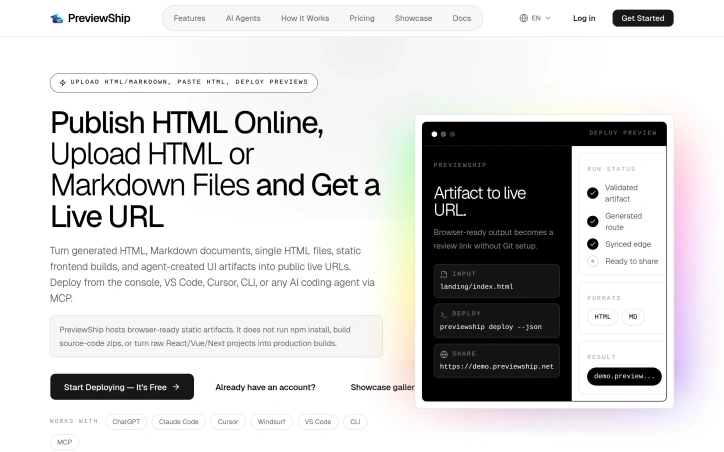
Developers and AI agents often generate HTML, Markdown, and static pages quickly, but sharing these results as a public URL can be a tedious process, typically requiring Git, CI, FTP, servers, or hosting setup. PreviewShip addresses this issue by providing a straightforward solution for instantly deploying and sharing these artifacts. The platform is designed for developers, teams, and AI agents who need to share their work without the hassle of configuring a deployment pipeline. What stands out about PreviewShip is its ability to simplify the deployment process by not requiring users to build source code or set up complex configurations. It directly hosts browser-ready static artifacts, making it an ideal solution for those who need to share AI-generated pages, landing page drafts, client previews, static prototypes, and quick experiments. The platform offers a range of capabilities, including the ability to upload or paste HTML, Markdown, or ZIP files and receive a public HTTPS preview link in seconds. It works seamlessly with various development tools and AI coding agents, including ChatGPT, Claude, Cursor, and VS Code, via CLI or MCP. Users can deploy from the console, VS Code, or CLI, making it a versatile tool that fits into different workflows. PreviewShip's simplicity is rooted in its clear rules regarding the types of files it supports. It directly publishes single HTML and Markdown files, while framework projects need to be built before being uploaded. This clarity reduces the likelihood of failed deployments, making the process smooth for users. By catering to different artifact-to-live-URL workflows, including paste HTML, upload a zip, or run a CLI, PreviewShip positions itself as a comprehensive solution. It is particularly suited for AI-generated HTML, Markdown documents, static build output, and editor deploys. The platform is free to start deploying, although specific pricing details are not provided. Overall, PreviewShip offers a valuable service that streamlines the process of sharing and collaborating on web development projects.

Navigating the rapidly expanding landscape of artificial intelligence tools is a daunting task for both practitioners and founders. AIToolsRecap addresses this challenge by serving as a central hub for discovery, comparison, and review of AI tools. The platform is geared towards two primary audiences: AI founders looking to showcase their tools and practitioners seeking to evaluate and stay updated on the latest AI technologies. What stands out about AIToolsRecap is its commitment to independence, in-depth analysis, and practitioner-tested reviews. The platform claims over 2 million Google impressions, underscoring its visibility and influence within the AI community. Its citation by prominent AI search platforms like ChatGPT, Copilot, and Grok further solidifies its credibility. The website showcases a diverse array of AI tools across various categories, with a notable emphasis on newly launched tools. AIToolsRecap's key features include a comprehensive directory of AI tools, detailed comparison guides, and editorial coverage. The platform allows AI founders to list their tools for free, making it an accessible resource for emerging technologies. For reviewers, it offers incentives such as credits for contributing reviews. The content is rich in insights, as demonstrated by in-depth guides comparing specific AI models and tools, providing readers with nuanced understanding and practical information. While the platform's business model isn't explicitly detailed, the presence of sponsored content and premium services for subscribers (as indicated by the "X Premium+" mention in one of the guides) suggests a multi-faceted approach to revenue generation. The specific guide comparing free and paid versions of Grok provides a clear example of the platform's nuanced analysis, highlighting the value proposition of paid upgrades and demonstrating its capability to deliver actionable insights to its readers. Overall, AIToolsRecap is a valuable resource for both AI practitioners and founders, offering a well-curated and insightful exploration of the AI tool landscape.


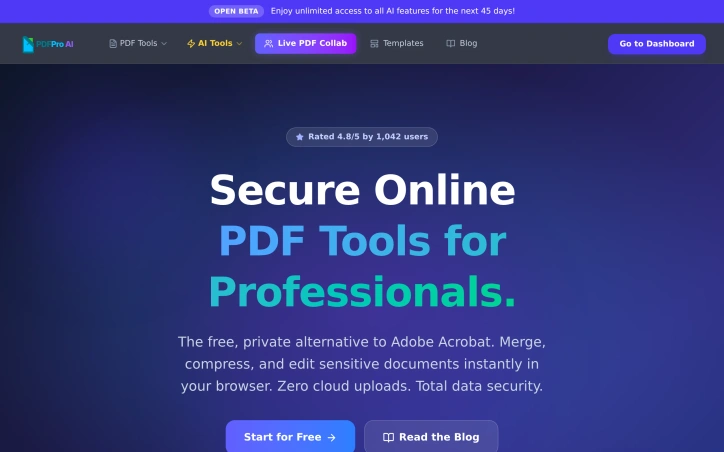
Professionals handling sensitive documents need a reliable and secure way to manage their PDFs without compromising on speed or functionality. PDF Pro addresses this need by offering a comprehensive suite of online PDF tools that are not only free but also prioritize user privacy and security. The platform is particularly suited for individuals and businesses looking for a secure alternative to Adobe Acrobat, providing features such as merging, compressing, and editing PDFs directly in the browser. What stands out about PDF Pro is its commitment to maintaining user privacy through robust security measures. It utilizes AES-256 encryption and ensures that files are automatically deleted from servers after two hours, reinforcing its "Privacy First" promise. The use of WebAssembly technology allows for instant processing of PDF tasks locally within the browser, eliminating the need for cloud uploads and thereby enhancing both speed and security. Key features of PDF Pro include a range of standard PDF tools such as merging, compressing, and editing, as well as more specialized AI-powered tools like the Medical Report Analyzer, Bank Statement Analyzer, and Resume Scanner. These tools cater to various professional needs, from document management to in-depth analysis. The platform also offers E-Sign capabilities that are ESIGN and eIDAS compliant, adding a layer of legal validity to electronically signed documents. Notably, PDF Pro operates on a completely free model with no signup required and no limits on usage, at least for the time being as indicated by a limited-time offer. This approach, combined with its robust feature set and emphasis on privacy, positions PDF Pro as a compelling option for those seeking a secure, efficient, and cost-effective PDF solution.
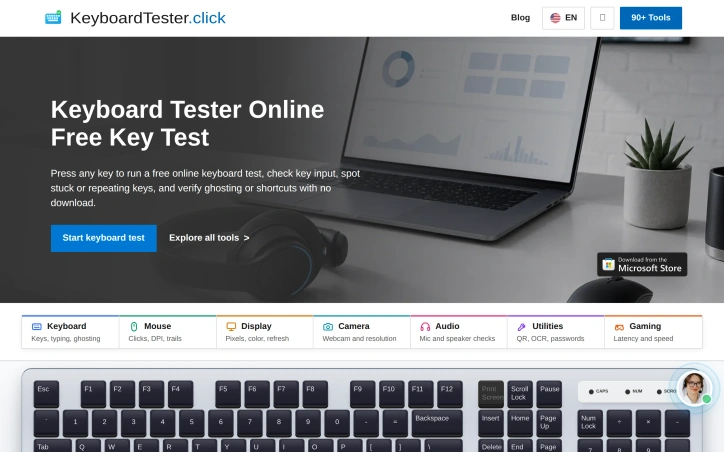
For computer users and gamers seeking to diagnose hardware issues, a comprehensive online testing tool is now available. The website offers a suite of free diagnostic tests for various peripherals, with a primary focus on keyboard testing. The platform allows users to verify the functionality of every key on their keyboard, check for stuck or repeating keys, and detect ghosting or shortcuts. What stands out about this product is its range of advanced diagnostic features, including a ghost click detection test and a keyboard latency test. The ghost click detection test monitors for unintended key presses, while the latency test measures the response time of the keyboard. Additionally, the platform offers a detailed analysis of keyboard performance, including N-key rollover detection, polling rate, and debounce testing. The user-friendly interface allows users to easily navigate between different testing tools and view detailed statistics and heatmaps of their keyboard usage. The platform also caters to mobile users, offering a mobile keyboard tester that allows users to test their device's keyboard. The website generates revenue through a direct sponsorship slot, which is available for booking at a starting price of $59. This advertising model allows businesses to reach their target audience without being blocked by ad blockers. Overall, this platform provides a valuable resource for anyone looking to troubleshoot or optimize their computer peripherals, particularly keyboards. Its comprehensive testing tools and detailed analysis make it an essential tool for both everyday computer users and gamers.

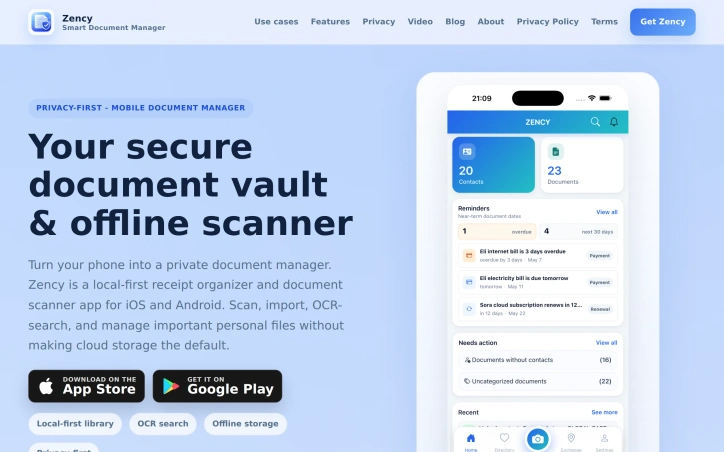
Managing personal documents can be a daunting task, with receipts, contracts, and identification documents scattered across various physical and digital locations. Zency addresses this issue head-on by providing a secure, local-first document vault and offline scanner app for mobile devices. The app is designed for individuals seeking to organize their personal files in a private and accessible manner, making it an ideal solution for those tired of sifting through disorganized paperwork. What sets Zency apart is its focus on local storage and offline capabilities, ensuring that sensitive documents remain under the user's control. The app's OCR search functionality allows users to scan and search within documents, making it possible to quickly locate specific information without having to rely on file names. This capability is particularly useful for tasks such as tracking contract expiration dates, warranty periods, and tax-related receipts. The app's features are geared towards creating a comprehensive and connected document management system. Users can link documents to contacts, creating a CRM-like experience for personal relationships and transactions. Automatic receipt data extraction is another standout feature, which simplifies the process of organizing financial records by extracting total amounts and detecting tax hints from scanned receipts. This functionality is designed to reduce manual entry while maintaining the original receipt as source evidence. By emphasizing local storage, advanced search capabilities, and document connectivity, Zency offers a robust solution for individuals seeking to take control of their personal document management. While pricing details are not explicitly mentioned, the app's availability on both iOS and Android platforms makes it widely accessible. Overall, Zency presents a compelling option for those seeking a private and efficient way to manage their personal documents.

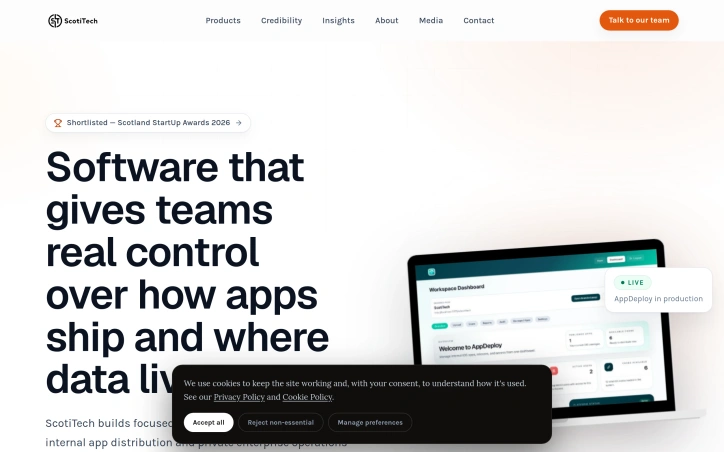
Organisations often struggle to distribute internal mobile applications to employees, partners, or customers, a task complicated by traditional Mobile Device Management solutions that can be expensive and create unnecessary friction. AppDeploy addresses this challenge by providing a secure, simplified platform for private iOS and Android app distribution. It is designed for businesses, educational institutions, and other organisations that need to manage custom mobile applications at scale. Notably, AppDeploy offers a branded workspace for app delivery, aligning with Apple Business workflows and providing clearer install guidance without requiring full MDM adoption. This approach enables administrators to manage app access, track installations, and monitor distribution activity from a single dashboard, while users enjoy a straightforward installation experience without needing their devices fully managed. A key strength of AppDeploy is its focus on control and privacy by design, reflecting the company's broader principles. The platform integrates with Apple Business Manager for Custom Apps and supports Android APK distribution, giving organisations real control over how apps are deployed and where data resides. Administrators can invite users, manage Apple redemption codes, and oversee distribution activity, all within a unified portal. AppDeploy is part of ScotiTech Solutions' product portfolio, a UK-registered company that prioritises privacy-conscious design. The product is available from £79 per month, making it a potentially cost-effective alternative to traditional MDM solutions. By simplifying private mobile app distribution, AppDeploy helps organisations maintain security, control, and compliance, achieving a crucial operational goal. Overall, AppDeploy is a focused solution that effectively addresses a specific pain point, making it worth consideration for organisations with complex internal app distribution needs.

Fitness and wellness businesses often struggle with administrative tasks that take away from the time they can devote to their clients and growing their operations. Lorari addresses this issue by providing an all-in-one management platform for yoga, pilates, and dance studios, as well as individual instructors. The platform is designed to simplify tasks such as booking management, payment tracking, and client communication, allowing business owners to focus on what matters most. What stands out about Lorari is its emphasis on ease of use and rapid setup. The platform promises configuration in just two minutes and enables users to start receiving bookings in under five minutes. This streamlined approach is particularly appealing to small businesses or solo instructors who may not have the time or technical expertise to navigate complex software. Lorari's features are geared towards alleviating the common pain points of fitness professionals, such as manually reprogramming sessions, keeping track of client payments and credits, and relying on messaging apps for communication. The platform allows users to create a profile, set up classes and fees, and share a link with clients, who can then book and pay for classes instantly. Several instructors and studio owners have shared their positive experiences with Lorari, citing the reduction in administrative time, ease of use, and improved management of bookings and payments. While the pricing model is not explicitly stated, the fact that users can reserve a demo without providing credit card information suggests a potentially flexible or customer-friendly approach. Overall, Lorari offers a practical solution for fitness and wellness businesses looking to simplify their operations and focus on delivering exceptional experiences to their clients.


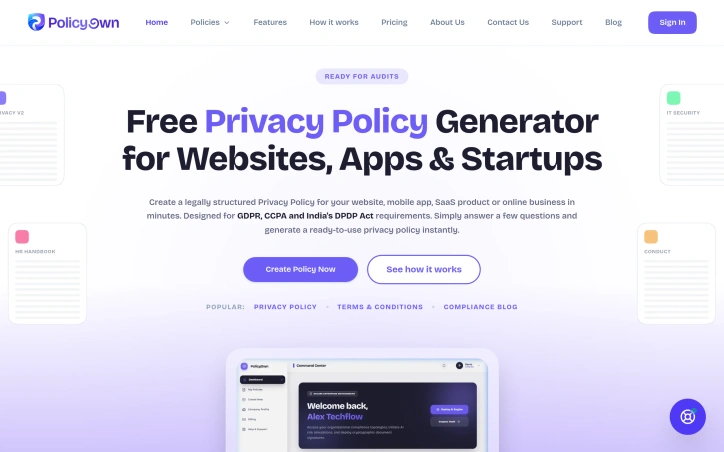
Generating a compliant privacy policy for a website or app can be a daunting task for startups and businesses, particularly with the ever-evolving landscape of data protection regulations such as GDPR, CCPA, and India's DPDP Act. PolicyOwn addresses this challenge by providing a streamlined solution that automates the process of creating a legally structured privacy policy. The product is designed for startups, businesses, and online entrepreneurs who need to establish a robust privacy policy quickly. What sets PolicyOwn apart is its AI-driven compliance logic, which enables the generation of a ready-to-use privacy policy in minutes. By answering a few simple questions, users can instantly create a fully editable policy that meets the required regulatory standards. Notably, PolicyOwn eschews generic templates and random AI-generated content in favor of a more tailored approach. The resulting policy is therefore more likely to be accurate and relevant to the specific needs of the user's business. The fact that the generated policy is fully editable also provides an added layer of flexibility and control. While the specifics of PolicyOwn's pricing or business model are not explicitly stated, the website invites users to "Create Policy Now" and see how it works, suggesting a potentially accessible and user-friendly onboarding process. Overall, PolicyOwn offers a valuable solution for businesses seeking to navigate the complexities of data protection regulations with ease and confidence. By simplifying the process of creating a compliant privacy policy, PolicyOwn helps its users focus on their core operations while ensuring they remain on the right side of the law.
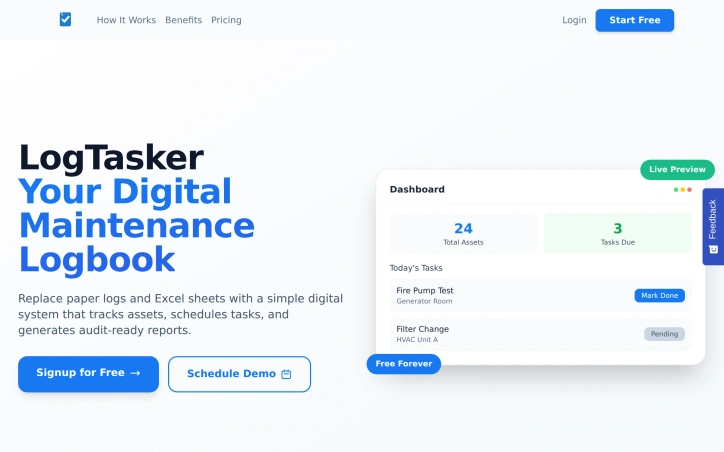
Facilities and organizations with complex maintenance operations often struggle with disorganized workflows, relying on outdated methods such as paper logs and Excel spreadsheets. LogTasker addresses this issue by providing a digital maintenance management system designed to streamline these processes. The target users are facilities managers and teams responsible for maintenance tasks, who will benefit from a more structured and efficient approach. What stands out about LogTasker is its focus on simplicity and clarity, transforming chaotic maintenance workflows into organized, easily manageable systems. The platform replaces cumbersome paper logbooks and error-prone Excel sheets with a user-friendly interface. By digitizing maintenance operations, LogTasker enables facilities to track assets effectively, schedule tasks, and generate reports that are ready for audits. Key features of LogTasker include a clean dashboard that displays tasks, KPIs, and status at a glance, smart scheduling with automatic reminders and recurring tasks, and instant report generation with one-click PDF exports. The platform also allows users to log task completion with photos and notes, adding a layer of detail and accountability. These features work together to reduce equipment downtime through proactive maintenance scheduling, keep facilities audit-ready with comprehensive logs, and improve team coordination with real-time updates. LogTasker offers a free forever plan, with the option to upgrade to other plans as needed, and does not require a credit card for signup. This flexible pricing approach makes it accessible to a range of facilities, from small to large operations. Overall, LogTasker provides a robust solution for facilities seeking to modernize their maintenance workflows and improve operational efficiency.

When buying, selling, or insuring a vehicle, knowing its full history is essential to making an informed decision. MOT History Free addresses this need by providing instant, comprehensive reports on UK vehicles. The target audience is clearly individuals involved in vehicle transactions, who require reliable data to assess a vehicle's condition and potential risks. What stands out about MOT History Free is its direct connection to official records, leveraging data from the DVSA and DVLA to deliver accurate and up-to-date information. The website emphasizes its use of a DVSA-certified data pipeline, ensuring the integrity of the data provided. This backing from official sources lends credibility to the reports generated. The reports themselves cover a wide range of information, including full MOT history, mileage checks to identify potential clocking, advisories and defects recorded during MOT tests, outstanding finance, and stolen or write-off status. Additionally, the reports provide technical specifications such as make, model, and engine size, as well as any outstanding manufacturer safety recalls. This comprehensive data is presented in a downloadable PDF format for convenience. Users can access these reports by entering a UK number plate or 17-digit VIN, with the results available in seconds. Notably, the basic MOT history is available for free, while a full report costs £0.99, with no requirement to create an account. The payment process is secured with AES-256 encryption, and various payment methods are accepted, including Visa, Mastercard, and PayPal. Overall, MOT History Free offers a straightforward, reliable solution for those seeking detailed insights into a UK vehicle's history.


Navigating the complexities of German bureaucracy can be daunting, especially for those who don't speak the language fluently. Expats and non-native speakers often find themselves struggling to understand official letters from government agencies, landlords, and healthcare providers. Briefed addresses this issue by providing a straightforward solution to decode German letters into plain English. The product stands out for its simplicity and effectiveness. Users can upload or paste a letter, and within three taps, they receive a clear summary of the content along with actionable steps. The output is concise and easy to understand, as seen in the example provided, where a tax assessment letter from the Finanzamt is translated into a simple statement of owing €847 in income tax, along with specific actions to take. The service covers a wide range of letter types, including tax assessments, healthcare updates, landlord notices, and court summons. For each type, Briefed not only translates the content but also provides guidance on the necessary next steps, such as drafting a reply or understanding one's rights. The platform also generates useful tools like a one-click calendar event for important deadlines. What's notable about Briefed is its focus on empowering users to take action with clarity and confidence. By providing plain English summaries and specific actions, it bridges the gap between receiving an incomprehensible letter and responding appropriately. While the pricing model is not explicitly detailed on the website, the service implies a paid profile is required for full access, suggesting a potentially subscription-based model. Overall, Briefed offers a valuable resource for expats and non-native speakers navigating the German bureaucratic landscape.

Amazon device users have long struggled with limited storage capacity, particularly on the Fire TV Stick. A new app aims to alleviate this issue by enabling seamless file transfers between devices over local WiFi. TransferPro allows users to send files from their Android phones, tablets, or PCs to their Fire TV without relying on cloud uploads or cumbersome USB cables. The app's simple three-step process makes it easy to connect devices and initiate transfers. Notably, the connection process is facilitated by a QR code, eliminating the need to manually enter IP addresses. The app is designed with a TV-optimized interface, making it navigable using the Fire TV remote. Key features include the ability to transfer files of any size, a built-in file manager, and functionality that works offline, making it suitable for travel or areas with poor internet connectivity. By providing a convenient, internet-free file transfer solution, TransferPro has the potential to be a valuable tool for Fire TV users, as well as for individuals in various other contexts, such as cord cutters, travelers, and professionals.


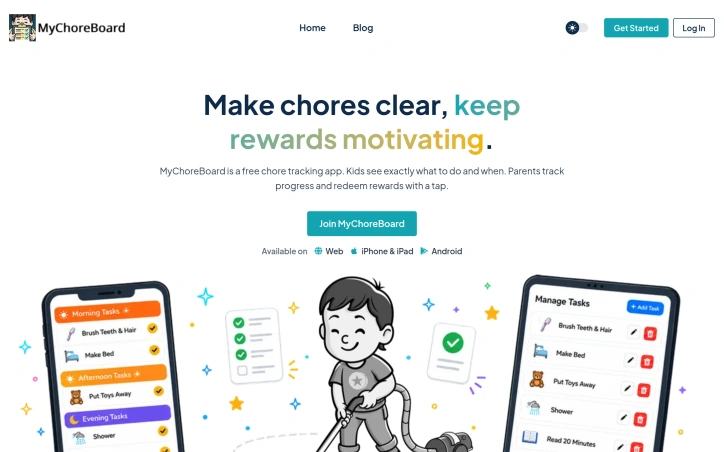
Household chores can be a significant source of stress for families, with parents often struggling to keep their kids on track and motivated. MyChoreBoard tackles this issue head-on, offering a straightforward solution that simplifies task management for families with kids. The app is designed to help kids take ownership of their chores, reducing the need for constant reminders and nagging from parents. What stands out about MyChoreBoard is its ability to turn chores into a game-like experience, making it enjoyable and rewarding for kids to complete their tasks. The app's design is kid-friendly, with large icons, colorful visuals, and animations that make it easy for children to navigate and understand their responsibilities. Parents can customize tasks, rewards, and settings to suit their household's unique needs, and the app is accessible across multiple devices, including web, iOS, and Android. The app's key features include the ability to assign and track tasks, redeem rewards, and monitor progress in real-time. Parents can also create custom tasks and rewards, and the app allows for device synchronization, ensuring that all family members are on the same page. Additionally, MyChoreBoard caters to families with children of different ages and needs, offering features like a "WallBoard Mode" for displaying tasks on a central screen and the ability to transition from rewards to allowance as kids grow older. MyChoreBoard is available for free, with no explicit mention of any premium features or paid upgrades. Overall, MyChoreBoard is a valuable resource for families seeking to streamline their household routines and encourage kids to take responsibility for their chores. By providing a fun, interactive, and customizable experience, MyChoreBoard has the potential to reduce stress and promote a sense of accomplishment among family members.

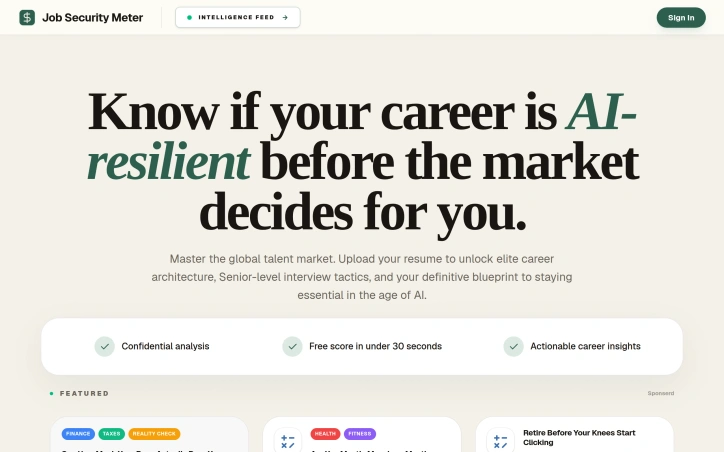
The increasing concern about AI's impact on the job market has led to the development of tools that help professionals assess their career risk. Job Security Meter is designed for individuals who want to understand how AI might affect their specific profession, providing a personalized score and roadmap to mitigate potential risks. The platform is geared towards a wide range of professionals, from tech and finance to healthcare and education. What stands out about Job Security Meter is its focus on providing specific insights into AI's potential impact on various professions, moving beyond general headlines about AI replacing jobs. The platform categorizes professionals into different industries and provides automation probabilities for each role. It also analyzes "Sunset Skills" and "Human Moats" for every major profession, giving users a detailed understanding of their career risks. The platform's AI Job Security Score is generated through a three-step process: extracting technical signals and seniority markers from a user's resume and LinkedIn profile, mapping skills against the 2026 LLM Capability Index to identify automation vulnerabilities, and creating a personalized 6-month roadmap to build strategic defenses. This score and roadmap are key features that help users understand their AI career risk and take proactive steps to mitigate it. While the platform's pricing is not explicitly mentioned, the focus on providing actionable insights and personalized roadmaps suggests a potentially premium offering. The availability of a "Full 2026 Methodology Audit" and "Latest Career Intelligence" articles suggests that the platform is committed to transparency and staying up-to-date with the latest developments in AI. Overall, Job Security Meter offers a unique value proposition for professionals seeking to understand and mitigate their AI career risk.

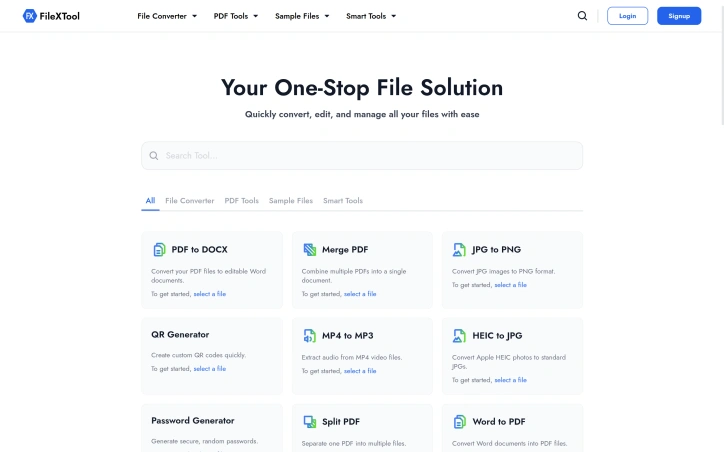
Managing and editing various file formats can be a daunting task, especially when dealing with multiple conversions and manipulations. FileXTool addresses this challenge by providing a comprehensive suite of online tools that cater to diverse file processing needs. The platform is designed for individuals who require a straightforward and efficient solution for converting, editing, and managing their files, without needing extensive technical expertise. What stands out about FileXTool is its commitment to delivering high-quality conversions and prioritizing data security. By leveraging reliable open-source technology and partnering with trusted software providers, the platform ensures accurate and customizable conversions across a wide range of formats, including audio, video, documents, and images. The emphasis on security is evident in its robust system, which features advanced encryption, secure data centers, and continuous monitoring to safeguard user data. The platform offers an impressive array of tools, including PDF conversion and manipulation utilities, image converters, and utility tools such as password generators and URL encoders. These features enable users to perform various tasks, from converting PDFs to editable Word documents to generating custom QR codes, all within a user-friendly interface that requires no technical skill or learning curve. FileXTool is entirely free to use, with no requirement to download or install software, making it an attractive solution for individuals seeking a convenient and accessible file processing tool. By providing a one-stop solution for file management and editing, FileXTool streamlines workflows and saves users time, making it an invaluable resource for those dealing with diverse file formats.

A collection of purpose-built AI utilities launched in 2026, this service addresses a consistent friction point in the AI tools market: premium functionality gated behind subscription costs that make no sense for creators and small teams. The problem is concrete. A content writer checking readability metrics should not need to commit to a $99 monthly subscription. A student asking for a code explanation should not negotiate an enterprise license. A freelance SEO consultant running keyword research for client work should not be locked into an annual contract just for access to basics. The founding team—Usman Shahid, M. Daniyal Fakahr, and Abdul Rehman—identified this pattern across years of content creation, product work, and engineering. Their response was direct: build a collection of focused, production-quality tools and keep them permanently free. Not a freemium trial. Not a limited-time offer. Actually free—no credit card required, no account creation, no expiration date, no data retention. The platform currently offers 11 tools covering writing, SEO, coding, and content optimization. These include an AI Text Analyzer for sentiment and readability scoring, a Code Explainer for translating technical code into plain language, a Keyword Research tool, a Prompt Generator for improving ChatGPT and Claude inputs, an AI Content Detector, a Text Summarizer, a Tone Rewriter, an AI Paraphraser, a Hashtag Generator, a Meta Tag Generator, and an Alt Text Generator. Each tool is scoped to a single task with no complex setup required—users pick a tool, paste their input, and retrieve results within seconds. What distinguishes this approach is its execution philosophy. Rather than building a bloated all-in-one platform, the founders deliberately created utilities that excel at one specific function. The product roadmap reflects user demand rather than speculative features. When content professionals asked for tone rewriting, it was added. When educators requested AI detection capabilities to identify student submissions, that tool was built. When SEO specialists wanted meta tag generation, it joined the collection. The business model itself is notable: zero cost, zero signup friction, and zero data collection. This removes the traditional barriers that keep individual creators and students from using professional-grade tools. Whether this model sustains long-term or serves as a user acquisition strategy remains to be seen, but in its present form, NexusAI represents a deliberate rejection of the subscription tax on basic AI utilities.


For web developers, digital marketers, and businesses looking to streamline their online workflows and boost their digital presence, Puspa Chaulagai offers a suite of expertly crafted online tools and applications. As a seasoned web enthusiast turned developer and SEO expert, Chaulagai has channeled his passion into creating solutions that save time and optimize digital processes. What stands out about Chaulagai's offerings is his commitment to delivering value through a blend of creativity, strategy, and technology. His tools and applications are built with a focus on clean UI/UX, SEO best practices, fast performance, and mobile-friendliness, ensuring they are not only useful but also provide a seamless user experience across various devices. Among his notable creations are the Stylish Name Maker and its AI-powered counterpart, designed to generate stylish and fancy text for gaming and social media profiles. Additionally, Chaulagai has developed a range of free online tools, including a character counter and analyzer, and an SEO meta tag generator, which cater to diverse needs such as writing, SEO, and development. Chaulagai's expertise extends beyond tool development to SEO optimization and digital marketing, where he leverages his knowledge of technical SEO, on-page SEO, and content structuring to help brands grow. His proficiency in web and app development using modern frameworks further underscores his capability to deliver robust and reliable solutions. While pricing details are not explicitly mentioned, Chaulagai does indicate his availability for consultation, suggesting a potential revenue stream through service-based offerings. Overall, Puspa Chaulagai's work is a testament to the power of self-directed learning and innovation, providing valuable resources for those navigating the digital landscape.


Freelancers often struggle with creating professional proposals and navigating the complexities of contracts, a challenge that can be both time-consuming and costly. Propactly addresses this issue head-on by offering an AI-powered solution tailored specifically to the needs of freelancers. The platform is built by freelancers, for freelancers, ensuring that it meets the unique demands of this profession. What stands out about Propactly is its ability to not only generate professional quotations, proposals, and business requirement documents from scratch but also to analyze and summarize contracts in plain English, stripping away the legal jargon that often confuses. This dual capability is a significant advantage for freelancers who need to both present their services professionally and protect their interests when negotiating contracts. The platform's AI assistance is geared towards understanding freelance business workflows, offering structured proposals, pricing-aware quotations, and contract risk analysis. This is a marked departure from generic AI tools that merely generate text without understanding the context or specific needs of freelancers. Users can create or upload documents, have them analyzed and enhanced by the AI, and then export professional PDFs or summaries. While Propactly's pricing model is not explicitly detailed, the platform invites users to get started for free, suggesting a potentially freemium model or a trial period. The emphasis is on the value it brings to freelancers, including saving time, reducing costly mistakes, and enhancing their professional image. Overall, Propactly is a valuable resource for freelancers at every level, providing them with the tools to create professional documents, understand contracts, and ultimately win more clients. Its focus on the specific needs of freelancers and its user-centric design make it a compelling solution in a market often dominated by one-size-fits-all tools.


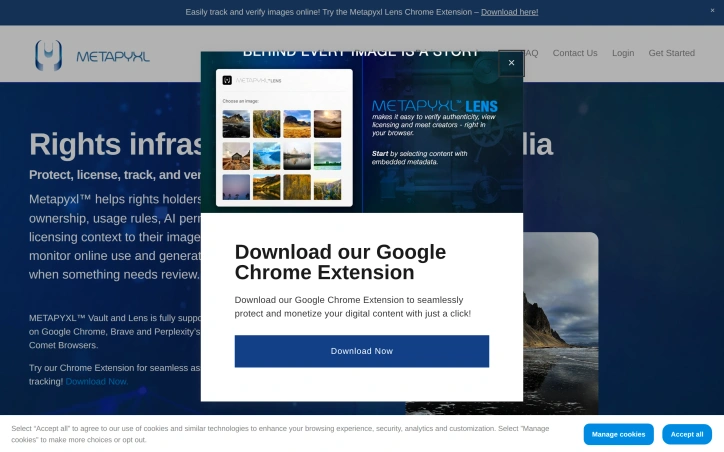
The online proliferation of visual media has created a pressing issue for creators, agencies, publishers, and brands: maintaining control over images as they spread across the internet. As images travel, essential information such as ownership, licensing terms, and usage rules often gets lost, leading to significant time and financial losses when trying to establish provenance and enforce rights. Metapyxl addresses this challenge by providing a comprehensive rights infrastructure for visual media. At its core, the platform ensures that images are protected, tracked, and verified throughout their online journey. What stands out about Metapyxl is its proactive approach to image protection, utilizing a combination of invisible forensic watermarking, metadata, and C2PA/content credentials to preserve ownership and licensing context. Users can register their images in Metapyxl Vault, where they can add licensing terms and apply forensic watermarking, allowing them to monitor online usage effectively. The platform's Lens feature enables viewers to access creator, rights, provenance, and licensing context when protected images appear online, promoting transparency and facilitating legitimate use. Notably, Metapyxl's watermarks are designed to remain detectable even after common image alterations such as cropping, resizing, and compression, with a high success rate of 99% in tested cases. The platform's capabilities are geared towards rights holders seeking to safeguard their visual assets while promoting their legitimate use. By maintaining a connected workflow from ownership record to evidence packet, Metapyxl provides a robust solution for managing image rights. Customers, including photography agencies and individual photographers, praise Metapyxl for its innovative features, such as customizable licensing agreements and a user-friendly Chrome extension that streamlines asset tracking. Overall, Metapyxl offers a vital tool for visual media creators to protect and monetize their work in the digital age.

Finding a Japanese name with the right meaning, sound, and cultural weight has traditionally meant juggling multiple resources or relying on family knowledge. Japanese Name Finder consolidates this fragmented search into a single directory designed for people naming babies, developing fictional characters, or exploring Japanese naming traditions. The product's core strength lies in its multi-path discovery model. Rather than forcing users into a single search funnel, the platform offers parallel routes: a 3,000-entry directory searchable by meaning (fire, water, moon), an A-Z browsing system across 26 filtered categories, a name generator with use-case presets, and thematic landing pages built around semantic queries. This approach acknowledges that someone seeking a baby name approaches the task differently than someone creating an anime character or naming a pet. The generator is the product's most distinctive feature, letting users input their English name for personalized suggestions and then customize results by gender, thematic elements, and intended use. The preset categories—Baby, Anime Character, Cat, Dog, Warrior, and Elegant—signal that the tool is built from observation of actual naming patterns rather than generic filters. Users can draw from nine thematic filters (Nature, Strength, Beauty, Love, Wisdom, Fire, Water, Moon, Flower) and control output volume, accommodating both quick decisions and comprehensive exploration. The directory includes kanji, pronunciation guidance, and cultural meaning for each entry, addressing a real barrier for non-native speakers or those unfamiliar with character selection conventions. The internal linking architecture transforms what could be a static list into a topic cluster, where users encountering a name can navigate to related entries by theme or gender rather than hitting dead ends. What's notably absent is any attempt to position the product as a generative AI tool. In an era where LLM-based alternatives proliferate, Japanese Name Finder's commitment to a curated database with structural navigation feels almost contrarian—and pragmatic. A 3,000-name directory can be browsed, internalized, and reasoned about in ways that procedurally generated alternatives struggle to match. The product targets a distinct niche, separate from general baby-name directories. Its competitive advantage lies in search visibility for high-intent queries (fire names, moon kanji, beauty themes) rather than broad brand recognition.