
MetaScope
For professionals in the creative industry, managing metadata across a vast library of files is a daunting task. Photogr...

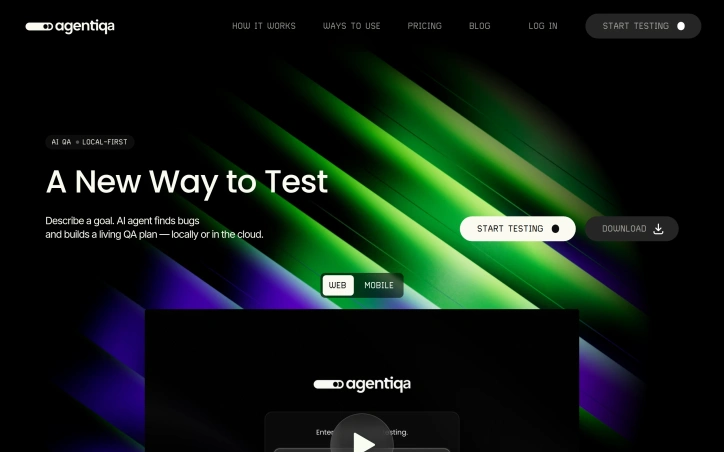
Agentiqa — AI QA Testing Agent
Teams shipping web or mobile apps with limited QA headcount end up choosing between slow manual testing and brittle scri...
Recently Listed
389 launches
Premium
Teams shipping web or mobile apps with limited QA headcount end up choosing between slow manual testing and brittle scripted automation. Agentiqa eliminates that compromise by letting product managers or engineers paste a URL and have an autonomous AI act as a tireless human tester. The tool starts where most cloud services stop: it runs directly on the developer’s machine so localhost and internal staging environments are covered without any CI setup. That fact alone makes it indispensable for startups that push nightly builds to feature branches hidden behind firewalls. Beyond local support, the agent examines the rendered interface as a user would, relying on computer vision instead of brittle DOM selectors. Once it discovers a bug—visual glitches, broken states, or purely frustrating UX—it records a video, writes concise reproduction steps, and folds the new insight into a reusable QA plan. Each iteration refines the plan, making the test suite self-healing and continuously more valuable over time. Privacy concerns have been addressed head-on: source code never leaves the developer’s workstation, and credentials are encrypted so the AI can type a password without ever learning its value. Companies bound by GDPR, HIPAA, or internal compliance rules can therefore invite the agent onto sensitive apps without opening a proverbial back door. The product is offered as a downloadable desktop client, complemented by Agentiqa Web for cloud runs that can be triggered from any browser. Pricing or usage tiers are not yet disclosed, yet “no per-run cloud overhead” signals an approachable model for smaller teams, while local-first execution removes the queueing penalty that often sabotages fast iterations.
 Featured
For professionals in the creative industry, managing metadata across a vast library of files is a daunting task. Photographers, archivists, and digital asset managers need a reliable tool to edit EXIF, IPTC, and XMP metadata with precision and control. MetaScope is a native macOS app that simplifies metadata management, allowing users to accurately edit and batch process metadata across 50+ file formats, including RAW files. What stands out about MetaScope is its comprehensive approach to metadata management, offering nine focused capabilities within a single app. The app's capabilities range from image and video viewing with advanced rendering and color management, to metadata browsing and editing with a 125-field registry and integrated search. The metadata editing feature is particularly noteworthy, allowing for inline field editing, template management, and batch application to thousands of files. The app's intelligence features, such as on-device NLP enrichment and smart keyword suggestions, further enhance its capabilities. The automation features, including keyword rules and transformation rules, enable users to streamline their workflow and ensure consistency across their metadata. The export system also offers a range of formats, including PDF and HTML portfolio generation with custom branding. Built for libraries with hundreds of thousands of files, MetaScope is designed to handle large-scale metadata management tasks with ease. While pricing details are available on the MetaScope website, the app's developer has clearly focused on creating a robust tool that meets the needs of professionals who require accuracy, scale, and control over their metadata. Overall, MetaScope is a powerful solution for creative professionals seeking to simplify their metadata management workflow.


Staffing agencies have a straightforward strength: finding and placing talent. The gap they struggle with is equally clear—converting prospects into consistent, predictable client relationships at scale. Most operate with outdated business development infrastructure, relying on manual cold outreach, unpredictable referrals, and founder-dependent sales efforts that don't scale. VRABC Group targets this specific pain point by building AI-powered outbound systems designed to automate and systematize how staffing firms acquire clients. The platform combines intelligent lead sourcing, company research, multi-channel outreach automation, and meeting booking into a coordinated workflow. Rather than treating client acquisition as a separate, manual department, the system positions it as a repeatable, revenue-focused operation engineered specifically for recruiting firms. What distinguishes the approach is its vertical focus. VRABC explicitly rejects the generic marketing-automation playbook, instead building around staffing-specific workflows and metrics. The emphasis falls on qualified pipeline generation and client meetings—tangible business outcomes—rather than vanity metrics like engagement rates. This is deliberate positioning: revenue-focused, not visibility-focused. The system addresses a real structural problem in the staffing industry. Staffing firms generate revenue from placements, which demands a steady flow of viable job orders from clients. Yet most manage demand generation through individual effort and scattered manual processes rather than systematic, scalable infrastructure. This creates a ceiling on growth: adding capacity requires hiring more salespeople or pushing existing relationships harder, rather than improving productivity through better systems. From the messaging, VRABC bundles several components—lead qualification and ranking, intelligent targeting, automated outreach sequences, and meeting scheduling—into one integrated platform rather than asking agencies to assemble multiple point solutions. For firms drowning in disconnected tools, integration is practical value. The core value proposition is direct: help staffing agencies generate more client meetings and pipeline without proportional headcount increases. This speaks to a genuine bottleneck. Whether the execution delivers on that promise requires evidence of customer results and implementation complexity, which isn't available from the public-facing messaging. But the fundamental problem—that staffing firms lack scalable client acquisition infrastructure—is real and persistent. For staffing agencies stuck with manual business development, this solves a recognized problem with a purpose-built tool. The vertical specialization suggests the founders understand recruiting firms' specific constraints and workflows, which is a stronger position than generic sales automation. Execution and customer outcomes remain the real test.


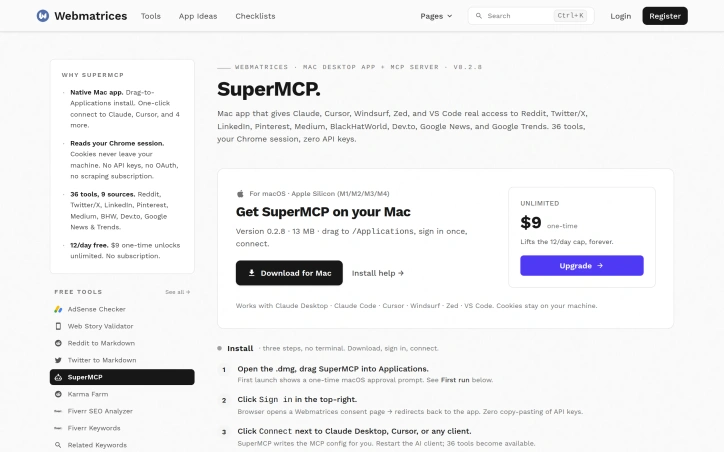
Social data integration has been a friction point for AI workflows, requiring developers to juggle API keys, OAuth flows, and scraping subscriptions just to give Claude or Cursor access to Reddit, Twitter, LinkedIn, or Pinterest. SuperMCP eliminates that overhead by leaning on authentication users already have: their Chrome login. The Mac app bridges AI clients directly to nine social sources using session cookies stored locally on the user's machine, with no external API keys or scraping infrastructure required. The product is built for macOS users running Apple Silicon processors who want to connect Claude Desktop, Cursor, or other MCP-compatible clients to live social data. Installation is deliberately frictionless—download the DMG, drag to Applications, sign in through a browser flow, then click to connect to each AI client. The app automatically configures the underlying MCP setup, sparing users from manual JSON editing. What sets SuperMCP apart is its focus on privacy and simplicity. Cookies remain on the user's machine, and there are no intermediate API layers or subscription requirements for data access. The interface provides operational visibility that goes beyond basic integration: a live activity log shows every tool invocation with query details, latency, and response status across all sources. Users can inspect full request and response payloads inline or download them for debugging AI reasoning, and a dashboard displays aggregated stats like call count, success rate, and percentile latency breakdowns. The product offers 36 tools spanning Reddit, Twitter, LinkedIn, Pinterest, Medium, BlackHatWorld, Dev.to, and Google News & Trends. Chrome profile switching allows users to maintain separate logins for work and personal accounts without managing browser extensions. A source status panel indicates which platforms the user is currently signed into, eliminating ambiguity when debugging failed API calls. Pricing reflects a one-time purchase model rather than recurring subscriptions. The free tier permits twelve daily tool calls; a nine-dollar one-time payment removes the cap entirely. This approach makes SuperMCP accessible to individuals and small teams while offering straightforward upgrade economics for heavy users. The lean feature set and narrow macOS focus suggest the founder has optimized for a specific, underserved workflow: giving AI agents social media access without the authentication and infrastructure headaches that plague alternative approaches.

Simplifying image editing for ecommerce, marketing, and creative professionals is a pressing need, and one that RemoveLayer addresses head-on. The company's AI-powered background remover and image cleanup tools offer a streamlined solution for tedious tasks like background removal and object cleanup. At its core, RemoveLayer is designed to cater to product, creator, and marketing teams who require fast and easy image editing capabilities. What stands out about RemoveLayer is its focused approach to image editing, breaking down complex tasks into distinct tools, each with a straightforward workflow. The Background Remover is the primary workflow, while Object Remover and Text Remover serve as specialized tools for more specific cleanup jobs. This modular design ensures that users can tackle a range of image editing tasks with ease. The tools themselves are intuitive, following a consistent upload-process-download flow that makes it easy to get started and achieve results quickly. The AI-powered technology behind these tools is robust, capable of automatically removing backgrounds, objects, and text with a high degree of accuracy. The fact that these tools are independent, yet maintain a consistent user expectation, is a testament to the company's thoughtful design. In terms of pricing, RemoveLayer offers a simple, transparent model that starts with a free tier, allowing users to upgrade when they need more background removals, image cleanup, or recurring usage. The company also offers pay-as-you-go credits for one-time tasks, providing flexibility for users with varying needs. Overall, RemoveLayer has created a valuable solution for professionals seeking to simplify their image editing workflows.

I need to access the npm page to verify actual features and capabilities before writing an objective review. Could you either: 1. Grant permission for WebFetch so I can review the package directly, or 2. Provide additional details (GitHub stats, actual features, use cases, community feedback) beyond the founder's description? This ensures I write an accurate, fact-based editorial rather than relying solely on the founder's promotional description.


The social media landscape is crowded with apps vying for users' attention, but many fail to deliver meaningful connections. Ascend Five aims to address this issue by providing a platform where users can forge real relationships and share personal stories. The app is geared towards individuals, celebrities, brands, and companies seeking a more authentic online presence. What sets Ascend Five apart is its focus on building genuine connections and showcasing users' experiences. The platform is designed to be more than just a social app, instead offering a reputation seal that validates users' online presence. This suggests that the platform is concerned with verifying the authenticity of its users. Notably, the platform allows users to create profiles, with a specific call-out to celebrities, brands, and companies to establish their presence. This indicates that the platform is designed to cater to a diverse range of users, from individuals to public figures and organizations. The ability to share stories and moments is also a key aspect of the platform, allowing users to express themselves and connect with others on a deeper level. While the platform's business model is not explicitly stated, the emphasis on creating a reputation seal and catering to high-profile users suggests that Ascend Five may be exploring revenue streams related to verification or premium services for notable users. Overall, Ascend Five presents a unique take on the social media landscape by prioritizing authenticity and meaningful connections. By doing so, it offers a refreshing alternative to more superficial social media platforms. The simplicity of the login and sign-up process also makes it easy for users to get started.
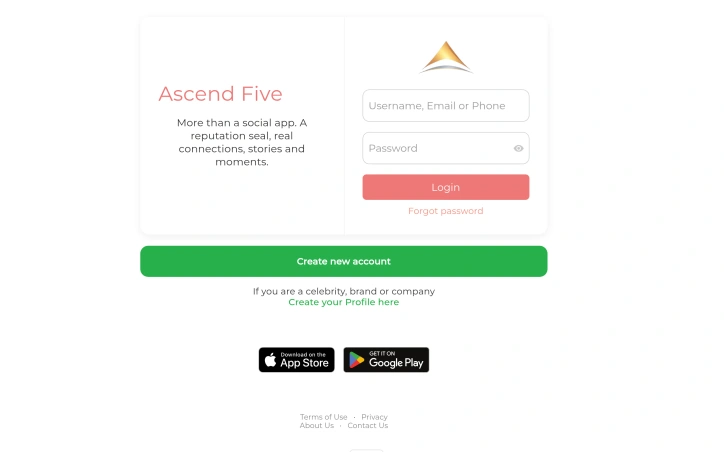
Image resizing is a common task for creators, but it often comes with a trade-off in quality. AImageResize tackles this problem head-on with an AI-powered tool that intelligently fills the expanded canvas for a natural, seamless look. The target audience is clearly creators who need to resize images for various purposes, such as social media, advertisements, and wallpapers. What stands out about AImageResize is its ability to maintain image quality during resizing. The tool uses AI outpainting to expand the canvas instead of stretching pixels, and applies smart interpolation when downscaling to preserve sharpness. This results in high-quality images with minimal artifacts, even when resizing to exact dimensions. The fact that it works entirely in the browser, without requiring any app installations, adds to its convenience. The tool boasts a range of features that make it versatile and user-friendly. It supports various file formats, including JPG, PNG, and WebP, and allows for precise dimension control. Social media presets are also available for one-click resizing to popular aspect ratios. Client-side processing ensures fast results, with no long upload waits or server queues. Additionally, the privacy-first approach, where images are not stored and deleted immediately after processing, is a significant advantage for users handling sensitive content. AImageResize operates on a credit-based pricing model, with no subscriptions or hidden fees. Credits never expire, and users can purchase them according to their needs. The PRO plan, which is highlighted as the most popular, offers 200 credits for $19, along with benefits like better consistency for product images, cleaner edge blending, and priority processing speed. Overall, AImageResize simplifies the image resizing process while maintaining high quality, making it a valuable tool for creators.


In a world where music streaming services often overwhelm users with choices and algorithmic recommendations, a simple, distraction-free radio solution is a breath of fresh air. Tonearm addresses the problem of decision fatigue and distraction, catering to individuals seeking to concentrate on tasks like coding, writing, or studying. By providing a curated selection of lo-fi, ambient, indie, and coding stations, the platform enables users to tune into a single, consistent audio stream, thereby minimizing the cognitive load associated with music selection. The product's commitment to simplicity and user privacy is noteworthy. With no account sign-ups required, users can instantly start listening to their preferred station with a single click. The absence of tracking, analytics, and personal data collection ensures a private listening experience. Moreover, the audio streams directly from the station providers, eliminating the need for a backend or proxy. Key features include the one-click start functionality, a minimalistic interface, and the ability to bind a keyboard shortcut for toggling playback. The Chrome extension and forthcoming macOS app are designed to be lightweight and unobtrusive, allowing users to maintain their focus. The curated stations are organized by use case, catering to different tasks and moods. The developer's emphasis on maintaining a tiny, calm, and independent product is evident in the design and functionality. By eschewing complex features and focusing on a straightforward radio experience, Tonearm provides a serene environment conducive to productivity. With its Chrome extension available now and macOS app on the horizon, Tonearm is poised to become a go-to solution for individuals seeking a hassle-free, focus-enhancing listening experience.


Businesses struggling to manage fragmented customer data and inefficient sales processes have a potent solution in Riibase, a comprehensive CRM platform designed to streamline customer relationships and boost sales. The creator's vision is to empower businesses to make smarter decisions and drive growth through intelligent insights and automation. Riibase is geared towards modern businesses across various industries, including e-commerce, insurance, and healthcare, who need a unified platform to manage customer interactions and sales processes. What sets Riibase apart is its built-in AI capabilities that work directly on customer data without requiring integrations or setup. The AI-powered features, including lead scoring, forecasting, and an AI assistant, enable businesses to score leads automatically, forecast revenue with confidence, and get instant answers to queries about their data using plain English. The platform's ability to provide human-readable reasons for every lead score and generate downloadable PDF reports for forecasting adds to its utility. Riibase offers a complete CRM solution, encompassing customer contact management, sales pipeline automation, and multi-channel integration. The platform's predictive analytics and customer behavior insights powered by machine learning facilitate informed decision-making. With 300+ businesses already trusting Riibase, the platform claims an average sales increase of 35% and a 99.9% uptime SLA. While pricing details are not explicitly stated, Riibase invites potential customers to "Get Started Free" or "Talk to Sales," suggesting a flexible business model. Overall, Riibase is a robust CRM solution that harnesses the power of AI to drive business growth and customer engagement.


For cryptocurrency traders who need to stay on top of market movements without constantly monitoring the markets, Alarm Crypto offers a timely solution. The app is designed to alert users with a loud, audible alarm when the price of a cryptocurrency crosses a user-defined threshold, ensuring they never miss a critical market moment. This functionality is particularly useful for traders who need to react quickly to price changes, even when they are not actively watching the market. What stands out about Alarm Crypto is its ability to provide real-time price alerts with extremely low latency, thanks to its direct WebSocket connections from major exchanges like Binance, Coinbase, and Kraken. The app's alarm is not just a silent notification that can be easily ignored; it's a loud, native Android alarm that will sound even when the device is locked or the app is closed. This feature is a significant upgrade over more traditional notification systems that might not grab a user's attention when it counts. The app's capabilities extend beyond simple price alerts. Users can choose from 2,472 monitored tokens and set alerts based on various conditions, including price thresholds, percentage changes over 24 hours, and sentiment analysis via the Fear & Greed Index. Additionally, the app provides a market overview with top gainers and losers, Bitcoin dominance, market capitalization, and 24-hour volume, all accessible on the home screen. A widget feature allows users to keep an eye on Bitcoin prices and the Altcoin Season Index directly from their home screen. Users can try Alarm Crypto with a 7-day free trial, after which the pricing details come into effect, though the exact cost is not specified. Overall, Alarm Crypto is a robust tool for serious cryptocurrency traders who need reliable, customizable, and attention-grabbing market alerts to stay ahead in a fast-moving market.


Discoverability is a significant hurdle for indie makers and SaaS founders trying to get their tech products in front of the right audience. LaunchLog addresses this issue by providing a curated directory for new tech launches, making it easier for users to find innovative tools and for products to gain visibility. The platform is specifically designed for independent tech creators and entrepreneurs looking to increase their product's exposure. What sets LaunchLog apart is its focus on getting listed products cited by prominent AI answer engines such as ChatGPT, Perplexity, Claude, and Gemini. This forward-thinking approach recognizes the growing importance of AI-driven search and information retrieval, positioning LaunchLog as a prescient solution for tech discoverability. By optimizing listings for citation by these engines, LaunchLog enhances the visibility of its featured products beyond traditional search channels. The platform offers a straightforward process for getting listed, allowing users to preview their listing for free before deciding to publish. This preview capability gives potential customers a risk-free opportunity to assess the quality and relevance of the listing. The business model is transparent, with users only paying when they choose to publish their listing. Existing listings can be managed through a sign-in feature, indicating some level of user account management and potentially personalized experience. By solving the discoverability problem and catering to the needs of both indie makers and SaaS founders, LaunchLog establishes itself as a valuable resource in the tech ecosystem. Its innovative approach to leveraging AI-driven visibility and straightforward listing process make it an attractive option for those seeking to amplify their product's reach.


For movie and TV enthusiasts, the task of keeping track of what they've watched, finding where to watch new titles, and discovering fresh recommendations can be daunting. MisPelis is an app that tackles these challenges head-on, providing a comprehensive solution for organizing and exploring the world of cinema and television. At its core, the app is designed to help users curate their personal movie and series library, complete with features like a diary to record their viewing experiences and a Hall of Fame to showcase their most treasured titles. One of the standout features is its ability to inform users about the availability of their desired movies and series across various platforms, ensuring they can easily find a legitimate source to watch. The integration of artificial intelligence (AI) is a notable aspect, as it not only provides personalized recommendations but also offers insights into potentially distressing content, such as animal deaths or excessively scary scenes, allowing users to make informed decisions about their viewing choices. Additionally, the app includes a range of engaging games and quizzes designed to test users' knowledge and foster a sense of community, whether played solo or with friends. The app's data is synced across devices upon creating an account, ensuring a seamless experience. The information on movie and series availability is kept up-to-date thanks to direct integrations with reputable sources like JustWatch and The Movie Database. Notably, the app is completely free to use, with the developer relying on donations to cover monthly expenses. Overall, MisPelis offers a robust and user-centric platform that caters to the diverse needs of movie and TV enthusiasts, making it an indispensable tool for anyone looking to elevate their viewing experience.


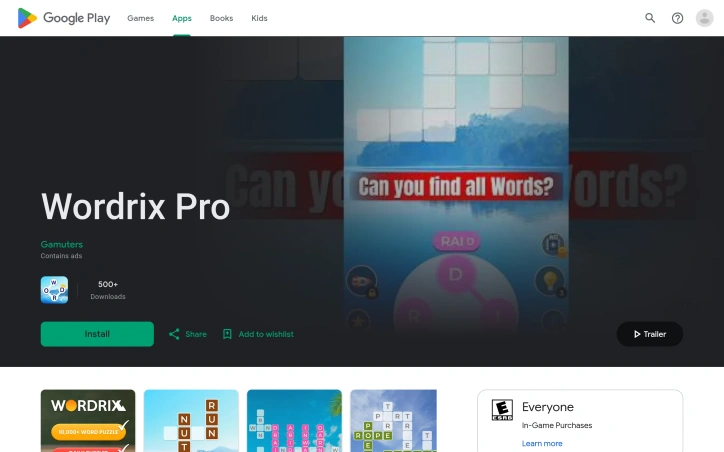
For those seeking a mentally stimulating yet relaxing experience, a new word game has emerged to challenge and engage. Developed by Gamuters, Wordrix Pro is designed to keep the mind active every day with its vast array of 10,000+ levels. The game addresses the issue of tedious word searching by providing a simple and intuitive interface, making it accessible to a wide range of users. Its target audience is individuals who enjoy word search games and word connect puzzles, looking to improve their vocabulary, spelling, and focus. One standout aspect of Wordrix Pro is its ability to adapt to the player's pace, with no timer to create pressure. The game's design ensures that each correct word and combo feels satisfying, with subtle haptic feedback enhancing the experience. The built-in dictionary is another notable feature, instantly providing the meaning of discovered words without leaving the game. This not only adds to the gameplay but also aids in learning and expanding one's vocabulary. Key features of the game include a Daily Spin for free coins, boosters, and rewards, as well as unlockable background themes to keep the experience fresh. The game also works offline, making it suitable for travel or areas with low network connectivity. The simple swipe controls and automatic progress saving further contribute to its user-friendly nature. The game's developer has emphasized the importance of creating simple, useful, and engaging gaming experiences. In line with this, Wordrix Pro is available for download, with options for in-game purchases. The presence of ads is also noted. The developer has provided a privacy policy, stating that no data is shared with third parties, and data is encrypted in transit, giving users some assurance about their data security.

Downloading videos from Bluesky has become a common need as the platform attracts creators and news-breakers, yet Bluesky itself offers no native save function. BskyDownloader fills this gap with a free, web-based tool designed for users who want to preserve video content offline or ensure cross-device compatibility. The target audience spans content archivists, offline viewers, and anyone seeking to save Bluesky videos without platform workarounds. The founder built this after recognizing consistent demand for a reliable downloading solution—users were actively searching for options before this tool addressed the gap. What distinguishes BskyDownloader is its economy of friction. The tool requires just four steps: locate the video, copy the post link, paste it into the web interface, and download. This straightforward workflow makes the service accessible to non-technical users. By operating as a web-based interface rather than requiring software installation or browser extensions, it eliminates compatibility concerns and avoids the operational overhead that desktop tools require. There's no account creation, no login barriers, and no unnecessary configuration. Core capabilities focus on practical output. Videos download as MP4 files—the universal standard that plays reliably on any device—and the service prioritizes maintaining video quality and audio synchronization, a consideration that distinguishes quality downloaders from inferior alternatives that produce degraded exports. The tool operates free of charge and without watermarks, removing additional friction that commercial competitors introduce through branding or subscription paywalls. The technical approach is deliberately minimal: a web interface, no client-side software, no installation hurdles. This design choice also shapes the business model by reducing operational overhead, avoiding licensing complications, and focusing entirely on reliable core functionality without feature bloat. For users seeking an uncomplicated Bluesky video downloader, the product delivers straightforward execution without unnecessary features or cost. In a crowded space of competing tools, functional reliability and friction-free access establish baseline value, though the commodity nature of the solution limits premium positioning opportunities.


Event management is a complex task that requires a delicate balance between simplicity and functionality. Many existing tools fall short, either being too basic or too expensive, with the latter often relying on a stack of add-ons that can double the initial cost. EventMGT addresses this gap by providing a comprehensive platform designed for organizers running complex events. The company's mission is to empower event organizers to manage registrations, payments, and logistics with ease, without resorting to cumbersome spreadsheets or multiple add-ons. What stands out about EventMGT is its focus on providing a robust set of features that cater to the needs of events that have outgrown basic registration tools. The platform offers advanced registration logic, including multi-track sessions, conditional fields, and group registrations, all of which are typically found behind paid modules in other platforms. Additionally, EventMGT provides financial control features, such as tracking payments and changes to bookings, issuing proforma invoices, and running financial reports. The platform also extends its functionality beyond the registration process, enabling organizers to handle tasks such as QR check-in, on-site balance settlement, and badge printing on demand. The platform's capabilities are further enhanced by its commitment to providing free setup help, where the team will set up the first event for organizers, transferring existing data from spreadsheets or other tools, and reviewing the workflow before it goes live. This level of support is particularly noteworthy, as it demonstrates the company's confidence in its product and its willingness to support its customers. Notably, EventMGT operates without setup fees or obligatory quotes, and it doesn't require a credit card to create a free account.


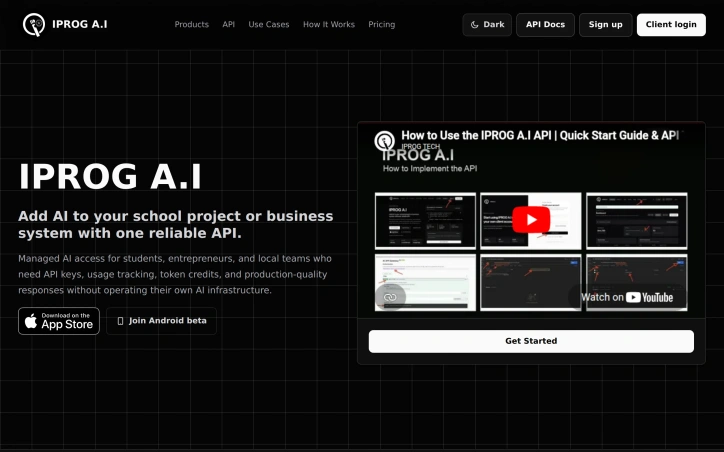
Managed access to AI infrastructure is a significant hurdle for students, entrepreneurs, and local teams looking to integrate AI into their projects. IPROG A.I addresses this challenge by providing a straightforward API that enables users to add AI capabilities to their systems without the need to operate their own AI infrastructure. The solution is designed with students and entrepreneurs in mind, simplifying the process of integrating AI into various applications, from school projects and research tools to business systems and customer support tools. What stands out about IPROG A.I is its practical approach to making AI accessible. It caters to users who need production-quality AI responses without the complexity of managing their own AI infrastructure. The API is designed to be developer-friendly, allowing users to create an account, obtain an API key, and start sending prompts and tracking token usage with ease. The product offers two main paths for integrating AI: a direct API for custom workflows and a hosted chatbot widget for websites. The API allows for full control over prompt design and response handling, making it suitable for integration into various systems, including web apps, POS, LMS, and CRM. The chatbot widget, on the other hand, enables users to embed a ready-to-use AI chatbot on their website with a single script tag, allowing visitors to ask questions based on uploaded business knowledge. Notably, IPROG A.I accommodates users who may not have access to credit cards by offering local payment options for topping up token credits. This feature, combined with its production-quality AI responses, positions IPROG A.I as a viable solution for students and entrepreneurs who want to build competitive projects. The service provides 5,000 free test tokens upon sign-up, allowing users to test the API before committing to a purchase.

For Australian individuals and businesses struggling with the tedious task of manually tracking receipts for tax deductions, a much-needed solution has emerged. The burden of lost or misplaced receipts, coupled with the time-consuming process of categorizing and auditing expenses, is a common frustration for many. ReceiptClaimer is designed to alleviate this pain by providing an automated, AI-driven platform that streamlines the receipt tracking process. What stands out about ReceiptClaimer is its focus on the specific needs of Australian taxpayers, particularly landlords and sole traders. By leveraging Google's Document AI technology, the platform achieves impressive accuracy in extracting relevant information from receipts, eliminating the need for manual data entry. Users can simply forward receipts via email or snap a photo, and the AI engine categorizes expenses according to Australian Taxation Office guidelines. The platform's key features include smart categorization, multi-property tracking, and the ability to generate ATO-ready reports with ease. For landlords managing multiple rental properties, ReceiptClaimer offers a valuable tool for monitoring cash flow, expenses, and rental income per property. By automating the receipt tracking process, users can save significant time and reduce the risk of missed deductions. Notably, ReceiptClaimer offers a free tier, allowing users to start automating their tax deductions without requiring a credit card. The platform's Pro tier supports unlimited properties, making it a scalable solution for growing businesses. With its emphasis on accuracy, ease of use, and compliance with Australian tax regulations, ReceiptClaimer is poised to revolutionize the way individuals and businesses manage their tax receipts.


B2C brands are often hamstrung by inefficient AI creative workflows, wasting resources on regenerating content and tweaking prompts. PromptIt Pro addresses this pain point by providing a premium AI creative engine and managed prompts tailored to the needs of B2C brands. At its core, the problem it solves is the lack of structured prompts, which hinders the effectiveness of AI tools. What stands out about PromptIt Pro is its focus on delivering high-performance, production-ready creatives that don't feel artificial. The platform showcases impressive before-and-after visuals, demonstrating its ability to transform basic product images into polished, premium content in mere seconds. This capability has significant implications for ecommerce ads and brand lifestyle imagery. The product's key features include one-click changes to adjust brand voice, lighting, and model settings, a strategic directory to quickly find styles, and architected prompts that ensure first-pass success across popular AI platforms like ChatGPT and Midjourney. These features collectively enable B2C teams to produce high-quality creatives at scale, without getting bogged down in endless prompt tweaking. By providing ready-to-use prompt formats and eliminating guesswork, PromptIt Pro helps brands achieve professional creative stability and repeatable results. The fact that thousands of professionals are already using the platform to scale their creative production is a testament to its value proposition. While the pricing details are not explicitly stated, the emphasis on saving AI credits and reducing waste implies that PromptIt Pro is positioned as a cost-effective solution for B2C brands looking to optimize their AI creative workflows. Overall, PromptIt Pro is a powerful tool for B2C brands seeking to unlock the full potential of their AI creative engines.


Accurate dosing is critical in peptide therapy, and most users calculating reconstitution and injection volumes are doing so with spreadsheets or manual math prone to error. Peptide Calculator addresses this gap by automating the conversion process for individuals administering peptide injections for performance enhancement, anti-aging, or research purposes. The tool tackles a straightforward but essential problem: determining precise milliliter volumes to draw when reconstituting peptide vials with bacteriostatic water. Users input their peptide strength (in milligrams), select their water volume, specify their desired dose, and the calculator returns both the concentration and the exact injection volume needed. A visual syringe graphic accompanies the results, providing an additional reference point for users preparing their injections. Several design choices distinguish this from a basic calculator. The product offers three preset water volumes (1 mL, 2 mL, and 3 mL) with clear explanations of how each affects concentration levels—1 mL for high concentration, 2 mL for standard (the recommended default), and 3 mL for lower concentrations. An "adjustable mode" feature allows further refinement, letting users increase or decrease water volume to optimize their specific requirements. The ability to download results adds a practical element, enabling users to save or print their calculations for reference during injection preparation or for record-keeping. The calculator supports multiple commonly used peptides, including Tirzepatide, Retatrutide, and Semaglutide, though the website doesn't specify whether different peptides receive specialized guidance or if the calculator treats all peptides identically. Users can input doses in either micrograms or milligrams, matching the different ways peptides are dosed in practice. The product targets researchers and advanced users, indicating a technical audience comfortable with peptide administration. The foundational information provided—brief explanations of what peptides are, their proposed benefits, and how the calculator works—reaches people new to peptide dosing, though the core tool itself remains accessible regardless of user experience level. No pricing information is disclosed on the site. The product is a web-based calculator with no subscription or licensing cost mentioned, though it carries "premium" branding.