uploadthefile.com
Sharing files and publishing static content has long required friction: account creation, platform navigation, or comman...

CrabTap
Small businesses have long struggled to implement loyalty programs without massive overhead. CrabTap addresses this gap...
Catalyst Healthspan Audit
Personal trainers typically sell training sessions. This startup reversed the equation by building assessment first, mak...
Recently Listed
884 launches
Calculus students and professionals often struggle with complex differentiation problems, tediously working through manual calculations prone to errors. Derivative Calculator addresses this pain point by providing a comprehensive online tool that not only solves derivatives instantly but also explains the step-by-step process behind the calculations. The platform is geared towards students checking their homework, educators looking for a reliable teaching aid, and professionals needing quick gradient computations. What stands out about Derivative Calculator is its commitment to transparency and learning. Unlike other online calculators that provide a final answer without context, this tool reveals the intermediate steps involved in the differentiation process, reinforcing users' understanding of calculus concepts. The incorporation of interactive graphs allows users to visualize the function and its derivative simultaneously, providing a geometric intuition that's essential to mastering calculus. The calculator's capabilities are impressive, supporting a wide range of functions, including algebraic, trigonometric, and exponential functions. It also handles complex rules like the Chain Rule, Product Rule, and Quotient Rule, labeling each applied rule to help users map the solution back to their textbook theories. Notably, Derivative Calculator is free for students and educators, with no sign-up required. This accessibility, combined with its robust feature set, makes it an attractive resource for those looking to accelerate their study workflow or verify manual calculations. Overall, Derivative Calculator is a valuable tool for anyone working with calculus, providing a reliable and instructive companion for academic and professional pursuits.


The challenge of generating accurate and visually appealing images has long plagued creators and businesses. GPTIMG2 AI tackles this issue head-on by providing a platform for producing high-quality product visuals, posters, UI mockups, and ads with clear text. The company was founded to address the shortcomings of existing image generation tools, specifically the problem of inaccurate text rendering and image generation. What stands out about GPTIMG2 AI is its focus on delivering precise and realistic images, as evident in its showcase of product ads, character action scenes, and typography-heavy visuals. The platform's GPT Image 2 generator is particularly noteworthy for its ability to produce e-commerce-ready images, stylized edits, and commerce mockups with a high degree of accuracy. The extensive prompt library and comparison of different image and video models across various parameters further underscore the platform's capabilities. GPTIMG2 AI's key features include its GPT Image 2 generator, which offers stronger prompt accuracy and text rendering, as well as its range of image and video models catering to diverse creative needs. The platform also provides a library of real-world use cases, demonstrating its potential applications in various industries. Currently, GPTIMG2 AI is offering 30 free credits to users, with yearly plans available at a discounted rate of up to 50% off until May 20. A promotional offer of 50% off is also available, although the specific details of the offer's terms are not specified. Overall, GPTIMG2 AI presents a compelling solution for creatives and businesses seeking to generate high-quality images with precision and accuracy.


Designing a visually appealing website or brand theme can be a daunting task, especially when it comes to selecting a harmonious color palette. The process of finding and creating color schemes is simplified by ColorsLabs, a suite of tools catering to designers and developers. The platform is geared towards professionals seeking to streamline their workflow and elevate their brand's visual identity. What stands out about ColorsLabs is its focus on providing a range of color palettes for various applications, including websites, mobile apps, and landing pages. The diversity of pre-curated palettes is complemented by a collection of website templates, showcasing the versatility of the color schemes. These templates, such as Nexora AI SaaS Template and Luxora Hotel Template, demonstrate how the color palettes can be effectively applied to real-world projects. A key feature of ColorsLabs is its image extractor tool, which allows users to upload a screenshot or image and instantly extract the dominant HEX colors. This functionality is particularly useful for designers looking to derive inspiration from existing designs or to maintain brand consistency. Additionally, the platform offers a text checker tool, providing a range of font options and styles to complement the color palettes. The creator of ColorsLabs aimed to address the need for a streamlined color palette creation process, coupled with handy color conversion tools. By doing so, they have developed a valuable resource for designers and developers seeking to enhance their UI and brand design. Notably, the website does not explicitly mention its pricing or business model, leaving potential users to explore these details further. Overall, ColorsLabs presents a valuable solution for creatives seeking to refine their design workflow and produce high-quality visual content.


For traders seeking to make informed decisions across various markets, Noro AI offers a sophisticated artificial intelligence-powered trading assistant. At its core, the platform addresses the complexities of manual analysis and risk management, aiming to simplify the trading process. The target audience is serious traders operating in Forex, Crypto, Gold, and Stocks markets who require advanced tools to refine their trading strategies. One standout aspect of Noro AI is its comprehensive approach to market analysis, covering market structure, liquidity zones, and momentum to provide precise entry and exit signals. The AI-driven analysis is bolstered by features such as smart stop-loss and take-profit targets, risk management calculators, and trend analysis, which collectively enable traders to make data-driven decisions. The platform's ability to understand market context and detect liquidity zones further enhances its analytical capabilities. The platform's key features include instant alerts for potential trend reversals, ultra-low latency alerts for timely notifications, and continuous weekly updates to ensure maximum performance. Additionally, Noro AI prioritizes security and privacy, employing full encryption to safeguard user data. Noro AI operates on a tiered pricing model, with options ranging from a monthly subscription of $499 to a one-time lifetime payment of $7,499. The higher-tier plans, including the yearly and lifetime subscriptions, offer additional benefits such as 1-on-1 onboarding sessions, deep-dive weekly reports, and private wealth consultation. For select plans, professional account management is available, where expert AI and human traders manage the user's capital for optimal returns, with a profit-sharing model that aligns the interests of the user and the management team.


Quitting nicotine pouches can be a challenging task, and most existing quit apps fall short in catering to the specific needs of pouch users, having been primarily designed for cigarette smokers. PouchOut addresses this gap by offering a tailored quit plan that understands the unique habits and challenges associated with nicotine pouch use. The app is designed specifically for users of popular nicotine pouch brands such as ZYN, Velo, and others, providing a structured 30-day protocol to help them overcome their addiction. What stands out about PouchOut is its comprehensive approach to quitting, which involves not just a taper plan but also urge training and a reset system. The app's 30-day protocol is divided into three phases, each designed to build awareness, disrupt habitual behavior, and ultimately give users control over their cravings. The urge training feature allows users to log their urges in seconds, track triggers, and build win streaks, providing a measurable sense of progress. The reset system is also noteworthy, as it protects users' progress and eliminates shame spirals when they slip up, instead guiding them to learn from the trigger and move forward. The app offers a range of features that support the quit journey, including a real-time cost calculator that shows users how much they are saving. By providing a structured and supportive environment, PouchOut empowers users to take back control of their lives. The testimonials from real users attest to the effectiveness of the app's approach, with some reporting significant reductions in their nicotine pouch use. With over 4,000 pouch users on their quit journey, PouchOut has established itself as a valuable resource for those looking to overcome their nicotine pouch addiction. The app is available for free download on the App Store.


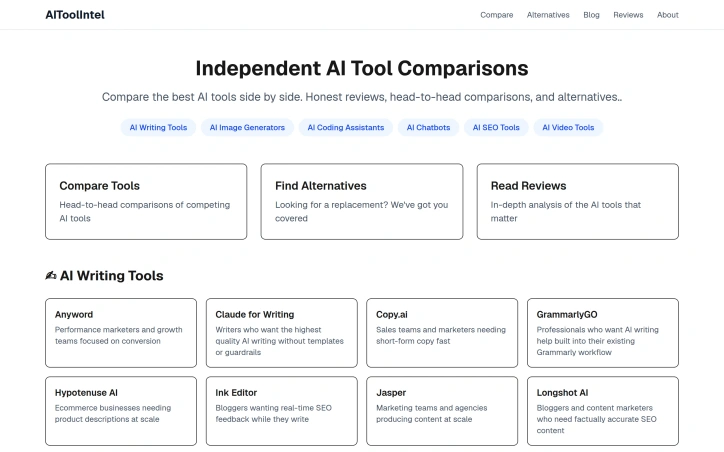
Navigating the ever-expanding landscape of AI tools can be a daunting task for individuals and businesses alike. The sheer number of options available makes it challenging to identify the most suitable tool for specific needs. AIToolIntel addresses this issue by providing a comprehensive comparison platform that enables users to make informed decisions. The platform is designed for a diverse range of users, from performance marketers and growth teams to artists, designers, and developers. By categorizing AI tools into distinct categories such as AI writing tools, image generators, coding assistants, and chatbots, AIToolIntel makes it easier for users to find relevant tools. The platform's focus on independent reviews and head-to-head comparisons sets it apart from other review sites. One of the standout features of AIToolIntel is its in-depth analysis of various AI tools. For instance, its AI writing tools section provides detailed descriptions of each tool, highlighting their strengths and ideal user profiles. This level of detail allows users to quickly identify the most suitable tool for their specific needs. The platform also offers alternatives to popular tools, giving users a broader range of options to consider. By providing honest and unbiased comparisons, AIToolIntel empowers users to choose the best AI tool for their specific requirements. While the platform doesn't explicitly mention its pricing or business model, its value proposition lies in its ability to simplify the process of finding the right AI tool, saving users time and effort in the long run. Overall, AIToolIntel is a valuable resource for anyone looking to navigate the complex world of AI tools.

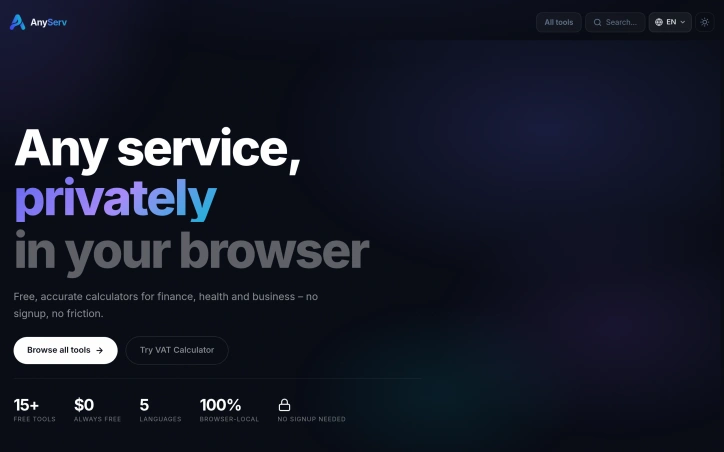
Financial calculations and business tasks often require specialized tools, but accessing these can be cumbersome due to paywalls, registration requirements, and data privacy concerns. AnyServ addresses this issue by offering a suite of calculators and business tools directly in the user's browser, eliminating the need for downloads, sign-ups, or server-side data processing. The platform is geared towards individuals and businesses seeking straightforward, accurate financial and business calculations without the hassle of traditional software or online services. What stands out about AnyServ is its commitment to user privacy and simplicity. By processing all calculations locally within the browser, AnyServ ensures that user data never leaves their device, providing a high level of security and compliance with data protection regulations like GDPR. The service also boasts a clutter-free experience, allowing users to pick a tool, input their data, and receive instant results without any friction. The range of tools available on AnyServ is diverse, covering financial, tax, and business needs. Users can access a VAT calculator, mortgage calculator, salary calculator, and percentage calculator, among others, all of which are designed with transparency and accuracy in mind. The formulas behind these calculators are based on official tax and banking standards, ensuring reliability. AnyServ operates on a completely free model with no hidden costs, accounts, or paywalls. The absence of registration requirements and the local processing of data contribute to a seamless user experience. The service supports multiple languages and is accessible on mobile devices, enhancing its utility across different user bases. With new tools being added regularly, AnyServ is continually expanding its capabilities to meet a wide range of user needs.

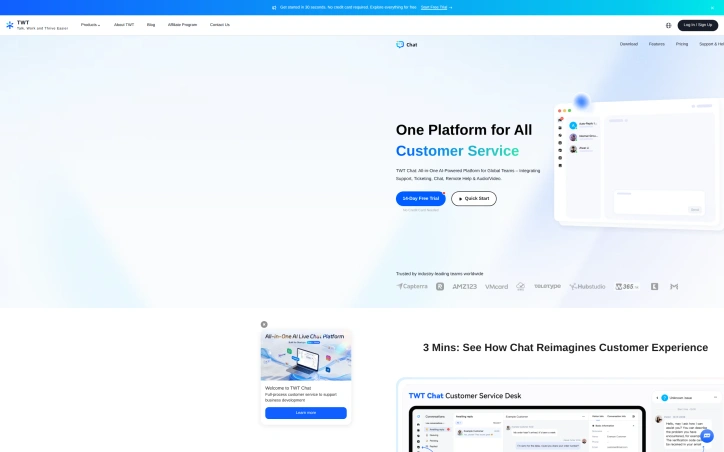
Customer support teams struggling with fragmented communication and inefficient processes have a potent solution in the form of an AI-powered, all-in-one customer service platform. Designed to unify support, ticketing, chat, and remote assistance, this platform is tailored for global teams seeking to streamline their customer interactions. The problem it tackles is multifaceted - it not only aims to reduce the complexity of using multiple tools but also addresses the challenges of providing customer support across different languages and time zones. What stands out about this platform is its commitment to simplicity and cost-effectiveness. It offers unlimited conversations without charging extra for growth, thereby eliminating the financial unpredictability associated with pay-per-use models. The integration of AI deep learning technology is also noteworthy, as it enables the provision of real-time professional replies, thereby freeing up a significant amount of support effort. The platform's capabilities, such as two-way real-time auto-translation, screen sharing, and live annotation, facilitate effective communication with global customers and help resolve complex issues promptly. Its multi-device sync feature ensures continuous service, allowing teams to handle alerts, tickets, and chats on the go. The platform caters to various industries, including SaaS, e-commerce, education, and finance, providing tailored solutions to meet their specific needs. The business model is straightforward, with a 14-day free trial that doesn't require a credit card. The transparent pricing is based on a fixed model, devoid of surge fees, making it an attractive option for businesses looking to manage their customer support costs effectively. Overall, this platform presents a compelling solution for global teams seeking to enhance their customer experience while improving operational efficiency.

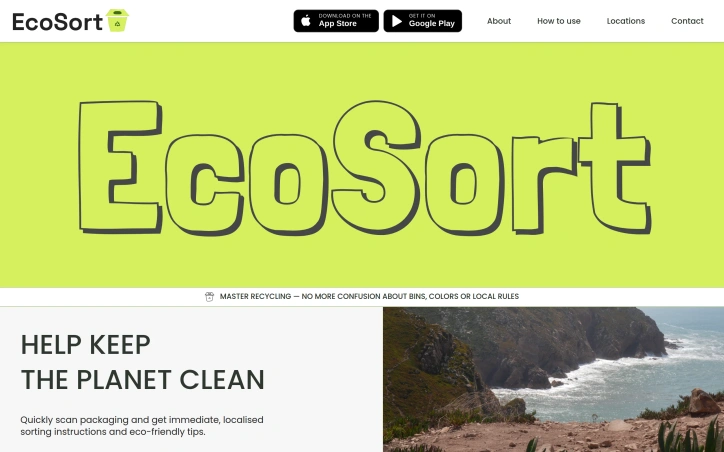
Waste management is a pressing global issue, and a significant part of the problem lies in the confusion surrounding recycling practices. Different regions have varying rules and guidelines, leaving individuals uncertain about how to dispose of waste correctly. EcoSort addresses this issue by providing a user-friendly solution for people to sort their waste effectively. The app is designed for individuals who want to make a positive impact on the environment but struggle with the complexities of local recycling regulations. What stands out about EcoSort is its commitment to making waste management effortless and accessible. By using a simple scanning process, users can quickly determine how to dispose of packaging waste and receive eco-friendly tips. The app's localized approach is also noteworthy, as it caters to specific regions and languages, ensuring that users receive relevant and accurate information. The app's key features include its ability to provide localized sorting instructions, support for multiple languages, and coverage of several countries, including Spain, France, Italy, Germany, Austria, Netherlands, and Portugal. Users can select their language and country, scan packaging, and receive immediate guidance on how to dispose of it. The app also encourages user feedback and provides a clear disclaimer, stating that its guidance is based on publicly available recycling guidelines and should be used as a suggestion rather than a definitive authority. Overall, EcoSort is a valuable resource for individuals seeking to reduce their environmental footprint. By simplifying the waste management process and providing accessible guidance, EcoSort empowers users to make a positive impact. While the app's pricing model is not explicitly stated, its availability on the App Store and Google Play suggests that it is accessible to a wide range of users.

Travel planning can be a daunting task, involving numerous details that are easy to overlook. For travelers seeking to simplify their journey, Time2Pack offers a comprehensive solution. The app is designed for anyone embarking on a trip, whether it's a leisurely vacation or a business excursion, providing a centralized platform to manage every aspect of travel. What stands out about Time2Pack is its ability to cater to diverse travel needs, from creating customized packing lists to tracking flights and storing important documents. The app's packing list feature is particularly noteworthy, as it allows users to tailor their lists according to their specific trip requirements. Moreover, the gamified packing process makes the experience engaging and stress-free. The app's key features include real-time flight tracking with alerts for check-ins, delays, and gate changes, ensuring that travelers stay informed and on schedule. Additionally, users can store trip documents, notes, and photos in one easily accessible location, making it simple to retrieve important information or reminisce about past travels. Time2Pack is available for free, with no credit card required to get started. The app also promises an ad-free experience, allowing users to focus on their travel planning without interruptions. Overall, Time2Pack is an excellent choice for travelers seeking a streamlined and organized approach to planning their trips, and its commitment to being free underscores its mission to make travel less stressful and more enjoyable. With a growing user base of over 50,000 travelers, Time2Pack is establishing itself as a reliable and user-friendly travel companion.


For travelers tired of cluttered and complicated flight tracking apps, OnlyFlights offers a refreshing alternative that cuts through the noise. By focusing on the essentials, it provides a straightforward and stress-free experience for users who want to stay informed about their flights without being overwhelmed by unnecessary features or notifications. The app is clearly geared towards individuals who fly occasionally, as well as those who value a clean and intuitive interface. What stands out about OnlyFlights is its commitment to simplicity and ease of use. The developers have deliberately avoided feature creep, instead concentrating on delivering a seamless and distraction-free experience that allows users to quickly access the information they need. The result is an app that feels calm and composed, even in the midst of travel chaos. Key features of the app include real-time flight tracking, live activities, and boarding alerts, all of which work together to keep users informed about the status of their flights. The app also allows users to keep a personal flight history and statistics, and to import flights from other apps with ease. Additionally, users can track flights directly from their lock screen and dynamic island, and use countdown widgets to keep track of upcoming flights. With over 50,000 users worldwide and 120,000 flights tracked since March 2025, the app has already gained significant traction. The developers are also actively working on new features, including calendar sync, which is promised soon.

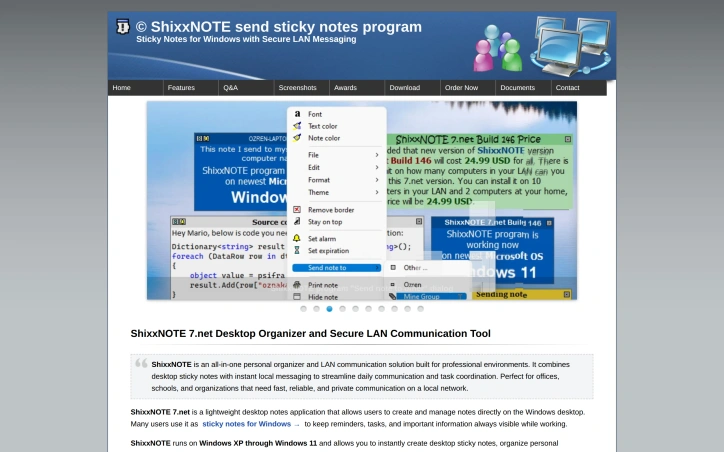
In environments where simplicity and speed are crucial, a clutter-free productivity solution is essential. ShixxNOTE addresses this need by offering a straightforward and efficient platform for managing notes, reminders, and internal communication. The software is tailored for professional settings such as offices, schools, and organizations that require fast, reliable, and private communication within a local network. What stands out about ShixxNOTE is its focus on being lightweight and uncomplicated, directly countering the trend of feature-heavy productivity apps that often come with slow interfaces and unnecessary distractions. By streamlining note-taking and communication, it enables users to capture information quickly and stay organized without the complexity associated with larger productivity platforms. The key features of ShixxNOTE include its ability to create and manage desktop sticky notes, facilitate instant messaging over a local network, and enable note sharing directly to other users' desktops. It is compatible with a range of Windows operating systems, from Windows XP to Windows 11, making it a versatile option for various environments. The application's multithreaded client/server architecture ensures that communication is immediate and effective, with notes being delivered straight to the recipient's desktop. Notably, ShixxNOTE prioritizes data privacy by operating entirely within the local network, eliminating the need for an internet connection. This aspect, combined with its offline functionality, makes it an attractive option for those seeking secure notes software. A 30-day free trial is available, allowing potential users to test the full functionality of the software before committing to a purchase. The trial version is fully functional, with the only limitation being the trial period itself.

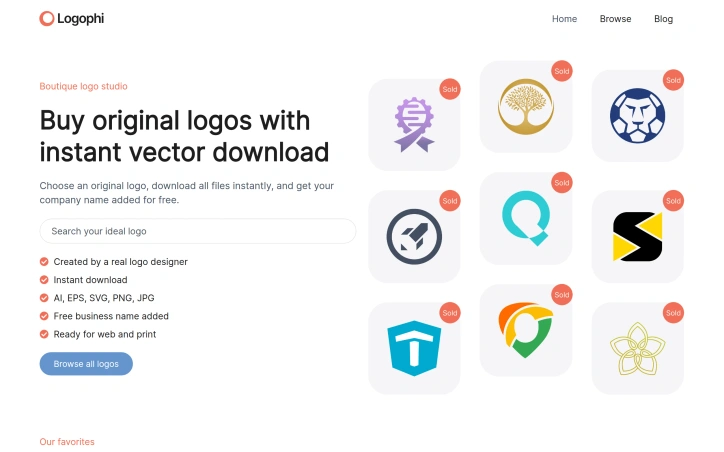
For entrepreneurs and small business owners who need a professional logo quickly, Logophi offers a compelling solution. The website provides a curated collection of original, handcrafted logos that can be purchased and downloaded instantly, eliminating the wait associated with custom design processes. What stands out about Logophi is its commitment to exclusivity; each logo is sold only once, ensuring that buyers receive a unique brand identity. The logos are designed by a real logo designer, and the website showcases a diverse range of designs, from minimalist to bold and symbolic. The process is straightforward: customers browse the collection, select a logo they like, and receive instant digital downloads in various formats, including AI, EPS, SVG, PNG, and JPG. The purchased logo comes with the buyer's business name added for free, and optional color adjustments are available at no extra cost. The commercial license is included, giving buyers full rights to use the logo across various platforms. Logophi's business model is based on a one-time sale for each logo, with prices ranging from $300 to $800. The website features a selection of logos at different price points, giving customers a sense of the design quality and variety available. Overall, Logophi provides a convenient and reassuring solution for startups and small businesses seeking a strong, memorable logo to establish their brand identity. By offering professionally designed, exclusive logos with instant download, Logophi helps new brands launch with confidence.
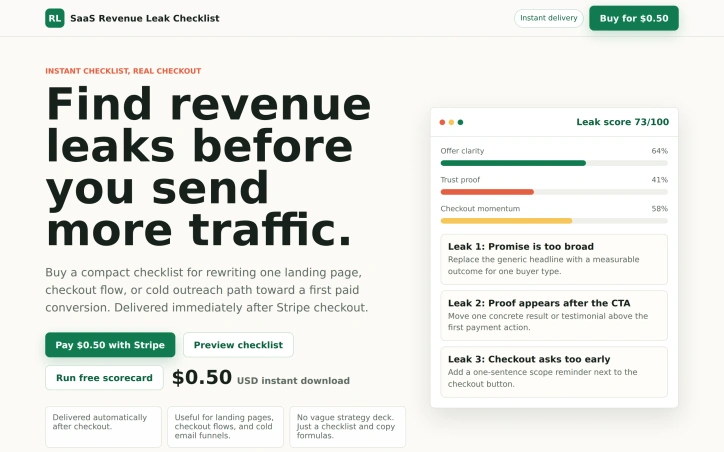
Founders and indie makers often struggle to optimize their conversion funnels, resulting in lost revenue. The Revenue Leak Scorecard is designed to help identify and fix these leaks. It is a conversion triage tool that assesses key areas such as buyer clarity, proof before checkout, and trust friction, providing a score and highlighting missing elements that hinder conversions. What stands out about this product is its straightforward and practical approach. The scorecard is free, and it provides a clear and actionable score that users can copy. For those willing to pay a minimal fee of $0.50, a comprehensive checklist is available, offering a step-by-step guide to rewriting their landing page, checkout flow, or cold outreach path. The product's key features include its ability to evaluate conversion basics, providing a score and identifying areas for improvement. The paid checklist includes copy formulas, trust checks, and paid-trigger prompts, all designed to help users tighten their conversion paths. The checklist is delivered immediately after payment via Stripe, and users can access it without providing any additional information. The pricing model is simple: the scorecard is free, and the detailed checklist costs $0.50. This low-cost upgrade offers significant value, as it provides users with a clear plan to optimize their conversion funnels. Overall, the Revenue Leak Scorecard is a valuable resource for founders and indie makers looking to maximize their revenue by identifying and fixing conversion leaks. Its practical approach, combined with its affordability, makes it an attractive solution for those seeking to improve their online sales and marketing efforts.

Learning time concepts can be a daunting task for young children, but a well-designed tool can make all the difference. The product in question is designed for kids aged 2 and above, with the primary goal of teaching them about days, months, seasons, and daily routines in an engaging manner. By introducing these concepts early on, it helps kids develop a sense of structure and understanding of the world around them. What stands out about this product is its interactive approach to learning, making it a fun experience for kids. It's a 9-in-1 activity calendar that covers a range of topics including day, date, year, festivals, time, affirmations, month, weather, season, and feelings. This comprehensive approach ensures that kids are exposed to a broad spectrum of concepts that are essential for their cognitive development. The product is made from non-toxic materials, ensuring the safety of children, which is a critical consideration for parents. The company behind the product, iLearnNGrow, offers a curated range of educational tools, positioning itself as a one-stop shop for parents seeking to support their child's overall development. The calendar is priced at ₹500, which is a discounted rate from its regular price of ₹899. The product's availability and pricing details suggest that it is positioned as an affordable solution for parents in India, with the added benefit of free shipping on orders above ₹999. Overall, this product has the potential to be a valuable resource for parents seeking to introduce their young children to fundamental time concepts in an engaging and interactive way.

For professionals struggling to establish an online presence, a new tool is emerging to simplify the process. The challenge of showcasing skills and experience online is a common one, and Aimorpher's creator has developed a solution that leverages AI to turn resumes into websites in a single click. By doing so, the product directly addresses the need for a straightforward and efficient way to create a professional online identity. What stands out about this product is its focus on ease and speed, with the entire process taking just one minute to initiate. The simplicity of uploading a resume to generate a professional website is compelling, especially for those who are not tech-savvy or lack the time to design a site from scratch. The key feature of this product is its ability to transform an existing resume or LinkedIn profile into a polished website. This capability is underpinned by AI, which presumably handles the formatting and design aspects, ensuring a professional outcome. The fact that it is 100% free and open source is also noteworthy, as it removes cost barriers for potential users and suggests a commitment to transparency and community involvement. The product's openness and lack of cost make it an attractive option for a wide range of professionals. The absence of any mentioned pricing tiers or business model suggests that the product is genuinely committed to being free, at least for the time being. Overall, the straightforward functionality and accessible nature of the product make it a worthwhile consideration for anyone looking to establish or enhance their professional online presence without the hassle of building a website from the ground up.


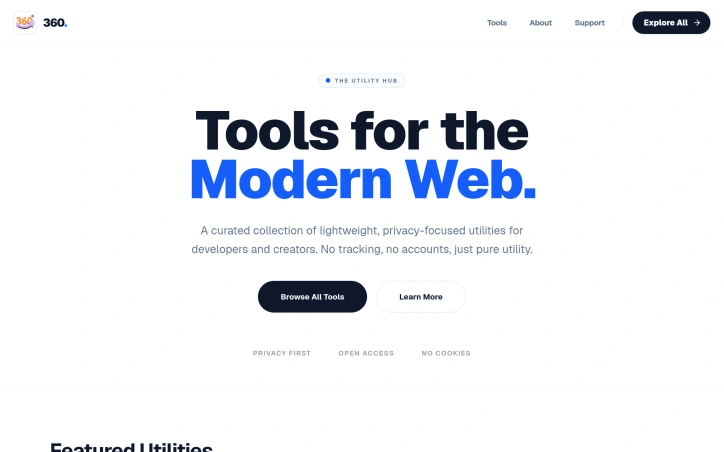
The modern web development landscape is cluttered with bloated software that prioritizes revenue over user needs. In response, a suite of online tools has emerged to cater to the needs of developers and business professionals. 360 Solution is a curated collection of utilities designed to be lightweight and privacy-focused, addressing the issue of inaccessible and cumbersome software. At its core, 360 Solution is built around the philosophy that software should be accessible, transparent, and respectful of the user's intent. This is evident in the design and functionality of its tools, which are geared towards solving specific problems without unnecessary features. The tools are browser-based, ensuring that data remains on the user's machine, and there is no requirement to create an account or provide an email address to access them. Notable tools include an Image Slug Generator for SEO-friendly image renaming, an Expo App Icon Generator for React Native app assets, and a CSV Viewer & Editor for analyzing and manipulating data files. These tools react quickly, with no loading screens or spinners, and are designed with a clean and tactical interface focused on productivity. The absence of tracking, cookies, and advertisements underscores the commitment to user privacy, making it an attractive option for those seeking straightforward, effective solutions. By being completely free and open-source, 360 Solution positions itself as a developer-centric resource, aligning with its mission to empower the next generation of web builders. With its emphasis on instant usability and zero ads, 360 Solution presents a compelling alternative to traditional software models.

Traveling to foreign destinations can be a daunting experience, especially when language barriers hinder communication and navigation. WanderVox addresses this issue head-on, catering to travelers seeking to immerse themselves in local cultures. At its core, the app solves the problem of language barriers, enabling users to communicate effectively and discover hidden gems that often elude tourists. What stands out about WanderVox is its comprehensive approach to travel facilitation. It integrates multiple features that work together seamlessly to provide a holistic travel experience. The app's voice translation capability allows for instant speech-to-speech translation in 49 languages, facilitating real-time conversations with locals. The smart camera feature uses AI to detect and translate text from images, making it easier to understand menus, signs, and documents. The app's cultural guidance is another notable aspect, offering users essential local phrases, etiquette tips, and cultural insights for 51 destinations. This information is cached offline, ensuring access even without a signal. Additionally, the AI-curated local recommendations surface hyper-local suggestions, such as street food stalls and secret viewpoints, that are tailored to the user's location. WanderVox also includes a trip planner that organizes bookings, places, and reminders into a dated itinerary, complete with live currency conversion and booking reminders. Notably, Android users can translate typed text offline via on-device ML Kit, although voice and camera translation require a connection. The app is free to start, with availability on Google Play and a promised iOS release. By providing a robust set of features that cater to various aspects of travel, WanderVox positions itself as a valuable companion for travelers seeking an authentic experience.


For enthusiasts of geo games and geographic analysis, manual guesswork is a thing of the past thanks to an innovative AI-powered solution. The problem it tackles is the tedious and often inaccurate process of identifying locations from images, a task that requires a deep understanding of geographic clues. This product is specifically designed for users who engage in geo games, such as Geoguessr, and need to rapidly and accurately pinpoint locations. What stands out about this solution is its ability to not only provide an answer but to explain the reasoning behind its guess. Powered by the advanced Gemini 3.1 Pro vision model, it analyzes dozens of meta clues within an image to deliver expert-level geographic analysis. With an impressive 99.2% accuracy rate in identifying the correct country, it has already been tested on over 10,000 images across 50+ countries. The level of detail it offers is remarkable, making it an invaluable tool for those looking to improve their geographic analysis skills. Key features include its capability to work with images lacking EXIF data, its systematic analysis of various geographic indicators such as road infrastructure, signage, and architecture, and its ability to provide detailed regional analysis. Users can even preview key location clues before deciding to upgrade, although full location details and complete reasoning are reserved for premium plan subscribers. By providing a learning experience rather than just a straightforward answer, this product educates users on the patterns and clues that experts rely on, effectively acting as a personal tutor for geographic analysis. The solution's focus on education and skill improvement sets it apart from being merely a 'cheat tool', instead positioning it as a serious learning aid for geo game enthusiasts.


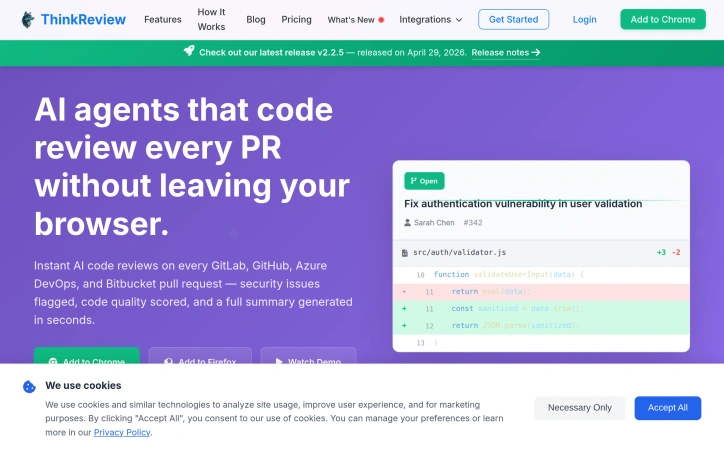
Code reviews are a crucial step in the development process, but manual reviews can be slow, inconsistent, and prone to missing critical security issues. ThinkReview addresses this pain point by providing an AI-powered copilot for GitLab, GitHub, Azure DevOps, and Bitbucket. The tool is designed for developers who care about code quality and want to streamline their review process. What stands out about ThinkReview is its ability to integrate seamlessly into existing workflows without requiring CI setup, admin access, or repo-level integrations. The extension can be installed in under 60 seconds and automatically detects pull requests and merge requests on supported platforms. The AI analysis provides a comprehensive summary, security insights, and smart suggestions, making it an invaluable resource for teams looking to improve their code quality. The tool's capabilities extend beyond basic syntax checking, catching security holes, logic flaws, and performance pitfalls before they reach production. Users can also engage in conversational PR reviews, asking questions and generating inline comments using natural language. Additionally, custom rules and review agents can be defined to enforce team-wide review standards. While pricing details are not explicitly mentioned, the product's frictionless installation and zero-setup approach suggest a potentially attractive offering for teams looking to enhance their code review process without added administrative burdens. Overall, ThinkReview has the potential to transform the way development teams approach code reviews, making it an attractive solution for those seeking to improve code quality and reduce review times.