
BLACK FRIDAY Premium $99 $69 Ends in 1 week 2 days See the deal →
1,261 startups launched 15,421 upvotes cast 57 submitted this week

Recently Listed

1,261 launches
Sort
66 Streaks: Habit Tracker

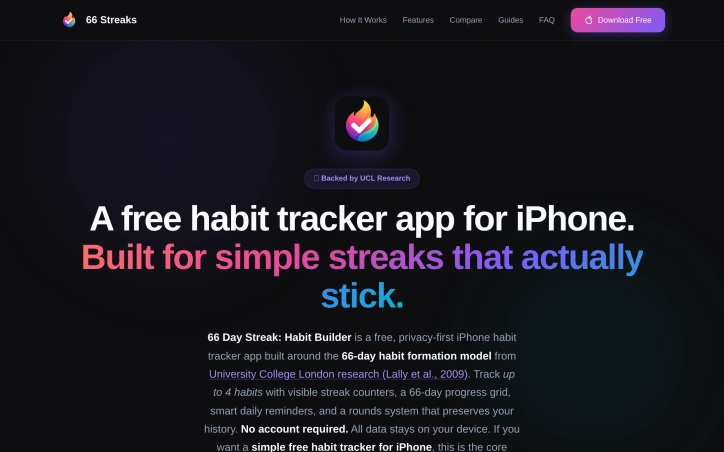
Habit tracking has become unnecessarily complex. Most popular apps bury their core function—simple daily logging—beneath feature-heavy dashboards that overwhelm rather than motivate. 66 Streaks corrects this by stripping away the noise and building around a single, research-supported principle: it takes 66 days, not 21, for a behavior to become automatic. The app's foundation rests on a 2009 study from University College London by Dr. Phillippa Lally and colleagues, published in the European Journal of Social Psychology. Their work tracked 96 participants and found that habit formation averaged 66 days, with a range between 18 and 254 days. This contradicts the widely repeated "21-day rule," often misattributed to Maxwell Maltz's 1960 book, which lacks scientific backing. Follow-up research from King's College London reinforced that real behavioral change requires consistent repetition far beyond three weeks. By anchoring the entire product around this precise timeframe, 66 Streaks gives users a legitimate finish line rather than an arbitrary target. The feature set reflects this philosophy of restraint. Users can track up to four habits simultaneously through a combination of visible streak counters, a 66-day progress grid, and daily reminders. The app includes a rounds system to preserve history across multiple habit cycles. Critically, it operates entirely offline—no account creation, no login requirement, and all data remains on the user's device. This privacy-first approach eliminates friction at the point of entry and addresses legitimate concerns about data handling. The product is positioned as free on the Apple App Store with no subscription component. This pricing structure removes another barrier to adoption while betting that simplicity itself becomes the retention mechanism. 66 Streaks targets people fatigued by overengineered productivity tools who want a focused, daily check-in system backed by actual behavioral science. The execution suggests the founders understood what makes habit trackers fail in practice: complexity and endless targets. By solving for those specific pain points rather than competing on feature count, the app addresses a genuine gap in the market where most competitors prioritize comprehensiveness over usability.

Activity-tracking
B
Burak ŞAHİN

Habit tracking has become unnecessarily complex. Most popular apps bury their core function—simple daily logging—beneath feature-heavy dashboards that overwhelm rather than motivate. 66 Streaks corrects this by stripping away the noise and building around a single, research-supported principle: it takes 66 days, not 21, for a behavior to become automatic. The app's foundation rests on a 2009 study from University College London by Dr. Phillippa Lally and colleagues, published in the European Journal of Social Psychology. Their work tracked 96 participants and found that habit formation averaged 66 days, with a range between 18 and 254 days. This contradicts the widely repeated "21-day rule," often misattributed to Maxwell Maltz's 1960 book, which lacks scientific backing. Follow-up research from King's College London reinforced that real behavioral change requires consistent repetition far beyond three weeks. By anchoring the entire product around this precise timeframe, 66 Streaks gives users a legitimate finish line rather than an arbitrary target. The feature set reflects this philosophy of restraint. Users can track up to four habits simultaneously through a combination of visible streak counters, a 66-day progress grid, and daily reminders. The app includes a rounds system to preserve history across multiple habit cycles. Critically, it operates entirely offline—no account creation, no login requirement, and all data remains on the user's device. This privacy-first approach eliminates friction at the point of entry and addresses legitimate concerns about data handling. The product is positioned as free on the Apple App Store with no subscription component. This pricing structure removes another barrier to adoption while betting that simplicity itself becomes the retention mechanism. 66 Streaks targets people fatigued by overengineered productivity tools who want a focused, daily check-in system backed by actual behavioral science. The execution suggests the founders understood what makes habit trackers fail in practice: complexity and endless targets. By solving for those specific pain points rather than competing on feature count, the app addresses a genuine gap in the market where most competitors prioritize comprehensiveness over usability.

66 Streaks: Habit Tracker preview

Key features

  • 66-Day Habit Formation: Based on University College London research showing habit formation takes an average of 66 days, not the commonly cited 21-day rule.
  • Offline Privacy Design: Operates entirely offline with no account creation, login, or server-side data storage.
See full listing
Prixie

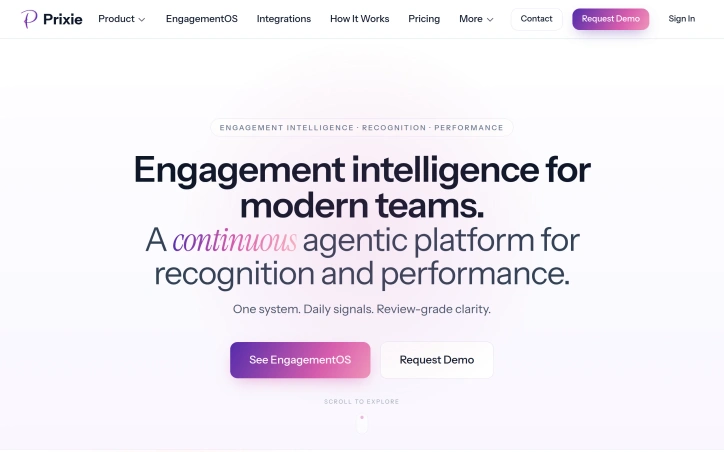
Recognition happens everywhere in modern workplaces—in Slack channels, passing conversations, emails from partner teams—but performance reviews happen once a year in a form that flattens all that context into a narrow evaluation. The gap between continuous visibility and periodic assessment creates a fairness problem: contributions fade from memory, work outside a manager's direct oversight disappears, and employees end up reconstructing a paper trail for impact they've already delivered. Prixie addresses this disconnect head-on. The platform consists of two connected suites: Recognise handles daily recognition, rewards, analytics, and leaderboards in the flow of work, while Perform manages goals, performance reviews, engagement surveys, and 1:1s with structured feedback. Both feed into an engine called EngagementOS that turns recognition signals into actionable intelligence. The core insight is compelling: if you continuously capture who's being recognized, who's thriving, and where contributions cluster, you can surface disengagement early and make performance reviews resonate with actual work patterns rather than faded manager recollection. The system automates moments that matter—anniversaries, milestones, and recognition prompts—so visibility stays intentional rather than accidental. Integration appears central to the value proposition. Prixie connects to Slack, Teams, HRIS platforms like Workday, and SSO providers, positioning itself as an overlay on tools teams already use rather than a parallel system requiring new authentication. The platform surfaces insights proactively instead of burying them in reports managers must manually excavate. The feature set maps the narrative well: recognition feeds and analytics ladder up to measurable outcomes; engagement metrics connect to ROI claims for HR and leadership; continuous feedback channels sit alongside traditional review cycles. Automation handles administrative friction by prompting managers when recognition moments arise. Pricing follows a per-user model, with separate plans for Recognise alone and a fuller platform bundling Perform and EngagementOS together. The company emphasizes transparent, modular pricing without hidden fees on standard plans, with enterprise options available. For organizations where the performance-recognition gap creates visible culture friction, the unified approach to continuous signals and episodic reviews offers a direct answer. The product essentially rebuilds the annual review to remember what actually happened.

Team-collaboration-software
D
Dhruv Arora

Recognition happens everywhere in modern workplaces—in Slack channels, passing conversations, emails from partner teams—but performance reviews happen once a year in a form that flattens all that context into a narrow evaluation. The gap between continuous visibility and periodic assessment creates a fairness problem: contributions fade from memory, work outside a manager's direct oversight disappears, and employees end up reconstructing a paper trail for impact they've already delivered. Prixie addresses this disconnect head-on. The platform consists of two connected suites: Recognise handles daily recognition, rewards, analytics, and leaderboards in the flow of work, while Perform manages goals, performance reviews, engagement surveys, and 1:1s with structured feedback. Both feed into an engine called EngagementOS that turns recognition signals into actionable intelligence. The core insight is compelling: if you continuously capture who's being recognized, who's thriving, and where contributions cluster, you can surface disengagement early and make performance reviews resonate with actual work patterns rather than faded manager recollection. The system automates moments that matter—anniversaries, milestones, and recognition prompts—so visibility stays intentional rather than accidental. Integration appears central to the value proposition. Prixie connects to Slack, Teams, HRIS platforms like Workday, and SSO providers, positioning itself as an overlay on tools teams already use rather than a parallel system requiring new authentication. The platform surfaces insights proactively instead of burying them in reports managers must manually excavate. The feature set maps the narrative well: recognition feeds and analytics ladder up to measurable outcomes; engagement metrics connect to ROI claims for HR and leadership; continuous feedback channels sit alongside traditional review cycles. Automation handles administrative friction by prompting managers when recognition moments arise. Pricing follows a per-user model, with separate plans for Recognise alone and a fuller platform bundling Perform and EngagementOS together. The company emphasizes transparent, modular pricing without hidden fees on standard plans, with enterprise options available. For organizations where the performance-recognition gap creates visible culture friction, the unified approach to continuous signals and episodic reviews offers a direct answer. The product essentially rebuilds the annual review to remember what actually happened.

Prixie preview

Key features

  • Recognition and Rewards: Daily recognition, rewards, and leaderboards integrated into the flow of work
  • Performance Management: Goals, performance reviews, engagement surveys, and 1:1s with structured feedback
See full listing
Drivium

Used car buyers face a critical problem: without access to verified history, they risk purchasing vehicles with hidden mileage tampering, outstanding finance claims, or theft records. Drivium addresses this by offering instant vehicle history reports through a simple plate or VIN lookup. The service operates as a streamlined B2C and B2B offering. Individual buyers get comprehensive verification for £0.99 per report with no account creation required, while dealers, brokers, and insurers access bulk checking through an API that integrates with their existing systems. The platform covers over 20 countries and supports all UK plate formats, both current and legacy. What distinguishes Drivium is its combination of simplicity and depth. A single report retrieves MOT history with recorded mileage at each inspection, outstanding finance or liens, stolen vehicle records, emissions ratings, technical specifications including engine size and fuel consumption, and outstanding manufacturer recalls. Users download results as PDF reports, while API customers export in JSON, CSV, or TXT formats. The service encrypts lookups with AES-256 SSL and processes payments via Visa, Mastercard, or PayPal. The platform's credibility indicators suggest genuine traction. It shows 2,560 reports issued, a 4.7 out of 5 rating across 1,296 reviews, and operates with verified data pulled from official UK Trade Records and DVSA MOT databases. The positioning acknowledges distinct user segments—consumers checking a single purchase, dealerships running batch verifications, and insurance assessors detecting fraud through VIN cross-referencing. One practical strength is the mileage tampering detection workflow. Rather than trusting odometer readings, buyers can review mileage at each MOT inspection to identify discrepancies. For fleet operators and dealers, the API removes manual lookup friction across hundreds of checks. The £0.99 entry point removes friction for one-time buyers, though the business model appears oriented toward API plans for commercial users. The lack of mandatory signup and subscription lock-in positions the service as a utility rather than requiring long-term commitment. Whether the volume of B2C impulse checks sustains the operation remains uncertain, but the commercial tier serving dealerships and insurers likely represents the core revenue driver.
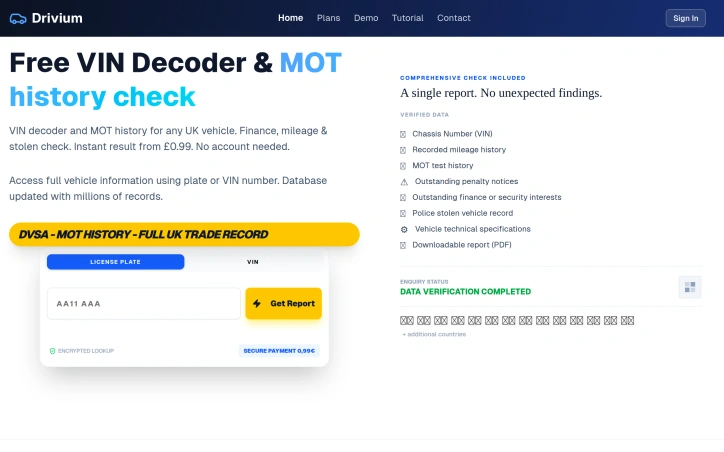

Used car buyers face a critical problem: without access to verified history, they risk purchasing vehicles with hidden mileage tampering, outstanding finance claims, or theft records. Drivium addresses this by offering instant vehicle history reports through a simple plate or VIN lookup. The service operates as a streamlined B2C and B2B offering. Individual buyers get comprehensive verification for £0.99 per report with no account creation required, while dealers, brokers, and insurers access bulk checking through an API that integrates with their existing systems. The platform covers over 20 countries and supports all UK plate formats, both current and legacy. What distinguishes Drivium is its combination of simplicity and depth. A single report retrieves MOT history with recorded mileage at each inspection, outstanding finance or liens, stolen vehicle records, emissions ratings, technical specifications including engine size and fuel consumption, and outstanding manufacturer recalls. Users download results as PDF reports, while API customers export in JSON, CSV, or TXT formats. The service encrypts lookups with AES-256 SSL and processes payments via Visa, Mastercard, or PayPal. The platform's credibility indicators suggest genuine traction. It shows 2,560 reports issued, a 4.7 out of 5 rating across 1,296 reviews, and operates with verified data pulled from official UK Trade Records and DVSA MOT databases. The positioning acknowledges distinct user segments—consumers checking a single purchase, dealerships running batch verifications, and insurance assessors detecting fraud through VIN cross-referencing. One practical strength is the mileage tampering detection workflow. Rather than trusting odometer readings, buyers can review mileage at each MOT inspection to identify discrepancies. For fleet operators and dealers, the API removes manual lookup friction across hundreds of checks. The £0.99 entry point removes friction for one-time buyers, though the business model appears oriented toward API plans for commercial users. The lack of mandatory signup and subscription lock-in positions the service as a utility rather than requiring long-term commitment. Whether the volume of B2C impulse checks sustains the operation remains uncertain, but the commercial tier serving dealerships and insurers likely represents the core revenue driver.

Drivium preview

Key features

  • Vehicle History Reports: Instant lookup via plate or VIN returning comprehensive vehicle records
  • MOT Mileage Tracking: Displays mileage recorded at each MOT inspection to detect tampering
See full listing
Echosy

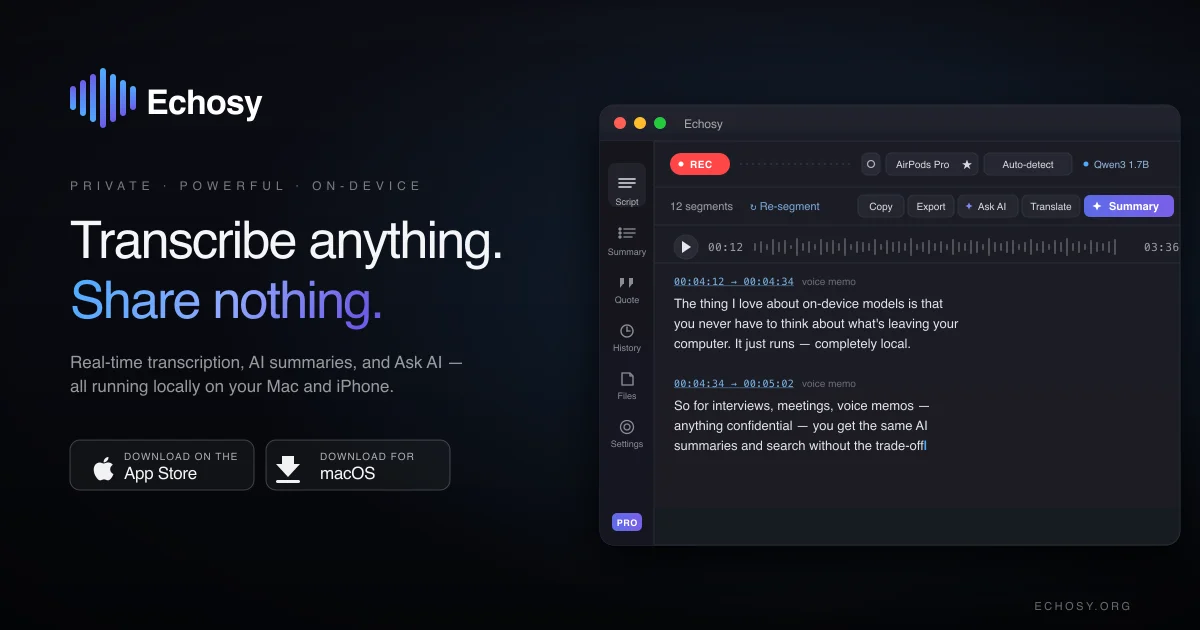
Privacy-focused audio transcription has become increasingly important as cloud-based services dominate the market, and Echosy addresses this gap directly by delivering professional-grade transcription entirely on macOS devices. The product targets professionals, educators, and content creators who need reliable transcription without surrendering their audio to external servers. The standout differentiator is its commitment to local processing. All transcription, summarization, and dictation happens on the user's Mac, eliminating latency and privacy concerns associated with cloud uploads. Rather than locking users into a single transcription model, Echosy supports multiple ASR engines including Qwen3-ASR and MLX Whisper, with GPU acceleration to optimize performance on Apple Silicon and Intel chips. This flexibility in model selection distinguishes it from more rigid competitors. Core capabilities span three major use cases. Live transcription captures both system audio and microphone input simultaneously with real-time timestamps, suitable for recording calls, lectures, and presentations. System-wide dictation activates anywhere on macOS via hotkey, with an Editor Mode that automatically inserts line breaks during pauses and supports voice-controlled formatting. File transcription accepts common audio and video formats for batch processing existing content libraries. What sets Echosy apart further is its integration with multiple LLM providers for summarization. Rather than forcing dependency on a single service, the platform supports OpenAI, Gemini, Ollama, and compatible APIs, allowing users flexibility in how they handle summarization workflows. Beyond summaries, users can chat directly with transcripts, extracting insights and action items. The service maintains searchable session history with audio replay, creating an archive of past recordings that remains fully accessible. The product is positioned as free-to-use software for macOS 14 and above, supporting both Apple Silicon and Intel architectures, with iOS availability as well. The emphasis on "no cloud, no latency, no compromises" clearly resonates with privacy-conscious users fatigued by default transcription workflows that involve external servers. For users skeptical of cloud-dependent transcription tools, Echosy offers genuine autonomy. It removes the friction of uploading files and waiting for remote processing, instead delivering instant results locally. The combination of multiple ASR models, flexible LLM integration, and comprehensive session management positions it as a credible alternative to cloud-centric competitors.

Transcription
P
Pong Wong

Privacy-focused audio transcription has become increasingly important as cloud-based services dominate the market, and Echosy addresses this gap directly by delivering professional-grade transcription entirely on macOS devices. The product targets professionals, educators, and content creators who need reliable transcription without surrendering their audio to external servers. The standout differentiator is its commitment to local processing. All transcription, summarization, and dictation happens on the user's Mac, eliminating latency and privacy concerns associated with cloud uploads. Rather than locking users into a single transcription model, Echosy supports multiple ASR engines including Qwen3-ASR and MLX Whisper, with GPU acceleration to optimize performance on Apple Silicon and Intel chips. This flexibility in model selection distinguishes it from more rigid competitors. Core capabilities span three major use cases. Live transcription captures both system audio and microphone input simultaneously with real-time timestamps, suitable for recording calls, lectures, and presentations. System-wide dictation activates anywhere on macOS via hotkey, with an Editor Mode that automatically inserts line breaks during pauses and supports voice-controlled formatting. File transcription accepts common audio and video formats for batch processing existing content libraries. What sets Echosy apart further is its integration with multiple LLM providers for summarization. Rather than forcing dependency on a single service, the platform supports OpenAI, Gemini, Ollama, and compatible APIs, allowing users flexibility in how they handle summarization workflows. Beyond summaries, users can chat directly with transcripts, extracting insights and action items. The service maintains searchable session history with audio replay, creating an archive of past recordings that remains fully accessible. The product is positioned as free-to-use software for macOS 14 and above, supporting both Apple Silicon and Intel architectures, with iOS availability as well. The emphasis on "no cloud, no latency, no compromises" clearly resonates with privacy-conscious users fatigued by default transcription workflows that involve external servers. For users skeptical of cloud-dependent transcription tools, Echosy offers genuine autonomy. It removes the friction of uploading files and waiting for remote processing, instead delivering instant results locally. The combination of multiple ASR models, flexible LLM integration, and comprehensive session management positions it as a credible alternative to cloud-centric competitors.

Echosy preview

Key features

  • Local Processing: All transcription, summarization, and dictation happens on your Mac without cloud uploads.
  • Multiple ASR Engines: Supports Qwen3-ASR and MLX Whisper with GPU acceleration for Apple Silicon and Intel chips.
See full listing
Simple Receipt Maker

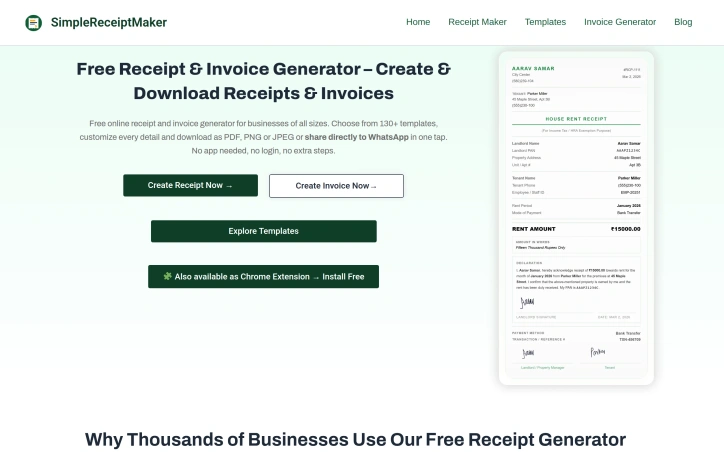
For small business owners and freelancers juggling multiple operational demands, creating professional receipts often falls into the category of necessary-but-tedious administrative work. SimpleReceiptMaker tackles this friction point directly with a free online tool designed to generate polished, print-ready receipts in under a minute. The platform addresses a genuinely practical pain point. Whether you're a restaurant owner, mechanics shop operator, or self-employed consultant, you need receipts that look legitimate and contain all required business information. SimpleReceiptMaker eliminates the need for expensive invoice software or time-consuming manual creation by providing a template-driven approach that requires no signup, login, or installed software. What distinguishes SimpleReceiptMaker in the crowded receipts-and-invoices space is its focus on simplicity and accessibility. The product ships with over 130 professionally designed templates spanning common business categories like retail, restaurants, transportation, and services. The customization layer is straightforward: users add their business details, items, pricing, and payment information, then select an export format. The company emphasizes three export options—PDF, PNG, and JPEG—alongside a WhatsApp integration that lets customers receive receipts immediately without email friction or copy-pasting. The feature set rounds out with practical touches. Automatic currency detection based on user location eliminates a minor but real point of friction. The tool supports 64+ currencies for international users. A Chrome extension extends the tool's reach beyond the browser. The company explicitly states it doesn't store receipt data, addressing a legitimate privacy concern for businesses handling customer information. The business model is transparently free, with no hidden paywalls mentioned in available materials. This positions SimpleReceiptMaker as an accessible option for micro-businesses and solopreneurs operating on tight budgets—the exact audience most likely to be priced out of traditional accounting software. Where the product excels is not in complexity or advanced features, but in removing barriers to adoption. No software installation. No account creation. No learning curve. For a freelancer or small vendor, that velocity matters. The 60-second creation cycle isn't mere marketing hyperbole—it reflects a deliberate design choice to keep the tool friction-free and focused on its core job: generating a receipt that looks professional and contains the right information.

Invoicing-tools
A
Affia Aslam

For small business owners and freelancers juggling multiple operational demands, creating professional receipts often falls into the category of necessary-but-tedious administrative work. SimpleReceiptMaker tackles this friction point directly with a free online tool designed to generate polished, print-ready receipts in under a minute. The platform addresses a genuinely practical pain point. Whether you're a restaurant owner, mechanics shop operator, or self-employed consultant, you need receipts that look legitimate and contain all required business information. SimpleReceiptMaker eliminates the need for expensive invoice software or time-consuming manual creation by providing a template-driven approach that requires no signup, login, or installed software. What distinguishes SimpleReceiptMaker in the crowded receipts-and-invoices space is its focus on simplicity and accessibility. The product ships with over 130 professionally designed templates spanning common business categories like retail, restaurants, transportation, and services. The customization layer is straightforward: users add their business details, items, pricing, and payment information, then select an export format. The company emphasizes three export options—PDF, PNG, and JPEG—alongside a WhatsApp integration that lets customers receive receipts immediately without email friction or copy-pasting. The feature set rounds out with practical touches. Automatic currency detection based on user location eliminates a minor but real point of friction. The tool supports 64+ currencies for international users. A Chrome extension extends the tool's reach beyond the browser. The company explicitly states it doesn't store receipt data, addressing a legitimate privacy concern for businesses handling customer information. The business model is transparently free, with no hidden paywalls mentioned in available materials. This positions SimpleReceiptMaker as an accessible option for micro-businesses and solopreneurs operating on tight budgets—the exact audience most likely to be priced out of traditional accounting software. Where the product excels is not in complexity or advanced features, but in removing barriers to adoption. No software installation. No account creation. No learning curve. For a freelancer or small vendor, that velocity matters. The 60-second creation cycle isn't mere marketing hyperbole—it reflects a deliberate design choice to keep the tool friction-free and focused on its core job: generating a receipt that looks professional and contains the right information.

Simple Receipt Maker preview

Key features

  • Professional Templates: Over 130 professionally designed templates spanning retail, restaurants, transportation, and services categories
  • Multiple Export Formats: Export receipts as PDF, PNG, or JPEG directly from the platform
See full listing
ShipMyBlog

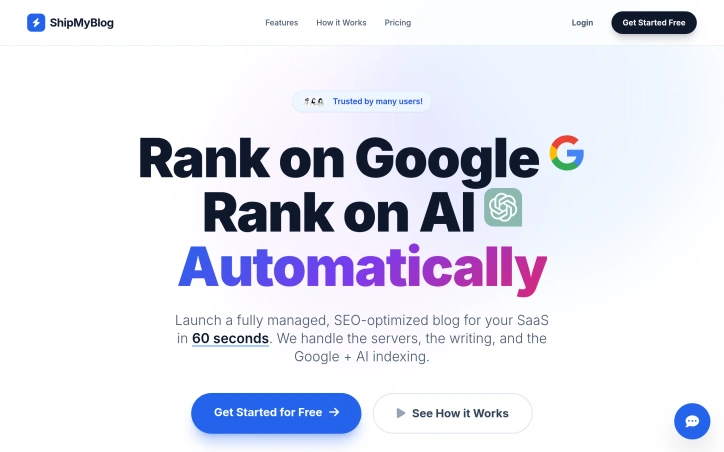
For SaaS founders drowning in infrastructure work, this blogging platform strips away the complexity that typically comes with managing WordPress installations, databases, and hosting. Rather than spending cycles on technical setup, founders can focus on content strategy and growth. ShipMyBlog targets this pain point by delivering a fully hosted blogging solution with AI-powered content generation built in. The platform's architecture eliminates the traditional blogging tech stack. There's no WordPress to maintain, no plugins to update, no databases to manage, and no servers to scale. All hosting is handled by the platform, including SSL certificates and domain management. For founders accustomed to wrestling with WordPress or similar CMS platforms, this hands-off approach represents a meaningful shift in operational burden. What distinguishes ShipMyBlog from both AI writing services and traditional hosting solutions is its integration layer. The platform connects Google Search Console, WordPress, Shopify, and Wix, allowing users to publish across multiple channels. More compellingly, it automatically injects affiliate links and product banners into generated posts, effectively monetizing content upon publication. The platform automatically connects articles through AI-driven interlinking to boost SEO authority, handling a task that typically requires manual editorial work. The indexing speed is positioned as a core advantage. Rather than waiting for Google's crawlers to discover new content, ShipMyBlog pings Google immediately upon publishing, letting articles begin competing for rankings while competitors await organic discovery. This taps into a legitimate pain point for content-driven growth, where SEO velocity directly impacts early traffic. Pricing is structured around credits rather than a traditional per-post model. The free tier includes manual features, while paid tiers range from $19 per month (60 credits) through agency plans at $199 per year. A lifetime option at $499 includes unlimited generation. Credits never expire, eliminating monthly usage pressure. A beta discount code offers 30 percent off paid plans. The competitive positioning emphasizes cost and convenience. Compared to Jasper or Copy.ai at $49+ monthly, ShipMyBlog undercuts on price and includes hosting. WordPress plus AI typically requires separate hosting expense and involves manual workflows. For founders skeptical of setup complexity and seeking an all-in-one solution with reasonable pricing, the platform's promise of low-friction, one-click content creation warrants serious consideration.

Blogging-platforms
A
Adnan Jindani

For SaaS founders drowning in infrastructure work, this blogging platform strips away the complexity that typically comes with managing WordPress installations, databases, and hosting. Rather than spending cycles on technical setup, founders can focus on content strategy and growth. ShipMyBlog targets this pain point by delivering a fully hosted blogging solution with AI-powered content generation built in. The platform's architecture eliminates the traditional blogging tech stack. There's no WordPress to maintain, no plugins to update, no databases to manage, and no servers to scale. All hosting is handled by the platform, including SSL certificates and domain management. For founders accustomed to wrestling with WordPress or similar CMS platforms, this hands-off approach represents a meaningful shift in operational burden. What distinguishes ShipMyBlog from both AI writing services and traditional hosting solutions is its integration layer. The platform connects Google Search Console, WordPress, Shopify, and Wix, allowing users to publish across multiple channels. More compellingly, it automatically injects affiliate links and product banners into generated posts, effectively monetizing content upon publication. The platform automatically connects articles through AI-driven interlinking to boost SEO authority, handling a task that typically requires manual editorial work. The indexing speed is positioned as a core advantage. Rather than waiting for Google's crawlers to discover new content, ShipMyBlog pings Google immediately upon publishing, letting articles begin competing for rankings while competitors await organic discovery. This taps into a legitimate pain point for content-driven growth, where SEO velocity directly impacts early traffic. Pricing is structured around credits rather than a traditional per-post model. The free tier includes manual features, while paid tiers range from $19 per month (60 credits) through agency plans at $199 per year. A lifetime option at $499 includes unlimited generation. Credits never expire, eliminating monthly usage pressure. A beta discount code offers 30 percent off paid plans. The competitive positioning emphasizes cost and convenience. Compared to Jasper or Copy.ai at $49+ monthly, ShipMyBlog undercuts on price and includes hosting. WordPress plus AI typically requires separate hosting expense and involves manual workflows. For founders skeptical of setup complexity and seeking an all-in-one solution with reasonable pricing, the platform's promise of low-friction, one-click content creation warrants serious consideration.

ShipMyBlog preview

Key features

  • Fully Hosted Blogging: Eliminates WordPress maintenance, databases, and server management
  • AI-Powered Content: Generates blog posts with built-in AI capabilities
See full listing
Punchly

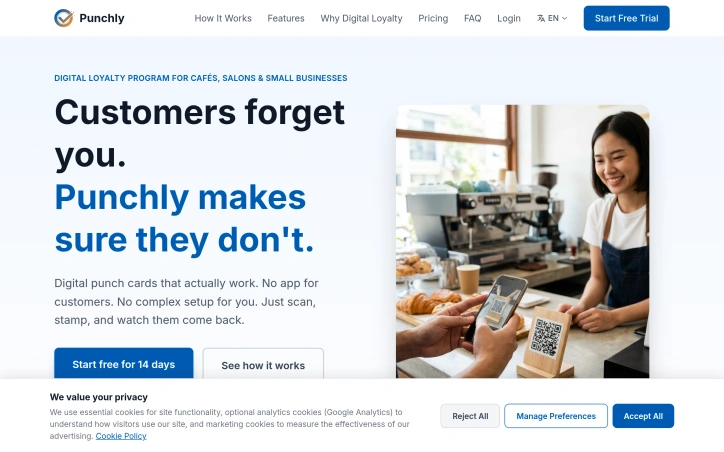
Small business owners have long struggled with loyalty programs that either fail to curb fraud or demand complicated infrastructure. Punchly addresses this gap by offering a straightforward digital punch card system that requires nothing from customers beyond a smartphone camera. The platform eliminates the friction that makes most loyalty solutions impractical for solo proprietors and lean teams. The product's core strength lies in its simplicity. Setup takes approximately two minutes with no point-of-sale integration, specialized hardware, or staff training needed. Businesses create a reward structure, print a QR code poster, and go live. Customers scan the code with any phone, and staff members complete each transaction by entering a four-digit PIN before stamping the digital card. This PIN requirement serves as a built-in fraud prevention mechanism, supplemented by velocity limits and optional geographic restrictions with complete audit trails. What distinguishes Punchly from competitors is the web-based wallet approach. Most loyalty apps fail because customers resist downloading yet another application; Punchly sidesteps this resistance entirely. Stamps arrive instantly in a web wallet accessible from any phone browser, removing friction on both sides of the transaction. The platform also handles customer re-engagement autonomously. Automated reminders tell customers when they're one stamp away from a reward or when stamps are expiring, addressing the core problem of forgotten cards through proactive outreach. Businesses gain basic analytics on visits, redemptions, and top customers, plus the ability to export email lists for independent marketing campaigns. The architecture reflects thoughtful design for regulated markets. GDPR compliance is baked in with opt-in-only collection, straightforward data export and deletion, and EU hosting. Punchly's positioning targets the specific friction points that have kept small businesses away from digital loyalty. Paper cards face document fraud; competing apps demand customers download software. Punchly avoids both traps. The reported metrics—85% email opt-in rates and 60% plus redemption rates—suggest the design resonates with actual users. The platform offers a free trial without requiring payment information, reducing barriers to experimentation. For small business owners tired of loyalty program complexity, Punchly delivers unexpected practicality.

Customer-loyalty-platforms
I
Ivo Marinov

Small business owners have long struggled with loyalty programs that either fail to curb fraud or demand complicated infrastructure. Punchly addresses this gap by offering a straightforward digital punch card system that requires nothing from customers beyond a smartphone camera. The platform eliminates the friction that makes most loyalty solutions impractical for solo proprietors and lean teams. The product's core strength lies in its simplicity. Setup takes approximately two minutes with no point-of-sale integration, specialized hardware, or staff training needed. Businesses create a reward structure, print a QR code poster, and go live. Customers scan the code with any phone, and staff members complete each transaction by entering a four-digit PIN before stamping the digital card. This PIN requirement serves as a built-in fraud prevention mechanism, supplemented by velocity limits and optional geographic restrictions with complete audit trails. What distinguishes Punchly from competitors is the web-based wallet approach. Most loyalty apps fail because customers resist downloading yet another application; Punchly sidesteps this resistance entirely. Stamps arrive instantly in a web wallet accessible from any phone browser, removing friction on both sides of the transaction. The platform also handles customer re-engagement autonomously. Automated reminders tell customers when they're one stamp away from a reward or when stamps are expiring, addressing the core problem of forgotten cards through proactive outreach. Businesses gain basic analytics on visits, redemptions, and top customers, plus the ability to export email lists for independent marketing campaigns. The architecture reflects thoughtful design for regulated markets. GDPR compliance is baked in with opt-in-only collection, straightforward data export and deletion, and EU hosting. Punchly's positioning targets the specific friction points that have kept small businesses away from digital loyalty. Paper cards face document fraud; competing apps demand customers download software. Punchly avoids both traps. The reported metrics—85% email opt-in rates and 60% plus redemption rates—suggest the design resonates with actual users. The platform offers a free trial without requiring payment information, reducing barriers to experimentation. For small business owners tired of loyalty program complexity, Punchly delivers unexpected practicality.

Punchly preview

Key features

  • Digital Punch Card System: Customers scan a QR code with their smartphone camera and staff complete transactions with a four-digit PIN
  • Two-Minute Setup: No point-of-sale integration, specialized hardware, or staff training required to launch
See full listing
ExplainThisCode

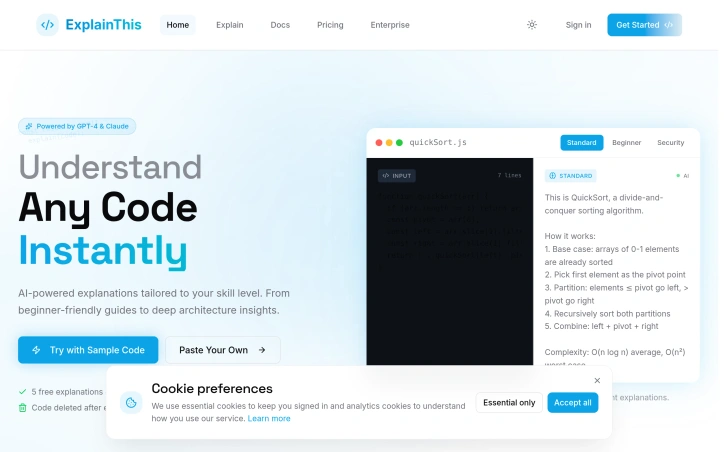
Developers regularly encounter codebases written in unfamiliar patterns, legacy languages, or architectures outside their expertise—and the gap between code literacy and actual understanding can significantly slow productivity. ExplainThisCode targets this friction by providing AI-generated explanations of code snippets adapted to individual skill levels, eliminating the need to hunt through documentation or rely on colleagues for clarification. The product's core strength lies in its recognition that code comprehension isn't one-size-fits-all. Rather than generating a single explanation, it tailors output to the user's proficiency: beginners receive analogies and step-by-step walkthroughs, while experienced developers get architectural context and complexity analysis. This approach, powered by GPT-4 and Claude, treats understanding as a variable problem rather than a commodity feature. The tool supports eighteen programming languages, reducing barriers for polyglot teams. The interface emphasizes frictionless experimentation. Users can paste code, upload files, reference GitHub repositories directly, or integrate via API without signing up—a deliberate choice that prioritizes discovery over gatekeeping. Explanations stream token-by-token as they generate, providing immediate feedback rather than forcing users to wait for complete responses. The product bundles explanation depth (quick summaries through comparative analysis) with analysis modes focused on security vulnerabilities and performance bottlenecks, making it pragmatic for code review and auditing workflows. The API pathway is notable. Rather than positioning itself as a chat interface for code (a territory crowded with general-purpose AI assistants), ExplainThisCode frames itself as a purpose-built microservice that teams can embed into existing development tools—an architecture that acknowledges where code explanation actually happens: in IDEs, documentation platforms, and CI/CD pipelines, not in dedicated browser tabs. The pricing structure reflects this positioning. A free tier caps requests at twenty per day, sufficient for casual exploration but clearly designed to convert regular users. The Pro plan at nineteen dollars monthly grants five hundred requests daily and unlocks API access, supporting both individual developers and small teams. Enterprise contracts accommodate large organizations with custom limits, team SSO, and deployment flexibility including self-hosted options. The main limitation is scope: the tool excels at explaining what code does and highlighting potential issues, but doesn't appear to help users *refactor* or *improve* the code in place. It remains fundamentally an explanatory tool, not a development partner. That's a rational constraint—it keeps the product focused—but it leaves a logical follow-on workflow unaddressed.
Llm-developer-tools
E
Elizabeth Stein

Developers regularly encounter codebases written in unfamiliar patterns, legacy languages, or architectures outside their expertise—and the gap between code literacy and actual understanding can significantly slow productivity. ExplainThisCode targets this friction by providing AI-generated explanations of code snippets adapted to individual skill levels, eliminating the need to hunt through documentation or rely on colleagues for clarification. The product's core strength lies in its recognition that code comprehension isn't one-size-fits-all. Rather than generating a single explanation, it tailors output to the user's proficiency: beginners receive analogies and step-by-step walkthroughs, while experienced developers get architectural context and complexity analysis. This approach, powered by GPT-4 and Claude, treats understanding as a variable problem rather than a commodity feature. The tool supports eighteen programming languages, reducing barriers for polyglot teams. The interface emphasizes frictionless experimentation. Users can paste code, upload files, reference GitHub repositories directly, or integrate via API without signing up—a deliberate choice that prioritizes discovery over gatekeeping. Explanations stream token-by-token as they generate, providing immediate feedback rather than forcing users to wait for complete responses. The product bundles explanation depth (quick summaries through comparative analysis) with analysis modes focused on security vulnerabilities and performance bottlenecks, making it pragmatic for code review and auditing workflows. The API pathway is notable. Rather than positioning itself as a chat interface for code (a territory crowded with general-purpose AI assistants), ExplainThisCode frames itself as a purpose-built microservice that teams can embed into existing development tools—an architecture that acknowledges where code explanation actually happens: in IDEs, documentation platforms, and CI/CD pipelines, not in dedicated browser tabs. The pricing structure reflects this positioning. A free tier caps requests at twenty per day, sufficient for casual exploration but clearly designed to convert regular users. The Pro plan at nineteen dollars monthly grants five hundred requests daily and unlocks API access, supporting both individual developers and small teams. Enterprise contracts accommodate large organizations with custom limits, team SSO, and deployment flexibility including self-hosted options. The main limitation is scope: the tool excels at explaining what code does and highlighting potential issues, but doesn't appear to help users *refactor* or *improve* the code in place. It remains fundamentally an explanatory tool, not a development partner. That's a rational constraint—it keeps the product focused—but it leaves a logical follow-on workflow unaddressed.

ExplainThisCode preview

Key features

  • Skill-Adaptive Explanations: Tailors output by proficiency level, from beginner analogies to architectural analysis for experienced developers
  • Multi-Language Support: Supports eighteen programming languages for polyglot teams
See full listing
Pr3ss3D

Frustration with major social networks forms the foundation of Pr3ss3D's pitch. The platform targets creators and audiences exhausted by algorithmic manipulation, content theft, account closures without recourse, and the structural misalignment between user interests and platform business models. Where conventional social media treats users as products and content as extractable value, Pr3ss3D reframes the relationship around creator ownership and audience autonomy. The core value proposition hinges on structural rather than policy-based fixes. Instead of relying on terms of service or algorithmic guardrails, the company claims to have redesigned incentive alignment so that serving user interests becomes the platform's profit motive rather than a constraint. Creators gain unlimited reach without algorithmic gating, guaranteed account permanence, content protection against unauthorized reposting, and direct payment mechanisms. Audiences get algorithmic elimination entirely, replaced by what the platform presents as genuine user choice, with explicit barriers against bots, data harvesting, and behavioral manipulation. What distinguishes Pr3ss3D from other social media entrants is its approach to the cold-start problem. Rather than launch to an empty network and hope organic growth follows, the company explicitly states it will withhold launch until reaching subscriber thresholds. This inverts conventional startup strategy—most apps ship first and attempt to build critical mass afterward, resulting in the ghost-town user experience familiar to anyone who has tried emerging platforms. By requiring minimum viable audience commitment before going live, Pr3ss3D aims to eliminate the inaugural emptiness that typically kills new networks. The business model relies on annual subscriptions, though specific pricing remains unspecified on the public-facing site. The emphasis on annual plans suggests optimization for committed users rather than casual engagement, aligning with its positioning against engagement-maximization algorithms. An interactive prototype demonstrating the interface is available, though as AI-generated sample content with enlarged mechanics for clarity, it offers limited insight into real-world user experience. The actual product remains unreleased pending the subscription threshold milestone.


Social-networking
P
Pr3ss3D

Frustration with major social networks forms the foundation of Pr3ss3D's pitch. The platform targets creators and audiences exhausted by algorithmic manipulation, content theft, account closures without recourse, and the structural misalignment between user interests and platform business models. Where conventional social media treats users as products and content as extractable value, Pr3ss3D reframes the relationship around creator ownership and audience autonomy. The core value proposition hinges on structural rather than policy-based fixes. Instead of relying on terms of service or algorithmic guardrails, the company claims to have redesigned incentive alignment so that serving user interests becomes the platform's profit motive rather than a constraint. Creators gain unlimited reach without algorithmic gating, guaranteed account permanence, content protection against unauthorized reposting, and direct payment mechanisms. Audiences get algorithmic elimination entirely, replaced by what the platform presents as genuine user choice, with explicit barriers against bots, data harvesting, and behavioral manipulation. What distinguishes Pr3ss3D from other social media entrants is its approach to the cold-start problem. Rather than launch to an empty network and hope organic growth follows, the company explicitly states it will withhold launch until reaching subscriber thresholds. This inverts conventional startup strategy—most apps ship first and attempt to build critical mass afterward, resulting in the ghost-town user experience familiar to anyone who has tried emerging platforms. By requiring minimum viable audience commitment before going live, Pr3ss3D aims to eliminate the inaugural emptiness that typically kills new networks. The business model relies on annual subscriptions, though specific pricing remains unspecified on the public-facing site. The emphasis on annual plans suggests optimization for committed users rather than casual engagement, aligning with its positioning against engagement-maximization algorithms. An interactive prototype demonstrating the interface is available, though as AI-generated sample content with enlarged mechanics for clarity, it offers limited insight into real-world user experience. The actual product remains unreleased pending the subscription threshold milestone.

Pr3ss3D preview

Key features

  • Creator Ownership: Creators retain guaranteed account permanence and full content ownership.
  • Algorithm-Free Feed: Content discovery is based on explicit user choice rather than algorithmic curation.
See full listing
Netflix Live Translator

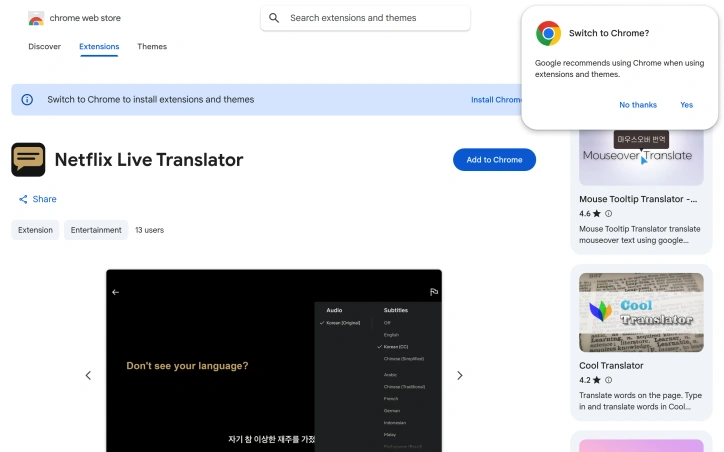
Streaming content across borders often creates a subtitle problem: foreign-language shows either come with no English subtitles, or viewers miss the challenge of engaging with original-language dialogue. Netflix Live Translator solves this by intercepting Netflix subtitles in real-time and replacing them with translations in any of 106 languages, letting viewers watch without missing dialogue or context. The extension targets language learners, international viewers, and anyone seeking content access beyond what Netflix's built-in subtitle options provide. What distinguishes this tool from other subtitle translation extensions is its architecture: it runs entirely in the browser with no backend server, no account creation, and no data collection. The developer has committed to privacy by design—your API key never leaves your browser and only communicates directly with Google's translation API. The workflow is deliberately minimal. Users select source and target languages from a popup, and the extension automatically detects subtitles on screen, translates them via Google Cloud, and replaces the originals instantly. A caching system prevents redundant API calls for repeated subtitle lines, reducing both latency and translation costs. The economic model relies on users bringing their own Google Cloud credentials. Google's free tier provides 500,000 characters per month—approximately sixteen feature-length films—enough for casual viewers at no cost. With only ten reported users and no ratings on the Chrome Web Store, Netflix Live Translator remains a niche utility. The extension launched in February 2026 and carries minimal friction for adoption: installation requires only a straightforward API key setup, which the developer guides users through directly in the interface. The developer operates it as a free project funded by optional donations, signaling this is more passion project than commercial venture. For viewers frustrated by subtitle limitations on Netflix or language learners seeking immersive practice, the tool addresses a genuine gap. Its browser-native architecture avoids the privacy and latency concerns of server-dependent translators, and the zero-cost base model removes financial barriers for eligible users. The main constraint is dependency on Google Cloud's free tier—once exhausted, users must fund their own API calls—but for casual use, the offering remains practical.

Chrome-extensions
S
Scott Young

Streaming content across borders often creates a subtitle problem: foreign-language shows either come with no English subtitles, or viewers miss the challenge of engaging with original-language dialogue. Netflix Live Translator solves this by intercepting Netflix subtitles in real-time and replacing them with translations in any of 106 languages, letting viewers watch without missing dialogue or context. The extension targets language learners, international viewers, and anyone seeking content access beyond what Netflix's built-in subtitle options provide. What distinguishes this tool from other subtitle translation extensions is its architecture: it runs entirely in the browser with no backend server, no account creation, and no data collection. The developer has committed to privacy by design—your API key never leaves your browser and only communicates directly with Google's translation API. The workflow is deliberately minimal. Users select source and target languages from a popup, and the extension automatically detects subtitles on screen, translates them via Google Cloud, and replaces the originals instantly. A caching system prevents redundant API calls for repeated subtitle lines, reducing both latency and translation costs. The economic model relies on users bringing their own Google Cloud credentials. Google's free tier provides 500,000 characters per month—approximately sixteen feature-length films—enough for casual viewers at no cost. With only ten reported users and no ratings on the Chrome Web Store, Netflix Live Translator remains a niche utility. The extension launched in February 2026 and carries minimal friction for adoption: installation requires only a straightforward API key setup, which the developer guides users through directly in the interface. The developer operates it as a free project funded by optional donations, signaling this is more passion project than commercial venture. For viewers frustrated by subtitle limitations on Netflix or language learners seeking immersive practice, the tool addresses a genuine gap. Its browser-native architecture avoids the privacy and latency concerns of server-dependent translators, and the zero-cost base model removes financial barriers for eligible users. The main constraint is dependency on Google Cloud's free tier—once exhausted, users must fund their own API calls—but for casual use, the offering remains practical.

Netflix Live Translator preview

Key features

  • Real-Time Translation: Intercepts Netflix subtitles and translates them to any of 106 languages instantly
  • Browser-Native Architecture: Runs entirely in the browser with no backend server or account creation required
See full listing
Leedrush Engine

B2B sales teams struggle with a fundamental paradox: lead volume without quality is worthless, yet validating raw leads manually is expensive and time-consuming. Leedrush addresses this by offering a dual-track platform where sales and revenue operations teams can either upload their own lists for instant verification and enrichment, or purchase pre-validated contacts from a marketplace with exclusive ownership guarantees. The product's most distinctive positioning lies in its lead ownership model. Unlike traditional intelligence platforms where multiple buyers compete for the same contacts, Leedrush sells each lead to a single buyer only. This eliminates the "burned-list" problem endemic to shared marketplaces, where a prospect receives identical outreach from multiple vendors. Combined with per-lead pricing rather than subscription fees, the economic model favors lean teams or those testing new segments without long-term commitments. The core workflow proves straightforward. Users upload a CSV file to a batch processor that enriches contacts with verified email addresses, phone numbers, and company data. The platform applies AI-driven scoring across intent signals—recent hiring patterns, technology stack changes, funding events—and matches prospects against user-defined ideal customer profiles. Processing happens asynchronously, with demonstrated batches moving from raw upload to CRM-ready contacts in roughly three minutes. Integration depth supports the sales stack most teams already use. Leedrush syncs directly with HubSpot and Salesforce, supports event-driven automation through Zapier, and posts alerts to Slack when high-scoring prospects match specified criteria. This eliminates manual export-import workflows and keeps intent signals visible to the entire revenue team. The platform maintains compliance certifications including SOC2 readiness and GDPR compliance, important assurances for teams operating across regulated markets. The free tier is genuinely functional—500 free credits allow a team to test the product with no payment method required. The $1.99 per-lead pay-as-you-go model shifts risk from the buyer to Leedrush, aligning incentives around actual prospect quality rather than volume sold. For teams drowning in list-buying subscriptions or maintaining expensive internal enrichment tooling, this alternative deserves serious evaluation.
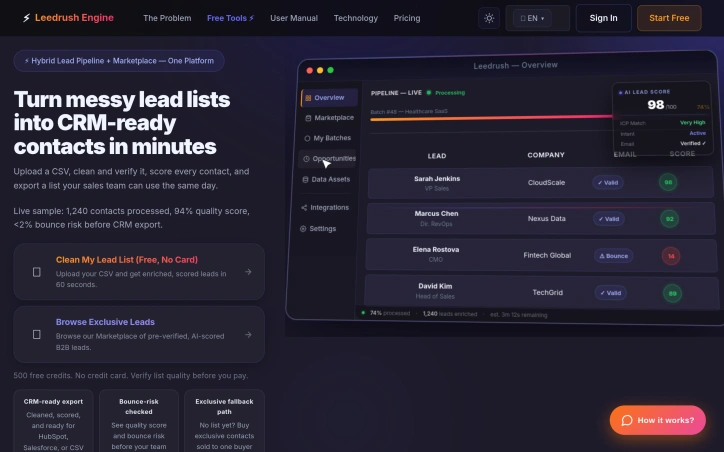

B2B sales teams struggle with a fundamental paradox: lead volume without quality is worthless, yet validating raw leads manually is expensive and time-consuming. Leedrush addresses this by offering a dual-track platform where sales and revenue operations teams can either upload their own lists for instant verification and enrichment, or purchase pre-validated contacts from a marketplace with exclusive ownership guarantees. The product's most distinctive positioning lies in its lead ownership model. Unlike traditional intelligence platforms where multiple buyers compete for the same contacts, Leedrush sells each lead to a single buyer only. This eliminates the "burned-list" problem endemic to shared marketplaces, where a prospect receives identical outreach from multiple vendors. Combined with per-lead pricing rather than subscription fees, the economic model favors lean teams or those testing new segments without long-term commitments. The core workflow proves straightforward. Users upload a CSV file to a batch processor that enriches contacts with verified email addresses, phone numbers, and company data. The platform applies AI-driven scoring across intent signals—recent hiring patterns, technology stack changes, funding events—and matches prospects against user-defined ideal customer profiles. Processing happens asynchronously, with demonstrated batches moving from raw upload to CRM-ready contacts in roughly three minutes. Integration depth supports the sales stack most teams already use. Leedrush syncs directly with HubSpot and Salesforce, supports event-driven automation through Zapier, and posts alerts to Slack when high-scoring prospects match specified criteria. This eliminates manual export-import workflows and keeps intent signals visible to the entire revenue team. The platform maintains compliance certifications including SOC2 readiness and GDPR compliance, important assurances for teams operating across regulated markets. The free tier is genuinely functional—500 free credits allow a team to test the product with no payment method required. The $1.99 per-lead pay-as-you-go model shifts risk from the buyer to Leedrush, aligning incentives around actual prospect quality rather than volume sold. For teams drowning in list-buying subscriptions or maintaining expensive internal enrichment tooling, this alternative deserves serious evaluation.

Leedrush Engine preview

Key features

  • Lead Enrichment: Instantly verifies and enriches contacts with email addresses, phone numbers, and company data.
  • Exclusive Lead Ownership: Each lead is sold to a single buyer only, eliminating the burned-list problem.
See full listing
ND Hive

Burnout and task paralysis plague millions of adults with ADHD and autism spectrum traits, yet most productivity solutions ignore the neurodivergent brain entirely. ND Hive addresses this gap by centering on a deceptively simple mechanism: body doubling—the measurable boost in focus and task completion that comes from working alongside others in real time. The platform operates as a daily coworking community with live sessions led by human coaches. Members join drop-in sessions, pick a task to complete, and work through it with accountability from both coaches and fellow participants. No complex app tutorials, no 47-step setup process. The simplicity is intentional. ADHD and autism often coexist with executive dysfunction that makes navigating byzantine software interfaces itself a barrier to use. What distinguishes ND Hive is its explicit design for neurodivergent needs rather than neurotypical defaults. The accompanying "Hub" provides structured tools—capacity planners, task breakdowns, emotion check-ins, and a completion tracker—built around how divergent brains actually operate. Sessions accommodate 58 hours per week of access, but participation is fluid. Members can attend one session or many, with no penalty for inconsistency. The company makes a specific empirical claim worth noting: its own data shows meaningful behavioral shifts by day three for most users, with larger transformations reported by day seven. Testimonials from the site reflect this pattern. A therapist reported reduced burnout within 72 hours. A college student moved from feeling paralyzed by workload to managing coursework effectively. A working parent progressed from chronic task avoidance to career advancement. These aren't outlier claims—body doubling is an established phenomenon in ADHD literature, and the company leverages it directly. The target audience is clear: working professionals, students, parents, and founders who recognize their difficulty isn't laziness or broken executive function, but rather isolation and lack of accountability structures suited to their neurology. For this cohort, the friction of traditional goal-setting apps or generic coworking spaces is real. ND Hive eliminates that friction by removing onboarding complexity and designing every interaction around neurodivergent cognition. The model includes a seven-day free trial, suggesting a subscription foundation, though specific pricing isn't disclosed in the available materials.

Mental-health
D
Danielle Ralston

Burnout and task paralysis plague millions of adults with ADHD and autism spectrum traits, yet most productivity solutions ignore the neurodivergent brain entirely. ND Hive addresses this gap by centering on a deceptively simple mechanism: body doubling—the measurable boost in focus and task completion that comes from working alongside others in real time. The platform operates as a daily coworking community with live sessions led by human coaches. Members join drop-in sessions, pick a task to complete, and work through it with accountability from both coaches and fellow participants. No complex app tutorials, no 47-step setup process. The simplicity is intentional. ADHD and autism often coexist with executive dysfunction that makes navigating byzantine software interfaces itself a barrier to use. What distinguishes ND Hive is its explicit design for neurodivergent needs rather than neurotypical defaults. The accompanying "Hub" provides structured tools—capacity planners, task breakdowns, emotion check-ins, and a completion tracker—built around how divergent brains actually operate. Sessions accommodate 58 hours per week of access, but participation is fluid. Members can attend one session or many, with no penalty for inconsistency. The company makes a specific empirical claim worth noting: its own data shows meaningful behavioral shifts by day three for most users, with larger transformations reported by day seven. Testimonials from the site reflect this pattern. A therapist reported reduced burnout within 72 hours. A college student moved from feeling paralyzed by workload to managing coursework effectively. A working parent progressed from chronic task avoidance to career advancement. These aren't outlier claims—body doubling is an established phenomenon in ADHD literature, and the company leverages it directly. The target audience is clear: working professionals, students, parents, and founders who recognize their difficulty isn't laziness or broken executive function, but rather isolation and lack of accountability structures suited to their neurology. For this cohort, the friction of traditional goal-setting apps or generic coworking spaces is real. ND Hive eliminates that friction by removing onboarding complexity and designing every interaction around neurodivergent cognition. The model includes a seven-day free trial, suggesting a subscription foundation, though specific pricing isn't disclosed in the available materials.

ND Hive preview

Key features

  • Body Doubling Sessions: Drop-in coworking with human coaches providing real-time accountability and focus support
  • Structured Support Tools: Hub features including capacity planners, task breakdowns, emotion check-ins, and completion tracking
See full listing
Tabme

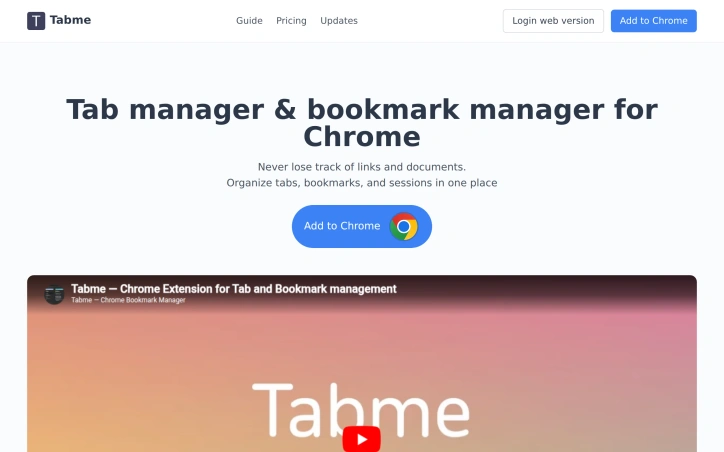
Organizing browser tabs has long been a point of friction for users who accumulate dozens of open pages and bookmarks scattered across multiple locations. Tabme, a Chrome extension, addresses this by consolidating tab management, bookmarking, and note-taking into a single interface with straightforward drag-and-drop controls. The extension handles several common browser headaches. Users can save individual tabs or entire sessions into folders with a single drag-and-drop action, reducing friction compared to manual bookmarking. Duplicate tab detection removes redundant pages with one click, directly addressing browser memory bloat that slows performance. Search functionality spans across open tabs, saved bookmarks, and recently closed tabs, eliminating the need to manually scroll through dozens of entries. A sticky notes feature lets users attach quick annotations directly to projects or collections. The product operates on a straightforward freemium model. The free tier maintains all data locally on the device, preserving privacy for users who prefer to avoid cloud dependencies. The Pro plan enables cross-device cloud synchronization and includes a web application for accessing bookmarks from any browser or phone. This structure caters to both casual users managing tabs on a single device and power users working across multiple machines. The "Mini" variant offers all features without overriding the new tab page, giving users control over how prominently the extension integrates with their workflow. User reviews emphasize simplicity and effectiveness. Comments praise the ease of organization, clean interface design, and productivity improvements. Reddit mentions suggest organic adoption and word-of-mouth traction. The extension maintains a top rating in the Chrome Store, reflecting consistent positive reception. Dark mode support and web-based access round out the feature set. Tabme serves both light organizers managing a handful of bookmarks and power users juggling dozens of projects across multiple devices.

Chrome-extensions
O
Oleg Plotnikov

Organizing browser tabs has long been a point of friction for users who accumulate dozens of open pages and bookmarks scattered across multiple locations. Tabme, a Chrome extension, addresses this by consolidating tab management, bookmarking, and note-taking into a single interface with straightforward drag-and-drop controls. The extension handles several common browser headaches. Users can save individual tabs or entire sessions into folders with a single drag-and-drop action, reducing friction compared to manual bookmarking. Duplicate tab detection removes redundant pages with one click, directly addressing browser memory bloat that slows performance. Search functionality spans across open tabs, saved bookmarks, and recently closed tabs, eliminating the need to manually scroll through dozens of entries. A sticky notes feature lets users attach quick annotations directly to projects or collections. The product operates on a straightforward freemium model. The free tier maintains all data locally on the device, preserving privacy for users who prefer to avoid cloud dependencies. The Pro plan enables cross-device cloud synchronization and includes a web application for accessing bookmarks from any browser or phone. This structure caters to both casual users managing tabs on a single device and power users working across multiple machines. The "Mini" variant offers all features without overriding the new tab page, giving users control over how prominently the extension integrates with their workflow. User reviews emphasize simplicity and effectiveness. Comments praise the ease of organization, clean interface design, and productivity improvements. Reddit mentions suggest organic adoption and word-of-mouth traction. The extension maintains a top rating in the Chrome Store, reflecting consistent positive reception. Dark mode support and web-based access round out the feature set. Tabme serves both light organizers managing a handful of bookmarks and power users juggling dozens of projects across multiple devices.

Tabme preview

Key features

  • Tab Management: Consolidates tab management, bookmarking, and note-taking into a single interface with drag-and-drop controls
  • Duplicate Detection: Removes redundant pages with one click to reduce browser memory bloat
See full listing
CoopTrack

Loan management in cooperative organizations typically requires juggling multiple spreadsheets, manual reconciliation, and constant back-and-forth communication. CoopTrack addresses this operational friction by providing a centralized platform designed specifically for how cooperatives function, eliminating the tedious administrative burden of tracking member balances, loan disbursements, and payment histories. The platform targets cooperatives of all sizes, from small community-based organizations to larger networks with hundreds of members. Its core strength lies in simplicity—the company emphasizes setup in under ten minutes, and the interface prioritizes ease of use over complex feature density. This focus on accessibility is deliberate; the tool is managed by cooperative staff rather than requiring member participation, meaning adoption friction is minimal. Key capabilities include real-time loan balance monitoring, member record management, automated payment tracking with balance updates, and financial reporting for decision-making. The platform also handles payment collection directly through PayPal and card processing, integrating a revenue mechanism into the same interface where cooperatives manage their operations. This consolidation reduces context-switching and data entry errors—a significant pain point for organizations relying on manual systems. Data security is a central design consideration, with the company emphasizing encryption and private storage of member financial information, which is critical for organizations handling sensitive cooperative finances. The absence of any requirement for members to install software or access the system directly further simplifies the operational model. Pricing is structured around cooperative size. The Starter tier at five dollars monthly supports up to fifty members with basic reporting; the Standard plan at ten dollars accommodates up to three hundred members and adds email notifications and priority support; the Premium offering at twenty-five dollars removes member limits and includes advanced analytics and export capabilities. All tiers include secure payment processing, and the requirement of no credit card for the free trial removes a common barrier to evaluation. The messaging positions CoopTrack as a replacement for error-prone manual processes rather than a comprehensive financial management system. For cooperatives managing loan portfolios without existing software infrastructure, the combination of low cost, quick implementation, and straightforward feature set represents a pragmatic alternative to spreadsheet-based workflows or expensive enterprise platforms designed for other organizational types.
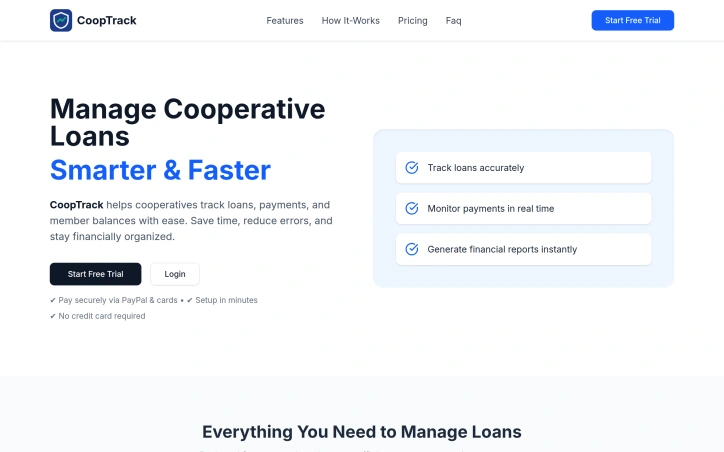

Financial-planning
N
nxt Tasq

Loan management in cooperative organizations typically requires juggling multiple spreadsheets, manual reconciliation, and constant back-and-forth communication. CoopTrack addresses this operational friction by providing a centralized platform designed specifically for how cooperatives function, eliminating the tedious administrative burden of tracking member balances, loan disbursements, and payment histories. The platform targets cooperatives of all sizes, from small community-based organizations to larger networks with hundreds of members. Its core strength lies in simplicity—the company emphasizes setup in under ten minutes, and the interface prioritizes ease of use over complex feature density. This focus on accessibility is deliberate; the tool is managed by cooperative staff rather than requiring member participation, meaning adoption friction is minimal. Key capabilities include real-time loan balance monitoring, member record management, automated payment tracking with balance updates, and financial reporting for decision-making. The platform also handles payment collection directly through PayPal and card processing, integrating a revenue mechanism into the same interface where cooperatives manage their operations. This consolidation reduces context-switching and data entry errors—a significant pain point for organizations relying on manual systems. Data security is a central design consideration, with the company emphasizing encryption and private storage of member financial information, which is critical for organizations handling sensitive cooperative finances. The absence of any requirement for members to install software or access the system directly further simplifies the operational model. Pricing is structured around cooperative size. The Starter tier at five dollars monthly supports up to fifty members with basic reporting; the Standard plan at ten dollars accommodates up to three hundred members and adds email notifications and priority support; the Premium offering at twenty-five dollars removes member limits and includes advanced analytics and export capabilities. All tiers include secure payment processing, and the requirement of no credit card for the free trial removes a common barrier to evaluation. The messaging positions CoopTrack as a replacement for error-prone manual processes rather than a comprehensive financial management system. For cooperatives managing loan portfolios without existing software infrastructure, the combination of low cost, quick implementation, and straightforward feature set represents a pragmatic alternative to spreadsheet-based workflows or expensive enterprise platforms designed for other organizational types.

CoopTrack preview

Key features

  • Real-Time Balance Monitoring: Track member loan balances and payment status instantly
  • Automated Payment Processing: Integrated PayPal and card processing for direct payment collection
See full listing
LingoFrame

Video creators worldwide face a persistent challenge: making content accessible across language barriers while managing tight production timelines. LingoFrame addresses this friction by automating subtitle generation and translation, eliminating the manual work that typically consumes hours and requires specialized skills. The platform targets three distinct audiences effectively. Educators can caption lessons to reach international students without language constraints. Marketing teams gain the ability to deploy multilingual campaigns at scale. Content creators benefit from improved discoverability and accessibility, which have become competitive advantages in crowded platforms. What sets LingoFrame apart is its streamlined workflow. Users upload video files and the system generates subtitles automatically, then offers customization options before exporting. The product provides flexibility in output formats—creators can download standard SRT files for external use or burn subtitles directly into video files. Multi-language translation capabilities are built into the core offering rather than treated as a premium add-on, though the credit system does meter access to these features. The feature set covers the essential needs of the subtitling workflow. Beyond basic caption generation, the platform handles the technically demanding task of translating subtitles while syncing them to video timing. Customization options suggest users can adjust styling, formatting, and language specifics to match their content aesthetic and regional preferences. Pricing employs a credit-based model with tiered options. New users receive 25 free credits to trial the service, lowering friction for initial adoption. Paid plans start at $4.99 for 30 credits, with a mid-tier offering at $12.99 for 100 credits marked as the platform's most popular option, and a premium tier at $29.99 for 300 credits. The credit allocation system accounts for different operation costs—subtitle generation, merging, and translation each consume credits at different rates, though exact time-to-credit conversions require calculation. LingoFrame occupies a practical position in the accessibility tooling space. It doesn't attempt to be a full video editing suite or compete with enterprise-grade localization platforms. Instead, it solves a specific, high-friction problem with a direct interface and transparent pricing. The free credit allowance and popular mid-tier option suggest the company targets creators and small teams rather than enterprise deployments, prioritizing ease of use over feature maximalism. For any producer managing multilingual content, the value proposition centers on the time savings and quality standardization that automation delivers.


Video creators worldwide face a persistent challenge: making content accessible across language barriers while managing tight production timelines. LingoFrame addresses this friction by automating subtitle generation and translation, eliminating the manual work that typically consumes hours and requires specialized skills. The platform targets three distinct audiences effectively. Educators can caption lessons to reach international students without language constraints. Marketing teams gain the ability to deploy multilingual campaigns at scale. Content creators benefit from improved discoverability and accessibility, which have become competitive advantages in crowded platforms. What sets LingoFrame apart is its streamlined workflow. Users upload video files and the system generates subtitles automatically, then offers customization options before exporting. The product provides flexibility in output formats—creators can download standard SRT files for external use or burn subtitles directly into video files. Multi-language translation capabilities are built into the core offering rather than treated as a premium add-on, though the credit system does meter access to these features. The feature set covers the essential needs of the subtitling workflow. Beyond basic caption generation, the platform handles the technically demanding task of translating subtitles while syncing them to video timing. Customization options suggest users can adjust styling, formatting, and language specifics to match their content aesthetic and regional preferences. Pricing employs a credit-based model with tiered options. New users receive 25 free credits to trial the service, lowering friction for initial adoption. Paid plans start at $4.99 for 30 credits, with a mid-tier offering at $12.99 for 100 credits marked as the platform's most popular option, and a premium tier at $29.99 for 300 credits. The credit allocation system accounts for different operation costs—subtitle generation, merging, and translation each consume credits at different rates, though exact time-to-credit conversions require calculation. LingoFrame occupies a practical position in the accessibility tooling space. It doesn't attempt to be a full video editing suite or compete with enterprise-grade localization platforms. Instead, it solves a specific, high-friction problem with a direct interface and transparent pricing. The free credit allowance and popular mid-tier option suggest the company targets creators and small teams rather than enterprise deployments, prioritizing ease of use over feature maximalism. For any producer managing multilingual content, the value proposition centers on the time savings and quality standardization that automation delivers.

LingoFrame preview

Key features

  • Automatic Subtitle Generation: The system automatically generates subtitles from video files without manual work
  • Multi-Language Translation: Built-in translation capabilities sync subtitles to video timing across multiple languages
See full listing
BacklinkLog

For indie makers and SaaS founders struggling to gain visibility in a crowded market, BacklinkLog positions itself as a shortcut—a curated directory designed to connect emerging products with discovery-minded audiences. Rather than betting on organic search or paid ads alone, the service offers a dedicated listing page that aggregates the key information potential customers need: product descriptions, screenshots, category tags, and direct links. The directory's value proposition rests on three operational claims. First, listings reach search engine indexes within 24 hours, suggesting visibility acceleration beyond typical website indexing timelines. Second, placements remain permanent as long as the subscription holds, eliminating the rotating feature carousel common in other directories. Third, each listing gets structured markup and keyword optimization to improve discoverability through both search engines and the directory's internal taxonomy. The product emerges at an interesting inflection point. Marketplace directories for indie products have proliferated—ProductHunt, Indie Hackers, and various niche aggregators all compete for founder attention. BacklinkLog's differentiation hinges on permanence and search integration rather than the social ranking or community voting mechanisms that dominate competitors. This reflects a deliberate bet that founders care more about sustained, indexable visibility than viral launch moments. The approval process advertises instant turnaround and a seven-day refund window, removing friction from the onboarding path. The absence of hidden fees is mentioned explicitly, suggesting prior frustration in the category warranted this emphasis. Beyond the standard listing tier, Premium and Sponsor options exist, with sponsors receiving featured badges and priority placement—a tiered model that mirrors conventional directory economics. The directory itself showcases products across various categories: travel compliance trackers, philosophy apps, file management tools, cash flow forecasting software, AI receptionists, and AI automation assistants. This heterogeneity suggests either broad acceptance criteria or effective long-tail positioning. The core tension: whether permanent listings and 24-hour indexing sufficiently justify subscription costs when free alternatives and social platforms already serve founder discovery. BacklinkLog's answer is that lasting visibility, earned through structured data rather than viral luck, matters more than novelty. Whether that resonates depends on individual founder priorities.

Marketplace-sites
N
Nick G

For indie makers and SaaS founders struggling to gain visibility in a crowded market, BacklinkLog positions itself as a shortcut—a curated directory designed to connect emerging products with discovery-minded audiences. Rather than betting on organic search or paid ads alone, the service offers a dedicated listing page that aggregates the key information potential customers need: product descriptions, screenshots, category tags, and direct links. The directory's value proposition rests on three operational claims. First, listings reach search engine indexes within 24 hours, suggesting visibility acceleration beyond typical website indexing timelines. Second, placements remain permanent as long as the subscription holds, eliminating the rotating feature carousel common in other directories. Third, each listing gets structured markup and keyword optimization to improve discoverability through both search engines and the directory's internal taxonomy. The product emerges at an interesting inflection point. Marketplace directories for indie products have proliferated—ProductHunt, Indie Hackers, and various niche aggregators all compete for founder attention. BacklinkLog's differentiation hinges on permanence and search integration rather than the social ranking or community voting mechanisms that dominate competitors. This reflects a deliberate bet that founders care more about sustained, indexable visibility than viral launch moments. The approval process advertises instant turnaround and a seven-day refund window, removing friction from the onboarding path. The absence of hidden fees is mentioned explicitly, suggesting prior frustration in the category warranted this emphasis. Beyond the standard listing tier, Premium and Sponsor options exist, with sponsors receiving featured badges and priority placement—a tiered model that mirrors conventional directory economics. The directory itself showcases products across various categories: travel compliance trackers, philosophy apps, file management tools, cash flow forecasting software, AI receptionists, and AI automation assistants. This heterogeneity suggests either broad acceptance criteria or effective long-tail positioning. The core tension: whether permanent listings and 24-hour indexing sufficiently justify subscription costs when free alternatives and social platforms already serve founder discovery. BacklinkLog's answer is that lasting visibility, earned through structured data rather than viral luck, matters more than novelty. Whether that resonates depends on individual founder priorities.

BacklinkLog preview

Key features

  • 24-Hour Indexing: Listings reach search engine indexes within 24 hours for accelerated visibility
  • Permanent Listings: Placements remain permanent as long as the subscription is maintained
See full listing
ClickToGuide

Automating the tedious process of documenting workflows, this Chrome extension captures user interactions and transforms them into PDF guides complete with annotated screenshots. The tool addresses a genuine pain point: professionals across support, quality assurance, training, and product documentation spend considerable time manually taking screenshots, pasting them into documents, and writing descriptions for each step. ClickToGuide eliminates this friction by recording clicks and automatically generating corresponding visual content. The extension markets itself to a diverse audience. QA teams can quickly generate evidence for bug reports, HR departments can assemble onboarding materials, customer support representatives can create visual troubleshooting guides, and developers can document features before handoff. This multi-use positioning reflects a well-understood problem that spans multiple job functions within organizations. Several design choices set this apart from generic screen recording tools. The interface emphasizes simplicity: users record a workflow, review and edit the captured steps, then export directly to PDF. The extension highlights where users clicked with a red box, providing context without cluttering the visual. A built-in crop tool lets users focus on specific UI elements, and standard keyboard shortcuts for undo, redo, and clipboard image insertion keep the workflow fast. The editing interface is built for quick iteration rather than deep customization. The privacy model represents a conscious architectural decision. All processing happens locally in the browser rather than on remote servers, meaning users never transmit screen data to company infrastructure. For teams handling sensitive information or operating under strict data governance, this is a meaningful differentiator from cloud-dependent competitors. The business model centers on a lifetime license with cosmetic unlocks—removing watermarks and supporting unlimited steps. A launch promotion offered $5 off the license price. The extension remains early-stage; the Chrome Web Store listing shows only two users and the most recent version update dates to February 2026. The small user base suggests limited market penetration so far, though the product addresses real workflow problems that users across industries encounter daily.
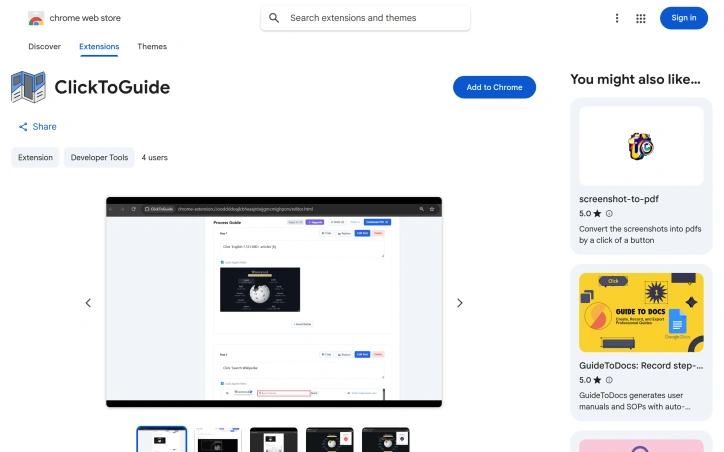

Screenshots-and-screen-recording-apps
N
Neha Pawar

Automating the tedious process of documenting workflows, this Chrome extension captures user interactions and transforms them into PDF guides complete with annotated screenshots. The tool addresses a genuine pain point: professionals across support, quality assurance, training, and product documentation spend considerable time manually taking screenshots, pasting them into documents, and writing descriptions for each step. ClickToGuide eliminates this friction by recording clicks and automatically generating corresponding visual content. The extension markets itself to a diverse audience. QA teams can quickly generate evidence for bug reports, HR departments can assemble onboarding materials, customer support representatives can create visual troubleshooting guides, and developers can document features before handoff. This multi-use positioning reflects a well-understood problem that spans multiple job functions within organizations. Several design choices set this apart from generic screen recording tools. The interface emphasizes simplicity: users record a workflow, review and edit the captured steps, then export directly to PDF. The extension highlights where users clicked with a red box, providing context without cluttering the visual. A built-in crop tool lets users focus on specific UI elements, and standard keyboard shortcuts for undo, redo, and clipboard image insertion keep the workflow fast. The editing interface is built for quick iteration rather than deep customization. The privacy model represents a conscious architectural decision. All processing happens locally in the browser rather than on remote servers, meaning users never transmit screen data to company infrastructure. For teams handling sensitive information or operating under strict data governance, this is a meaningful differentiator from cloud-dependent competitors. The business model centers on a lifetime license with cosmetic unlocks—removing watermarks and supporting unlimited steps. A launch promotion offered $5 off the license price. The extension remains early-stage; the Chrome Web Store listing shows only two users and the most recent version update dates to February 2026. The small user base suggests limited market penetration so far, though the product addresses real workflow problems that users across industries encounter daily.

ClickToGuide preview

Key features

  • Automated Screenshot Capture: Records user interactions and automatically captures corresponding screenshots
  • PDF Guide Generation: Transforms captured workflow steps into annotated PDF documents
See full listing
Exolio

Detecting artificially generated text has become a critical concern in academic and educational settings, where verifying authorship helps maintain integrity and fairness. Exolio addresses this need with a detection tool designed specifically for educators, offering both automated scanning and human-backed analysis. The product combines two distinct approaches. The Quick AI Check provides immediate feedback, letting users paste text and receive an instant likelihood score for AI authorship, broken down sentence by sentence. For higher-stakes decisions, the Document Upload service pairs automated analysis with expert human review, handling PDF and Word documents and delivering detailed written assessments within one to seven days. This dual offering reflects a pragmatic understanding that different use cases demand different levels of rigor. The company takes transparency seriously about its limitations. Rather than claiming comprehensive accuracy, Exolio explicitly acknowledges that no AI detection system is foolproof and positions its scores as a starting signal rather than definitive proof. This restraint—unusual in a category prone to marketing overstatement—signals that the founders understand the stakes in educational contexts where false accusations carry real consequences. The business model is straightforward and friction-minimized. New users get three free checks monthly without needing a credit card, letting them evaluate the tool without commitment. Premium access costs £3 monthly for unlimited checks, positioned as cheaper than a coffee. The pricing avoids long-term contracts and allows cancellation through the dashboard or Stripe portal directly. What limits the appeal is the modest feature set. The Quick AI Check remains rudimentary—text pasting with an overall score lacks the granular reporting some educators demand. The Document Upload service, while more thorough, lacks published pricing and timeline specificity; the cited range of "24 hours to 1 week" creates ambiguity for time-sensitive academic decisions. The reliance on a single founder email for support indicates an early-stage operation with obvious scaling constraints as user volume grows. Exolio occupies a defensible position in the emerging AI detection space for academic institutions. Its clarity about capabilities, accessible pricing, and dual-tier approach create differentiation in a crowded market. The core question is whether the product develops the sophistication and support infrastructure to keep pace as AI-generated text becomes more convincing and detection demands grow more rigorous.


Ai-content-detection
F
Francisco Booth

Detecting artificially generated text has become a critical concern in academic and educational settings, where verifying authorship helps maintain integrity and fairness. Exolio addresses this need with a detection tool designed specifically for educators, offering both automated scanning and human-backed analysis. The product combines two distinct approaches. The Quick AI Check provides immediate feedback, letting users paste text and receive an instant likelihood score for AI authorship, broken down sentence by sentence. For higher-stakes decisions, the Document Upload service pairs automated analysis with expert human review, handling PDF and Word documents and delivering detailed written assessments within one to seven days. This dual offering reflects a pragmatic understanding that different use cases demand different levels of rigor. The company takes transparency seriously about its limitations. Rather than claiming comprehensive accuracy, Exolio explicitly acknowledges that no AI detection system is foolproof and positions its scores as a starting signal rather than definitive proof. This restraint—unusual in a category prone to marketing overstatement—signals that the founders understand the stakes in educational contexts where false accusations carry real consequences. The business model is straightforward and friction-minimized. New users get three free checks monthly without needing a credit card, letting them evaluate the tool without commitment. Premium access costs £3 monthly for unlimited checks, positioned as cheaper than a coffee. The pricing avoids long-term contracts and allows cancellation through the dashboard or Stripe portal directly. What limits the appeal is the modest feature set. The Quick AI Check remains rudimentary—text pasting with an overall score lacks the granular reporting some educators demand. The Document Upload service, while more thorough, lacks published pricing and timeline specificity; the cited range of "24 hours to 1 week" creates ambiguity for time-sensitive academic decisions. The reliance on a single founder email for support indicates an early-stage operation with obvious scaling constraints as user volume grows. Exolio occupies a defensible position in the emerging AI detection space for academic institutions. Its clarity about capabilities, accessible pricing, and dual-tier approach create differentiation in a crowded market. The core question is whether the product develops the sophistication and support infrastructure to keep pace as AI-generated text becomes more convincing and detection demands grow more rigorous.

Exolio preview

Key features

  • Quick AI Check: Paste text and instantly receive a likelihood score for AI authorship, broken down sentence by sentence.
  • Expert Document Review: Upload PDFs or Word documents for paired automated and human analysis, delivered within one to seven days.
See full listing
Study Share

Standardized test preparation has traditionally demanded either expensive one-on-one tutoring or a patchwork of free and paid resources that students must assemble themselves. Study Share positions itself as a middle ground—a comprehensive platform that consolidates test prep into a single interface while keeping costs lower than private instruction. The platform centers on AI-powered guidance alongside realistic practice testing. The company emphasizes its Bluebook-style test interface, matching the actual exam format students will encounter, and backs this approach with a money-back guarantee if students don't improve their scores. This confidence in outcomes is notable, though the site cites a 99% improvement rate without qualifying what "improvement" means or how that figure was measured. Study Share covers multiple exam tracks. Beyond the SAT, the platform supports ACT and PSAT preparation, allowing students to keep all their test prep work consolidated rather than juggling separate tools. The feature set includes full-length practice tests, flashcards, detailed analytics, a review system for missed questions, and an integrated AI tutor that offers hints and explanations during study sessions. This breadth suggests an attempt to eliminate context-switching between different platforms—a genuine friction point in self-study workflows. The company differentiates itself from existing alternatives by positioning against Khan Academy's free-first model and Quizlet's flashcard focus. Study Share argues its strength lies in combining practice tests, AI tutoring, and analytics into a unified workflow designed for structured self-study rather than pure content consumption or flashcard drilling. On business model, the platform publishes pricing publicly so families can see plan options before committing, and allows cancellation at any time. This transparency around cost and commitment is more consumer-friendly than many competitors in the test prep space. The platform targets self-motivated students who want structured guidance without the scheduling limitations of tutoring. For students already comfortable with independent study but frustrated by disjointed tools, Study Share's integrated approach addresses a real gap. The money-back guarantee and emphasis on measurable score improvement signal the company believes in its product's efficacy, though prospective users should verify improvement claims against independent data.
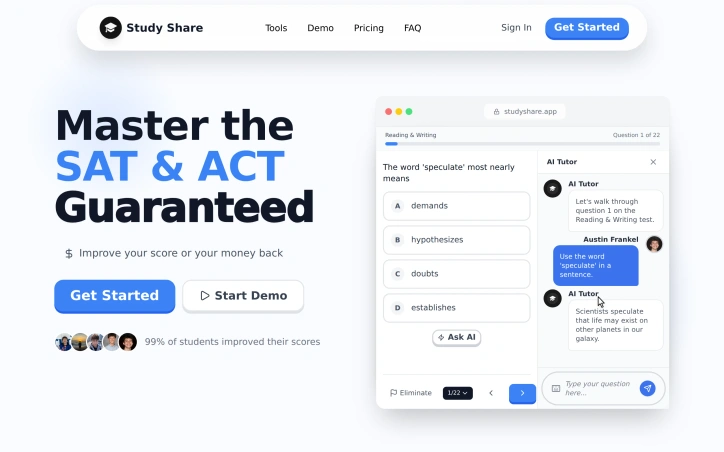

Online-learning
A
Austin Frankel

Standardized test preparation has traditionally demanded either expensive one-on-one tutoring or a patchwork of free and paid resources that students must assemble themselves. Study Share positions itself as a middle ground—a comprehensive platform that consolidates test prep into a single interface while keeping costs lower than private instruction. The platform centers on AI-powered guidance alongside realistic practice testing. The company emphasizes its Bluebook-style test interface, matching the actual exam format students will encounter, and backs this approach with a money-back guarantee if students don't improve their scores. This confidence in outcomes is notable, though the site cites a 99% improvement rate without qualifying what "improvement" means or how that figure was measured. Study Share covers multiple exam tracks. Beyond the SAT, the platform supports ACT and PSAT preparation, allowing students to keep all their test prep work consolidated rather than juggling separate tools. The feature set includes full-length practice tests, flashcards, detailed analytics, a review system for missed questions, and an integrated AI tutor that offers hints and explanations during study sessions. This breadth suggests an attempt to eliminate context-switching between different platforms—a genuine friction point in self-study workflows. The company differentiates itself from existing alternatives by positioning against Khan Academy's free-first model and Quizlet's flashcard focus. Study Share argues its strength lies in combining practice tests, AI tutoring, and analytics into a unified workflow designed for structured self-study rather than pure content consumption or flashcard drilling. On business model, the platform publishes pricing publicly so families can see plan options before committing, and allows cancellation at any time. This transparency around cost and commitment is more consumer-friendly than many competitors in the test prep space. The platform targets self-motivated students who want structured guidance without the scheduling limitations of tutoring. For students already comfortable with independent study but frustrated by disjointed tools, Study Share's integrated approach addresses a real gap. The money-back guarantee and emphasis on measurable score improvement signal the company believes in its product's efficacy, though prospective users should verify improvement claims against independent data.

Study Share preview

Key features

  • AI-Powered Test Prep: Uses AI guidance alongside practice testing with Bluebook-style exam interface
  • Multi-Exam Support: Covers SAT, ACT, and PSAT preparation in one consolidated platform
See full listing
Time Capsule - Memory Vault

Capturing memories for future reflection has become increasingly common, but most solutions treat time capsules as an afterthought. This app tackles the specific use case of sealing away meaningful moments—photos, videos, voice recordings, notes, and files—to be opened at a predetermined date, preserved exactly as they were locked away. The target audience is broad but specific: people marking milestones who want to freeze a moment in time. This includes high school graduates saving photos and letters for their adult selves, parents recording a child's early moments to be revisited at 18, friend groups documenting shared trips, and individuals tracking personal goals for yearly review. What distinguishes this offering is its uncompromising stance on privacy. The application stores everything on-device using AES-256 encryption, avoids cloud servers entirely, requires no account creation, and collects no analytics or user data. This approach appeals to users skeptical of tech companies' data practices, though it carries a trade-off: responsibility for manually backing up capsules as encrypted files to prevent device loss from becoming data loss. The interface emphasizes simplicity. Users name a capsule, choose an unlock date ranging from one day to decades away, add their content, and press and hold to seal it. A countdown timer displays time remaining until each capsule unlocks. The app supports flexible content types, from imported media to built-in voice recording and text composition. Sharing encrypted capsules with others requires a premium subscription. The service operates on a freemium model with in-app purchases. Core capsule creation and storage is free, while premium access unlocks capsule sharing and some advanced features. The documentation doesn't clearly distinguish what exactly requires payment, which prospective users should clarify before relying on the app for long-term memory storage. One practical consideration: since everything is local and unsynced, device loss means capsule loss unless backups exist as external encrypted files. The developer emphasizes this backup requirement, suggesting they understand the inherent risks of an entirely on-device architecture. For users prioritizing privacy over convenience, who accept responsibility for backups, and who find meaning in time-delayed memory capture, this fills a genuine gap in the app ecosystem.
Note-and-writing-apps
A
Austin Frankel

Capturing memories for future reflection has become increasingly common, but most solutions treat time capsules as an afterthought. This app tackles the specific use case of sealing away meaningful moments—photos, videos, voice recordings, notes, and files—to be opened at a predetermined date, preserved exactly as they were locked away. The target audience is broad but specific: people marking milestones who want to freeze a moment in time. This includes high school graduates saving photos and letters for their adult selves, parents recording a child's early moments to be revisited at 18, friend groups documenting shared trips, and individuals tracking personal goals for yearly review. What distinguishes this offering is its uncompromising stance on privacy. The application stores everything on-device using AES-256 encryption, avoids cloud servers entirely, requires no account creation, and collects no analytics or user data. This approach appeals to users skeptical of tech companies' data practices, though it carries a trade-off: responsibility for manually backing up capsules as encrypted files to prevent device loss from becoming data loss. The interface emphasizes simplicity. Users name a capsule, choose an unlock date ranging from one day to decades away, add their content, and press and hold to seal it. A countdown timer displays time remaining until each capsule unlocks. The app supports flexible content types, from imported media to built-in voice recording and text composition. Sharing encrypted capsules with others requires a premium subscription. The service operates on a freemium model with in-app purchases. Core capsule creation and storage is free, while premium access unlocks capsule sharing and some advanced features. The documentation doesn't clearly distinguish what exactly requires payment, which prospective users should clarify before relying on the app for long-term memory storage. One practical consideration: since everything is local and unsynced, device loss means capsule loss unless backups exist as external encrypted files. The developer emphasizes this backup requirement, suggesting they understand the inherent risks of an entirely on-device architecture. For users prioritizing privacy over convenience, who accept responsibility for backups, and who find meaning in time-delayed memory capture, this fills a genuine gap in the app ecosystem.

Time Capsule - Memory Vault preview

Key features

  • On-Device Encryption: Uses AES-256 encryption to store all memories locally without cloud servers
  • Multiple Content Types: Supports photos, videos, voice recordings, notes, and files in a single capsule
See full listing