iCV.ge
iCV.ge targets a common frustration for job seekers: building a polished CV takes time, and many applicants never learn...

My2Do
My2Do takes aim at a familiar frustration: task managers that demand a form for every entry and then bury the reminder b...
Categories
Recently Listed
1,261 launches
Everyone's been there: friends texting "you pick" and suddenly 20 minutes vanish deciding between pizza and that new bar downtown. Spotlight targets this exact friction point, offering a way to discover nearby venues matched to your current mood in three taps instead of endless group chat back-and-forth. The core insight is sharp. The app doesn't attempt to be a general discovery platform; it solves the specific problem of matching nearby locations to your current vibe. Rather than generic recommendations, users select from specific mood categories—sugar rush, golden hour, rainy day, first date, adrenaline, late-night study spots, or large group activities—and get matched to real places within a short radius. This vibe-driven narrowing sidesteps the paralysis of infinite choice and produces relevant results. What distinguishes Spotlight from standard location apps is its privacy posture and friction-free onboarding. The service requires no login or account creation. It pulls your location once to find nearby spots, then discards that data immediately. Saved spots live only on your phone; clear them and nothing persists. This privacy-first stance feels calculated for an app aimed at teenagers and young adults whose parents apparently scrutinize data practices. The interface prioritizes speed. Users select a location, pick a vibe, then tap for directions. The app claims an average of 60 seconds from opening to heading out the door. It also generates shareable spot screenshots designed to drop into group chats—clever positioning given its "ditch the group chat" messaging, which actually means replacing endless decision-making with a faster alternative rather than eliminating group coordination entirely. The platform surfaces 10,000+ nearby spots, though how this database is curated or maintained isn't addressed in the available materials. It operates as a free web-based service, eliminating download friction. The underlying business model isn't disclosed from the content provided. The positioning targets a specific user: the friend everyone texts for restaurant picks or activity ideas. Spotlight positions itself as the tool that lets you fulfill those requests without memorizing every hidden gem within 10 minutes. The core promise—knowing the vibe but not the venue—is genuine. Whether the app can attract beyond this niche, reaching casual users who don't need to be the plan-maker, remains open. But solving a real social friction point gives it solid traction.


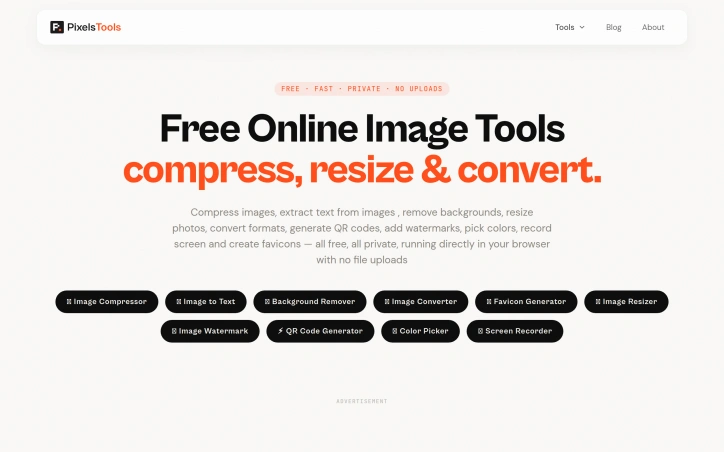
Anyone tired of uploading files to mysterious servers for simple image tasks now has an alternative. PixelTools addresses a straightforward but persistent problem: users need quick image and document processing without surrendering their files to third-party servers. The product targets anyone who handles images regularly but values privacy and speed—content creators, developers, designers, and professionals who want instant results without friction or data exposure. What distinguishes PixelTools is its execution of a privacy-first architecture. Every tool runs entirely in the browser using WebAssembly and browser APIs, eliminating the traditional server upload bottleneck. This approach delivers genuinely instant processing since computation happens locally on the user's device rather than queuing in a server pipeline. The developer behind the project built it explicitly to solve a personal frustration with existing workflows, bringing authentic motivation to the product. The current toolkit spans ten utilities: image compression, text extraction via OCR, AI-powered background removal, format conversion between PNG, JPG, and WebP, favicon generation, image resizing with preset templates, watermarking, QR code generation, a color picker for palette building, and screen recording with audio. This breadth addresses common image workflows without forcing users to juggle multiple tabs or services. The business model relies entirely on non-intrusive advertising, keeping all tools permanently free while avoiding accounts, subscriptions, or file limits. Users download or process their work without friction. This approach appeals to cost-conscious individuals and small teams who might otherwise piece together expensive software or resort to less legitimate alternatives. Technically, the product reflects solid frontend engineering. The developer brings five years of professional experience building React and Next.js applications, with demonstrated expertise in performance optimization and responsive design. That background shows in the product's interface and stability. The main limitation lies in feature scope. While the ten tools cover common tasks well, they remain fairly focused. Advanced image editing, batch operations across all tools, or custom processing pipelines remain absent. For users needing specialized functionality beyond these core utilities, more comprehensive solutions may prove necessary. PixelTools succeeds by doing one thing well: giving users fast, private image processing without requiring trust in unknown servers or payment. For that specific need, it delivers reliably.

Quick photo editing without the signup friction remains a genuine user need, and this browser-based AI editor tackles it head-on. Users upload an image, describe the edits they want in natural language, and receive results without creating an account first. The approach removes a major barrier to entry for photographers who just need one-off adjustments before moving on. The product works with standard web image formats (JPG, PNG, WebP) up to 30MB and supports a range of editing tasks through its prompt-based interface. Object removal stands out as a particularly useful feature, letting users eliminate distracting elements while requesting specific texture or detail handling to maintain natural results. Background replacement handles both transparent outputs and custom scene generation, making it practical for product photography and profile images. The editor also includes restoration workflows for old photos and generative fill for adding or modifying elements within an image. What distinguishes this tool is its genuine no-friction approach. Rather than burying the free tier behind a signup wall, the editor lets users engage immediately, then offers optional accounts for those who want daily credits and extended history. This positioning targets creators who value speed over feature depth and e-commerce sellers preparing marketplace listings without commitment. The interface presents multiple AI model options, giving users flexibility in generation approach and output quality. Aspect ratio and resolution controls let users tailor outputs to specific uses, whether that's creating social media content, campaign images, or marketplace thumbnails. The product demonstrates clear use cases through task-specific guidance and step-by-step examples. The business model trades immediate conversion for accessibility. Free usage with a credits system means casual users can experiment before deciding whether the product earns a subscription. This low-barrier approach suits a fragmented market where many photo editors sit unused after signup friction or confusing paywalls. The main tradeoff is predictable: a credits-based model combined with the browser platform means users are limited in how much they can generate for free, creating natural paths toward paid accounts for power users. For those seeking unlimited local editing, desktop tools remain the alternative. But for the specific case of quick AI-assisted edits that need no installation and no login, the product delivers directly on its proposition.


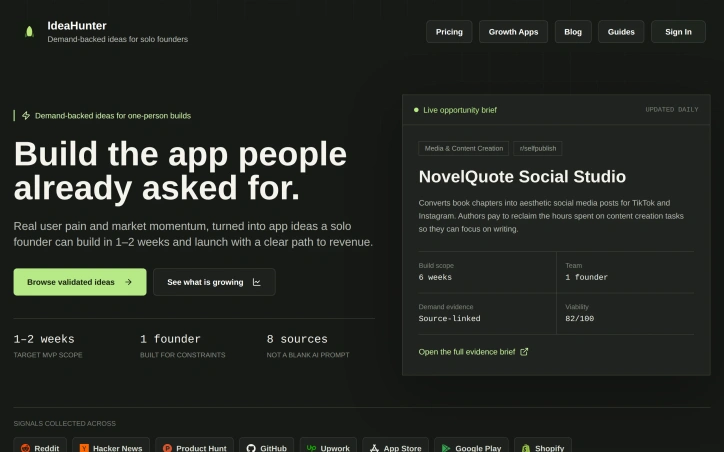
Building a startup idea that won't die after the first two weeks requires both market demand and realistic scope. IdeaHunter addresses a specific need for solo founders and indie hackers: finding app ideas grounded in actual user pain rather than theoretical possibilities. The platform aggregates public signals from eight sources, including Reddit, Hacker News, Product Hunt, GitHub, Upwork, and both major app stores, then synthesizes these signals into structured opportunity briefs. The product's core value proposition centers on constraints rather than limitless possibilities. Most idea databases optimize for novelty and ambition; IdeaHunter filters for what a single person can actually build. Each idea listing specifies a target MVP scope measured in one to two weeks, identifies the specific buyer, articulates the painful job to be solved, and sketches a monetization path. This is not theoretical brainstorming. Each opportunity includes the raw market signals that motivated it, so a founder can inspect the complaints, requests, or job postings that validate demand exists before writing any code. What distinguishes IdeaHunter from broader entrepreneurship content is its insistence on evidence. The platform displays the research trail behind each idea rather than presenting polished conclusions. A founder can see why an opportunity matters by reviewing the source signals that generated it. The daily update cycle means the platform captures emerging trends in near-real time. The product also positions itself against AI-generated idea lists. Rather than offering algorithmic output optimized for novelty, it surfaces patterns from where real people describe their broken workflows and unmet needs. The methodology is transparent: repeated signals across public platforms get distilled into a buildable wedge, then compared against products already showing visible market momentum. Beyond the core idea database, the platform includes guides and checklists aimed at the whole founder journey, from selecting ideas through building and launching. One notable inclusion is guidance on guardrails for AI-assisted code generation, acknowledging that solo builders often rely on AI tools but need frameworks for safe deployment. No pricing information appears in the available content, so the business model remains undisclosed. Regardless, the product solves a genuine problem: founders spend significant time sorting through noise to find ideas worth pursuing. IdeaHunter cuts through that noise by surfacing only opportunities backed by demonstrated demand and buildable within the constraints of one person's time and resources.

Tarot readings traditionally occupied a niche intersection of spirituality and mystique, often requiring in-person sessions with expensive practitioners and demanding significant prior knowledge to interpret results. iTarot addresses this gatekeeping by combining traditional 78-card tarot with AI-powered interpretation, making the practice accessible to beginners and non-English speakers alike. The platform supports 15 languages and offers 25 different card spreads ranging from simple single-card pulls to complex multi-card layouts designed for specific life domains—relationships, career decisions, personal growth, and long-term trajectory. Rather than presenting isolated card meanings, the AI component differentiates itself by explaining how cards relate to one another, analyzing upright and reversed positions, and offering structured, actionable interpretations tailored to the user's specific question. Accessibility extends beyond language support. The site includes a comprehensive help center addressing common misconceptions about tarot's predictive power, explicitly clarifying that readings reflect current energy and possibilities rather than fixed fate. This ethical framing discourages users from employing tarot to circumvent professional advice on medical, legal, or financial matters—a responsible boundary that strengthens rather than weakens the product's credibility. Beginners can start with explanations of all 78 card meanings before diving into complex spreads. The business model uses a freemium approach: basic readings and card meaning lookups are available without payment, while unlocking the AI deep-report analysis requires purchase. Stripe and Alipay are supported, indicating deliberate geographic focus toward global audiences, particularly Asia. What distinguishes iTarot is its positioning at the intersection of ancient divination practice and modern generative AI—a combination that makes subjective interpretation feel more systematic and transparent. Whether users consult tarot for genuine spiritual guidance or self-reflection exercises, the product acknowledges the distinction without judgment. The interface layers structure and clarity over mystique, making it suitable for skeptics and believers alike to explore tarot as a decision-making aid or personal journaling prompt.


Divination has traditionally been gated behind expensive appointments and limited availability, leaving people seeking practical guidance with few accessible options. Lenormand Live addresses this by offering an AI-powered Lenormand card reading platform available 24/7 with support for 15 languages. The platform focuses on Lenormand rather than Tarot, a deliberately practical choice. Lenormand's 36-card system emphasizes concrete, actionable guidance over psychological symbolism, making it better suited for questions about love, career, and life direction. The product offers ten different spreads ranging from simple three-card layouts to nine-by-nine grids for comprehensive analysis, ensuring both beginners and experienced practitioners find suitable options. What distinguishes Lenormand Live is its implementation of contextual card interpretation through what the platform calls adjacency—reading neighboring cards as semantic units rather than in isolation. This approach mirrors how professional readers work. AI-powered, it applies this technique consistently and instantly. The interface guides users to focus their intention before selecting cards, and the AI generates interpretable guidance based on both card positions and the user's specific question. The business model reflects thoughtful design. Users access free basic readings and standard card meanings without friction. Detailed AI interpretations that synthesize card positions with question context unlock through payment, creating a straightforward freemium structure. Payment options include Stripe and Alipay, acknowledging the platform's international audience. Privacy considerations receive explicit attention. Card selection occurs entirely in the browser, and the platform only sends question text and spread data to interpretation services when users explicitly request AI reports. Without login or payment, reading history isn't retained long-term. This transparency about data handling stands out in a space where divination platforms often operate with little scrutiny around user privacy. The product exists within a broader ecosystem. The founder operates related platforms for geomancy, Mayan calendar guidance, tarot, and traditional astrology, suggesting both conviction in AI-assisted divination and recognition that different systems serve different user needs. Lenormand Live targets practical people seeking accessible guidance who value both transparency and convenience. The execution demonstrates understanding that AI can enhance rather than replace divination's appeal when applied thoughtfully to established methodologies.


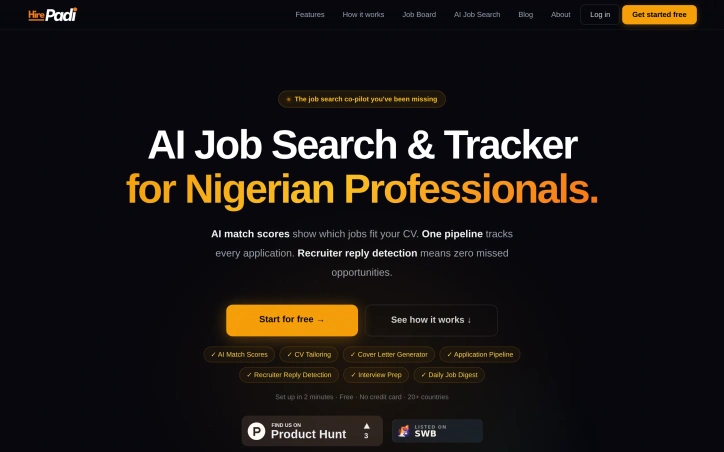
Job search platforms typically optimize for volume—more applications, more shots at the target. HirePadi inverts this approach by prioritizing precision instead. The service targets Nigerian professionals and job seekers across 20 countries who waste time applying to roles that don't match their profile, then wonder why rejections pile up without explanation. The core insight is straightforward: the job search problem isn't about working harder; it's about working smarter. Applicants spray resumes at dozens of postings and never learn whether they're genuinely competitive for each role. HirePadi addresses this by deploying AI to score how closely a candidate's CV aligns with each job, offering clarity before the application lands. The platform bundles this matching capability with three complementary features addressing friction points in traditional job search. CV tailoring automatically adapts resumes to individual roles rather than forcing applicants to use generic templates. Recruiter reply detection monitors Gmail in the background for offers, interview invites, and rejections, surfacing them before they vanish into inbox clutter—a practical safeguard against missed opportunities buried by volume. An application tracker keeps every application visible in a single pipeline, eliminating uncertainty about whether a rejection came via email weeks ago. HirePadi aggregates job listings from nine major platforms including LinkedIn, Indeed, and specialized boards like Remote.co and We Work Remotely, then delivers a personalized daily digest rather than requiring users to hunt across multiple sites. The service rounds out its feature set with cover letter generation and interview preparation tools, creating a workflow spanning discovery through interview. The positioning emphasizes getting real feedback instead of just recording "sent" notifications. Rather than measuring success by application count, the platform promises actual recruiter responses and visibility into whether a candidate is genuinely in contention. HirePadi operates a free model with no credit card requirement and claims setup takes roughly two minutes. No premium tier or paid upgrade is mentioned. The service fills a legitimate gap for job seekers frustrated by low conversion rates and unanswered applications, particularly in emerging markets where job search infrastructure remains fragmented. Whether the AI matching proves reliable and whether this approach genuinely converts to more interviews will determine whether the insight outweighs considerable competition in hiring tools.

Losing unsaved text to a browser crash or network failure is a common frustration that most internet users have experienced at least once. UTexSave addresses this problem by running quietly in the background to automatically capture and preserve everything you type. The product targets anyone who spends significant time writing online: form entries, email drafts, AI prompts, social media posts, or any text input that matters. The founder built this after losing thirty minutes of work to a browser crash, discovering no simple solution existed at the time. What distinguishes UTexSave is its commitment to offline operation. The software stores all data locally on your device with no cloud component, internet connection, or account required. This design choice prioritizes security and privacy while ensuring your backups remain accessible even during network outages. The application runs entirely on your machine, eliminating transmission risks associated with cloud-based competitors. The feature set directly addresses recovery scenarios. Continuous local backup captures everything you write in real time. The previous session recovery function restores text even after unexpected shutdowns or crashes. A clipboard tracker logs the last 100 copied items in the standard version, expanding to 400 in the Pro tier. Pro users also gain access to a backup folder storing the last 30 sessions, allowing recovery of text deleted long ago. Technical execution shows discipline. The entire application weighs under 2 megabytes, meaning minimal system overhead and no noticeable performance impact. Installation is straightforward, with taskbar menu access for retrieving saved files. A pause feature lets users stop recording temporarily, useful when typing passwords or sensitive information. The business model relies on lifetime licenses rather than subscriptions. The Standard version costs 9.90 dollars with installation limited to three authorized PCs. The Pro version costs 39.90 dollars and supports up to twenty PCs. A Microsoft Store version available at 13.99 dollars ties installation to a single Microsoft account. All versions include the core backup and recovery functionality. UTexSave solves a specific, genuine problem with a straightforward approach. The offline-first philosophy appeals to users prioritizing data control and privacy. For writers, developers, and anyone vulnerable to data loss through crashes or accidental deletion, the product delivers measurable value without complexity or subscription costs.


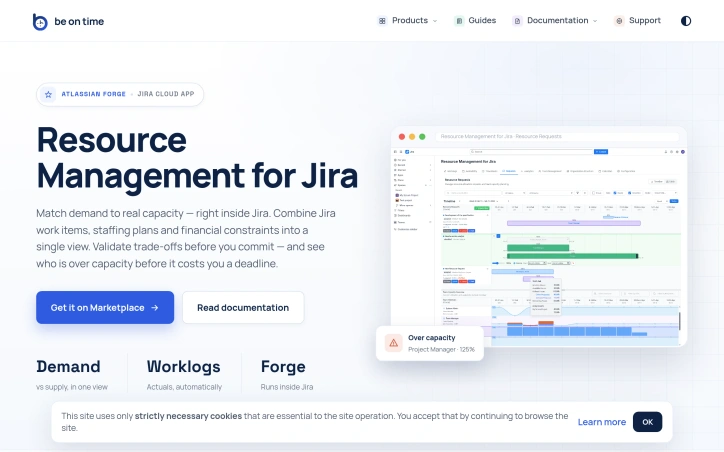
Portfolio resource management at scale is fundamentally about coordination. When dozens of projects compete for the time of the same specialized teams—engineers, designers, QA—organizations lose visibility into who can actually do what, when. Timelines slip not because work is impossible, but because capacity decisions were made in isolation or on gut feel rather than data. This Jira Cloud app tackles that core problem by collapsing org structure, capacity planning, and actual time tracking into a single view where project demand meets team reality. The product is built for organizations running parallel projects that share functional teams. Project managers and team managers gain a structured workflow for requesting resources and signaling availability, while PMOs and executives get analytics that surface over-allocation risks before they become missed deadlines. Everyone stays inside Jira rather than juggling spreadsheets or external tools. What distinguishes this solution is its scope. Most resource management tools handle one dimension well—tracking capacity or managing requests or reporting time. This consolidates org structure synced from Azure AD or Outlook, calendar-based capacity with self-service time-off, a stateful request workflow between PMs and Team Managers, time tracking via Jira worklogs, and analytics comparing demand against actual utilization. The ability to approve resource requests and see over-capacity warnings before committing transforms resource planning from intuition into precision. The execution trades breadth for focus. Rather than building a standalone platform, the team built a Forge app, which means it runs within Jira Cloud without context-switching or data duplication. This tight integration is both strategic and practical—organizations already managing work in Jira get resource visibility without adopting another system. The emphasis on enterprise features—org structure automation, compliance with data residency (Forge cloud), invoice-ready exports, REST API for org sync—signals intent to serve mid-market and larger organizations. The feature set hints at mature thinking about the problem. Calendar-based capacity avoids double-booking by design. The structured request workflow with Team Manager approval prevents PM-level chaos where every request is urgent. Analytics spanning past and future periods let organizations course-correct. Time-off management tied to capacity avoids the phantom availability problem common in spreadsheet-based shops. One limitation is implicit: the product assumes Jira is your system of record for project work and that resource decisions can be scoped to teams and projects tracked there. Organizations with work outside Jira or those needing resource visibility across tools beyond API integration would find this constraining. The REST API mitigates this for org-data sync but not for dynamic allocation scenarios. For organizations struggling to match project demand to expert-team capacity, this fills a real gap at the intersection of portfolio planning and team execution where most tools stop short.

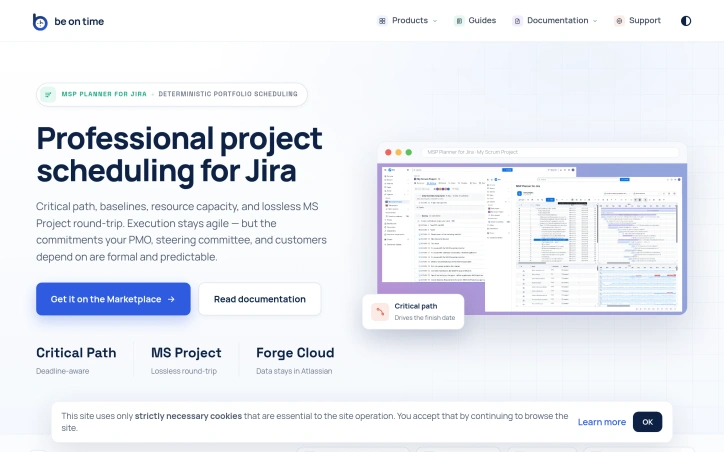
Organizations running Jira often face a critical tension: agile teams need flexibility, but stakeholders—PMOs, steering committees, and customers—demand formal commitments backed by rigorous scheduling. This gap is where MSP Planner for Jira operates, providing what its creators position as a professional scheduling engine rather than a visual overlay. The distinction matters. Most Jira Gantt integrations function as date visualizations, but MSP Planner implements an actual planning model, drawing its design from MS Project. This means support for industry-standard scheduling modes: Fixed Duration, Fixed Work, and Fixed Units. These controls let teams precisely define how effort, resources, and timing interact when project scope shifts—a capability that separates deliberate planning from guesswork. The product's strongest differentiator is its MS Project interoperability. Rather than one-way exports, the tool enables lossless round-trip sync: you export Jira schedules to .mpp format for external stakeholders, edit them in MS Project, and reimport them without losing structure or links. This is rare integration work. It means teams can satisfy both camps—Jira-native execution with formal external review—without maintaining parallel schedules. Core features address the formal planning checklist: critical path analysis identifies which task delays actually matter, baselines track schedule drift over time, and dependency management supports all standard link types (FS, SS, FF, SF). Resource capacity checks ensure commitments account for team availability. Complex task hierarchies and nested structures handle real-world project logic rather than forcing oversimplified models. The architecture choice is notable: data remains in Atlassian Forge, avoiding external data migration or vendor lock-in concerns. The protected Planning Space with explicit push/pull sync suggests controlled synchronization rather than constant bidirectional mirroring, giving teams deliberate moments to reconcile agile execution with formal planning artifacts. This targets a specific market segment: organizations too large or regulated to rely on pure task lists, but committed to Jira for their execution layer. It's not for teams that view scheduling as overhead; it's for those where predictability itself is a competitive requirement.

Translating a vague tattoo concept into a stencil-ready design has always meant weeks of Pinterest scrolling and awkward conversations with tattoo artists. AI Tattoo Generator cuts through this friction by converting text descriptions into preview-ready artwork in seconds, letting customers validate their vision before walking into an artist's chair. The product targets two distinct audiences: people who want to visualize and refine ideas independently before paying for professional consultation, and those seeking inspiration by browsing community-generated designs. Rather than positioning itself as a generic image generator, the founder built the workflow specifically for tattoo planning, training the AI on style-aware prompts for minimalist, traditional, Japanese irezumi, geometric, and blackwork aesthetics. What distinguishes this from standard AI image tools is the specificity embedded in every decision point. Users describe their tattoo idea, select from multiple AI models with different credit costs (ChatGPT Image at 4 credits, Doubao at 5, with premium options locked behind a Pro tier), pick an established tattoo style, and designate placement on specific body areas. The system delivers high-resolution PNG files formatted explicitly for artists to trace and adapt. This deliberate architecture—combining style, placement, and output format in a single workflow—reflects genuine product thinking about how tattoos actually get made. The community gallery functions simultaneously as inspiration and social proof. Displaying previous user prompts alongside finished designs creates a browsable archive of ideas, while a private mode upgrade lets users keep designs confidential. The font generator addresses lettering requests, a common tattoo need that most AI tools handle poorly. Accessibility comes through a free credit allowance on signup, allowing new users to generate multiple concepts before deciding whether to continue. Credit costs vary by model availability and capability, introducing a tiered monetization model without forcing immediate payment. The positioning is refreshingly honest: these are drafts, not finished pieces. The site consistently reminds users that AI designs are starting points requiring professional artist review and adaptation for actual skin placement. This liability-conscious language protects both the user and the company. For people frustrated by the design-communication gap in tattoo planning, the product delivers genuine utility. It collapses what might take days of conversation and revision into minutes of generation and variation.

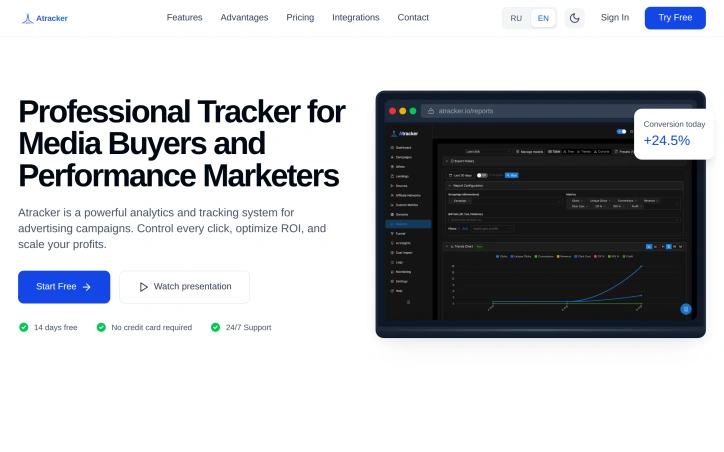
Fragmented data haunts performance marketing teams. Atracker addresses this with a unified analytics and tracking platform designed specifically for media buyers and performance marketers who need granular visibility into their advertising spend. The product tackles a concrete problem: organizations managing paid traffic campaigns often lack a centralized view of campaign performance across channels. Atracker consolidates this data into a single dashboard, offering real-time analytics and unified tracking that lets teams monitor individual clicks and campaign ROI. This centralization enables faster decision-making, allowing teams to identify underperforming campaigns and shut them down before wasting additional budget, while simultaneously scaling strategies that deliver results. What distinguishes Atracker from basic analytics tools is its explicit focus on the media buying workflow. Rather than generic event tracking, the platform emphasizes ROI optimization and campaign control as primary functions. The real-time analytics capability is particularly relevant for performance marketers who operate in high-velocity environments where delayed insights translate directly to wasted spend. The platform includes integrations with other tools in the marketing stack, indicating recognition that media buyers work across multiple platforms and need data to flow seamlessly. The single-dashboard approach reduces the friction of context-switching between systems, a genuine pain point in the industry. Atracker offers an accessible entry point through a 14-day free trial that requires no credit card, lowering the barrier for teams evaluating tools. The inclusion of 24/7 support suggests the company positions itself as a service rather than a self-service tool, acknowledging that performance marketers often operate outside standard business hours and may need immediate assistance. The product explicitly targets performance marketers and media buying teams—a narrow but underserved segment. These organizations typically operate on thin margins where even small optimization improvements compound quickly, making tools that promise ROI control and campaign-level transparency attractive. No explicit pricing details appear in available materials, though the free trial model and support positioning indicate a subscription-based business model likely targeting small to mid-market agencies and in-house marketing teams managing substantial advertising budgets.

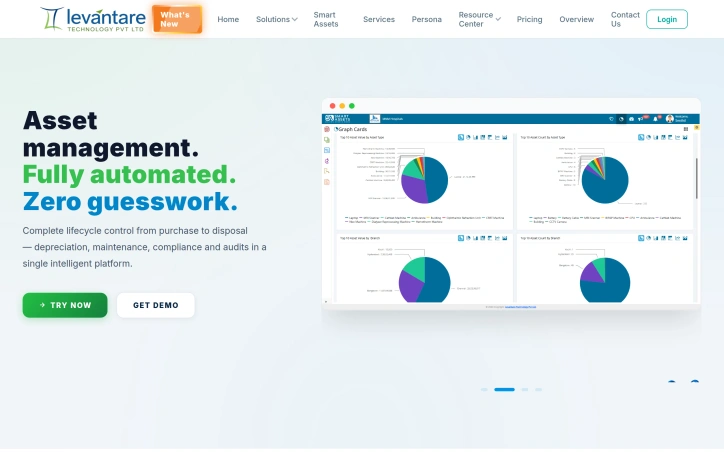
Businesses that carry equipment, vehicles, furniture, and other capital items struggle to keep track of where those assets sit, who holds them, and whether depreciation schedules are current. Smart Assets, from Levantare, targets that gap with fixed asset management software pitched at companies of every size. Its stated scope spans the full asset lifecycle, from purchase through disposal, bringing depreciation, maintenance, compliance, and audits into one system. What distinguishes the product is its emphasis on consolidation. Rather than splitting asset records across spreadsheets, maintenance logs, and accounting exports, the vendor argues for a single system where assets are recorded, tagged, verified, and tracked. The site also highlights quick onboarding and AI-based mapping, which address the setup friction that often slows software rollouts. Promises of fewer duplicate records and fewer data inaccuracies speak directly to a problem most finance and operations teams recognize, and the link between accurate records and better decisions gives buyers a clear benefit to weigh. The listed capabilities include asset lifecycle management, depreciation, verification, custodian management, and software license tracking. Verification and custodian management map to the accountability and audit workflows the vendor emphasizes, showing who holds each asset and confirming it is still present. License tracking extends coverage beyond physical equipment, which matters for organizations with significant software spending. The site also cites asset movement and ownership change tracking, along with actionable reports and analytics, though it offers little detail on what those reports contain. The page does not publish pricing, plan tiers, or contract terms. Visitors are directed to a Get Demo request and a Try Now option, so cost must be established through direct conversation with the vendor. The company states that more than 400 organizations use its platform, and the site displays badges from several review platforms, including Capterra, GetApp, Clutch, and Trustpilot. These claims come from the company's own presentation, so prospective buyers should verify them through independent references before committing. Overall, Smart Assets offers a consolidated proposition for organizations that have outgrown spreadsheets, and its lifecycle breadth makes it a serious candidate for evaluation.
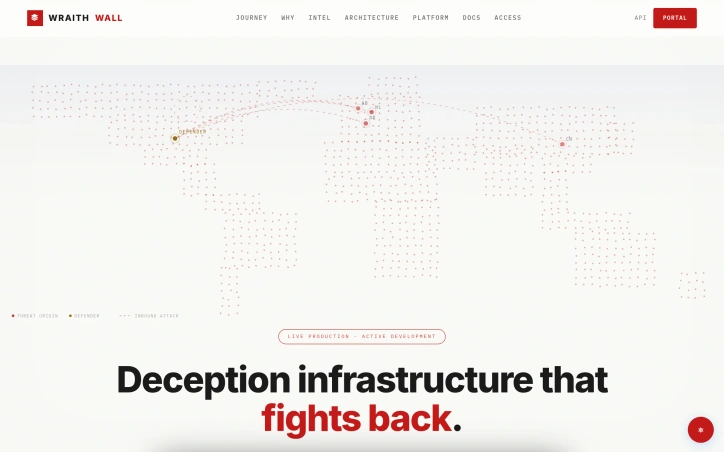
Defensive security has long relied on detection and response, but most tools operate in reactive mode, alerting teams after attackers have already penetrated defenses. WraithWall inverts this logic by embedding deception infrastructure at the perimeter and inside networks, forcing adversaries to reveal their methods before they can reach critical assets. The platform orchestrates honeypots, canaries, credential lures, and BGP monitors as an integrated detection layer. Rather than generating alerts on suspicious activity, these systems capture the full behavioral signature of an attack, including tool choices, timing, payloads, and lateral movement patterns. This evidence feeds a correlation engine that links disparate sessions into campaign clusters, transforming isolated alerts into forensically sound incident narratives. What distinguishes WraithWall from traditional honeypot projects is its claim to operate as a live production system rather than an isolated research environment. The website displays real telemetry from an operational deployment, including threat counts, session captures, and canary triggers. A documented case from May 2026 illustrates this model in practice: when the Cowrie SSH honeypot detected six high-severity sessions within eight minutes, the platform correlated identical payloads and authorized keys modifications across source IPs to identify a coordinated worm campaign rather than six independent attacks. This jump from signal-to-noise reduction to campaign attribution represents the core value proposition. The platform prioritizes evidence integrity and operator transparency. Logs are marked immutable, session telemetry includes fingerprinting through JA3 hashes and HASSH profiles, and findings are mapped to MITRE tactics to improve clarity for downstream incident handlers. By design, deception engagement eliminates false positives that plague production alerts: if a canary or honeypot responds, an attacker has interacted with it, removing guesswork. The attacker journey visualization sequences this data into a coherent narrative across reconnaissance, interaction, deception engagement, correlation, and intelligence output. This staged model acknowledges that not all threats move through every phase and that correlation quality depends on capturing behavior across multiple touch points. WraithWall positions itself for security teams prioritizing attribution accuracy and forensic quality over alert volume, targeting organizations running mature incident response practices. Pricing and licensing details are not disclosed in public materials.
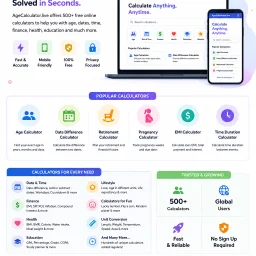
Quick and accurate age calculation from a date of birth remains a surprisingly common need—whether for administrative forms, personal record-keeping, or curiosity about one's precise age down to the day. AgeCalculator.live addresses this straightforward but essential problem by delivering instant results with just a date entry. The product's core value proposition centers on accuracy and simplicity. Rather than struggling through manual date arithmetic across months and leap years, users get exact age calculations in seconds. The founder built this to eliminate the manual calculation errors that plague users attempting to determine their precise age spanning years, months, and days—a calculation simple in concept but error-prone by hand. What distinguishes this offering from a basic calculator is its breadth. The platform bundles the primary age calculator with an extensive ecosystem of related tools: age difference calculations, birthday countdowns, zodiac and Chinese zodiac identifiers, retirement planning utilities, pregnancy due date estimators, menstrual cycle trackers, generational classifiers, and dozens more. This constellation of features transforms a single-purpose calculator into a comprehensive date utility suite addressing different life stages, planning horizons, and interests. The multilingual interface reflects genuine global ambition. Supporting at least eleven languages across multiple language families positions the tool for international use rather than English-speaking markets alone. This design choice acknowledges that age calculation spans cultures and demographic boundaries. The application targets a broad audience: individuals managing personal records, users completing administrative tasks, people planning major life events, parents tracking developmental milestones, and anyone exploring astrology or generational identity. The calculator appeals equally to those seeking quick utility and those wanting deeper exploration through ancillary tools. The product operates on a free model, removing financial barriers to access. This decision maximizes reach in a category where users expect zero-cost friction. The main limitation is inherent to the concept itself—age calculation is a solved problem with minimal competitive differentiation at the core feature level. However, the surrounding toolkit adds practical utility that extends the platform's usefulness beyond the base use case. For users who calculate age occasionally, this works as a quick lookup. For those needing related date utilities repeatedly, the bundled collection justifies repeated visits over single-purpose alternatives.


Budget-conscious home cooks seeking variety without compromise will find Foodysis a straightforward resource for weeknight dinners. The platform addresses a genuine gap in recipe discovery by bundling accessibility with dietary specificity, proving that eating well on a modest budget remains entirely feasible. The collection spans over 600 recipes with heavy representation across Middle Eastern and Indian cuisines, alongside comfort food staples. What immediately stands out is the deliberate categorization by dietary requirement, not as an afterthought but as a primary organizing principle. Users can filter for keto, vegan, gluten-free, and dairy-free options without friction. Most recipes clock in at 15-25 minutes, with several marked as quick-win 0-minute preparations, suggesting an emphasis on busy schedules rather than weekend projects. The recipe variety mirrors modern eating habits. Alongside traditional categories like salads and pasta, the platform features dedicated sections for air fryer cooking, a modality that has expanded significantly in home kitchens over the past few years. Each recipe includes serving size, prep time, and difficulty rating, giving users realistic expectations before they commit ingredients and effort. The interface supports browsing by cuisine, dietary requirement, or ingredient category, with search functionality for targeted discovery. This multi-axis approach acknowledges that home cooks don't think in straight lines; they may browse for vegan Indian recipes one evening and dairy-free desserts the next. Foodysis succeeds where many recipe platforms flounder: it delivers breadth without overwhelming, respects dietary diversity as legitimate rather than niche, and keeps friction minimal. The real test, however, lies in execution: whether recipes genuinely deliver on their difficulty ratings and prep time estimates, whether ingredient lists remain realistic for budget shopping, and whether dietary labeling is accurate. The foundation is solid. The promise is clear.

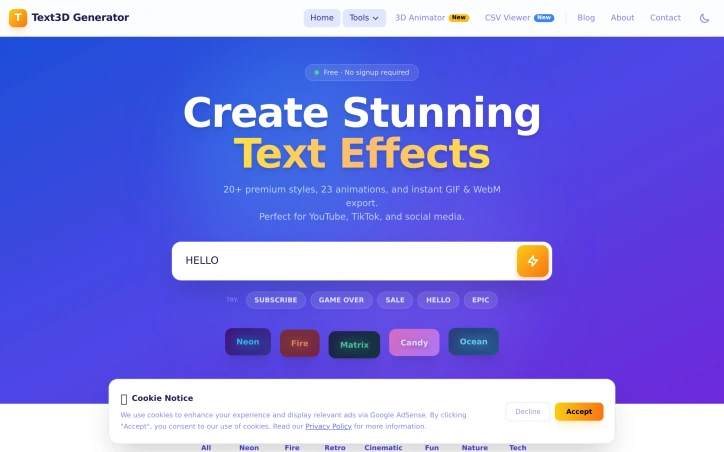
Content creators and designers working on tight deadlines need text effects fast. Professional design software like Photoshop or Blender carries steep learning curves and licensing costs, while many existing text effect generators either demand subscriptions, require software installation, or deliver subpar results. Text3D Generator addresses this gap by delivering professional-quality animated text effects instantly through a web browser. The tool targets YouTubers, TikTok creators, social media marketers, and designers who need quick visual assets for thumbnails, posts, and video intros. The value proposition is straightforward: high-quality results without friction, subscriptions, or learning curves. What distinguishes Text3D Generator is its accessibility-first design. The workflow takes roughly a minute from start to download: type text, select a style and animation, and export. No account creation, no software installation, and no watermarks cluttering the final output. Users can download unlimited assets forever at zero cost. This matters because friction is often why creators abandon tools midway through projects. The feature set is substantial. The tool offers 20+ text style categories spanning neon, fire, cinematic, retro, candy, and matrix aesthetics. These aren't random templates; they're organized by visual theme, suggesting thoughtful curation. Paired with 23 animation presets (word pop, typewriter, glitch, matrix rain, heartbeat, and others), the combination yields many possible outputs. The 22 included Google Fonts provide typographic variety without forcing users into a limited palette. Export flexibility matters for workflow integration. Users can download transparent GIFs for compositing over existing footage or WebM video files compatible with editing software like Premiere Pro and DaVinci Resolve. Both formats support professional-grade video production, not just social media posting. The technical implementation is solid. Built on Next.js and Vercel infrastructure, the browser-based architecture means no installation, instant preview updates as users customize, and consistent performance across devices. The pricing model is unambiguous: completely free. No freemium tier, no upsells, no payment wall hiding premium features. This straightforwardness removes decision friction and makes the product genuinely useful for hobbyists and professionals alike. Text3D Generator succeeds because it recognizes that creators don't need 90% of Photoshop's features; they need animated text effects in seconds. By narrowing scope ruthlessly and keeping the tool free, it solves a real problem without pretense.
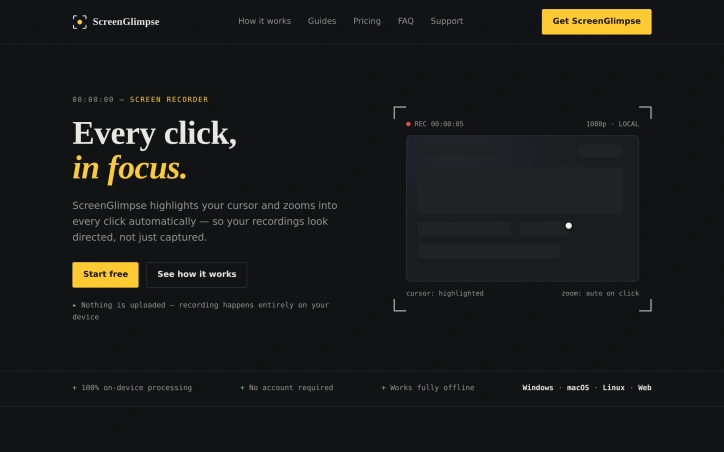
For anyone tired of recording screens with tools that either demand subscriptions, steal your data, or integrate only with bloated communication platforms, ScreenGlimpse offers a focused alternative built on a refreshingly simple premise: privacy-first recording that happens entirely on your device. The tool targets creators, educators, and teams who need to produce polished screen recordings without friction. Its core innovation centers on cursor visibility and automatic zoom-on-click—features that transform raw screen captures into directed, viewer-friendly content. Every cursor movement gains a soft highlight, and double-clicking triggers an automatic zoom that keeps viewers locked on the relevant action rather than lost in a sea of screen real estate. ScreenGlimpse stands apart through its commitment to local processing. Nothing leaves your computer. Recording, encoding, and export all happen on-device, eliminating both the privacy concerns that plague cloud-dependent tools and the upload delays that plague most competitors. Export happens immediately upon stopping the recording—no render queues, no waiting bars. Users can choose between MP4 and WebM formats at various quality levels before recording even starts. The feature set extends beyond basic recording. The app supports simultaneous capture of screen, microphone, webcam, and system audio in any combination. A draggable webcam bubble keeps your face present without consuming the entire frame. Beyond video, ScreenGlimpse includes screenshot capabilities with markup tools, a freeform whiteboard mode, and the ability to export recordings as animated GIFs. A custom watermark feature allows teams to add branding without the intrusive stamps common in competing tools. Distribution reaches across platforms. Windows, macOS, and Linux each get native installers, while a browser version accommodates one-off recordings or users unwilling to install software. The pricing structure rewards flexibility. A free tier, called Glimpse, offers unlimited local recordings with 720p export and basic features. Focus, the paid tier at five dollars monthly or fifty dollars annually, unlocks 4K export and advanced screenshot markup capabilities. A Forever option provides a one-time purchase of one hundred dollars for permanent access with a year of included updates—a model designed for users skeptical of subscriptions. The absence of required account creation for free use removes friction at the entry point. Paid tiers use license keys rather than tracking usage, respecting the privacy pledge that anchors the entire product philosophy.

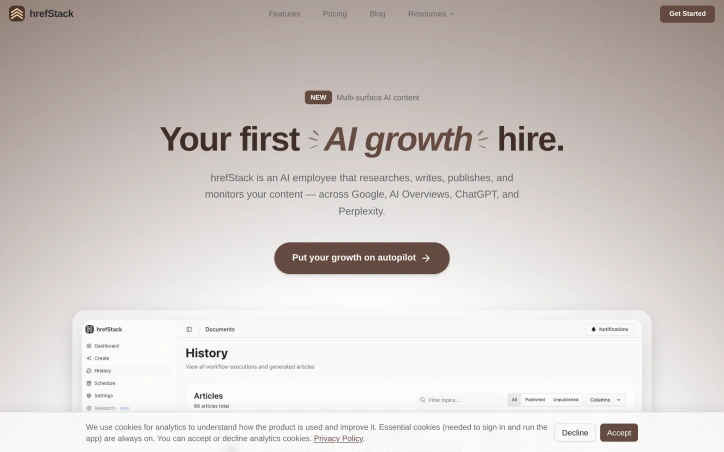
Search visibility is a stubborn problem for small teams, and most lack the budget or hours to keep a blog producing articles that rank. hrefStack targets that gap. It is aimed at founders, solo operators, and growth-minded marketers who run content sites on platforms such as WordPress, Shopify, Wix, Ghost, or Sanity and want the whole publishing cycle handled, not just the writing. What stands out is the framing. Rather than positioning itself as a writing assistant, hrefStack presents one AI agent that covers research, drafting, publishing, and tracking as a continuous loop. The agent connects to Google Search Console, reviews published articles and drafts, and returns findings ranked by priority, with the source of each one listed. Every proposed action waits for the user's approval before it ships, which keeps a human in control of what goes live. The feature set is broad. Topic research mines Search Console data and competitor gaps to surface keywords a site can realistically win. A competitor analysis tool takes a rival's domain, lists the keywords it ranks for that the user does not, and attaches search volume, difficulty, and a recommended move such as creating, refreshing, or clustering content, with the easiest wins highlighted first. The article generator produces structured drafts with a table of contents, comparison tables, an embedded video, and internal and external links, and users choose a small, medium, large, or pro word budget. Each article is then scored across six quality dimensions, including readability, structure, keyword placement, depth, credibility, and engagement, with a breakdown of what works and what needs fixing. The product also tracks rankings and Search Console performance over time, reporting which topics win and directing future effort toward them, so each new article draws on the results of earlier ones. The page reviewed does not state pricing or a business model, so this review cannot assess cost. Prospective users should check plans directly before committing. Overall, hrefStack is a serious attempt to automate the full content pipeline, and its evidence-based findings and approval gates set it apart from draft-only writing tools.

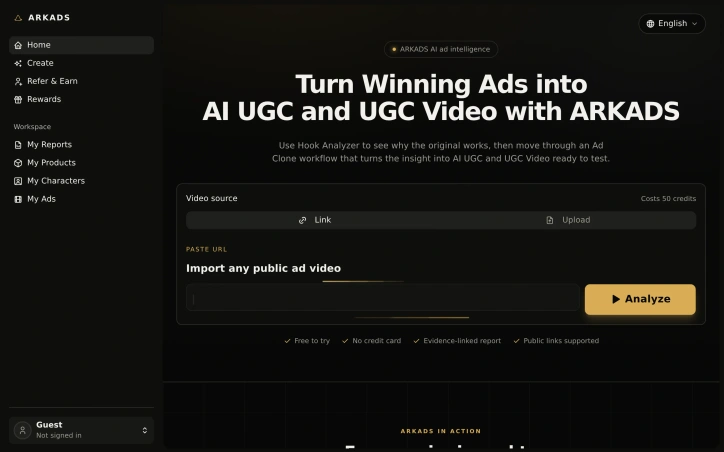
Marketing teams waste countless hours reverse-engineering winning ads, scrubbing through video, taking notes, and manually rebuilding those insights into new creative. ARKADS automates this loop by combining two functions: Hook Analyzer, which dissects what works in existing ads, and Ad Clone, which transforms those findings into finished AI UGC videos ready for testing. The core problem is clear. Ad analysts need to understand why a reference creative performs, then hand those insights to writers and producers who regenerate the concept. That handoff is inefficient and loses context. ARKADS collapses this workflow into a single connected process that keeps research evidence connected to every downstream decision. What distinguishes the product is its commitment to evidence linking. Rather than offering generic recommendations, Hook Analyzer ties each finding to the specific frame or transcript segment that supports it. When Ad Clone builds a brief from the analysis, those insights carry forward as structured inputs—audience, problem, promise, proof, transformation—that can be edited before scripting and rendering. This approach replaces guesswork with cited reasoning. The product targets marketing teams managing paid social campaigns at volume. It accepts ads from TikTok, Instagram, Facebook, or direct video upload. The Hook Analyzer is free to try without a credit card, lowering the friction to experimentation. Video analysis costs 50 credits. The Ad Clone workflow then renders individual hook variations and clips on demand, with per-clip charging and refunds if a take fails, plus free merging for final assembly. This modular pricing model means failed experiments don't carry unnecessary cost. Visual consistency is another practical strength. Rather than managing multiple actors across different UGC takes, Ad Clone carries one actor reference through the entire workflow, solving a common friction point in production. The product sits between research tools and production software. It assumes marketing teams have winning ads to learn from and need a faster path from insight to testable video. For teams running rapid test-and-iterate creative cycles, that speed advantage is meaningful. For teams building one campaign at a time, the ROI may be harder to justify. The main question is execution depth. The website shows illustrative outputs but disclaims them as non-customer results. Real-world performance remains unclear.